All posts by Sunalini Kumar

Taming of The Vamp: Suchitra Vijayan

This is a guest post by Suchitra Vijayan

When I first read the Myth of Sappho, I was reasonably troubled that a famed Greek poetess would jump off the Leucadian cliffs for love of Phaon, a deeply flawed man. Why would a woman like Sappho kill herself over unrequited love? Did she not realise that she deserved better than the love of a loathsome man? Rationality dictates that no life is worth giving up for another. But the prudent pragmatist in me would beg another version, a rethinking. It was not unrequited love that made Sappho’s leap – a mainstay of our myth – it was something else. It was a comforting misogynistic tale attached as an afterthought, many hundred years after her death. First it suggested that a “woman” who had dared to trespass, and be different had to be mad all along. Second, the subversives always had to be reclaimed. Political rebels, internal subversives and non ideal types had to be tamed or done away with. In Shakespeare’s Taming of the Shrew, a man “acquires” a headstrong woman as his bride. Minus the comedic sub-plots and slapstick humour, the bare bones of the story include “notoriously aggressive” Katherine and her “tamer” husband Petruchio. But Katherine is neither aggressive nor notorious, she wears her indescribable naivety and sheer straightforwardness with the innocent integrity of a woman who is comfortable in her skin. This sits uncomfortably with the author, readers and commentators. Later Petruchio drags Katherine away from her own wedding celebrations, insisting she is his “chattel”, he deprives her of food and sleep until she learns to bend her will to his entirely. Some have argued that Katherine subverts patriarchy by acting like a submissive wife, manipulating Petruchio to her ends. Whatever interpretation you choose to favor, the fact remains that the woman had to be tamed, she had to manifestly re-fashion her self to comply with the new set of realities. To win she had to transform herself into something else, someone she is not.
Continue reading Taming of The Vamp: Suchitra Vijayan

Of Peas and War: Sajan Venniyoor

This is a Guest post by Sajan Venniyoor


“How you can sit there, calmly eating muffins when we are in this horrible trouble, I can’t make out. You seem to me to be perfectly heartless.” “Well, I can’t eat muffins in an agitated manner. The butter would probably get on my cuffs.” – Oscar Wilde, ‘The Importance of being Earnest’

When Vijay Patil (49) was detained by the Mumbai police for drinking tea in a suspicious manner, the accused moved the High Court challenging his detention and seeking damages. The Court expressed bewilderment at the arrest. Their Lordships Patel and Dharmadhikari – for whom I have only the greatest respect and admiration – observed with unbecoming levity,

“We were unaware that the law required anyone to give an explanation for having tea, whether in the morning, noon or night. One might take tea in a variety of ways, not all of them always elegant or delicate, some of them perhaps even noisy. But we know of no way to drink tea ‘suspiciously’.”

More worldly men than the Mumbai HC bench have known it is perfectly possible to drink tea in a suspicious manner. It was said of the poet Alexander Pope, as the Mumbai Police said of Mr. Vijay Patil, that he hardly drank tea without a stratagem.

Continue reading Of Peas and War: Sajan Venniyoor

Palamau, Ardh Satya and the Activist Life: Vikrant Dadawala

This is a guest post by VIKRANT DADAWALA: “We have lost a lot”, says Manoj-ji, president of Vikas Sahyog Kendra. “Aadmi ko ek bar aag choo jaye toh woh ekdam se peeche ho jaata hai.” (If fire touches a man once, he flinches every time)

I am standing outside the Vikas Sahyog Kendra office in Daltonganj, Palamau. It is the end of my first day as an intern with the organization. Manoj-ji is trying to give us, three interns, a sense of why Vikas Sahyog Kendra does not have a signboard. “Niyamat Ansari and Lalit Mehta’s murders shook us badly”, Manoj-ji says. “We’re no longer as fearless as before.”

I am little disappointed, unreasonably so. It is evening but still mindlessly hot. My first impressions of Daltonganj take in its bareness – unfinished buildings, loudspeakers blaring bhajans, the ostentatious houses of minor bureaucrats and contractors standing like castles against the dry summer wind. Continue reading Palamau, Ardh Satya and the Activist Life: Vikrant Dadawala

Killing it softly over two decades: Agrima Bhasin

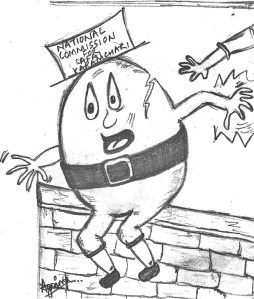
NCSK cartoon for Kafila

This is a guest post by AGRIMA BHASIN: No different from the caste hierarchy in India, the National Commission for Safai Karamcharis (NCSK) enjoys a marginal status, at the bottom, in the power hierarchy of commissions. “Why,” asked Former Prime Minister Narasimha Rao, “is it that the Commission for Safai Karamcharis is being subjected to the same discrimination as the safai karamcharis themselves? This is not something to be proud of.” He minced no words at the Conference of Welfare Ministers of States in 1996, to guilt the august gathering into recognising their culpability in deliberately weakening a competent commission. Continue reading Killing it softly over two decades: Agrima Bhasin

‘Documentary Evidence of Sexual Relationship’: Is companionship necessary when adults cohabit?: Rukmini Sen

This is a guest post by Rukmini Sen The Madras High Court on 17th June 2013 has delivered a judgment where it unambiguously states that ‘the main legal aspect for a valid marriage is consummation’ (pg 13). Consummation of a marriage, in many traditions and statutes of civil or religious law, is the first (or first officially credited) act of sexual intercoursebetween two people, either following their marriage to each other or after a prolonged sexual attraction. Its legal significance arises from theories of marriage as having the purpose of producing legally recognized descendants of the partners, or of providing sanction to their sexual acts together, or both (last accessed 22nd June 2013). In a country like India, where Section 377 of the Indian Penal Code still exists (although decriminalization of consensual sexual acts between two adults in private has been declared by the Delhi High Court in 2008), what constitutes the status of consummation in a gay/lesbian union or when two heterosexual adults live together, when the legal significance of consummation is connected only with giving birth to a ‘legitimate’ child? What about relationships where there are willfully no children, biological, adopted or surrogate? This is one of the many questions that this judgment raises and leaves me more bewildered about my legal identity as a cohabiting partner in a heterosexual relationship.

Continue reading ‘Documentary Evidence of Sexual Relationship’: Is companionship necessary when adults cohabit?: Rukmini Sen

Welcome the Two-Year Under Undergraduate Programme at Delhi University

Harish Kumar Trivedi’s article on the proposed four-year undergraduate programme at Delhi University, “Is Delhi University Dying?” (TOI May 29th 2013), for all its rhetorical flourishes, makes in fact a single point – the need for change. He is not alone in this belief; who could possibly be against reform? Who would want to stick their necks out in these breathless times and say, “Stop, why so fast?”

Many, many right-thinking people, actually, as the absolute barrage of criticism against the FYUP has shown. From the ordinary undergraduate teacher to academic and executive councils, committees of courses, and internationally renowned scholars, writers and academics. Now, there can be two responses to the range and variety of criticism that has been expressed. One would be to engage with it, based on the reasonable assumption that so many people involved with a profession cannot be entirely wrong. The other response is of the kind Professor Trivedi makes – to make an a priori argument for “change”. I say a priori because in fact there is only one, short paragraph in the article that discusses the possible advantages of the new system. One, that the new system ends the distinction between pass and honours courses. Two, that even if students exit after two years, they will still earn a “university qualification”. Three, it allows college teachers to frame a course in the fourth year.

Continue reading Welcome the Two-Year Under Undergraduate Programme at Delhi University

Promises and Perils of FYUP: An Appeal to Students and Citizens: Sunny Kumar

This is a guest post by SUNNY KUMAR At the current moment, Delhi University is caught in a tremendous crisis. On the one hand, the DU administration is hurriedly forcing through the Four Year Undergraduate Programme (FYUP). On the other hand, students, teachers, intellectuals and all those concerned with education are opposing it. The DU administration has declared that all students taking admission in DU will enter a four year honours degree. Within this FYUP scheme, if students wish they can leave at the end of two years with a Diploma or at the end of three with a Bachelor degree (without honours). It is only at the end of four years that they can leave with a Bachelor (Hons) degree. Teachers and academics have raised many valid objections about the way in which this tectonic shift is being imposed on DU. Here, we will not belabour many of the arguments that have been made effectively elsewhere. Instead, we will mainly address the Vice Chancellor’s two central claims – of greater employability and flexibility – being made in defence of the FYUP.

To understand the new scheme better, let us look at what will be taught under FYUP.

Will the FYUP, with the above course content and its multiple exit options truly make students more employable? Will it help them get better jobs or give them extra advantage in choosing future academic options? Let us look at some of the facts: Continue reading Promises and Perils of FYUP: An Appeal to Students and Citizens: Sunny Kumar

Breasts, cancers and the ethics of reptiles: Ramray Bhat

This is a guest post by RAMRAY BHAT  Two weeks ago, tucked in between lurid details of spot-fixing during IPL matches, and an inordinate attention to how Sanjay Dutt spent his first few moments in jail, was an important bit of news about a high profile American movie actor having undergone preventive surgery in order to escape a future encounter with breast cancer. The source of the information was an op-ed written by the actor in The New York Times.

The mainstream Indian media not quite knowing how to report this kind of information first presented it in the blandest fashion and then hurried to the closest cancer hospital to interview its surgeons. The social media took the expected route of initially spouting knee-jerk reactions some of which were misogynous and offensive. The response later evolved into a division between two camps. One hailed the actor for being courageous. The other criticized her for a variety of reasons such as her choice of undergoing surgery without being afflicted with the disease, and her soft advocacy for a detection procedure that is out of the economic reach of a majority of women in her own country, let alone those from the third world. Ruth Fowler’s article from the left-leaning Counterpunch adopted a cavalier tenor and chided the actor for her op-ed with what seemed like nitpicking arguments.

Continue reading Breasts, cancers and the ethics of reptiles: Ramray Bhat

Of Education and Democracy in India: Preeti Chauhan

This is a guest post by Preeti Chauhan Now that the cat is out of the bag and the four year undergraduate programme(FYUP) is being criticized and thereby being discussed threadbare by some of the leading scholars of the country, one needs to also think of its relationship with the current state of democracy in India. The manner in which FYUP is being pushed through crushes the very idea of a university and with it the ideals and ideas of democracy.

Even if one assumes and believes that the “Academic Congress” held last year in the University gave a go ahead to change the existing three year undergraduate programme to FYUP and frame courses accordingly, then also the way the University administration has functioned goes against the very values that the University of Delhi or for that matter any university is supposed to promote. Continue reading Of Education and Democracy in India: Preeti Chauhan

Savar Tragedy: Solution in Solidarity: Navine Murshid

This is a guest post by Navine Murshid The grief surrounding the collapse is unimaginable with more than 500 dead and hudrends still missing. It is clear that the accident was a culmination of the alignment of corruption, greed, inefficiency, and a bid to cut costs, at every level from acquiring lands through illegal means, using sub-standard materials for construction, and forcing workers to work despite life-threatening risks, to foreign buyers who show little regard for human life. It is clear too that the wealthy elite with political connections have capitalized on the textile industry by exploiting the poor; it reveals the evils of capitalism where the bid to minimize costs have led to the complete disregard for human lives, perpetuating the “race to the bottom.”

Thousands of RMG workers have gone on strike and taken to the streets to demand justice for what has happened and to demand changes in working conditions. Many have demonstrated in front of the BGMEA office. On the occasion of May Day, different groups came forward to support the working  class’ struggle for a work environment that is safe and well-equipped for emergency situations and a justice system that actually does them justice. Indeed, such support and solidarity with workers can end these “murders.”

The relevance of Shahbag

Shahbag’s main contribution to the political culture in Bangladesh, arguably, has been to empower people, particularly urban youth, to speak up and realize that even ordinary people can make a difference when they unite; that they do not need political patronage to voice their demands and dissatisfaction. The outpouring of support in the wake of the Savar disaster can be attributed to the understanding of “taking back the nation” that Shahbag had instilled in people to encourage them to be active citizens instead of waiting for the state to take action.

The Savar disaster reveals some key points of convergence between the interests of Shahbag activists and the working classes.

Continue reading Savar Tragedy: Solution in Solidarity: Navine Murshid

What Rediff Could Have Done to Support Kavita Krishnan Against Rape Threats: Anja Kovacs

Guest post by ANJA KOVACS: Imagine a TV station inviting a guest and giving the audience the opportunity to freely ask questions, with the guest deciding which questions to respond to. Imagine a member of audience then threatening the guest with rape, and the TV station’s representative responding by simply passing on the microphone to the next person, leaving the guest to fend for herself. Imagine the TV station then also refusing to provide any assistance to the guest following the incident. Outrage would, justifiably, ensue. Last week, Rediff treated a guest in much this way – during a Rediff-organised online public chat.

On 24 April, Kavita Krishnan, Secretary of AIPWA and a leading figure in the anti-rape protests that have been rocking the capital since December 2012, participated in a public chat at the invitation of Rediff. The topic of the chat was the rising incidences of rape and violence against women in the country. During the chat, Krishnan was repeatedly threatened with rape by a participant whose handle read ‘RAPIST’. RAPIST wrote: ‘Kavita tell me where I should come and rape you using condom’. Earlier the same person had made comments such as ‘Kavita tell women not to wear revealing clothes then we will not rape them’, to which Krishnan had in fact responded. All comments by RAPIST were written in capital letters.

Continue reading What Rediff Could Have Done to Support Kavita Krishnan Against Rape Threats: Anja Kovacs

Ground Report on the Real Estate Mafia’s Reign of Terror in Noida: Bigul Mazdoor Dasta

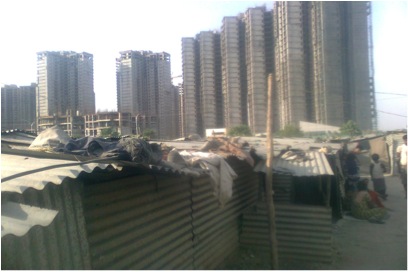
This is a guest post by Bigul Mazdoor Dasta  Noida is one among those places which are highlighted as the hub of the ’emerging’ and ‘shining’ India. The glittery shopping malls, world class expressway, flyovers, F1 International circuit, luxury apartments, villas etc. are cited as the symbols of India’s ‘growth story’ and Noida has all of these. For the last couple of decades, the mainstream corporate media has been busy selling this growth story to the emerging urban upper middle class; in the process making them a customer of artificially inflated dreams such as having one’s own luxurious house. But, curiously, the harrowing stories of those whose labour power is responsible for this so called development are conspicuous by their absence in the mainstream media’s narrative. The labourers come into the news only when some untoward incident happens and they are immediately held responsible for any such incidents without carrying out any investigation. One such horrendous incident took place on April, 28 at one of the hundreds of construction sites in Noida in which the security guards of the site opened fire on the labourers and in the process injuring some of them. On the morning of the April 28, the workers of the 3C Lotus Panache company’s constructions site at Noida’s Sector 110 witnessed the naked reign of terror by the company’s management. At the beginning of the morning shift at around 8 a.m., the workers had reached the construction site to join the construction work of the multi-story apartment complex, but they had to stand in a big queue because the security guards at the gate were taking a long time to intensively check each worker and make an entry. When some workers protested against this lax attitude of the guards, saying that they had to listen to the supervisor’s abuses if they were late even by one minute, a heated exchange took place between the security guards and workers and suddenly the guards started firing indiscriminately over the workers. As per the media reports, two workers were injured, but when a team of Bigul Mazdoor Dasta visited the workers settlement adjacent to the construction site, some workers said that the number of the injured workers could be four which includes a child as well and one of the workers is seriously injured and his life is in danger. As per the records of the district hospital in Noida, only one worker was admitted on April 28. Other workers were admitted to some private hospital.

Bigul1

The workers settlement adjacent to the construction site where the incident took place

Continue reading Ground Report on the Real Estate Mafia’s Reign of Terror in Noida: Bigul Mazdoor Dasta

Do you know why Aadhaar is NOT compulsory: Ram Krishnaswamy

This is a guest post by Ram Krishnaswamy For the last three years activists opposing Aadhaar/UID have argued that it can lead to communal targeting, can aid illegal migrants, can invade privacy, is unconstitutional, does not have parliamentary approval, is illegal, etc. Yet all such objections and more have been successfully stonewalled by UIDAI and UPA leaders.

Further, Aadhaar is not compulsory and so such allegations are considered invalid. The middle and upper class Indians have remained silent about the UID debate, as it does not affect them in the least. The long lines of persons stretching before UID enrollment centers must be proof, then, of the popularity of this concept.

Nandan Nilekani and UIDAI Director General R.S Sharma have repeatedly told the nation that UID, now called Aadhaar, is not mandatory. Yet, over a period of time, they say, it could become ubiquitous, if service providers insist upon it compulsorily, in order to receive their services. To quote UIDAI Chairman, Nandan Nilekani, “Yes, it is voluntary. But the service providers might make it mandatory. In the long run I wouldn’t call it compulsory. I’d rather say it will be come ubiquitous.”

Continue reading Do you know why Aadhaar is NOT compulsory: Ram Krishnaswamy

The lives of documents: on the sorrows of AADHAR: Rijul Kochhar

This is a guest post by Rijul Kochhar

Combining field and event, camp is in effect spatial practice.[…] Camps are spaces where states of emergency or legal exception have become the rule. [They offer] the setting for the normative permanence of a suspended rule of law.

~Charlie Hailey, Camps: A Guide to 21st Century Space

Delhi govt advert compulsory aadhar

The story of Aadhar is not unknown—a new, cutting edge piece of documentary practice jack-booted for this 21st century, it seeks to cull out fraudulent persons tied to dubious places or circumstances (words like ‘ghosts’, ‘fakes’, ‘frauds’, ‘duplicates’ abound in its context). Paeans to the powers of biometrics have been sung from numerous citadels of power—the project’s uniqueness lies in its capacity to channel biological anatomy to a singular fantasy of individually-determined (and fixed) citizenship; its ability to weed out duplication and duplicity in favour of fool-proof individuality; its promise to identify seamlessly; its realization of that ultimate bureaucratic fantasy that seeks to eliminate the noisiness of personhood and the messiness of individual lives by inaugurating a system of identity constructed and at once accomplished through a 12-digit number tied to the bedrock of fingerprints and iris-scans. These seductive powers of identity and technology, long wished for by visions and bureaucratic pursuits of rationality, contrast against fears of the invasion of privacy, the dangers of centralising data, and the abuse of powers and of information by functionaries of government, as well as—by no means less important—prospects of technological malfunction in the field of civic services or anatomical recalcitrance.

Continue reading The lives of documents: on the sorrows of AADHAR: Rijul Kochhar

The Silence of the Protector: Anonymous

This is a guest post by Anonymous

It is over two months since policemen and others allegedly molested women students of Delhi University as they protested against Narendra Modi’s presence at a college event within the University Campus. Not a word of support or concern has emerged from the Vice Chancellor. Instead, cases have been filed by the police against students and teachers who participated in the protest. The Vice Chancellor’s silence is probably among the less hypocritical responses that he could have had. At least students don’t have to hear assurances about their safety once more, and that lie has been laid to rest.

Sometime last year I happened to be present at an interaction between the local Delhi police and women hostel residents of Delhi University. The police had informed three hostels of a ‘meet the public’ programme at which we were required to be present and urge students to attend as well.  The students, who were preparing for exams at the time, attended the event somewhat reluctantly, but in the course of the evening, provided the feedback that was asked for with unexpected vigour. A woman DCP and other police representatives who had been called to address us, chose to assure us that the city was in fact safe despite a lot of media noise to the contrary, and that the reliability of the police could be counted on in all instants. This did not go down well. Various students asked what they should do when the police leered at them, exposed themselves to the women, urinated deliberately in front of them, lolled in their chairs chatting with security guards while cars slowed down threateningly in front of the hostel gates. The DCP, flummoxed by this flood of complaints, finally said that the police were after all a part of society and would reproduce its problems. This rare if honest admission should be taken seriously as a sign of how women should regard the question of their own safety.

Continue reading The Silence of the Protector: Anonymous

Of imagined solidarities and real fears – The politics of the Sri Lankan Tamil cause in Tamil Nadu: Anonymous

This is a guest post by ANONYMOUS:  When elephants fight it is the grass that suffers, so goes an old Kenyan proverb. In the maelstrom of political hysteria unleashed by Jayalalitha and Karunanidhi ostensibly in aid of Sri Lankan Tamils, democracy, truth and solidarity have been the biggest casualties. Over the past few months, Tamil Nadu has witnessed attacks on Sri Lankan Buddhist monks and Christian pilgrims, and the government sanctioned blockade of Sri Lankan schoolchildren and sportspersons.

The latest salvo from Chennai regarding Sri Lanka is the Tamil Nadu assembly resolution calling upon India to press for a United Nations Security Council mandated referendum amongst Tamils living in Sri Lanka as well as Tamils of Sri Lankan origin in other countries on the question of carving out an independent Tamil Eelam in Sri Lanka. This is in addition to demands to declare Sri Lanka a ‘hostile state’, impose some form of sanctions etc. Continue reading Of imagined solidarities and real fears – The politics of the Sri Lankan Tamil cause in Tamil Nadu: Anonymous

Nellie, Me and Impunity: Uddipana Goswami

This is a guest post by Uddipana Goswami

I was born around the time the Assam Movement started and grew up in an atmosphere of intense xenophobia. Everywhere, we heard anti-Bangladeshi slogans – which often translated into expressions of anti-Bengali sentiments. Our parents tried their best at home to protect us from such influences. We were sent to convent schools which often isolated us from whatever was going on outside the school walls. But we felt the tensions in the air and tasted the fear. We heard the names of places and people, killed, maimed, tortured.

Nellie was one such name we grew up with. There were others – Dhula, Gohpur, Phulung Sapori – where other genocides happened, but the name Nellie stayed with me. It fascinated me and brought to my mind the image of a distraught woman. Many years later, when I started researching the Muslim community of East Bengali origin in Assam, this amorphous image of Nellie started taking a definite shape. And it translated into a poem one day – ‘If Nellie Was the Name of the Woman’ (Northeast Review).

As I wrote the poem, I realized that I could myself be Nellie, a woman, battered, bruised and abused because of my ‘otherness’, because I could – and would – not sacrifice my ‘otherness’ in my quest for oneness within the institution of marriage.

Continue reading Nellie, Me and Impunity: Uddipana Goswami

Modi and me: Sharad Mathur

This is a guest post by SHARAD MATHUR

1999

In the summer of 1999, practising our family tradition, we were availing a government LTC that my father was entitled to, being a senior central government officer.  Since we could travel by air, we decided to take a trip to Darjeeling, while halting at Allahabad, Varanasi, Lucknow, and Calcutta for some sight-seeing. Those were the days when flying was an experience for most Indians; yet the emotional memory of this trip did not record much of the excitement induced by flying, but took vivid account of disappointment – with a chance conversation and of missing another.

It was on our flight from Lucknow to Calcutta, I was sitting with my younger brother while my parents were sitting together in a row behind us. I was on the window seat and was too occupied with the process of luggage sliding inside the plane, to notice two gentlemen who came and sat next to my parents and my brother respectively. My gawking was however interrupted by my father excitedly introducing me to one Devi Singh ji, who I was told happened to be Personal Assistant to Shri Bhairon Singh Shekhawat. Being a big BJP enthusiast, partly because of their mesmerizingly bright coloured flags, I looked up to this BJP heavyweight and was elated to meet his personal assistant. My excitement was doubled when Devi Singh ji introduced us to a gentleman sitting next to my brother, on the aisle seat, as Modi ji who was accompanying Bhairon Singh ji to the Bihar convention of BJP. However, this excitement remained short lived.

Continue reading Modi and me: Sharad Mathur

India’s other education crisis: The English Teacher

This is a guest post by ‘The English Teacher’
Here are some statistics detailing the current state of education in India. 4% of Indian children – eight million – never start school. 57%, 74 million, don’t complete primary school. 90% – 172 million children – don’t complete secondary school. To call the situation alarming is an understatement; we have in our country a full-blown disaster. 90% of our nation’s children are victims of this disaster, with barely 10% emerging as survivors. But how fortunate are the 10% really?I’ve been a teacher since 2010, a year after I graduated from university. I taught social studies for a while, pottered a bit in the areas of curriculum and school policy development for a while longer, and have, for the past two years, taught English to middle school students. If these terms – middle school, curriculum and school policy development seem a bit foreign to you, it’s because they are. I happen to work – or happened to, until very recently – in an international school.

When you hear “international school” you may imagine any number of a range of things  – let me tell you right off, though, that we aren’t talking top range international school here. As far as school infrastructure goes, my former place of work is a damned sight better than any of the schools the 90% go to in our country, but as far as international schools go, mine lay in the majority of them that are just coming up in the country, especially in Mumbai. The sort that’s less than ten years old and an educational disaster zone of its own kind.

Noida Police keeps a labour leader and 6 citizens under illegal custody: Bigul Mazdoor Dasta

Press release by BIGUL MAZDOOR DASTA:

At the behest of the factory owners, the reign of terror of police continues

Noida, March 1. Several mass organizations including Bigul Mazdoor Dasta have strongly condemned the Noida police’s act of illegal detention of the labour leader Tapish Maindola and 6 common citizens. A petition is also being filed today at the Allahabad High Court against the illegal custody.

Ajay swamy of Delhi Metro Kamgar Union told that on the evening of February 27th, 10-12 persons came in 2 Bolero vehicles to the DTP Centre of Navin Prakash in Ghaziabad and forcibly took him and his employee Raju along with them. They forced Navin to call the activist of Bigul Mazdoor Dasta and his friend Tapish by phone and as soon as Tapish reached there, police captured him. Without informing the people present there as to where they were taking them, the policemen took all three along with them. None of the three were allowed to make a call and their phones were taken away and switched off.

Continue reading Noida Police keeps a labour leader and 6 citizens under illegal custody: Bigul Mazdoor Dasta

On bloodlust: notes towards four imminent executions: Rijul Kochhar

Guest post by RIJUL KOCHHAR

[This June 19, 1993 photo shows Veerapan aides Simon (front row, second from left) and Madaiah (fourth from left) among other landmine blast accused. Courtesy The Hindu/PTI.]
[This June 19, 1993 photo shows Veerapan aides Simon (front row, second from left) and Madaiah (fourth from left) among other landmine blast accused. Courtesy The Hindu/PTI.]

Into my heart an air that kills
From yon far country blows:
What are those blue remembered hills,
What spires, what farms are those?

That is the land of lost content,
I see it shining plain,
The happy highways where I went
And cannot come again.

~A.E. Housman

ज़िन्दगी और मौत ऊपर वाले के हाथ हैं जहापनाह, उसे ना आप बदल सकते हैं न मैं, हम सब तोह रंग-मंच की कठपुतलियाँ हैं, िजनकी डोर उपरवाले की उँगलियों मे बंधी हैं: कब, कौन, कैसे उठेगा, कोई नहीं बता सकता.

~Anand (1971)

I write in an evening shrouded in anticipation, but it is an anticipation of death.

Continue reading On bloodlust: notes towards four imminent executions: Rijul Kochhar