All posts by Shivam Vij

Shivam Vij is a writer and journalist based in New Delhi.

Dr Khalil Chishty is back home – three cheers for candle-light peaceniks

The 80 year old Pakistani virologist Dr Khalil Chishty just reached Pakistan. His son Tariq called me from Islamabad. “Sorry we couldn’t meet, it was all so rushed.” Tariq Chishty was worrying about getting a PIA ticket – President Zardari sent his special PAF plane to get them! Contrast this with the rank indifference with which the Indian government treats the issue of Indian prisoners in Pakistan.

Just a few days ago, Tariq Chishty was convinced his father is not going to be freed in the hearing on Thursday and was ready to return to Pakistan alone. But the Supreme Court of India, in an unprecedented judgement, allowed him to go home, on the condition that he must return by 1 November for the next hearing. Some months ago when his grandson had met him in jail, Dr Chishty had bid him goodbye as though it was the last time. This is not the end yet – the Supreme Court may uphold his conviction and god knows if he’ll again have to spend time in jail. 20 years in India have been jail-like for him even when he’s not been in jail. For details of his case, whether and why he should be granted mercy and so on, please see this article by me. Continue reading Dr Khalil Chishty is back home – three cheers for candle-light peaceniks
‘Your problem was that you weren’t satisfied with mentioning one haram thing per story’

You may have read it by now but in case you haven’t, the best article on Manto’s birth centennial came from Mohammad Hanif:

Your problem, Manto sir was that you weren’t satisfied with mentioning one haram thing per story. We do realise that in the world of short stories sometimes you have to describe bad things, things that our religion and our culture don’t approve of but couldn’t you have exercised a bit of moderation? As if having a prostitute as your main character wasn’t enough, you had to make her drink alcohol, and as if her drinking wasn’t bad enough you had to make her go to sleep with a flea-ridden dog. And I am not even mentioning the uncalled for description of her blouse where she stuffs her haram-earned money. Why did you have to do all that when you could have written about banana peels? [Read]

Who wants a non-Brahmin sperm?

Not that we needed any evidence of the prevalence of caste in India – even amongst the elites who like to pretend caste doesn’t exists when it comes to the reservation debate. The Times of India reports from Mumbai:
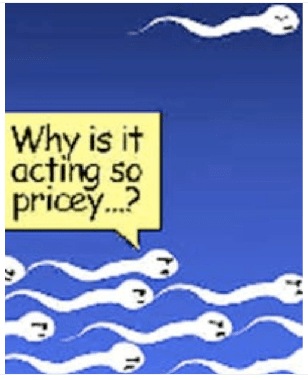
In India, it’s well known that couples shopping for sperm demand both looks and brains. What isn’t so well known, despite being fairly commonplace, is a more outrageous request: caste-based sperm. Three years ago, Dr Saurav Kumar, a Patna gynaecologist, created a furore when he told a newspaper that childless couples insisted on knowing the caste of sperm donors. But while one may be tempted to assume that caste biases are entrenched only in states likeBihar, the city’s infertility experts insist otherwise.

Dilip Patil, founding president of Trivector, an infertility solutions firm, says there is a definite preference for Brahim donors in Mumbai. “Even among Muslims, couples want to know whether the donor is Sunni or Shiite,” he says. “However, going by Indian Council of Medical Researchguidelines, we reveal only the religion of the donor, not the caste.” [Link]

The Teleology of Gilded Clinics: Mohan Rao

Guest post by MOHAN RAO

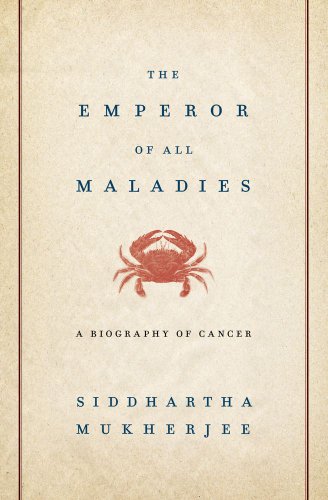
Siddhartha Mukherjee, The Emperor of all Maladies: A Biography of Cancer, Fourth Estate, London, 2011, paperback, pp.572.Rs.499.

This book, a brilliant book, received extraordinary attention in India.

You might disagree with me, but I believe we do not have a rich literary culture. This is of course fundamentally related to India’s caste structure, and that we haven’t changed that much since Independence. There is little public space for books, a space that has shrunk in the last 20 years, even as book sales have increased. But there lies another story – of the dumbing down of publishing, of the Chetan Bhagatisation of reading. All leading English language newspapers  – who have over the last 20 years dispensed with their book review editors, and indeed often book reviews unless they deal with fashion, food, fucking and the First World – discovered the book after Dr.Mukherjee had won the deserved Pulitzer Prize. They celebrated the book, highlighting the fact that it had been written by an Indian, with interviews of his family and school teachers in New Delhi and so on. Dr Mukherjee is also seriously good looking, and I heard, he is doing a role in a Bollywood film. I even know he has celebrity friends like Salman Rushdie. Continue reading The Teleology of Gilded Clinics: Mohan Rao

14 farmers committed suicide and the Times of India said no one died

The Times of India did not hear of any dead people because Monsanto paid for the taxi from the city to the village for its reporter. Or is that all that Monsanto paid for? P Sainath in The Hindu:
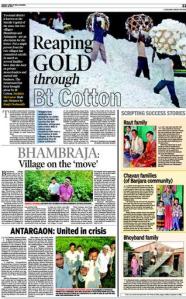
The 2008 full-page panegyric in the TOI on Monsanto’s Bt Cotton rose from the dead soon after the government failed to introduce the Biotech Regulatory Authority of India (BRAI) Bill in Parliament in August 2011. The failure to table the Bill — crucial to the future profits of the agri-biotech industry — sparked frenzied lobbying to have it brought in soon. The full-page, titled Reaping Gold through Bt Cotton on August 28 was followed by a flurry of advertisements from Mahyco-Monsanto Biotech (India) Ltd., in the TOI (and some other papers), starting the very next day. These appeared on August 29, 30, 31, September 1 and 3. The Bill finally wasn’t introduced either in the monsoon or winter session — though listed for business in both — with Parliament bogged down in other issues. Somebody did reap gold, though, with newsprint if not with Bt Cotton. [Full story]

Why do people read the Times of India when we know it tells us lies that corporations pay it to tell us?

Where do the defenders of the free market disappear when stuff like this comes out?

What I learned from “The Patriarchy”: Nilanjana S. Roy

Guest post by NILANJANA S. ROY

Reading Saba Dewan’s post, on patriarchy and St Stephen’s, was a release. For years, I had struggled to make sense of two contradictory things—my years at college were some of the happiest of my life, but the institution that was held up to us as one of the best in India was also built on a flawed and deeply discriminatory set of beliefs.

(It’s hard to write about this in part because it always felt like complaining about what was, in essence, a very privileged life–those of us who went to St Stephen’s were by definition lucky, in our acquisition of English, in our officially liberal families, in our assumption of a secure place in the hierarchies of power in India.) Continue reading What I learned from “The Patriarchy”: Nilanjana S. Roy

Family chronicles

Jamal Kidwai tells the (continuing) story of the Partition through family memories:

As children we would invariably be divided into Pakistani and Hindustani groups. We would have long arguments about who would win the next war, whether Imran Khan was a better all-round cricketer than Kapil Dev; we would even divide ourselves into Indian and Pakistani teams when it came to playing cards, scrabble, cricket or antakshari. These competitions and arguments brought small but interesting victories. Like once when in the course of an argument, a Pakistani cousin pulled out a tube of Colgate toothpaste, a far slicker plastic tube than our usual Indian toothpaste which came in tin tubes and was easily rusted. He was taunting us about the quality of the toothpaste tube which, of course, proved how backward India was compared to Pakistan. At this point one of us from the Indian team noticed that ‘their’ tube had a mark ‘Made in India’. Nothing gave us more joy than that and the Pakistani team was not only defeated but was left embarrassed for the rest of the holidays. (Material wealth and consumer goods was one area where Pakistan, with its imported goods from the US, was far more ‘developed’ than India and it gave us great pleasure to puncture that aspiration.) [Read the full article.]

Of chick charts, hen charts and other such women’s stories: Saba Dewan

Image credit: Tribhuvan Tiwari / outlookindia.com

Guest post by SABA DEWAN

(For Vrinda, Uma, Sukhpreet, Dipta and all of us who found strength in each other to raise our voices in protest…) 

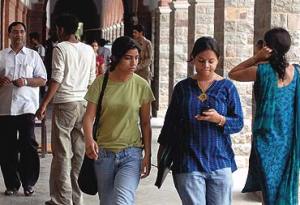
A few months back I visited St. Stephen’s College in Delhi University for a screening organized by the students there of my film, ‘The Other Song.’ It was my first visit after 26 years when I had been an undergraduate student here from 1982 – ‘85. I confess I have never felt any urge to go back nor have I suffered nostalgia about the three years I spent in St. Stephen’s College although I have carried vivid memories of that time. Sharp, brittle memories that defined many of the choices I have made in life over the years; the most important being of believing in and hopefully practicing a feminist politics based on equality and respect for all. Feminism truly has been a legacy that St. Stephen’s College inadvertently bequeathed to many of its women students of my generation. Continue reading Of chick charts, hen charts and other such women’s stories: Saba Dewan

…and now Judicial Impunity?: JKCCS

This release comes from the JAMMU KASHMIR COALITION OF CIVIL SOCIETY
2 May 2012: The recent Supreme Court judgment in the Pathribal case is very disappointing.
Fake encounters, along with various other human rights violations, have been a reality for the people of Jammu and Kashmir over the last twenty two years. In 2008, according to media reports, Supreme Court Justices Aftab Alam and G.S. Singhvi made observations in court in relation to the practice of fake encounters for rewards in Jammu and Kashmir. With about 8000 persons disappeared, 70,000 persons killed, numerous cases of torture, rape and other human rights violations, Jammu and Kashmir has seen institutional denial of justice. Continue reading …and now Judicial Impunity?: JKCCS

Pathribal ruling a setback for justice in Jammu and Kashmir: Amnesty International

This press release comes from AMNESTY INTERNATIONAL

1 May 2012

Special powers that allow India’s armed forces suspected of involvement in extra-judicial killings to sidestep the civilian courts have been reinforced in a disappointing court ruling over the notorious killings of five Kashmiri civilians 12 years ago.

India’s Supreme Court has contradicted a reported statement by its Justices in February 2012 that army personnel suspected of murder should be placed in front of a civil judge.

Instead it opted to give military authorities eight weeks to bring about the court martial of eight army officials allegedly responsible for the unlawful killing of five youths in Pathribal, in March 2000. Failing that, the Central Bureau of Investigation (CBI), may apply to prosecute the army personnel. Continue reading Pathribal ruling a setback for justice in Jammu and Kashmir: Amnesty International

Unpacking India’s Internet Censorship Debate

Recent debates on Internet censorship in India have focused to the allegedly free-for-all nature of the internet. Those of us who have argued against internet censorship have been somewhat misrepresented as arguing for absolute freedom whereby the reasonable restrictions laid down in Article 19 (A) of the Constitution of India don’t apply. Nothing could be farther than the truth.

It has been said that the internet can be used to incite violence, particularly inter-communal violence, and there needs to be a mechanism to prevent that. Communications minister Kapil Sibal wants internet giants to “self-regulate” for this reason, denying that he wants to censor political dissent on the internet. Following on the heels of his expression of such concern in December 2011, Mufti Aijaz Arshad Qasmi and journalist Vinay Rai filed cases against various internet companies for similar material that is religiously offensive.It needs to be pointed out, however, that the cases filed by Qasmi and Rai are under the Indian Penal Code and do not even invoke the Information Technology Act. So if the Indian Penal Code can be used against religiously offensive material why do we need any new mechanism to “regulate” or even “self-regulate” the internet? Continue reading Unpacking India’s Internet Censorship Debate

A Brief Summary of the Interlocutors’ Report on Kashmir: Shoaib Rafiq

This guest post by SHOAIB RAFIQ is an analysis of the Home Ministry-appointed group of interlocutors’ report on Kashmir 

We swear by the fundamentals of absurdism
of that all we have learned
our solutions will mimic the ludicrousness
that we employ in our education, research, and other related shit. Continue reading A Brief Summary of the Interlocutors’ Report on Kashmir: Shoaib Rafiq

‘Sau Mein Pachees Haq Hamara’: Caste of a Scam

This press release was put out by the SC/ST BUDGET ADHIKAR ANDOLAN after a large protest in Delhi on 24 April

Massive uproar and agitation by over a thousand SC/ST’s marked the initiation of the campaign “Sau Mein Pachees Haq Hamara” at Jantar Mantar on 24 April, 2012. The protesters flooded the roads of Jantar Mantar as they marched along the high pitch drum beats, adding to the rhythm of the march. Even the scorching heat did not deter those who joined the protest march from several other states. They hooted in unison, “Hamara Haq Idhar Rakho!” Continue reading ‘Sau Mein Pachees Haq Hamara’: Caste of a Scam

Freedom in the Cage: Photos from a protest against internet censorship in Delhi

These photographs were taken at Delhi’s Jantar Mantar on Sunday, 22 April, by MUKUL DUBE. This protest was organised by the Aseem Trivedi led Save Your Voice campaign against India’s IT Rules 2011 that, as has been explained earlier on this blog, are a set of procedures that are already causing internet censorship in India bypassing the right to legal remedy and natural justice. Trivedi’s website, http://www.cartoonsagainstcorruption.com, was taken down by its domain registrar and he was not even informed in advance, thanks to these rules. The Rajya Sabha, upper house of the Indian Parliament, will debate these rules any time between 24 April and 9 May. You can urge all Rajya Sabha MPs to vote for the motion in a petition here or write directly to Rajya Sabha MPs from your state, in just a few clicks, here.

This slideshow requires JavaScript.

What’s up with India’s IT Rules?

*

The IT Rules of 2011 will come up for discussion in the Rajya Sabha very soon under an annulment motion.

Urge all Rajya Sabha MPs to vote for the motion in a petition here or write directly to Rajya Sabha MPs from your state, in just a few clicks, here.

Here’s an FAQ on the IT Rules by SFLC.in and here’s an analysis of the rules by PRS Legislative Research.

Rajya Sabha to consider repealing Kapil Sibal’s IT Rules

When the Parliament’s budget session re-opens on April 24, the Rajya Sabha will vote on an annulment motion against the IT Rules promulgated in April 2011 that provide for “intermediaries” to remove the online content they are asked to by anyone. The motion has been moved by P Rajeeve, Rajya Sabha member from the Communist Party of India-Marxist.

Speaking on the phone from Thrissur, Rajeeve said, “The IT Rules go against the Fundamental Rights of the Constitution and against the principles of natural justice which are the foundation of our criminal justice system. The rules ask intermediaries to remove content without giving the content owner an opportunity to defend it. They will cause private censorship.”

The Left parties have decided to back the motion and efforts are on to mobilise members of Parliament across party lines. If the motion is accepted by the Rajya Sabha, it will be sent to the Lok Sabha, probably in the monsoon session. Continue reading Rajya Sabha to consider repealing Kapil Sibal’s IT Rules

A meeting with Deepak Perwani

At the Lifestyle Pakistan trade exhibition that concluded in Delhi on Sunday, one stall stands out from a distance for just its name – Deepak Perwani, one of Pakistan’s most famous fashion designers. This was the first of its kind exposure for Perwani outside the Indian fashion circuit, of which he has long been a friend and fellow traveller. The humble Perwani, though, has long been used to facing Indian surprise. “People keep asking me, ‘Oh you guys didn’t migrate?’, ‘How are you treated there?’ and so on. The questions show a lack of awareness.” Pakistani Hindus do not exist in the Indian imagination, but Perwani is part of Karachi’s flourishing Hindu community, which is small but visible and influential even today. One lakh of Karachi’s 1.3 crore population is Hindu.

Continue reading A meeting with Deepak Perwani

A turning point in Nepal

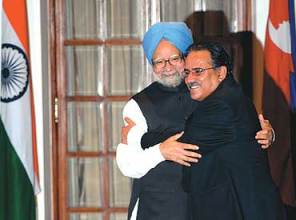
Manmohan Singh with Prachanda, circa 2008

Prashant Jha interviews the Nepali Maoist leader Prachanda:

All of us reviewed the situation. I presented a document in my party last April stating that the 12-point agreement must be the basis, and we must conclude the peace and the constitution process. India then changed the way it viewed Maoists, and realised it must help the process succeed. It was a realisation that we must revert to the environment of trust that existed during the 12-point pact.

Would it be right to say that Nepal’s peace process and the constitution would not have been possible without Indian support?

Definitely. Saying that the 12-point understanding was signed in Delhi means that there was India’s active support — otherwise it was not possible. CA elections would not have been possible. There could have been problems with the declaration of a republic. Now also, to take peace and the constitution to a logical conclusion, without Indian support, it will be very complex and difficult. [Full interview]

Kanak Mani Dixit critiques such a conclusion of the peace process: Continue reading A turning point in Nepal

An Unrecorded Festival – Pictures from Parliament Street: Siddhi Bhandari

April 14 was Ambedkar’s birth anniversary. There is no single pan-India political icon, certainly not Gandhi, whose birth and death anniversaries are celebrated as public festivals, by the public, in the way the Ambedkar’s is. Some newspapers on 15 April typically had photos of the top leaders of the country paying homage to Ambedkar but that’s about all. When historians turn these pages they will not find, in the first drafts of history, any reports about how people celebrated Ambedkar’s birthday like a festival. They will not find a record of the singing and dancing, of drums and plays, of Dalit housing socities and employees’ unions holding celebrations bang under the nose of the Indian Parliament at Parliament Street as much as in Dalit bastis is villages across India. Such is the public ignorance of this celebration at Parliament Street in Delhi that most Delhites enjoying a free holiday don’t even know about it. Parliament street is where SIDDHI BHANDARI took these photos in 2010.

This slideshow requires JavaScript.

Why does Ratan Tata have a diplomatic passport?

Update: Tata Sons has clarified that Mr Ratan Tata does not hold a diplomatic passport. See comments section.

*

Is he an Indian diplomat?

“After all, you have given Ratan Tata a diplomatic passport. He always travels with the red passport,” the American continued.

[…]

The American told him that he had once travelled first class with the industrialist, he had seen Tata’s diplomatic passport and when they both alighted at New York, Tata went to the special immigration enclosure for diplomatic passport-holders .

When S.M. Krishna became external affairs minister in May 2009, one of his earliest discretionary decisions was to issue a diplomatic passport to Tata, recognising his emergence as a global investor and industrialist who has to travel extensively worldwide, some of those trips on behalf of the government or representing his country. [KP Nayar]

And that is not the only shocking thing there. There’s also the revelation that the Maharashtra government allowed an American government group to fly out without security check!

The Indian state is India’s biggest embarrassment.

क्या खलील चिश्ती अपने जीवन में पाकिस्तान वापिस जा पाएंगे?: आशीष महर्षि

आशीष महर्षि
पी.यू.सी.एल. के सदस्य डॉक्टर खलील चिश्ती को बैल मिलने के बाद उनके साथ
बीस साल बाद भले ही डॉक्टर खलील चिश्ती खुली हवा में सांस ले रहे हों लेकिन उन्हें अभी भी सरकार की दया की दरकार है। उम्र के ८क् बरस गुजार चुके डॉ. खलील अब अपने वतन लौटना चाहते हैं। खलील साहब की जमानत भले ही हो गई हो लेकिन उन्हें और उनके परिवार को इंतजार है संपूर्ण रिहाई का। Continue reading क्या खलील चिश्ती अपने जीवन में पाकिस्तान वापिस जा पाएंगे?: आशीष महर्षि