
As someone recently commented on a Kafila post, we live in a post-fact world where there are no facts. Everyone believes what they want to. So depending on your ideology, poverty in India has reduced or increased. But such is the debate on poverty that the definition of poverty itself is subject to debate. How poor do you have to be, so that the government will say you are poor? This poverty debate has been on around the same lines for about ten years now, with the economic left arguing that India isn’t shining, and the economic centre-right arguing that millions of people have been lifted out of poverty by India’s super-successful economic growth. The debate will go on forever, there will be no certainty in numbers, and perhaps there shouldn’t be – perhaps counting the poor cheapens the issue of poverty. Counting the poor leads us to ask, what about the only -slightly-better-than-the-poor? Counting the poor leads us to compare poverty numbers and give us relief. Ah, only 30% Indian poor now, as opposed to 50% in such and such decade, nice! Great job India! No, this is not what the poor deserve, whether they are 30% or 50%. Perhaps we should stop counting the poor. Continue reading Let’s not count the poor (seriously)
Category Archives: Countryside
FDI In Retail – What Does the Government’s Own Data Say? Shankar Gopalakrishnan
Guest post by SHANKAR GOPALAKRISHNAN
In his budget speech, Finance Minister Pranab Mukherjee declared that the government’s “decision” to allow FDI in multi-brand retail outlets “has been held in abeyance” until there is a “broad based consensus.” In other words, it’s already a decision, but it’s just being held back until the government feels it can go ahead safely. The question though is: why is the government so convinced of its decision? How does Mr. Mukherjee so firmly declare that “organised retail helps in reducing costs of intermediation… benefiting both consumers and producers”? Has the government done the homework to justify its actions? This note looks at the government’s own data to find out.
As far as is known, there was only one study commissioned by the government in this regard (Business Standard 2007) This was done by ICRIER in 2007, first published as a Working Paper in 2008 (Joseph et al 2008), and subsequently converted into a book – Retail in India: A Critical Assessment – in 2009, with one chapter added by other authors.[i]
Continue reading FDI In Retail – What Does the Government’s Own Data Say? Shankar Gopalakrishnan
Seeing UP from Phulpur
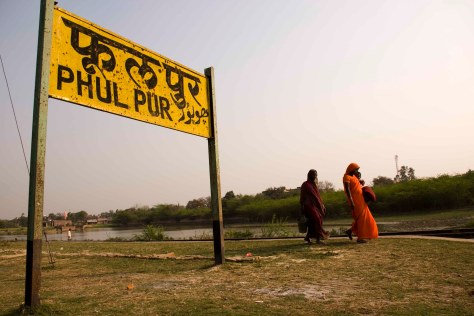
In which I go to Phulpur, once famous as Nehru’s seat, and do walk-the-talk with village-level workers of the four main political parties in Uttar Pradesh. Here. Continue reading Seeing UP from Phulpur
Caste Discrimination in Cyclone Thane in Tamil Nadu and Pondicherry: NDW-NCDHR
A preliminary report of an investigation into caste discrinimation with regard to Cyclone Thane by National Dalit Watch–National Campaign for Dalit Rights conducted on 18, 19 January 2012
Cyclone Thane
Cyclonic Storm Thane was the strongest tropical cyclone of 2011 within the North Indian Ocean. Thane initially developed as a tropical disturbance within the monsoon trough to the west of Indonesia. Over the next couple of days the disturbance gradually developed further while moving towards the northwest, and was declared a Depression during December 25, before being declared Cyclonic Storm Thane during the next day. As it was named, Thane started to turn towards the west under the influence of a subtropical ridge of high pressure before its development slowed down during December 27, as a strong outflow and marginally favourable sea surface temperatures fought with persistent vertical wind shear. After its development had slowed down during December 27, Thane became a Very Severe Cyclonic Storm during December 28, before as it approached the Indian states of Tamil Nadu and Andhra Pradesh, it weakened slightly. Thane then made landfall early on December 30, on the north Tamil Nadu coast between Cuddalore and Pondicherry and rapidly weakened into a depression.
Cuddalore and Vilipuram Districts in Tamil Nadu and Pondicherry were the worst affected due to Cyclone Thane. All roads in these three districts are line by wreckage of fallen trees including large tracts of Casuarina plantations completely wiped out. The only trees that seem to have withstood the fury of the cyclone seems to be the Borassus flabellifer or the Palmyra Palm. According to government estimates at least 39 people have been killed by this cyclone in Tamil Nadu and 7 in Pondicherry. Apart from the loss of life, the Cyclone left huge destruction in terms of livelihood, particularly agricultural livelihood and ripped apart the green cover in these already arid districts.
Continue reading Caste Discrimination in Cyclone Thane in Tamil Nadu and Pondicherry: NDW-NCDHR
An Election in Sarvajan Samaj
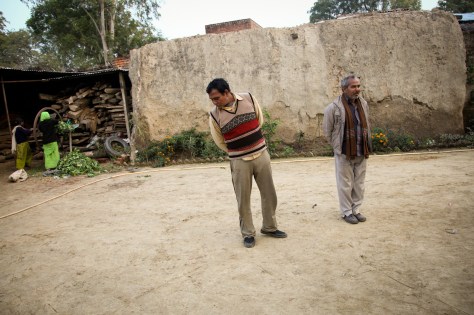
This photograph was taken by Salman Usmani in Ganguali village in Unnao near Lucknow, in early January. On the left is Prabhat Pandey and on the right, Ram Khilawan. Pandey is a Brahmin and Khilawan a Dalit. They’re the BSP’s men in this village, responsible for urging Brahmins and Dalits to vote for the BSP candidate, also a Brahmin. The photo was taken when I asked them to pose together. This is all the ‘brotherhood’ they could show before the camera.
Here’s my story on UP elections, seen through the prism of Brahmins and Dalits. Continue reading An Election in Sarvajan Samaj
Open Letter to Haryana CM on Forced Land Acquisition for Gorakhpur Nuclear Power Plant, Fatehabad

Farmers of Gorakhpur village hold a protest in Fatehabad against acquisition of their agricultural land by the Haryana government for a nuclear power plant in the area, August 2010. (The Tribune on-line)
January 16, 2012
Bhupinder Singh Hooda,
Chief Minister, Haryana
Chandigarh
Dear Mr. Chief Minister,
It was with gravest concern and misgivings that we heard of Section 9 of the Land Acquisition Act, 1894, being issued in Fatehabad, Haryana, to forcibly acquire land for the proposed Gorakhpur Nuclear Power Plant Project. This action by the Harayana State Govt. is completely unacceptable on the following two counts:
Farmers of Gorakhpur and nearby villages have been sitting in continuous opposition to the proposed nuclear power plant from August 2010. They are fighting for their right to life, livelihood and to safeguarding their fertile and irrigated, three-crop land, all of which will be severely threatened if the project were passed. The fact that a community is in such a long drawn and strong opposition to this project, is of crucial concern and cannot be ignored arbitrarily or repressed in democracy. Continue reading Open Letter to Haryana CM on Forced Land Acquisition for Gorakhpur Nuclear Power Plant, Fatehabad
A Caste(d) Drive – Paramakudi to Pasumpon: Bobby Kunhu
Guest post by BOBBY KUNHU

Between the occasion of the memorial anniversary of Immanuel Sekharan that falls on 11th September and that of Muthuramalinga Thevar on 30th October are 30 odd road kilometers, 49 days, incalculable castiesm and this year (2011) 7 more Dalit lives. Almost the entire Big Media portrayed the 11th September, 2011 murders at Paramakudi as retaliatory State violence to an unruly and violent mob – to the convenient delight to the defenders of the State administration. Dissenting voices mostly Dalit – located the violence squarely where it belongs – in caste. In his note “Paramakudi Violence: Against Dalits, Against Politics”, inthe November 5th, 2011 issue of the Economic and Political Weekly, Muthukaruppan Parthasarathi clearly outlines the historical and current context in which the this year’s spate of violence that claimed 7 lives happened!
Continue reading A Caste(d) Drive – Paramakudi to Pasumpon: Bobby Kunhu
When the Wandering Falcon came to Delhi: Pragya Tiwari
Guest post by PRAGYA TIWARI

There is this world among the many worlds of Delhi, the world of book events. You show up for a reading followed by a conversation between the author and some other prominent member of the fraternity. Afterwards you drink wine and exchange news with everyone you know there. And you know everyone there. The scale of some of these events would make you think books actually sell. But the greater riddle for those of us who show up is this: Why do we show up? To see friends, to socialise and occasionally to celebrate books, or perhaps the very existence of books irrespective of quality; to register our support for words and stories bound by charming jackets; to toast these objects of desire in a simulated bubble where they shine on undeterred. Debatable as their meaning might be, for most part these events are mere rituals. On the 21st of December, however, for a brief moment I was made to see that they could be more than that. The man who made that apparent was not even physically present in the room. Continue reading When the Wandering Falcon came to Delhi: Pragya Tiwari
‘Protests and Repression: Struggles in the Forests of India’
This note comes from the CAMPAIGN FOR SURVIVAL AND DIGNITY
The last few weeks have seen struggles over forest rights and forest control intensifying across the country. On the one hand there are larger and larger protests taking place, and on the other, the continued use of force by Central and State governments is combined with total silence and apathy on protecting people’s rights. Continue reading ‘Protests and Repression: Struggles in the Forests of India’
‘NAPM condemns arrest and harassment of anti-dam protesters in Assam’
This press release was issued on 26 December by the NATIONAL ALLIANCE FOR PEOPLE’S MOVEMENTS
New Delhi, December 26 : Tonight at 2:15 am Assam Police in collusion with other security forces swooped down on the protesters at Ranganadi who have been blockading the Highway since December 16 and thwarting state’s attempt to carry turbines and dam materials to project site of Lower Subansiri Dam. Nearly 200 people have been arrested and earlier also security forces have been harassing the ptotestors. In past too, Krishak Mukti Sangram Samiti fighting against the big dams on Brhamaputra have faced government’s ire and often been attacked and jailed. NAPM stands in solidarity with KMSS and other students groups of the region who have been consistently opposed to the Big dams in highly sensitive seismic zone. We condemn the sustained action and harassment of KMSS and their activists and targeting of Akhil Gogoi for constantly opposing the destructive development policies and corruption of the government machinery. Continue reading ‘NAPM condemns arrest and harassment of anti-dam protesters in Assam’
Mining Poisons South Goa Waters: Devidas Gaonkar
A Video Volunteers story on mining in Goa:
Salaulim reservoir, situated in the Sanguem taluka, is the largest dam in Goa. It supplies water to almost entire South Goa, comprising 55% of the state’s population. Although Devidas’s video mentions that there are 8 mines that operate near Salaulim, other sources suggest that there are as many as 15 mining leases within the catchment of the reservoir. This proves to be a grave danger to the dam, the water that flows through it, as well as the people who consume this water.
Continue reading Mining Poisons South Goa Waters: Devidas Gaonkar
Release Abhay Sahoo Now: People’s Union for Civil Liberties
This press release comes from the PEOPLE’S UNION FOR CIVIL LIBERTIES
Bhubhaneshwar / Delhi
5th December, 2011
PRESS RELEASE
• Appeal to the Odisha Government to withdraw the frivolous cases and RELEASE ABHAY SAHOO NOW!
• WITHDRAW ALL THE CRIMINAL CASES LODGED AGAINST THE ANTI POSCO ACTIVISTS and put a stop to repressive measures.
• PUCL APPEALS TO OTHER ORGANISATIONS TO COME TO TOGETHER AND INITIATE A NATIONAL CAMPAIGN FOR THE RELEASE OF ABHAY SAHOO AND SUPPORT OF THE POSCO PRATIRODH SANGRAM SAMITI.
The People’s Union for Civil Liberties, represented by its National Secretary Kavita Srivastava and Odisha Convenor, Pramodini Pradhan visited the area in and around Dhinkia Panchayat in Jagatsinghpur district on 1st December, 2011, where the struggle against the proposed POSCO steel plant is taking place for the last seven years. We also went to Choudwar Jail in Cuttack District on 2nd December, 2011 to meet Mr Abhay Sahoo the leader of the POSCO Pratirodh Sangharsh Samiti, who has been arrested against FIRs motivated by the administration under sections causing sexual assault, wrongfully confining somebody and causing atrocities under the SC & ST Act. Continue reading Release Abhay Sahoo Now: People’s Union for Civil Liberties
When an Ecofeminist Dies: Anupam Pandey
Guest post by ANUPAM PANDEY
 “The government said, “If they only planted trees, we wouldn’t bother with them. But they also plant ideas. And I say, it’s true”
Wangari Mathaai (1940-2011)
When the death of Steve Jobs evoked such unprecedented emotions of manic proportions in India which is not even a market of consequence for Apple, it is astounding that the passing away of Wangari Mathaai (a few days before Jobs’ death) did not even create a ripple of interest. But then, in the power hierarchy of global capitalism, what is the worth of the life of an ecofeminist compared to that of the one which is associated with one of the most popular consumer brands in the world? Continue reading When an Ecofeminist Dies: Anupam Pandey
Green and Saffron: Hindu Nationalism and Indian Environmental Politics
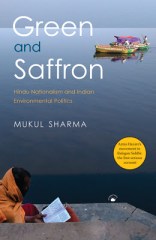
My book Green and Saffron is just out. The book details and an interview are on the blog of Permanent Black. From the publishers’ notice:
This book examines contemporary environmental issues and movements in independent India on the one hand, and the development of Hindu conservative ideology and politics on the other. It includes the first thorough investigation of Anna Hazare’s movement in Maharashtra.
Mukul Sharma argues that these two social currents—environmental conservation and Hindu politics—have forged bonds which reveal the hijacking of environmentalism by conservative and retrograde worldviews. This, he says, constitutes a major aspect of hinterland political life which neither academics nor journalists have seriously analysed. Environmentalism and politics cannot be seen as separate from each other, for environmental issues are being defined in new ways by an anti-secular form of Hinduism. In turn, Hindu ideologues are gaining mileage for their ideology by espousing major environmental projects. Continue reading Green and Saffron: Hindu Nationalism and Indian Environmental Politics
Dilli
Dilli, the name most people of Delhi use for their city, is “a multiple-award winning documentary that has played in over 50 international film festivals across North America, South America, Africa, Europe and Asia”. Recently released online.
Justice for Valsa John of Jharkhand, latest victim of the mining mafia
This press release was put out on 18 November 2011 by the NATIONAL ALLIANCE FOR PEOPLE’S MOVEMENTS (NAPM), the NATIONAL FISHWORKERS’ FORUM (NFF) and the NATIONAL FORUM OF FOREST PEOPLE AND FOREST WORKERS (NFFPFW)
Sr. Valsa, an activist of the Rajmahal Pahad Bachao Andolan (RPBA) and an ordained nun with the Sisters of Charity of Jesus & Mary, who had been working among Santhal Adivasis in the coal rich region of Dhumka, Jharkhand was brutally murdered by a group of about 40 armed men on the night of 15 November 2011. On behalf of Indian peoples’ movements and resistance struggles, NAPM, NFF and NFFPFW condemn this heinous and cowardly act, evidently conceived by the powerful mining mafia, aimed at essentially hunting down individuals and movements to silence the voices of resistance by people. Continue reading Justice for Valsa John of Jharkhand, latest victim of the mining mafia
Clean Chit to Law-Breaker Lavasa, a Blot on India’s Democracy and Environmentalism: NAPM
This press release was put out by the NATIONAL ALLIANCE FOR PEOPLE’S MOVEMENTS on 14 November 2011
Post-facto Green signal to Phase-I of Lavasa by the Union Ministry of Environment and Forests (MoEF) given on the November 9th is a blot on the democratic process and a shockingly dangerous precedent in the history of environmental action in India. MoEF’s improper action has infact sent shock-waves to eco-activists within the country and also across the world. Although it is not the first time in the long history of Indian Environmental clearance regime that political highhandedness has been used to subvert rule of law and the ends of justice, this case is unique since the clearance has disregarded well established evidence based on facts collected by no other than the MoEF itself. It is surprising that the Ministry’s decision has come in the wake of the case filed by the Maharashtra government against 15 persons including promoters of Lavasa Corporation for alleged violations of the Environment Protection Act (EPA), while the Maharashtra Chief Minister on the other hand has recommended that Lavasa be considered for environmental clearance, exposes the double standards of the state government. Continue reading Clean Chit to Law-Breaker Lavasa, a Blot on India’s Democracy and Environmentalism: NAPM
Bring Justice to ANM Bhanwri Devi: Women’s organisations protest in Jaipur
This press release was put out by KAVITA SRIVASTAVA on behalf of various women’s organisations in Rajasthan, on 11 November 2011. For a background to the case, see “A CD and a missing health worker“.
- RAJASTHAN CONGRESS, STOP MISUSING AND EXPLOITING WOMEN IN POLITICS!
- ARREST MAHILPAL MADERNA AND OTHER POLITICIANS INVOLVED IN THE DISAPPEARANCE BHANWARI DEVI!
- ASHOK GEHLOT, PRODUCE BHANWRI DEVI DEAD OR ALIVE, OR ELSE RESIGN!
- BJP WHERE ARE YOUR TEARS FOR BHANWRI DEVI!! STOP PLAYING THE CASTE CARD!
- MAMTA SHARMA, NCW Chairperson, WHY THE SILENCE ON BHANWRI DEVI!
Raising the above slogans, Women, Dalit and Human Rights Organisation under the leadership of Dr. Pawan Surana ex-chairperson of the state women’s commission, protested today 11 November, 2011 condemning the Ashok Gehlot Government for the disappearance of one the workers of his Government ANM Bhanwri Devi and an aspirant of the Congress party. Continue reading Bring Justice to ANM Bhanwri Devi: Women’s organisations protest in Jaipur
‘A Call for Rejecting 2011 Land Acquisition Bill’
This joint statement, signed and endorsed by various organisations and individuals from across India, named at the end, was put out on 12 November 2011.
The 2011 Land Acquisition, Resettlement and Rehabilitation Bill is a dangerous exercise in doublespeak that will worsen the injustice and devastation caused by the present law. Below is a joint statement on this legislation from a number of organisations and individuals, calling for the rejection of the new Bill and raising the basic issues that need to be addressed by any legal framework.
The statement points out that:
Continue reading ‘A Call for Rejecting 2011 Land Acquisition Bill’
Crime redefined in Bihar: Ibne Ali
Guest post by IBNE ALI
John Emerich Edward Dalberg Acton is said to have said in 1887, “Power tends to corrupt, and absolute power corrupts absolutely.” After 124 years it is being felt that Lord Acton could have added one more thing; Power gives you the exclusive right to define and redefine things according to your convenience. The ‘all-possible-awards-winner’ chief minister of Bihar Mr. Nitish Kumar could have prompted Lord Acton to enrich this famous quotation for a couple of reasons.
Child Malnutrition in Karnataka- A Report
In light of the Planning Commission’s cruel joke of pegging the poverty level at an expenditure level of Thirty Rupees day, I wanted to bring our attention to a recent report compiled by Clifton D’Rozario in his capacity as an advisor to the Commisioners on the right to food. The report may be downloaded from here
 KAFILA - COLLECTIVE EXPLORATIONS SINCE 2006