Category Archives: Culture

Ban-man on the prowl again: Malvika Sharad

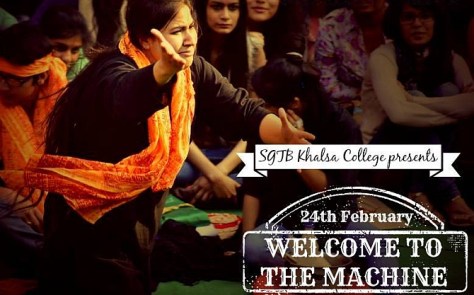
Guest Post by MALVIKA SHARAD on the recent call by Delhi University Students’ Union for a ban on the street play by Khalsa College theatre group, Ankur.

24lead6

Image courtesy rediff.com

One evening in 2013, a group of ‘street play seniors’ as we call them, visited us in the front lawns of my college, Lady Shri Ram College for Women. They were from various colleges across DU who had been actively involved in street theatre, and had been invited to give the newly formed street play team of that year, an introduction to the art form. Among those seniors was a dynamic young chap from Khalsa College, who reiterated several times that street theatre fills you with such immense courage that you end up doing things you never thought you would, for that courage comes from the sheer truth and brutal honesty that street theatre is based upon. He said that freedom of expression is taken to a whole new level when you perform amidst crowds, and state the truth looking directly into their eyes. A fire is born within you that cannot be extinguished, it burns brighter with every performance of the play. You become fearless in voicing your opinions and thoughts, so fearless that you don’t even realize how far you have pushed your own limits and emerged triumphant.

After a whole year dedicated to doing street plays in Delhi, I have learnt how right he was, that young student not much older than us. I find I have come out of my shell, shedding my inhibitions at a pace and scale I had never imagined. Torn chappals don’t bother me anymore, my sun-burned skin makes me look beautiful, I don’t flinch with embarrassment while sitting, sometimes lying, on the floor of the metro station out of sheer weariness, though co passengers stare at me with judgemental eyes, I can’t bring myself to stop romanticizing the mud and the dirt that hug me every time I wear my soiled street play kurta… But above all, I can articulate my thoughts properly now, I am not scared of speaking in public unlike the times when I was a meek docile person, cocooned in the comforts of home and parental pampering. I owe this change in my attitude and personality to street theatre, which taught me what it is to live confidently and fearlessly.

Continue reading Ban-man on the prowl again: Malvika Sharad

An Open Letter to Kerala Khap Managers and Madam Principal, CET, in Particular, and to Malayalees in General

Dear Madam(s) and Sirs

Greetings from a long-suffering woman, a shocked and appalled parent, a worried social scientist, an angered citizen, a furious teacher, a firm believer in the Indian Constitution determined to defend it, a irredeemable feminist — I greet you in all these capacities.

Respected Madam(s) and Sirs, my grievances are all about you, in fact, about the incalculable damage you are collectively doing to  young people in Kerala, to the future of democracy here. They are about your utter disregard for the spirit and the letter of the Indian Constitution and your and powerful hatred of young people in general and young women in particular, clearly manifest in your despicable efforts to deny them their rights as Indian citizens. My grievances are also about your utter lack of humane concern for the students under your care, your rank cruelty and disregard of their humanity and dignity.

Continue reading An Open Letter to Kerala Khap Managers and Madam Principal, CET, in Particular, and to Malayalees in General

People’s Union for Democratic Rights Condemns Bans on Cow Slaughter

Statement by People’s Union for Democratic Rights 
On March 16th 2015, the Haryana Government unanimously passed Haryana Gauvansh Sanrakshan and Gausamvardhan Bill with main opposition parties INLD and Congress supporting the Bill. The new bill passed by the Haryana Government bans cow slaughter and sale of beef and imposes a punishment of rigorous imprisonment of not less than three years extending up to 10 years and fines ranging from Rs. 30,000 to Rs. one lakh. The Haryana Government’s move comes just days after the President’s assent to Maharashtra Animal Preservation (Amendment) Bill 1995 early this month. Maharashtra Animal Preservation (Amendment) Bill 1995 not only banned beef but also extended the prohibition to slaughter of bulls and oxen. There was already a ban on slaughter of cows in Maharashtra since 1976.  The new amended act imposes a fine of Rs. 10,000 and a maximum prison term of five years for selling or even possessing beef.
What needs to be underlined here is that these bans on cow slaughter are not new; they were in existence in many of the states for many-many years. For example in Delhi, Bihar, Andhra Pradesh, slaughter of cows and calves is totally prohibited. In Goa and Andhra Pradesh, ‘cow’ is defined to include heifer, or a male or female calf of a cow under the Goa, Daman and Diu Prevention of Cow Slaughter Act 1978 and Andhra Pradesh Prohibition of Cow Slaughter and Animal Preservation Act 1977, respectively. In some states like Karnataka, Andhra Pradesh, Goa and Madhya Pradesh slaughter of bulls, bullocks and adult buffalos is permitted on ‘fit for slaughter’ certificate if the cattle is over 12 or 15 years of age, is not likely to become economical for draught, breeding or milk. Assam and West Bengal provides for slaughter of all cattle which includes bull, bullocks, calves, cows and buffalo on ‘fit for slaughter’ certificate. Meghalaya and Nagaland have no legislation to this effect.

Continue reading People’s Union for Democratic Rights Condemns Bans on Cow Slaughter

Hashimpura : Who will Guard the Guards Themselves ?

India lost, not victims, in Hashimpura massacre case: Victims' lawyer

Picture : Courtesy http://www.indiatomorrow.net

Wait for justice to victims of Hashimpura has become much longer.

After around 28 years of the gruesome massacre allegedly by the personnel of the much feared PAC ( Provincial Armed Constabulary) for its biased approach , the Delhi court acquitted all 16 accused on ‘benefit of doubt due to insufficient evidence, particularly on the identification of the accused’.

There have been very few massacres in post-independent India which have shaken the civil society to the core and have propelled it to come forward and raise its voice. And the Hashimpura killings happen to be one such episode. One still remembers the words of the well-known journalist Nikhil Chakravarty who had visited the place along with few likeminded individuals and in his scathing write-up condemning the incident had compared the event with

“Nazi Pogrom against the Jews, to strike terror and nothing but terror in a whole minority Community”.

Continue reading Hashimpura : Who will Guard the Guards Themselves ?

Kill it Before it Hatches, Attack it Before it Grows – On State Sanctioned Vandalism against Contemporary Art in Kashmir: Syed Mujtaba Rizvi

Guest Post by Syed Mujtaba Rizvi

A Work of Art Vandalized at Gallerie One, Srinagar

On the opening day of Gallerie One, I was in a conversation with Rajendra Tickoo, Masood Hussain, Shabbir Mirza, M A Mehboob, Shaiqa Mohi and several other senior artists from Jammu and Kashmir. The opening of the first ever centre for contemporary arts and research in Kashmir was a dream come true for all of them. They told me that they had waited all their lives for such an initiative and how several great artists had died with the dream of having an art gallery in Kashmir. They were all very excited. They shook my hand again and again and hugged me before and after. Continue reading Kill it Before it Hatches, Attack it Before it Grows – On State Sanctioned Vandalism against Contemporary Art in Kashmir: Syed Mujtaba Rizvi

On The Interrelationship between Bovine and Human Beings

”in our religious scriptures ( Puranas) life of a cow is more important than any number of people” ( Puranon me insaan se jyada gay ko mahtv diya jata hai)

– Giriraj Kishore, Vice President of VHP,

On the public lynching of five dalits, October 2002

BJP Haryana chief Ram Bilas Sharma has promised to treat cow slaughter as a crime as heinous as murder. If elected, he said at the manifesto release function…

 TNN | Oct 3, 2014, 05.06AM IST

There is a competition of sorts between BJP ruled states to fulfil what a Haryana leader said ‘ to fulfil Modiji’s dream’. Close on the heels of Maharashtra government’s getting clearance to ban cow slaughter, there is news in a section of the press that the government in Haryana would table a similar bill in the assembly.

Sharing few snippets of the bill and comparing it with punishment of other offences, a newspaper report tells us that if the offence is insult to modesty of women the maximum jail sentence would be one year or fine, if it is molestation then it would be two years or fine, for theft the maximum jail term would be three years, for assault it would be 3 months or fine,  and for causing grievous hurt it would be maximum seven years. (Times of India, 14 th March 2015) and if it is beef in any form then it would be punishable by upto ten years in jail. Continue reading On The Interrelationship between Bovine and Human Beings

Goodbye Secularism ! Enter Theocracy !!

Understanding the yet unfolding ‘Dietary Fascism’

Image : Courtesy – bollypedia.in

To the question whether the Hindus ever ate beef, every Touchable Hindu, whether he is a Brahmin or a non-Brahmin, will say ‘no, never’. In a certain sense, he is right. From times no Hindu has eaten beef. If this is all that the Touchable Hindu wants to convey by his answer there need be no quarrel over it. But when the learned Brahmins argue that the Hindus not only never ate beef but they always held the cow to be sacred and were always opposed to the killing of the cow, it is impossible to accept their view…

B. R. Ambedkar 1

“Did the Hindus never eat Beef?” Dr Ambedkar has dealt with this specific issue holistically in his various writings and has also tried to link it with emergence of ‘untouchable’ castes.

At a time when the saffrons are keen to appropriate Ambedkar  – who had time and again cautioned his followers about the dangers of Hindu Raj 2 and appealed to them to fight the twin enemies of  Brahminism and Capitalism – and present him as someone who not only endorsed the Hindutva project but also opposed beef eating as cow was sacred to Hinduism, it would be opportune to pose this question afresh before them. Continue reading Goodbye Secularism ! Enter Theocracy !!

Nation’s Honour, ‘IBIs’ and the Dimapur lynching : Bonojit Hussain

Guest Post by BONOJIT HUSSAIN

naga

Photo courtesy: ABPLive

On 5th of March a mob of few thousands stormed the Dimapur central jail and after having dragged jail inmate Syed Sarif Uddin Khan, brutally lynched him while a gleeful lot clicked photographs of the lynching with mobile phone cameras.

Since the night of 5th March photographs of the brutalized dead body and a video of the lynching has gone viral on social media and activists across the country has rightfully condemned this horrific act of mob lynching. But most activists are under the impression that the outrage and subsequent lynching was because a Sumi Naga woman was allegedly raped by Syed Sarif Uddin Khan on the night of 23rd February. But one needs to understand that the outrage and the lynching of Khan wasn’t primarily about rape of a woman, it was more about how an outsider, more so a ‘lowly’ IBI (a very popular acronym for Illegal Bangladeshi Immigrant), has violated  the Naga nation’s honour reposited in the bodies of its women by raping one of its ‘daughters’. Continue reading Nation’s Honour, ‘IBIs’ and the Dimapur lynching : Bonojit Hussain

Reading the Power Struggle in AAP

There is no way of discussing the ongoing crisis in AAP without being blunt and frank. The terrain of politics is, after all, a brutal and treacherous one. So let me put it without mincing words. The ongoing crisis in AAP is not just about ‘differences of opinion’ or ‘toleration of dissent’ but a power struggle. And before squeamish liberal stomachs start churning, let me also add – power struggles are not always only about power in and of itself. Sometimes they are, but quite often they have to do with alternative visions, imaginations and of course, contrary interests. It is only likely that every serious political party or organization will, if it has any life in it, be faced with a struggle over any or all of these matters, for what is politics if not about steering the party/ movement in the direction one understands to be the best course. And these alternative visions, imaginations, policies and interests are inseparable from the position of individual personalities involved. Individual ambitions are pretty much the stuff of politics and it is unrealistic to expect to see a politics without all of this. The will to power is not exactly a self-effacing virtue.

For this reason, factions and platforms are inevitable in all political formations and it is best to recognize them as legitimate entities and have open public debate, on matters at stake. These cannot be matters of concern to only a small group of leaders in the National Executive and Political Affairs Committee (in AAP’s case) or in Politburos and Central Committees (in the case of communist parties). So, if collective deliberations are important in the apex committees, they would do well to be preceded by a public debate among different tendencies within the organization. At one level, this means moving away from the party-form itself to the form of a platform or coalition, where the different groupings and ideological currents are honestly and openly recognized, as are the personal inclinations and angularities of each individual leader.

This longish preface should make it very clear that my concerns here have nothing to do with the usual liberal platitudes about ‘amicably and democratically’ resolving ‘difference of opinion’. A political movement or party is not an academic seminar. Every such struggle, in the final analysis, is a power struggle – so is the current one in AAP. And there can be no doubt that both sides in this conflict are deeply involved in it. Decoding the stakes in the absence of a clear public debate, apart from selective leaks in the press, is not an easy task. But it does not involve rocket science either. One can read the signs, one can read between the lines of the narratives from both sides that have emerged, howsoever partially, in the media. What follows below, though, is a reading quite different from the ones inundating the media about intolerance of dissent. Continue reading Reading the Power Struggle in AAP

That Elusive Thing with Feathers – After the Killing of Avijit Roy: Abdul Bari

Guest Post by ABDUL BARI

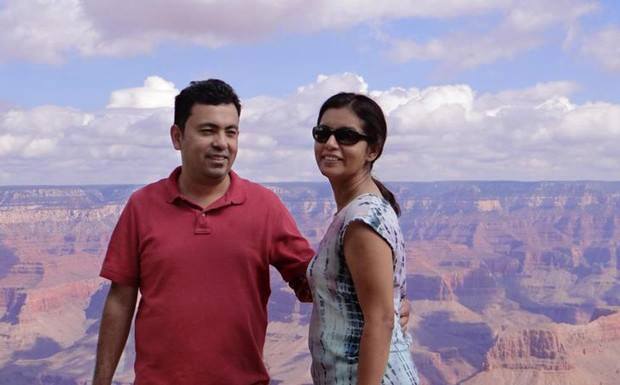
Avijit Roy was brutally murdered in Dhaka a few days ago. His wife, after heroically trying to shield his person with her own body, now lies in an ICU bed, fighting for her life.  I was an infrequent visitor to his website, Muktomona. Visiting it was like running your tongue over that tooth you’re missing, or reflexively checking whether you had your keys with you in the morning. Its presence was a reminder that, no matter how circumscribed, the nation-state of Bangladesh still had men and women who liked to think unconventional thoughts; give expression to unpopular ideas; endeavored to stand, as it is, in the very edge of what the societal limit of what could be expressed, and then take another firm step, not back, but forward. Continue reading That Elusive Thing with Feathers – After the Killing of Avijit Roy: Abdul Bari

India’s Obsession with Elitism is Leading it to Ignore the Marginalized: Rupande Mehta

Guest post by RUPANDE MEHTA

Chances are you have heard about Sureshbhai Patel, a 57 year old man, beaten and left temporarily paralyzed by Alabama police. His only crime: while he was out for a walk, a neighbor reported a ‘suspicious’ and ‘skinny black guy’ in the neighborhood causing him extreme distress and nervousness to leave his wife alone at home.

Several elements of this case bring back the ghosts of Trayvon Martin and Eric Garner, two black lives taken away by police brutality – despite being unarmed, Sureshbhai was subjected to “extreme force” and suspected not because he was Indian but because he resembled a black guy – but also bring to the forefront the enormous emotional and financial support generated not only from Indians but also Americans who rallied behind Sureshbhai and the injustice meted out to him. In a matter of six days, donations worth $190,000 were garnered to help the Patel family with medical bills. The incident also provoked Alabama’s governor to apologize for police’s use of “excessive force” and to initiate an investigation by the Alabama Law Enforcement Agency, along with the one being conducted by the FBI. Continue reading India’s Obsession with Elitism is Leading it to Ignore the Marginalized: Rupande Mehta

Reading Between the Lines – A Critique of the UAPA: Avani Chokshi

Guest post by AVANI CHOKSHI

It seems ludicrous that in a civilised democratic society like India, a citizen may be practically abducted by police, charged with perfunctory offences and incarcerated without bail on mere suspicion for an indefinite period of time.  But this is indeed the situation in present-day India, with duly passed legislation sanctioning the inhumane state of affairs.

The validity of unjust or immoral laws has long been debated, with two major schools of thought emerging- the positivist school and the naturalist school. The positivist school does not recognise any correlation between the legal system of a society and notions of what ought to be justice. The positivist framework mandates that the law is that ordained by the valid legislator, whereas the naturalist school of thought envisages some rights to be inherent by virtue of humanity of a person. Thus, an unjust law, as per the school of naturalist thought, would be no law at all; positivistic thought, on the other hand, would posit such law to be valid by virtue only of being ascribed to the law-making process. The Hart- Fuller debate  devolved around the law made by Hitler; with Hart contending that laws passed using proper procedure would always be valid and Fuller maintaining that no unjust rule could ever be law. India allows “procedure established by law ” to deprive people of their Fundamental Rights; a state of affairs which reflects positivistic thought in the founders of India. India’s judiciary has slowly moved from this strictly positivist setting to a more naturalistic and liberal interpretation  of the term. This shift has placed India closer to the guarantee of “due process of law” in the United States of America. Continue reading Reading Between the Lines – A Critique of the UAPA: Avani Chokshi

हम सब पानसरे


अभी पिछले साल की बात है जब जनवरी के मध्य में महाराष्ट्र के कोल्हापुर में ‘डा दाभोलकर की हत्या और तर्कशीलता/विवेकवाद’ विषय पर बोलते हुए कामरेड गोविन्द पानसरे, ने एक अहम बात कही थी कि अंधश्रद्धा के खिलाफ संघर्षरत रहे डा दाभोलकर की हत्या इसी वजह से हुई क्योंकि वह विवेकवादी थे। उनका कहना था कि

‘ऐसे सभी लोग जिन्होंने तर्कशीलता का रास्ता अपनाया, उसका प्रचार किया, उन तमाम लोगों को कुर्बानी देनी पड़ी है। तर्कशीलता की बलिवेदी पर अपने आप को न्यौछावर करनेवाले डा दाभोलकर न पहले शख्स हैं और न आखरी। तर्कशीलता और तर्कशीलता विरोध का यह संघर्ष आदिम काल से चल रहा है और उसमें बदल करना है या नहीं इसके बारे में आप को फैसला लेना होगा।’

निश्चित ही उस वक्त़ किसे यह गुमान हो सकता था कि महज एक साल के अन्दर शहीदों की इस गौरवशाली परम्परा में उनका नाम भी जुड़ जाएगा।

20 फरवरी 2015 को मुंबई के ब्रीच कैण्डी अस्पताल में कम्युनिस्ट पार्टी के इस वरिष्ठ नेता ने अपनी अन्तिम सांस ली। 16 फरवरी को सुबह जब वह अपनी पत्नी उमा के साथ सुबह टहलते हुए लौट रहे थे, तब मोटरसाइकिल सवार युवकों ने उन पर गोलियां चलायी थी। अपनी लम्बी जिन्दगी लेखन से लेकर आन्दोलन, संगठन निर्माण से लेकर रचनात्मक काम आदि तमाम मोर्चों पर एक साथ सन्नद्ध रहा यह सेनानी, चार दिन जिन्दगी और मौत से संघर्ष कर, यह जंग हार गया। इसे विचित्र संयोग कहा जा सकता है कि डा दाभोलकर की मौत और उनकी मौत के तरीके में भी एक समानता थी, मोटरसाइकिल पर सवार युवकों ने दोनों पर तभी गोलियां चलायी गयीं जब वह सुबह टहल कर लौट रहे थे। Continue reading हम सब पानसरे

Shuddhikaran of Hindu Mahasabha by Lovers of Love in Delhi

Well, they tried, and more power to them.

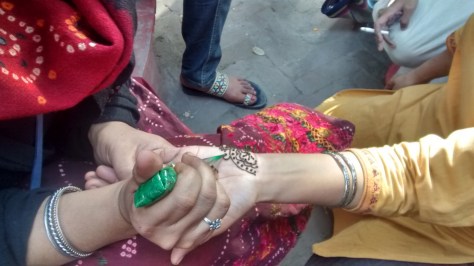
shuddhikaran of that hate-filled, divisive, toxic organization (and others of the Hindutva brigade) would have considerably reduced pollution in the only vasudha we have, which is our kutumb, but the attempt was foiled by a compliant Delhi Police. However, Parliament Street Police Station was very shuddh indeed by the end of the day, its noxious atmosphere cleansed by the cosmic vibrations of music, dance and “marriages” among all sorts of human beings.

IMG_20150214_152622113_HDR

Mehndi ceremony inside parliament Street Police Station

Image courtesy feminisminindia.com

This hilarious subversion of the idea of marriage, with which Hindu Mahasabha threatened lovers, is in fact a deeply political gesture against the institution of patriarchal, heterosexual marriage with all its violent hierarchies of age and gender, in which disobedient women and younger people are in the custody, much like prisoners in jail, of the patriarchs of the family, which include compliant women. There are no honour killings – these are custodial deaths, when families violently separate couples who chose to marry outside their caste or religious community, often killing one or both of them.

Continue reading Shuddhikaran of Hindu Mahasabha by Lovers of Love in Delhi

Gandhi’s Assassins

“It is far too early to dismiss the possibility of a future Hindu State in India. However, the possibility does not appear a strong one. The secular state has far more than an even chance of survival in India” (India as Secular State, 1963).

It was the early sixties when American political scientist Donald Eugene Smith commented about the “possibility of a Hindu state in India”. Today, even to a layperson, the secular state in India seems to be standing on very weak foundations, and the possibility of a Hindu State is far stronger than it was half a century ago, in 1963.

Perhaps, a pertinent expression of this transformation of India is the metamorphosis we witness in the image of Nathuram Godse – the assassin of Mahatma Gandhi, as part of a conspiracy which was hatched by many bigwigs of the Hindutva Supremacist movement. The makeover in the image is for eveyone to see: from a murderer, a conspirator, terrorist to a ‘martyr’ who supposedly ‘deserves’ a temple in his name everywhere. We also learn that after the ‘successful’ run of a drama in Marathi called Me Nathuram Boltoy (I Nathuram Speak) for the last few years, plans are afoot to have a movie made on him, supposedly to communicate his ‘viewpoint’. With the changed political situation, where even the censor board of the country is populated by rightwing people, one can guess that it won’t have any difficulty in release. And with an ambience which is more prone to illiberal ideas, one can as well prophesy that it will have a good run.

Read the full text here.

Confronting Gandhi’s Ghost

” I imagine you believe that he was for the most part adored; in fact he was hated and he is still hated today. Hatred is still alive in India and he died of it. Those who were for mostly from those what is called the scheduled castes, those who belonged to the gutters with whom he had sided. Yet he did not ask anything of anyone; he simply went his own way….But the simple fact that he lived according to his own law—which was ascetic and demanding of himself was something people could not tolerate.”  French writer Helene Cixous turns to Gandhi to compare his life with the ways of writing that “may hurt, may dissatisfy and give the feeling that something is taken away.”

Continue reading Confronting Gandhi’s Ghost

Long Live Charlie Hebdo : Harsh Kapoor

A letter to the left leaning in wake of Charlie Hebdo shootings of January 2015

Guest Post by HARSH KAPOOR

The January 2015 terror attack on the Paris satirical weekly and its gross misinterpretation by people of Left liberal sensibilities in India and much of the world.

We recently witnessed a devastating terror assault by fanatics who gunned down close to 200 children in a school in Peshawar. Was this a desperate cry of the dispossessed in Pakistan? I am glad that the various tiny fractions of the left in Pakistan stood up and condemned it openly, some in India also stood up for the first time. It provoked widespread shock and disdain.

But the terrorist assassination of 12 cartoonists, journalists and workers at Charlie Hebdo in Paris on 7 January 2015 has provoked very different reactions. Geographical location of the murder seems to drive this.

I am utterly astounded and shocked at the manner in which many in the left leaning and liberal circles in India have reacted to the devastating terror attack in Paris. Has a section of left gone mad? Why do they have to deflect a straight forward issue and start providing rationalisation for terror attacks from the Muslim fundamentalists. We are being given an endless spiel on French colonisation, the war for decolonization in Algeria, the exclusion of the so-called Muslim ‘community’ in France, the blowback for France’s foolish involvement in the recent wars in Libya and Syria and so on. The role of poor and dispossessed is being invoked.

( Read the full article here : http://www.sacw.net/article10438.html)

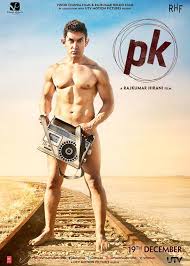
PK, satire, ramzadas: Prabhat Kumar

Guest Post by PRABHAT KUMAR

download

Commenting on a Hindi film released a month ago is a difficult enterprise, but this ‘delayed’ review of PK highlights what the film critics so far have ignored. Through intelligent crafting of its narrator-figure and its satirical narrative, I argue, this astoundingly successful Hindi film questions the ordinary and banal of Indian public life. The political vision behind PK’s satirical attack is old but relevant: Nehruvian.

Breaking the grammar of normalcy, Pee Ke!

Oye Pee Ke hai kya?” (Are you drunk?), is the dismissive riposte that PK, protagonist-narrator, of the film receives for questions he asks. For, the questions he asks are considered ‘abnormal’. But he is persistent with his ‘odd’ queries and prying gaze, like a drunken man, unmindful of the wrath he may invite from the sober and normal beings. He is tireless and gawking in his ‘weird’ interrogations, like a curious child, unaware of the risk of irreverence to mature beings. But, why does he ask such ‘strange’ questions? What makes his questions ‘unheard-of’ and his snooping eyes ‘clumsy’ in normal everyday life? Why is his ‘drunken-childish’ probing inadvertently insistent to confront the normalcy of mature world? The answer lies in the carefully crafted lead character and the political subtext that inform PK. Continue reading PK, satire, ramzadas: Prabhat Kumar

Caste, Class and the ‘Classical’ – FAQs about the Urur Olcott Festival, Chennai: Nityanand Jayaraman

Guest post by NITYANAND JAYARAMAN

Print

On 15-16 January, 2015, a much talked about festival of dance and music, that intends and promises to be different, is to be held in Chennai. The Urur Olcott Kuppam Margazhi Vizha means different things to different people. But for those who do not know what Urur Olcott Kuppam is or what the Tamil phrase Margazhi Vizha means, the Vizha may have no significance. These answers to FAQs (Frequently Asked Questions) is for such people, and for those who know what it means and have sent many bouquets and a few brickbats my way for being engaged in the organising of this Vizha. The views expressed here are personal and do not reflect a consensus within the group of organisers. However, the process of organising, the event and post-event engagements are itself likely to provide a platform for discussing such views and counterviews.

Carnatic-musician-TM-Krishn_0

T.M. Krishna performs at Besant Nagar beach as a part of the Urur Olcott Kuppam Margazhi festival

What is Urur Olcott Kuppam?

Urur Olcott Kuppam is a centuries-old fishing village in South Chennai. By rights, the Kuppam ought to be the landmark for Besant Nagar as in — “You know Besant Nagar, that newly settled neighbourhood near Urur Olcott Kuppam?” But that’s not how it is. Besant Nagar’s residents are predominantly upper class, upper caste. Urur Kuppam’s are predominantly from the fisher community of Pattinavar. The hip and happening Besant Nagar is well-known; the kuppam is invisible. The injustice doesn’t stop with geography. Dominant history also begins where dominant geography begins – with Besant Nagar. Ask Besant Nagar residents what existed 40 years ago in this area, and people are likely to say “Nothing” or “Nothing but the beach.” It’s as if the fishing villages did not exist before the government decided to carve residential plots for middle and high-income people out of sand dunes carpeted with cashew, palmyra, casuarina and screwpine.  Continue reading Caste, Class and the ‘Classical’ – FAQs about the Urur Olcott Festival, Chennai: Nityanand Jayaraman

What does one write today?

It’s the kind of moment that makes you reach for poetry, for words that convey what can scarcely be written. It’s the kind of moment where you must write for it is writing that is itself at stake.

The debates on Charlie Hebdo are wide and varied. There is, as Joe Sacco so beautifully drew, before anything else, a deep yet horrifically dull sadness. Few and fewer in the world have the privilege to still be “shocked” by violence, to not have its banality be its true horror. There is solidarity, some of the most meaningful of which comes from cartoonists in the Arab world.  There is a wide agreement that no justification is possible for returning any measure of offence with death yet there is an insistence on the ability to critique even that which one defends. As Teju Cole eloquently argues: “moments of grief neither rob us of our complexity nor absolve us of the responsibility of making distinctions.” There are important, vital debates about what it means to “insult everyone equally” when everyone is not equal, reminding us that we must begin and ask our questions in place, in history; that we must remember that the power to criticise is a freedom but also a privilege. There are the universal debates on the limits to absolute speech, pointed to by Sandip Roy who reminds us that the French Government itself banned the earlier incarnation of Charlie Hebdo for printing a mock death notice of the then French PM De Gaulle. There are fears of the Islamophobia this violence will re-incarnate as, that Hari Kunzru argues is one intent of the attackers.

I write with a different intent today. I write not to enter these debates about Charlie Hebdo but to insist on what these deaths must provoke us to do: to translate our solidarity, our empathy, our fear, and our resolve into the real work of protecting the freedoms of speech, satire, offence, and expression in India. That is the tribute to Charlie Hebdo that matters, that transcends all our debates.

Continue reading What does one write today?

Qalam chhin gayi to kya ghum hai/Snatch my pen away, I remain defiant (Faiz Ahmed Faiz)

Post jointly authored by ADITYA NIGAM AND NIVEDITA MENON

o-BANKSY-PARIS-CHARLIE-HEBDO-570

This image celebrating the power of dissent and creativity over forces of tyranny, circulated widely after the murderous attack on the French satirical journal Charlie Hebdo and the shooting of cartoonists Charbonnier, Wolinski, ‘Tignous’ and Cabut, among others. The cartoonists of the ‘equal opportunity offender’ journal were called out by name and coldly slaughtered in the name of Islam.

It seems appropriate now to remember Faiz’s words on censorship and the violent closing of minds:

Mataa-e- lauh-o-qalam chhin gayi to kya ghum hai 

Ke khun-e-dil men dubo li hain ungliyan maine

Zuban pe muhar lagi hai to kya,

ke rakh di hai har ek halqa-e-zanjeer mein, zubaan maine.

Snatch away my ink and pen, I remain defiant,

For I have dipped my fingers in the blood of my heart.

Chain shut my lips, I don’t give a damn,

For in every link of the chain I have placed a tongue ready to speak.