
On the eve of the panchayat elections in Kerala, I can’t help noticing how different it has been this time. Every time, the build-up to voting day includes heated debates about the state of the local bodies and discussions on the promises made by political parties. Not that it was completely absent this time, but somehow it appeared that such questions were hardly on people’s minds. The coming of decentralized governance in the mid-1990s divided the political field in Kerala into two: ‘local governance’ and ‘high politics’ involved very different conceptions of power, authority, and agency. Welfarism, now also reimagined in terms of self-help, was moved into the former, while the latter remained the more decisive arena of political activity and authority. However, given that the space on local governance was crucial to the poor in that welfare entitlements flowed through it, it remained a key area of public concern. Over the years, from Plachimada to Vilappilsala, the local bodies even seemed to form sites around which resistance to top-down destructive ‘development’ could take shape. Each election was an opportunity to take stock of this large network of institutions which despite all the flaws remained quite decisively important to the lives of the poor in Kerala. In fact, it is worth noting that the elections were the occasions in which the better-off sections paid relatively more attention to local bodies and even set aside their cynicism and reluctance to engage. Not so, this time, I can’t help feeling. Continue reading What Communal Attacks And Our Own Blindness have Cost Us: Thoughts for Malayalees on the Eve of Panchayat Elections
Category Archives: Debates
Can accessibility alone create an inclusive society for persons with disability? Tony Kurian
Guest Post by TONY KURIAN
Amidst the noisy campaigns of “Make In India and Digital India”, a campaign called “Accessible India” was launched by the Central Government recently and unsurprisingly this did not catch much media attention. Department of Persons with Disabilities, Ministry of Social Justice & Empowerment has launched the Accessible India Campaign (Sugamya Bharat Abhiyan), as a nation-wide flagship campaign for achieving universal accessibility for Persons with Disabilities.
The campaign is an extremely welcome initiative in a country like India which is home to more than 2.1 million officiallyrecognized disabled and a lot more who are not counted by the decadal exercise of census. While the campaign disserves much appreciation, it offers an appropriate opportunity for us to rethink some of our common sense, or at least that of majority about disability and disabled. Continue reading Can accessibility alone create an inclusive society for persons with disability? Tony Kurian
Why the Ban on Cow Slaughter is not Just Anti-Farmer but Anti-Cow as Well: Sagari R Ramdas
SAGARI R. RAMDAS writes in The Wire:
The recent killings of Mohammad Akhlaq, Noman and Zahid Ahmad Bhatt on the claim that they were slaughtering cows is not only an attack on the right to life, livelihood and diverse food cultures but an assault on the entire agrarian economy.
The cynical fetishisation of cows by Hindutva politicians is not only profoundly anti-farmer but, paradoxically, also anti-cow.
What these bigots fail to realise is that the cow will survive only if there are pro-active measures to support multiple-produce based cattle production systems, where animals have economic roles. The system must produce a combination of milk, beef, draught work, manure and hide, as has been the case in the rain-fed food farming agriculture systems of the sub-continent over the centuries.
In meat production systems – whether meat from cattle, buffaloes, sheep, goat, pigs or poultry – it is the female which is reared carefully in large numbers to reproduce future generations, and the male that goes to slaughter. It is only the sick, old, infertile and non-lactating female that is sold for slaughter. In every society where beef consumption is not politicised, farmers known that eating the female bovine as a primary source of meat will compromise future production, and hence they are rarely consumed.
Knowledge and Innovation for a Better Society : Ravi Sinha
An Address to the Students of Gokhale Institute of Politics and Economics, Pune, India
Guest Post by Ravi Sinha
It should be a matter of no small comfort if, in today’s world and in today’s India, any discussion takes place anywhere about the relationship between knowledge and innovation on the one hand and the prospects for a good society on the other. It is greatly more satisfying and reassuring if this topic interests talented young minds such as present here, who, I hope, also nurse hopes for a better future, not only for themselves but also for the entire society and civilization. Yours is an esteemed institution with such a long history of cultivating and disseminating knowledge about society – about politics, economics and other related disciplines. I am sure this issue has been a core concern right from the inception of this institute, and I doubt if I will be able to bring in anything of added value. But, as I said, this is always a welcome topic for discussion. I am very happy for this opportunity to share some of my thoughts with you.
Today if one mentions these two words – knowledge and innovation – together, it is very likely that the image of a Mark Zuckerberg or Steve Jobs or Bill Gates will come to mind, even if such an association is not obvious to everyone. I, for one, often need to tell myself that I should not complain. After all, these gentlemen are symbols of one of the greatest technological revolutions humanity has experienced and we are living through. It has changed the way humanity works, communicates and lives, and it is not over yet. Unrealized potentials far outweigh the realized ones and far greater changes are in the pipeline. Physicists have recently discovered that the Universe now expands at an accelerated rate, but when it comes to accelerated expansion into the unknown, the Universe appears to be no match for technology.
For many the technological explosion is a cause for unadulterated excitement and a source of unbounded hope. For many others it is a cause for grave concern. There are yet others for whom it presents a mixed picture. In times of rapid and radical transformations, it is not unusual for many to have a sense of unease. Humanity has always innovated and created new ways and forms of life, and it has always found it difficult to adjust to its own innovations and creations. But the capacity to adjust improves with time. If the sense of unease or consternation appears widespread despite a greatly improved capacity for adjusting to the new, part of the reason lies in the break-neck speed of the current change. Continue reading Knowledge and Innovation for a Better Society : Ravi Sinha
Statement by Artists, Curators and Critics Against Rising Intolerance in India
Text of a Statement by Artists, Curators and Critics in India against a Climate of Rising Intolerance in India
(Followed by Names of the 300 + Signatories, in Alphabetical Order)
The artist community of India stands in firm solidarity with the actions of our writers who have relinquished awards and positions, and spoken up in protest against the alarming rise of intolerance in the country. We condemn and mourn the murders of MM Kalburgi, Narendra Dabholkar and Govind Pansare, rationalists and free thinkers whose voices have been silenced by rightwing dogmatists but whose ‘presence’ must ignite our resistance to the conditions of hate being generated around us.
We will never forget the battle we fought for our pre-eminent artist M.F. Husain who was hounded out of the country and died in exile. We remember the rightwing invasion and dismantling of freedoms in one of the country’s best known art schools in Baroda. We witness the present government’s appointment of grossly unqualified persons to the FTII Society and its disregard of the ongoing strike by the students of this leading Institute. We see a writer like Perumal Murugan being intimidated into declaring his death as a writer, a matter of dire shame in any society.
While the Prime Minister of the country has been conspicuously reticent in his response to the recent events, the reactions of BJP ministers in his government reveal their ignorance and prejudice. Mahesh Sharma, Minister of State for Culture, has made abhorrent comments about mob lynching and murder. His remarks suggesting that writers should stop writing to prove their point are alarming – empowered as he is to take policy decisions in the domain of culture. Arun Jaitley, Minister of Finance, Information & Broadcasting, has mocked the actions of our respected writers as a manufactured ‘paper rebellion’. He asks for scrutiny of the political and ideological affiliations of those who are protesting.
To these and other such provocations there is a clear answer: while the actual affiliations of the protesting writers and artists, scholars and journalists may be many and varied, their individual and collective voices are gaining cumulative strength. It is this that the ruling party will have to reckon with: the protestors’ declared disaffiliation from a government that encourages marauding outfits to enforce a series of regressive commands in this culturally diverse country.
The scale of social violence and fatal assaults on ordinary citizens (as in Dadri, Uttar Pradesh; Udhampur, Jammu and Kashmir; Faridabad, Harayana) is escalating. The contemptuous comments about the religious minorities and Dalits made by those within the government confirm that there is little difference between the RSS-BJP mainstream and supposed ‘fringe’ elements. The perfunctory warnings and regrets issued by ruling party ideologues – to defend the agendas of ‘development’ and ‘governance’ advanced by Mr Narendra Modi – are merely expedient. The Sangh Parivar and its Hindutva forces operating through their goon brigades form the support base of this government; they are all complicit in the attempts to impose conformity of thought, belief and practice. Continue reading Statement by Artists, Curators and Critics Against Rising Intolerance in India
The Move to Professionalise Research: Aswathy Senan
This is a guest post by ASWATHY SENAN
Researchers all over the country are protesting the move by the UGC to scrap the non-NET fellowship and students have gathered in hundreds to resume their agitation at the UGC office through OccupyUGC. it appears that one should be clear about what the student reaction means: it is much more than as a demand for monetary benefits. The student mobilization happened after the committee that met at the UGC office in Delhi to discuss and increase the non-NET fellowship, decided to scrap it. Following the protests that lasted through the nights from 21 October, the Minister of Human Resources Development tweeted that the fellowship shall be continued leaving out one crucial detail: its availability to new students. This decision to end all financial support of researchers doing their MPhil and PhD until they qualify NET or JRF is a huge threat for the research community in India as this is a clear move to professionalise research and make it a mere add on to teaching career. Continue reading The Move to Professionalise Research: Aswathy Senan

Students Occupy UGC to Defend the Right to Research in Universities Across India: Sucheta De
Guest Post by Sucheta De.
[ Videos by V. Arun, Om Prasad, Akhil Kumar, with Facebook Post Updates by Shehla Rashid and Akhil Kumar ]
#SaveNonNETfellowship: A movement for ensuring democratic, inclusive and pluralistic research in India
“The ideas of the ruling class are in every epoch the ruling ideas, i.e. the class which is the ruling material force of society, is at the same time its ruling intellectual force.”
― Karl Marx, The German Ideology
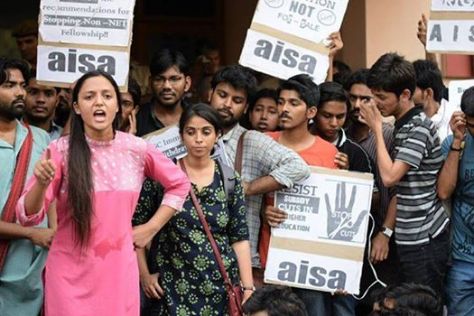
On the afternoon of 21st October, students from several universities in Delhi began ‘Occupying’ the Delhi premises of the head-office of University Grants Commission (UGC) – the government mandated body under the Ministry of Human Resources that is supposed to govern the functioning of universities across the country. The occupation continued through the night of the 21st, the day of the 22nd, and is still currently in process. The students occupying the UGC premises have decided, as of now, not to let the UGC function. Goons from the BJP aligned students organization Akhil Bharatiya Vidyarthi Parishad (ABVP) have now reached the UGC and are continuously harassing and abusing the student activists who are in ‘occupation’ of UGC. There is heavy police presence. There is a state of near siege at the UGC head quarters near ITO Chowk in Delhi.
आज़ादी और विवेक के पक्ष में प्रलेस, जलेस, जसम, दलेस और साहित्य-संवाद का साझा बयान
देश भर में चल रहे लेखकों व साहित्यकारों के विरोध के सन्दर्भ में लेखकों के पांच संगठनों – प्रगतिशील लेखक संघ, जनवादी लेखक संघ, जन संस्कृति मंच, दलित लेखक संघ व साहित्य-संवाद – ने आज दिल्ली में निम्नलिखित बयान जारी किया :
देश में लगातार बढ़ती हुई हिंसक असहिष्णुता और कट्टरपंथ के ख़िलाफ़ पिछले कुछ समय से जारी लेखकों के प्रतिरोध ने एक ऐतिहासिक रूप ले लिया है. 31 अगस्त को प्रोफेसर मल्लेशप्पा मादिवलप्पा कलबुर्गी की हत्या के बाद यह प्रतिरोध अनेक रूपों में प्रकट हुआ है. धरने-प्रदर्शन, विरोध-मार्च और विरोध-सभाएं जारी हैं. इनके अलावा बड़ी संख्या में लेखकों ने साहित्य अकादमी से मिले अपने पुरस्कार विरोधस्वरूप लौटा दिए हैं. कइयों ने अकादमी की कार्यकारिणी से इस्तीफ़ा दिया है. कुछ ने विरोध-पत्र लिखे हैं. कई और लेखकों ने वक्तव्य दे कर और दीगर तरीक़ों से इस प्रतिरोध में शिरकत की है.
दिल्ली में 5 सितम्बर को 35 संगठनों की सम्मिलित कार्रवाई के रूप में प्रो. कलबुर्गी को याद करते हुए जंतर-मंतर पर एक बड़ी प्रतिरोध-सभा हुई थी. इसे ‘विवेक के हक़ में’ / ‘इन डिफेन्स ऑफ़ रैशनैलिटी’ नाम दिया गया था. आयोजन में भागीदार लेखक-संगठनों – प्रलेस, जलेस, जसम, दलेस और साहित्य-संवाद — ने उसी सिलसिले को आगे बढाते हुए 16 सितम्बर को साहित्य अकादमी के अध्यक्ष विश्वनाथ प्रसाद तिवारी को एक ज्ञापन सौंपा जिसमें उनसे यह मांग की गयी थी कि अकादमी प्रो. कलबुर्गी की याद में दिल्ली में शोक-सभा आयोजित करे. विश्वनाथ त्रिपाठी, मुरली मनोहर प्रसाद सिंह, चंचल चौहान, रेखा अवस्थी, अली जावेद, संजय जोशी और कर्मशील भारती द्वारा अकादमी के अध्यक्ष से मिल कर किये गए इस निवेदन का उत्तर बहुत निराशाजनक था. एक स्वायत्त संस्था के पदाधिकारी सत्ता में बैठे लोगों के खौफ़ को इस रूप में व्यक्त करेंगे और शोक-सभा से साफ़ इनकार कर देंगे, यह अप्रत्याशित तो नहीं, पर अत्यंत दुखद था. अब जबकि अकादमी की इस कायर चुप्पी और केन्द्रीय सत्ता द्वारा हिंसक कट्टरपंथियों को प्रत्यक्ष-परोक्ष तरीके से दिए जा रहे प्रोत्साहन के खिलाफ लेखकों द्वारा पुरस्कार लौटाने से लेकर त्यागपत्र और सार्वजनिक बयान देने जैसी कार्रवाइयां लगातार जारी हैं, यह स्पष्ट हो गया है कि लेखक समाज इन फ़ासीवादी रुझानों के विरोध में एकजुट है. वह उस राजनीतिक वातावरण के ख़िलाफ़ दृढ़ता से अपना मत प्रकट कर रहा है जिसमें बहुसंख्यावाद के नाम पर न केवल वैचारिक असहमति को, बल्कि जीवनशैली की विविधता तक को हिंसा के ज़रिये कुचल देने के इरादों और कार्रवाइयों को ‘सामान्य’ मान लिया गया है. Continue reading आज़ादी और विवेक के पक्ष में प्रलेस, जलेस, जसम, दलेस और साहित्य-संवाद का साझा बयान
The Curious Case of a Study on Bihar Elections: Kamal Nayan Choubey and Nishant Kumar
Guest post by KAMAL NAYAN CHOUBEY and NISHANT KUMAR
[This article is a response to the lead news-cum-article written by Sanjay Kumar and Suhas Palshikar and published in The Indian Express as well as Jansatta on 7th October about the pre-poll survey related to the Bihar Legislative Assembly Election. We had sent this article to the The Indian Express, but they could not give any space to our views. – Authors]
Politically, Bihar is one of the most complex states in India. It is often difficult to provide a substantially cogent electoral prediction because of the multivariate factors that impact the political outcome in the state. The other obvious reason is the political maturity of the electorates of Bihar, who decide the fate of the candidates based on several considerations including caste orientation and the candidates’ performance in the past. Still many analysts have tried to provide a picture regarding the possible outcome of electoral fray for the Bihar Assembly Elections based on quantitative surveys. The opinion poll conducted by Lokniti-CSDS and published in The Indian Express and Jansatta, two of India’s most respected newspapers, on 7th October, 2015 was one such attempt. In the last two decades election studies in India has seen a dramatic evolution with poll surveys gaining immense popularity among both analysts as well as electorates. Lokniti-CSDS has been one of the most reliable institutions for such studies because unlike other market oriented institutions it has always focused on serious academic and intellectual understanding of electoral competition. Many reputed academicians have been part of its election studies and its publications have given new dimensions to the study and understandings about the dynamics and churnings of Indian democracy. However, the pressure of media as well as the rush to publish opinion polls seems to have affected the way CSDS-Lokniti is known to release its analysis.
The news-item in the front page of The Indian Express read ‘Advantage BJP as Bihar gets ready’. It was claimed in that news-cum-article that BJP led NDA had an advantageous edge in the forthcoming Bihar Assembly Elections over Nitish Kumar’s Grand Alliance. We are not sure whether it was the editors who chose the headline to attract attention of its readers or it was consciously decided by the poll conductors based on their analysis. Whatever the case may be, the projection of ‘Advantage BJP’ exposes fissures at several levels, most of which are evident from the data itself. The publication also forces us to pose significant questions about the way in which such opinion polls are conducted both in terms of methodology as well as the analytical categories used to understand electoral politics in a complex society as in the case of Bihar. It further creates doubts about the aim of such published opinion polls. Continue reading The Curious Case of a Study on Bihar Elections: Kamal Nayan Choubey and Nishant Kumar
House of Cards
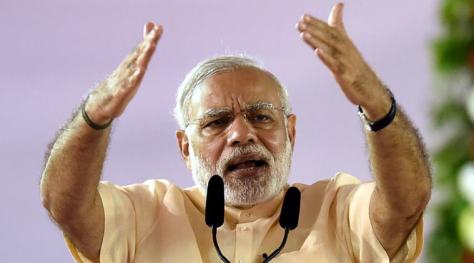
Anybody with a passing interest in consistency or coherence might be forgiven for being stumped at the political spectacle unfolding right now. Yesterday, Prime Minister Narendra Modi assured us that his government was committed to reservations. The statement was made at a ceremony to inaugurate the Ambedkar memorial at the Indu Mills compound in Mumbai. The fact that ordinary Dalits, in the habit of thronging any joyous celebration on Ambedkar in big numbers, were kept out of the ceremony, is possibly irrelevant. After all, officialese is officialese, and no political party – certainly not the BJP – has a monopoly on stiff-necked commemorations of people’s leaders that want nothing to do with the people. It is Modi’s commitment to reservations and the Indian constitution that is of interest. In some ways a statement of this nature made at the inauguration of an Ambedkar memorial, makes perfect sense. Apart from the occasion and locale, also not coincidental was the timing of Modi’s statement – one that he himself alluded to, when he referred to the bitterly fought Bihar elections now underway, “With a BJP government in power and polls getting under way, a malicious propaganda is being spread that the government is against reservation…”. The fact that the anti-BJP mahagathbandhan (grand alliance) in Bihar has made reservations one of their chief planks, with Lalu Prasad Yadav declaring in his inimitable style that he will kill himself if reservations are removed, is relevant.
Zooming back from the Ambedkar memorial event, the PM was clearly also responding to the threat to his Sabka Saath Sabka Vikas model begun a couple of months ago by the irrepressible Hardik Patel. Patel – erstwhile BJP supporter, self-styled Patidar-Patel revolutionary and a wild child in imminent danger of being silenced (or coopted) by the BJP – was temporarily subdued by the Gujarat administration following the wave of violence over his first call for reservation, but resurfaced a couple of days ago to be the nightmare Modi hadn’t dreamed yet – saying his aim was to expose the “Gujarat model of development”. This is for the current party nothing short of the youngest born of a rambling illustrious family running into the street from the family mansion saying our house is made of mud! our house is made of mud!
Open Letter to FB : Change the Authentic Name Policy — Nameless Coalition
Nameless Coalition, a group of NGOs, has written an open letter to Facebook demanding justice for individuals who have been affected by it’s ‘authentic identity’ policy. Please read it at the Electronics Frontier Foundation Action Centre.Those interested in supporting this effort are requested to sign the petition.
In Kerala, the abuse of women online became a hotly-discussed issue over the heavy online abuse suffered by Preetha G P, which provoked a wider debate on FB policy and strong responses in support of Preetha from other women politically active on FB. The campaign For A Better FB was initiated by them.
I add below reflections by Anila Balakrishnan expressed on FB, on her support for the campaign. They have been translated from the Malayalam and posted here with her permission:
Facebook has never given me the feeling that it is a space where I can behave and speak out my views freely. On the contrary, it has always reminded me that I am a woman and must therefore tread carefully. That is the reason why I decided to reduce myself into someone who had nothing to say in public, someone who spoke only in the presence of friends. I just decided that I will not sacrifice my peace for the misogyny and hate-speech of the hordes who know nothing of me or my politics; I was not willing to spend time and energy on confronting them. When my posts became public because of sheer necessity or even by mistake, these hordes reminded me quickly that they should be confined to friends alone. Those were not ideological confrontations; they were vicious attacks the female gender itself. And so I have not felt brave enough to say anything that could invite public comment on FB. Women who have showed the courage to say such things have not been spared by the hordes, for sure.
But this was never my choice. I do believe that opinions ought to be public; that one must engage with each and every person in the crowd. But I am not willing to take on myself from the social media personal wounds that go beyond differences and diversity in views . So the decision to reduce myself is not my choice – it was imposed on me. I have not heard of any man who makes his views public being abused because of his body. I do not know of any man who has to maintain constant vigilance against such attacks. That’s how Facebook remains as patriarchal as any other social media, as society itself. And that’s precisely why I am part of this campaign for a better FB.
Christians oppose demand for ban on Agnes of God: Press Statement
We, the following signatories, object to Mr. Joseph Dias, Secretary, Catholic Secular Forum, issuing press statements, representing himself as the spokesperson of the entire community while he seeks bans on films and plays on the ground that they hurt the sentiments of the Catholic religious community in India. Since such demands tarnish the image of the entire community, we appeal to the press that they should not be projected as the views of the entire Christian community.
We wish to state that the views expressed by him are his own, or at best, that of his organization and this by no stretch of the imagination, can be portrayed as the views of the entire Catholic community, as is being done in recent times. His demands are sensational in nature and are self serving to attract media attention unto himself and we are opposed to the same.
Principal Anandarajan and the Legacies of a Long and Pointless War: Luther Uthayakumaran
Guest post by LUTHER UTHAYAKUMARAN
A lot has happened since the early 1980’s, when I first got to know Anandarajan. Nearly thirty-five years later, it seems a different world. A way of life has died between then and now. It is through these multiple layers of life and memories that I remember that evening. It was nearly dusk when the news spread through Jaffna ‘Principal Anandarajan shot dead” and then the other three words followed in a hushed tone, like a reluctant trailer, ‘….. by the boys’.
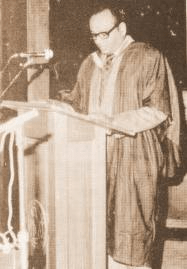 I first met Anandarajan when I was fourteen years old, a few weeks before I was to join St John’s. Anandarajan was introduced to me at a family function, as my would-be principal. The first thing I noticed about him was the total lack of aloofness. His response was ‘I say, I was a classmate of your mother at St John’s, and she was the only girl in the class whom I was scared of’ (which my mother vehemently denied!). In the years that followed I came to know Anandarajan more closely, first as a teacher, and then as a close family friend. In those days at St John’s the first year Advanced Level classes occupied the open sheds opposite the Vice-Principal’s house, and everyday from my classroom I would see Anandarajan walk purposefully across the school grounds from his residence to the principal’s office. If it was a Monday, I would see him again a few minutes later, wearing a black academic-gown walking up the stage of Peto Hall to chair the assembly. I used to enjoy those Monday morning assemblies, as they provided a welcome reprieve from the stress of cramming for exams. Anandarajan would invite interesting speakers to address us, from Hindu mystics to those who spoke on more earthy topics such as pollution and war in the Middle East. Ironically for many of us in those days, war was something that happened only in distant places. If there were no outside speakers Anandarajan would address the assembly himself. It was on one such occasions that I learnt a value that I have cherished ever since then. It is in Anandarajan’s own words: “Always defend yourself. Never let anyone accuse you falsely – not anyone – not even me. If you let that happen, part of the blame is yours”. Continue reading Principal Anandarajan and the Legacies of a Long and Pointless War: Luther Uthayakumaran
तर्क और विचारों से कौन डरता है ? – दाभोलकर, पानसरे और कलबुर्गी की शहादत के बहाने चन्द बातें
 1
1
Photo : Courtesy – http://www.newslaundry.com
1.
आग मुसलसल जेहन में लगी होगी
यूं ही कोई आग में जला नहीं होगा
दोस्तों
कातिल के पिस्तौल से निकली ऐसी ही आग का शिकार हुई तीन अज़ीम शख्सियतों की याद में हम सभी लोग ‘कलम विचार मंच’ की पहल पर यहां जुटे हैं। विगत दो साल के अन्तराल में हम लोगों ने डा नरेन्द्र दाभोलकर, कामरेड गोविन्द पानसरे और प्रोफेसर कलबुर्गी को खोया है। गौरतलब है कि सिलसिला यहीं रूका नहीं है। कइयों को धमकियां मिली हैं। ऐसा समां बनाया जा रहा है कि कोई आवाज़ भी न उठाए, उनके फरमानों को चुपचाप कबूल करे। दक्षिण एशिया के महान शायर फैज़ अहमद फैज़ ने शायद ऐसे ही दौर को अपनी नज्म़ में बयां किया था। ‘निसार मैं तेरी गलियों पे ऐ वतन, के जहां ; चली है रस्म के कोई न सर उठा के चले..’
और इसी माहौल के मददेनज़र हम इसी अदद मसले पर आपस में गुफतगू करना चाह रह हैं कि आखिर तर्क और विचार से इस कदर नफरत क्यों दिख रही है ? कौन हैं वो लोग, कौन हैं वो ताकतें जो विचारों से डरती हैं, तर्क करने से खौफ खाती हैं ? चन्द रोज लखनउ की सड़कों पर उतर कर भी आप ने ऐसे हत्यारों के खिलाफ आवाज़ बुलन्द की थी। और एक तरह से समूचे देश के विभिन्न नगरों, कस्बों में जो इस मसले पर जो बेआरामी, बेचैनी देखने को मिली थी, उसके साथ अपनी आवाज़ जोड़ी थी। आज की यह चौपाल, आज की यह गोष्ठी दरअसल इसी सिलसिले की अगली कड़ी है। हम उन चिन्ताओं को आपस में साझा करना चाह रहे हैं ताकि यह जो माहौल बन रहा है, जो गतिरोध की स्थिति बनती दिख रही है उसमें थोड़ी हरकत पैदा की जा सके।
इसे दिलचस्प संयोग कहेंगे कि इस गोष्ठी का आयोजन बीसवीं सदी के पूर्वार्द्ध के महान सामाजिक विद्रोही पेरियार रामस्वामी नायकर / 17 सितम्बर 1879-24 दिसम्बर 1973/ के 139 वें जन्मदिन के महज एक दिन बाद हो रहा है। कल ही देश के तर्कशील समूहों, संगठनों ने, विचारों की अहमियत जाननेवाले तमाम लोगों ने उनका जन्मदिन मनाया, वही पेरियार जिन्होंने ताउम्र तार्किकता, आत्मसम्मान, महिला अधिकार और जातिउन्मूलन के सिद्धान्तों का प्रचार किया और आन्दोलन किए। मालूम हो कि तमिल लिपि में नए बदलावों के जनक पेरियार समाजवादी रूस की उपलब्धियों से भी प्रभावित थे और उन्होंनेे नास्तिकता एवं तर्कशीलता के प्रचार के लिए अभिनव मुहिमों का आयोजन किया था।
Cow Slaughter – Can a Directive Principle Trump Fundamental Rights of the Most Marginalized? Mariya Salim
Guest post by MARIYA SALIM
The debates and demands around the issue of the prohibition of cow slaughter in India are a highly volatile, political and contentious subject, with the cow being revered as sacred by most Hindus in the country. Although almost all the proponents calling for a national legislation for a total ban on slaughter of cow and other cattle today look to the directive principles of state policy and use an economic and agrarian argument to defend their demand, it is interesting to note that the constituent assembly debates around this directive principle clearly indicate that it was as much a religious issue, reasoned on science and agriculture instead however, for some of those who wanted it to be an integral part of the Indian Constitution.
After much debate and deliberation in the Constituent Assembly and a demand from a few members of the assembly, to include a total ban on the slaughter of cows as part of fundamental rights in the Indian Constitution, a compromise was reached and the protection of the revered bovine found place in the Directive Principles of state policy, which incorporates this Hindu sentiment in a somewhat guarded and hesitant form[1]. Most notable among the members raising the issue were Pandit Thakur Dass Bhargava and Seth Govind Das[2]. Syed Muhammad Sa’adulla, another member argued that he would rather have the insertion on the protection of cow slaughter as a religious ground, as, the argument on economic grounds will ‘create a suspicion in the minds of many that the ingrained Hindu feeling against cow slaughter is being satisfied by the backdoor’ and he went on to give facts and figures on how cow slaughter is not as bad ‘as it is being made out to be’ from the economic point of view. [3] Continue reading Cow Slaughter – Can a Directive Principle Trump Fundamental Rights of the Most Marginalized? Mariya Salim
Kudumbashree in Chandydesham/Muneerland — In Three Parts
Part One: Prologue
In 2008, I reported the results of research on Kudumbashree women leaders at the village level, from seven districts in Kerala. Those were the days when Kudumbashree was being projected as the ultimate answer to all of women’s woes, and the chorus consisted of politicians, official feminists, researchers, bureaucrats, development experts – in other words, everyone, well, almost. What I had to say was not pleasant to their ears. However, implicit in my reporting was the essential changeability of Kudumbashree, which was after all a government programme. The discussions around the modifications of the Kudumbashree bye-law and its approval were on during our fieldwork, and even though we reported after it was finalised and approved, it was too early for us to assess its impacts.
Continue reading Kudumbashree in Chandydesham/Muneerland — In Three Parts
Scramble for Muslim Votes as Owaisi Jumps into Bihar Polls: Abhay Kumar
Guest post by ABHAY KUMAR
Ever since Asaduddin Owaisi, president of the All India Majlis-e-Ittehadul Muslimeen (henceforth MIM), addressed a well-attended public meeting in Kishanganj on August 17, speculation about his party contesting election in Bihar has been rife. Three weeks after the rally, Owaisi, eventually, decided that he would field candidates in Muslim-dominated Seemanchal region of Kishanganj, Araria, Purnia and Katihar. “MIM will put up candidates in Bihar’s Seemanchal region, which is not only backward but also has a lot of problems. There has to be over all development,” Owaisi told media, giving the leaders of anti-Hindutva Grand Alliance jitters.
Contrary to Owaisi’s latest move, some political observers had held the view that given the weak organisational structure of the MIM in Bihar and late entry in the state, Owaisi was unlikely to jump into assembly election. For example, senior journalist and political commentator, Khurshid Hashmi said that if Owaisi had been serious about Bihar election, he would have launched his campaign much earlier as he did in UP. Continue reading Scramble for Muslim Votes as Owaisi Jumps into Bihar Polls: Abhay Kumar
An Attempt to Make Sense of Culture in Islam: Raoof Mir
Guest post by RAOOF MIR
Purity and corruption has remained one of the recurrent themes in the entire history of Islam. The arrival of Islam in Arabia did not mean a radical departure from the past. Wael B. Hallaq, a noted scholar on Islamic law and Islamic intellectual history establishes through his commendable work that “much of Arabian law continued to occupy a place in the Shari’ah, but not without modification.” Prophet Mohammed, who founded this new faith by introducing new nomos, also let several old customs and institutions to remain unchallenged. Despite his critical attitude toward the local social and moral environment, Prophet Muhammad was very much part of this environment and was deeply rooted in the traditions of Arabia.
Though the new converts to Islam entered into a new cosmological order, they at the same time, continued to adhere to the practices of old pagan culture. Since the arrival of Islam many individual reformists or reform movements have intended to reform Islam and decontaminate it from its ‘accretional’ aspects. These reformative endeavours envisaged a Muslim community that is not only socially distinct but also repudiates the pre-existing cosmological order. However, so far, there has been no end to this conflict. This conflict between the formal ideology of reformists (Textual Islam) and functional behaviour of the majority of the Muslims (Lived Islam) continues till today. Continue reading An Attempt to Make Sense of Culture in Islam: Raoof Mir
Appeal by the Striking Students of Delhi College of Art – Students of Delhi College of Art and Ambedkar University, Delhi
Guest Post by Students of Delhi College of Art, with a statement in solidarity by students of Ambedkar University, Delhi (Department of Visual Arts)
[ This post compiles communications sent out by students of the College of Art, Delhi, their charter of demands (which include very basic and fundamental demands – and it is indeed a revelation that students have to resort to a strike to get this charter even noticed) and a letter in solidarity (see end of the post) with the College of Art students from Students of the Department of Visual Arts, Ambedkar University, Delhi. We are posting this to continue to bring to attention the condition of students of art, media and film in the country. Kafila has already posted articles on the conditions of the students of the Film & Television Institute of India. This post also needs to be seen in the context of the recent statement by the Minister of Culture, Government of India, about ‘cultural pollution’. Clearly, the rot is within institutions, and has not been caused, as the minister seems to think, by the ‘encroachment of Western culture’. We hope that this series of posts can contribute to a real debate about the state of art, culture and cultural institutions in India and the rest of South Asia. ]
Students of College of Art, New Delhi have been on strike for last thirteen days. The strike had to happen, when the individual voice of art students in the college was ignored and suppressed for years. This bundling up of dissent was inevitable.
Old Age Culture Homes and other Cultural Pollutants – Lessons in Toxicity from the Minister of Culture
The world’s largest ‘cultural’ organization, the Rashtriya Swayamsevak Sangh (National Volunteer Organization) recently met with the minister responsible for what is probably, in real terms, the world’s smallest ‘culture’ ministry, the Ministry of Culture, Government of India. Under Khaki shorts, size does matter. The big tell the small, what’s what.
Muzaffarnagar Baaqi Hai – Critical Readings Online and Offline: Akash Bhattacharya and Arif Hayat Nairang
These are guest posts by Akash Bhattacharya and Arif Hayat Nairang
The film Muzaffarnagar Baaqi Hai has been in the news recently, and not always for the right reasons, having attracted disruptive and abusive protest at some screenings. Following a day of counter-protest in which the film was screened all over the country, a friend teaching in a Delhi University college suggested screening it in her college, only to be told by the student representative that it would “cause trouble” (“bawwal mach jayega ma’am!!”). She asked what that meant and if he had seen the film, and he simply said, “nahin, bhaiyya logon ne kaha hai ki woh film bahut buri hai” (No, but our elder brothers have said it’s a bad film).
In an atmosphere where political self-censoring comes as easily to the current generation of students as scouring the net for “blocked content” we present below two readings of the reception of the film, the first ruminating on whether the film addresses the complexities of communal mobilisation adequately; and the second inquiring in the context of social media and particularly Facebook, what constitutes the ‘liking’ of an image or idea. The idea of posting these comments is as much to give space to these arguments as it is to make a larger point that the ‘sickular left’ voices that are presumably behind the film love discussion, critique and disagreement. That to my mind is the way forward, not pre-empting the always-already hurt sentiments of the bhaiyya log whosoever they may be.
 KAFILA - COLLECTIVE EXPLORATIONS SINCE 2006