Category Archives: Debates

‘To those who attacked Charlie Hebdo yesterday shouting Allahu Akbar’: Karima Benoune

KARIMA BENOUNE in Open Democracy

We are all Charlie!

To those who attacked Charlie Hebdo yesterday shouting “Allahu Akbar,” I would like to say that your kind of God – a God of Hate and Murder – is not Great. Nor is that God the God of most Muslims, but rather of your own Islamist cult – which so many people of Muslim heritage oppose. You are incapable of understanding satire; you openly revile the beliefs of others but brook no criticism of the medieval notions you believe. You claim to defend Islam while bringing only shame upon it. You are offended by cartoons but not by killing. You claim to have avenged the Prophet Mohamed but have instead defamed him with your cowardly attack on unarmed journalists in his name.

As a Tunisian woman wrote to me afterwards, “It is so horrible, claiming the name of God while killing these poor people. But, about which God are they speaking?”  With an ironic outrage, worthy of Charlie Hebdo itself, she insisted the deity would be “gratified” that they are “making him a God of intolerance and blood.”  In the name of tolerance and peace, and in memory of the tragically murdered victims in Paris, and of so many others – even more numerous – in places like Peshawar, let us commit after this bleak January day to make 2015 the year we finally put an end to this ghastly jihad.

While first information suggests the authors of the Paris attack may have claimed affiliation with Al Qaeda in Yemen, others suspect an “Islamic State” link. In any case, their indisputable connection is with the pernicious ideology of international Islamism and its myriad armed manifestations.  These are, to quote Algerian sociologist Marieme Helie-Lucas, “political movements of the extreme right that… manipulate religion to achieve their political aims.” We must collectively denounce that ideology and do all we can to defeat these movements.  As Helie-Lucas and Maryam Namazie wrote in an online petition in denunciation of the Charlie Hebdo attack, a statement rapidly signed by activists from Iran to Sudan, “What is needed is straight-forward analysis of the political nature of armed Islamists: they are an extreme-right political force, working under the guise of religion and they aim at political power. They should be combated by political means and mass mobilization….”

Continue reading ‘To those who attacked Charlie Hebdo yesterday shouting Allahu Akbar’: Karima Benoune

Qalam chhin gayi to kya ghum hai/Snatch my pen away, I remain defiant (Faiz Ahmed Faiz)

Post jointly authored by ADITYA NIGAM AND NIVEDITA MENON

o-BANKSY-PARIS-CHARLIE-HEBDO-570

This image celebrating the power of dissent and creativity over forces of tyranny, circulated widely after the murderous attack on the French satirical journal Charlie Hebdo and the shooting of cartoonists Charbonnier, Wolinski, ‘Tignous’ and Cabut, among others. The cartoonists of the ‘equal opportunity offender’ journal were called out by name and coldly slaughtered in the name of Islam.

It seems appropriate now to remember Faiz’s words on censorship and the violent closing of minds:

Mataa-e- lauh-o-qalam chhin gayi to kya ghum hai 

Ke khun-e-dil men dubo li hain ungliyan maine

Zuban pe muhar lagi hai to kya,

ke rakh di hai har ek halqa-e-zanjeer mein, zubaan maine.

Snatch away my ink and pen, I remain defiant,

For I have dipped my fingers in the blood of my heart.

Chain shut my lips, I don’t give a damn,

For in every link of the chain I have placed a tongue ready to speak.

After the Charlie Hebdo Massacre, Support those Fighting the Religious-Right : Statement by concerned citizens

Statement by concerned citizens

After the massacre in Charlie Hebdo in Paris on January 7, 2015, expressing indignation, as so many are doing, is not enough.

A quick look at the English-speaking media shows that whilst many condemn the violence itself, they also assert that Charlie Hebdo courted (and maybe deserved?) a strong response from “Muslims”. Charlie’s regular cartoonists did not spare Islam, any other religion, nor fanatics and bigots.

This trend in the media requires our attention. Apparently secularists, agnostics and atheists must keep silent and do not deserve the kind of respect that believers are entitled to; nor can they enjoy free speech to the same degree.

In the name of “respect” of religions and of the religious sentiments of believers, it is indeed the fanatical religious-Right that is being supported and given centre stage. Meanwhile, those who are on the forefront of countering armed fundamentalists are left to their own devices. It is high time to give these secularists prominence, to recognise their courage and their political clarity and to stop labelling them “Islamophobic”.

In October 2014, secularists – including atheists, agnostics and believers from many countries, in particular many Muslim-majority countries, met in London to denounce the religious-Right and to demand being seen as its alternative. It is high time to learn from their analysis and lived experiences.

The tragic massacre in Paris will undoubtedly give fuel to the traditional xenophobic far-Right and the immediate danger is an increase in racism, marginalization and exclusion of people of Muslim descent in Europe and further. We do not want to witness “anti-Muslim witch hunts” nor do we welcome the promotion of “moderate” Islamists by governments as official political partners. What is needed is a straightforward analysis of the political nature of armed Islamists: they are an extreme-Right political force, working under the guise of religion and they aim at political power. They should be combated by political means and mass mobilisation, not by giving extra privileges to any religion.

Their persistent demand for the extension of blasphemy laws around the world is a real danger for all. France has a long – and now growingly endangered – tradition of secularism; which allows dissent from religions and the right to express this dissent. It has had a rich tradition to mock and caricature powers that be – religious or otherwise. Let us keep this hard won right which cost so many lives in history, and, alas, still does – as Charlie Hebdo’s twelve dead and numerous wounded demonstrate.

Signed:
Marieme Helie Lucas, Algerian Sociologist and Secularism is a Women’s Issue Founder
Maryam Namazie, Iranian-born Spokesperson of Council of Ex-Muslims of Britain, One Law for All and Fitnah and Co-host of Bread and Roses TV
Karima Bennoune, Professor and Martin Luther King Jr. Hall Research Scholar, University of California, Davis School of Law
Ali al-Razi, Ex-Muslim Forum
Amel Grami, Professor at the Tunisian University of Manouba
Anissa Daoudi, Birmingham University, Head of Arabic Section
Ayesha Imam, Coordinator of the Nigerian Women’s Rights Organisation BAOBOB
Braema Mathi, Human Rights Activist, Singapore
Chris Moos, Secularist Activist and Researcher
Christine M. ShellskaPresident of Atheist Alliance International
Codou Bop, Groupe de recherche sur les femmes et les mois au Sénégal
Daayiee Abdullah, Imam of Light of Reform Mosque
Deeyah Khan, Norwegian Filmmaker and Founder/CEO of Fuuse
Esam Shoukry, Defence of Secularism and Civil Rights of Iraq and Left Worker Communist Party of Iraq
Fahima Hashim, Director of Salmmah Women’s Resource Centre in Sudan
Fariborz Pooya, Founder of the Iranian Secular Society and Co-host of Bread and Roses TV
Farzana Hassan, Writer
Fatou Sow, International Director of Women Living Under Muslim Laws
Fiammetta Venner, Writer and Filmmaker
Gita Sahgal, Founder of Centre for Secular Space
Gona Saed, Campaigner and Activist
Hala Aldosari, Women’s Health Researcher and Women’s Rights Women’s Activist
Harsh Kapoor, South Asia Citizens Web
Houzan Mahmoud, Kurdish Women’s Rights Activist
Imad Iddine Habib, Founder of the Council of Ex-Muslims of Morocco
Inna Shevchenko, Leader of FEMEN
Julie Bindel, Writer
Kate Smurthwaite, Comedian and Activist
Laura Guidetti, Marea Italian Feminist Review
Lila Ghobady, Iranian Writer and Filmmaker
Magdulien Abaida, Libyan Activist and President of Hakki (My Right) Organization for Women Rights
Meredith Tax, Centre for Secular Space
Mina Ahadi, International Committees against Stoning and Execution
Nadia El Fani, Tunisian Filmmaker
Nina Sankari, Vice President of Atheist Coalition of Poland
Nira Davis-Yuval, Founder member of Women Against Fundamentalism and the International Research Network on Women in Militarized Conflict Zones
Peter Tatchell, Director, Peter Tatchell Foundation
Ramin Forghani, Founder of the Ex-Muslims of Scotland and Vice-Chair of the Scottish Secular Society
Safak Pavey, MP for Istanbul, Turkish Parliament
Sara Hakemi, Secular Greens and Giordano Bruno Foundation
Siamak Bahari, Political Activist and Editor of Children First Publication
Sultana Kamal, Bangladeshi Human Rights Activist
Taslima Nasrin, Bangladeshi-born Writer
Tehmina Kazi, Director of British Muslims for Secular Democracy
Soad Baba Aïssa, Founder of Association pour la mixité, l’égalité et la laïcité
Terry Sanderson, President of the National Secular Society
Waleed Al-Husseini, Palestinian blogger and Founder of the Council of Ex-Muslims of France
Yasmin Rehman, Women’s Rights Advocate

Love Godse, Hate Tipu Sultan

Why the ‘Tiger of Mysore’ Still Troubles the Saffrons

image : http://www.tntmagazine.in

The saffrons have done it again.

They have once again showed utter contempt towards the legacy of legendary Tipu Sultan, (20 November 1750  – 4 May 1799) one of those rare kings who was martyred on the battlefield, while fighting the Britishers at the historic battle at Srirangpatnam and whose martyrdom fighting the colonials preceded the historic revolt of the 1857 by around 50 years. Not very many people even know that he had even sacrificed his children while fighting them.

The immediate reason for stigmatisation of Tipu Sultan, by the leaders of Hindutva Brigade, concerns move by the Karnataka state government led by the Congress to celebrate Tipu Jayanti or Tipu’s birth anniversary. The Chief Minister Siddaramaiah had made this announcement releasing a book ‘Tipu Sultan: A Crusader for Change’ by historian Prof B Sheik Ali.

A ruler much ahead of his times Tipu Sultan, a scholar, soldier and a poet, was an apostle of Hindu-Muslim unity, was fond of new inventions, and is called innovator of the world’s first war rocket, one who felt inspired by the French Revolution and who despite being a ruler called himself Citizen and even had planted the tree of ‘Liberty’ in his palace. History bears witness to the fact that Tipu sensed the designs of the British and tried to forge broader unity with the domestic rulers and even tried to connect with French and the Turks and the Afghans to give a fitting reply to the hegemonic designs of the British and had defeated the British army twice with his superior planning and better techniques earlier. Continue reading Love Godse, Hate Tipu Sultan

An old RC ruminates on his ‘Pseudo-Secularist’ roots: Hartman de Souza

Guest post by HARTMAN DE SOUZA

The background and context to this not-so-enigmatic title is very simple. By today’s standards, I am old – I get a hefty discount travelling by train which I am still hooked on, and I am still counting the years and sniffing my coffee. The ‘RC’ is a lot simpler:

Travelling by train from Mumbai to Delhi many, many moons ago, a man in the compartment, in his thirties, got into conversation with me. After I had answered his opening bullet shot questions – You are from? You are doing what? Your father is doing what? – he told me I spoke English like a ‘foreigner’.

I was still fresh from Kenya those days, where I was born, so I got a lot of grief from having a different accent that no one could place.

This was of course much, much before you could study for an undergraduate degree in India (where you were born) and then, if you had the means and the SATs, go and study in the US for a few years. There, in the land of beef and honey, as we now note with pride, many Indians also discovered the ‘free market’ and their ‘authentic’ Hindu roots – then came back to spew communal venom with a makeshift American accent and the dollars to back it.

As if it was stamped on my bloody forehead, he then asked: “You are Christian?” He pronounced this as “Kir-tchin’.

I pretended I hadn’t heard. So he repeated the question. I nodded, hoping he would disappear and let me get on reading my book.  He did not. Instead had a broad grin on his face, like he knew in which bag he could drop me in.  “You are RC!” he said, almost triumphantly.

For a few seconds, he almost had me stumped. I raised my eyebrows.

Ro-maan Catholic,” he offered.

I shook my head and smiled back. “No,” I replied “Retired Catholic…”

He didn’t get the joke. Guys like that still can’t. Continue reading An old RC ruminates on his ‘Pseudo-Secularist’ roots: Hartman de Souza

ചുംബനസമരവിരോധികളുടെ സംശയങ്ങളും അവയ്ക്കുള്ള സമാധാനങ്ങളും: ആലപ്പുഴയിലെ ചുംബനസമരത്തിന് അഭിവാദ്യങ്ങൾ

[പല വേദികളിൽ പല തവണ ഉത്തരം പറഞ്ഞുവെങ്കിലും ചുംബനസമരക്കാർ നിരന്തരം നേരിടുന്ന ചോദ്യങ്ങളാണിവ.  ഈ ചോദ്യങ്ങളും മറുപടികളും പല സുഹൃത്തുക്കളോടും സഹപോരാളികളോടുമുള്ള സംഭാഷണങ്ങളിൽ നിന്നുണ്ടായവയാണെങ്കിലും അവയുടെ പൂർണ്ണ ഉത്തരവാദിത്വം എനിക്കു തന്നെ.]

ചുംബനസമരങ്ങളിൽ പങ്കെടുക്കുന്നവർ കേവലം പബ്ളിസിറ്റിക്കു പിന്നാലെ നടക്കുന്നവരല്ലേ?

Continue reading ചുംബനസമരവിരോധികളുടെ സംശയങ്ങളും അവയ്ക്കുള്ള സമാധാനങ്ങളും: ആലപ്പുഴയിലെ ചുംബനസമരത്തിന് അഭിവാദ്യങ്ങൾ

Anti-Conversion and Ghar Wapsi, Or Hindutva’s Doublespeak: Charu Gupta

Guest post by CHARU GUPTA

The synchronised vocabulary of anti-conversion by the BJP and that of reconversion by the VHP and Dharm Jagran Samiti, an RSS affiliate, reveals the intimate relationship between the two. Anti-conversion and reconversion are two sides of the same coin. Even though the Dharm Jagran Samiti dropped its plan to ‘reconvert’ 4000 Christians and 1000 Muslim families in Aligarh on 25 December, due to pressures from a parliament in session as well as other protests, the day has had strategic significance. Christmas Day has been given a different meaning by the Hindutva brigade — the birth anniversaries of Madan Mohan Malaviya, one of the stalwarts of the Hindu Mahasabha, and Atal Bihari Vajpayee, the eminent BJP leader. Equally critically, on 23 December 1926 Swami Shraddhanand, the leading ideologue of the shuddhi movement (purification; Hindu movement in the late nineteenth and twentieth centuries to reclaim those who had converted from Hinduism to other religions) was assassinated by a Muslim fanatic, and on 25 December, a condolence motion was moved at the Guawhati session of the Congress.

The twin strategies of anti-conversion and ghar wapsi have a long history and past, which saw its efflorescence in the shuddhi movement, but have become much more aggressive in the present context. As part of their community and nation making rhetoric, the Arya Samaj and the Hindu Mahasabha had launched the programme of shuddhi on a large scale in Uttar Pradesh in 1923. Though Arya Samaj had stronger roots in Punjab, shuddhi movement was more effective in UP. Various scholars have pointed to the communal character of the movement. A note prepared by the criminal investigation department at that time stated that though the movement had older origins, ‘its application to mass rather than individual conversion gave it a special prominence’ in 1923. Shuddhi came to be touted as a movement to reclaim the ‘victims’ and protect the ‘faithful’. Reconversion attempts have since been a part of agenda of various Hindutva outfits, and the present assertions should be seen in that context. Today, organisations like the VHP and Dharm Jagran Samiti have acquired a new importance and are emboldened to not only challenge conversions in an organised manner, but also to simultaneously aggressively campaign for reconversion. Just as shuddhi became an instrument for Hindu communal mobilization in early twentieth century, ghar wapsi is fulfilling the same role today. Continue reading Anti-Conversion and Ghar Wapsi, Or Hindutva’s Doublespeak: Charu Gupta

Celebrating ‘Good Governance’ : Mary E John and Satish Deshpande

Guest post by MARY E. JOHN AND SATISH DESHPANDE

It seems odd to associate words like ‘mean’ and ‘petty’ with entities like states.  But it is hard to avoid them when confronted by the despicable attempt of the Modi regime to cancel or restrict the holiday for Christmas.  On the other hand, these words are far too mild to capture the poisonous malice behind this small-minded act that, despite its clumsiness, is clearly part of a systematic campaign to cultivate a culture of vicious aggression towards select “minorities”.

How should one respond to such pettiness, knowing that it is only the surface of a deep reservoir of violent hatred?  One could light heartedly point to the irony that 25th December happens to be the birthday of not only Madan Mohan Malviya (1861) and Atal Bihari Vajpayee (1924), but also a certain Mohammad Ali Jinnah (1876).

Alternatively, one could argue, in a spirit of liberal reasonableness, that Christmas has for long been much more than a holy day for Christians.  The secularisation of Christmas is apparent not only in its relentless commercialisation (much like Deepavali), but also in its longstanding status as a broader symbol of festive good cheer marked by giving and sharing.   Continue reading Celebrating ‘Good Governance’ : Mary E John and Satish Deshpande

The Secular Stake- A Burden, or a Democratic Imperative? Sanjay Kumar

Guest Post by Sanjay Kumar

Mr Asaduddin Owaisi, the leader of MIM recently remarked in a media conclave that ‘Muslims are not coolies of secularism’. The statement made perfect sense for his politics. He is the leader a party that aims to mobilise voters on the basis of them being Muslim. The unprecedented success of Hindutva under Mr Modi in recent elections has upset many old electoral calculations, and opened new opportunities. Mr Owaisi is smelling a chance for the MIM to expand beyond its turf in Hyderabad, to regions where non-BJP parties have been getting the major chunk of Muslim votes with the slogan of secularism, seen principally as the promise of protection from riots. For Mr Owaisi, the remark serves multiple purposes. Average Muslim citizens are deeply disillusioned with a political process that has resulted in the utter marginalisation of their community.  For such voters, the statement is intended to clearly distinguish his party from the so-called secular non-BJP parties. It is calibrated to raise a doubt in their mind, why should only Muslims be expected to vote for such parties, when significant sections of the Hindus have sided with the communal BJP? It is also a preemptive answer to his political competitors and ideological critics, who are likely to accuse him of being communal.

Otherwise too, the secular discourse in India has largely become a minorities’ affair. It is said to be under threat when minorities are attacked. It is claimed to be flourishing when minorities rights are protected. A corollary belief among major sections of the so called majority community is that India  could have as well been non-secular if there were no minorities in the country, or if they are put in their place as the RSS political programme demands. Continue reading The Secular Stake- A Burden, or a Democratic Imperative? Sanjay Kumar

Converting Religion, Converting law: Rajshree Chandra

Guest Post by RAJSHREE CHANDRA

The right to freedom of religion  (Art. 25 of the Indian Constitution) in a country like India has a burden so extensive and a content so capacious that the same right functions both as an instrument of individual liberty As well as a mode through which the state intervenes to discipline and curtail religious freedom. It has a history so diverse and conflicted that the right often become a mode of settling quid pro quo battles between religious publics, and law often becomes hostage to the principle of ‘historical correction’.

There have been various modes of historical corrections. If the demolition of Babri Masjid was one, ghar wapasi – a return home to one’s religion – is another. The recent ghar wapasi episode in Agra, where RSS affiliate Bajrang Dal converted 57 Muslims to Hinduism; the proposed and then withdrawn conversion of Muslims and Christians in Aligarh on 25th December 2014 by the RSS’s Dharm Jagran Samiti; and the scheduled holy dip of an expected 50,000 “reconverts” (of the last five years) in the Godavari during the Kumbh at Nashik next August are instances and signs of the “re-conversion” rhetoric steadily mainstreaming itself. The question is how does the state and law respond to this?

‘Re-conversions’ are not new in Indian history. Katju & Sikand document instances of mass conversions of Muslims into Hinduism from 1947 onwards, and more forcefully and openly from the 1990s onwards, as part of the Shuddhi (purification) movement. The VHP, an adjunct of the Sangh, extols the practice of ghar wapasi and had claimed that over 200,000 Christians had been converted to Hinduism. The re-conversion argument – of shuddhi and ghar wapasi – is invoked by the various factions of the Sangh Parivar as a modus that aims to correct the history of conversions away from Hinduism.  Continue reading Converting Religion, Converting law: Rajshree Chandra

A Massacre is a Massacre and There is no Good Taliban: S. Akbar Zaidi

Guest post by S. AKBAR ZAIDI [This post was sent to us by our friend S. Akbar Zaidi. Though published earlier in The International News of Pakistan, we are reproducing it here because it represents a position that is felt by many inside Pakistan but which right-wingers in India would love not to see. Like right-wingers and Talibanis in Pakistan, our very own Hindutvavadis too thrive on presenting a monolithic picture of something called ‘Pakistan’.]

This was a massacre, nothing less. We should call it that, nothing less. We may want to call the children ‘shaheed’, but they were not engaged in any war against anyone. They were too innocent and blameless for this. They were victims. Let us call them that. They were victims of our politics, of our opportunism, of hiding in the dark, and especially of protecting the murderers. Do we simply pray for innocent victims, and absolve ourselves of the crimes that we have allowed to persist which resulted in this massacre? As Mohammad Hanif has so eloquently argued, Pakistan’s civil and military leadership needs to examine their own bloodstained hands when they raise their hands in prayer. It was the bloody Taliban butchers who killed these children, not militants or some obscure, unspecific category called ‘terrorists’. Let us name them for who they are. We cannot hide away from this reality and unless we name names, we will not alter our political economy, our direction. If we are waiting for the good Taliban to emerge and denounce this massacre, we need to stop hoping. We must stop differentiating between different types of killers. There is no good Taliban, just one ideology represented and manifest in different groups and forms. Continue reading A Massacre is a Massacre and There is no Good Taliban: S. Akbar Zaidi

The Success of Nilppu Samaram: The Victory of Democracy

This is a guest post by ASWATHY SENAN
The Nilppu Samaram (Standing Strike) by the Adivasis demanding their land rights started on 9-7-12 under the leadership of Adivasi Gothra Maha Sabha (AGMS). The protesters stood for 162 days in front of the Secretariat, Thiruvananthapuram. This protest saw the support and intervention of people from all age group from various caste and religious communities (not under the banner of any particular political party or religious organisation) most of whom came to the protest space and stood with them to mark their solidarity. The government had to budge at the end under the pressure of the non-violent democratic protest of the adivasis backed by the civil society and on the 163rd day the ended their standing after the Government of Kerala agreed to all their demands on paper.

Continue reading The Success of Nilppu Samaram: The Victory of Democracy

Statement on David Bergman Case in Bangladesh: Concerned South Asian Journalists and Others

Guest Post. Statement by Concerned South Asian Journalists, Writers, Historians and Activists

We, the undersigned journalists, writers, historians and activists from South Asia,  are deeply concerned about the use of ‘contempt of court’ law to curb freedom of expression. The conviction and sentencing on December 2, 2014, of Dhaka-based journalist David Bergman by the International Crimes Tribunal 2 on charges of “contempt of court” for citing published research on killings during the Bangladesh Liberation War of 1971, is a serious set-back to Bangladesh’s commitment to free speech and independent scholarship.

At the outset, we reiterate our belief that those responsible for genocide and international crimes during the Liberation War must be prosecuted and punished through an open and transparent process.

Continue reading Statement on David Bergman Case in Bangladesh: Concerned South Asian Journalists and Others

നിലനില്പിനു വേണ്ടിത്തന്നെയുള്ള സമരം : ഫാസിസ്റ്റ് വിരുദ്ധ ചുംബനസമരം തിരുവനന്തപുരത്ത്

നിങ്ങൾക്ക് സദാചാരപ്പോലീസിനെതിരെയുള്ള സമരം ഓപ്ഷണൽ ആയിരിക്കും. ഞങ്ങൾക്ക് അത് ജീവൻമരണപോരാട്ടമാണ്.


അടക്കാൻ ഞങ്ങൾ ശവങ്ങളല്ല.

ഒതുക്കാൻ ഞങ്ങൾ വീട്ടുസാമാനങ്ങളല്ല.

ഫോട്ടോ എടുത്തുകളിക്കാൻ ഞങ്ങൾ

കടമുന്നിൽ തുണി ഉടുത്തും ഉടുക്കാതെയും

ചിരിച്ചു കൈകൂപ്പുന്ന പാവകളല്ല. Continue reading നിലനില്പിനു വേണ്ടിത്തന്നെയുള്ള സമരം : ഫാസിസ്റ്റ് വിരുദ്ധ ചുംബനസമരം തിരുവനന്തപുരത്ത്

സെക്യുലറും ഭരണകൂടസെക്യുലറിസവും തമ്മിലുള്ള ദൂരം – ടി. മുഹമ്മദ് വേളത്തിന് ഒരു തുറന്ന കത്ത്

പ്രിയ മുഹമ്മദ്

ചുംബനസമരങ്ങളുടെ പശ്ചാത്തലത്തിൽ ഉയർന്നുവന്നിരുക്കുന്ന ധർമ്മസങ്കടങ്ങളും ആശയസംഘട്ടനങ്ങളുമാണ് എന്നെ ഈ കത്തെഴുകാൻ പ്രേരിപ്പിക്കുന്നത്. Continue reading സെക്യുലറും ഭരണകൂടസെക്യുലറിസവും തമ്മിലുള്ള ദൂരം – ടി. മുഹമ്മദ് വേളത്തിന് ഒരു തുറന്ന കത്ത്

A Women’s Charter for Delhi Elections: Women against Sexual Violence and State Repression

Guest Post by Women Against Sexual Violence and State Repression

The elections in Delhi are approaching.

Violence, as well as discrimination against women, and sheer denial of women’s dignity and rights, has been a huge concern for Delhi’s citizens.

This is the time when women are looking towards the political parties, to see what place women’s rights and freedoms have on their agenda.

We are disturbed to see that while most parties pay lip service to the cause of women’s rights, they blithely field candidates accused of violence against women, and they play to the patriarchal gallery on a range of issues, ignoring the voices of the women’s movement.

We, the undersigned would like to put the following concerns on the agenda of the Delhi elections, and we ask the political parties contesting Delhi elections to respond to them with urgency and seriousness. We appeal to all women voters to place this charter before every candidate and every party campaigner, and ask them for a clear position on each of its points.

1. We are alarmed at the spiralling of communal violence towards the Delhi elections. We are shocked that, instead of nabbing those who are fuelling the violence in a planned way, the Delhi Police has instead beaten up and brutalised innocent women in Trilokpuri. Above all, we are appalled at the attempts to justify communal, caste, racial or homophobic/transphobic violence in the name of ‘protecting women’. We assert that women are invariably rendered most unsafe by such violence. We seek a commitment that no party will promote leaders – either as candidates or as campaigners – who are accused of stoking violence against women, as well as communal, caste, racial or homophobic/transphobic violence. Specifically, we do not want the notorious 1984 duo Jagdish Tytler and Sajjan Kumar, we do not want to see Gugan Singh (who made communal speeches in Bawana) or Sunil Vaidya (who incited riots at Trilokpuri), or Somnath Bharti (charge-sheeted for racist and anti-women violence at Khirki) to be candidates or campaigners. Continue reading A Women’s Charter for Delhi Elections: Women against Sexual Violence and State Repression

Appeal to Stay the Execution of Surinder Koli: Concerned Women, Individuals and Groups

Guest Post by Concerned Women, Womens’ Groups and Others against the Death Penalty Awarded to Surinder Koli

To,

The President of India

Rashtrapati Bhavan, New Delhi, India.

2 December 2014

Subject:  Execution of Surinder Koli Would be a Travesty of Justice:
Plea for Mercy from Women’s Groups, Lawyers, Academics, Students and Activists

As women who have been engaged in the struggles for women’s rights and justice, (and their allies) we appeal to you to commute Koli’s death sentence or at least to stay his execution till the completion of the other cases involving other Nithari victims in which he is an accused. 

Continue reading Appeal to Stay the Execution of Surinder Koli: Concerned Women, Individuals and Groups

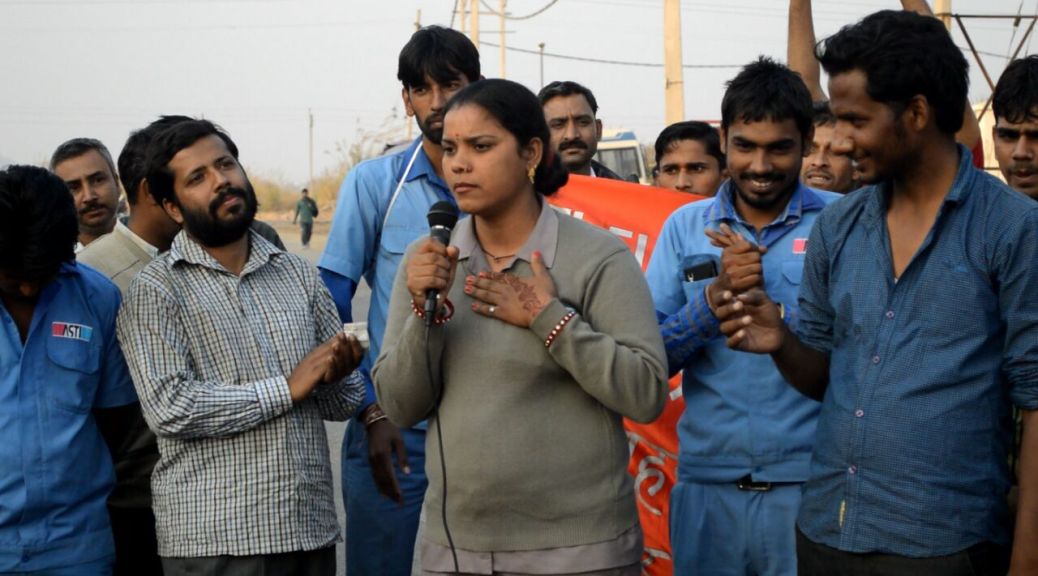
Days and Nights in Manesar – Reflecting on the ASTI Workers’ Struggle: Anshita & Arya

Guest Post by Anshita & Arya (Krantikari Naujawan Sabha)

All 310 contract workers in ASTI Electronics factory in IMT Manesar in Gurgaon, Haryana have been on dharna since 3rd November 2014 after they were laid-off on 1st November 2014 citing low work demand. Seven of them are on fast-unto-death from 24th November, while ten workers and pro-worker activists each everyday sit on relay hunger strike.

 In a context where contract workers, increasing exponentially as a demand of the capitalists gleefully forced down by the government through labour law reforms, are finding it ever harder to organize/unite and sustain spontaneous outburts of discontent, due to the precarious nature of their life and work conditions, workers at ASTI Electronics (as a continuation of the 60-70 strikes in various factories in the industrial belt of Gurgaon-Manesar-Dharuhera-Bawal in the last few months) are fighting back and keeping the flame of new emergent struggles alive.

These workers are raising important questions on contractualisation and informalisation within the organized sector which even Central Trade Unions have constantly avoided. Over 250 of these 310 workers are women whose militancy in struggle and leadership is redefining the overall struggle and changing the gender relations within the workers movement.

This struggle for work-livelihood-life is unmasking the heart of the developmental model on DMIC (see current projects in makeinindia.com) which Mr Modi under the supervision of the capitalist class is proposing as the solution to all ills before so-called ‘progress of the country.What follows is a short reflection from the factory gate on the ongoing struggle. Continue reading Days and Nights in Manesar – Reflecting on the ASTI Workers’ Struggle: Anshita & Arya

Debating Muslim Law after Shah Bano – the Model Nikahnama Initiative: A Suneetha

Guest Post by A SUNEETHA continuing the discussion on Uniform Civil Code on Kafila.

In popular imagination Muslim women’s unequal position in marriage is symbolized by cases such as Shah Bano or Imrana. It is understood this is the result of the religion-based Muslim personal law and the rigid control of women by the community in general and ulema in particular. Not many are aware that the same religion-based marriage law also offers tools for changing Muslim women’s position in marriage. In the last ten years, an ordinary document that every Muslim couple signs at the time of marriage – nikahnama or marriage contract – has assumed such a role. It has been innovatively used to initiate discussions and push for changes in the community’s thinking about the Muslim women’s position in marriage. In these efforts, a large number of “religious” and “non-religious” Muslim groups got into a conversation and set off a consensus-building process on the issue of a Muslim woman’s “entitlements”.

This discussion assumes importance in the context of the ongoing debate on UCC.  The debate on the UCC entered a new phase when, unhappy with the removal of Muslim women from the ambit of S 125 Crpc that guarantees all divorced women a minimum maintenance and the promulgation of a separate provision for divorced Muslim women called Muslim Women’s Maintenance Act 1986, many women’s groups renewed their demand for a UCC in 1990. Such a Code, it was hoped, would bring marital equality to women of all religions. When the Bharatiya Janata Party hijacked this demand to castigate Muslim men, (as if Hindu men were free of misogynist and patriarchal behaviour), such a hope was irretrievably lost. In the post-Babri Masjid demolition period, when there were pogroms against the Muslim communities, such a law would have found it impossible to garner support from the Muslims, especially if it were made by the BJP dominated Parliament. As anyone familiar with law knows, a consensus is important for law-making so that it is accepted and followed. But the changed situation of unparalleled parliamentary dominance of BJP brings newer challenges to all those working on issues of gender justice in all communities.

Muslim women were caught in this unenviable position since the 1990s – of having to address their own situation – under-age marriages, non-payment of mehr, arbitrary talaq, cruelty in marriage, maintenance after talaq, multiple marriages of men, resistance to women’s employment etc. while taking care that the Muslim men are not vilified further. Continue reading Debating Muslim Law after Shah Bano – the Model Nikahnama Initiative: A Suneetha

The Class Politics of Blasphemy in Pakistan: Fatima Tassadiq

Guest Post by FATIMA TASSADIQ

The brutal murders of Shehzad and Shama, a Christian couple in the village of Kot Radha Kishan in Kasur district on 4th November, spawned predictable outrage in the press and social media. The rush of horror, the diagnoses and prescribed course of action against such violence involved the familiar paternalistic discourse of the ‘illiterate masses’ whose ‘ignorance’ evidently leaves them particularly vulnerable to the manipulation of the much maligned mullahs. Such a narrative serves the dual function of reducing religious violence to the faceless masses while at the same time reaffirming the educated urban upper class as the rightful custodian of Islam and Pakistan. This construction conveniently ignores the role played by the state and the elite in producing religious violence and feeds the class-based blind spots that exist in our understanding of what constitutes religious extremism.

Continue reading The Class Politics of Blasphemy in Pakistan: Fatima Tassadiq

Whatever happened to the great debate? Ankita Anand

Guest Post by ANKITA ANAND

On 6 November 2014 BBC World invited three panellists from different sectors to debate on ‘A New India: Free, Fair and Prosperous’ as part of the World Economic Forum. Issues of content and objectivity apart, one still has high expectations of a group like BBC when it comes to setting high standards of form. But this ‘debate’ fell flat on its face on all counts.

No rules of the game

One would think that in a discussion like this all three panellists would bring in varied viewpoints due to their specialization in their individual sectors. However, if one wants to quote either the minister or the corporate voice in the debate, it would require constant rechecking to distinguish who said what. Of course businnesses and governments need not always be in conflict with each other. But this smooth overlapping can be dangerous if those who are to be at the receiving end of this coalition between corporate bodies and governing bodies get completely left out. So for all practical purposes, instead of having three distinct voices, the format of the session (to keep calling it a debate would be to perpetuate technical erroneousness) was two against one. The yesmanship resulting out of this format naturally dulled the sparkling energy any debate worth its salt should have. Continue reading Whatever happened to the great debate? Ankita Anand