Category Archives: Democracy

THE PEOPLE’S NATIONAL LIBRARY POLICY

This is a guest post by Purnima Rao and Mridula Koshy

[The Free Libraries Network (FLN) is a coalition of over 250 free libraries, librarians and library activists across India and South Asia. A member of the International Federation of Library Associations and Institutions (IFLA), FLN believes in universal access to reading materials and information. FLN offers a platform for sharing resources, best practices, and insights about free libraries in India. Although it does not own or operate libraries, FLN plays an integral role in coordinating and acting on policy issues related to access to knowledge resources. FLN actively advocates for a free public library system in India. The FLN believes that reading and access to information are a fundamental right. It is motivated by the conviction that a robust free public library system is a foundational bedrock of a just, equal, and democratic society.]

Free Libraries Network, is choosing the birth anniversary of Babasaheb Ambedkar to announce the completion of its work drafting the People’s National Library Policy. The date is fitting as Babasaheb’s love of books and reading and especially his belief in libraries gives us strength in our anti-caste work to argue for a public library system that is free and open to all. Our network of over 250 free libraries spread across nearly every state in India brings together library movement activists who recognise that without a publicly funded and locally autonomous library system, we will never realise the promise of Babasaheb’s great work, our Constitution. Our democracy suffers when the people do not have free libraries in which to have equal access to vital information.

At this time, we have every reason to fear that the long stagnant question of libraries and of library policy is being revived, but to serve narrow interests. We have seen the question raised in Rajya Sabha in 2022, and call issued from there to the Union Ministry of Culture for a national library policy; we attended the same Ministry’s Festival of Libraries in 2023, where the keynote speaker Vinay Sahasrabuddhe spoke of the “good” and “bad” books and where it was announced that the government would be shifting the library question from the State to the Concurrent list; and  we have visited a model library in Delhi, created by the Gautam Gambhir Foundation  and inaugurated by Amit Shah, which utilises best practices of modern library science such as open shelving with its impulse to freedom of choice to house a collection that can be characterised as propaganda.

The draft People’s National Library Policy is a counter to these threats and an attempt to revive the question of libraries in India. It recognises the pivotal role of public libraries in empowering communities and fostering societal progress, especially amongst those excluded throughout India’s history, including Dalit, Adivasi & Bahujan people, Backward Classes, women, non-binary & trans people, undocumented & refugee communities and persons with disabilities. Rooted in Dr Ambedkar’s ideals of equity and justice, the policy envisions a public library system that is freely accessible and relevant to all segments of society, transcending barriers of caste, class, gender and disability.

The PNLP will be released on 13th April 2024, at 5:00 PM, Press Club, New Delhi.

The full draft of the PNLP can be read here:

https://www.fln.org.in/library-reform-demanding-the-peoples-national-library-policy/

Mridula Koshy and Purnima Rao are members of the Research and Action Group, Free Libraries Network.

‘लोकतंत्र की जननी’ को अपना अलग डेमोक्रेसी इंडेक्स बनाने की ज़रूरत क्यों आन पड़ी है?

अपनी जनतांत्रिक छवि चमकाने के लिए ‘मदर आफ डेमोक्रेसी’ होने के दावों से शुरू हुई भारत सरकार की यात्रा फिलवक्त डेमोक्रेसी रेटिंग गढ़ने के मुक़ाम तक पहुंची है. अभी वह किन-किन मुकामों से गुजरेगी इसके बारे में भविष्यवाणी नहीं की जा सकती.

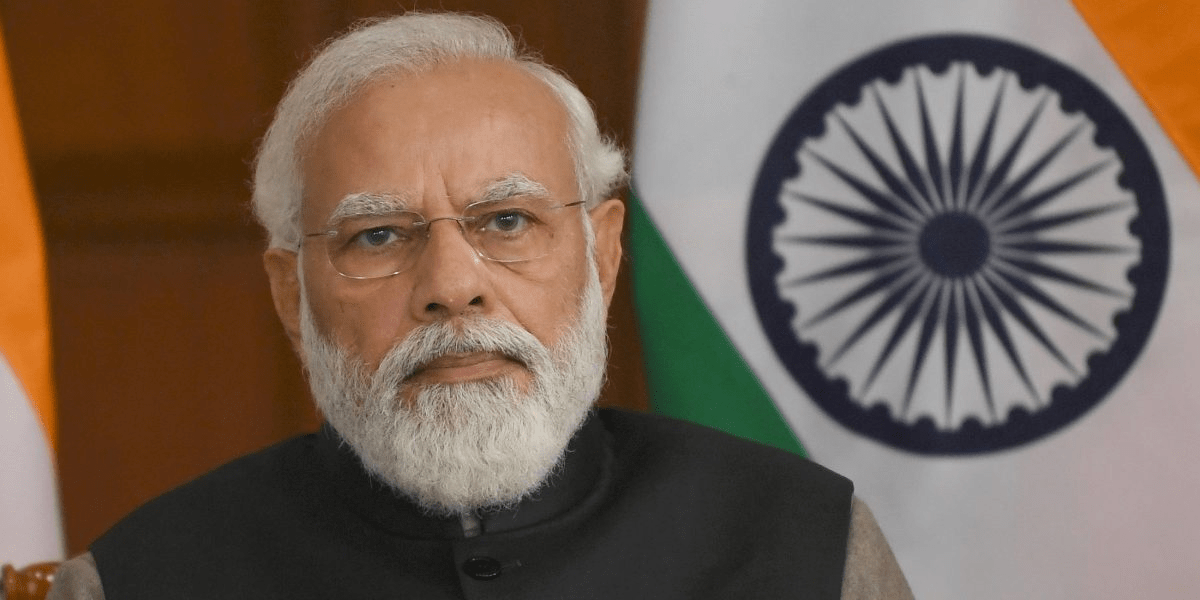
प्रधानमंत्री नरेंद्र मोदी. (फोटो साभार: pmindia.gov.in)

‘भारत- जिसने औपनिवेशिक हुकूमत से आज़ादी के बाद जनतांत्रिक संरचनाओं को अपनाया और हर नागरिक को संविधान के तहत बुनियादी अधिकार प्रदान किए- वहां जनतंत्र की परंपरा कमजोर की जा रही है….’

दुनिया के अग्रणी विद्वानों- जिनमें से कई भारतीय मूल के हैं – द्वारा पिछले दिनों जारी बयान में प्रगट सरोकार काबिलेगौर हैं. बयान में साफ कहा गया है कि किस तरह यहां ‘मूलभूत आजादियों को भी कुचला जा रहा है या कमजोर किया जा रहा है. ’

गौरतलब है कि साझे बयान का फोकस न्यूज़क्लिक न्यूज़ पोर्टल पर हुए संगठित हमले, भीमा कोरेगांव मामले में पांच साल से अधिक समय से हुई गिरफ्तारियों और उत्तर पूर्व दिल्ली में हुए दंगों के बाद इसी तरह जेल में डाले गए लेखकों, कार्यकर्ताओं पर रहा हैे, लंबे समय तक जेल में रखने के बावजूद चार्जशीट तक दाखिल न होने पर है, लेकिन वह यहां की बद से बदतर होती स्थिति को ही रेखांकित कर रहा है.

तय बात है कि एक ऐसे समय में जबकि चुनाव आसन्न हैं और मोदी सरकार द्वारा देश के अंदर उठाए जा रहे दमनात्मक कदमों को लेकर मामला सरगर्म है, यहां तक कि चुनावों का ऐलान होने के बाद विपक्ष के नेताओं की गिरफ्तारी, प्रमुख विपक्षी पार्टी कांग्रेस के बैंक खातों को बहाना बनाकर सील देने के कदम ने देश-दुनिया में चिंता प्रगट की जा रही है, उस समय इस बयान ने निश्चित ही मोदी की अगुवाईवाली हुकूमत को कत्तई खुश नहीं किया होगा.

आधिकारिक तौर पर इस बयान को लेकर मुल्क के मौजूदा हुक्मरानों की तरफ से कोई प्रतिक्रिया नहीं आई है और न ही उनके हिमायतियों ने इसके बारे में कुछ कहा है. उसकी पूरी कोशिश यही होगी कि हुकूमत के प्रति आलोचनात्मक रुख रखने वाले अन्य बयानों, रिपोर्ट की तरह इस बयान को भी भुला दिया जाए या दफना दिया जाए. ( Read the full article here : https://thewirehindi.com/271640/why-does-the-mother-of-democracy-need-its-own-democracy-index/)

Wokeism – the new whipping horse of India’s Hindutva Right & of the Global Right 

(This is another article on ‘Wokeism’ on Kafila, you must be familiar with earlier discussions on this theme here and here) 

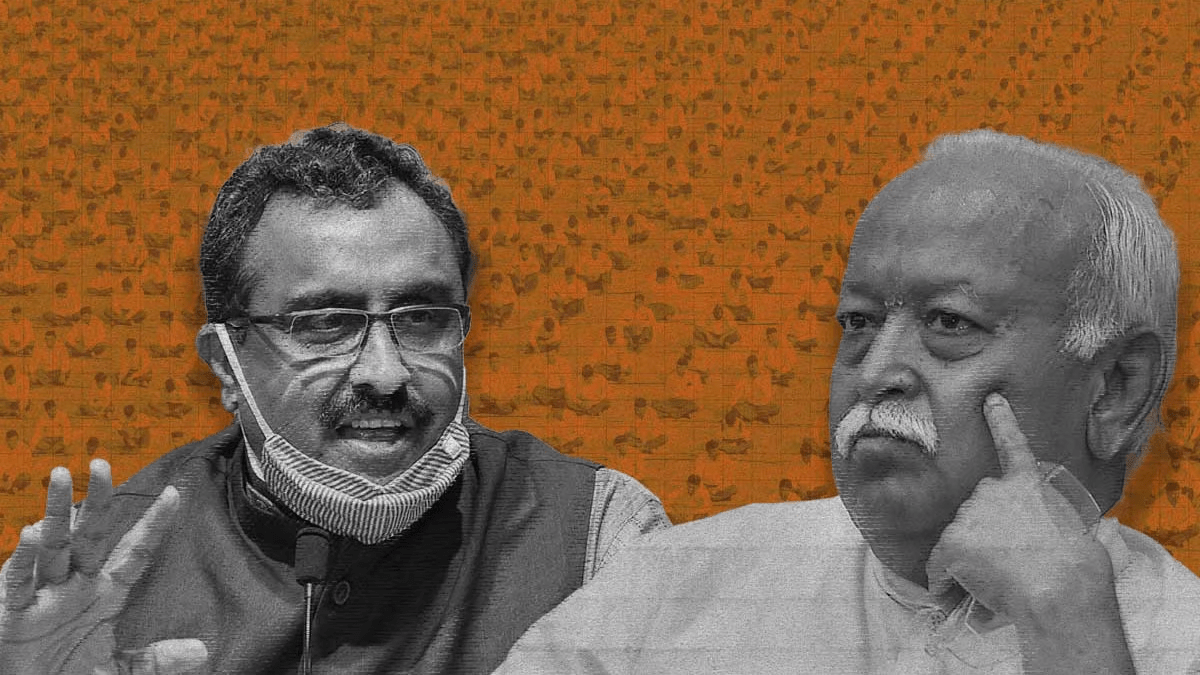
Ram Madhav and Mohan Bhagwat, Stylised by Jaseem ( Photo Courtesy : The News Minute)

The shrill voices of those who give orders
Are full of fear like the squeakings of
Piglets awaiting the butcher’s knife, as their fat arses
Sweat with anxiety in their office chairs….
Fear rules not only those who are ruled, but
The rulers too.

—Bertolt Brecht

The global right is ’terrified’ (at least that’s what it wants us to believe)

We are being increasingly told that it has finally discovered what could prove to be its nemesis.

Right from the likes of Donald Trump to the Indian origin American Vivek Ramaswamy – who has even written few tomes on this ’menace’ to the controversial hard right Florida governor De Santis, there are claims that the spectre of woke or wokeism haunts them. One can recall how De Santis had famously declared in his re-election victory speech that ’Florida is where Woke ideology goes to die’. [1]

What needs to be noted that this ’menace’ felt by the right is not limited to the Western World only.

There are newer converts to this movement.

Mohan Bhagwat, the Supremo of RSS ( Rashtriya Swayamsevak Sangh) – a Hindutva Supremacist Organisation – happens to be the newest entrant. Sometime back he joined this chorus by the global right, similarly expressing his anger against ’Wokeism’ and ’Woke People’ in no uncertain terms. For him these were ’forces’ who were ’spoiling Indian ethos’.

( Read the full article here )

Towards Securing Himalayas From Disasters – People for Himalaya Demand Charter 2024

People for Himalaya campaign is an initiative of progressive groups, civil society organisations and activists from the region. The campaign is not affiliated with any political party. For the list of supporting organizations, please scroll to the bottom of the post.

[Last year we witnessed the hills of Himachal Pradesh, Uttarakhand and Sikkim in virtual revolt against the mindless development that they have been subjected to. It was against the backdrop of these frightening developments that discussions began among groups across the Himalayan states in February this year, leading to the adoption of the Charter for the Himalayas. We also just saw environment activist from Ladakh, Sonam Wangchuk sit on a 21-day hunger strike in freezing minus 10 degrees Centigrade, demanding that the Sixth Schedule of the Constitution be implemented in Ladakh and it be protected from being handed over to corporate interests for so-called Development projects. Wangchuk’s hunger strike was withdrawn but the movement continues with women continuing their sit-in and other sections of the population, especially youth, preparing to join in soon. The movement is not about one person’s hunger strike but to prevent Ladakh meeting the same fate as Himachal Pradesh, Uttarakhand and Sikkim. – AN]

  1. STRENGTHEN REGULATION, MONITORING AND PLANNING OF LAND USE, LAND-USE CHANGE AND FORESTRY (LULUCF)
  • A complete moratorium on all mega infrastructure projects like railway, dams, hydro projects and four lane highways, tunnelling, transmission lines – and conduct a 360-degree multi- disciplinary review of the impacts of existing projects
  • Democratic decision making through referendums and public consultation on large infrastructure by strengthening the Environment Impact Assessment Notification 1994 (Scrapping the EIA 2020 Amendments & FCA 2023 Amendments); Free Prior informed consent of Gram Sabhas to be mandatory for all developmental projects
  • Terrain Specific Disaster and Climate Risk Studies and land susceptibility assessments to be mandatory for land use change for urbanisation, commercial development and public infrastructure construction
  • Just Implementation of 2013 Right to Fair Compensation and Rehabilitation Act
  • To ensure participation of citizens, civic bodies and Gram Sabhas in monitoring pollution and land use change works like stone crusher, sand-gravel mining, mineral mining, debris dumping, construction of local roads and every commercial construction work.

2. GRANTING COMMUNITIES CONSTITUTIONAL, LAND AND FOREST GOVERNANCE RIGHTS

  • Strengthening of state laws and regulations that protect the private and community resource rights of nature dependent communities – example Van Panchayat Rules in Uttarakhand
  • Complete the Unfinished land reforms and land regularisation agendas to provide secure land tenure to landless and displaced communities to practice land based livelihoods – example Nautor rules in Himachal Pradesh
  • Just implementation of constitutional provisions and laws that support the decentralised, autonomous and democratic governance and decision making – example the Scheduled Tribes and Other Traditional Forest Dwellers Act 2006 and other constitutional provisions
  • Protection of pastoral communities especially minority communities like the Van Gujjars and Bakarwals in migratory routes
  • Strengthen floral and faunal biodiversity through Community Forest Resource Rights governance framework under FRA 2006 – convert pine monocultures into broad leaf forests to address fodder scarcity, forest fires and soil erosion. Five ‘f’ species should drive plantations i.e. fruit, fodder, fertilizer, fuel, fiber and medicinal plants. Weed eradication programs for pasture development.

3. TRANSPARENCY, KNOWLEDGE BUILDING, SHARING AND EXCHANGE

Continue reading Towards Securing Himalayas From Disasters – People for Himalaya Demand Charter 2024

How India Wants to Whitewash Its Democracy Image

It was the early part of last year when the chorus of India as ‘mother of democracy’ gathered pace.

The summit for Democracy held in March, witnessed PM Modi in his virtual address sharing his pearls of wisdom as India being “indeed the mother of Democracy” citing reference to Vedas and Mahabharata

Delegates who arrived for the G 20 summit in Delhi were similarly greeted with the slogan Welcome to the ‘Mother of Democracy’ ( -do-)

Rightwing think tanks were not behind to project India’s past experience in its very own Indic Democracy despite proofs to the contrary.

Continue reading How India Wants to Whitewash Its Democracy Image

A Statement by Scholars and Writers on The Undermining of Elementary Freedoms in India

[Following is a statement issued by some eminent scholars and writers against the prolonged incarceration without trial of political prisoners in India.]

We, the signatories to this statement, write with the greatest of concern because we admire the democratic structures that India embraced since gaining Independence from colonial rule, including a set of Constitutionally-guaranteed fundamental rights for every citizen.  This entire democratic tradition is being fundamentally undermined by some recent developments in that country.   We write at this particular moment to draw the world’s attention to how this is being done by the prolonged incarceration without trial of a large number of writers, journalists and social activists, often without so much as a charge-sheet against them. All that these individuals have done is to criticize the present government in India.

Continue reading A Statement by Scholars and Writers on The Undermining of Elementary Freedoms in India

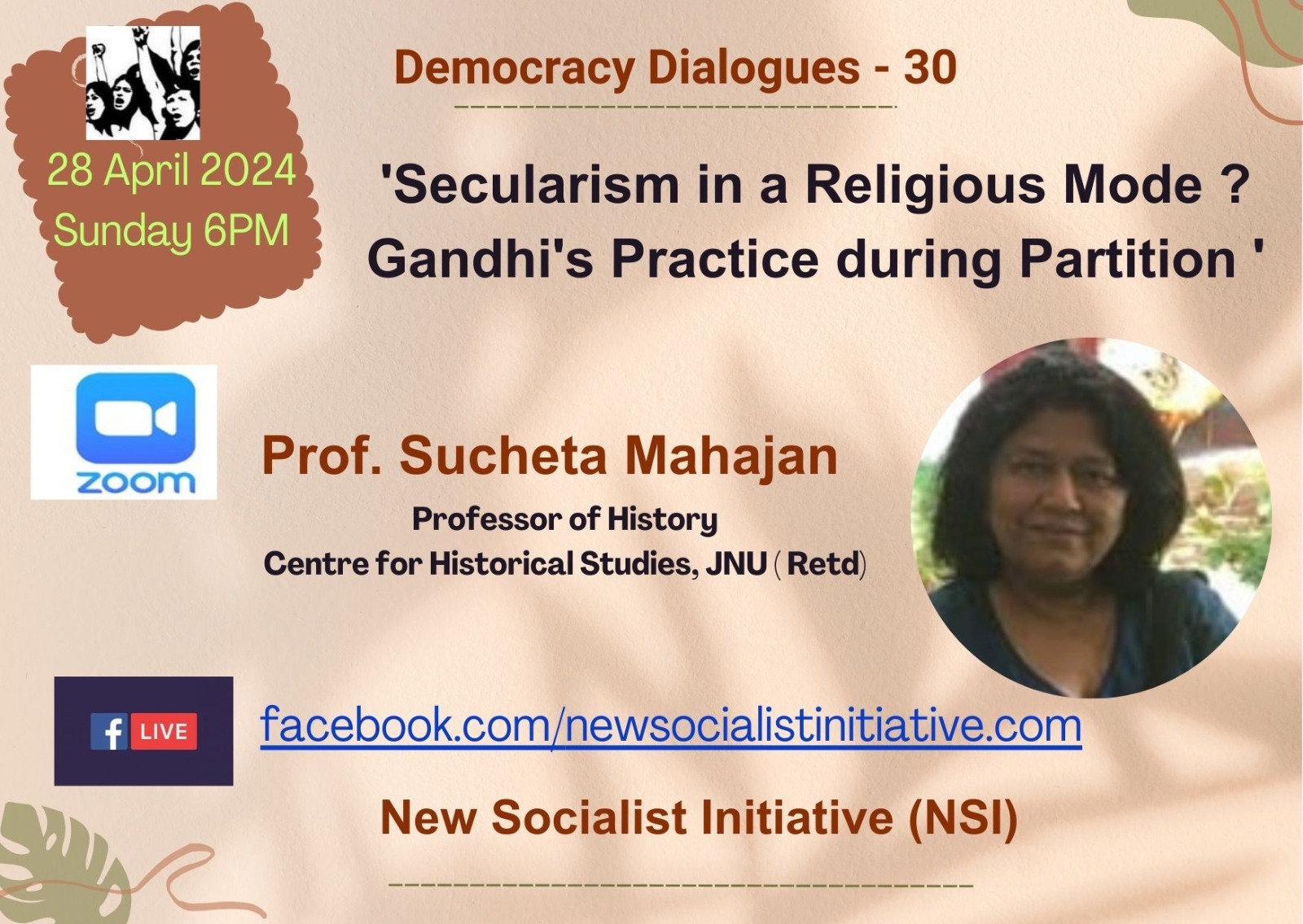
Democracy and Religion in Modern India: Critical and Self-critical Reflections – Prof Rajeev Bhargava

Professor Rajeev Bhargava, noted political theorist will be delivering the 29th Democracy Dialogues Lecture on Sunday, March 31, 2024 at 6 PM ( IST)

Please reserve the time and date for the lecture. Details are given below

Democracy Dialogues Lecture 29:

Speaker: Professor Rajeev Bhargava

Date: Sunday, March 31, 2024, at 6 PM IST

Theme: 

Democracy and Religion in Modern India: Critical and Self-critical Reflections – Prof Rajeev Bhargava

– New Socialist Initiative

Abstract:

“It is widely accepted that ‘secular’ is an alien category in India. This is too simplistic a view. But even if we agree with it, how come no one has asked if ‘religion’ is alien to India? My claim is that it is or at least it is as foreign to India as secular is. What are the implications of this thesis? What have been the consequences of religionization on Indian society and polity? How has it shaped Indian democracy?  In my presentation, I shall expand these views and show why India  needs secularism and in what form.”

About the speaker :

Renowned political theorist and former director of  Centre for the Study of Developing Societies ( CSDS), Delhi Prof Rajeev Bhargava is currently an honorary fellow at the Centre and the director of its Parekh Institute of Indian Thought. He has taught at the University of Delhi and Jawaharlal Nehru University (Delhi) and has lectured, taught and held visiting professorships at several international universities. 

Prof Bhargava’s work on individualism and secularism is internationally acclaimed. His publications include Individualism in Social Science (1992), What Is Political Theory and Why Do We Need It? (2010) and The Promise of India’s Secular Democracy (2010). His edited works include Secularism and Its Critics (1998), Politics and Ethics of the Indian Constitution (2008) and Politics, Ethics and the Self: Re-reading Hind Swaraj (2022), Bridging Two Worlds : Comparing Classical Political Thought and Statecraft in India and China (2023) 

REJECT CAA-NRC – REJECT NATIONALIST XENOPHOBIA – REJECT DETENTION CENTRES: Hasratein A Queer Collective

Guest post by HASRATEIN : A QUEER COLLECTIVE

On 11 March 2024, four years after the passing of the Citizenship (Amendment) Act, 2019, the BJP government notified the CAA rules. Continuing their symbolic violence in creating a Hindu Rashtra, the notification came at the beginning of the month of Ramadan, held to be holy by Muslims across the world. As part of their election agenda, this marks another step to consolidate the Hindu vote bank which has been fed on anti-Muslim proposals and propaganda machines. While CAA apologists are using refugee rhetoric to spread hatred against Muslims in the country, the CAA rules show the bureaucratically stringent proofs demanded (Schedule IA and IB) which will ensure many who attempt to claim citizenship through the Act will be rendered de facto stateless.

CAA 2019 is an amendment to India’s citizenship law that fast tracks citizenship acquisition for non-Muslim minorities of neighboring countries of Afghanistan, Pakistan, and Bangladesh. This includes Hindus, Sikhs, Jains, Buddhists, Parsis, and Christians from these three countries. An earlier version of the bill with this logic was passed by Lok Sabha in 2016 but did not get cleared by Rajya Sabha. The Act introduces anti-secular provision by making religion a criterion in citizenship acquisition. CAA 2019 fulfills many agendas of Hindu nationalism at the same time. Continue reading REJECT CAA-NRC – REJECT NATIONALIST XENOPHOBIA – REJECT DETENTION CENTRES: Hasratein A Queer Collective

No It Is Not Hegde’s ‘Mann Ki Baat’ It is BJP’s ‘Dil ki Baat ‘:  Goodbye Constitution, Enter ManuCracy !

How BJP dreams to Usher In Hindu Rashtra Democratically ?

Representative image. Credit: iStock Photo( courtesy Deccan Herald)

Anantkumar Hegde, BJP MP from Uttari Karnataka, is again in the news.

Close on the heels of his controversial statement about demolition of a mosque and his invoking of Hindu community who would not rest ‘until more mosques are reclaimed ‘ (1) he has delivered another explosive statement.

This time the whole edifice of Constitution is under his attack, which according to him has ‘distortions introduced by the Congress to suppress Hindu society’. (2) ..

..Critics have rightly said how this suggestion exhibits real intentions of the saffron regime which wants to usher us into Hindu Rashtra, end reservation for scheduled and backward communities, reinforce caste system and also replace Constitution drafted by Dr Ambedkar with a worldview inspired by Manusmriti. The main opposition party Congress has expressed fear that all such statements, steps just go to vindicate how a ‘cloud of dictatorship’ now hovers over India. (3)

It is a different matter that neither BJP top guns nor PM Modi – who had famously declared way back in 2014 that for him ‘Constitution is the most sacred book’ deemed it important to condemn Hegde’s statements or ordered him to seek apology for his claim.

One learns that it has merely distanced itself from Hegde’s controversial statement to convey an impression that what he said was his ‘Mann ki Baat’ and not BJP’s Dil ki Baat’ .

After Citizens’ Commission on Elections, Independent Panel on Monitoring Indian Elections, 2024 [IPMIE] Formed

[We reproduce below a statement issued on 11 March 2024, by the group comprising the Citizens Commission on Elections, which included eminent citizens like former Justice Madan B. Lokur, Wajahat Habibullah, MG Devasahayam, Sundar Burra and others. This statement announces the formation of the IPMIE, keeping the special urgency to monitor the conduct of the electoral process that stands seriously threatened as we move into the 2024 general elections.]

India is world’s largest democracy wherein General Election to Parliament is around-the-corner (April-May, 2024). As is known the words “election” and “democracy” have become synonymous. The Universal Declaration of Human Rights of 1948 states as much: “The will of the people shall be the basis of the authority of government; this will be expressed in periodic and genuine elections which shall be by universal and equal suffrage and shall be held by secret vote or by equivalent free voting procedures.”

The situation on the ground in India, has created anxiety and upsurge within the country. The citizen is at the centre of any democracy with their right to vote in a free and fair manner. Currently, the concern among the Indian electorate is that this process is in peril. The present scenario reveals an unevenness of the playing field that militates against the right to free and fair elections, and risks obstructing the will of the people.

Continue reading After Citizens’ Commission on Elections, Independent Panel on Monitoring Indian Elections, 2024 [IPMIE] Formed

Can a Teacher be Compelled to Offer Prayers in School Premises ?

An atheist school teacher’s case in Nashik before the Bombay HC resonates with the recent case of a Dalit teacher’s suspension in Rajasthan.

Representational Image. Image Courtesy: Flickr

Can anyone compel a teacher to offer prayers inside a school?

This was a little vexed question before the Bombay High Court when a case came up before a two-judge bench led by Justice Abhay Oka and Justice Revethi Mohiti-Dhere. Sudhir Salve, an atheist teacher from a school in Nashik — who otherwise had an excellent record in his profession — had approached it for relief, because the school management where he worked had denied increment to him for ‘indiscipline’.

The teacher’s refusal to fold hands at the time of school prayer or even at the time of taking oath of the Constitution was construed as such an act. As it happens in most such cases, Salve’s case had lingered on for more than six years in the lower courts.

But it did not take much time for the two-judge bench to decide the case, which declared that any such compulsion to fold hands will be a ‘[v]iolation of the fundamental rights conferred on an individual under the Constitution’.

One was reminded of Salve’s case when the suspension of Hemlata Bairwa, a Dalit lady teacher from an upper primary school in Rajasthan’s Baran district, made headlines recently.

To recapitulate the turn of events, it was Republic Day (January 26, 2024) and Bairwa had garlanded the portraits of B.R. Ambedkar, Savitribai Phule and Mahatma Gandhi before the assembly of students in her school. Two of her fellow teachers interrupted the programme and asked her to put a photograph of Saraswati, goddess of knowledge as per Hindu mythology, which she plainly refused. Despite pressure by them, who even allegedly made casteist slurs against her and were even helped by the local head of the panchayat, Bairwa refused to relent.

When the video of the whole incident went viral, the state education minister Madan Dilawar announced her suspension in a public programme — an act that evoked a strong reaction within the Dalit community. Demonstrations were held in different parts of the state opposing this action by the education minister, demanding revocation of the suspension order and removal of the minister from the post.

The question arises: Will Bairwa similarly have to wait for a long period like Salve for justice? Or whether the Bombay High Court’s intervention would impel the Rajasthan High Court to take up her case suo motu.

Waiting to Become Eichmann? Unpacking the Moral Relativism of a People

“They took so much away from us that they ended up taking away our fear”
— Message scrawled on a placard in a women’s march in Spain

’How does Justice feel?’

A difficult query to answer but perhaps Bilkis Bano would be the best person to respond to it.

Yes the same Bilkis – survivor of a mass rape and the only witness to horrific massacre of her 14 relatives – when the state she lived witnessed a carnage when officially one thousand innocents perished in the communal pogrom and many thousands were displaced from their homes and were condemned to live as internal refugees.

One can still recollect her words when the highest courts of the country finally cancelled the remission of sentences to her perpetrators who had been convicted for this heinous crime. [1].

She frankly narrated her feelings before a reporter.

’It feels like a stone the size of a mountain has been lifted from my chest, and I can breathe again. This is what justice feels like.”

Empowered to Death? Tales of Empowerment and Death from Kerala

Last month, on the 21st of January 2024, a young woman, an assistant public prosecutor at a lower court in the district of Kollam in Kerala, took her own life, after sending out one last desperate plea — calling for justice after her death at least. She revealed through audio clips that fighting for justice at her workplace had worn her out completely. Her words brought out the rot infecting the institution of public prosecution (the stench of it is very much in the air, actually, unbearable it has become, though our political leaders and social justice motormouths seem to largely ignore it).

Continue reading Empowered to Death? Tales of Empowerment and Death from Kerala

Say No To Hate, We Need Jobs

A Joint Statement and Appeal issued by people’s organisations, intellectuals and concerned citizens from Uttarakhand about the violent incidents on 8 th February

( This is an attempt at English translation of the original statement issued by writers, journalists, social activists and people’s organisations. For original statement , please see here )

Developments on 8th February are serious, condemnable as well as tragic. We would like to express our deep concern for the dead as well as the injured and demand proper compensation for them

We appeal to people in Uttarakhand and rest of India to maintain peace and harmony . We condemn all sorts of violence and want that an impartial legal action be taken about the incident. We are of the opinion that every type of resistance, opposition should always remain in the bounds of law and constitution.

We also appeal to the administration that no action should be contrary to Constitutional principles and values.

  • Negligence, hurry and biased approach of the administration can be clearly seen in these developments. Even the language of the administration sounds sectarian. When the allegedly illegally built mosque and madarsa were in the control of the administration itself and the next hearing in the case was scheduled to be heard on 14 th February, what was the necessity to go for demolition in such a hurried manner. It is time that the District Magistrate and Senior Superintendent of Police are immediately transferred and a judicial enquiry be done about the whole incident.
  • We need to bear in mind that since 2017 the Uttarakhand government has desisted from taking an impartial legal action against vigilante violence and hate speeches. Right from citizens groups, people organisastions, opposition parties, leading intellectuals, advocates of Supreme Court to ex generals of the army from the state have been raising their voices in this connection. When the government does not appear impartial it emboldens anti-social elements. In this background voices have been raised to underline how use of hate, communal and violent incidents for political benefits ultimately engenders further challenges to social harmony and rule of law. It is high time that steps on war footing be taken to strictly implement decisions of the Supreme Court in 2018 and later, regarding hate speeches and violence.
  • We have always maintained that the “anti encroachment drive” is plagued by unnecessary hurry and a biased approach. Hundreds of such incidents have occurred since last one year . We are of the opinion that without resettlement nobody should be made homeless and every such action be undertaken in proper legal manner and with enough sensitivity. As far as Uttarakhand is concerned today lakhs of people are living on 4 lakh hectare Nazul land. In Haldwani itself a large population has settled on Nazul land which comprises people belonging to all religions. It has been a long time demand that people living on nazul land be given the ownership of the land. The state government has even sent proposal to the central government in this connection. Despite all this it is beyond comprehension to see that government seems to be in an unnecessary hurry regarding the issue of encroachment. Since quite some time the state government is engaged in these efforts under the name of anti encroachment drive. We feel that the government is pushing its sectarian agenda under the name of anti encroachment drive. This should be immediately stopped.

Say No To Hate, We need Jobs

  • Rajiv Lochan Sah, Uttarakhand Lok Vahini; Naresh Nautiyal, General Secretary, Uttarakhand Parivartan Party ; Tarun Joshi, Van Panchayat Sangharsh Morcha; Bhuvan Pathak and Shankar Dutt, Sadbhavna Samiti Uttarakhand; Shankar Gopal and Vinod Badoni, Chetna Aandolan; Islam Hussain, Sarvoday Mandal ; Lalit Upreti and Munish Kumar, Samajwadi Lok Manch ; Trilochan Bhatt, Independent Journalist; Heera Jangpani, Mahila Kisan Adhikar Manch ; Mukul, Mazdoor Sahyog Kendra

After FTII, Lalit Kala Academy Pune Students Face Attacks of Right Wing Goons

We publish below a statement circulated by Lalit Kala Kendra(Gurukul) alumni, art educators, visiting faculty and theatre/cine artistes regarding the recent attack on the students making an examination presentation of a play woven around a Ram Leela rehearsal, where routinely men play women’s roles. This attack took place on 2 February. This incident was preceded by an attack on FTII students on 23 January by a group of right-wing goons. We also present in this post, for the record, a statement on the previous incident by the FTII Students’ Association and a solidarity statement by FTII Alumni.

Statement from Lalit Kala Kendra(Gurukul) alumni, art educators, visiting faculty and theatre/cine artistes

We would like to begin by saying that despite our diverse ideological, cultural, social, religious and geographical backgrounds and identities, we write this note together as informed and sensitive artists, and citizens of India. We would like to strongly emphasise that we have great respect for all religions, castes, creeds, sects etc. We are proud of and value our rich Indian culture and traditions.

Continue reading After FTII, Lalit Kala Academy Pune Students Face Attacks of Right Wing Goons

Call to participate in compiling information on disability access: Centre for Disability Studies, NALSAR, Hyderabad

Appeal sent by AMITA DHANDA and ANITA GHAI

Let us do it together!
The Supreme Court of India on 29th of November 2023 took up the long pending case of Rajive Raturi vs Union of India, and expressed dissatisfaction on the manner in which the Union, States and Union Territories were implementing their accessibility obligations. Since the reports submitted by the governmental authorities to the Court were also found unsatisfactory, the Court directed the Centre for Disability Studies (CDS), NALSAR Hyderabad:

to submit a report on the steps required to be taken in accordance with the guidelines and the Accessible India Campaign to, inter alia, make all State and Central Government buildings, airports, railway stations, public transport carriers, all Government websites, all public documents and the ICT eco system fully accessible to persons with disabilities.

The Court had asked the Union Ministry of Social Justice to take care of the logistics.

Continue reading Call to participate in compiling information on disability access: Centre for Disability Studies, NALSAR, Hyderabad

Demanding respectful and inclusive language for sex workers: Sex Workers and Allies South Asia (SWASA)

Text of a petition initiated by SWASA, signed by 3640 sex workers and allies, sent to the UN Special Rapporteur on Violence Against Women, Reem Alsalem on January 31, 2024. This is in response to a call for inputs towards the Special Rapporteur’s report on violence against women to be presented to the UN  Human Rights Council in June 2024.

Sex workers and allies at a rally demanding sex work be recognized as work under government labor rules, on the eve of International Labor Day, in Kolkata, April 30, 2022. AP Photo/Bikas Das. Image courtesy Human Rights Watch

We, the undersigned write to bring to your attention our concerns regarding the problematic terminology used in the call for inputs to the report of the Special Rapporteur (SR) on violence against women (VAW) and girls to the Human Rights Council.  The thematic report of the SR on VAW that will be presented to the UN Human Rights Council at its 56th session in June 2024 proposes to examine the nexus between the global phenomenon of prostitution and violence against women and girls.

The call for inputs states that the Special Rapporteur would like to receive inputs to better understand the relationship between prostitution and violence against women, to clarify terms, approaches and actions States should take in order to maintain the spirit of international human rights law and to effectively protect women and girls from all forms of violence. Continue reading Demanding respectful and inclusive language for sex workers: Sex Workers and Allies South Asia (SWASA)

अजेयता का मिथक: 2024 में मोदी की वापसी होगी या 2004 की होगी पुनरावृत्ति?

2024 की शुरूआत में भारत एक प्रचंड बदलाव की दहलीज पर खड़ा है। सभी जनतंत्र प्रेमी, इन्साफ पसंद और अमन के चाहने वालों के सामने यही बड़ा सवाल मुंह बाए खड़ा है कि 2024 के संसदीय चुनावों में- जो मई माह के अंत तक संपन्न होगा तथा नयी सरकार बन जाएगी (अगर उन्हें पहले नहीं कराया गया तो)- का नतीजा क्या होगा?

क्या वह सत्ता के विभिन्न इदारों पर भाजपा की जकड़ को ढीला कर देगा, क्या वह जनतंत्र की विभिन्न संस्थाओं को निष्प्रभावी करने की या उनका हथियारीकरण करने की सोची समझी रणनीति को बाधित कर देगा, क्या वह धर्म के नाम पर उन्मादी तक हो चुकी जनता में इस एहसास को फिर जगा देगा कि 21वीं सदी में धर्म और राजनीति का घोल किस तरह खतरनाक है या वह भारतीय जनतंत्र की अधिकाधिक ढलान की तरफ जारी यात्रा को और त्वरान्वित कर देगा, भारत के चुनावी अधिनायकतंत्र ( electoral autocracy) की तरफ बढ़ने की उसकी यात्रा आगे ही चलती रहेगी

.

The Preamble of the People


Thinking Graham Staines and his Children in times of Jubilation over Ram Temple

The life of the dead is placed in the memory of the living.

– Marcus Tullius Cicero

Politics is nothing but theology in action

– Ambedkar


Right-wing politics suffers from a common syndrome everywhere.

It never feels confident to project its own icons for the rest of the humanity, whatever might be their claims about their worldview,  it knows that its own icons are detested by a wide spectrum of people.

The easiest way it finds to overcome this lacunae is to appropriate already established icons – who  were even opposed to their world view as well  and claim them their own. In fact, it does not have any qualms in utilising dates – bearing special significance for exploited and oppressed and marginalised of the world – to put their stamp on it.

The project of Hindutva Supremacism – which yearns / strives to transform a Secular, Socialist, Democratic and Sovereign Republic into a Hindu Rashtra has perhaps achieved near perfection in this kind of politics.

Ram’s Ayodhya: Vivek Kumar

Guest post by VIVEK KUMAR

(Translated by Nivedita Menon from a widely circulating post earlier attributed to Saroj Mishra, on social media, originally in Hindi.

UPDATE: We have since heard from the author himself. This post was written in 2010 by VIVEK KUMAR (Vivek Asri) and so we have made the necessary changes. Here is the link to VIVEK KUMAR’s  original post.

Update 2 : The Hindi original can also be read here on Kafila.)

This 300 year old Janmasthan temple in Ayodhya, built on land donated by a Muslim zamindar, was demolished in August 2020 to accommodate an expanded vision of the new Ram Mandir. Image courtesy The Wire

They say Ram was born in Ayodhya; in Ayodhya he played and roamed around as a youth, grew into adulthood, was sent from there into exile in the forest, and then returned to rule there. There are temples in Ayodhya to commemorate every moment of his life. Where he played, there is Gulela Mandir. Where he studied there is Vashishta Mandir. Where he sat and ruled, there is a mandir. Where he ate his meals, there is Sita Rasoi. Where Bharat stayed, there is a mandir. There’s Hanuman Mandir, Kop Bhavan. There’s Sumitra Mandir, Dashrath Bhavan. There are many many such temples and all of them are about 400 to 500 years old. That is to say, these temples were built when Hindustan was ruled by the Mughals, by Muslims.

How strange! How did Muslims permit these temples to be built? They are remembered after all, for destroying temples. Continue reading Ram’s Ayodhya: Vivek Kumar