Category Archives: Empire/ Imperialism

Free Murtaza Manzoor

This release comes from AMNESTY INTERNATIONAL

Urgent Action: Child Detained Without Charge or Trial

UA: 115/11 Index: ASA 20/015/2011 India Date: 14 April 2011

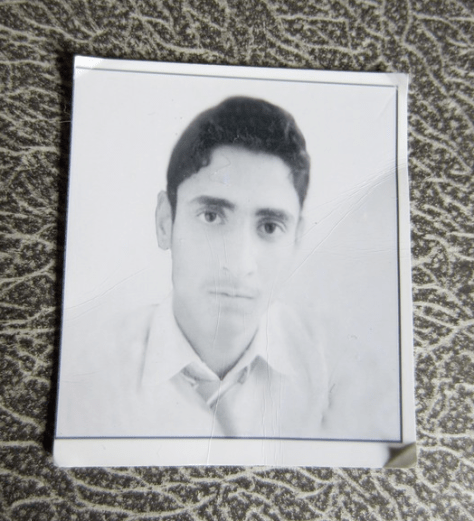
Murtaza Manzoor has been held in administrative detention since 8 February by police in Jammu and Kashmir, India. His official birth certificate states that he is only 17 years old.

Murtaza Manzoor was arrested on 21 January by police in Srinagar, the capital of Jammu and Kashmir. He was arrested in relation to a case from June 2010 on allegations of attempted murder, assault and rioting. According to the police, he is an “incorrigible antisocial element” who was leading a protest march that resulted in protestors pelting police with stones. Continue reading Free Murtaza Manzoor

‘Justice on Trial’ in the Times of Tilism: The Absence of Binayak Sen and the Presence of Anna Hazare on Television in April 2011

Sometime today, the Supreme Court bench of the honorable Justices H. S. Bedi and C.K. Prasad will hear arguments for and against the petition asking that  Dr. Binayak Sen, currently sentenced to life imprisonment by the Chhattisgarh High Court on charges of sedition and several other sections of the Indian Penal Code,  be given bail. Continue reading ‘Justice on Trial’ in the Times of Tilism: The Absence of Binayak Sen and the Presence of Anna Hazare on Television in April 2011

JKCCS demands probe into killings of political workers

Press release from the JAMMU KASHMIR COALITION OF CIVIL SOCIETY

11th April 2011

Jammu Kashmir Coalition of Civil Society (JKCCS) is concerned at the spate of killing of civilian political workers belonging to different religious and political parties. So far in this year, five civilian political workers have been killed.

Dastan-e-Sedition Banaam Hakim Sen

Dastangoi performed by Mahmood Farooqui and Danish Husain as part of Justice on Trial for the Free Binayak Sen Campaign, at the Alliance Francaise de Delhi on 6 April 2011. Video credit: Nicky Chandam.

A Lesson in Kashmiri: Hilal Mir

Guest post by HILAL MIR

On a clear spring day in the year 2000, the first year of my masters in journalism at Kashmir university, the class was taken to Sogam for a field trip. Zafar Hyderi, our esteemed teacher much respected for his integrity than scholarship was keen on students having practical experience. We were supposed to visit areas where only radio works because the mountains girding these areas don’t allow television signals from Srinagar Doordarshan to enter the homes. Imagine the relief of not having to watch 24X7 the official propaganda. Since Zafar Sir taught radio, these places provided him a cathartic vindication of the superiority of his medium (though secretly he might have aspired to make a name in TV). Such places are aptly called Shadow Zones. These could well be called shadow zones for other reasons too, as much of the barbarity unleashed by the state in such areas remains buried under shadows, itching to be put into words or images. Continue reading A Lesson in Kashmiri: Hilal Mir

I dont love India but I love cricket: Sudipto Mondal

Guest post by SUDIPTO MONDAL

They don’t love the deftness of a late cut
or the terror of a snorter;
the authority of a cover drive
or the seduction of a flighted one.

They don’t love the smell of spit on leather.
They don’t love one eased through long leg
unless its Deepika Padukone we’re talking about.

They don’t love cricket but they say they love India.

They don’t love Inzamam’s hulking sixes.
They don’t love Hayden’s muscular heaves
or Ponting’s nervous shuffle.

They don’t love Lara because he was
as good as Sachin.
And Kambli was after all just an urchin

They don’t love cricket but they say they love India.

They don’t love the man who cleans their shit.
They don’t love the colleague that eats meat.
They don’t love the ‘backdoor entrant’ who shares their seat.

They don’t love the hungry protestors
who block their path at the height of summer’s heat.
They don’t love the vendor on the street.

They don’t love cricket but they say they love India.

They don’t love the lesbians, gays, bisexuals and transgenders either.
They don’t love the man who puts food on their plate
because he asks for food in turn.

They don’t love them jungle boys
because they wouldn’t give them their hill.

They don’t love the dark ones.
They don’t love the short ones.

They don’t love a nose that lacks precision.
They don’t love circumcision.

They don’t love cricket but they say they love India.

Why Bangladesh?: Jyoti Rahman

Guest post by JYOTI RAHMAN

Singing Amar Shonar Bangla with the whole stadium — the highest point during a cricket match attended by fellow blogger Rumi Ahmed.

For those of us born in Bangladesh, which turns 40 today, along with the red-and-green flag, there is an instinctive, natural identification with Amar Shonar Bangla. Less recognised is the fascinating history of the song, which also tells us the twists and turns in the history of the 20th century Bengal. Continue reading Why Bangladesh?: Jyoti Rahman

I Wish You Egypt: An open letter to people of conscience in the West. Omar Barghouti

Guest post by OMAR BARGHOUTI

I wish you Egypt!

I wish you empowerment to resist; to fight for social and economic justice; to win your real freedom and equal rights.

I wish you the will and skill to break out of your carefully concealed prison walls. See, in our part of the world, prison walls and thick inviolable doors are all too overt, obvious, over-bearing, choking; this is why we remain restive, rebellious, agitated, and always in preparation for our day of freedom, of light, when we gather a critical mass of people power enough to cross all the hitherto categorical red lines. We can then smash the thick, cold ugly, rusty chains that have incarcerated our minds and bodies for all our lives like the overpowering stench of a rotting corpse in our claustrophobic prison cell.

Your prison cells, however, are quite different. The walls are well hidden lest they evoke your will to resist. There is no door to your prison cell — you may roam about “freely,” never recognizing the much larger prison you are still confined to. Continue reading I Wish You Egypt: An open letter to people of conscience in the West. Omar Barghouti

India’s ‘Lawless Law’ that Keeps Dissidents ‘Out of Circulation’

Amnesty International has released a report calling on India to repeal the Jammu & Kashmir Public Safety Act. The report, called A ‘Lawless Law’: Detentions Under the Jammu and Kashmir Public Safety Act, can be downloaded here. Given below is the text of the Introduction and Summary of the report.

‘We have to keep some people out of circulation…’ – Samuel Verghese, (then) Financial Commissioner – Home, Jammu and Kashmir in a meeting with Amnesty International, Srinagar, 20 May 2010 Continue reading India’s ‘Lawless Law’ that Keeps Dissidents ‘Out of Circulation’

A Million March in Kashmir?: Suvaid Yaseen

Guest post by SUVAID YASEEN

A ‘March of Million’ in Egypt’s Tahrir Square picked up the momentum of the people’s movement in Egypt, and finally led to the ouster of the dictator who had ruled Egypt with an iron fist for thirty years. Hosni Mubarak, the US backed Egyptian President, fled the country on 11th of February.

In Kashmir, 11th of February is an important day. It was on this day in 1984, that Maqbool Bhat, the founding member of the Jammu Kashmir Liberation Front (JKLF), a militant group that started the armed struggle for Independence of Kashmir, was hanged at Delhi’s Tihar Jail. He is remembered every year on his death anniversary, which has been a day of strike and protest since then. His remains still lie in the premises of Tihar jail in Delhi, and Kashmiris every year ask for their return. An empty grave in Srinagar’s Martyrs’ graveyard waits with Maqbool’s name on the plaque. For Kashmiris, the date of the flight of the modern Pharoah of Egypt, with Maqbool’s date of martyrdom brought a melancholic delight to this date. Continue reading A Million March in Kashmir?: Suvaid Yaseen

Congrats Egypt

Tahrir at Midan Tahrir

This slideshow requires JavaScript.

These six photos come to Kafila from an art collective in Cairo. Photographs by artist HR and other members. They do not want their identities revealed for their safety. Note how that gas canister says Made in USA!

Also see this video doing the rounds, perhaps its not the only effort that brought about the 25 January uprising in Egypt but may still be an important one.

Previously on Kafila: A Phone Call From Alexandria

Thus Sudan Splits, What’s Next for the Aspiring Rest?: Tanmoy Sharma

Guest post by TANMOY SHARMA

Pro-separation activists hold signs and chant pro-independence slogans outside the Juba airport in southern Sudan, on Jan. 4, where Sudanese President Omar al-Bashir arrived. Photo credit: Pete Muller/AP/File

To add to the tumultuous political dynamics of Africa, the world is most likely to see a new country adorning its map by the middle of this year with the two-way split of the continent’s largest country, Sudan.  For Africa, which has again hit the international headlines for fresh troubles in Ivory Coast, Tunisia and most recently in Egypt, civil wars based on identity and protests against despotic governments are nothing new. However the larger question that has kept many wondering is whether the world is going to see a new era of a large-scale statebirth with the formation of South Sudan, a process that almost stopped barring the examples of Kosovo two years back or East Timor ten years back. As millions of jubilant south Sudanese in the city of Juba, went to vote in a long awaited independence referendum in the second week of January to see their war torn region emerge as a new nation, it will be important to revisit the troubling status quo of other regions of the world demanding secession. Continue reading Thus Sudan Splits, What’s Next for the Aspiring Rest?: Tanmoy Sharma

Niyamgiri, You Are Still Alive

This 17 minutes long film won the Vasudha, Environment Award at the International Film Festival of India in Goa, 2010.

Egypt today: A first hand account.

Transcript of a land line phone conversation between my friend NAHED MANCYP (based in Toronto) and her mother a (a blogger herself) and grandmother (both currently in Alexandria). Her mother will write a piece soon which can get to Nahed only after the ban on the internet is lifted in Egypt. Thank you Nahed.

My mom:

We arrived in Alexandria from Cairo right after Friday prayers. The streets where completely empty. I actually made a bet with dad. Dad said, I don’t think anything is going to happen. I said, no something will. Half an hour later I began feeling really embarrassed because it looked like nothing would happen. The streets where deserted, there were no officers or cars. Continue reading Egypt today: A first hand account.

‘As followers pushed to get close, the pole broke in several places and the flag tumbled down onto Mr. Joshi’

History repeats itself, and we learn so little from it. Or rather, we learn too much from it. I am excerpting below about half the text of a report dated 27 January 1992, written by EDWARD A. GARGAN in The New York Times, describing in detail Murli Manohar Joshi’s hoisting of the Indian flag in Srinagar’s Lal Chowk. Wish I had a picture!

He [Murli Manohar Joshi] had begun his trek, which he named Pilgrimage for Unity, 44 days before at India’s southernmost point. But the inability of the security forces to protect even their highest officials made it clear that there was no way, despite the presence of several hundred thousand troops in the Vale of Kashmir, to protect a convoy of cars and buses filled with zealous Hindus. So Mr. Joshi and a small contingent of his closest supporters were flown here on Saturday night. Continue reading ‘As followers pushed to get close, the pole broke in several places and the flag tumbled down onto Mr. Joshi’

“These are not stones these are my feelings”

An image taken in downtowon Srinagar.

Given below is a note written by a Kashmiri student from downtown Srinagar who calls himself ‘Kale Kharab’, meaning ‘hot headed’. Taken from his blog, the note reads like a personal manifesto, a statement of purpose, a testimony more telling than what the most patient interviewer can elicit. This note gives you more insight into what is happening in Kashmir than a lot of what you may have read or seen on TV news about the killing of 115 protestors across Kashmir in 2010 by Indian forces. This testimony, written early on during the uprising, on 30 August 2010, shows how irredeemably India has lost the plot in Kashmir all over again, with a new generation of Kashmiris.

How and why I became a stonepelter

by KALE KHARAB

I am from downtown srinagar born in 1991. I was admitted to one of the best school of valley. As a child I had dream to became engineer. Whenever somebody used to ask me about my aim I would proudly say engineer. As I started to grow up I started to became familar with many words which everyone used to talk about that among them few were “azadi” (freedom), “hartal” (shutdown) but I was unable to understand the meaning of these words. I loved the word hartal as it was holiday, so I always wished for hartal. As I grew up I came to know about mujahids. I used to listen stories of mujahids. I would oftenly ask my elders to tell me about mujahids. They told me stories of many mujahids like Issac, Ishfaq, Jan Malik which I liked to share with my friends.  Continue reading “These are not stones these are my feelings”

‘Kashmir ho ya Guwahati, Apna desh, apni maati’: Mahtab Alam

This is a guest post by MAHTAB ALAM

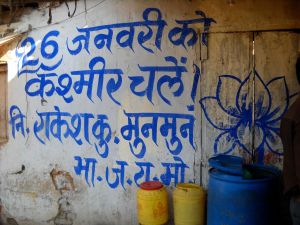
The graffiti reads: '26 Janwari ko Kashmir chalein. Nivedak: Rakesh Kumar Munmun, BJYM'. Trans: 'Let's go to Kashmir on 26 January. Appeal by Raksh Kumar Munmun, BJYM.''


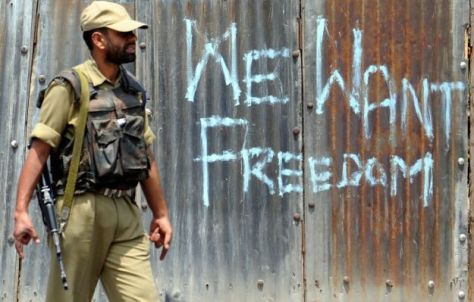
A policeman walks by a street in Kashmir, summer of 2010. Graffiti demanding azadi was all over the Valley this summer.

In Hazaribagh, one of the oldest cities of the newly formed state of Jharkhand, one is more likely to come across the word Kashmir than the name of the city itself these days. Kashmir, a place that most of the residents of Hazaribagh would have only heard of. At almost every nook and corner, teashop, wall of the city one would find an invitation to the ‘raashtriya ekta yatra’ from Kolkata to Kashmir to hoist the revered Indian flag at Lal Chowk. And this public invitation comes from none other than the youth wing of BJP, namely the Bhartiya Janata Yuva Morcha. Continue reading ‘Kashmir ho ya Guwahati, Apna desh, apni maati’: Mahtab Alam

Is the cat out of the bag?

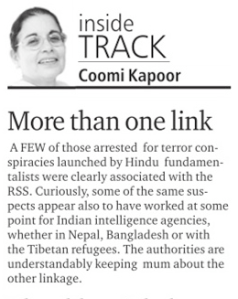
Veteran journalist Coomi Kapoor wrote this small snippet in the Indian Express yesterday. Hope it is only the beginning of more information on what this country’s intelligence agencies have been up to in the name of its citizens.

Would the secession of South Sudan be good for Africa?

On January 6th, it is almost certain that a referendum in South Sudan will lead to a vote to secede from the rest of the country, thus paving the way to the formal inauguration of Africa’s 54th sovereign state. The vote comes after many years of discord between Sudan’s Arab-and-Muslim north and its black, animist and Christian south, and civil war in which almost 2m have died. Thus, divorce seems the only option in Sudan’s case. However, many in Africa, including the African Union, which has long inveighed in principle against secessionist tendencies in Africa, worry that it could set a trend that encourages other self-determination movements on the continent, potentially causing instability and worse. Others argue that the right of all peoples to self-determination must be allowed to hold good. In these terms, would the secession of South Sudan be good for Africa?

Well, you can cast your vote here.

See also: Celebrations across south as millions flock to polling stations.

Periyar on the Constitution

As a follow up to the earlier piece, here is a translation of excerpts from Periyar’s speech on the constitution soon after it was framed.

Here there is a need for a note on how we can read these historic documents. This is not a call to burn the constitution (Figuratively maybe a little bit but not literally. That would be a waste of paper. We’d rather recycle it en masse as a symbolic gesture! ). The purpose is to break down into details, this ‘nation’ that we often use as a default construct. We know it has a history and a not so long one. We also know that it has been contested by many from its very inception. Independence day should also be observed as ‘partition into india and pakistan day’ for starters. There have always been challenges ranging from debates over secession of regional kings when independence was declared, to demands for a separate nation that always existed and continue to do so. Continue reading Periyar on the Constitution