Category Archives: Empire/ Imperialism

तर्क और विचारों से कौन डरता है ? – दाभोलकर, पानसरे और कलबुर्गी की शहादत के बहाने चन्द बातें

1

Photo : Courtesy – http://www.newslaundry.com

1.

आग मुसलसल जेहन में लगी होगी
यूं ही कोई आग में जला नहीं होगा

दोस्तों

कातिल के पिस्तौल से निकली ऐसी ही आग का शिकार हुई तीन अज़ीम शख्सियतों की याद में हम सभी लोग ‘कलम विचार मंच’ की पहल पर यहां जुटे हैं। विगत दो साल के अन्तराल में हम लोगों ने डा नरेन्द्र दाभोलकर, कामरेड गोविन्द पानसरे और प्रोफेसर कलबुर्गी को खोया है। गौरतलब है कि सिलसिला यहीं रूका नहीं है। कइयों को धमकियां मिली हैं। ऐसा समां बनाया जा रहा है कि कोई आवाज़ भी न उठाए, उनके फरमानों को चुपचाप कबूल करे। दक्षिण एशिया के महान शायर फैज़ अहमद फैज़ ने शायद ऐसे ही दौर को अपनी नज्म़ में बयां किया था। ‘निसार मैं तेरी गलियों पे ऐ वतन, के जहां ; चली है रस्म के कोई न सर उठा के चले..’

और इसी माहौल के मददेनज़र हम इसी अदद मसले पर आपस में गुफतगू करना चाह रह हैं कि आखिर तर्क और विचार से इस कदर नफरत क्यों दिख रही है ? कौन हैं वो लोग, कौन हैं वो ताकतें जो विचारों से डरती हैं, तर्क करने से खौफ खाती हैं ? चन्द रोज लखनउ की सड़कों पर उतर कर भी आप ने ऐसे हत्यारों के खिलाफ आवाज़ बुलन्द की थी। और एक तरह से समूचे देश के विभिन्न नगरों, कस्बों में जो इस मसले पर जो बेआरामी, बेचैनी देखने को मिली थी, उसके साथ अपनी आवाज़ जोड़ी थी। आज की यह चौपाल, आज की यह गोष्ठी दरअसल इसी सिलसिले की अगली कड़ी है। हम उन चिन्ताओं को आपस में साझा करना चाह रहे हैं ताकि यह जो माहौल बन रहा है, जो गतिरोध की स्थिति बनती दिख रही है उसमें थोड़ी हरकत पैदा की जा सके।

इसे दिलचस्प संयोग कहेंगे कि इस गोष्ठी का आयोजन बीसवीं सदी के पूर्वार्द्ध के महान सामाजिक विद्रोही पेरियार रामस्वामी नायकर / 17 सितम्बर 1879-24 दिसम्बर 1973/ के 139 वें जन्मदिन के महज एक दिन बाद हो रहा है। कल ही देश के तर्कशील समूहों, संगठनों ने, विचारों की अहमियत जाननेवाले तमाम लोगों ने उनका जन्मदिन मनाया, वही पेरियार जिन्होंने ताउम्र तार्किकता, आत्मसम्मान, महिला अधिकार और जातिउन्मूलन के सिद्धान्तों का प्रचार किया और आन्दोलन किए। मालूम हो कि तमिल लिपि में नए बदलावों के जनक पेरियार समाजवादी रूस की उपलब्धियों से भी प्रभावित थे और उन्होंनेे नास्तिकता एवं तर्कशीलता के प्रचार के लिए अभिनव मुहिमों का आयोजन किया था।

Continue reading तर्क और विचारों से कौन डरता है ? – दाभोलकर, पानसरे और कलबुर्गी की शहादत के बहाने चन्द बातें

A Contested line – Implementation of Inner Line Permit in Manipur: Deepak Naorem

This is a guest post by DEEPAK NAOREM

Violence and the accompanying disruption of everyday life in Manipur is not a recent phenomenon. This year too, the state was plunged into a spiral of violence following demands for the implementation of Inner Permit Line, a law originating in the colonial period. This demand is based on real or imagined fears that Manipur, like Sikkim and Tripura, would be overwhelmed by the ‘outsiders’ and that the ‘indigenous people’ of Manipur would become a minority in their homeland. Such demands are neither new nor surprising in this part of the world, where a nearly-unfathomable ethnic, demographic and political jigsaw puzzle was created by British colonialism; one that was deepened by even more myopic and inconsistent policy in the post-colonial years. However, this year, following the death of a young student by police firing during a student protest in Imphal, the movement demanding the Inner Line Permit (ILP) gained considerable momentum in Manipur. Subsequently, the legislature was forced to introduce three bills in the Manipur State Legislative Assembly on 28th August, 2015, ensuring the implementation of Inner Line Permit in the state. This in turn triggered another wave of violence with the ‘tribals’ and tribal organizations opposing the three bills, eventually bringing life to a standstill in the state.

Continue reading A Contested line – Implementation of Inner Line Permit in Manipur: Deepak Naorem

Praful Bidwai Is No More

Praful Bidwai is no more. He died in Amsterdam on Tuesday evening due to a cardiac arrest, With his death we have lost the ‘best left-wing journalist’ in this part of South Asia whose articles appeared in many newspapers and magazines in the subcontinent and in the middle east and was frequently published by The Guardian, Le Monde Diplomatique as well. Praful will be missed by thousands and thousands of his readers (this pen pusher included) who were ‘groomed’ by him in a career spanning more than four decades. For them he was one such voice who remained uncompromising in his strident criticism of communal fundamentalisms of various kinds and the crony capitalism which is having a field day these days. He was a leading voice for nuclear disarmament and peace as well and had written extensively on it. It was a strange coincidence that we met last in the capital when a memorial meeting was organised by Communist Party of India to remember the legendary Comrade Govind Pansare who was assassinated few days back. He was to speak in the meeting. The meeting was yet to start and I could steal some time to talk to him. He told he is working on a book – which was near completion – on the left movement in the country and had interviewed many activists associated with the movement to listen to their understanding of challenges before the left. And in that connection he had long meeting with Com Pansare – once in Kolhapur and one possibly in Mumbai. He shared his fascination about the energies he still had at that age for ‘the cause’. Few days after the meeting, there was a call from him asking for a phone number of a dalit activist which incidentally I did not have. Yes, that was the last time I spoke to him.

Continue reading Praful Bidwai Is No More

Imperial Ejaculations – Reflections on “Ten Books that Shaped Empire”: Dilip Menon

Guest Post by Dilip M. Menon

Unlike Salman Rushdie, I did not grow up kissing books, I merely collected them. From provision stores, sidewalks, and from booksellers who were eccentric enough to try and survive by selling second hand books, in the small towns and yet-to-become cities of post independent India. The books came with a fine patina of dust that no amount of smacking against one’s thigh or the flat of one’s palm could get rid of. Kissing them was out of the question. In what was called the mofussil, or the provinces, the detritus of empire and the war that ended it gathered, as the collections of effects of the British who departed, as much as those who stayed on and died, gathered in the auction houses and bookstores.

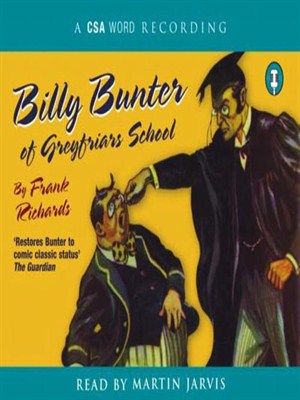
It was on a summer afternoon in 1973 that I cycled down to the local provision store in Pune and saw beside the sacks of rice, wheat and spices, a pile of books, periodicals and rather lurid posters of European women with very long legs and few clothes on. I had always imagined Europe to be a cold place. In the pile were old Penguins; books by Enid Blyton, Anthony Buckeridge, Capt. WE Johns, Rider Haggard; periodicals like Boys Own Weekly, Gem, and Magnet; and of course the war comics (the staple reading of Allied troops posted in India and South East Asia), from which I learnt my German. At school, during the break, we were always running through the corridors shouting Schnell, Schnell and calling our Kamerads Schweinhunds. But on that summer day, I found two authors that I had not heard of: George Orwell and Frank Richards. The former had written a book about some fat pigs and the latter, one about a fat boy, and being rather plump myself, I was favourably disposed.

{AC8E3D54-0D18-423F-A888-DAE1A6C73C6C}Img400 Continue reading Imperial Ejaculations – Reflections on “Ten Books that Shaped Empire”: Dilip Menon

Much Better to Run Over the Poor Than to Speak Up for Them

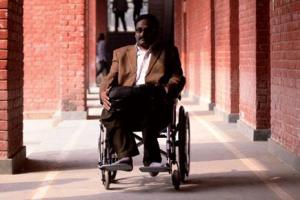
Yesterday, the 9th of May, one day after the court granted what must be the fastest bail and suspension of sentence in the history of India to India’s favourite Dabangg, a diminutive woman stood under the blazing Delhi sun and spoke of her husband who had been in jail for the past one year. In May 2014, lecturer in English at Ramlal Anand College, Delhi University, G. N Saibaba was returning home after evaluating answer scripts when he was abducted by unknown men, who later identified themselves as Maharashtra Police.

Professor Saibaba. Image Courtesy FRS Blog

Saibaba was not produced before a magistrate in Delhi but taken directly to Aheri, a small town in Maharashtra and then to Nagpur, to be put in solitary confinement in the famous anda cell of Nagpur jail. Let’s call this cell famous instead of the usual epithet “notorious” because all over the country, children are probably playing with each other right now saying to each other, “saale main tujhe anda cell mein daal doonga“, while their parents look on indulgently, congratulating themselves on the kid’s excellent G.K.

Continue reading Much Better to Run Over the Poor Than to Speak Up for Them

Piketty and the Economic Crisis in the Euro Zone: Cenan Pirani

PikettyGuest post by CENAN PIRANI

Though the US has seemingly bounced back from the 2008 financial crisis, southern European countries like Portugal and Greece are currently dealing with debt situations that were once only characteristic of the “developing world”. In order to stabilize their economies after the 2008 crisis these European countries took on a series of IMF and European Central Bank loans in which rates of interest were higher than the countries’ rates of GDP growth, thus stagnating their economies for the foreseeable future.

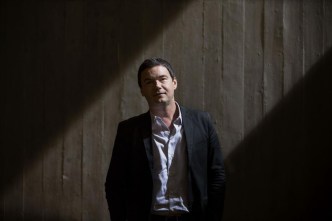
This situation that currently befalls these countries’ economies was explained by Thomas Piketty in a recent interview he gave for the major Portuguese newspaper, PÚBLICO. Piketty, who has become a prominent public intellectual due to the popularity of his recent work, “Capital in the 21st Century”, was in Portugal this week in order to discuss the economic future of the country with some of its political figures. Besides outlining the problem, he discusses possible courses of action for the countries to release themselves from perpetual debt and austerity. These ideas ironically enough come out of the paths once carved by those now economically dominant countries in the Euro Zone, specifically France and Germany. Continue reading Piketty and the Economic Crisis in the Euro Zone: Cenan Pirani

Are We Legit? Roanna Gonsalves

ROANNA GONSALVES writes in Southern Crossings, a new blog run by a writers’ collective based in Australia, which aims “to reimagine Australia, South Asia, and the world, through South Asian bodies and minds.”

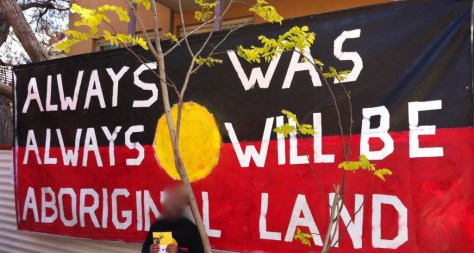
Aboriginal-flag-1-1024x548

One rainy Mumbai day, sitting in an Udipi restaurant, chai cup in hand, I told a dear friend I would soon leave for Australia.

“I’ll never leave India and be a second class citizen in another country”, my friend said. My chai turned colder and a crinkly skin formed on its surface.

Seventeen years later, I realise that in perceiving a hierarchy of citizens in Australia, my friend was right, but in a manner that he did not intend…

…[T]here were certain fundamental truths that I did not grasp before I got here: Indigenous people i.e. Aboriginal people and Torres Strait Islanders, are the First Peoples of this land and the waters that surround it; they formed the First Nations of this continent; this always was and always will be Aboriginal land.

We are not the perpetrators, the ones who wielded the guns in the forgotten wars between invading white settlers and Indigenous Peoples. We are not the victims. However, as mainly economic migrants from South Asia (I acknowledge the many South Asian refugees from the conflict zones of Afghanistan and Sri Lanka), we are not absolved of complicity.

We are beneficiaries of the genocide of Aboriginal people, the dispossession of their land, the loss of their homes, their families, their cultural values, their tongues, their songs. It is such soil that we step on when we first step into Australia, soaked not just with the promise of a ‘first world lifestyle’, but squelchy with the memory of massacre.

Read the rest of this uncompromising and challenging set of reflections here.

Frontline’s Calculus of Caste: C. K. Raju

Guest post by C. K. RAJU

[Frontline carried a historically ill-informed article on Indian calculus which also had mathematical and casteist errors. When the errors were pointed out, the magazine ignored it, contrary to journalistic ethics. Here is Prof Raju’s response to that article.]

Frontline (23 Jan 2015) published an excessively ill-informed article by Biman Nath on “Calculus & India”. The article suppressed the existence of my 500 page tome on Cultural Foundations of Mathematics: the Nature of Mathematical Proof and the Transmission of Calculus from India to Europe in the 16th c. (Pearson Longman, 2007). This suppression was deliberate, for Nath and Frontline ignored it even after it was pointed out to them. They also refused to correct serious mathematical and casteist errors in the article. That is contrary to journalistic ethics. To understand my response, some background is needed.

According to my above book and various related articles, the calculus developed in India and was transmitted to Europe. The second part of the story is lesser known. As often happens with imported knowledge, calculus was misunderstood in Europe. Later that inferior misunderstanding was given back to India through colonial education, and continues to be taught to this day just by declaring it as “superior”. That claim of superiority was never cross-checked to see if it is any different from the other flimsy claims of superiority earlier made by the West, for centuries, for example the racist claim that white-skinned people are “superior”. Continue reading Frontline’s Calculus of Caste: C. K. Raju

Communist, Scientist, Activist and Dreamer Daya Varma (August 23, 1929 – March 22, 2015) : Harsh Kapoor

Guest Post by Harsh Kapoor

Dr. Daya Varma, life-long communist, scientist, activist, dreamer, pharmacologist, professor emeritus at McGill University, Montreal, passed away on 22 March 2015 in St. John’s Newfoundland, Canada. Former member of the undivided Communist Party of India, founder of Indian People’s Association in North America (IPANA) and the International South Asia Forum, founding member of CERAS (Centre d’Étude et Ressources d’Asie Sud) and was on the board of of Alternatives, a progressive think tank in Canada, He also founded and edited the INSAF bulletin. Many in India remember how when the 1984 Bhopal Union Carbide industrial disaster struck,where thousands died, Dr. Varma spearheaded a study to monitor the effects of MIC on pregnant women whilst participating in activities aimed at supporting their compensation claims.

(Read the complete text here : http://www.sacw.net/article10894.html)

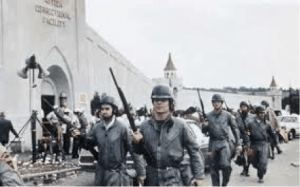
‘Attica, Attica, You Put Them Guns Down!’ Ipsita Barik

On a day when we woke up to the seemingly incomprehensible barbarism of a woman being beheaded in Saudi Arabia, we may do well, apropos Nivedita Menon’s post on MLK, to remember the barbarism that hides in broad daylight within seemingly civilised societies. One such floodlit hideout, so bright it blinds us, is the state of our prisons. Before Guantanamo and Abu Ghraib inaugurated a new era of dehumanisation in the American “correctional system”, there was Attica, and hundreds others like it that continue in the U.S and around the world to this day. We may also remember Professor G.N Saibaba of Delhi University who, despite being 90% disabled, has been not only imprisoned but kept in solitary confinement for almost two years on mere suspicion in an Indian jail somewhere. Really, what more does it take these days?!

This is a guest post by Ipsita Barik

Attica 9

When Al Pacino’s character Sonny Wortzik yells and hollers “Attica – Attica” in the film Dog Day Afternoon, the cops and the FBI officers are left stunned & dumbfounded, but the civilian population collected at the scene, behind the police barricades began to cheer & applaud. The air is soon filled by the chants of the noun and Sonny in his soaked white shirt, flaying his arms and stomping on the ground, gestures at the cops and adds “you put them guns down; you put them down – “AATTICA aattica”. So what was happening here? Why were these people cheering and supporting a man who had come to rob a local bank and was holding hostages inside! And what was Attica all about?

Attica 5

Attica prison riots/uprisings happened at the Attica Correctional Facility, New York, United States; when the prison cells and yards were seized by the inmates, who also held hostages, on September 9th 1971, opening a series of negotiations and dialogues between the establishment and the inmates, which included civilian observers, Tom Wicker of the New York Times, Republican State Senator John Dunne, radical lawyer William Kunstler and Black Panther’s Bobby Seale, on the request of the inmates. The primary demands of the inmates were related to the inadequacies and brutalities within Attica, such as related to insufficient food and medical care, racial discrimination, physical abuse, restricted access to educational and training facilities, all a serious indictment of the prison rules and environment, as the New York State Special Commission on Attica/McKay Commission (set up by the state) subsequently went on to assert and highlight. Continue reading ‘Attica, Attica, You Put Them Guns Down!’ Ipsita Barik

Love Godse, Hate Tipu Sultan

Why the ‘Tiger of Mysore’ Still Troubles the Saffrons

image : http://www.tntmagazine.in

The saffrons have done it again.

They have once again showed utter contempt towards the legacy of legendary Tipu Sultan, (20 November 1750  – 4 May 1799) one of those rare kings who was martyred on the battlefield, while fighting the Britishers at the historic battle at Srirangpatnam and whose martyrdom fighting the colonials preceded the historic revolt of the 1857 by around 50 years. Not very many people even know that he had even sacrificed his children while fighting them.

The immediate reason for stigmatisation of Tipu Sultan, by the leaders of Hindutva Brigade, concerns move by the Karnataka state government led by the Congress to celebrate Tipu Jayanti or Tipu’s birth anniversary. The Chief Minister Siddaramaiah had made this announcement releasing a book ‘Tipu Sultan: A Crusader for Change’ by historian Prof B Sheik Ali.

A ruler much ahead of his times Tipu Sultan, a scholar, soldier and a poet, was an apostle of Hindu-Muslim unity, was fond of new inventions, and is called innovator of the world’s first war rocket, one who felt inspired by the French Revolution and who despite being a ruler called himself Citizen and even had planted the tree of ‘Liberty’ in his palace. History bears witness to the fact that Tipu sensed the designs of the British and tried to forge broader unity with the domestic rulers and even tried to connect with French and the Turks and the Afghans to give a fitting reply to the hegemonic designs of the British and had defeated the British army twice with his superior planning and better techniques earlier. Continue reading Love Godse, Hate Tipu Sultan

Impossible Lessons: Ravi Sinha

Guest Post by RAVI SINHA

Far away from Peshawar five men and a woman sat in a physician’s waiting room in Lucknow. The television screen that ordinarily shows some Bollywood film or a cricket match had a news channel on. It was day after the slaughter of children. The assistant who maintains the waiting list of patients and collects the doctor’s fee said something very predictable, even if heart-felt, expressing his horror and revulsion. The matter would have passed as unremarkably as most things do most of the times, except for what an elderly gentleman waiting to see the doctor had to say in response.

In a feeble yet firm voice whose conviction and sincerity was unmistakable, he said – dhaarmikata ko badhaava doge to kattarta badhegi; kattarta badhegi to aatank upajega, haivaaniyat saamne aayegi. (If you will promote religiosity, fundamentalism will grow, and from that will emerge terror and barbarism.) After a pause he added – hamaare desh mein bhee yahee ho rahaa hai, haalaan ki abhee hum pehle daur mein hain, dhaarmikata badhaane ke daur mein. (Same thing is happening in our country too, although we are in the first phase so far – that of promoting religiosity.) Continue reading Impossible Lessons: Ravi Sinha

From Ferguson to Pune—The Minority Report: Archit Guha

This is a guest post by ARCHIT GUHA

Prima facie, the grand jury decision in the United States to not indict a white police officer, Darren Wilson, in the murder of a black teenager, Michael Brown, and the flurry of protests that have occurred since the incident in August are distinctly symptomatic of the structural racism that continues to plague the settler colonial nation that institutionalized slavery nearly 500 years ago, but claims to be post-racial today. Continue reading From Ferguson to Pune—The Minority Report: Archit Guha

Feed The Poor, Go To Jail

image : Courtesy eideard.com

Whether serving food to the homeless is a crime?

Ask Arnold Arbott, known as Chef Arbott, a 90 year old man from Fort Lauderdale, Florida, who along-with two other members of a Church charity faces potential jail term for at least six months for the same ‘offence’. In fact his name finds prominent mention in the police records in the past week for breaking the new city ordinance which has come into effect recently which characterises his act as breach of law, according to reports.

Talking to a newsperson he said:

“These are the poorest of the poor. They have nothing. They don’t have a roof over their head. And who could turn them away?”

Continue reading Feed The Poor, Go To Jail

I am a Muslim, an Atheist, an Anarchist: Salmaan Mohammed

Guest Post by Salmaan Mohammed

[ Salmaan Mohammed, a twenty five year old philosophy student was arrested in Thiruvananthapuram on 19 August 2014 for sedition, and for allegedly dishonouring the national flag and national anthem. The complaint against him originated as a response to his refusing to stand while the national anthem was played in a cinema during a screening. Salman is currently out on bail, but still faces the prospect of a life term in prison if he is found guilty of sedition by the judicial process. We at Kafila have been in touch with Salman and he has recently sent us a translation of an audio interview he did after coming out of prison on bail so that the world outside Kerala (and those who do not read or speak Malayalam) can understand what he has been thinking.]

Continue reading I am a Muslim, an Atheist, an Anarchist: Salmaan Mohammed

Terror, Performance and Anxieties of Our Times – Reading Rustom Bharucha and Reliving Terror: Sasanka Perera

Guest Post by SASANKA PERERA

[ This post by Sasanka Perera is a review of  Terror and Performance by Rustom Bharucha (2014). Tulika Books, New Delhi. Kafila does not ordinarily post book reviews. An exception is being made for this post because we feel that the subject of terrorism, which has interested Kafila readers in the past, is an important one, and needs to be thought through with seriousness. We hope that this post initiates a debate on Kafila regarding terror, the state, performance, and the performances – serious, or otherwise – that typically attend to the discussions of terror, whether undertaken by the agents of the state or by non-state actors, commentators in the media, or by intellectual interlocutors. ]

When I started reading Rustom Bharucha’s latest book, Terror and Performance, it immediately became an intensely personal and gripping engagement. It was difficult to read in a single attempt as the mind kept wandering from one unpleasant moment in our recent annals of terror to another in some of which I had also become an unwitting part – mostly as a spectator. From the beginning, my reading was a conversation with Bharucha’s text through detours of my own experiences and an interrogation to a lesser extent. In 1986, as a young man when I went to the Colombo International Airport to pick up my father who was returning from the Middle East, I was shaken by a tremendously loud sound for which I had no immediate references. I had not heard such a sound before. People started running towards the sound. It was a bomb that had blown up an Air Lanka flight which had come from Gatwick. The Central Telegraph Office in Colombo was bombed in the same year. We learnt that everyone was running towards the sound and not away from it. Dry local political humor very soon informed us that people were trying to get inside the bombed out telegraph office hoping that they could get free phone calls to their relatives in the Middle East as they had heard phones were dangling from the walls with no operators in sight. That was long before mobile phones and call boxes. We were still young in terms of our experiences with terror. However, we soon had very viable references to what all this meant as the political narrative of Lanka unfolded with devastating consequences. But in 1986, when the kind of terror that was to follow in all its fury was still relatively new and quite unknown, we were acutely unaware of the dynamics of the actual act of terror and the structure of feeling it could unleash. This is why many of us in these initial years were naively attracted towards the epicenter of the act rather than being mindful to run away from it. But as the society grew in experience, people soon learned their lessons. Though an academic text in every conceivable way, I was reminded one could always find a few rare books of this kind which might personally and emotionally touch a reader in addition to whatever intellectual stimulation it might also usher in. Terror and Performance is clearly one such book. From the perspective of the writer, Bharucha himself recognizes this personal emotional engagement and investment early in the book. For him, “this writing demands stamina as it faces an onslaught of uncertainties and cruelties at the global level that challenges the basic assumptions of what it means to be human” (xi). It is the same kind of stamina that one also needs to read it as most of us in South Asia would be reading it squarely sitting in the midst of our own worlds of unfolding terror. This is why all those thoughts came gushing into my mind throughout the reading. I was not only reading Bharucha; I was also reading my own past.

Continue reading Terror, Performance and Anxieties of Our Times – Reading Rustom Bharucha and Reliving Terror: Sasanka Perera

Of Money-in-the-Blood and Blood-Money: Ravi Sinha

Guest Post by Ravi Sinha

Recently, the Indian Prime Minister had occasion to report to the Japanese on his genealogy and haematic chemistry. Addressing a house-full of corporate honchos in Tokyo he declared, “I am a Gujarati, money is in my blood”. One does not know what percentage of Gujaratis would feel insulted by such a description. It can be asked, perhaps more meaningfully, if great civilizations are created by money-in-the-blood types and one may wonder if Gujarati greats such as Narsi Mehta, Narmad, Govardhan Ram or Gandhi, too, had money flowing in their blood.

There is also some irony in the situation – prime minister of a country with the largest number of world’s poor boasting about ‘money in the blood’ to the richest men of a country that has, in the post-war decades, made more money per capita than any other on the planet. This prime minister can be accused of many things but not of lacking in hubris unencumbered by learning and cultivation.

One may wonder about something else too. The Indians may deserve their new prime minister and all his speeches – on the Independence Day, the Teacher’s Day and on all the other days. After all, they have elected him. But what have the Japanese done to deserve this? What forces them, despite the depth and dignity of their civilization, to lap up such crassness and banality?

The answer can be given in one word – money. Continue reading Of Money-in-the-Blood and Blood-Money: Ravi Sinha

Sailaab Nama – An Insider’s View of the Flood in Kashmir from the Outside: Gowhar Fazili

Guest Post by Gowhar Fazili

The floods in Kashmir can provide an outsider a momentary glimpse into the reality of Kashmir behind the corporate media propaganda smokescreen that is fumbling at the moment and like Truman Show (1998) exposing bits of the backstage. At the moment there are three key actors in Kashmir. There are the floods, the state and the people. Each one is on its own. One limb of the state—the state government was the first to crumble before the approaching waters.   The other limb—the mammoth military apparatus that has already inundated Kashmir since several decades, took two days to wake up to the crisis and when it finally did, its priority was to fish out the rich Indian tourists and the people close to the establishment out of the state. In the initial days, local people had to risk their own lives to get their marooned relatives to safety. Some hired local boats, some swam or waded through water, some made makeshift rafts out of anything that floats, including water tanks, car tubes, foam sheets, inflated baby bathtubs, so on and so forth to save their dear ones. The rest either drowned or kept moving up the floors of their houses as the waters kept rising until they reached their attics.

Continue reading Sailaab Nama – An Insider’s View of the Flood in Kashmir from the Outside: Gowhar Fazili

‘My Heart says Yes, but the Head says No’: Economizing Politics in the Scottish Referendum: Akshaya Kumar

Guest post by AKSHAYA KUMAR

I

About two months ago, while walking by the roadside in Glasgow, a middle-aged man handed me out a pamphlet. In an endorsement of UKIP, the pamphlet declared ‘Our government pays GBP 55 million a day in fees to the EU’ (emphasis added). It went on to inform that in return, the EU gives ‘us’ accounts riddled with fraud, no control over ‘our’ own borders – putting pressure on our health, education and welfare services – and a super-government that makes more than 70% of ‘our’ laws. The pamphlet intrigued me a fair bit, not in the least because as an international student in the UK, I wondered if my case was a bigger or smaller burden on the UK defined thus – their UK. But who are they? One might rubbish them as a deviant community, or one might consider them a threat to yet another definition of us – the liberals or suchlike. But what intrigued me was not the neatness of these boundaries, or the speculations about how many of ‘us’ and ‘them’ there are. I was intrigued by the language of the starkly political proposition. Let us tentatively assume that in the pamphlet, ‘us’ meant the citizens of UK and it constructs an antagonistic position vis-à-vis other national citizens who are entitled to living and working within the UK. Surely the two are politically distinguishable? Or are there too many of them living next to us, so they cannot exactly be identified as such? Continue reading ‘My Heart says Yes, but the Head says No’: Economizing Politics in the Scottish Referendum: Akshaya Kumar

The European Union And The Twin Civil Wars In Syria/Iraq: Peter Custers

Is this one of those rare occasions where policymakers self-critically correct a gigantic blunder? Or is it a cold turn-about guided by pure self-interest? On August the 15th, the Foreign Ministers of EU-countries gathered in Brussels and decided that each would henceforth be free to supply arms to Kurdish rebels fighting Sunni extremists of ISIS in the North of Iraq. Even Germany which in the past had been unwilling to furnish military supplies to warring parties  in ‘conflict zones’, is now ready to provide armoured vehicles and other hardware to the Kurds opposing ISIS’ advance. The decision of Europe’s Foreign Ministers may surprise some, for barely a year and four months ago, in April of 2013, the European Union had lifted a previously instituted ban on all imports of Syrian oil (1). Moreover, the lifting of this boycott was quite explicitly intended to facilitate the flow of oil from areas in the North-East of Syria, where Sunni extremist rebel organisations had established a strong foothold, if not overall predominance over the region’s oil fields (2). ISIS was not the only Sunni extremist organisation disputing control over Syrian oil fields. Yet there is little doubt but that the fateful decision the EU took last year has helped ISIS consolidate its hold over Syrian oil resources and prepare for a sweeping advance into areas with oil wells in the North of Iraq (3).  Continue reading The European Union And The Twin Civil Wars In Syria/Iraq: Peter Custers

Creeping Dictatorship: Concerns from Kerala

Guest post by THUSHAR NIRMAL SARATHY

 Are we living in a democratic dictatorship? ‘Democratic dictatorship’ is a much debated concept in Kerala.  I am referring not to that here but to the dictatorship of the executive led by democratically-elected politicians. Recent incidents seem to indicate that this is now an ever-growing tendency in our democracy.

A few months back, a notice with the photos of well-known public figures, which identified them as Maoists, appeared in the Mananthavady police station at Wayanad.  These were pictures of senior, very well-known activists who have fought battles for democracy in Kerala.  Following widespread protests, the police was forced to remove the notice. On 28th July this year, Jonathan Baud, a Swiss citizen was arrested by Valappad police for attending a commemoration meeting of a Maoist leader, Sinoj, who died in an accidental explosion at the forested Kerala- Karnataka border. Mr Baud was in India on a tourist visa. His arrest was big news in the media which had happily swallowed policespeak, and so he was also projected as a Maoist. The reports claimed that he had come here with the express purpose of attending the meeting, and that he delivered a solidarity speech there. Later, when the Commemoration Committee made public its own version of events, the police sensationalism was refuted and had to be withdrawn. The charge against Mr Baud are apparently limited to violation of visa conditions and it was admitted that he had no Maoist links. Continue reading Creeping Dictatorship: Concerns from Kerala