Category Archives: Everyday Life

Suicide of a ‘Criminal’ or Murder of the Stigmatized? : Anuja Agrawal

This is a guest post by ANUJA AGRAWAL

Criminal sets self ablaze outside police station’, says a small news item in a local edition of a leading newspaper. The report suggests that a 22- year- old ‘criminal’ set himself ablaze outside a police station in Nanded district, Maharashtra, after some members of his family were arrested. It claims that the young man was a known ‘property offender’ with three cases against him and goes on to describe how the police had been assaulted by his family members when they had gone to investigate a case filed against him by a local trader.  Why a ‘hardened’ criminal should have committed suicide outside the police station would elude the readers if they pondered over the content of this news item. But by now most of us would have moved to the next ‘story’ Continue reading Suicide of a ‘Criminal’ or Murder of the Stigmatized? : Anuja Agrawal

No To Ambedkar-Periyar in ‘Modern Day Agraharam’?

Whether discussing issues of contemporary concern among students, raising debates around them on the campus – taking inspiration from the ideas of leading social revolutionaries of 20th century – should be construed as an act of creating ‘social disharmony’ or ‘spreading hatred’ ?

Any sane person would rather reject this weird proposal but it appears that the bureaucrats in the Ministry of Human Resources Development (MHRD) think otherwise. It was evident in the way they acted on an anonymous complaint regarding the activities of a group of students in IIT Madras which calls itself ‘Ambedkar-Periyar Study Circle’ (APSC) – which comprises mainly of dalit, bahujan and adivasi students. Perhaps they were worried that the particular students group, has been critical about PM Modi’s policies and has been raising issues of caste, communalism as well as corporate loot of resources and challenging the ‘development’ narrative which is popular these days among a section of people. The impetuosity with which they acted when they wrote to the management of the Institute can also be gauged from the fact that in this process they violated the recommendations of the CVC (Central Vigilance Commission) itself which has ‘barred’ organisations from taking action on such (anonymous) complaints.

As of now the issue of ‘derecognition’ of APSC by the IITM management, has snowballed into a major controversy, with issues of curtailment of freedom of expression, infringement of autonomy of educational institutions and dominance of caste in higher education all coming to the fore. Continue reading No To Ambedkar-Periyar in ‘Modern Day Agraharam’?

A Hindu View of Sanitation: Ardhendu Sen

Guest Post by ARDHENDU SEN

The Swachh Bharat Abhiyan has many components but the main thrust is on the building of new toilets, both public and private. Why is it that we have so few toilets so many decades after independence? Many would blame the policy paralysis of the UPA II government and there is no denying the truth in that charge. Many others would go back decades and ask if any government before the present one ever paid adequate attention to such important social problems. Looking back into our hoary past, we come across an important ancient cause of our present misfortune.

It is now a well-known fact that India had aircrafts and spacecrafts long before other nations could even conceive of flying. The western educated, liberal (meaning Nehruvian) sceptic has only to visit the official website of the Indian Science Congress to convince herself of this. We know about one of these crafts in some detail because the 1903 edition of an old paper by one Rishi Bhardwaj has survived. The paper describes a fairly large craft, sixty feet by sixty feet that could not only fly in air but was suitable for interplanetary travel. This huge flying machine like that must have carried hundreds of people.

It is logical to assume that these crafts were fitted with chemical toilets. An aeroplane may do without one for a while but a spacecraft cannot because there is no force of gravity to help us get rid of the stuff. Ask Sunita Williams and she would be happy to explain it to you.  Continue reading A Hindu View of Sanitation: Ardhendu Sen

Branding Mother India: Sarojini N, Anindita Majumdar, Veena Johari and Priya Ranjan

Guest post by SAROJINI N, ANINDITA MAJUMDAR, VEENA JOHARI AND PRIYA RANJAN

Indian motherhood is finally, officially being advertised. Recent news reports regarding the launch of the Japanese advertising conglomerate Dentsu Mama Labs in India, have left many of us working on women’s reproductive lives in a serious quandary. How does one explain the unthinking coverage that the firm has received?

This is their pitch (or ‘branding’, as the Corporation puts it):

Dentsu Mama Lab aims to be a thought leader on mothers, motherhood and mothering.

The beautifully shot launch advertisement of pregnant women in a scenic desert village in India, using Japanese products and living in evident prosperity belies the true nature of what Mama Labs is representing, or rather misrepresenting.

Continue reading Branding Mother India: Sarojini N, Anindita Majumdar, Veena Johari and Priya Ranjan

A Short Guide to Appropriate Behaviour in the Wake of A Judgement on Historically Respectable Personalities

[ This short guide is being released to the general public which is liable to fall into error and confusion in the wake of the recent Supreme Court judgement in Devidas Ramachandra Tuljapurkar vs. State of Maharashtra restricting freedom of speech and expression pertaining to what the Honourable Justices who have looked at this case call ‘historically respectable personalities’.]

1. Petition all history departments to start courses in historical respectability so that you know who is who and what is what.

2. Having carefully studied the history of respectability, separate out all historically respectable personalities. Genuflect.

3. Then, from those that remain, make a list of historically disrespectable personalities, starting with yourself.

4. Refer to a historically respectable dictionary of slang – for instance, ‘Cassell’s Dictionary of Slang’ by Jonathan Green, the works of William Shakespeare, or a set of curses of the historically respectable Muni Durvasa

5. Choose at least ten colorful insults, curses and terms of abuse, from the above. and construct a poem, written in the ‘voice’ of a historically disrespectable person.

6. Print in large characters, along with an image of a historically disrespectable personality.

7. Stand singly, or in groups, with the large character posters with the poems in the ‘voice’ of  historically disreputable personalities in meditative silence in front of the honorable Supreme Court of India, and in other public spaces, while considering the sagacious wisdom of our historically respectable judiciary.

8. Be ever grateful that you know now that you can always protect your constitutionally guaranteed and judicially protected freedom of speech by ventriloquizing to your hearts content in the abusive voice of a historically disrespectable personality.

9. And learn this formula by heart – “The dignity of historically respectable personalities cannot be protected without the self-flagellation and abuse of historically disrespectable personalities, which includes the majority of all populations, in all societies, in all times.”
10.  Never disobey a law, or a judgement. Only take obedience to its logical conclusion.

Cancer – getting the story right: Harmala Gupta

Guest post by HARMALA GUPTA

Despite the almost daily dose of information on some aspect of cancer or the other in the national and international media these days, the confusion around cancer persists. The reports and their headers are calculated to catch the public eye rather than inform: “tetanus shot may boost brain cancer survival”; “extra oxygen could help you fight cancer”, etc. The reality on the ground is far removed and infinitely more complex.

To begin with, cancer is one word used to describe a number of different diseases. Furthermore, despite the progress made, we are still far from curing a majority of cancers, from preventing them or finding them early enough to ensure long term survival. The progress that has been made is largely in the West and can be attributed to screening techniques which are able to detect cancers earlier than they did before. In fact, some would argue, too early.

The question being asked is: should we be meddling with pre- cancerous or early stage tumours that are unlikely to ever become life threatening?  Studies show that in some people, for no clear reason, these tumours do not progress. Once again, the baffling question is: Are these tumours best left alone? And if so, at what stage should we begin to engage with them? Only now are we learning that the mammogram touted as the gold standard for detecting breast cancer works best for women over 50 years of age. Before that age there are too may false positives with their attendant consequences to ethically warrant its regular use as a diagnostic tool. Shame that it took medical science so long to work this out. In the meantime, thousands of women have had surgeries and gone through emotional trauma they could have avoided.

Continue reading Cancer – getting the story right: Harmala Gupta

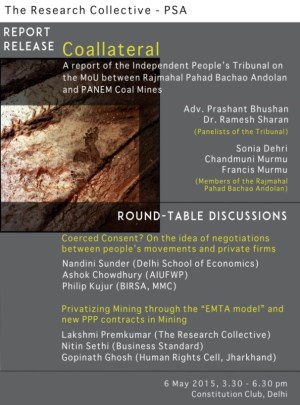
Coallateral: Research Collective of Programme for Social Action

Executive Summary by RESEARCH COLLECTIVE of Programme for Social Action, of the Report of the Independent People’s Tribunal on the MoU between Rajmahal Pahad Bachao Andolan and PANEM Coal Mines.

Press Invite

Release of the Report and Panel Discussion on May 6, 2015 at Constitution Club

The Independent People’s Tribunal, held on 16 November 2014 in Ranchi, established that PANEM Coal Mines repeatedly violated human rights of Adivasis, used violence against them to force their consent to operationalise the project, and has not adequately resettled and rehabilitated project affected families. PANEM Coal Mines, which acquired Adivasi lands in 2002 in Pakur district of Jharkhand, violated the Santhal Parganas Tenancy Act, 1949 and the rights of Adivasi (indigenous) people granted under the fifth schedule of the Indian Constitution.

PANEM Coal Mines, a Joint Venture company between Punjab State Electricity Board (now PSPCL) and EMTA Group, required land from Adivasi communities in Alubera and Pachwara panchayats in Pakur to operationalise the Pachwara Central Coal Block mining project. Fearing that the large-scale mining project would ultimately destroy their homeland, the Santhal and Pahadia people did not consent to the acquisition of their land. They organized themselves as the Rajmahal Pahad Bachao Andolan (RPBA) and militantly opposed the project between 2000 and 2006. In an unexpected turn of events, on 30 November 2006, RPBA signed a Memorandum of Understanding (MoU) with PANEM and allowed the company to acquire land and mine coal.

Continue reading Coallateral: Research Collective of Programme for Social Action

The Priya Vedi Suicide: Diwas Raja Kc and Alston D’Silva

This is a guest post by Diwas Raja Kc and Alston D’Silva

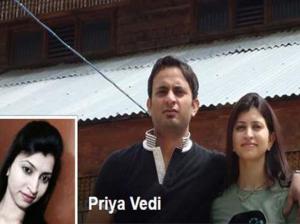
Image Courtesy: www.pardaphash.com
Image Courtesy: http://www.pardaphash.com

On the 18th of April this year, Dr. Priya Vedi of AIIMS tragically ended her life and left a Facebook note incriminating her husband—fellow doctor at AIIMS Dr. Kamal Vedi—for “torturing” her mentally, clearly implying that his homosexuality was the reason for her suicide. Her distress is apparent in the note as she recounts the lack of intimacy in her marriage and her discovery of the husband’s sexual activities as a gay man before and during the marriage. At the end she includes a plea to all gay men to not “marry to a girl to save yourself,” to not play with the emotions of a girl and her family. It should not be surprising that some condolent commentators have placed the blame specifically on Kamal Vedi’s alleged sexual orientation, even calling for legal action. Even within the LGBT community, the tendency has been to first put culpability on the man’s opportunistic participation in the institution of marriage. There is a sense that this incident ought to serve as a teaching moment for gay men, who are argued to require an ethical code, who need to fixate on the deliverance of their conscience, and whose rights—as Sandip Roy pointed out—”mean nothing without responsibility.” But despite Priya Vedi’s strongly felt sentiments, must we proceed as if the case of her fatal end is a logical and natural consequence of gay men’s irresponsible intrusions into the sanctum of marriage? After all, such intrusions are routine, and the ensuing heartbreaks are sometimes even known to be productive of powerful empathy between straight women and gay men.

Continue reading The Priya Vedi Suicide: Diwas Raja Kc and Alston D’Silva

Lessons learnt from the misdeeds of Paralympic Committee of India – Continuing to speak up: Pragya Deora

Guest post by PRAGYA DEORA

The 15th National Para-Athelitic Championship held in Ghaziabad in March 2015 was my first national-level athletic competition that I was participating in. I did not know much about the world of sports, the associated pressures for sportsmen, politics at different levels and most importantly the amount of compromises that the participants had been making in all these years.

Our team left for Ghaziabad and even before we reached we were a little surprised. The condition of roads leading to the stadium was so terrible that we were confused if we were reaching the right place. After we reached, we realized there was worse to come. Working on issues of accessibility in my campus for making our campus barrier free for persons with disabilities, there was an expectation from the organizers that this would be a model of the way a sports competition should be organized in terms of infrastructure, procedures and attitudes. But it was a far cry from it. What screamed at each step was complete insensitivity towards persons with disabilities. Continue reading Lessons learnt from the misdeeds of Paralympic Committee of India – Continuing to speak up: Pragya Deora

Enabling Dissent, Defying Silence – In Memory of Sabeen Mahmud: Yaminay Chaudhri and Mariam Sabri

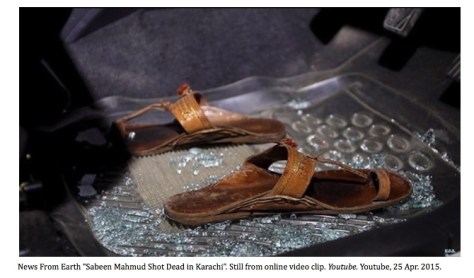
Sabeen Mahmud's Slippers

Guest Post by Yaminay Chaudhri and Mariam Sabri

[ This is a post from two friends in Pakistan responding to the tragic assasination of Sabeen Mahmud, activist and director of ‘The Second Floor’ (T2F) – a space that hosted many wonderful conversations and brave events. Sabeen was killed as she was going home after an event dedicated to a public discussion of disappearances and human rights violation in Balochistan.]

A normally quiet and desolate gali is packed with camera crews and hundreds of attendees for the funeral of Sabeen Mahmud. While there is a steady trickle of mourners entering and exiting the premises of the vibrant community space Sabeen created, the crowd waiting in the gali outside seems to be arrested by a mixture of disbelief, anger and grief.

Similar emotions paralyze us as we write about Sabeen in the past tense. It is difficult to believe she is gone, infuriating to think about the way she went, and, perhaps, the hardest to accept the beginning of her absence.

While watching her interview with PBS NewsHour last month, one is struck by how her cavalier attitude to fear and security, reverberates eerily in the wake of her murder.

“I grew up playing cricket on the streets” she said, “I just feel when the time comes, the time will come”.

Continue reading Enabling Dissent, Defying Silence – In Memory of Sabeen Mahmud: Yaminay Chaudhri and Mariam Sabri

My Name is Suzette Jordan

Our panel was a queer one in all the wonderful senses of that word. At trainings with lower court judges on sexual violence laws in the Saket District Courts in Delhi, the five of us would find ourselves next to each other every few months. On a dais surrounded by that distinctly sarkari flower arrangement, first sat Suzette, a survivor of a brutal rape in a moving car in Park Street in Kolkata. Then in line: a survivor of an acid attack; a representative of a sex workers union; a well known hijra activist and I, speaking as a gay man. We were usually on the third day, right after lunch, when we would face nearly a hundred slightly sleepy judges from the region. They had been updated on new sexual violence laws, gone through a case exercise on how to apply them, been given a CD, a folder, the requisite handouts. The boxes were ticked. Technically, they were up to date. Ours was a different job: to animate, if such a thing is possible, a sense of empathy in the judges, to shift even slightly the way they thought of the rainbow of dubious morality that we represented.

Continue reading My Name is Suzette Jordan

Fairy Tales and Feminist Theory in the Face of Fear: Indus Chadha

This is a guest post by INDUS CHADHA

For about a year now, I have been teaching 33 wide-eyed and wise middle schoolers. As we have read fiction, studied history, exchanged stories, and tried to understand the world together, I have found my students to be wonderfully curious and innately compassionate. As the school year drew to a close, I wondered how to conclude our time together. Because our parting at the end of a fulfilling year together was bittersweet, I was looking for something both lighthearted and meaningful. I settled on an old favorite of my own, The Paper Bag Princess, an unconventional fairy tale that turns the ‘prince saves princess from the dragon’ stereotype upside down. As always, I was amazed by my students’ heartfelt and fresh responses to the story. Continue reading Fairy Tales and Feminist Theory in the Face of Fear: Indus Chadha

An Open Letter to Kerala Khap Managers and Madam Principal, CET, in Particular, and to Malayalees in General

Dear Madam(s) and Sirs

Greetings from a long-suffering woman, a shocked and appalled parent, a worried social scientist, an angered citizen, a furious teacher, a firm believer in the Indian Constitution determined to defend it, a irredeemable feminist — I greet you in all these capacities.

Respected Madam(s) and Sirs, my grievances are all about you, in fact, about the incalculable damage you are collectively doing to  young people in Kerala, to the future of democracy here. They are about your utter disregard for the spirit and the letter of the Indian Constitution and your and powerful hatred of young people in general and young women in particular, clearly manifest in your despicable efforts to deny them their rights as Indian citizens. My grievances are also about your utter lack of humane concern for the students under your care, your rank cruelty and disregard of their humanity and dignity.

Continue reading An Open Letter to Kerala Khap Managers and Madam Principal, CET, in Particular, and to Malayalees in General

Kill it Before it Hatches, Attack it Before it Grows – On State Sanctioned Vandalism against Contemporary Art in Kashmir: Syed Mujtaba Rizvi

Guest Post by Syed Mujtaba Rizvi

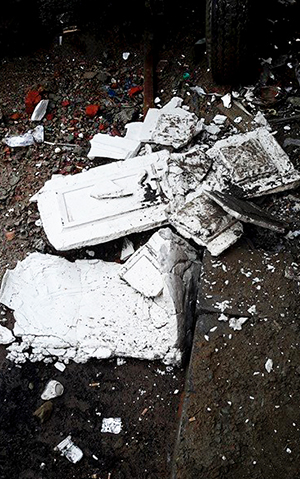
A Work of Art Vandalized at Gallerie One, Srinagar

On the opening day of Gallerie One, I was in a conversation with Rajendra Tickoo, Masood Hussain, Shabbir Mirza, M A Mehboob, Shaiqa Mohi and several other senior artists from Jammu and Kashmir. The opening of the first ever centre for contemporary arts and research in Kashmir was a dream come true for all of them. They told me that they had waited all their lives for such an initiative and how several great artists had died with the dream of having an art gallery in Kashmir. They were all very excited. They shook my hand again and again and hugged me before and after. Continue reading Kill it Before it Hatches, Attack it Before it Grows – On State Sanctioned Vandalism against Contemporary Art in Kashmir: Syed Mujtaba Rizvi

On The Interrelationship between Bovine and Human Beings

”in our religious scriptures ( Puranas) life of a cow is more important than any number of people” ( Puranon me insaan se jyada gay ko mahtv diya jata hai)

– Giriraj Kishore, Vice President of VHP,

On the public lynching of five dalits, October 2002

BJP Haryana chief Ram Bilas Sharma has promised to treat cow slaughter as a crime as heinous as murder. If elected, he said at the manifesto release function…

 TNN | Oct 3, 2014, 05.06AM IST

There is a competition of sorts between BJP ruled states to fulfil what a Haryana leader said ‘ to fulfil Modiji’s dream’. Close on the heels of Maharashtra government’s getting clearance to ban cow slaughter, there is news in a section of the press that the government in Haryana would table a similar bill in the assembly.

Sharing few snippets of the bill and comparing it with punishment of other offences, a newspaper report tells us that if the offence is insult to modesty of women the maximum jail sentence would be one year or fine, if it is molestation then it would be two years or fine, for theft the maximum jail term would be three years, for assault it would be 3 months or fine,  and for causing grievous hurt it would be maximum seven years. (Times of India, 14 th March 2015) and if it is beef in any form then it would be punishable by upto ten years in jail. Continue reading On The Interrelationship between Bovine and Human Beings

We Need You More Than Ever Today – A Tribute to Mukul Sinha: Harsh Mander

Guest post by HARSH MANDER

Two events altered his life forever. The first was when he witnessed a supervisor disrespectfully berating and kick a junior employee, which transformed a young apolitical physicist, who was passionately devoted to fundamental scientific research, into a tireless trade-unionist. The second – seeing his beloved adopted city Ahmedabad burn with tumultuous hate violence for many weeks in 2002 – thrust him into the heart of many battles against state power malevolently exercised against people of minority faiths. When Mukul Sinha succumbed to a particularly deadly stream of cancer in the summer of 2014, just weeks before Narendra Modi was swept to power, the country lost one if its bravest, most forthright voices for justice.

Raised in the railway enclave of the small district town of Bilaspur in Chhattisgarh where his father served, the young man had clearly worked out his chosen career as a scientist. After graduating in physics from IIT Kanpur, his elected life pathway seemed neatly laid out for him when, in 1973, he was accepted for his doctoral studies in plasma physics in the prestigious Physical Research Laboratory (PRL) in Ahmedabad. Founded in 1947 by the legendary Vikram Sarabhai, this apex space research institute undertakes fundamental research in physics, space and atmospheric sciences, astronomy, solar physics and planetary geo-sciences. This was where India’s first space satellite was born. It was a cloistered intellectual world, separated it seemed by light years from the turbulent life of fighting injustice which Mukul was to ultimately choose. Continue reading We Need You More Than Ever Today – A Tribute to Mukul Sinha: Harsh Mander

That Elusive Thing with Feathers – After the Killing of Avijit Roy: Abdul Bari

Guest Post by ABDUL BARI

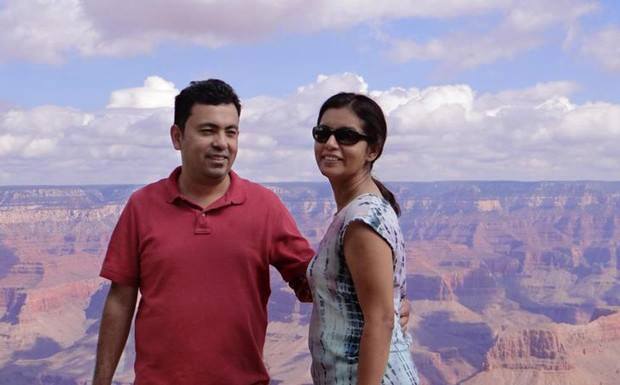
Avijit Roy was brutally murdered in Dhaka a few days ago. His wife, after heroically trying to shield his person with her own body, now lies in an ICU bed, fighting for her life.  I was an infrequent visitor to his website, Muktomona. Visiting it was like running your tongue over that tooth you’re missing, or reflexively checking whether you had your keys with you in the morning. Its presence was a reminder that, no matter how circumscribed, the nation-state of Bangladesh still had men and women who liked to think unconventional thoughts; give expression to unpopular ideas; endeavored to stand, as it is, in the very edge of what the societal limit of what could be expressed, and then take another firm step, not back, but forward. Continue reading That Elusive Thing with Feathers – After the Killing of Avijit Roy: Abdul Bari

India’s Obsession with Elitism is Leading it to Ignore the Marginalized: Rupande Mehta

Guest post by RUPANDE MEHTA

Chances are you have heard about Sureshbhai Patel, a 57 year old man, beaten and left temporarily paralyzed by Alabama police. His only crime: while he was out for a walk, a neighbor reported a ‘suspicious’ and ‘skinny black guy’ in the neighborhood causing him extreme distress and nervousness to leave his wife alone at home.

Several elements of this case bring back the ghosts of Trayvon Martin and Eric Garner, two black lives taken away by police brutality – despite being unarmed, Sureshbhai was subjected to “extreme force” and suspected not because he was Indian but because he resembled a black guy – but also bring to the forefront the enormous emotional and financial support generated not only from Indians but also Americans who rallied behind Sureshbhai and the injustice meted out to him. In a matter of six days, donations worth $190,000 were garnered to help the Patel family with medical bills. The incident also provoked Alabama’s governor to apologize for police’s use of “excessive force” and to initiate an investigation by the Alabama Law Enforcement Agency, along with the one being conducted by the FBI. Continue reading India’s Obsession with Elitism is Leading it to Ignore the Marginalized: Rupande Mehta

Bus Porters’ Petition for Aadhaar – A Political Analysis: Tarangini Sriraman

Guest post by TARANGINI SRIRAMAN

IMG_20140407_180321

Porters at ISBT  (Image courtesy DNA)

Barely six years into its introduction, the Aadhaar project, otherwise known as the Unique Identification (UID) project has been studied and critiqued extensively – its promises to strengthen welfare delivery, curb corruption, exorcise ghost beneficiaries from government databases, initiate financial inclusion and enhance intra-governmental coordination have been enthusiastically received in certain corporate and technocratic circles and skeptically, if not scathingly viewed in other academic and journalistic quarters. The liberties this far-advanced project has taken with individuals’ privacy and its failure to acquire a statutory basis (even as enrollment drives continue unabated) have justly attracted severe censure. And until recently, the surreptitiously mandatory nature of the project – where welfare entitlements were linked to the possession of numbers – was cause for alarm. The Supreme Court judgment in 2013 challenging this mandatory linkage between Aadhaar and subsidies/entitlements may have slowed down processes of the number’s proliferation as an exclusive proof.

However, since the new government at the Centre took over, newer uses and linkages are being imagined. How indispensable the Aadhaar will be to such schemes and entitlements only time can tell: cases in point the Jan Dhan Yojana (JDY) and the linkage of the Aadhaar with the passport. As new linkages appear in place of the old, the new government is urging all of us to walk boldly into the embrace of biometric identification that will, to a certain extent, at least, pervade public transactions (for some) and their very socio-economic chances of welfare support (for most others).  It was against this conceptual and empirical backdrop (so competently elucidated by the various scholars, lawyers and journalists following this project) that I decided, as part of my work on a larger book project, to speak with a migrant community in Delhi about their Aadhaar-related experiences – did they wish to get these numbers, if so why?

For these purposes, I picked a community of bus coolies or porters in North Delhi most of whom were migrants from different parts of the country and who stayed in a makeshift residence on the premises of the bus terminal. Continue reading Bus Porters’ Petition for Aadhaar – A Political Analysis: Tarangini Sriraman

Rohtak Gang Rape Reveals the Attitudinal Differences Disabled Face in India: Rupande Mehta

Guest Post by RUPANDE MEHTA

By now it is all beginning to sound very familiar: A woman gang raped, her vital organs missing, stones and blades found in her stomach, other objects found in her anus and vagina and the doctor conducting the post mortem stating it was the most horrific case of his life. This case, however, has one additional parameter – the woman raped and killed was mentally challenged and being treated for her condition at the Post Graduate Institute of Medical Sciences (PGIMS) in Rohtak, Haryana.

There is conflicting information on the mental condition of the woman raped and killed. While some reports state she was suffering mental retardation, others state her as condition as being psychiatric. Never mind that mental retardation is untreatable but the contradiction in reporting highlights a fact we all know – how widely misunderstood mental illness really is.

Mental illness is the most undertreated of all diseases around the world. There is an unspoken stigma around it and most sufferers usually do not want to talk about their “condition.” We have a difficult time grasping its severity and hence victims usually quietly suffer on their own until the situation often gets very serious. Many famous people have suffered mental illness and it has taken many of them years to come out and acknowledge their suffering. Few of them have fallen to their disease, the most notable recent case being that of Robin Williams who suffered from extreme depression. Other personalities who suffered mental illness include: Winston Churchill, the Prime Minister of UK, Buzz Aldrin, the second man on the moon, Beethoven, musical genius, Diana, Princess of Wales who suffered from bulimia, an eating disorder, and depression. Mental illness is the most unrecognized and, perhaps, one of the most damning diseases.

Continue reading Rohtak Gang Rape Reveals the Attitudinal Differences Disabled Face in India: Rupande Mehta

Are Jibran Nasir and his friends Game Changers in today’s Pakistan? Fawzia Naqvi

Guest Post by FAWZIA NAQVI

One cold Karachi Night

On the night of February 1st, Jibran Nasir Pakistan’s leading activist and a handful of peaceful protesters sat on a road in Karachi near the Sindh Chief Minister’s house for more than 24 hours, demanding the arrest of terrorists responsible for the January 30th Shikarpur attack which killed 65 Shias during Friday prayers, and demanding action against banned sectarian organizations. There were only 20 protesters, their average age 25, outnumbered it seemed by riot police with water cannon and batons at the ready.

Protest in Karachi against Terrorism and Secterian Violence

Continue reading Are Jibran Nasir and his friends Game Changers in today’s Pakistan? Fawzia Naqvi