Category Archives: Everyday Life

Will Logarani Be The Last Victim Of Violence Against Women? Cayathri. D

GUEST POST BY CAYATHRI D via Ground Views

All photographs by the author, or sent by the author (in the original post)

Around 5pm on 17 October 2013, within the Jaffna municipality, one of our friends (a male youth resident of Jaffna) came to our home (a few friends were gathered there) looking very disturbed.…

READ MORE HERE

A tale of two passports, the year 1979, and walking to India: Fawzia Naqvi

Guest Post by Fawzia Naqvi

For the first time Pakistan’s elected President has completed his full five-year term and has willingly stepped down to transfer power to another elected President, a herculean achievement for a country with chronic dictatoritus.  The people of Pakistan must be congratulated for ensuring that democracy becomes an enduring grace and not just a good idea in some unforeseeable future.  So while there is earsplitting cacophony of debate and disagreement on virtually all issues, there is near unanimous political consensus that the army should remain in the barracks and that there should be peace with India. The time is now. And Pakistanis have accomplished this in an era when Pakistan is suffering its worst hellish nightmare of daily bombings and killings by terrorists, and a loss of over 40,000 of its own citizens in the last decade or so.  Pakistan teeters on the precipice of a very dark abyss, and has been inching ever closer to this dangerous edge for the last 34 years if not more. The first disturbing sign which I can remember was when the state institutionalized bigotry by officially declaring the Ahmadi community non-Muslim in 1974, opening up a hornets nest of discrimination, violence and unequal citizenship.  A tragic disaster, and fatal capitulation to right wing elements, by Prime Minister Zulfikar Ali Bhutto. No one is really safe in today’s Pakistan but clearly those less safe, those hunted and killed are the Shias, the Christians, the Ahmadis and the Hindus. Those doing the killings have given insidiousness to the meaning of “the land of the pure.”

Continue reading A tale of two passports, the year 1979, and walking to India: Fawzia Naqvi

Voting with their feet – Religious conversion as a democratic right

Voting with one’s feet:  to express one’s dissatisfaction with something by leaving, especially by walking away.

2007052806851201_590863g

More than 1 lakh Dalits and tribal Hindus converted to Buddhism in May 2007 to commemorate the 50th anniversary of B.R. Ambedkar’s conversion, in what is considered the largest mass conversion in the country

What business is it of any government if I want to convert from one religion to another? Why should I seek permission from, or inform the government that I intend to follow a different god or gods from the one/s I was taught to worship from birth? There is absolutely no justifiable basis for the various anti-conversion laws in India, every one of which should be struck down as anti-constitutional.

Recently, Godie Osuri commented on the paradox of anti-conversion legislations being named ‘Freedom of Religion’ Acts when in fact they entail religious unfreedom.  And so they do. The Gujarat government has ordered a probe into the mass conversions of Dalits to Buddhism at Dungarpur village in Junagadh district last Sunday (October 12, 2013). Why? Because under the state’s Freedom of Religion Act of 2003, it is mandatory for the organizers to have taken prior permission. Turns out that the organizers did in fact inform the authorities, who provided facilities such as an ambulance, microphone and so on. It is clear that this ‘probe’ is a belated and panic stricken response from the Gujarat government upon realizing how great the Dalit response was to the event.

Continue reading Voting with their feet – Religious conversion as a democratic right

Courage is silent and Stoic – Tortured in Kashmir: Aditya Prakash

Guest post by ADITYA PRAKASH

The following is a narrative of a torture victim I gathered during my time in Kashmir as a researcher. The person interviewed was tortured by the 2nd Dogra regiment of the Indian Army.

Where is your gun?

On the night of 28th October 1991, the 2nd Dogra Regiment of the Indian Army was conducting interrogations in Palhallan. Palhallan is a large village in the Baramulla district of Jammu and Kashmir.

People suspected of having links with terrorists were interrogated. The women and men were asked to come out of their homes. The women were asked to gather at the local dargah (shrine) and the men were lined up in the village school.

A major from the 2nd Dogra handpicked Manzoor Ahmad Naikoo to step forward. Others were also short listed for interrogation. Manzoor was taken inside the school and forced to strip. He was made to sit on a chair. His hands were fastened to his back.

‘Taaki main kuch na kar sakoon’

He was completely immobilized. The army personnel then asked him for his gun. Manzoor Ahmad said he had no gun. He tried to convince them that he was a shopkeeper and never owned a gun. Continue reading Courage is silent and Stoic – Tortured in Kashmir: Aditya Prakash

Dilemma of Indian Muslims After Partition: Yasmin Qureshi

Guest post by YASMIN QURESHI. Excerpts from this essay were read at an event organized by the Partition Archives project in Berkeley earlier this year.

Abbu’s family, like many other Muslims in India was torn between staying in their ancestral land and going to the new country founded for Muslims. The call for Pakistan and the Muslim League movement was more prominent in the elite or educated classes. For Abbu’s family it was a distant idea and life outside Dilli was inconceivable. But the partition wave didn’t leave them untouched and a few family members including Abbu migrated to Lahore. Lahore was chosen because they had heard it was similar to Dilli. A year in Lahore was enough for them to realize their heart was still in DilliGhalib ki galiyan, echoes of azaans from Jama Masjid, pigeons flying above their roofs and the aroma of korma brought them back to the home their father had built.

The conflict of choosing between the newly founded nation states of India and Pakistan divided many families. Some of Abbu’s relatives shuffled between the two for many years till they were forced to make a choice by the governments in the 1960s. His elder sister’s family and a few other nieces and nephews decided to become Pakistani citizens.

For Muslims that stayed in India, the next few decades were years of fear and subjugation. Communal violence, often organized and manufactured by political parties or the right wing Hindu organization, RSS throughout the 1960s in cities where Muslims were in large numbers was a threatening message to the Muslims that if they choose to stay here they would have to live as a silenced minority with a constant reminder they were guilty of dividing India. Continue reading Dilemma of Indian Muslims After Partition: Yasmin Qureshi

Storm in a Calm IIT Campus Over a Sexual Harassment Case: Pronoy Rai

Guest post by PRONOY RAI

The serene, picturesque campus of the Indian Institute of Technology Guwahati has been witnessing some very noteworthy events in the recent past. According to reports in the popular media, a professor at the institute’s biotechnology department was accused of sending obscene text messages to his PhD student over her phone. Though the professor pleaded innocence, claiming that messages were sent from his sim card that was stolen, the local police found this hard to believe. The professor has also been accused of harassing the student during other instances on campus. Upon receiving the advice of the ‘Working Women’s Committee’ of the institute, the professor was recently suspended. This narrative constructs for us a simple, fair story of a just state-society system. A person breaks the law, and he is disciplined, as one would expect in a fair democratic society. If only that was the case.

The suspension of the professor was not immediately followed by the submission of the report, let alone the filing of complaint at the institute and with the local police. On August 13, Amingaon police in Assam arrested the professor for sending obscene text messages to a student. The arrest happened because the student had to file a FIR in order to request a telecom company to reveal the identity of the owner of the phone, from where the obscene messages being sent to her, were emanating. The delay in the inaction of the institute administration is unjustified, but perhaps not very inexplicable. Continue reading Storm in a Calm IIT Campus Over a Sexual Harassment Case: Pronoy Rai

Casting a backward glance after a court order – the UID project: Usha Ramanathan

Guest Post by USHA RAMANATHAN

On September 23, 2013, the Supreme Court ‘s directed that “no person should suffer for not getting the aadhaar card in spite of the fact that some authority had issued a circular making it mandatory”. Reacting to an argument of Mr Anil Divan, Justice Puttaswamy’s counsel, the judges added that “when any person applies to get the Adhaar Card voluntarily, it may be checked whether that person is entitled for it under the law and it should not be given to any illegal immigrant”. The order regarding making the UID mandatory  was made in the context of the questionable legality of the project, and the instructions being issued, as it has been in Maharashtra, that  teaching and non-teaching staff and judges of the High Court would not get their salaries unless they have a UID. The latter part of the order on `illegal immigrants’ echoes those who wanted, and got, an amendment to the Citizenship Act in 2003 authorising the creation of a National Register of Citizens. This was inherently illogical and opportunistic; for, the rhetoric of threat from the outsider drew upon the Kargil standoff in 1999, when it was Pakistan that was seen as sending in terrorists who needed to be identified and dealt with, but the politics of the day made the migrant from Bangladesh the `threat’. The Home Minister of the day saw them in every shadow. The UID project is a part of this enterprise.

The UID Project, with Mr Nandan Nilekani at its helm, has developed ambitions of its own in the four years since it was set by executive notification. In these four years, what observers and analysts have seen of the project has produced disturbing questions around what constitutes identity and how it will be established: [1]

Continue reading Casting a backward glance after a court order – the UID project: Usha Ramanathan

Aadhaar – What next after the SC ruling? Kalyani Menon-Sen

Guest Post by KALYANI MENON-SEN

Poor Mr Nilekani. Just when everything was going swimmingly for him – adulatory interviews in the foreign press, tantalising rumours of a Congress ticket for the 2014 polls, lots and lots of votes on a poll to select the Greatest Living Indian – comes another well-aimed spanner in his works from that bunch of litigacious Jokers who have been playing rasta roko with his Batmobile for some time now.

The Supreme Court ruling of 23rd September is curt and unequivocal – a) two other challenges to Aadhar in the High Courts of Chennai and Mumbai to be clubbed with this one and heard by a Constitution Bench; b) an immediate freeze on linking Aadhar to benefits under social schemes; and c) a direction to tighten up the registration process to make sure that only Indian citizens are enrolled.

Every line of this ruling is a painful blow for Aadhar. It’s bad enough that the Court has taken seriously the charge that Aadhar violates Constitutional rights. The implication that there are serious errors in the registration process is even worse, and pulls the plug on one of the main arguments in support of the UID  – that it will stop leakages in government schemes by weeding out bogus beneficiaries. Worst of all is the decoupling from the “Apna Paisa Apne Haath bandwagon. If the UPA decides not to  jettison the cash transfer scheme – its big-ticket strategy for the 2014 polls – it will find a way to keep it going without Aadhar. Whether or not this strategy pays off, Aadhar will be the loser. Continue reading Aadhaar – What next after the SC ruling? Kalyani Menon-Sen

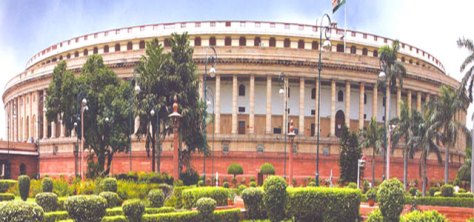
World’s Biggest Old Age Home with Cheapest Canteen

parliamnthouse

Information received via Rakesh Chaturvedi

The only place in India where food is cheap.

Tea- 1.00
Soup-5.50
Daal-1.50
Meals-2.00
Chapati-1.00
Chicken-24.50
Dosa-4.00
Biryani-8.00
Fish-13.00

Rakesh Chaturvedi suggested that instead of the Food Security Bill, let the Government give food to the poor at the Parliament canteen rates.

Good idea. That may allay the corporate media’s fears that the Food Security Bill  may further strain India’s weakening economy.

Taking off from this interesting price list, some idle research  on this rainy Sunday morning yielded the following information: There has been a noticeable shift in the age profile of MPs in  Lok Sabha. Continue reading World’s Biggest Old Age Home with Cheapest Canteen

Online mapping of sexual harassment in Mumbai

header_mumbai-1024x409
After the spate of rapes and molestations in Mumbai and of course, the daily sexual harassment of women, AKSHARA CENTRE decided to launch HarassMap-Mumbai. it is a socio techno tool using crowdsourcing to enable women to report their experiences and citizens to spot and report unsafe spaces. The idea is to get women to report and engage local groups and the police to take action. This is possible if people use their mobiles and internet connections.
Check it out: HarassMap-Mumbai

In Delhi’s defence

Reuters photo
Reuters photo

By SHIVAM VIJ: The census counts ’urban agglomerations’, and the Census of India says that Mumbai is India’s largest urban agglomeration. This includes Mumbai’s suburbs. In counting Delhi, the suburbs are not added because They are separated by state boundaries. If you were to add suburbs of the ’National Capital Region’, Delhi’s population would be not 16 million but over 22 million, making it the world’s largest urban agglomeration after Tokyo. This bustling urban centre is made of its people. Today’s Delhi cannot be stereotyped as just the seat of power. There is more to Delhi than the endless roundabouts of Lutyens’ capital.

Delhi’s core – the Partition refugee Punjabi – is not xenophobic like the Marathi ’manoos’ of Mumbai. In fact Delhi today is what Bombay once was, India’s foremost cosmopolitan metropolis. It is the city of choice for people from across India to migrate to with dreams of riches.

A lot has been written about “the Delhi gang-rape”. 16 December 2012 started a conversation that doesn’t seem to end. This conversation has largely been about rape, not about Delhi.
Continue reading In Delhi’s defence

How Would You Like your Death Penalty Steak, Rare, Well Done, or Medium Rare?: Arguments Against the Death Penalty

The anger that I felt when a young woman was brutally raped and killed by a group of men on the night of December 16 last year is not something that will ever go away. It marked not just me, but millions of people in Delhi, and elsewhere. That anger has no closure. Nor do I seek the convenience of such a closure. I do not seek the convenience of closure for the rape and murder of dalit women in Haryana, or of women in Kunan-Poshpora and elsewhere in Jammu & Kashmir or in Manipur who were raped and killed by the soldiers of the Indian army and who are still unpunished. I would like such men to be punished, but I will never demand the penalty of death for them. Not because I have any affection for rapists, but because I have a greater regard and respect for human life, which I do not think that we should allow the state to take away, in cold pre-meditation, whatever the circumstances.

Continue reading How Would You Like your Death Penalty Steak, Rare, Well Done, or Medium Rare?: Arguments Against the Death Penalty

Race too, after all, along with Gender: Arvind Elangovan

A few facts and some thoughts on the reception of Michaela Cross’s experience of India – Guest Post by ARVIND ELANGOVAN

Since Michaela Cross’s experience was part of a study abroad program conducted annually by the University of Chicago, and I was part of the program – for three years as a graduate student assistant (for the Fall quarters of 2007-2009), and one year as faculty in the program (Fall of 2010) – I think I could most usefully contribute by highlighting a few facts about the program itself. In the process I would think aloud about some of the issues that have come up in the reception of Cross’s experience in India, especially in the responses of Rajyashree Sen and Ameya Naik. I choose Sen’s and Naik’s responses partly because they have been the most recent, but also because between them they represent the spectrum of possible positions that one could usefully take about this issue. Needless to add, there have been other responses, such as the one posted by another fellow University of Chicago student on the trip, an article titled ‘In Defence of Rose Chasm (Michaela Cross) and countless other comments, criticisms, and responses that have flooded the Internet world.

However, between Sen and Naik, the basic ends of the spectrum are quite clear. Sen contends that it is not only a white woman’s problem but an issue for all women and that some self-regulation and discipline would have gone a long way to avert the unsavory experiences if not completely eliminate their possibility. Naik, at the other end of the spectrum, points out that the expectation of preparedness or caution urged by Sen belies the possibility of questioning the pervasive culture of sexual violence, in which any cautionary attempt to be safe, is to pay merely lip service to acknowledging the crime of sexual violence, instead of combating more difficult questions about such a culture. Continue reading Race too, after all, along with Gender: Arvind Elangovan

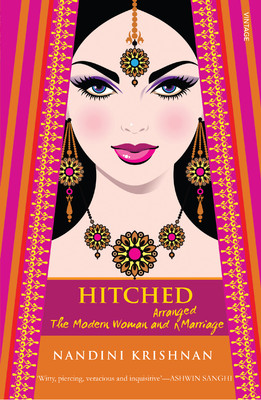
‘Marriage for men is like puberty for women’: Nandini Krishnan

nandini-krishnan-hitched-400x400-imadmuhyuygmg2xeThis is an extract from Hitched: The Modern Indian Woman and Arranged Marriage by NANDINI KRISHNAN

Saurabh laughs that he had the advantage of knowing what the process of spouse-hunting involves. A year before he went through the drill, his sister did.

[…]

However rosy the courting period may be, once you’re married, you get a rude wake-up call when you’re living in the same space. ‘Living with a strange person takes adapting. You could be in love for a few years and then get married, but even that doesn’t prepare you for sharing your personal space with another person. Of the other gender. Who has a different set of bodily smells, and opinions on the way your clothes smell.’

He has an interesting comparison for what men go through after marriage. ‘Remember when you, as a girl, got up close and personal with menstruation. That’s what most guys go through in the first month of marriage, unless they’ve been in a live-in relationship before. The first month is very chaotic because you’re experiencing another gender’s physicality and emotions.

Curiosity and disgust go hand in hand. Men see that their wives menstruate. Women begin to appreciate that belching and farting are natural human processes, but somehow they never manage to complete this process of appreciation.’ Continue reading ‘Marriage for men is like puberty for women’: Nandini Krishnan

A Burden of Proof: A Response to “White Woman’s Burden” by Ameya Naik

This is a guest post by AMEYA NAIK

[On the 26th of August 2013, Newslaundry carried a piece by Rajyasree Sen titled “White Woman’s Burden“. This post is offered as a rebuttal of the views expressed in the essay.]

Dear Rajyasree,

Michaela Cross, aka RoseChasm’s CNN blog piece about her experience of India is, as you say, currently unavoidable on the internet. It does seem to be provoking a dialogue on women and safety in India – at least in social media circles. If the result is that Indian girls and women acknowledge and share their own negative experiences, perhaps thereby to make some Indian men re-examine their perceptions and behaviour, it would still be a step forward.

Unfortunately, some responses represent two steps backwards instead. Your writing (“White Woman’s Burden”, 26 Aug, 2013) is one such; it made me profoundly uncomfortable. The gist of your argument appears to be this: Michaela was not suitably prepared, and she *SHOULD* have known better. Indeed, given her account of her actions and experiences, and the trauma she has experienced therein, it is surprising (to you) how unprepared she was.

Did I just read a young, educated Indian woman entrepreneur – from the hospitality industry, no less – say that an exchange student left traumatised after experiencing molestation (and worse) because she was unprepared? I describe myself as a cynic, but surely this is a new low!

What, pray tell, would suggest she was sufficiently prepared? That she came here, had the experiences she did, and considered them “par for the course” in India? Or that she came here aware of (what you call) the skewed psycho-sexual dynamic between Indian men and women in all its rich and diverse forms, behaved in the most conservative and appropriate fashion – only dancing in “safe places”, avoiding public transport entirely, staying only with trusted hosts or in one of Goa’s five star hotels – and left having experienced only milder forms of violation, like the persistent gaze (which she would know to expect)?

This assertion of yours does have one unexpected benefit – it lets us ignore the fair skin debate. If complexion plays no role, she should still be at least as careful as any Indian woman. If complexion does play a role, she should be even more careful! As silver linings go, though, this is pewter on a thundercloud.

How, pray tell, would the students or the University prepare for their visit to the land of the skewed psycho-sexual dynamic? With little docu-dramas of all the kinds of harassment you can expect, and how to be safe at all times? Would you not seed the most pernicious mistrust in your potential visitors? In fact, why would any of them come at all? Surely the University would simply cancel the trip!

And, while you seem to suggest that this is precisely what the “easily traumatised” should do, we would be the first to protest. Already we cry ourselves hoarse over travel advisories saying India is unsafe for women. That, apparently, is an insult to our national pride. And that seems to be the source of this article: “how dare this unprepared white girl write about India this way?” Only Indian writers can suggest that India has a skewed psycho-sexual dynamic, right? (An interesting dynamic which, of course, makes some – but not all – lechers or potential rapists. And on current evidence, I shudder to ask you who these corrupted ones are, and why only they succumb to this taint.) Because Indian women are prepared for such behaviour, and they know – even when they face it abroad – that it is only an aberration.

Too many responses, too many comments, seem to be in this vein. Why this parochial-with-my-fingers-crossed-so-as-not-to-offend-gendered-perspectives reply at all? My thesis is that it is because Michaela’s account makes us ask a few uncomfortable questions. Such as, how many aberrations to make a norm? How much preparation is enough?

Answering those questions is not a White Woman’s Burden – the onus to answer to them lies on us. Discrediting the person who asked them as “easily traumatised” – and really, as someone who says she has lived through incidents enough of her own, how dare you! – is a thoroughly inadequate reply.

[Ameya Naik is currently in a graduate programme in Boston. A psychologist and lawyer by qualification, he worked in New Delhi across 2012-13.]

Why is Sachin Pilot in My Dreams? Or, Three Visas, and No More, to India: Fawzia Naqvi

Guest Post by Fawzia Naqvi

Sachin Pilot was in my dreams last night, with all due apologies to his wife, because I swear, I am not secretly fantasizing at all about India’s youngest cabinet minister. He just showed up. I think it was in Srinagar, though I’ve never been there, I swear. And why Srinagar? Well that’s another matter, requiring numerous sessions of therapy. But the good Minister made a cameo appearance and told me quite categorically that I had already been granted three visas to India and should expect no more. Don’t get me wrong. I like Minister Pilot. I admired the way he handled corporate America when he visited New York to deal with all the whining and complaining about Indian reforms and that pesky CSR Bill. But why is he in my dreams? An Indian friend tells me it’s because I’m constantly nervous about going to India. And herein lies the truth. I observe, analyze, obsess about, pontificate upon, call, email and travel to India more than most Pakistanis, without actually being a spy. Yes. Really. And I resent how easy the spooks have it. I’m guessing they aren’t dreaming about a finger wagging minister, ok Sachin Pilot, telling them they can’t get a visa! But such are the incessant covert and overt anxieties of Pakistanis like me who have careers involving India. And if Sachin Pilot, he of the new generation of Indian leaders is also telling me (in my dreams of course) that I can’t get a visa, then surely the news for Indo-Pak and hence my career, is not good. The twain of course is twinned.
Continue reading Why is Sachin Pilot in My Dreams? Or, Three Visas, and No More, to India: Fawzia Naqvi

सार्वजनिक जगहों पर सामूहिक कब्ज़े की संस्कृति : किशोर

Guest post by Kishore

दिल्ली के उत्तर-पश्चिम में स्थित रोहिणी का इलाका लाखों मध्यम और निम्न मध्यम वर्ग परिवारों का बसेरा है. कुछ समय पहले यहाँ मेहनतकश मज़दूर वर्ग के नुमाइंदे भी झुग्गी-झोपडियों में रहा करते थे जिन्होने  रोहिणी  नाम के इस उपनगर को बसाया था. पर पिछले कुछ सालों में इन झुग्गियों को उजाड़ कर दिल्ली के बाहरी हिस्सों में पुनर्वासित किया गया है. ठीक गोरख पाण्डेय की कविता “स्वर्ग से  विदाई” की तरह.

रोहिणी एक नियोजित उपनगर है जिसे दिल्ली विकास प्राधिकरण ने बसाया है. एक शहरी बस्ती की जरूरतों के हिसाब से हर एक चीज़ का ध्यान रखा गया है. थोड़ी थोड़ी दूर पर “सार्वजनिक” पार्कों की व्यवस्था की गयी है और हर एक-दो किलोमीटर पर एक बड़े “सार्वजनिक” पार्क की भी व्यवस्था है जिसे डिस्ट्रिक्ट पार्क कहते हैं. Continue reading सार्वजनिक जगहों पर सामूहिक कब्ज़े की संस्कृति : किशोर

The Public Secret of Savita Bhabhi: Jyoti Singh

This is a  guest post by JYOTI SINGH

In May 2013, makers of the erotic comic strip came out with the Savita Bhabhi movie, where apart from Savita Bhabhi doing what she is best at, she also helps the two nerds, who mistakenly teleport her into their Orwellian India of 2070, take their revenge upon the notorious I&B Minister who bans all online porn but engages in all offline porn. With this, Savita Bhabhi was back in our ever-so-fickle public memory after 4 years of ban, but yet not quite. Her resurfacing was not as resounding as her going away. One could ascribe this to the spoken language of the movie being Hindi instead of English, which is the original language of the strip and also the official language of all modern day revolutions of the middle class on social media. Perhaps they misjudged the ‘maximum reach’ bit, which rendered her an orphan. Nevertheless, that aside, why isn’t Savita Bhabhi missed enough anyway?

Continue reading The Public Secret of Savita Bhabhi: Jyoti Singh

Deceit at the Hospital of Truth: Surendra Panchal

Guest Post by Surendra Panchal

Sanitation Hospital Workers Strike at a Delhi Hospital over Non-Payment of Minimum Wages

Sanitation workers of the Satyavadi Raja Harishchandra Hospital (The Truthful King Harishchandra Hospital), Narela in Outer Delhi have started an indefinite dharna today, to protest their unjust dismissal when they asked to be paid the statutory minimum wage for unskilled work declared by the Delhi Government, Rs 7254 per month.

Continue reading Deceit at the Hospital of Truth: Surendra Panchal

Can Happiness and Resistance Go Together? Gowhar Fazili

Guest Post by Gowhar Fazili

Does resistance necessarily have a direct relationship with suffering and inverse relationship with pleasure and happiness? This is a question that is particularly significant for long drawn resistance movements facing a formidable enemy insensitive to and largely unruffled by the exertions of resistance.  The engagement with occupation often involves violent and non-violent struggle.  Both demand sacrifices that warrant shunning of such mundane pleasures and opportunities taken for granted by the populations reconciled with power.  If the struggle extends over multiple decades, it is bound to generate fatigue and disillusionment especially among those who have not voluntarily committed themselves to the life of endless self abnegation even while they may desire freedom from occupation.   While all people want to be free from the indignity of living under occupation and dominance, human nature puts limits on how far individuals and populations may be willing to stretch themselves in their denial of bodily desires and material pleasures that life has to offer.

Continue reading Can Happiness and Resistance Go Together? Gowhar Fazili

Gendered Violence and the Hall of Mirrors: Parnal Chirmuley

Guest Post by Parnal Chirmuley

A very young man, who should have been cheerfully devouring the world of ideas over samosas and tea from the canteen, tries instead to hack an equally young woman, his classmate, to death. With an axe, some say. Tries to shoot her too, but the pistol is too stubborn, they say. Then turns the blade and the poison on himself. There he sees success. Succumbs to both.

This leaves behind rivers of blood in the classroom and gashes in the minds of those who witnessed this, bravely intervened, or ran away from it. It leaves everybody entangled in a sea of Gordian knots that are just questions.

Continue reading Gendered Violence and the Hall of Mirrors: Parnal Chirmuley