Category Archives: Frontiers

‘Who isn’t a Shabaab these days?’: Alia Allana reports from the Tunisia-Libya border

This guest post by ALIA ALLANA is part of a Kafila series of despatches from the Arab Spring
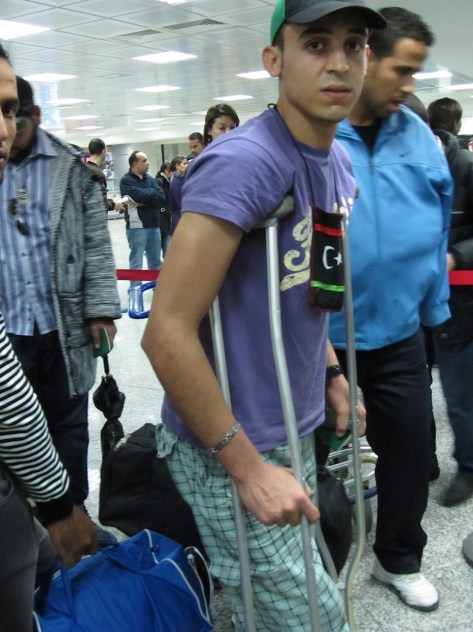
When does a boy become a shabaab?

Literally, in Arabic, shabaab means young men. Before the fever of the Arab Spring raged in the minds of the youth, back when boys used to gather in squares aimlessly, girls eyeing them would call them shabaab.

But that was then; before the political architecture of the Arab world was reconstructed.

Today the shabaab are the disenchanted youth, the angry boys of Benghazi with deathly toys devoid of opportunity, angry at their condition, aware of the world through the Internet and their mobiles, acting out their rebellion. Today the shabaab, the rebels of Libya, want what they think is theirs: the right to self-determination, a say in politics and freedom.

Continue reading ‘Who isn’t a Shabaab these days?’: Alia Allana reports from the Tunisia-Libya border

A temple in Peshawar reopens for the first time since 1947: Shabbir Imam

Guest post by SHABBIR IMAM from Peshawar, Pakistan. Video and photos by Shabbir Imam

[youtube:http://www.youtube.com/watch?v=qnZJClQNI_c%5D

During Sikh rule in Peshawar, the Gor Khatri area of Peshawar was declared Governor House, so the Gorakh Nath temple here was abondened and Hindu families shifted to a close by residential compound called Christian Colony. Then during the British Raj, the government provided residential quarters to a Hindu family to look after the temple. Continue reading A temple in Peshawar reopens for the first time since 1947: Shabbir Imam

Kashmir’s Horcrux: Sameer Bhat

Guest post by SAMEER BHAT

Hectic parleys are on at the moment to jettison the dreaded AFSPA in the valley. By conservative estimates the army must have beaten about one in every five Kashmiris at one point or the other since this piece of horrible legislation was slapped on us. An unjust law, is no law at all, Martin Luther, the symbol of protestant reformation, verbalized the sentiment of St Augustine in the 15th century. Rings true to this day.

For more than twenty years people have been punched, thrown in the back of military trucks, knocked down by gun-butts, given kicks, pushed around as they got off a bus or simply slapped around for no apparent reason. Just for being themselves, perhaps. No you could not question the moral turpitude of a military-walla from Madras if he clubbed your aging father.  Continue reading Kashmir’s Horcrux: Sameer Bhat

The Synagogue and the Jihadi: Alia Allana reports from Jerba

This guest post by ALIA ALLANA is part of a Kafila series of ground reports from the Arab Spring

Inside the El Ghriba synagogue in Djerba, an island off the south coast of Tunisia

Out of all the outrageous questions I have asked in my life, this one has to be amongst the top ten:

“Are you a jihadi?” Continue reading The Synagogue and the Jihadi: Alia Allana reports from Jerba

A prologue to memory: Arif Ayaz Parrey

Guest post by ARIF AYAZ PARREY

Over the corner shop at the busy crossing near home hangs a white board on which the words ‘Muzaffar Pan-House’ are painted in bright red. On the right side of the words, an artistic rendition of the side-view of Muzaffar’s face can be seen. His left hand is also painted in, holding a cigarette. The grey smoke emanating from the cigarette does not vanish before it touches the top of the board.
Continue reading A prologue to memory: Arif Ayaz Parrey

AFSPA in Kashmir – “Armed Forces’ Say Prevails Anyway”: Gowhar Geelani

Guest post by GOWHAR GEELANI

There is a lot of noise in the media over AFSPA. Ask any senior Indian security official, a turn-coat politician or a retired Army General what AFSPA stands for. “Armed Forces Special Powers Act,” they will say. Now pose the same query to an ordinary Kashmiri living there in the hapless Vale for the past two decades. The answer perhaps would be: “Armed Forces’ Say Prevails Anyway”. Continue reading AFSPA in Kashmir – “Armed Forces’ Say Prevails Anyway”: Gowhar Geelani

Understanding the Nepali Revolution: Baburam Bhattarai

(Nepal’s Prime Minister, Dr BABURAM BHATTARAI, visited India in his first bilateral trip since taking office, in the third week of October. Bhattarai spoke at the Jawaharlal University, Delhi, where he had earned his PhD from the Centre for Study of Regional Development, about the political evolution in Nepal, particularly after the 1990 and 2006 movements as seen through the prism of the Unified Communist Party of Nepal (Maoist).
Before beginning his substantive speech, he declared, “I am what I am because of JNU,” amidst thundering applause and cries of Lal Salaam.

The full text of the speech, provided to Kafila by his office, is being posted below for the record.)  Continue reading Understanding the Nepali Revolution: Baburam Bhattarai

Bhutan’s cautious tryst with democracy

Bhutan’s shift to plural politics remains carefully calibrated, but the emergence of a relatively free press and democratic institutions are important achievements. An account from Thimpu

Political changes in Bhutan over the past five years — the introduction of a ‘democratic constitution,’ the retreat by the fourth King and the coronation of his son, elections to Parliament which now has both a ruling and an opposition party, and governance being the prerogative of the elected government — have triggered two opposite reactions generally. One school has hailed the vision of the Bhutanese monarchy and its act of ‘renunciation,’ and has declared the ‘democracy story’ to be a success. Many others dismiss the transition as being a ‘farce,’ claiming that the King still calls the shots and that Bhutan remains a tight autocracy. Continue reading Bhutan’s cautious tryst with democracy

From Manhattan to Manesar: Naeem Moahaiemen

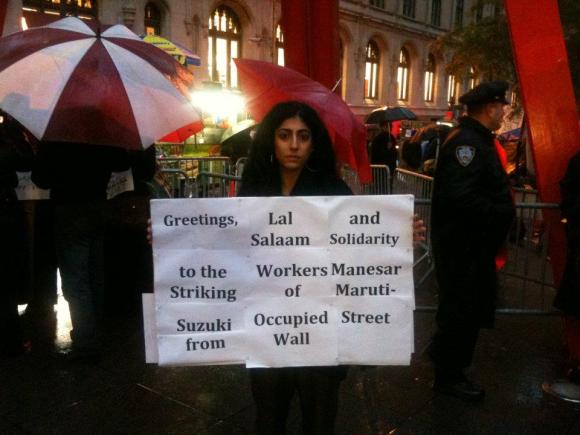
Greetings to the Workers of Manesar from Occupied Wall Street (Photograph by Naeem Moahaiemen)

A few days ago, in a post on the rally in solidarity with the (then) striking Maruti Suzuki, Suzuki Powertrain and Suzuki Motorcycles Factory workers in Manesar, Gugaon in Haryana, we had reported a worker saying: Continue reading From Manhattan to Manesar: Naeem Moahaiemen

End the culture of impunity, not just AFSPA: APDP

This is a press release from the ASSOCIATION OF PARENTS OF DISAPPEARED PERSONS

The Bund Amira Kadal, Srinagar – 190001, Jammu and Kashmir
28th October 2011

APDP feels that the recent announcement by the Chief Minister Omar Abdullah on the partial revocation of Armed Forces (Special Powers) Act (AFSPA) from some areas of Jammu and Kashmir would be insignificant for improving the human rights situation and also for providing justice to those affected by the mindless violence by armed forces.
Continue reading End the culture of impunity, not just AFSPA: APDP

Signs of improving times

Two incidents that took place recently provide hope, underlining that the India-Pakistan peace process must indeed be on track. One incident was related to the UN and the other to Kashmir, if you can believe it. Continue reading Signs of improving times

Lies about sanctions under AFSPA: JKCCS

This press statement was issued by the JAMMU AND KASHMIR COALITION OF CIVIL SOCIETY on 19 October 2011 
 
Over the last 22 years in Jammu and Kashmir, the Armed Forces Special Powers Act (AFSPA) and Cr.P.C. 197 has provided absolute legal impunity to the armed forces and the Jammu and Kashmir Police.
The Government of India claims that despite the imposition of AFSPA, mechanisms of justice are functional and deliver whenever anyone is found indulging in human rights abuses, but facts provided by the state institutions contradict the claim of the Indian state. Continue reading Lies about sanctions under AFSPA: JKCCS

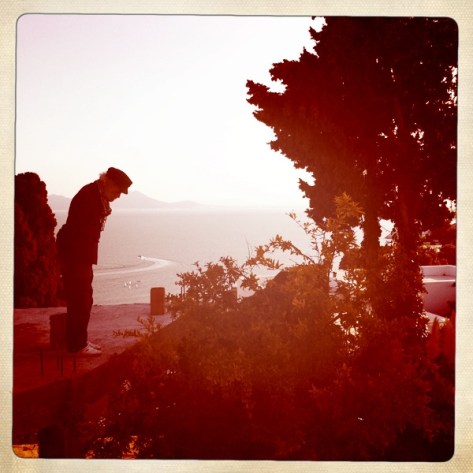
Mickey wants to be the first one to vote: Alia Allana reports from Tunisia

This guest post for Kafila by ALIA ALLANA from Sidi Bou Said on the outskirts of the capital Tunis captures the mood a day before Tunisia goes to the polls. Photos by Alia Allana

Continue reading Mickey wants to be the first one to vote: Alia Allana reports from Tunisia

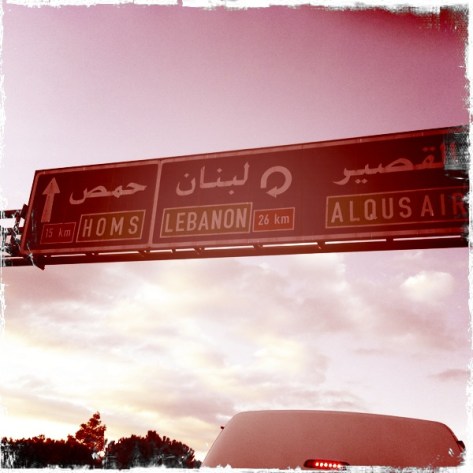
A Despatch from Homs: Alia Allana

This guest post by ALIA ALLANA is a despatch for Kafila from Homs, Syria. All photos by Alia Allana


He was found shot in the chest, bleeding on the streets, alone.

He has no name. He’s just another struggling body in the hospital in Homs — only he’s much younger than most. He’s only four. He doesn’t move, his small frail body is gobbled by wires. The doctors say he hasn’t opened his eyes, hasn’t made a sound, nor has he called out for anyone. Saliva runs down his mouth but there is no one to wipe it off his face. This isn’t the first case and the doctors fear it won’t be the last. There will be other children who will take his place, there will be more victims of random shooting, more deaths and no one knows by whose gun.  Continue reading A Despatch from Homs: Alia Allana

Through the screen, not so darkly: Raza Rumi

Guest post by RAZA RUMI

Pakistanis love Bollywood. There is no question about that. Amidst the love-hate perceptions, Indian cinema has for decades fed public imagination. Before the 1965 war that took place when Ayub Khan, Pakistan’s first military ruler, was in power,  Indian films were released in Pakistan regularly. They competed with the local cinema. The healthy contest enriched filmmaking and gave choice to Pakistani cinema-goers. The war and competing imaginary nationalism halted this process and for decades, Indian films stayed away from cinemas until another military ruler, Parvez Musharraf, allowed limited releases. Such is the power of Bollywood and its commercial viability that for the past few years, Bollywood flicks have revived cinema in Pakistan. Continue reading Through the screen, not so darkly: Raza Rumi

Everybody Loves a Good War – Tehelka and Essar: Bobby Kunhu

Update: A Day after the publication of this post, Tehelka changed the status of Essar from “Principal Sponsor” to merely one of several “patrons” on the Goa ThinkFest website.

Guest post by BOBBY KUNHU

Tehelka: Free, Fair, Fearless?

Without doubt, one of the most important documents to make its appearance after the arrest of Soni Sori by the Chattisgarh Government in Delhi on 4th October 2011 was the cover story titled, “The inconvenient truth of Soni Sori” that appeared in Tehelka, written by Shoma Chaudhary. It tells the story of Soni Sori and her nephew Linga Kodopi as narrated to Tehelka and the sequence of events that led to their persecution.

Nonetheless there is an intriguing twist to how this story was framed. The introduction of the story goes:  “Why were two tribals and the Essar group framed by the Chhattisgarh police? Why are Soni Sori and Linga Kodopi being systematically silenced? This chilling story of one family reveals more about India’s Naxal crisis than any official document can.”

In other words, Tehelka is arguing that Essar is also being framed in this narrative along with Soni Sori and Linga Kodopi.

Continue reading Everybody Loves a Good War – Tehelka and Essar: Bobby Kunhu

Navratri in Karachi

The report above is by Zanobia Ilyas, who writes: Continue reading Navratri in Karachi

The unspeakable horrors of Delhi, 1947

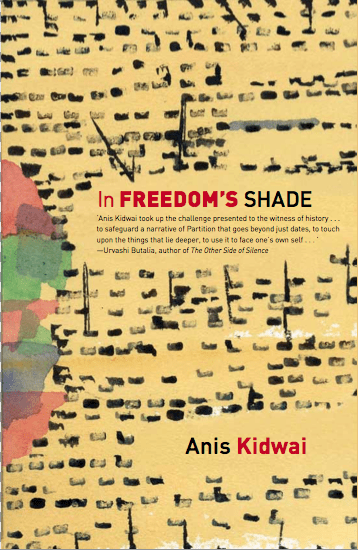
In Freedom’s Shade, by Anis Kidwai; translated from Urdu by Ayesha Kidwai; Penguin Books India 2011, Pp 382, price Rs. 450

Anis Kidwai belonged to the illustrious Kidwai family of Barabanki. The family has made more than a signal contribution to the making of India. Not only in politics and governance but also in diverse fields of creative endeavour. This short piece, though, is not about her or about her family but her most remarkable record of the unfolding tragedy in the Capital of India and in its surroundings in the aftermath of independence and partition.

Anis Kidwai, though extremely politically aware with sharp and clear views on what she saw happening, was not a political activist and would have probably continued to lead a well settled, almost sedentary life in Mussoorie, had the unthinkable not happened. Her husband, Shafi Ahmad Kidwai, the administrator of the Municipality, who had almost single handedly tried to keep peace in Mussoorie when everyone else had either given up or joined the rioters, was murdered.

Continue reading The unspeakable horrors of Delhi, 1947

Untitled: Najeeb Mubarki

Guest post by NAJEEB MUBARKI

I could have met Sebald.
I went to Britain in September 2001,
And he died in December.
East Anglia wasn’t all that far way
From London, nothing, really,
Is all that far away in Britain.
I could have met him, if I had known him
Then.
What I would have wanted to say, I think Continue reading Untitled: Najeeb Mubarki

Gopal Das is free, Khaleel Chishty is not

Justice Markandey Katju, who has upon retirement just been appointed head of the Press Council of India, today addressed the media at his residence in Delhi. Towards the end of his speech, he said:

Before I conclude, I once again repeat my appeal to the Indian Government through the Prime Minister to release Dr Khaleel Chishty who is in Ajmer Jail. He is 80 years old and has not very long to live. He was an eminent virologist in Karachi Medical College and was a PhD from Edinburgh University. He is a heart patient and has many other ailments also. He is unable to walk. In the name of humanity I appeal to the Indian Government to release him and allow him to get back to home in Karachi to his wife and daughter who live there. The Pakistan Government honoured my appeal and released Gopal Das from a Pakistani jail. I am sad that the Indian Government has not yet honoured my appeal made several months ago to the Hon’ble Prime Minister, the Hon’ble Home Minister, and His Excellency the Governor of Rajasthan. In my opinion, the prestige of our country will be invreased if Dr. Chishty is released, whereas if he dies in jail, we will be disgraced. Continue reading Gopal Das is free, Khaleel Chishty is not

Release Indian and Pakistani fishermen with their boats

PRESS STATEMENT: We, the undersigned, express our deep concern regarding the continuous arrests of Indian and Pakistani fishermen and confiscation of their boats by each country of the other. The poor, innocent fishermen go to sea to catch fish and in the deep sea it becomes virtually impossible for them to recognise where their countries waters end and other’s start.

The fishing season has begun couple of days ago and boats in a big number go to the mid-sea to catch and earn some money. Both the governments need to recognise the fact that these traditional fishermen go to the mid-sea for their livelihood. Arresting them and confiscating their boats means depriving their families from the livelihood, and causing them extreme distress. Continue reading Release Indian and Pakistani fishermen with their boats