Category Archives: Frontiers

An appeal to help Pakistani Hindu refugees in Jaipur: PUCL

This is the text of a memorandum submitted recently by the PEOPLE’S UNION FOR CIVIL LIBERTIES, Rajasthan, to the state’s chief secretary.

12th June, 2013

Sh. CK Mathew,
Chief Secretary,
Government of Rajasthan, Jaipur

Subject: Urgently providing temporary housing and other support to refugees from Sindh, Pakistan living in Paldi Meena, Jaipur

Dear Sir,

This is in continuance of our telephonic conversation regarding provision of temporary housing to the 23 persons belonging to six families who have come to Jaipur in the last five months from Umerkot, in Sindh province of Pakistan due to deteriorating conditions of the minorities and there existence in fear there. Some came in January 2013 and others came in March. They all arrived in India via the Thar Express which they boarded from Mirpur and first came to Jodhpur before moving to Jaipur. They are mostly on visitors and pilgrimage Indian visas. Continue reading An appeal to help Pakistani Hindu refugees in Jaipur: PUCL

The Jamhuriyat Road to Taksim Square: Shilpi Suneja

Guest post by SHILPI SUNEJA

Istanbul, 4 June

istanbul11

The evening of 3 June, 2013 was the first time I’d experienced the sting of pepper spray. I was walking on Cumhuriyet Caddesi near Taksim Square in central Istanbul, where, for the past five days, civilians and the Turkish police have been clashing over what the international media has called “a matter of a few trees”. Certainly, the spark of what is now a huge mass protest spanning multiple cities with over 1,000 injured, was the issue over Gezi Park, an area in central Istanbul where the Prime Minister, Tayyip Erdogan has proposed to build a shopping complex. The plan was to graze the green space and create a shopping complex. This in an area that already boasts of a Hyatt, a Hilton, a Swiss hotel and shopping centers with national and international brands. “There’s already so many shopping malls here,” said a Turkish friend speaking about the government’s decision. “Why build another?” The grazing of the park was supposed to start on Thursday, May 30th. By that time, hundreds of people gathered and occupied the park, bringing tents, books, and children. The police, in response, burned their tents and dispersed the protesters using pepper spray and tear gas. Continue reading The Jamhuriyat Road to Taksim Square: Shilpi Suneja

Breasts, cancers and the ethics of reptiles: Ramray Bhat

This is a guest post by RAMRAY BHAT  Two weeks ago, tucked in between lurid details of spot-fixing during IPL matches, and an inordinate attention to how Sanjay Dutt spent his first few moments in jail, was an important bit of news about a high profile American movie actor having undergone preventive surgery in order to escape a future encounter with breast cancer. The source of the information was an op-ed written by the actor in The New York Times.

The mainstream Indian media not quite knowing how to report this kind of information first presented it in the blandest fashion and then hurried to the closest cancer hospital to interview its surgeons. The social media took the expected route of initially spouting knee-jerk reactions some of which were misogynous and offensive. The response later evolved into a division between two camps. One hailed the actor for being courageous. The other criticized her for a variety of reasons such as her choice of undergoing surgery without being afflicted with the disease, and her soft advocacy for a detection procedure that is out of the economic reach of a majority of women in her own country, let alone those from the third world. Ruth Fowler’s article from the left-leaning Counterpunch adopted a cavalier tenor and chided the actor for her op-ed with what seemed like nitpicking arguments.

Continue reading Breasts, cancers and the ethics of reptiles: Ramray Bhat

Eleven things India must do in Kashmir: Justin Podur

india_kashmir_rebel_attack
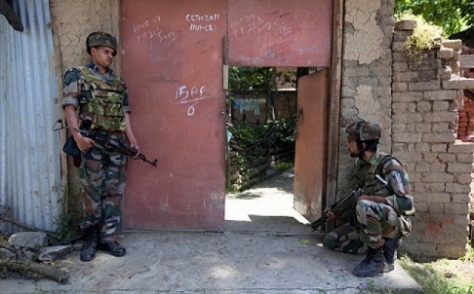
Indian Army soldiers at an encounter site with militants in Kashmir on Friday. AP photo

Guest post by JUSTIN PODUR: I spent a week in Srinagar, the capital of Kashmir, at the end of April 2013, talking to people among whom there was a wide range of opinion. While almost everyone supports freedom, some are resigned to India never letting Kashmir go, others believe that the struggle will go on and take different forms, some are just trying to survive. It seemed to me, at the end of a calm week during tourist season, that India is bringing about all of the things that it fears: Pakistani influence, violence,  radicalisation of youth, political Islam, and hatred of India. Continue reading Eleven things India must do in Kashmir: Justin Podur

Sarabjit, Sanaullah, you and me

sarabjit2

I met Sarabjit Singh’s brave lawyer Awais Sheikh in Delhi some months ago, where his book was released. He was very confident Sarabjit wouldn’t be hanged. As was Justice (Retd.) Katju, who launched the book. Justice Katju said there was no point campaigning for Sarabjit’s release until the Pakistan elections were over. I got a similar impression of optimism from people who had been following the Sarabjit case.

Well, they were right. Sarabjit wasn’t hanged. But hanging is only one way of killing. Continue reading Sarabjit, Sanaullah, you and me

Gandhi’s fourth monkey: Suvaid Yaseen

Guest post by SUVAID YASEEN: Incredible India is a land of promises. Amnesia and half narratives. Selective remembrance and deliberate forgetting. The national interest is incredibly important. And everything is allowed in this war.

Gandhi’s – the father of the nation – maxim of bura mat kaho, bura mat suno, bura mat dekho (don’t say evil, don’t hear evil, don’t see evil), interestingly forgets to say bura mat karo (don’t do evil). So, you can do it, and forget it. Gandhi should smile. And his monkeys can make merry.

Mohammad Yasin Malik, the Jammu Kashmir Liberation Front commander turned ‘Gandhian leader’ must know this irony very well.

When, in the early nineties, the guns started ringing, Kashmiris were told that they should leave the path of the armed struggle and have a peaceful agitation, and they would be listened to, by India and by the international community. Continue reading Gandhi’s fourth monkey: Suvaid Yaseen

Partha Chatterjee on Subaltern Studies, Marxism and Vivek Chibber

At the recent Historical Materialism conference held in Delhi from April 3-5, a panel was organized with great fanfare – an official panel by the HM editors – around Vivek Chibber’s new book Postcolonial Theory and the Spectre of Capital. This panel was billed to be a decisive refutation of Subaltern Studies and Postcolonial theory, not only by the chief  theorists and organizers of Historical Materialism but by many other Indians – most of whom in any case have little more than a religious faith in ‘Marxism’ and understand little of Marxism and its history.  There was glee all around and one came across the hurried announcement of a Centre for Marxist Studies that was to host further events around this book against the demon that Chibber had apparently slain. After all, Chibber  was backed by the likes of Slavoj Zizek, Robert Brenner and Noam Chomsky, all of whom  had  endorsed his book as the death knell to  Subaltern Studies and Postcolonial theory. The glee was to be short-lived.

On April 28, at the New York conference of Historical Materialism, the organizers made the mistake of inviting Partha Chatterjee (a representative of a spent force, already buried at the Delhi HM Conference!) to debate the new star on their horizon. The meticulous demolition of Chibber that followed, embarrassed even his most ardent supporters, who had hoped to see the redoubtable Partha vanquished in person. And Chhibber, let our marxist brethren note, is reduced to finally accepting that he is more inclined towards contract  theory than towards Marxism!

Partha, whose years of meticulous engagement with Marxism can hardly be taken on cavalierly by any upstart on the horizon, calmly tore Chibber’s claims to shreds. Many supporters of Chibber’s book have, in social media, glumly  described the 28 April event as a great setback to their cause…

Here is Partha in debate…

Joint statement after the sixth meeting of the India-Pakistan Judicial Committee on Prisoners in Pakistan

This statement was issued yesterday by the JOINT INDIA-PAKISTAN JUDICIAL COMMITTEE ON PRISONERS

May 03, 2013

  1. Members of the India-Pakistan Judicial Committee on Prisoners visited Pakistani Jails in Karachi, Rawalpindi and Lahore from April 26-May 1, 2013. The members of the Committee, Justice (Retd.) Mr A.S Gill and Justice (Retd) Mr. M.A Khan from the Indian side and Justice (Retd) Abdul Qadir Chaudhry, Justice (Retd.) Mr. Nasir Aslam Zahid and Justice (Retd.) Mian Muhammad Ajmal from Pakistan side visited the Jails.
  2. A total number of 535 Indian prisoners including 483 fishermen (including 11 juveniles) and 8 civil prisoners, believed to be Indian nationals at District Jail Malir, Karachi, 8 Prisoners, believed to be Indian nationals at Adiyala Jail, Rawalpindi and 36 Prisoners, believed to be Indian nationals at Kot Lakhpat Jail, Lahore were presented before the Committee. Continue reading Joint statement after the sixth meeting of the India-Pakistan Judicial Committee on Prisoners in Pakistan

बंगलादेशी जनउभार और भारत की मुर्दाशान्ति: किशोर झा

Kishore Jha is a development professional and is working in the field of children’s rights for the last two decades. This piece was originally published on the NSI blog.

सन २०११ में भ्रष्टाचार के खिलाफ अन्ना आन्दोलन में उमड़े हजारों लोगों की तस्वीरें आज भी ज़ेहन में ताज़ा है। उन तस्वीरों को टी वी और अख़बारों में इतनी बार देखा था कि चाहें तो भी नहीं भुला सकते। लोग अपने-अपने घरों से निकल कर अन्ना के समर्थन में इक्कठे हो रहे थे और गली मोहल्लों में लोग भ्रष्टाचार के खिलाफ नारे लगा रहे थे। इंडिया गेट से अख़बारों और न्यूज़ चैनलों तक पहुँचते पहुँचते सैकडों समर्थकों की ये तादात हजारों और हजारों की संख्या लाखों में पहुँच जाती थी। तमाम समाचार पत्र इसे दूसरे स्वतंत्रता आन्दोलन की संज्ञा दे रहे थे और टी वी देखने वालों को लग रहा था कि हिंदुस्तान किसी बड़े बदलाव की दहलीज़ पर खड़ा है और जल्द ही सूरत बदलने वाली है। घरों में सोयी आवाम अचानक जाग गयी थी और राजनीति को अछूत समझने वाला मध्यम वर्ग राजनैतिक रणनीति का ताना बाना बुन रहा था। यहाँ मैं आंदोलन के राजनितिक चरित्र की बात नहीं कर रहा बल्कि ये याद करने की कोशिश कर रहा हूँ कि उस आंदोलन को उसके चरम तक पहुचाने वाला मीडिया अपने पड़ोस बांग्लादेश में उठ रहे जन सैलाब के जानिब इतना उदासीन क्यों है और कुछ ही महीने पहले बढ़ी आवाम की राजनैतिक चेतना आज कहाँ है? Continue reading बंगलादेशी जनउभार और भारत की मुर्दाशान्ति: किशोर झा

Showkat Ahmad Paul is no terrorist: APDP

This is a press release from the Parveena Ahangar-led ASSOCIATION OF PARENTS OF DISAPPEARED PERSONS on 11 April 2013:

The Association of Parents of Disappeared Persons (APDP) strongly refutes the recent claim of the police that Showkat Ahmad Paul, of Lawaypora, is part of a fidayeen squad of a militant group planning to carry out a strike in the civil lines area of Srinagar City.  APDP states that the claim floated through a section of the media quoting police sources is utterly baseless and false.  After having abducted and disappeared Showkat Ahmed Paul in 2003, this is a fabricated attempt by the security forces and  state intelligence agencies to obfuscate and deny responsibility in the case of his disappearance. The family who are being harassed by the security agencies fear for the safety of their son who is in their illegal and unlawful custody since 2003. They fear that after branding him as a Fidayeen the security agencies now intend to murder Showkat, by staging an encounter or using some other extra judicial method. Continue reading Showkat Ahmad Paul is no terrorist: APDP

In Delhi for Dhaka: A solidarity vigil for Shahbagh

The New Socialist Initiative (NSI), Jamia Teachers’ Solidarity Association (JTSA), Nishant, Anhad, Krantikari Lok Adhikar Sangathan and the Stree Mukti Sangathan have put out this statement in advance of the demonstration tomorrow (9 April) 2 pm before the Bangladesh High Commission in Delhi.

The neighbouring country of Bangladesh is going through a new churning. Hundreds and thousands of people have hit the streets of Dhaka, demanding strict punitive action against ‘war criminals’ and their organisations, who forty-two years ago—at the time of the liberation struggle/war of the then East Pakistan (now Bangladesh)—colluded with the Pakistan army and committed untold acts of atrocities on the general public.

Basically, there are two main demands of the protesters: war criminals should be strictly punished and organisations like the Jamat-e-Islami, Bangladesh, should be banned and all commercial and other kinds of establishments run by it should be proscribed. Continue reading In Delhi for Dhaka: A solidarity vigil for Shahbagh

Muslim Right: Baring Its True Fangs!

Image

Any death is regrettable and those who died due to police fire may also come under this category. What is interesting is Jamaat’s modus operandi. The lone survivor of 14 December mass murder of intellectuals described in a recent TV documentary how Al Badr killed Prof Munier Chowdhury and others. Some were bitten with iron bars to death and at the final point; they would insert such bars into the head of their victims to ensure death. Jamaat-Shibir reportedly did exactly the same couple of weeks ago when they killed some police constables and others. It shows Jamaat-Shibir’s Standard Operating Procedure has remained unchanged for the last four decades…

(Rabiul H. Zaki, 1952, 1971, the genocide and Shahbagh)

“The Pakistani soldiers unleashed a reign of terror on the soil of Bangladesh in 1971. They brutally killed innocent people, molested Bengali women and ruined the economy. The Jamaat leaders, Ghulam Azam and Matiur Rahman Nizami, issued the fatwa that those activities were permissible to save Islam” (Dr Mohammed Hannan, Page 252, Bangladeshe Fatwar Itihas, 1999).

 I

What is common between Syed Md Nurur Rahman Barkati, Shahi Imam of Tipu Sultan Masjid, Kolkatta and Maulana Syed Athar Abbas Rizvi, imam, Cossipore Masjid or Md Qamruzzaman, general secretary, All Bengal Minorities Youth Federation ? Well, if media reports are to be believed then they would be the leading lights of a demonstration to be held on March 30 th in Kolkata demanding stepping down of Bangladesh Prime Minister Sheikh Haseena’s resignation. Continue reading Muslim Right: Baring Its True Fangs!

India, International Law and an Act of Hypocrisy: JKCCS

Press release put out 24 March by the JAMMU AND KASHMIR COALITION OF CIVIL SOCIETY

Srinagar: The 21 March 2013, United Nations Human Rights Council [UNHRC] resolution is a welcome initial step in the ongoing struggle to hold countries responsible for human rights violations, ranging from Genocide, Crimes against Humanity and War Crimes to Enforced Disappearance, Torture, Rape and Extra-judicial executions. The watered down resolution, moved by the United States, and India’s support for the resolution, requires both commendation and severe criticism at the same time.

There can be no selective morality when it comes to standing against the commission of human rights violations by State’s. Every country must be held to the same standards, as Sri Lanka has been in the instant case, regardless of economic or geo-political concerns. In this regard, the United States and India stand accused of hypocrisy in their dealings with human rights violations in their regions or across the world. Similarly, Pakistan’s vote against the resolution raises serious questions on its own approach to human rights violations in the region or elsewhere. Continue reading India, International Law and an Act of Hypocrisy: JKCCS

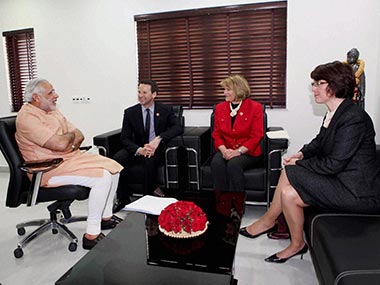
On Narendra Modi’s strange bedfellows in Washington DC: Zahir Janmohamed

Guest post by ZAHIR JANMOHAMED

PTI photo
PTI photo

The headline on Zee News at 5:09pm today read: “America opens its gates for ‘very dynamic’ Narendra Modi.”

The Business Standard in an article posted a few minutes earlier, at 4:57pm, wrote: “After UK, now US softens stand on Modi.”
Indeed three members of the US Congress, along with a few US business leaders, did meet with the Gujarat Chief Minister today in Gujarat. But should we infer any shift in US policy towards Narendra Modi?

In short, no.
Continue reading On Narendra Modi’s strange bedfellows in Washington DC: Zahir Janmohamed

Aadhar/UID is Against Equality and Democracy: Moiz Tundawala

Guest Post by Moiz Tundawala

After the suppression of the 1857 Mutiny and the British take over of Delhi, Mirza Ghalib was once asked by a military official whether he were Muslim or not. Ghalib is said to have quipped: “Only half Muslim; I drink wine but refrain from swine.” For me, this ripost evinces a flippant disdain for modern forms of rule which essentialize persons and groups purely based on certain attributes which are deemed definitive and prioritized over others. As far as Ghalib’s case was concerned, the idea may have been to find out based on his religious identity if at all he could pose problems for the newly established colonial regime. In later years, this policy, which African intellectual Mahmood Mamdani has recently termed ‘define and rule’, gradually became integral to governmental practices in most parts of the modern world; today, populations are ever so readily classified and enumerated based on empirically observable characteristics in order to make them amenable to effective government. The Aadhaar project of the Unique Identification Authority of India clearly falls within the gamut of such practices, marking a transition to modernity in a radical break from the past. So my reservations with it are just the same as those with any other modernity inspired programme wherein personal and collective identities are reduced to a somewhat arbitrarily determined bare essence which may have no real connection with lived experiences of fuzzy and contextually constructed identities.

Continue reading Aadhar/UID is Against Equality and Democracy: Moiz Tundawala

Carpets and kebabs in Isfahan: Marryam H Reshii

Guest post by MARRYAM H RESHII

iran67

I could write a book about my week in Iran, but will restrict myself to captioning these photographs I took.

The only two cities I visited were Mashad and Isfahan. Mashad is famous for two things. The shrine of the Eighth Imam of the Shia sect of Islam, Imam Reza, the only one out of all twelve Imams to actually be buried in Iran (all the others are buried in Saudi Arabia and Iraq) and saffron that grows far, far more plentifully than it does in Kashmir.

Mashad sells carpets woven/produced elsewhere. While the large carpets are traditionally Iranian, the small ones in frames are too suspiciously perfect to be made with human hand. Most of them have a plethora of shades of white in them, making the weaver something of a genius! Continue reading Carpets and kebabs in Isfahan: Marryam H Reshii

Pakistan ka Jugraafiya: Kyunki Patras

This guest post by KYUNKI PATRAS is in Roman Urdu.
KYUNKI PATRAS ka yeh mazmoon Roman Urdu mein hain.

Pakistan samundr-e-kufr mein aik roshan jazeera hai. Continue reading Pakistan ka Jugraafiya: Kyunki Patras

An undivided history of Punjab’s Partition: Ajay Bharadwaj

This is a book review by AJAY BHARADWAJ of an authoritative new book on the Punjab’s Partition by Prof Ishtiaq Ahmed. If you have any questions about the book or about the Partition in general, please leave them in the comments section and we will soon put them to Prof Ahmed.

images
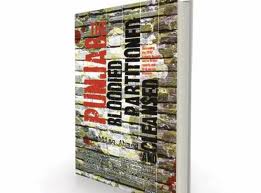
The Punjab Bloodied, Partitioned and Cleansed
By Ishtiaq Ahmed
Rupa Publishers, Delhi; 2011, 754 pp., Rs 995

Ishtiaq Ahmed claims that his work is “the first holistic and comprehensive case study of the partition of Punjab” (p.xlv); he has lived up to it admirably.  A study of rigorous scholarship, with painstaking fieldwork on both sides of the divide, The Punjab Bloodied, Partitioned and Cleansed’ offers unbiased insights into a minefield called the Partition of Punjab. As the title itself suggests, the book delves deep into the most difficult aspect of Partition history which has come to define it — the scale and magnitude of the killings at that juncture.

The primary sources that Ahmed has accessed in his endeavour are equally interesting for a number of reasons. While the historian draws extensively from the classified fortnightly reports (FRs) of the Punjab governors and chief secretaries to the viceroys, he simultaneously pays heed to oral history or the personal narratives of individuals — “witness to or victim of traumatic events” — that he has recorded over a decade and a half. The coming together of the two strands creates an intricate web of high politics and everyday life, which contributes to a layered, richly detailed and immensely moving account of the partition of Punjab — leaving a permanent imprint on the mind of the reader. Continue reading An undivided history of Punjab’s Partition: Ajay Bharadwaj

A Curfew in Spring: Rich Autumns

1-rich-autumns2
Photograph by Rich Autumns

RICH AUTUMNS writes from Srinagar: The capital of Kashmir is under tight curfew. Tight does not qualify curfew. It qualifies Srinagar. Srinagar is tight under curfew. The city has stopped breathing. It is an enforced exercise that the Valley undergoes regularly for the sake of law and order. On the deserted streets of Srinagar, Indian Army men stand in army issued jackets nursing rifles under the fresh green leaves of the Chinar. Occasionally a milk man cycles by. Sometimes, he is stopped and turned back. Sometimes he is allowed to pass, after an identity check. Continue reading A Curfew in Spring: Rich Autumns

Kindly Deliver My Letter to the PM of India: Mahum Shabir

Guest Post by Mahum Shabir

Dear Mr. Prime Minister,

Maybe it is silly to think that the Prime Minister of the world’s largest democracy will listen to the sorrows of a young Kashmiri woman-you have a billion more people to worry about. Maybe your interest in this letter would be piqued if I began by telling you that we have something in common-an education from two of the world’s best universities, yours from Oxford, mine from Harvard. Maybe it shouldn’t take a reference to where one went to school to get attention on a serious ethical issue at the center of democratic governance in India but nothing else has worked so far. I hope jaan pehchaan will work its wonders this once too. Continue reading Kindly Deliver My Letter to the PM of India: Mahum Shabir

The Mind And Heart Of Lotika Sarkar, Legal Radical, Friend, Feminist: Usha Ramanathan

LOTIKA-SARKARUSHA RAMANATHAN via Women’s Feature Service: We have to marvel at how the world has changed since r*** was a four letter word, and young Lotika Sarkar (1923-2013), the first woman lecturer in the Faculty of Law, University of Delhi, shocked the department by teaching rape to her students.

This is what happens when you let women into hallowed institutions of learning:  They don’t understand that, even when they are allowed to be seen, they may not be heard about the obscene. This was our LS-given, early version of the Vagina Monologues, without the theatre. Shift to the present: I suspect some will tell us that the battle to take rape to the classroom is far from over; except, thanks to LS, it is prudery that is on the back foot now. Continue reading The Mind And Heart Of Lotika Sarkar, Legal Radical, Friend, Feminist: Usha Ramanathan