Category Archives: Genders

‘After falling in love, I saw the reality of caste’: E. Ilavarasan

Dalit youth E. ILAVARASAN, whose marriage to a Vanniyar girl had resulted in caste violence in Tamil Nadu last year, was found dead on a railway track yesterday. Given below is an interview Ilavarasan gave to KAVIN MALAR and was published in the Tamil edition of India Today magazine. This translation is by PRAKASH VENKATESAN.

ilavarasan_divya-350_070513040519

Did you realise you were going to be in the headlines in TN when you got married?

No. Certainly not. I thought ours would be just like any other marriage. Divya thought so too. We thought they (Divya’s parents) would be angry initially but can be eventually reconciled. We simply did not expect these things would happen. I now can really understand the horrendous nature of caste and the heinous things it is capable of after falling in love.

Why do you think Divya is suddenly saying now that she wants to go with her mother? Continue reading ‘After falling in love, I saw the reality of caste’: E. Ilavarasan

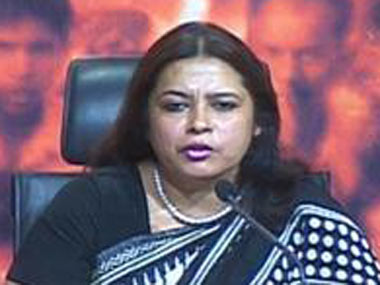
Women condemn Meenakshi Lekhi’s sexist slandering of Ishrat Jahan

Meenakshi Lekhi
Meenakshi Lekhi

Over 115 women have signed a letter seeking an apology from Ms. Meenakshi Lekhi for her sexist slandering of deceased Ishrat Jahan in a television channel. The letter has also been sent to the Chairperson of the National Commission for Women for appropriate action.

As the noose is tightening around the conspirators who cynically and coldly planned and executed the killing of teenaged Ishrat Jahan and three other people in 2004, there is a concerted campaign – the final, last ditch bid to save their skins – by tarnishing the image of this college student. There have been planted stories in the media linking her to a terrorist group –all of them false and concocted, even as the Gujarat High Court has clearly said that the CBI’s mandate is to simply investigate whether Ishrat and others were killed in cold blood. Continue reading Women condemn Meenakshi Lekhi’s sexist slandering of Ishrat Jahan

‘Documentary Evidence of Sexual Relationship’: Is companionship necessary when adults cohabit?: Rukmini Sen

This is a guest post by Rukmini Sen The Madras High Court on 17th June 2013 has delivered a judgment where it unambiguously states that ‘the main legal aspect for a valid marriage is consummation’ (pg 13). Consummation of a marriage, in many traditions and statutes of civil or religious law, is the first (or first officially credited) act of sexual intercoursebetween two people, either following their marriage to each other or after a prolonged sexual attraction. Its legal significance arises from theories of marriage as having the purpose of producing legally recognized descendants of the partners, or of providing sanction to their sexual acts together, or both (last accessed 22nd June 2013). In a country like India, where Section 377 of the Indian Penal Code still exists (although decriminalization of consensual sexual acts between two adults in private has been declared by the Delhi High Court in 2008), what constitutes the status of consummation in a gay/lesbian union or when two heterosexual adults live together, when the legal significance of consummation is connected only with giving birth to a ‘legitimate’ child? What about relationships where there are willfully no children, biological, adopted or surrogate? This is one of the many questions that this judgment raises and leaves me more bewildered about my legal identity as a cohabiting partner in a heterosexual relationship.

Continue reading ‘Documentary Evidence of Sexual Relationship’: Is companionship necessary when adults cohabit?: Rukmini Sen

Shahrukh Khan, Surrogacy and Sex-Selection: Sneha Banerjee

Guest post by SNEHA BANERJEE: It was a Monday morning that didn’t bring me blues, after many weeks of sweltering heat I could keep the door to my balcony open without fearing the skin-burning ‘loo’ and my room filled with the pleasant breeze which had the promise of bringing in rains once again.  I decided to keep my diligently prepared to-do list aside and embarked on staring at the neem tree observing the avian cohabitants of my neighbourhood with the radio on my phone tuned to a FM station.  It was then that the unnecessarily loud, over-enthusiastic voice of a radio-jockey broke the serenity of the surroundings.  His shrieky voice exhorted a promise to keep Dilliwalon up-to-date with the latest controversies in Bollywood.  Now, that was not something that I was very interested in – imagined competition among biggies, who ate what, who holidayed where and with whom and after betraying whom was going to be too depressing to handle, but before I could reach out to change the station, he took somebody’s name that still makes my heart skip a beat even after couple of leap-years have come and gone since I was sweet-sixteen.  Yes, any and every news about this ‘star’ interests me and I want to know it all, true or untrue, gossip or through ‘reliable sources’.

But what I heard then, broke my heart.  The RJ quoted a Mumbai tabloid, that Shah Rukh Khan (SRK) is having a third child through surrogacy and that he has ensured it is a son through sex-selection.  Continue reading Shahrukh Khan, Surrogacy and Sex-Selection: Sneha Banerjee

Barasat Rape, Murder and the Culture of Rape in West Bengal: Soma Marik

Guest post by SOMA MARIK. [We are publishing below two articles by Soma Marik, Visiting Professor, School of Women’s Studies, Jadavpur University. The first deals with the recent case of the rape and murder of a young girl in North 24 Parganas while the second one below was written in 2003 when the Left Front was in power and documents the widespread culture of rape in the state. Between them, the two pieces alert us to the way we tend to respond selectively to such matters. This is particularly so in the case of political parties in power.]

The Barasat Rape and Murder: Some Reflections

On 8th June, a young woman, a second year college student, was returning home, Kamduni, a remote village of Barasat in the district of North 24 Parganas. She was waylaid by some criminals, who took her to a godown, where they gang raped and then proceeded to murder her. Six hours after she was seen alighting from a bus, her body was found by her brothers and other villagers. The police were forced into some action, after the family and people of the locality refused to even let them shift her body without action first. They accused a number of people, including some connected to the ruling Trinamul Congress, of being rapists. The young woman was well known, as she used to help many children of the locality in their study.

The first response from the police was to play it down, till local anger made that an impossible proposition. The first response from the government was to declare it a stray incident, and also to offer jobs and cash compensation to the family. This was angrily turned down, with the family members turning up in Kolkata, meeting Chief Minister Mamata Banerjee, and demanding the death penalty for the rapists and murderers. Continue reading Barasat Rape, Murder and the Culture of Rape in West Bengal: Soma Marik

Interview with Amalia Ziv – queer, feminist and anti-occupation in Israel

KveesaShchora020403CWPsm

On April 3rd, 2002, Israeli peace organizations led by women activists tried to enter Palestine, but were violently rebuffed by Israeli soldiers – 21 required hospitalization when it was all over. The picture shows seven members (six women and one man) of the organization Kveesa Shchora – Lesbians and Gay Men Against the Occupation – as they set out that morning.

It was through Amalia Ziv ‘s work that I came to know about ‘Kvisa Shchora’ (Black Laundry), an Israeli anti-Occupation queer group, which positions itself against both Israeli Zionist queer politics and the Israeli Left, against whose universalist understanding Black Laundry poses its queer identity as a platform for critique. Ziv suggests that Black Laundry tied together ‘sexual deviance’ and ‘national deviance’ with slogans like ‘Free Condoms, Free Palestine’, ‘Bull Dykes, Not Missile Strikes’, ‘Transgender not Transfer’ (that is, forced deportation of Palestinians)  – which break down the hierarchies of Nation and Sex, challenging queer politics in Israel with anti-occupation politics and Left anti-occupation politics with the queer gaze. Ziv argues that through the ‘twin strategies of national betrayal and sexual depravity’, Black Laundry deliberately situated itself outside both  discursive communities – that of Israel/Palestine as well as of hetero/homosexual.

Read this wonderful interview by  TSAFI SAAR with Amalia Ziv in which she talks about queer parenting, pornography, masochistic fantasies, her envy of people who have the capacity to be polyamorous, how tolerance in Israel for queer politics  ‘runs out when queer politics melds with politics against the occupation,’ and about her crush as an adolescent for Woody Allen. ‘Eros is blind’, she says unrepentantly. Continue reading Interview with Amalia Ziv – queer, feminist and anti-occupation in Israel

White Women in the Indian Imagination: Alexandra Delaney

This is a guest post by ALEXANDRA DELANEY: 

“Yeah, Indian guys think white girls are easy”, a British-born Indian remarked nonchalantly to me this week. Normally I’d be shocked by such gross racial stereotyping (of Indians) but in this case I’m inclined to agree. Not because Caucasian women by their very skin colour or cultural preferences are any more promiscuous than their South Asian sisters, but because of their sustained portrayal as loose and morally deficient. The image of the sexually liberated and ‘easy’ white woman runs deep in the Indian imagination, a perception which is drip-fed by the country’s all-pervading mainstream media.

The brutal rape and murder of an Indian student in New Delhi last December followed by numerous sexual attacks on foreign women has sparked international outrage. This year alone, a Chinese woman was date-raped in New Delhi, a Korean woman was raped after being drugged in Bhopal, a Swiss tourist was gang-raped by five men in Madhya Pradesh while holidaying with her husband, and a British woman broke both her legs after jumping off a hotel balcony to avoid an alleged sexual attack by the hotel’s manager. These incidents have led to a shift in how tourists perceive India, resulting in a 25% fall in foreigners travelling to the country and a 35% reduction in women travellers, reports New Delhi-based Associated Chambers of Commerce and Industry. Continue reading White Women in the Indian Imagination: Alexandra Delaney

Capitalism, Sexual Violence, and Sexism: Kavita Krishnan

Sexual violence cannot be attributed simply to some men behaving in ‘anti-social’ or ‘inhuman’ ways: it has everything to do with the way society is structured: i.e., the way in which our society organizes production and accordingly structures social relationships. Once we understand this, we can also recognize that society can be structured differently, in ways that do not require – or benefit from – the subordination of women or of any section of society. 

What are the material structures that underpin sexual violence? As I address this question I will also engage with some of the arguments made in two recent articles which offer a professedly Marxist analysis of sexual violence and women’s subordination in India; one is ‘On the Empowerment of Women’ by Prabhat Patnaik, People’s Democracy, January 27, 2013, and the other is ‘Class Societies and Sexual Violence: Towards a Marxist Understanding of Rape’, by Maya John, Radical Notes, May 8, 2013.    Continue reading Capitalism, Sexual Violence, and Sexism: Kavita Krishnan

Students vs. SEWA or Dalit Student vs. Dalit Women Workers? Student ‘Politics’ on CDS Campus: Praveena Kodoth, J Devika, Sonia George

There have been reports in the media of an agitation by students of the Centre for Development Studies, Thiruvananthapuram,  because a fellow student was asked to leave the hostel  to facilitate an investigation of a complaint against him by the Self Employed Women’s Association, which runs the cafeteria on campus.  These reports and some exchanges between faculty have been circulated on the web / social media and has led to wider discussion of this event.  We consider it imperative to put forward our shared perspective as women activists as well as bring together our views as women faculty members of CDS and co-ordinator of SEWA respectively.

The student was informed in a letter that the action against him was until such time as the investigation was completed.  Media reports have portrayed the agitation as having been motivated by the victimization of a Dalit student by the workers of the cafeteria. Also it is being propagated that the student was ‘turned out’ of the campus when the letter from the Director required the student to ‘leave’ the hostel and refrain from using the cafeteria until the investigation was over.  Deliberately enough, the action was not to prevent the student from entering the campus.  We present here the context in which the student was asked to leave the hostel, the politics of the portrayal of the incident by the students as an infringement of the rights of a Dalit student and the larger implications of their claims, that feminism has been used to victimize students on the basis of caste.

Continue reading Students vs. SEWA or Dalit Student vs. Dalit Women Workers? Student ‘Politics’ on CDS Campus: Praveena Kodoth, J Devika, Sonia George

Taking Stock of the new Anti Rape law: Madhu Mehra

This is a guest post by MADHU MEHRA: The Criminal Law (Amendment) Bill, 2013, more popularly called the Anti-rape Bill, is now law. The outrage following the homicidal gang rape in Delhi unleashed events that lent force to the longstanding demand by the women’s movement for comprehensive reform of laws relating to sexual assault. These demands were bolstered by the recommendations of the high level committee, headed by retired Justice Verma, that called for reform of criminal laws, police reforms, prevention and education interventions to effectively tackle impunity for sexual violence. With the new bill passed by the parliament, the law stands substantially changed. This article takes stock of the ways in which the new amendments re-framed sexual offences in the law, their significance and the challenges that remain. While being far from comprehensive, these changes substantially transform the way legal redress for sexual offences have been framed in the law. A few examples below contextulise the significance.

Continue reading Taking Stock of the new Anti Rape law: Madhu Mehra

What Rediff Could Have Done to Support Kavita Krishnan Against Rape Threats: Anja Kovacs

Guest post by ANJA KOVACS: Imagine a TV station inviting a guest and giving the audience the opportunity to freely ask questions, with the guest deciding which questions to respond to. Imagine a member of audience then threatening the guest with rape, and the TV station’s representative responding by simply passing on the microphone to the next person, leaving the guest to fend for herself. Imagine the TV station then also refusing to provide any assistance to the guest following the incident. Outrage would, justifiably, ensue. Last week, Rediff treated a guest in much this way – during a Rediff-organised online public chat.

On 24 April, Kavita Krishnan, Secretary of AIPWA and a leading figure in the anti-rape protests that have been rocking the capital since December 2012, participated in a public chat at the invitation of Rediff. The topic of the chat was the rising incidences of rape and violence against women in the country. During the chat, Krishnan was repeatedly threatened with rape by a participant whose handle read ‘RAPIST’. RAPIST wrote: ‘Kavita tell me where I should come and rape you using condom’. Earlier the same person had made comments such as ‘Kavita tell women not to wear revealing clothes then we will not rape them’, to which Krishnan had in fact responded. All comments by RAPIST were written in capital letters.

Continue reading What Rediff Could Have Done to Support Kavita Krishnan Against Rape Threats: Anja Kovacs

Of campus democracy and academic excellence: Students of St. Stephen’s College

This is a guest post by some STUDENTS OF ST. STEPHEN’S COLLEGE, Delhi

Over the past one year Delhi University has been subjected to significant changes in the name of academic excellence, and many more changes are in the offing, like an un-thought-out introduction of the four-year undergraduate course. Teachers and students who have voiced concerns (and protested) have been harassed and not paid any heed to. One can witness a general shrinking of democratic space, and the space for dissent within the university. It is almost as if democratic decision making is an enemy of academic excellence, and thus needs to be curbed! A sharp contradiction between campus democracy and a vaguely defined academic excellence has come up recently in some issues pertaining to St. Stephen’s College. In this article, we – some students of the college would like to draw attention to the injuries inflicted on campus democracy, and the questions thrown up about the very meaning of academic excellence in the process.    Continue reading Of campus democracy and academic excellence: Students of St. Stephen’s College

A conversation that didn’t take place in Juhapura: Madhu Purnima Kishwar and Zahir Janmohamed

On 15 January, Kafila published an open letter to MADHU PURNIMA KISHWAR by ZAHIR JANMOHAMED. Three months later, Kishwar has sent us a response. Given below her response are comments by Zahir Janmohamed.

*

Dear Zahirbhai,

My apologies for the delay in responding to your “Open Letter” addressed to me through Kafila on January 11 2013.

Unlike most of those upset at my articles on Gujarat, you have been remarkably measured in your tone and tenor and also respectful in questioning my observations. However, the content of your letter annoyed me no end. I kept postponing my response in the hope that my annoyance at the absurdity of your chargesheet would subside over time. I honestly did not want to give you an angry or discourteous response so that the dialogic mode you established remained undisturbed.

However, as I began processing the enormous load of material I had gathered from Gujarat, my annoyance kept increasing at your jaundiced viewpoint. Therefore, I thought of letting the series of articles I am writing answer some of your questions. I had made it a point to ask all the questions you raised from Gujaratis I interviewed. At the end of my first series on Gujarat I would have written to ask you if you got your answers. Continue reading A conversation that didn’t take place in Juhapura: Madhu Purnima Kishwar and Zahir Janmohamed

The Silence of the Protector: Anonymous

This is a guest post by Anonymous

It is over two months since policemen and others allegedly molested women students of Delhi University as they protested against Narendra Modi’s presence at a college event within the University Campus. Not a word of support or concern has emerged from the Vice Chancellor. Instead, cases have been filed by the police against students and teachers who participated in the protest. The Vice Chancellor’s silence is probably among the less hypocritical responses that he could have had. At least students don’t have to hear assurances about their safety once more, and that lie has been laid to rest.

Sometime last year I happened to be present at an interaction between the local Delhi police and women hostel residents of Delhi University. The police had informed three hostels of a ‘meet the public’ programme at which we were required to be present and urge students to attend as well.  The students, who were preparing for exams at the time, attended the event somewhat reluctantly, but in the course of the evening, provided the feedback that was asked for with unexpected vigour. A woman DCP and other police representatives who had been called to address us, chose to assure us that the city was in fact safe despite a lot of media noise to the contrary, and that the reliability of the police could be counted on in all instants. This did not go down well. Various students asked what they should do when the police leered at them, exposed themselves to the women, urinated deliberately in front of them, lolled in their chairs chatting with security guards while cars slowed down threateningly in front of the hostel gates. The DCP, flummoxed by this flood of complaints, finally said that the police were after all a part of society and would reproduce its problems. This rare if honest admission should be taken seriously as a sign of how women should regard the question of their own safety.

Continue reading The Silence of the Protector: Anonymous

Crimes of Exclusion: Siddharth Narrain

Guest post by Siddharth Narrain.

It is anger on the streets that brought back to the forefront the neglected issue of sexual violence, energized a government appointed Committee to put together clear and well reasoned recommendations on law reform, and forced the government to table the Criminal Law Amendment Bill (2013).  It is public pressure and years of struggle by the women’s movement that is reflected in the more progressive parts of the Bill, passed recently by both Houses of Parliament.  Unfortunately, despite unanimity from a large cross section of society, that the definition of rape cannot be restricted to an outdated understanding of rape as perpetrated by men on women, the version of the Criminal Law Amendment Bill that was finally passed by Parliament retains this language. The law, if passed in this form will be a betrayal of the rights of millions of transgender persons, intersex persons and sexual minorities not born women.

Continue reading Crimes of Exclusion: Siddharth Narrain

Women – rights-bearers, economic assets, or stranded starfish? Uma Narayan

This is a review by UMA NARAYAN of the book Half the sky: Turning Oppression into Opportunity for Women Worldwide by Nicholas D. Kristof and Shirley WuDunn (2010). This review was first published in Perspectives on Politics, Vol. 8, No. 1, March 2010.

Why are we republishing a three year old review? The book has since then become a “movement” with celebrity advocates and a Facebook game that was launched this year. While being widely celebrated across the media in the US, it is also being sharply attacked for its “your women are oppressed, but ours are awesome” rhetoric. 

8065751089_c4fd818f4e

Asks Sayantani Dasgupta in her blog post from which the image above is taken:

For example, would Kristof, a middle-aged male reporter, so blithely ask a 14-year-old U.S. rape survivor to describe her experiences in front of cameras, her family, and other onlookers? Continue reading Women – rights-bearers, economic assets, or stranded starfish? Uma Narayan

When rape survivor becomes victim: Sherin B.S.

SHERIN B.S. writes from Hyderabad: There is a constant demand for a change in the terminology from ‘rape victim’ to ‘rape survivor’ in the agenda of feminist concerns in discourses related to rape. But beyond the feminist investment on surviving rape, a systematic reading of public discourses presents the traumatic sustenance of layers of violence that follows rape. The Suryanelli girl has survived rape, but the violent experience of life after rape perpetrated by systemic structures of patriarchy places her at the receiving end of a system that consciously alienates, humiliates and hunts her down.

While referring to the Suryanelli rape case there are two kinds of discourses circulated widely. One is the question of legality of the crime involved, with a heavily prejudiced and unsympathetic legal frame work attempting to frame the girl as an eternal victim subject for whom justice is almost impossible, mediated through parallel machinery of the state, including law enforcement. The impossibility of justice is not the intention of the legal machinery but it comes through the operating forces of judgments, prosecution stands, law enforcing offices like police stations and officers, and questions of evidence, alibis and so on. Continue reading When rape survivor becomes victim: Sherin B.S.

Class Feminism vs. Classy Feminism … Or, Everybody Loves the Governable Woman!

A few weeks ago, I mentioned on Kafila a certain gentleman who delivered a memorable address in Government Women’s College, Thiruvananthapuram, which contained sage advice on how to bring under control the unruly bodies of ungovernable women.  After that I have been receiving unsigned letters from his admirers who feel that their innocent hero has been most unfairly criticized. Like the grumpy ground-lubber types who are either incapable of ascending or simply unable to climb coconut trees and do not appreciate the free services rendered by the chivalrous heroes high above, I have erred in judgment, they claim. Continue reading Class Feminism vs. Classy Feminism … Or, Everybody Loves the Governable Woman!

A Tale of Two Panels: Vrinda Marwah

Guest Post by Vrinda Marwah

On 6th March, in the run up to International Women’s Day, I was involved in two panel discussions on women’s rights, both adrenalin-raising but for entirely different reasons. As someone who has been working in feminist organisations, and who, like so many others, is trying to be active and simultaneously make sense of the agitations and conversations following the Delhi gang rape, I decided to write about this experience because it was so revealing about how power operates.

The second panel, which I will talk about first, was in the United Nations Information Center, from 7:00 PM to 9:00 PM approx., organized by the New Delhi hub of the Global Shapers Community of the World Economic Forum, on issues of women’s safety in Delhi and practical measures that can be taken to address these. I don’t know much about this rather fancy sounding group (in their correspondence with me they describe themselves thus: The Global Shapers Community is a network of hubs developed and led by young people who are exceptional in their potential, achievements and drive to make a contribution to their communities). Continue reading A Tale of Two Panels: Vrinda Marwah

Gender Just, Gender Sensitive, NOT Gender Neutral Rape Laws

images

Statement by feminist and queer groups and individuals:

The report of the Parliamentary Standing Committee on the 2012 Criminal Law (Amendment) Bill as well as the 2013 Criminal Law (Amendment) Ordinance not only violates the letter and spirit of the Justice Verma Committee (JVC) recommendations but endangers and deepens women’s vulnerability in this country.

Representatives of women’s groups, democratic and human rights groups and activists are alarmed about major lacunae in current legislative protection to women, upheld by the Standing Committee report, and we insist on the following:

The Accused Must Be Male.

One pernicious provision of the Ordinance 2013, upheld by the Committee report, is blanket gender neutrality of the perpetrator of sexual harassment, assault and rape. Put simply: unlike in existing law where the accused is male, the Committee recommendations if enacted into a proposed new Bill, will make it possible for women to be charged with these offences. This is wholly unacceptable for the following reasons: Continue reading Gender Just, Gender Sensitive, NOT Gender Neutral Rape Laws

Why I need feminism

Here’s wishing all men and women across borders and boundaries, in New Delhi and New Haven, Ranchi and Russia, Dublin and Damascus, Srinagar and Sri Lanka, Bhutan and the Bermudas, a very happy International Women’s Day. These images are from the ‘I Need Feminism’ Campaign at the Lahore University of Management Sciences

This slideshow requires JavaScript.