Category Archives: Government

Two days in the Srinagar High Court: Shrimoyee Nandini Ghosh

This is a guest post by SHRIMOYEE NANDINI GHOSH

Impressions of the Hearing of the Public Interest Petition on the Mass Rapes at  Kunan Poshpora

Day 1: 7th May 2013: I happen to be in Srinagar. I hear through a friend that a Public Interest Petition has been filed by a group of fifty odd Kashmiri women, before the Srinagar Bench of the High Court, asking that the Kunan Poshpora mass rape case be reopened, and re-investigated. It would take a group of very odd women indeed, to ask for something so far fetched. They are students, housewives, teachers, doctors, some of whom were not even born in 1991, when the rape took place on the ‘intervening night’ (as such records always read) of the 23rd and 24th of February during a ‘search and cordon’ operation by personnel of the Indian army.

Continue reading Two days in the Srinagar High Court: Shrimoyee Nandini Ghosh

Naya Pakistan, an old fable: Ayesha Siddiqa

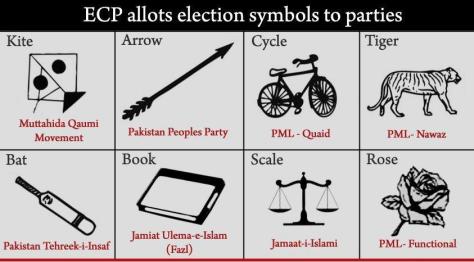
pakvotes-election-symbols

Guest post by AYESHA SIDDIQA: The renowned television anchor Quatrina Hosain was in tears. A day after the incident of her being sexually assaulted at a Pakistan Tehreek-e-Insaaf (PTI) jalsa by party workers in Wah Cantonement, she talked about how the bruises may heal but not her emotional scars. She was covering election rallies and got invited by a PTI candidate Mohammad Sarwar to his rally in Wah. It was a sudden plan so no one could have conspired to misbehave. This is important to note, as  many PTI workers have subsequently tried to blame the incident on Pakistan Muslim League (Nawaz)’s workers. However, when confronted with facts, PTI workers tried to hide behind the argument that women should not provoke people by coming out and mixing with them. Continue reading Naya Pakistan, an old fable: Ayesha Siddiqa

Sinful liberals and the war against jihadi terror: Manisha Sethi responds to Praveen Swami

Guest post by MANISHA SETHI: It has been seven months since the Jamia Teachers’ Solidarity Association brought out its report, Framed, Damned, Acquitted, chronicling in detail how the Delhi Police’s Special Cell implicated innocents – former militants, police informers, businessmen, and just ordinary, unlucky men – as terrorists. It is one of the few documents that lends evidentiary credence to the widespread sense amongst Muslims that they are being targeted in the war against terror. Apologists for the police and investigative agencies however do not tire of contesting its conclusions, namely that there is a systemic and systematic bias against minorities when it comes to terror investigations. What bias, they ask. As does our chief National Security ‘analyst’ Praveen Swami, who has stressed that “liberals are compromising the war against jihadi terror“.

Could such ‘analysts’ be echoing the sentiments of a judge of the Allahabad High court, who less than two decades after India gained independence, noted, that “in the entire country there is not another criminal force whose misdeeds can come anywhere near the list of crimes of that organised body called the Indian Police force” (All India Reporter, 1964, Vol. 51, 702). Do they mean, that our extraordinarily brutal police force is even-handed in its application of cruelty across the spectrum of our citizenry, and is not especially biased against the Muslims, or Dalits, adivasis and so on?

Continue reading Sinful liberals and the war against jihadi terror: Manisha Sethi responds to Praveen Swami

Savar Tragedy: Solution in Solidarity: Navine Murshid

This is a guest post by Navine Murshid The grief surrounding the collapse is unimaginable with more than 500 dead and hudrends still missing. It is clear that the accident was a culmination of the alignment of corruption, greed, inefficiency, and a bid to cut costs, at every level from acquiring lands through illegal means, using sub-standard materials for construction, and forcing workers to work despite life-threatening risks, to foreign buyers who show little regard for human life. It is clear too that the wealthy elite with political connections have capitalized on the textile industry by exploiting the poor; it reveals the evils of capitalism where the bid to minimize costs have led to the complete disregard for human lives, perpetuating the “race to the bottom.”

Thousands of RMG workers have gone on strike and taken to the streets to demand justice for what has happened and to demand changes in working conditions. Many have demonstrated in front of the BGMEA office. On the occasion of May Day, different groups came forward to support the working  class’ struggle for a work environment that is safe and well-equipped for emergency situations and a justice system that actually does them justice. Indeed, such support and solidarity with workers can end these “murders.”

The relevance of Shahbag

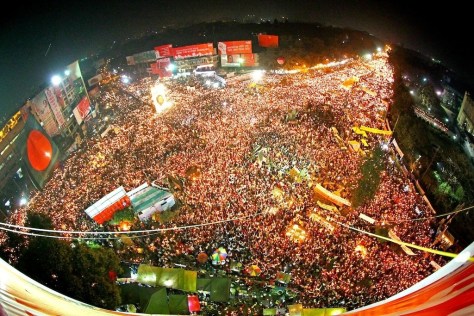
Shahbag’s main contribution to the political culture in Bangladesh, arguably, has been to empower people, particularly urban youth, to speak up and realize that even ordinary people can make a difference when they unite; that they do not need political patronage to voice their demands and dissatisfaction. The outpouring of support in the wake of the Savar disaster can be attributed to the understanding of “taking back the nation” that Shahbag had instilled in people to encourage them to be active citizens instead of waiting for the state to take action.

The Savar disaster reveals some key points of convergence between the interests of Shahbag activists and the working classes.

Continue reading Savar Tragedy: Solution in Solidarity: Navine Murshid

Joint statement after the sixth meeting of the India-Pakistan Judicial Committee on Prisoners in Pakistan

This statement was issued yesterday by the JOINT INDIA-PAKISTAN JUDICIAL COMMITTEE ON PRISONERS

May 03, 2013

  1. Members of the India-Pakistan Judicial Committee on Prisoners visited Pakistani Jails in Karachi, Rawalpindi and Lahore from April 26-May 1, 2013. The members of the Committee, Justice (Retd.) Mr A.S Gill and Justice (Retd) Mr. M.A Khan from the Indian side and Justice (Retd) Abdul Qadir Chaudhry, Justice (Retd.) Mr. Nasir Aslam Zahid and Justice (Retd.) Mian Muhammad Ajmal from Pakistan side visited the Jails.
  2. A total number of 535 Indian prisoners including 483 fishermen (including 11 juveniles) and 8 civil prisoners, believed to be Indian nationals at District Jail Malir, Karachi, 8 Prisoners, believed to be Indian nationals at Adiyala Jail, Rawalpindi and 36 Prisoners, believed to be Indian nationals at Kot Lakhpat Jail, Lahore were presented before the Committee. Continue reading Joint statement after the sixth meeting of the India-Pakistan Judicial Committee on Prisoners in Pakistan

A Report from the Protests: Kavya Murthy

Guest post by KAVYA MURTHY.

In the middle of the day a few days ago, a group of around ten people held hands and blocked the traffic on the road opposite the police headquarters at ITO, Delhi, protesting and calling for the removal of the Police Commissioner after a young, young child  had been raped and the police had done nothing, not file an FIR, nor act.

In this instance, it was not only the brutality of the act that had shaken us up. A young child, five years of age, raped by neighbours, bad enough to hold one’s head in shame – yes. There was outrage. But there was also outrage that a police officer had tried to bribe the family of the girl – with two thousand rupees – to avoid filing an FIR. Then, to add insult to injury, a young woman protester slapped repeatedly by an impatient policeman, an Assistant Commissioner of Police no less, when she tried to get inside the hospital where the child was in a critical condition.

Why were we there, that afternoon outside the Delhi Police Headquarters? What had prompted people to gather at the AIIMS metro station the day the child was shifted there for care, what was being said, who was being addressed? Was it  a silent vigil, in hope that this little child does not meet the same fate as the 23 year old woman gang raped just a few months ago? Was it also to say,  this is not the first time it is happening after that fateful day on December 16, 2012? 363 rapes already in just around the NCR the last few months, and here we are again, not exactly happy to be standing outside in outrage thinking of a little girl with bottles in her vagina and terrible infections. Continue reading A Report from the Protests: Kavya Murthy

Same Difference? The Politics of Development in Rajapakse’s Sri Lanka and Modi’s Gujarat: Anonymous

This is a  guest post by ANONYMOUS

President Mahinda Rajapakse in Sri Lanka and Gujarat’s Chief Minister Narendra Modi in India have positioned themselves as champions of development and good governance. Hardly a day passes without a media comment in the two countries on their respective development achievements. By and large, claims and counter-claims regarding development in Gujarat and Sri Lanka have tended to focus on mobilising data and ‘facts’ pertaining to a range of vital indicators—economic growth, levels of foreign investment, per capita income, employment, industrial or agricultural output, housing, rural infrastructure, roads, electrification, social welfare allocations, etc.

While working with development data is useful and necessary, an approach that relies too heavily on them tells us little about why development matters to the two regimes and how and to what ends it is actually deployed and leveraged by them at this point in time—the focus of this commentary. The question is not just what Modi and Rajapakse are doing for development but also what development is doing for them. Notwithstanding the significant differences between Gujarat and Sri Lanka, as argued herein, there are many striking similarities with respect to how and why Modi and Rajapakse are constructing, invoking and championing the cause of development. Continue reading Same Difference? The Politics of Development in Rajapakse’s Sri Lanka and Modi’s Gujarat: Anonymous

Why Delhi University’s Four Year Undergraduate Programme Should Not be Implemented with Irresponsible Haste


A Note Prepared at the Request of the Department of Higher Education, MHRD, Govt of India

Preamble:

Universities are meant to educate, that is, to teach students how to identify, understand and evaluate multiple points of view. Therefore, dissent, debate and argument are the core concerns of a University – they cannot be regarded as irrelevant irritations or acts of sedition. Debate cannot continue indefinitely, and must be responsible. But what constitutes responsible and well-considered criticism is inevitably a matter of judgement – it cannot be decided through assertion and counter-assertion. It is also inevitable that motives will be called into question. This is once again a matter of judgement, based on available evidence on who is speaking (what is their wider credibility beyond the immediate dispute?) and why (what do they stand to gain or lose by what they are saying?), and an overall sense of what is at stake in the issue. We invite such judgements.

Facts which are NOT disputed:

1. The proposed FYUP is the biggest, most far reaching change of curriculum in the recent (i.e., last 30-40 years) history of DU – it will replace every existing undergraduate course of study in every college and every discipline (professional courses & some other low-enrolment courses may be exceptions).

2. The first time that the FYUP was placed before any statutory body of the University was at the Academic Council meeting of Monday, 24 December, 2012. This meeting – to discuss the biggest curricular reform in several decades – was an Extraordinary meeting, called at 3 days’ notice, which was issued on Friday, 21 December, 2012 and delivered over the weekend, giving Departments no time to consider the proposal and formulate an informed response.

3. The structure of the FYUP presented to the Academic Council on 24 December had not been sent to the Committees of Courses at the Faculties or Departments, or to the Staff Councils of Colleges.

4. The Academic Council meeting of 24 December approved the FYUP with 6 dissents, including a written submission by the Dean, Faculty of Social Sciences, specifically requesting that the University take more time to think through this major change, and that a detailed White Paper on the FYUP be prepared and made public to enable the University community to respond to it.

5. The Executive Council meeting at which the AC approval of the FYUP was presented was held on Wednesday, 26 December, 2012, i.e. the next working day after the AC meeting of 24 December.

Continue reading Why Delhi University’s Four Year Undergraduate Programme Should Not be Implemented with Irresponsible Haste

Why censorship is the greatest threat to India: Michael Edison Hayden

Guest post by MICHAEL EDISON HAYDEN: An editorial published earlier this month in India Today bemoans India’s willingness to placate religious fundamentalists through artistic censorship. The author, Peter V. Rajsingh, makes the familiar point in “Censorship a slur on India’s ethos” that religious zealots have become “purveyors of infantilising values of Victorian colonial missionaries”. What he says is true, but India’s real problem with censorship extends far beyond removing images of bare breasts from movie screens. There is possibly no issue today – including the vile treatment of women and the relentless threat of terrorism – that poses a greater threat to the happiness and security of Indian citizens than that of censorship. And I believe that it is extremely important for those of us who live here, and love this country to comprehend the weight of this situation before it is too late. Continue reading Why censorship is the greatest threat to India: Michael Edison Hayden

Dismiss the Delhi Police Commissioner

It is surreal watching leaders from Sushil Kumar Shinde to Sushma Swaraj make tough statements, one after another, on television. Statements about taking strong measures, the latter even demanding, as is her wont, death sentence to rapists. I felt like asking, do you even realize what the people are angry about? Do you even know what is at issue here? Who will you hang? Case after case, even after December 16, it is being revealed, suffers from the same problem: the refusal of the police to even register a case! What is the meaning of this high histrionics then, when you do not even have a culprit to punish? I am not even raising the question of the ethics of death penalty because that is a redundant question at the moment. Except for the raving right wingers who – like Sushma Swaraj and Shinde – have to make some song and dance about the issue merely for effect, no one else really believes that at the moment there is any issue other than the criminality of Delhi Police. Continue reading Dismiss the Delhi Police Commissioner

Another rape, still more incompetence: Time to teach Delhi Police a Lesson?

A five year old girl is now in a critical condition in a Delhi hospital after being brutalized and raped by a neighbour. The Delhi police, which has dealt with the situation with its characteristic incompetence, first refused to file an FIR when her parents went to the police station, and then, tried to bribe the girls parents with two thousand rupees so as to ‘hush them up’. Subsequently,a young woman who tried to protest against the behaviour of the police at the Dayanand Hospital were the girl was initially taken for treatment was slapped by a policeman, an Assistant Commissioner of Police, in full public view. His actions have been recorded on video. It is believed that the policemen who tried to bribe the victim’s parents and the policeman who slapped the young woman have been suspended.

But can the suspension of a few individuals address what is obviously a deep rooted culture of misogyny and class prejudice (what else is it but class prejudice – would a policeman in a thana, say in an affluent South Delhi colony be able to offer two thousand rupees as ‘hush money’ to parents of an assaulted child with the same ease with which they could in Gandhi Nagar in East Delhi) within the Delhi Police? Is more severe and strict action that goes right to the top and to the source, not necessary in order to send a signal that this kind of behaviour within the police force cannot be tolerated? Must Delhi’s police commissioner not be compelled to resign, for his abysmal failure in terms of dealing with sexism and for failing to address the contempt for citizens who are not affluent that is now clearly endemic to the Delhi Police’s work culture?

Continue reading Another rape, still more incompetence: Time to teach Delhi Police a Lesson?

The urban-rural divide in Modi’s Gujarat

Christophe Jaffrelot gives us perspective on why Gujarat’s development numbers don’t look as impressive as Gujarat’s economic growth – it’s about Modi’s neglect of the rural:

Modi’s policy, over the last 10 years, has benefited the urban middle class more than anybody else. If Gujarat ranks only 11th out of 23 states in terms of the human development index, it’s because groups in rural Gujarat continue to lag behind. Indeed, Gujarat is a case of social polarisation with the new rich in the cities and most of the groups that are at the receiving end concentrated in the villages. There, the number of families below the poverty line has jumped from 23.39 lakh in 2000 to 30.49 lakh in July 2012, according to the rural development commissioner. Unsurprisingly, 9 lakh of the 11 lakh houses without electricity, according to the Gujarat 2011 census, are in rural areas. In terms of education, the excellent report of the NGO, Pratham, shows that rural Gujarat was lagging behind states like Haryana.

Dalits and Adivasis (11.3 and 16.5 per cent of the state population, respectively) are particularly affected. For instance, the percentage of tribal underweight children (0-5 years old) is much higher in Gujarat than the tribal average at the national level (64.5 per cent compared to 54.5 per cent). The under-five mortality rate of tribal children is also much higher. Similarly, the percentage of Dalit participation in the NREGA programme is three times less in Gujarat (7.83 per cent) than in India at large (22.67 per cent). In fact, development has meant socio-economic polarisation, because Gujarat is a typical case of growth without development for all. The Gujarat chapter of the India Human Development Report of 2011 concluded that “the high growth rate achieved by the state over the years has not percolated to the marginalised sections of society, particularly STs and SCs, to help improve their human development outcomes”. [Full article here]

More on Gujarat from Kafila archives: Continue reading The urban-rural divide in Modi’s Gujarat

A conversation that didn’t take place in Juhapura: Madhu Purnima Kishwar and Zahir Janmohamed

On 15 January, Kafila published an open letter to MADHU PURNIMA KISHWAR by ZAHIR JANMOHAMED. Three months later, Kishwar has sent us a response. Given below her response are comments by Zahir Janmohamed.

*

Dear Zahirbhai,

My apologies for the delay in responding to your “Open Letter” addressed to me through Kafila on January 11 2013.

Unlike most of those upset at my articles on Gujarat, you have been remarkably measured in your tone and tenor and also respectful in questioning my observations. However, the content of your letter annoyed me no end. I kept postponing my response in the hope that my annoyance at the absurdity of your chargesheet would subside over time. I honestly did not want to give you an angry or discourteous response so that the dialogic mode you established remained undisturbed.

However, as I began processing the enormous load of material I had gathered from Gujarat, my annoyance kept increasing at your jaundiced viewpoint. Therefore, I thought of letting the series of articles I am writing answer some of your questions. I had made it a point to ask all the questions you raised from Gujaratis I interviewed. At the end of my first series on Gujarat I would have written to ask you if you got your answers. Continue reading A conversation that didn’t take place in Juhapura: Madhu Purnima Kishwar and Zahir Janmohamed

Because Presidency is an Idea – All You Need to Know About What Happened at Presidency University: Waled Aadnan

Image

Guest post by WALED AADNAN: On 10th April, 2013, an unprecedented incident happened at Presidency University (erstwhile Presidency College), Kolkata. Now, unprecedented is a strong term when it relates to Presidency College, because it has, over its 196- year- long history,  seen much. It has been broken in by rioting mobs in 1926; in the 1960s and 70s, it was the so-called headquarters of the Naxal movement in Bengal; it has nurtured Indian Nobel Prize and Oscar winners and consistently over its history. It has been one of India’s elite colleges and a hotbed of left-wing politics.

Continue reading Because Presidency is an Idea – All You Need to Know About What Happened at Presidency University: Waled Aadnan

Lethal Lottery: A study on death penalty in India, 1950-2006

Do you know why Aadhaar is NOT compulsory: Ram Krishnaswamy

This is a guest post by Ram Krishnaswamy For the last three years activists opposing Aadhaar/UID have argued that it can lead to communal targeting, can aid illegal migrants, can invade privacy, is unconstitutional, does not have parliamentary approval, is illegal, etc. Yet all such objections and more have been successfully stonewalled by UIDAI and UPA leaders.

Further, Aadhaar is not compulsory and so such allegations are considered invalid. The middle and upper class Indians have remained silent about the UID debate, as it does not affect them in the least. The long lines of persons stretching before UID enrollment centers must be proof, then, of the popularity of this concept.

Nandan Nilekani and UIDAI Director General R.S Sharma have repeatedly told the nation that UID, now called Aadhaar, is not mandatory. Yet, over a period of time, they say, it could become ubiquitous, if service providers insist upon it compulsorily, in order to receive their services. To quote UIDAI Chairman, Nandan Nilekani, “Yes, it is voluntary. But the service providers might make it mandatory. In the long run I wouldn’t call it compulsory. I’d rather say it will be come ubiquitous.”

Continue reading Do you know why Aadhaar is NOT compulsory: Ram Krishnaswamy

Showkat Ahmad Paul is no terrorist: APDP

This is a press release from the Parveena Ahangar-led ASSOCIATION OF PARENTS OF DISAPPEARED PERSONS on 11 April 2013:

The Association of Parents of Disappeared Persons (APDP) strongly refutes the recent claim of the police that Showkat Ahmad Paul, of Lawaypora, is part of a fidayeen squad of a militant group planning to carry out a strike in the civil lines area of Srinagar City.  APDP states that the claim floated through a section of the media quoting police sources is utterly baseless and false.  After having abducted and disappeared Showkat Ahmed Paul in 2003, this is a fabricated attempt by the security forces and  state intelligence agencies to obfuscate and deny responsibility in the case of his disappearance. The family who are being harassed by the security agencies fear for the safety of their son who is in their illegal and unlawful custody since 2003. They fear that after branding him as a Fidayeen the security agencies now intend to murder Showkat, by staging an encounter or using some other extra judicial method. Continue reading Showkat Ahmad Paul is no terrorist: APDP

Statement by concerned academicians on the death of a student in police custody in Kolkata

We have watched with disgust and horror the brutal police assault on students during a peaceful demonstration organized by four Left students’ organizations on 2nd April, 2013 in Kolkata and the subsequent death of Sudipta Gupta, a participant in the demonstration, while in police custody.  Sudipta was a bright student and a leading activist of the Students’ Federation of India. We are shocked to see the Chief Minister of the state absolve the police of any responsibility for Sudipta’s death before a proper enquiry had even been initiated. We do not perceive this incident as an isolated one but rather as the egregious culmination of a series of systematic attacks on the civil and democratic rights of the academic community in West Bengal over recent months.  We strongly condemn this unprovoked singular attack on a peaceful students’ demonstration and the subsequent custodial death of Sudipta Gupta. We demand an immediate and impartial enquiry into the incident.  Continue reading Statement by concerned academicians on the death of a student in police custody in Kolkata

What a time to be in Dhaka! Kalyani Menon-Sen

This is a guest post by KALYANI MENON-SEN

I am in Dhaka right now.

Being here at this moment, in Shahbagh (Projonmo Chottor, as it is now called) and on the streets with activists from the Gonojagoron Mancha – young people, academics, veterans of the liberation movement, singers, artists, writers, professionals and thousands of ordinary people – is a unique and inspiring experience.

Battle for the soul of Bangladesh – Rally in February against the killing of Rajab Haider, the blogger who was a key figure in the protests against Islamists

The similarities and differences with the Delhi mobilisation are striking. Continue reading What a time to be in Dhaka! Kalyani Menon-Sen

Children of Kollegal: Blassy Boben

This is a guest post by BLASSY BOBEN

Loud voices singing the alphabet ring clear through the otherwise silent morning at Ardhanaripura. Bright eyed children assemble themselves in the school’s only classroom, chattering excitedly while waiting for their teacher to arrive. The school compound is alive with the laughter of the children. The only other sound in the village is that of the wind blowing through the locked, empty houses.

1298953987071-government school kids

Children at a school in another village of Kollegal district lining up for the midday meal (Image by  Junaid A Tagala)

As is the case in most villages in the taluk, the only residents of Ardhanaripura in Kollegal district of Karnataka are the aged and the very young, as all able bodied persons go out of the villages in search of work. Continue reading Children of Kollegal: Blassy Boben

Plucked, Consumed and Discarded: Dhruba Jyoti Purkait and Deepshikha Hooda

Guest post by DHRUBA JYOTI PURKAIT and DEEPSHIKHA HOODA.

Sakhra (Yavatmal): Deep in the heartland of Maharashtra’s suicide-ravaged Yavatmal district, the Gond tribal settlement of Sakhra holds a surprise. “There are no husbands here, just children,” explains Kishore Tiwari, president of the Vidarbha Jan Andolan Samiti. A member of the VJAS accompanies us on the bumpy two-hour ride out of Pandarkawada.

We turn onto a dirt trail that runs through a forest clearing; an hour passes before we start spotting cotton fields. We stop and our guide calls out to two female labourers. Only then does it strike us. Most of the labourers picking cotton are women.

It has been 10 years since Laxmi, now 24, gave birth to a son. She met a rich, upper caste boy who had promised to marry her. “Pyaar jataya tha mujhse,” After the delivery, he refused to acknowledge the parentage of the baby. “Congressi tha woh,” she says.

Continue reading Plucked, Consumed and Discarded: Dhruba Jyoti Purkait and Deepshikha Hooda