
RTI activist Subhash Agrawal has obtained correspondence between the then sports minister Mani Shankar Aiyar, and Prime Minister Manmohan Singh, that shows the PM was informed about the scam as early as October 2007. And did nothing. You can download here (.pdf, 4.2 MB) the 52 pages long RTI reply Agrawal got from the PMO.
Category Archives: Government
Growing Inequality and Deprivation in Telangana – Questions evaded by Srikrishna Committee: Bhim Reddy
Guest post by BHIM REDDY
[The movement for a separate Telangana state has been raging now for quite some time. At Kafila, we have not yet had the occasion for a discussion on the pros and cons of the issue. This post deals with one aspect – that of agricultural economy and its relationship to the perceptions of discrimination. We hope that this post will lead to some debate on a very important issue. AN]
Rural Telangana has experienced income declines for ninety percent of its population, increase in inequality and a drastic decrease in the class-size of cultivators accompanied by an increase in the class-size of agricultural labourers since early 1990s. This revealing evidence is presented in Srikrishna Committee (Committee for Consultations on the Situation in Andhra Pradesh, headed by Justice B.N. Srikrishna) Report based on NCAER (National Council of Applied Economic Research, New Delhi) surveys conducted once in the year 1993-94 and another in 2004-05. The Committee’s concern over this scenario, despite the purpose of its constitution being to study the situation in Andhra Pradesh state in the context of unrest in Telangana region, has not attracted any attention beyond its worry that the vulnerability of the deprived masses can be ‘used’ by political groups: “…most of the deprived communities in Telangana are facing hardship and therefore are vulnerable to mass mobilization on one pretext or the other, including political mobilization with promises which may or may not be met”. Beyond this shallow concern the Committee is indifferent to such evidence that any study characterised by objectivity and rigorous interrogation would be compelled to undertake a critical examination of the trajectory of economic development and state’s policy, and attempt to explain the cause of such deprivation and growing inequity.
The ‘Viral’ Revolutions Spread Across Europe
The New Democratic Upsurges
The mainstream Western media that celebrated the democracy movements in the Arab world not very long back, is relatively silent now. For, then it was the Arab youth’s striving for the ‘western values’ of democracy that it was celebrating. Now that the cry of ‘democracy’ is arising from its very midst, it does not seem to quite know what to do. From May 15 on, for almost two weeks Madrid and other Spanish cities have been witnessing some of the largest demonstrations in recent memory. Protesters have thronged the Puerta del Sol, virtually camping there. As government forces started cracking down, demonstrations began to grow in an ever expanding scale spreading to many other Spanish cities. When the government moved to ban demonstrations on May 20, in the run up to the regional and municipal elections, the protests acquired an even more militant form. A ‘snapshot’ of the rallies in defiance of the ban:
The initial protests against the planned multibillion euro bailout plan for banks, austerity measures and against high unemployment almost 45 percent among the youth), according to reports, were not very large but when the government responded by arresting several activists and demonstrators, things started going out of hand. That was the ‘spark that lit the prairie fire’. As Ryan Gallagher’s report in the New Statesmanput it:
A demonstration against the arrests was organised in the city’s main square, Puerta del Sol, and numbers soon snowballed when word got out over the internet. What began as a group of fewer than a hundred activists reached an estimated 50,000 within less than six days.
The protesters whose arrests had sparked the initial demonstration were released and immediately returned to the square. By the time they arrived, the demonstration was no longer just about their treatment at the hands of the police. It was about government corruption, lack of media freedom, bank bailouts, unemployment, austerity measures and privatisation.
Here is another video of a fierce battle being fought on the streets of Madrid: Continue reading The ‘Viral’ Revolutions Spread Across Europe
Gautam Navlakha detained, denied entry into Kashmir: Press note from IPTK
Press Note: For immediate release
INTERNATIONAL PEOPLE’S TRIBUNAL ON HUMAN RIGHTS AND JUSTICE IN INDIAN-ADMINISTERED KASHMIR (IPTK)
www.kashmirprocess.org
From: Dr. Angana Chatterji, Convener IPTK and Professor, Anthropology, California Institute of Integral Studies; and advocate Parvez Imroz, Convener IPTK and Founder, Jammu and Kashmir Coalition of Civil Society
TRIBUNAL CO-CONVENER DENIED ENTRY INTO KASHMIR
Srinagar, May 28, 2011: On May 28, 2011, Mr. Gautam Navlakha, Convener, International People’s Tribunal on Human Rights and Justice in Kashmir (IPTK) and Editorial Consultant, Economic and Political Weekly, was stopped at Srinagar airport on his arrival from New Delhi, and asked to go back. Officials invoked Section 144 of the Code of Criminal Procedure. By the time the authorities finalized their decision regarding his return, there were no remaining flights out of Srinagar. Mr. Navlakha is being detained and taken to an undisclosed location until May 29, when he will be allowed to return home.
Mr. Navlakha is a noted public intellectual and peace activist. His denial of entry raises urgent concerns about the status of freedom of speech and movement in Kashmir. Given the egregious violence that was inflicted on people by state forces in the Summer of 2008, 2009, and 2010 in Kashmir, we are deeply concerned that state forces not suppress democratic activities in the Summer of 2011, and not isolate Kashmiris from human rights defenders that travel to Kashmir to bear witness to atrocities and speak for peace and justice.
We understand that harassment, intimidation, and threats to IPTK members or their families are acts aimed to target and obstruct the work of the Tribunal. In November 2010, Professor Richard Shapiro, an academic from the United States and life-partner of IPTK Co-convener Angana Chatterji, was denied entry into India without any charges or due process.
Earlier, in June 2008, IPTK Co-convener Pravez Imroz and his family were targeted and an explosive device was thrown at his home. Imroz has been denied a passport. In July 2008, a First Information Report charged Angana Chatterji and IPTK Co-convener Zahir-Ud-Din, then editor of Etalaat English Daily, with acting to incite crimes against the state, following his publication of an article on mass graves written by Chatterji. IPTK Liaison Khurram Parvez has been threatened and is extensively surveilled. All Tribunal communications and the movements of its members in India and abroad are monitored.
We remain gravely concerned about the physical and psychological safety and integrity of all Tribunal members. We remain gravely concerned about our ability to continue our work, and the ability of out-of-state Tribunal members to travel to Kashmir.
अफ्स्पा: एक काले कानून की आधी सदी: महताब आलम
Guest post by MAHTAB ALAM
आज बाईस मई की सुबह जब ऑफिस या काम पर जाने की चिंता से बेफिक्र हम सोते रहेंगे, उसी समय नॉर्थ-ईस्ट और कश्मीर की जनता जो सुबह देखेगी, वह कानून के नाम पर बर्बरता की 53 वीं सालगिरह होगी. जी हाँ, मैं आर्म्ड फोर्सेस स्पेशल पावर्स एक्ट (अफ्स्पा) की बात कर रहा हूँ. कानून के नाम पर, ला-कनूनियत नाफ़िज़ करने का घिनौना हथियार. जिसके खाते में अगर कुछ लिखा है, तो सिर्फ ला-क़नूनियत और बरबरियत की न खत्म होने वाली दास्तानें.
बाईस मई 1958 को नागा लोगों को ‘नियंत्रित’ करने के लिए ये कानून अमल में लाया गया. नागा जनता के पुरजोर विरोध के बावजूद, अपनी आदत के मुताबिक भारतीय संसद ने 18 अगस्त 1958 को इस कानून पर अपनी मुहर लगा दी. पहले- पहल ये कानून सिर्फ नागा जनता को ‘नियंत्रित’ करने के लिए बना और कहा गया कि जल्द ही हटा लिया जायेगा. पर ऐसा कभी हुआ नहीं. बल्कि धीरे-धीरे ये ‘कानून’ पूर्वोत्तर के 7 राज्यों से निकलता हुआ कश्मीर की घाटी तक पहुँच गया. आख़िरकार, कानून के हाथ लम्बे होते हैं. वैसे भी, अगर भेड़िये को एक बार खून का स्वाद मिल जाये तो फिर उसे कौन रोक सकता है और खासतौर पर खून ‘विदेशी’ या अलग नस्ल का हो. इस पूरे मामले में भी कुछ ऐसा ही दिखता है. Continue reading अफ्स्पा: एक काले कानून की आधी सदी: महताब आलम
Four years after the Mecca Masjid Blast, Justice Still Denied: Lateef Mohd. Khan
This note comes from LATEEF MOHD. KHAN of the Civil Liberties Monitoring Committee, Hyderabad
The Makkah Masjid bomb blast is completely different from all the other blasts of the country because on 18th May 2007, at a time many terrorist attacks took place in the Makkah Masjid. First of all the Hindutva terrorists planted the bombs and targeted the people praying on Friday in the house of Allah i.e. Makkah Masjid, immediately after that, the Hindutva police of Hyderabad through using the firing experts, fired at the praying people and those who were helping the victims. After this, the third terrorist act done by the Police was that they blamed Muslim community itself for the blast through media. Muslims were shocked at this layer by layer terror acts; they never thought that Hyderabad which is considered as the fort of Muslims, the bomb would be blasted at the historical Makkah Masjid. In fact, this act was to attack the fort of Muslims. With this the confidence of Muslims is shaken. Continue reading Four years after the Mecca Masjid Blast, Justice Still Denied: Lateef Mohd. Khan
Why the Left Front did not Endure: Sharib Ali and Shazia Nigar
Guest post by SHARIB ALI and SHAZIA NIGAR
“But it is unlikely that such a review exercise will to lead to the kind of “reformed” Left that its critics are rooting for — a Left tamed by its defeat into accepting the set of economic policies that, in the name of growth, intensify and create new inequalities; a Left subdued… The relentless pressure being put on the Left today is precisely to give up its class approach, to adapt itself to neo-liberal realities represented by the set of policies popularly referred to by workers as LPG — liberalization, privatization, globalization”
The op-ed piece by Brinda Karat is a brave effort at self defense after almost 5 days of uncomfortable silence following one of the most humiliating defeats in the history of the left movement in India. The article, defensively titled ‘The Left will endure’, is revealing in a number of ways. One that the CPI (M) has nothing much left to say, and two, that most of what it says is an expression of many of the beliefs that the Left Front continues to hold, or at least professes to hold – even with all evidence against the same – in review of its performance in West Bengal.
But, before an analysis, it is necessary to point out that Karat’s use of the term ‘The left’ is also a little problematic as it cannot be said with certainty that all people or parties associated with the color red are willing to call the CPI(M) brand of politics their own, and, definitely, not all of them are necessarily in position at the moment to feel the need to say that ‘ the left will endure’.
What the article attempts is to argue:
- That the defeat of the Left Front in Bengal was somehow a defeat because of the values that the Left Front professes to hold – equal and sustainable growth, labor rights, class approach to issues, and its refusal to accept foreign capital, etc.
- That the critics have written the Left Front off, and are attempting to browbeat them into neo-liberal submission.
- That the Left Front record in Bengal has been most applaudable in terms of its commitment to people, secularism, growth, and maintaining a thriving democratic culture in Bengal inspite of the lack of a strong opposition.
Most of the above are only ‘theoretically’ true, and meet reality only at a tangent.
Continue reading Why the Left Front did not Endure: Sharib Ali and Shazia Nigar
Beyond the Bluster-Equity and Justice in West Bengal: Abusaleh Shariff and Tanweer Fazal
Guest post by ABUSALEH SHARIFF AND TANWEER FAZAL
One of the key issues being keenly watched in the recently concluded assembly elections in West Bengal was the direction in which the Muslim vote was going. Muslims constitute 25 per cent of West Bengal’s population. Despite such high concentration, the near absence of Muslims from public arena—art, culture, literature, public service, education—is alarming and should cause consternation in any polity, especially one that claims its legitimacy in the name of the poor and the marginalized. However, any suggestion that the long Left Front rule had rendered Muslims of West Bengal poorer and deprived than other social groups was taken as an affront to the so-called ‘exceptional’ record of the Left Front. Figures were trotted out, statistics read out in support of this track record. However, there is a difference between sops, assurances and promises made in an election year and the actual performance of a regime that has ruled a state for more than 30 years.
HPV Vaccine – Undeniable Violations and Unidentifiable Violators: SAMA
This guest post has been sent by the SAMA team
Enquiry Committee Report on HPV Vaccine Projects – Of Undeniable Violations and Unidentifiable Violators
Sarojini N and Anjali Shenoi
Sama – Resource Group for Women and Health
This is in continuation with our previous post (17 May 2010) on the Human Papilloma Virus (HPV) vaccine ‘Demonstration Projects’ conducted by an American NGO PATH, in collaboration with the Indian Council of Medical Research (ICMR) and the two state governments of Andhra Pradesh and Gujarat. These projects have raised several pressing questions related to the ethics of biomedical research in India and the deflection of public health priorities in a context where the influence of the pharmaceutical industry is increasing.
Following strong opposition by civil society groups and a member of parliament, these ‘projects’ were temporarily suspended by the Ministry of Health and Family Welfare (MoHFW). At the same time, the Ministry also appointed a Committee to enquire into the “Alleged irregularities in the conduct of studies using HPV vaccine” with a time frame of three months to submit its report.
A year later, the report submitted by the Committee has identified several deficiencies in the planning and implementation of the project such as ambiguity in the nature and purpose, implementation of the projects, “the need for continued pharmacovigillance of the HPV vaccine” etc.
Continue reading HPV Vaccine – Undeniable Violations and Unidentifiable Violators: SAMA
Young Women in Kerala : Between Empowerment and Death? — Part I
[This was a note titled ‘We Still Need Feminism’ which I wrote on March 31 on my Facebook page; I thought it relevant to re-post it here as it appears that an ‘honour killing’, of a sort — an ‘honour suicide’ — may have actually surfaced in Kerala. More on that in the next post]
In JNU, last week, some of us were noticing how there seemed to be a notable increase in the numbers of students, both women and men, from the Hindi heartland. It is interesting, said one of my friends, that the deterritorialised university spaces in Delhi can no longer back off from directly confronting the tensions through which these societies now live through. “Look at that girl,” she said, pointing to a sprightly young woman, a bright student who I’d briefly met earlier,”she comes from a family that’d kill her if she married out of her gotra. And she is involved with a young man who’d not even of her region. We must fear the worst and prepare to confront evil.” For a brief moment, in my fright, I thought, well, at least we don’t have honour killings in Kerala. Honour kidnappings, yes, but I haven’t heard of too many honour killings. Maybe honour killings are still on their way here (like dowry deaths were, in the 1980s, when I was growing up into a young woman). We have some time to rally against them. Continue reading Young Women in Kerala : Between Empowerment and Death? — Part I
Firing and Repression on Factory Workers in Gorakhpur
The workers of Ankur Udyog Ltd., a factory in the Bargadwa industrial area in Gorakhpur, eastern UP were attacked by goons called by the factory owner the morning of 3 May. At least seven workers were seriously injured in firing by the goons. Apparently, the factory owners of Gorakhpur have been very angry with the workers for attending the May Day rally at Jantar Mantar, Delhi and one of them suspended 18 workers as soon as they went to resume work. The workers protested against this and the factory owner sent hired goons who fired on the workers injuring 19 of them. The workers had cornered the goons inside the factory but the police came and took them away and let them free. FIRs have been registered from both sides.
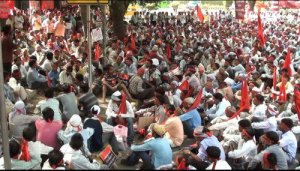
As the tension and repression of the factory owners and the district administration mounts, the workers have planned to go on Satyagraha from May 8 (tomorrow) and the administration is determined to not let it happen. We have received messages saying that trade union organizers fear for the life and safety of the workers and their leaders. The voice of protests from many forums and due to the incident being covered by the local media, the administration has refrained from taking any one sided action till now. But conspiracies are being hatched behind the scenes. Its not a distant reality that the leaders might be killed in fake encounters, or slapped with false charges or lynched by mobs instigated by the factory owners or Adityanath’s goons.
Continue reading Firing and Repression on Factory Workers in Gorakhpur
Two statements on the Environment Ministry’s ‘forest clearance’ to POSCO
In response to the Union Environment Ministry’s decision, given below are two press releases, from POSCO Pratirodh Sangram Samiti and Campaign for Survival and Dignity
POSCO PRATIRODH SANGRAM SAMITI
(based out of villages Gadkujang, Nuagaon and Dhinkia in Erasama block of Jagatsinghpur district, Odisha. )
A Mercenary Minister and a Lying Government Cannot Crush Our People
Money Worth More to Government than Truth, Law and Justice; but the Corrupt and the Criminal Will Not Triumph
2 MAY 2011: Today, in a sanctimonious order riddled with lies and distortions, the Environment Ministry allowed thePOSCO project to proceed. The livelihoods of 4000 families (over 20000 people) and the laws of the land have been sold to the highest bidder. Certain facts should be brought to the notice of the public: Continue reading Two statements on the Environment Ministry’s ‘forest clearance’ to POSCO
A government that wants to destroy its own airline?: Susmita Dasgupta
 Guest post by SUSMITA DASGUPTA
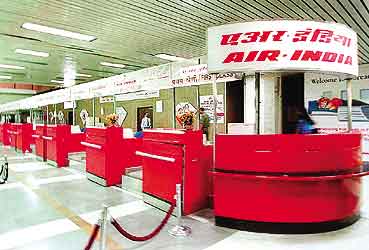
Many moons ago, when our sweet little dupleix in Dover Lane was enlarged into a three storey house to make space for a tenant, our first tenant was an Indian Airline pilot. Similarly, many modern condominiums in our locality were being rented out to pilots and air hostesses. This was a mark of Dover Lane having arrived as a respectable colony in Ballygunje from its rather modest middle class veneer. The airlines are always looked upon as a creamy layer of the middle class; offering prospects and possibilities that are matched only by the IT, bureaucracy and the army. It has the class of being high salaried, élan of professional excellence and the allure of a closed group cadre. In other words, it has the best of all worlds notwithstanding the attraction of international travel with sops like free tickets for dependent members of the family. The pilots, who are the core of this sector, are on strike in India’s only public sector in the aviation sector, namely Air India. Continue reading A government that wants to destroy its own airline?: Susmita Dasgupta
India’s Kashmir policy described in one photograph by Javed Dar
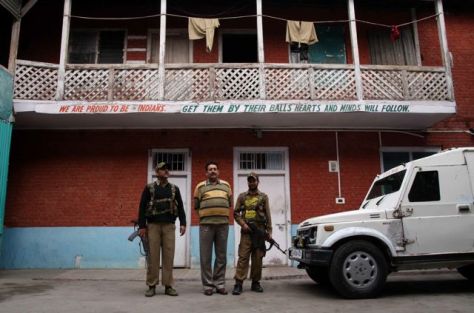
This photograph of an Ikhwani camp in south Kashmir was taken by JAVED DAR in 2008. Standing in the middle is a well-known ‘government gunman’, Jehangir Khan. Photo courtesy Conveyor.
The gospel according to a divine identifier – An essay on the biblical origins of UID: Taha Mehmood
Guest post by TAHA MEHMOOD

1.
Simon Bar Jona was a fisherman based in small town called Bethaida. They say one day Simon’s brother, Andrew, led him to a man who called himself Jesus. They say Simon and Andrew became disciples of Jesus.
One day Jesus asked his disciples, “Who do you think I am?”
His disciples looked at each other. They did not know anything about him. They did not know who he was. Some disciples said Jesus was actually John the Baptist: some said he was Elijah; and others though he was Jeremias. Jesus could have been any of these or none of these. But Jesus was not satisfied with the answer, so he asked again, “Who do you think I am?”
At that point Simon Bar Jona, the fisherman answered, “Are you not Christ, the Son of the living God?’“
Jesus was pleased, he replied, “Bless you, Simon Bar Jona: for flesh and blood has not revealed it to you, but my Father who is in heaven.” Continue reading The gospel according to a divine identifier – An essay on the biblical origins of UID: Taha Mehmood
Chronicle of a Bail Foretold: Saroj Giri
Guest post by SAROJ GIRI
Till very recently it was not possible to discuss Binayak Sen without referring to the corporate land grab and state repression in Chhattisgarh. Somehow Salwa Judum, the displacement of thousands of adivasis and the Maoist movement would come in the picture. Above all, what would come out is Sen’s work in the specific context of the suffering of the adivasis. Indeed soon after the bail order was granted, it came so naturally for Sen’s beaming wife to state that he will of course go back to resume his work in Chhattisgarh.
Upon his release from Raipur Central Jail on April 18 2011, Sen immediately called for a dialogue between the Maoists and the government and reminded us of so many other political prisoners languishing in the country’s jails. In the video showing Sen being greeted by his supporters after his release he enthusiastically joins in giving slogans saying, ‘Shankar Guha Niyogi Zindabad’. But the supporters soon after break into ‘Binayak Sen Zindabad’. You could immediately see this embarrassed look on his face, totally disapproving this iconisation.
Indeed, Sen seems very far off from celebrating his release as a major victory for democracy or a boost forIndia’s image as a modern democracy and so on. He seems really far off from the dominant discourse which seeks to cleanse the ‘Binayak Sen issue’ of the harsh realities of India’s dirty war, the inequality and the injustice towards the adivasis and their suffering. Continue reading Chronicle of a Bail Foretold: Saroj Giri
Is It Nineteen Eighty Four Already?
On 9 April 2011, 11 members of the English Department of Delhi University (almost the entire Department) resigned from various (non-statutory) work committees within the Department. They carried on all their other duties, including teaching, regardless. This mass resignation followed repeated requests from them to their Head of Department to call a meeting of the Department Council of the English Department. By resigning (only from the non-statutory committees), the members of the Department were hoping to bring largely symbolic and moral pressure to bear on the Head, to perform his duties!!
You know something is seriously wrong with a workplace when members of Department have to bring pressure to bear on a Head to perform his or her regular, statutory duties. You should really smell a rat when it’s not the minions and juniors but the bosses at the highest levels that are bending and twisting rules to their advantage; publicly ignoring long-standing statutes and conventions; inventing new ones almost overnight; and practising selective amnesia about procedures.
The UGC’s dictates: Pratiksha Baxi
Guest post by Pratiksha Baxi
The UGC’s new regime of qualifications, evaluation and supervision of teachers employed in universities makes fascinating reading for those who are entertained by the sublime ludicrousness of those with the power to shape our everyday lives in the academia.
The new regime betrays a lack of understanding of the basic enterprise of what academics do. The new regime is too voluminous to be read with lucidity at once. However it is not too difficult to understand immediately that the new regime, ushered in with the new pay hike, has imposed adverse conditions of employment. This is specially true for assistant professors who now are eligible for associate professorship only after 12 years of serving the University (instead of 5 years as earlier). The doctrine of reasonable and legitimate expectations stands fully violated by the UGC, as assistant professors at the time of employment would not have expected the imposition of these adverse conditions.
The UGC has ignored the fact that the revision of pay scales cannot enforce a contract – signed or otherwise – on any faculty to adhere to the new rules since such a contract can only be constituted as un-free and therefore, not valid. In other words, better pay which was ostensibly ushered in to meet the rising cost of living cannot be conditional to the UGC’s homogenising and uncreative vision of how to enhance evaluation of teachers’ performance and determine promotions.
Free Dr Khaleel Chishty: Amna Chishty

Update: A hopeful note from Kavita Srivastava
An appeal by AMNA CHISHTY
16th April 2011
My father is almost 80 years old. He received his PhD from University of Edinburgh, Scotland in 1968 in Public Health Virology. He had an illustrious career as a professor and head of department of virology and microbiology at Karachi University. In the late 80’s he retired from his last job as the Director of Public Health at King Abdul Aziz Airport in Jeddah Saudi Arabia. He is a principled man who is well‐read, well bred and well traveled. He worked hard to raise a family of six children – one son (oldest, with engineering diploma), five daughters (one is a doctor, one is a Pharmacologist, two are graduates and myself an MBA in marketing). He educated us and built a house for us in Karachi and supported his younger brother in India as well. After retirement he wanted to live in that house in Karachi and enjoy his retirement with his family and his grandchildren.
The following events led to his current plight: In 1992 my father went to Ajmer to visit his ailing mother at his brother’s house near Dargah Sharif. Continue reading Free Dr Khaleel Chishty: Amna Chishty
Chidambaram khush hua: Mahtab Alam
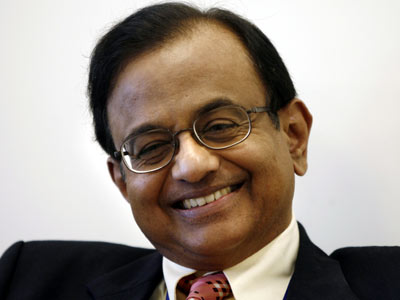 Guest post by MAHTAB ALAM
On Friday morning, when I started for the Supreme Court to attend the bail hearing of Dr. Binayak Sen, like many of our friends and comrades I was not sure of whether he would be granted bail. I was afraid that the case would be adjourned once again, as many of us who are regular visitors of courts expect, aware of the delaying tactics of government counsels, and the history of tareekh par tareekh. Kavita Srivastava, who has been following the case closely and campaigning tirelessly for Binayak’s release along with others, put the spirit back in me. It couldn’t get any worse, she said.
Fortunately, it turned out to be a good Friday. I was happy, as were my friends and comrades. We wanted to scream out of joy and happiness but we restrained ourselves for we were in the court premises and could be booked for ‘contempt of the Court’. Naturally, it was one of the happiest moments our life. Binayak and Ilinia a source of inspiration for hundreds of students and youth like me. I am happy for Binayak, for his family, especially for his mother, for ordinary (read extra-ordinary) people of Chattisgarh and for thousands of his supporters and justice loving people. Continue reading Chidambaram khush hua: Mahtab Alam
‘Anna Hazare’, Democracy and Politics: A Response to Shuddhabrata Sengupta
In an earlier post, (hits to which have broken all records on Kafila), Shuddhabrata Sengupta has raised some extremely important points in the context of the media-simulated coverage and celebrations around the ‘Anna Hazare’ movement. I agree with the central argument made by Shuddha – which is about the authoritarian, indeed totalitarian implications of the proposed Jan Lokpal Bill (though, as many commentators to the post have pointed out, the Bill really remains to be drafted and passed in parliament).
I have no doubt whatsoever that any demand that simply seeks a law of the sort that has been raised by the movement (even in the proposed form), is completely counterproductive. Indeed, it is naive. Matters like corruption or communalism cannot simply be legislated out of existence through tougher laws. Inevitably, they will lead us up to China type situations where you will end up demanding summary trials and executions. Even in the best of cases, a law and state-dependent mode of addressing such problems, adds to the powers of a corrupt bureaucracy. I also agree with his (and Bobby Kunhu’s) criticisms of some aspects of what they have both chosen to designate as ‘mass hysteria’ of sorts – I certainly do not agree with this description but that need not detain us here. I am interested in something else here and that has to do with the way the movement has struck a chord among unprecedentedly large numbers of people – mainly middle class people I am sure, but the support for it is not just confined to them. In fact, on the third day of the dharna at Jantar Mantar I received an excited call from a CPM leader who works among the peasants in villages of northern India in the Kisan Sabha, about the response to the movement he had encountered in his constituency. I doubt that this was a support simulated either by the government or by the electronic media. Continue reading ‘Anna Hazare’, Democracy and Politics: A Response to Shuddhabrata Sengupta
 KAFILA - COLLECTIVE EXPLORATIONS SINCE 2006