Its 6.30 am on a mid-May Sunday morning in Bombay, India’s favourite metropolis-on-the-sea. Like a sudden gift from a dying relative, an unseasonal chilled breeze is blowing in from the ragged beaches of the city. I put my sandals on and go downstairs from my flat to meet three friends; all of us having decided to do what Bombay dwellers do periodically – use a Sunday to make friends with the city again, to momentarily cease the war that rages, unbidden, every other day of the week. Continue reading Maya Bazaar
Category Archives: Images
‘The Making of a Modern Indian Artist-Craftsman – Devi Prasad’: Naman Ahuja
Continue reading ‘The Making of a Modern Indian Artist-Craftsman – Devi Prasad’: Naman Ahuja

The Many ‘Vices’ of Chitralekha
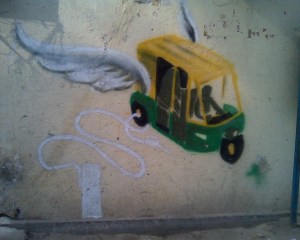
Chitralekha, a dalit woman from Payyanur, Kannur, has been in the news since 2005, for her open challenge to the CITU in that left bastion. An autorickshaw driver, she had protested at the CITU’s constant interference at work and the intensely male hostility against her presence in an almost exclusively male line of work. Braving ‘character-assault’ from the CITU which called her a ‘loose woman’, a ‘regular drunk’ and so on, she continued working until,in December 2005, her autorickshaw was burned down. She fought, however, and was supported by various Dalit, Feminists and Citizen’s initiatives. In June 2008, she procured a new autorickshaw with their support. This did not mean that she was now acceptable to the CITU . Now recently, she complained that the CITU had seized a chance encounter to beat her and her husband, and the police, who arrived on the scene, took them to the police station and unleashed even worse violence. Her complaints have been ignored or treated with hostility by the mainstream media in Kerala. Activists and concerned persons in and outside Kerala, however, have rallied to her support. Continue reading The Many ‘Vices’ of Chitralekha
Asim Butt (1978-2010)

Karachi-basd artist Asim Butt committed suicide yesterday by hanging himself to death. He was only 31, and his work made waves. Part of the Stuckist art movement, he made figurative paintings, most notably a series of seven portraying a dog’s carcass. He was also a graffiti artist, painting red the walls of Karachi. His best known graffiti work was the eject symbol painted all over towards the end of General Musharraf’s rule.
Read this moving tribute by a journalist friend and this one with a lot of links at Stuckism.com. You can pay homage here, but most of all, see his pictures and paintings on his own Facebook profile.
As one of the tributes on Facebook reads, good people die early.
Media Induced Morbidity Syndrome: Anant Maringanti
Or, when suicide threat becomes political strategy
Guest post by ANANT MARINGANTI
I am witnessing a bizarre phenomenon in Andhra Pradesh which I can at the moment only call ‘Media Induced Morbidity Syndrome‘. That this is pathological, and that this has to do with the media I am certain. But it is difficult to pin down what the pathogen is.
First, in the days and weeks following the then chief minister Y S Rajasekhar Reddy’s (YSR) death on September 2nd, 2009; over 450 people were reported to have died either of heart attacks or suicides. Newspapers kept a daily tally and the numbers kept mounting. Being in Singapore at the time, several thousands of miles away from Hyderabad during those weeks, I had no first hand experience of the mood in Hyderabad. I dismissed the reportage as a silly political gimmick. It was easy to surmise that vested interests had simply been collecting daily death reports from various government hospitals in different towns and attributing them to grief over YSR’s death. The largest number of these deaths – 227 occurred on the day of the funeral and the following day. Continue reading Media Induced Morbidity Syndrome: Anant Maringanti
Savarna Terror Erupts in Kerala
(with inputs from Mythri Prasad Aleyamma)
I admit, this title sounds sensationalist. But one can hardly avoid resorting to it when confronted with utterly stupefying news of attacks on dalit colonies almost next door to Kerala’s capital city and nerve centre of Malayalee politics, and that too, by a minor anti-political force that has a legacy of anti-South Indian hatred — the Siva Sena. And of course when one is confronted with the hard, stony silence of almost all sections of the media about this. The mystery of the murder of an elderly, innocent morning-walker in Varkala, a town close to Thiruvananthapuram (of which I wrote in an earlier post) still remains a mystery; the police story is so full of holes that it looks like a sieve. But the Guardians of our Free Press are still lapping police versions and not conducting independent investigation. Activists who have dared to do so have been heckled and hounded, even senior and respected human rights activists like B.R.P.Bhaskar, by the Siva Sena, and their protests have been ignored. Meanwhile violence continues to be unleashed against the supporters of the group that has been accused of murder, the Dalit Human Rights Movement (DHRM).
Who’s at ‘Jihad’? : ‘Love Jihad’ and the Judge in Kerala
It looked as if the controversy over ‘Love Jihad’ ( ‘jihad defined as ‘war by other means’) had blown over with state authorities in Kerala and Karnatake denying that such a threat ever existed.The Central Government informed the Kerala High Court early this month that there was no such thing and that the term ‘love jihad’ was being used by the media.However, today, the Kerala High Court openly voiced its scepticism of police reports, claiming that the reports were inconsistent and citing various technical flaws.The Court claims that it is abiding by the secular spirit of the Indian Constitution: it agrees that the freedoms to choose one’s faith and one’s partner in marriage are fundamental rights. However, it feels that the present instances of marriage and conversions that have been brought to its attention are not the exercise of freedom by individuals — specifically, by young women, though the Court does not say it that way. It is difficult to imagine a more anti-Muslim and anti-woman position; and it is a serious matter that the muddle-headed reasoning of the judge has been uncritically circulated in the dominant media.
Continue reading Who’s at ‘Jihad’? : ‘Love Jihad’ and the Judge in Kerala
Minarett-Verbot
This is a guest post by Naeem, an artist friend. The post is a cull from a conversation regarding the recent ban in Switzerland imposed on building minarets.

In a vote that displayed a widespread anxiety about Islam and undermined the country’s reputation for religious tolerance, the Swiss on Sunday overwhelmingly imposed a national ban on the construction of minarets, the prayer towers of mosques, in a referendum drawn up by the far right and opposed by the government. The referendum passed with 57.5 percent of the vote and in 22 of Switzerland’s 26 cantons.
City Walls that Talk

[Part of a Series. See For Movement]
एक पुराने कॉमरेड की अंतिम यात्रा: सांत्वना निगम
The following story/reminiscence is a guest post by SANTWANA NIGAM
नोट: फ़ायरफ़ॉक्स या ऑपेरा इस्तेमाल करने वाले पाठक कृपया पढ़ते वक़्त फ़ॉन्ट बढ़ाने के लिए ( Ctrl +) दबाएं।
संस्मरण
एक पुराने कॉमरेड की अंतिम यात्रा
“साला भैंचो गॉरबाचोव, कैपिटलिस्टों का एजेंट … सब तोड़-फोड़ कर चकनाचूर कर दिया। युगों की मेहनत के ऊपर खड़े महल को ताश के घर की तरह ढहा दिया। हरामी ने ग्लासनोस्त हूँ: चूतिया कहीं का” संझले भैया चोट खाए सांप की तरह फुंफकार रहे थे। हालाँकि मेरा मन भी उदासी की गहरी परतों के नीचे दब चुका था, फिर भी मैंने जैसे उन्हें दिलासा देने के लिए कहा “भैया याद है? स्टडी सर्कल में जब हम तुमसे प्रश्न पूछते थे तुम अकसर कहते थे – ‘इतिहास अपने रास्ते पर चलता है लेकिन बेतरतीबी से नहीं – कार्यकारण से जुड़ी होती है सारी घटनाए। सड़ी गली समाज व्यवस्था से ही उपजती है क्रांति वग़ैरह-वग़ैरह।’ शायद उस समाज में भी सड़न आ गई थी, नहीं तो भुरभुराकर ढह कैसे गया?” “अरे रखो तुम्हारी अधकचरी थ्योरीज़, ख़ाक समझती हो, ख़ाक़ जानती हो।” भैया चिड़चिड़ा कर बोले। “मुझे तो लगता है साम्यवाद फिर से वापस आएगा, शायद किसी और शक़्ल में” मैंने कमज़ोर-सी आवाज़ में कहा। “खाक़ आएगा।” यह कैपिटलिस्ट सिस्टम, यह कंज़्यूमरिज़्म का दानव सब कुछ निगल जाएगा। संझले भैया दहाड़े। हरियाणा के एक छोटे-से क़स्बे के मकान के आँगन में यह वार्तालाप चल रहा था। मैं अपने “पुराने कॉमरेड” भाई से मिलने गई थी। महीने में एक बार जाती थी – पिछले तीस सालों से ।
Continue reading एक पुराने कॉमरेड की अंतिम यात्रा: सांत्वना निगम
A Face Towel in Allahabad, 1984
(Published with the title, The Actor’s Studio, in Outlook, Volume XLIX, No. 41, October 19, 2009.)
The late prime minister V.P. Singh’s memoir Manzilon se Zyaada Safar has an interesting episode pertaining to Amitabh Bachchan’s political baptism in Allahabad in 1984. The episode is not so much an event as it is an image. An image, which by its very opacity, by its presentation of a mask where we would normally expect to meet a face, continues to exercise a certain strange power. V.P. Singh, who was at that time the president of the UP state Congress party, recalls seeing Bachchan (whom he did not know of, he says, as he did not watch films) for the first time with his face “…covered in a towel”. Ever since I have read this, I can no longer see Amitabh Bachchan, not even retrospectively, without his face-towel on.
Rajiv Gandhi and his close advisors had decided that fielding Bachchan in the Lok Sabha elections for the Allahabad seat was a winning proposition. Bachchan was a friend, an Allahabad lad who had a cathartic place on the national stage and a decisive influence on the hairstyles and angst of millions. Continue reading A Face Towel in Allahabad, 1984
Rakhi Sawant Ka Swayamvar!
“Yeah yeah, take a good show and spoil it by theorizing” said my labour lawyer/bollywood-gossip-junkie flat mate. All I said was that I thought Rakhi Sawant Ka Swayamvar was an “Interesting phenomenon that comments on the articulations of the notion of marriage within the context of fixed notions of culture among upper middle class north Indian families and within that the tropes of gender, normativity and melodrama! And so I should write about it on Kafila”.
Her comment wasn’t entirely unjustified.
The way in which one watches these shows in itself raises a range of questions. The show has taken over my life as of now. The final decision of who she will marry will be made soon and the restlessness and anxiety about it is immense and requires effort to contain. Continue reading Rakhi Sawant Ka Swayamvar!
A Tale of Two Encounters – Dehradun and Batla House: Jamia Teachers Solidarity Group
We publish below a statement from Jamia Teachers Solidarity Group, formed after the “encounter” at Batla House in Jamia Nagar, Delhi. For background information on this issue, see Some questions about the Delhi encounter; A little less melodrama, a lot more forensics; Shame is a revolutionary sentiment.
Jamia Teachers’ Solidarity Group extends its heart-felt condolences to the family of Ranbir Singh, the youth who was killed in a police encounter in Dehradun last week. This encounter again brings to the fore the trigger happy ways of the Indian police who kill and torture for medals and promotions. We demand exemplary punishment for the guilty policemen. Continue reading A Tale of Two Encounters – Dehradun and Batla House: Jamia Teachers Solidarity Group
Faith, religion, ritual, identity, dogma – how do I understand this?
I walked into Anjali’s house. She lives in one of the Rehabilitation and Resettlement colonies in Bombay which were developed to provide housing for slum dwellers and railway slum dwellers affected by the creation of roads infrastructure in Mumbai. Her house is a one-room tenement. She has created a litte bedroom space by placing a large showcase unit which separates the living room and the bedroom. I sat down to talk with her when my eyes fell on the Mecca-Medina mosque photograph which was placed on the wall facing her kitchen, above her newly purchased washing machine. For a moment, I was not sure if I had seen correct. Then, while continuing the talking, I glanced carefully again. It was the Mecca-Medina mosque photograph which is usually found in the homes of Bohra Muslims, Shias, Iranis and Sunnis as some kind of a visible mark of religion or show of faith and practice (or perhaps something else, I am not sure). I was both intrigued and amused. Continue reading Faith, religion, ritual, identity, dogma – how do I understand this?
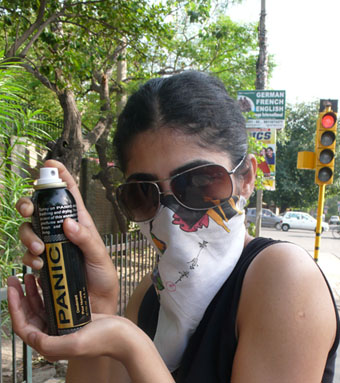
An Ounce of Panic is Worth a Quintal of Surveillance!
Did you know terrorists are running amok in Delhi University??
Continue reading An Ounce of Panic is Worth a Quintal of Surveillance!
Another sort of touch
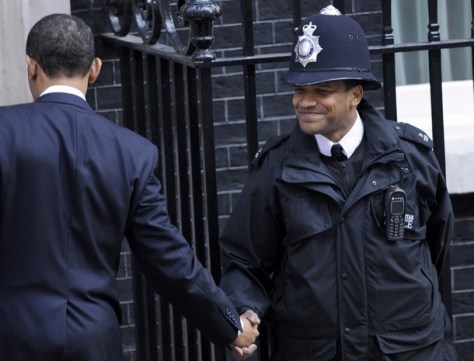
The British queen placed a royal hand around the American First Lady’s waist, who graciously reciprocated, and a million words and images were launched in the world media on that historical moment.
How come we never got to see this other Touching Moment in London involving another Obama? Thanks to Dilip Simeon, who was sent this by a friend, I received this picture of what happened when Barack Hussein was entering 10, Downing Street on April 1, 2009.
There he is, a British police officer joyously breaching protocol while ushering a black American president into the British corridors of power. As the caption in the forwarded message said – “the two brothers couldn’t resist the historic moment!”

(Reuters/Toby Melville)
That’s it for now, folks.
Is Desh Ka Kuch Nahin Ho Sakta
Of the many excitements on offer at election time are the pious ads by luminaries of the film fraternity exhorting the peoples of India to vote. This one is my favourite…
“Parties come and parties go”, smiles Isha Koppikar,
“But the rubbish on the roads,” says a glum Ritesh,
“Is still there,” notes Farhan astutely.
“Why?”
“Why?”
“Why?” ask Shahid, Priyanka, and Sonam in anguished tones. The answer my friend, as the bard and Kareena said is, “Kyonke Kuch Nahin Ho Sakta Is Desh Ka”. Bhaiiyon aur behenon! Ungli uthao aur button dabao! Ah! TV! But the disastrous acting and terrible scripting aside, there are few things more hilarious than watching Abhishek Bacchan, who distinguished himself by declaring himself a farmer and stealing land from farmers in Barabanki, waxing eleoquent on criminalization of politics. Truly, after watching this ad, I am forced to concur: Is Desh Ka Kuch Nahin Ho Sakta…
Dignifying Jade Goody, or, What Jade Goody actually connotes: D. Parthasarthy
guest post by D. PARTHASARTHY
When newspaper columnists become self-righteous, it is usually because they see a good way of capturing reader interest by moralizing about an issue. After all, tabloids around the world regularly make fortunes by generating a false sense of moral outrage and indignation through stories of the indiscretions and ineptitudes, sufferings and misfortunes of celebrities and of not so famous people. It is a sign of irony as well as an indication of the way in which neo-liberal capitalist media works, that the consequences of alienation engendered by an individualist ideology is fodder for sensationalist reporting, but also a tool for mobilizing collective conscience against alienated individuals, and for preventing communities from understanding the real reasons for alienation.
Continue reading Dignifying Jade Goody, or, What Jade Goody actually connotes: D. Parthasarthy
The Discreet Poison of Aamir

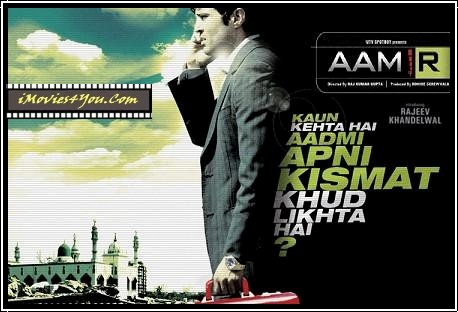
Aamir, a film about a man on the run, was released in June 2008, it was one of those rare films that was praised by critics and liked by viewers. I did not like the film, I was in fact very upset and disturbed about the film and thought about giving expression to my angst in writing, but this outpouring of powerful emotions never materialised, I would probably have never gotten down to writing this piece had Delhi 6 not arrived on the scene. Continue reading The Discreet Poison of Aamir
Slumdog as aesthetic
The Oscars have passed us by, leaving us with moments that op-ed writers could possibly only dream up: bollywood dancers on an Oscar stage; two of the three nominees for Best Song being sung in a language nearly the entire audience couldn’t even identify let alone speak; the English-speaking of the bevy of ‘India’s children’ translating the English questions into Marathi for the ‘kid from an actual slum’ in a we’re-all-one-across-the-ocean-moment; and, of course, the most harmonious moment of India-is-England-is-India convergence since the founding of the East India Company. It’s an embarrassment of riches.
So what does any of this have to do with slums? Let me be clear: this is not a tirade against the movie in any way. It actually isn’t about the movie at all. It is though about the one thing that the movie has brought back into our attention but that, somehow, no one actually seems to be talking about – that thing called the slum. Slumdog and the debates, protests, and celebrations around it, in equal measure, seem to beg a question: how do we, as Indians who are not Danny Boyle, think about the slum? How should we? Can Slumdog teach us a trick or two about our own backyards?
Caste/gender in a poem by Varavara Rao
I’m posting below a poem by Varavara Rao and a response to it by Rochelle Pinto. Comments and debate welcome, but trolls will strictly not be allowed regardless of caste and gender! Comments are regulated here by a disclaimer to maintain sanity. Not repeating your position ad nauseum helps, unless you desperately want to have the last word.
Merit
by VARAVARA RAO
Lucky
You are born rich
To say in your language
“Born with silver spoon in the mouth”
Your agitation sounds creative
Our agony looks violent
Continue reading Caste/gender in a poem by Varavara Rao