Category Archives: Law

“Those Backward People” – Arun Jaitley and a Long Ugly History

Two days ago, Finance Minister Arun Jaitley sought to make a special mention of “poor, dalits, tribals, backwards, those who are landless.” The occasion was the the Land Acquisition Bill, which,

“we are bringing, as per that the industrial corridors which would be set up in the country, those backward people, the 300 million landless people would get employment opportunities,”

First, Mr Jaitley, what exactly is the mechanism your government proposes by which the “backwards” released from the land will be absorbed into industry? Is there a guarantee by the industry owners? Is there a provision for skill training in the same industrial corridors? Are there ITI institutes being set up? Forget these, is even primary or secondary education going to be expanded so that farmers’ children, at some point in the distant future can take advantage of the supposed industrial boom? Continue reading “Those Backward People” – Arun Jaitley and a Long Ugly History

We Need You More Than Ever Today – A Tribute to Mukul Sinha: Harsh Mander

Guest post by HARSH MANDER

Two events altered his life forever. The first was when he witnessed a supervisor disrespectfully berating and kick a junior employee, which transformed a young apolitical physicist, who was passionately devoted to fundamental scientific research, into a tireless trade-unionist. The second – seeing his beloved adopted city Ahmedabad burn with tumultuous hate violence for many weeks in 2002 – thrust him into the heart of many battles against state power malevolently exercised against people of minority faiths. When Mukul Sinha succumbed to a particularly deadly stream of cancer in the summer of 2014, just weeks before Narendra Modi was swept to power, the country lost one if its bravest, most forthright voices for justice.

Raised in the railway enclave of the small district town of Bilaspur in Chhattisgarh where his father served, the young man had clearly worked out his chosen career as a scientist. After graduating in physics from IIT Kanpur, his elected life pathway seemed neatly laid out for him when, in 1973, he was accepted for his doctoral studies in plasma physics in the prestigious Physical Research Laboratory (PRL) in Ahmedabad. Founded in 1947 by the legendary Vikram Sarabhai, this apex space research institute undertakes fundamental research in physics, space and atmospheric sciences, astronomy, solar physics and planetary geo-sciences. This was where India’s first space satellite was born. It was a cloistered intellectual world, separated it seemed by light years from the turbulent life of fighting injustice which Mukul was to ultimately choose. Continue reading We Need You More Than Ever Today – A Tribute to Mukul Sinha: Harsh Mander
Bread and Roses in Kerala today – the Kalyan Sarees Women Workers’ Struggle, and an Appeal on Women’s Day-Eve: Malavika Narayan

This is a Guest post by MALAVIKA NARAYAN

Drive through any road in Kerala, one sees enormous showrooms of silks and jewellery, glittering with all the riches they contain.

Who says that the Kerala model of development is slow on growth and only high on human indicators? The most literate ‘progressive’ state is evidently doing well enough in business and investment too it would seem. We are also an expanding consumer market now, willing to finally shed some of that humility and simplicity once perceived to be characteristic of us. We have what claims to be Asia’s biggest mall, and other international chains setting shop here. In Maveli’s land, there really appear to be no poor or oppressed who would destroy this image of perfection. Continue reading Bread and Roses in Kerala today – the Kalyan Sarees Women Workers’ Struggle, and an Appeal on Women’s Day-Eve: Malavika Narayan

Condemn Communal Violence in Kozhikode Village: Concerned Citizens

We  strongly condemn the unprecedented communal violence at the end of January 2015, in Tuneri, Vellur and Kodanjeri villages, Nadapuram in Kozhikode, Kerala, in which more than a hundred Muslim families and homes were singled out, attacked, and crores worth of property destroyed. We are utterly horrified and outraged that violence of this extent has received scant attention from the media — electronic, print or even social.

On 22 January 2015, a local murder was instantly transformed into a communal conflict. Shibin Bhaskaran, a 19-year-old DYFI activist, resident of Vellur, a village dominated by the Communist Party of India (Marxist) — CPI(M) — was stabbed to death by an Indian Union Muslim League (IUML) activist Teyyampadi Ismayil. Ismayil, who openly claimed responsibility for the murder on that very night, is known to have criminal antecedents and was once jailed for six months in accordance with the Kerala Anti-Social Activities (Prevention) Act, 34/2007. The aftermath of this cold-blooded murder, a personal settling of scores between two individuals, was instantly communalised, and in a manner that is reminiscent of communal violence in other parts of the country, especially in Muzaffarnagar 2013.

Read more at   : http://www.epw.in/letters/communal-violence-kozhikode-village.html 

G Arunima, P K Yasser Arafath, K Satchidanandan, Kavita Krishnan, Jairus Banaji, G Haragopal, Shabnam Hashmi, J Devika, Trupti Shah, Jyotirmay Sharma, Upinder Singh, B Rajeevan, C R Neelakandan, Kumkum Roy,
A K Ramakrishnan, Ajay Gudavarthi and others

Reading Between the Lines – A Critique of the UAPA: Avani Chokshi

Guest post by AVANI CHOKSHI

It seems ludicrous that in a civilised democratic society like India, a citizen may be practically abducted by police, charged with perfunctory offences and incarcerated without bail on mere suspicion for an indefinite period of time.  But this is indeed the situation in present-day India, with duly passed legislation sanctioning the inhumane state of affairs.

The validity of unjust or immoral laws has long been debated, with two major schools of thought emerging- the positivist school and the naturalist school. The positivist school does not recognise any correlation between the legal system of a society and notions of what ought to be justice. The positivist framework mandates that the law is that ordained by the valid legislator, whereas the naturalist school of thought envisages some rights to be inherent by virtue of humanity of a person. Thus, an unjust law, as per the school of naturalist thought, would be no law at all; positivistic thought, on the other hand, would posit such law to be valid by virtue only of being ascribed to the law-making process. The Hart- Fuller debate  devolved around the law made by Hitler; with Hart contending that laws passed using proper procedure would always be valid and Fuller maintaining that no unjust rule could ever be law. India allows “procedure established by law ” to deprive people of their Fundamental Rights; a state of affairs which reflects positivistic thought in the founders of India. India’s judiciary has slowly moved from this strictly positivist setting to a more naturalistic and liberal interpretation  of the term. This shift has placed India closer to the guarantee of “due process of law” in the United States of America. Continue reading Reading Between the Lines – A Critique of the UAPA: Avani Chokshi

Bus Porters’ Petition for Aadhaar – A Political Analysis: Tarangini Sriraman

Guest post by TARANGINI SRIRAMAN

IMG_20140407_180321

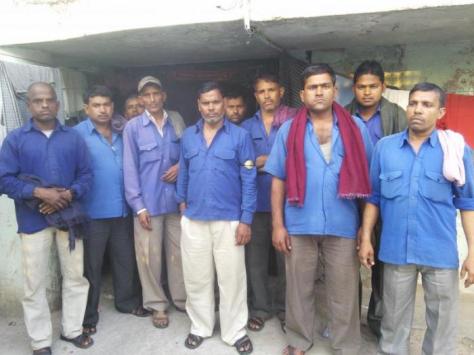
Porters at ISBT  (Image courtesy DNA)

Barely six years into its introduction, the Aadhaar project, otherwise known as the Unique Identification (UID) project has been studied and critiqued extensively – its promises to strengthen welfare delivery, curb corruption, exorcise ghost beneficiaries from government databases, initiate financial inclusion and enhance intra-governmental coordination have been enthusiastically received in certain corporate and technocratic circles and skeptically, if not scathingly viewed in other academic and journalistic quarters. The liberties this far-advanced project has taken with individuals’ privacy and its failure to acquire a statutory basis (even as enrollment drives continue unabated) have justly attracted severe censure. And until recently, the surreptitiously mandatory nature of the project – where welfare entitlements were linked to the possession of numbers – was cause for alarm. The Supreme Court judgment in 2013 challenging this mandatory linkage between Aadhaar and subsidies/entitlements may have slowed down processes of the number’s proliferation as an exclusive proof.

However, since the new government at the Centre took over, newer uses and linkages are being imagined. How indispensable the Aadhaar will be to such schemes and entitlements only time can tell: cases in point the Jan Dhan Yojana (JDY) and the linkage of the Aadhaar with the passport. As new linkages appear in place of the old, the new government is urging all of us to walk boldly into the embrace of biometric identification that will, to a certain extent, at least, pervade public transactions (for some) and their very socio-economic chances of welfare support (for most others).  It was against this conceptual and empirical backdrop (so competently elucidated by the various scholars, lawyers and journalists following this project) that I decided, as part of my work on a larger book project, to speak with a migrant community in Delhi about their Aadhaar-related experiences – did they wish to get these numbers, if so why?

For these purposes, I picked a community of bus coolies or porters in North Delhi most of whom were migrants from different parts of the country and who stayed in a makeshift residence on the premises of the bus terminal. Continue reading Bus Porters’ Petition for Aadhaar – A Political Analysis: Tarangini Sriraman

The Genealogy of the Secular Discourse of Bangladesh – A Second Reading to Bangladesh History: Mubashar Hasan

Guest Post by MUBASHAR HASAN

Even though, according to a series of Gallup and Pew Research polls, Bangladeshi society is now perhaps most illiberal in its history of existence, most informed readers know that a strong secular discourse led by a group of academics, creative writers and artists still continues to flourish and resisting the illiberalism to be the main discourse of the country.

After the independence, the 1972 constitution of the country have endorsed secularism, socialism and democracy as key founding principles among others. However, it is unclear to me as a Bangladeshi who is in his thirties whether these principles were propounded within the constitution with mass support or influential elite intellectuals who were close to the power-base asserted these values because they had the luxury to construct Bangladesh in paper the way they wanted to. May be the latter is true. If secularism was a value held close to the hearts of Bangladeshi masses, it does not make sense now why there is a huge mass support-base for the center-right party Bangladesh Nationalist Party (BNP) or the growing shift to Islam by the ruling Awami League (AL).

In this article, I want to revisit the role of a group of intellectuals who were instrumental in shaping a secular discourse for Bangladesh when Bangladesh was known as the East Pakistan. I call my approach as a second reading to Bangladesh history simply because I haven’t come across any narratives that looks into the thought process of the key constructors of secular discourse in Bangladesh. In this lieu, I shall try to point out to the motivational forces of key actors behind the secular discourse of Bangladesh.  Continue reading The Genealogy of the Secular Discourse of Bangladesh – A Second Reading to Bangladesh History: Mubashar Hasan

Zehn ki Loot – The Plunder of Reason in a Times Now TV Studio: Kavita Krishnan

Guest Post by Kavita Krishnan

“Phool shaakhon pe khilne lagey” tum kaho,
“Jaam rindon ko milne lagey” tum kaho,
“Chaak seenon kay silne lagey” tum kaho,
Iss khule jhooth ko,
Zehn ki loot ko,
Main nahin maanta,
Main nahin jaanta

“Branches are abloom with flowers” you say!

“The thirsty have got to drink” you say!

“Wounds of the heart are being sewn” you say!

This open lie…

A plunder of reason…

I shall not accept!

I shall not recognise!

(Habeeb Jalib, translated by Ghazala Jamil)

In Shakespeare’s Taming of the Shrew, Petrucchio declares the noontime sun to be the moon: “I say it is the moon,” to test his wife’s loyalty and obedience. As long as she stands by her reason and asserts “I know it is the sun”, she continues to be a ‘shrew’. Only when she consents to ‘zehn ki loot’ (plunder of reason), when she agrees to subordinate her own reason to the whim and diktat of her husband, and deny the self-evident truth, does she achieve approval as a suitable wife.

We, the people of India, are being similarly tamed of our ‘shrewish’ behaviour, with propaganda and public shaming in TV studios accomplishing the ‘zehn ki loot’. It is a process that seeks to bully us into declaring that the sun is the moon, that night is day, that ‘khula jhooth’ (open lie) is in fact the only truth. Refuse to part with your reason, and you are chastised for ‘bad behaviour’.

I would like to revisit the #GovtVsNGO News Hour show on Times Now, on 17th February, as a particularly glaring instance (Activism or Anti-nationalism, Parts 1 and 2 )

The topic of the show was the Government of India’s decision to deplane a Greenpeace activist Priya Pillai from a London-bound flight, because she was planning to depose before British MPs about the violation of India’s forest rights laws by a British mining company, Essar, in Mahan in Madhya Pradesh.

Continue reading Zehn ki Loot – The Plunder of Reason in a Times Now TV Studio: Kavita Krishnan

Shahid Lives, Shahids Never Die

Tafawut ast mun-I-shunidam-I-man-o-to, Tu bastan-dar, o, man fatahe-bab me shunidam

(What you and I hear are different : you hear the sound of closing doors, but I of doors that open)

– A Persian couplet that Maulana Abul Kalam Azad choose to use while addressing a gathering of Muslim Youth at the Aligarh Muslim University in 1949.

I

It was the mid of 2008 when I first heard about Shahid Azmi.

Friend/journalist Ajit Sahi had written a series of articles in ‘Tehelka’ about the fraudulence of the police in framing innocent Muslim men, which had caused enough consternation among the chattering classes. As Ajit had revealed Shahid had played an important role in making the story happen. Apart from facilitating meeting with victims of system, he had himself provided many facts relevant to the story.

And the name kept cropping in. I read an interview of Shahid where he discussed the challenges faced by lawyers like him who dared to take up inconvenient cases which at times put the police people on the defensive. I was still not aware of the many twists and turns in his life – his spending prime years of his youth behind bars as an innocent victim of TADA – or his classes at the prestigious TISS (Tata Institute of Social Sciences) where he use to enthuse students in magical ways. Continue reading Shahid Lives, Shahids Never Die

A Daughter’s Plea For A Better Way to Die: Gowri Parameswaran

This is a guest post by Gowri Parameswaran on behalf of her mother Sulochana

“Life changes in the instant, the ordinary instant” wrote Joan Didion in her book The Year of Magical Thinking. Didion wrote about her attempts to cope with her husband’s death and her reference was to the moment of his passing. I had picked up the book in JFK and had completed it by the time I reached Chennai. I needed the sustenance that the book seemed to offer; I was coming to see and take care of my mother (Amma we called her) who had been admitted to the hospital with decompensated lungs for the third time in two months. Her heart was too sluggish to pump her blood through the arteries and the fluid had backed up into her lungs; her lungs were decompensated. I remembered the ominous prognosis that one book on Heart Failure had spelled out about this turn of events in her health – that this was a seminal indication that the heart had reached the end of the road. She seemed so normal when I left her in October. The doctor had pronounced her heart healthy under the circumstances.

“Life changes in the instant,

The ordinary instant”. Continue reading A Daughter’s Plea For A Better Way to Die: Gowri Parameswaran

Murdering Democracy in Kerala : the Latest

Secularism and socialism can be thrown out, so says the Hindutvavadi. Among those who protested against this suggestion were, of course, the Congress. But then, increasingly, many of us who live in  Congress-ruled Kerala are unable to tell the Congress from the BJP as they have thrown out not just secularism and socialism but even minimal forms of liberalism. For our rulers seem as adamant as the BJP in forcing down our throats at least a softer version of Hindutva, reinforced with protection to shameless plunder of public resources and repressive police measures. Now young people and activists in Kerala, many of who were active in many protests including the Kiss Protests, are being pursued and hounded by the police. Apparently, a few people who participated in the latest edition of the Kiss Protests, the Lovefest, were hounded by the police for having been seen in the vicinity of a police station repeatedly! The most convenient excuse is pursuing the Maoists, a fear that is easily excited in our fattened and lazy middle classes. By the way, I am actively considering saving some money by ending my subscriptions to newspapers. In fact it is not being on FB which makes me feel out of touch with the world these days. Two leading human rights activists, Thushar Sarathy and Jaison Cooper, have been arrested and the papers are busy covering that shameful and utterly criminal waste of our common resources, the opening ceremony of the National games.

I am not surprised at all, having been an observer of local politics. In Kerala, after the Left-Right differences in politics came to an end, what we have seen is the transformation of our politics into a neofeudal space inhabited by powerful male leaders and their craven followers vying for power. Because the discourse of social development still lingers and the oppositional civil society has not yet given up, entry of predatory capital from national or global sources has not been easy. However, a whole generation of NRI — Malayali –capitalists based in the Gulf countries who essentially manage the wealth of the rulers there have been able to enter Kerala unimpeded.It is this group which is increasingly taking over our resources in overt and covert ways, legally and illegally. These capitalists themselves are interesting — their transnational belonging needs to be studied. They have apparently managed to become part of the non-democratic political systems in the Gulf countries, entering the lower levels of the court there, as juniors who help manage the rulers’ wealth. And from that position of strength, they now work to systematically undermine everything that Malayalis hold dear : our welfarist democracy, social development achievements, our rich ecology. Continue reading Murdering Democracy in Kerala : the Latest

Where Have all the Swings gone?

School kids hold up a sign given to them by activists at a demonstration at Langata Primary Road School.Photo Courtesy : Brian Inganga/AP
Who ‘stole’ our playground ?

There are occasions when simple questions raised by innocent people – even by kids – invite brutal wrath of the authorities. The kids of Langata Road Primary School in Nairobi learned it a very hard way.  Back from Christmas vacations when they found that the playground of the school – which provided them enough space to unwind themselves – has just ‘disappeared’ behind ‘iron walls’ with security people guarding it, they had raised this simple question. Sympathetic teachers had told them that a dominant politician in Nairobi, who wanted space to park cars of people visiting a neighbouring mall owned by him, has ‘taken over’ their playground.

Definitely it was not an unusual event – at least in Nairobi which happens to be one of the fastest growing real estate markets in the world – where real estate mafias are so powerful that with the connivance of political masters they are able to ‘acquire’ vacant or unmarked land plots without much difficulty. And land belonging to public schools is considered ‘under threat’ of land sharks as it is not properly delineated to them.

But nobody could have predicted that the kids in Langata School would prove to be biggest stumbling block in their ‘peaceful’ expansion and would literally ‘make history’. As rightly pointed out by an analyst these kids did what ordinary Kenyans are rarely able to do: defend disappearing public space. Continue reading Where Have all the Swings gone?

Trampling on Workers’ Rights in Sriperumbudur: Ramapriya Gopalakrishnan and Bobby Kunhu

Guest post by RAMAPRIYA GOPALAKRISHNAN and BOBBY KUNHU

On January 2nd this year, management officials at the Sriperumbudur factory of NVH India Auto Parts Ltd, the Indian subsidiary of a Korean auto parts manufacturing company manhandled the company’s striking workers. The shocking visuals of the Korean managers of the company dragging workers on the floor and a manager standing over a worker holding him between his feet sparked outrage amongst civil society groups and caught the attention of the mainstream media.

Literally trampling workers!

The trigger for the strike was the suspension of 15 workers which their union alleges was without any reason. Several other issues festering for a long time also gave an impetus to the workers to go on strike. These include the lack of adequate toilet facilities. Apparently, there are only 6 toilets in a factory where more than 700 workers are employed of which only 4 are in usable condition. In a juvenile twist, the workers have to seek and secure the permission of the management officials each time they need to use the toilet. If this rule is violated in cases of emergency, warning letters are issued to workers alleging that they were found missing from their work spot. Another issue is the lack of a regular and sufficient supply of drinking water in the factory. The workers were also miffed at being under the glare of surveillance cameras all the time during their work hours. A very important issue that was a sore point was the management’s use of trainees and contract labour to perform production work of a regular nature. The workers were also upset at the attitude of the Korean management and the way they treat them.  They allege that there are instances of physical abuse where the management officials hit and slap workers and spit on their faces. Over and above all this, the permanent workers in the factory were peeved at the failure of the management to grant recognition to the union they had joined in 2013 and negotiate with the union.

Continue reading Trampling on Workers’ Rights in Sriperumbudur: Ramapriya Gopalakrishnan and Bobby Kunhu

Swachchh Bharat – Beyond Charity and Symbolism to Legal Rights and Duties: Sujith Koonan

Guest post by SUJITH KOONAN

Sanitation and cleanliness seems to have become buzzwords. Celebrities and political leaders have started talking about sanitation. The call for Swachchh Bharat by the Prime Minister of India was welcomed by many taking brooms in their hands. Several institutions have uploaded prestigiously the photographs of its employees carrying brooms. All of a sudden, the sanitation consciousness seems to have increased in the country. Indeed, it is a good sign that we have started thinking and talking about the ‘unmentionables’ – shit and dirt.

Many of these actions and responses are symbolic and rhetoric in nature. While it may be acceptable to begin with symbolism, the seriousness needs to be demonstrated through concrete long term plans and actions. One can hope that the government will take such steps. One way to show that the ongoing sanitation talk is serious, and the state is sincere about it, is to recognise the legal aspects of sanitation. There are mainly three issues where the government has been a failure in fulfilling its constitutional and legal duties and these are supposed to be at the forefront of the Swachchh Bharat Mission (SBM). Continue reading Swachchh Bharat – Beyond Charity and Symbolism to Legal Rights and Duties: Sujith Koonan

Statement Against Continued Harassment of Teesta Setalvad, Javed Anand and others

The following is the text of a statement issued in Banaras on the 3rd January 2015, by a number of intellectuals 

In Support of Teesta Setalvad, Javed Anand and others

We are deeply shocked and outraged by the continuing attempts of the Modi government and the Gujarat police to somehow implicate the human rights lawyers and activists, Teesta Setalvad, Javed Anand along with three victim survivors of the state sponsored carnage in Gujarat in 2002 on patently trumped up charges.

This is another attempt to derail justice particularly Zakia Jafri’s appeal which is now before the Gujarat High Court where she has accused the then Gujarat chief minister, Narendra Modi, the home minister of Gujarat along with 59 others which include top politicians, civil servants of conspiracy for mass murder and other serious crimes.

It is extremely significant that the amicus curiae appointed by the Supreme Court, Mr. Raju Ramachandran  has told the apex court there was enough prima facie evidence to prosecute Shri Modi. Continue reading Statement Against Continued Harassment of Teesta Setalvad, Javed Anand and others

ചുംബനസമരവിരോധികളുടെ സംശയങ്ങളും അവയ്ക്കുള്ള സമാധാനങ്ങളും: ആലപ്പുഴയിലെ ചുംബനസമരത്തിന് അഭിവാദ്യങ്ങൾ

[പല വേദികളിൽ പല തവണ ഉത്തരം പറഞ്ഞുവെങ്കിലും ചുംബനസമരക്കാർ നിരന്തരം നേരിടുന്ന ചോദ്യങ്ങളാണിവ.  ഈ ചോദ്യങ്ങളും മറുപടികളും പല സുഹൃത്തുക്കളോടും സഹപോരാളികളോടുമുള്ള സംഭാഷണങ്ങളിൽ നിന്നുണ്ടായവയാണെങ്കിലും അവയുടെ പൂർണ്ണ ഉത്തരവാദിത്വം എനിക്കു തന്നെ.]

ചുംബനസമരങ്ങളിൽ പങ്കെടുക്കുന്നവർ കേവലം പബ്ളിസിറ്റിക്കു പിന്നാലെ നടക്കുന്നവരല്ലേ?

Continue reading ചുംബനസമരവിരോധികളുടെ സംശയങ്ങളും അവയ്ക്കുള്ള സമാധാനങ്ങളും: ആലപ്പുഴയിലെ ചുംബനസമരത്തിന് അഭിവാദ്യങ്ങൾ

Pondicherry Ashram Suicides and The Spiritual Surrender: Bobby Kunhu

Guest post by BOBBY KUNHU

On 17th December there was a dramatic sequence where, the youngest of a family of aged parents and five sisters who were inmates of Sri Aurobindo Ashram, Pondicherry attempted suicide by jumping off a water tank. The police rescued the woman, booked her and her sisters for attempt to suicide and released them on bail. This was following a Supreme Court order evicting them from the ashram at the end of a decade long struggle against the ashram. Their demand was simple that the management of the Ashram be taken over by the State to contain the corruption within. On the morning of 18th December, the family of seven decided to walk into the sea. Three died, four were rescued. Amongst the four who were rescued, one was allegedly raped by two men in her state of unconsciousness.

The South Asian spiritual landscape perhaps is the most diverse – ranging all hues and shades of spirituality cutting across religions and castes and has attracted followers internationally including celebrities like the Beatles, Isaac Tigrett (the founder of Hard Rock Café) and many others. Without exception, all of these spiritual groups ask for “total” surrender, though the terms of this surrender would differ from group to group. And many have willingly surrendered! For a non-believer it might be difficult to understand this leap of faith. But, for the believer this becomes the single most important event in her/his life. Even more important than birth marriage, love or death! And, when the terms of surrender is breached – though all hell breaks loose, people cling on to their faith. Despite “Sexy Sadie”, Paul McCartney held that Transcendental Meditation was a gift The Beatles had received from the Maharishi at a time when they were looking for something to stabilise them. In the BBC documentary The Secret Swami Tigrett stated that he believed that there was truth to the rumors of Sai Baba’s actions of pedophilia and sexual abuse towards some of his young male followers, but also such rumours would not change his belief in the Baba. Continue reading Pondicherry Ashram Suicides and The Spiritual Surrender: Bobby Kunhu

Statement on David Bergman Case in Bangladesh: Concerned South Asian Journalists and Others

Guest Post. Statement by Concerned South Asian Journalists, Writers, Historians and Activists

We, the undersigned journalists, writers, historians and activists from South Asia,  are deeply concerned about the use of ‘contempt of court’ law to curb freedom of expression. The conviction and sentencing on December 2, 2014, of Dhaka-based journalist David Bergman by the International Crimes Tribunal 2 on charges of “contempt of court” for citing published research on killings during the Bangladesh Liberation War of 1971, is a serious set-back to Bangladesh’s commitment to free speech and independent scholarship.

At the outset, we reiterate our belief that those responsible for genocide and international crimes during the Liberation War must be prosecuted and punished through an open and transparent process.

Continue reading Statement on David Bergman Case in Bangladesh: Concerned South Asian Journalists and Others

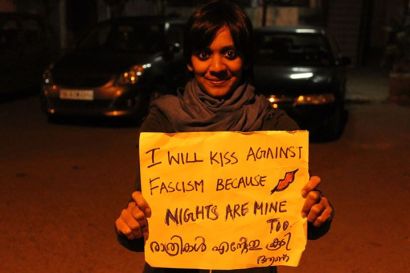
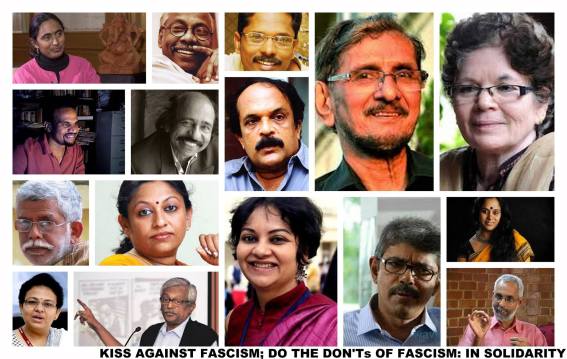
Wave after Wave, We Refuse to Die Down: Kiss Protest Against Fascism at IFFK

If you are in Thiruvananthapuram, please do join us at one o’clock at noon in front of the Kairali-Sree theatre complex at Thampanoor, the main venue of IFFK.

We do believe that the rising tide of fascism in Kerala, the creeping fear of the sheer violence of fascist goons, can be combated only through love, humor, and moral courage. The victory of Hindutva right wing forces in the national scene seems to have emboldened them in Kerala. They are attempting to import here the instruments of terror that they brazenly unleash on people in the states which have become laboratories of their hate-politics. We will not let their evil grow; we will fight it with love.

We will use as an instrument of self-defense precisely all that which fascist forces deny us in this society. We will reclaim that ultimate symbol of tender and intimate human contact, the Kiss; we will kiss against fascism.

And each of us has different, but interconnected reasons, for kissing against fascism.

sunilKissable boymikek edited 3aswatyrenuedited 2nisaaratrikasinghabipshaKAF solidarity


ഫാസിസത്തിനെതിരെ സമരചുംബനം; ചെയ്യുക, ഫാസിസം അനുശാസിക്കുന്ന അരുതായ്മകളെ


Kiss against Fascism

Continue reading ഫാസിസത്തിനെതിരെ സമരചുംബനം; ചെയ്യുക, ഫാസിസം അനുശാസിക്കുന്ന അരുതായ്മകളെ

From Ferguson to Pune—The Minority Report: Archit Guha

This is a guest post by ARCHIT GUHA

Prima facie, the grand jury decision in the United States to not indict a white police officer, Darren Wilson, in the murder of a black teenager, Michael Brown, and the flurry of protests that have occurred since the incident in August are distinctly symptomatic of the structural racism that continues to plague the settler colonial nation that institutionalized slavery nearly 500 years ago, but claims to be post-racial today. Continue reading From Ferguson to Pune—The Minority Report: Archit Guha