[Following is a statement issued by some eminent scholars and writers against the prolonged incarceration without trial of political prisoners in India.]
We, the signatories to this statement, write with the greatest of concern because we admire the democratic structures that India embraced since gaining Independence from colonial rule, including a set of Constitutionally-guaranteed fundamental rights for every citizen. This entire democratic tradition is being fundamentally undermined by some recent developments in that country. We write at this particular moment to draw the world’s attention to how this is being done by the prolonged incarceration without trial of a large number of writers, journalists and social activists, often without so much as a charge-sheet against them. All that these individuals have done is to criticize the present government in India.
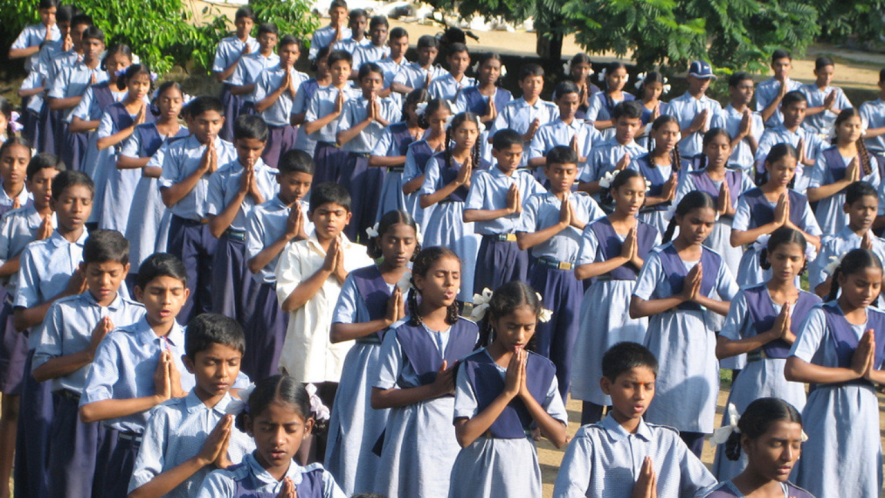
An atheist school teacher’s case in Nashik before the Bombay HC resonates with the recent case of a Dalit teacher’s suspension in Rajasthan.
Representational Image. Image Courtesy: Flickr
Can anyone compel a teacher to offer prayers inside a school?
This was a little vexed question before the Bombay High Court when a case came up before a two-judge bench led by Justice Abhay Oka and Justice Revethi Mohiti-Dhere. Sudhir Salve, an atheist teacher from a school in Nashik — who otherwise had an excellent record in his profession — had approached it for relief, because the school management where he worked had denied increment to him for ‘indiscipline’.
The teacher’s refusal to fold hands at the time of school prayer or even at the time of taking oath of the Constitution was construed as such an act. As it happens in most such cases, Salve’s case had lingered on for more than six years in the lower courts.
But it did not take much time for the two-judge bench to decide the case, which declared that any such compulsion to fold hands will be a ‘[v]iolation of the fundamental rights conferred on an individual under the Constitution’.
One was reminded of Salve’s case when the suspension of Hemlata Bairwa, a Dalit lady teacher from an upper primary school in Rajasthan’s Baran district, made headlines recently.
To recapitulate the turn of events, it was Republic Day (January 26, 2024) and Bairwa had garlanded the portraits of B.R. Ambedkar, Savitribai Phule and Mahatma Gandhi before the assembly of students in her school. Two of her fellow teachers interrupted the programme and asked her to put a photograph of Saraswati, goddess of knowledge as per Hindu mythology, which she plainly refused. Despite pressure by them, who even allegedly made casteist slurs against her and were even helped by the local head of the panchayat, Bairwa refused to relent.
When the video of the whole incident went viral, the state education minister Madan Dilawar announced her suspension in a public programme — an act that evoked a strong reaction within the Dalit community. Demonstrations were held in different parts of the state opposing this action by the education minister, demanding revocation of the suspension order and removal of the minister from the post.
The question arises: Will Bairwa similarly have to wait for a long period like Salve for justice? Or whether the Bombay High Court’s intervention would impel the Rajasthan High Court to take up her case suo motu.
“They took so much away from us that they ended up taking away our fear” — Message scrawled on a placard in a women’s march in Spain
’How does Justice feel?’
A difficult query to answer but perhaps Bilkis Bano would be the best person to respond to it.
Yes the same Bilkis – survivor of a mass rape and the only witness to horrific massacre of her 14 relatives – when the state she lived witnessed a carnage when officially one thousand innocents perished in the communal pogrom and many thousands were displaced from their homes and were condemned to live as internal refugees.
One can still recollect her words when the highest courts of the country finally cancelled the remission of sentences to her perpetrators who had been convicted for this heinous crime. [1].
She frankly narrated her feelings before a reporter.
’It feels like a stone the size of a mountain has been lifted from my chest, and I can breathe again. This is what justice feels like.”
Last month, on the 21st of January 2024, a young woman, an assistant public prosecutor at a lower court in the district of Kollam in Kerala, took her own life, after sending out one last desperate plea — calling for justice after her death at least. She revealed through audio clips that fighting for justice at her workplace had worn her out completely. Her words brought out the rot infecting the institution of public prosecution (the stench of it is very much in the air, actually, unbearable it has become, though our political leaders and social justice motormouths seem to largely ignore it).
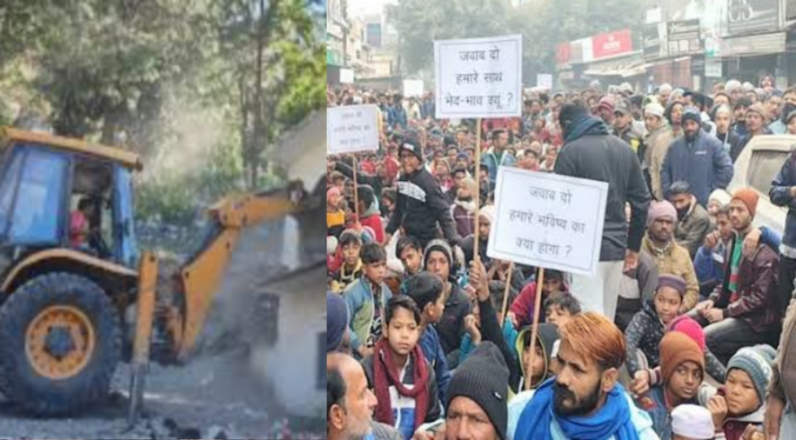
A Joint Statement and Appeal issued by people’s organisations, intellectuals and concerned citizens from Uttarakhand about the violent incidents on 8 th February
( This is an attempt at English translation of the original statement issued by writers, journalists, social activists and people’s organisations. For original statement , please see here )
Developments on 8th February are serious, condemnable as well as tragic. We would like to express our deep concern for the dead as well as the injured and demand proper compensation for them
We appeal to people in Uttarakhand and rest of India to maintain peace and harmony . We condemn all sorts of violence and want that an impartial legal action be taken about the incident. We are of the opinion that every type of resistance, opposition should always remain in the bounds of law and constitution.
We also appeal to the administration that no action should be contrary to Constitutional principles and values.
Negligence, hurry and biased approach of the administration can be clearly seen in these developments. Even the language of the administration sounds sectarian. When the allegedly illegally built mosque and madarsa were in the control of the administration itself and the next hearing in the case was scheduled to be heard on 14 th February, what was the necessity to go for demolition in such a hurried manner. It is time that the District Magistrate and Senior Superintendent of Police are immediately transferred and a judicial enquiry be done about the whole incident.
We need to bear in mind that since 2017 the Uttarakhand government has desisted from taking an impartial legal action against vigilante violence and hate speeches. Right from citizens groups, people organisastions, opposition parties, leading intellectuals, advocates of Supreme Court to ex generals of the army from the state have been raising their voices in this connection. When the government does not appear impartial it emboldens anti-social elements. In this background voices have been raised to underline how use of hate, communal and violent incidents for political benefits ultimately engenders further challenges to social harmony and rule of law. It is high time that steps on war footing be taken to strictly implement decisions of the Supreme Court in 2018 and later, regarding hate speeches and violence.
We have always maintained that the “anti encroachment drive” is plagued by unnecessary hurry and a biased approach. Hundreds of such incidents have occurred since last one year . We are of the opinion that without resettlement nobody should be made homeless and every such action be undertaken in proper legal manner and with enough sensitivity. As far as Uttarakhand is concerned today lakhs of people are living on 4 lakh hectare Nazul land. In Haldwani itself a large population has settled on Nazul land which comprises people belonging to all religions. It has been a long time demand that people living on nazul land be given the ownership of the land. The state government has even sent proposal to the central government in this connection. Despite all this it is beyond comprehension to see that government seems to be in an unnecessary hurry regarding the issue of encroachment. Since quite some time the state government is engaged in these efforts under the name of anti encroachment drive. We feel that the government is pushing its sectarian agenda under the name of anti encroachment drive. This should be immediately stopped.
Say No To Hate, We need Jobs
Rajiv Lochan Sah, Uttarakhand Lok Vahini; Naresh Nautiyal, General Secretary, Uttarakhand Parivartan Party ; Tarun Joshi, Van Panchayat Sangharsh Morcha; Bhuvan Pathak and Shankar Dutt, Sadbhavna Samiti Uttarakhand; Shankar Gopal and Vinod Badoni, Chetna Aandolan; Islam Hussain, Sarvoday Mandal ; Lalit Upreti and Munish Kumar, Samajwadi Lok Manch ; Trilochan Bhatt, Independent Journalist; Heera Jangpani, Mahila Kisan Adhikar Manch ; Mukul, Mazdoor Sahyog Kendra
समान नागरिक संहिता के विधेयक के मसौदे पर उत्तराखंड महिला समूहों का यह बयान हम यहाँ छाप रहे हैं ताकि इस ख़तरनाक़ बिल पर और बहस हो सके।
6 फरवरी 2024
उत्तराखंड महिला समूह और प्रतिनिधि राज्य विधानसभा में पेश किए गए इस विधेयक को पूरी तरह से खारिज करते हैं।
संवैधानिक व्यवहार को अपराध बनाने वाला, नैतिक पुलिसिंग का परिचय देने वाला विधेयक अस्वीकार्य है।
प्रस्तुत हिंदूकृत समान संहिता विधेयक का एजेंडा सभी वर्गों के परिवारों में असमानताओं को दूर करना नहीं है, बल्कि मुस्लिम अल्पसंख्यक और वयस्कों के स्वायत्त व्यवहार को अपराधी बनाना है।
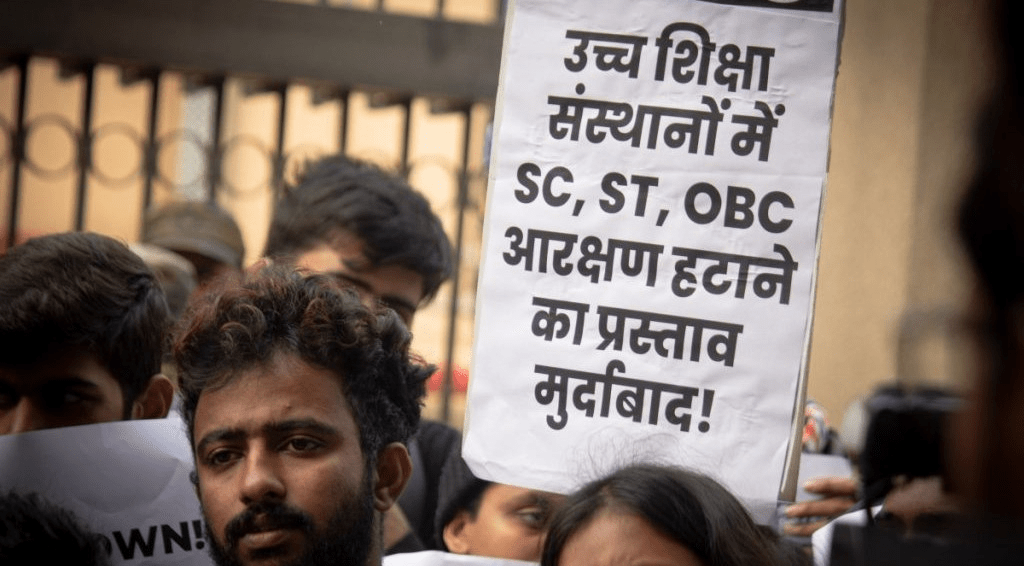
UGC led by Chairman Jagdeesh Kumar refuses to remain beyond controversy for long time.
The latest being its draft proposal of ‘dereservation’ of seats if not a suitable candidate from reserved category is found wherein it asked people’s views till 28 th January.
As expected this proposal which smacked of the ruling dispensation’s surreptitious and even direct attempts at attacking or biting away at the affirmative action policies emanating from the Constitution rightly led to protests in various quarters, There were protests opposing this proposal on JNU and other campuses and even opposition parties attacked the ruling party for its compromising attitude towards reservation rights and its desire and moves to either dilute or hollow out the provisions of these socially progressive policies and this led to an intervention from the Human Resources Ministry underlining that there is no such proposal.
At a media interaction on 26 October, the Malayali actor-turned-politician tried to turn his reel-life into real life. Once known mainly for his cine-avatar as the perpetually-angry, elite-justice hungry, thoroughly-misogynist ‘hero’ characters (yes, despite some better roles), Mr Gopi behaved with unbelievable condescension towards a woman journalist who asked him a question. Instead of answering her in a meaningful and civil manner, he turned into one of his obnoxious on-screen avatars. He put his hand on her shoulder and addressed her as ‘mole’ (daughter, literally, but also a condescending reference used by male lovers/husbands to refer to their loves/wives). She was clearly unhappy with the gesture, and backed away. Probably because the man has now become actually indistinguishable from the rotten, stinking masculinity he represents on-screen — knowingly or otherwise — he put his hand right back on her shoulder.
When I read the Supreme Court Bench’s disappointing judgment on same-sex marriage, it was a line from Lalithambika Antharjanam’s autobiography that came to my mind. Remembering her youthful struggles against the barbaric oppression of women in the traditional Malayala brahmin caste, she wrote: “Never had my heart trembled so hard than when I placed my hand on that forbidding door”. She was referring to the terrifying, dehumanising, violent structure of restrictions under which Malayala brahmin women lived. Over centuries, she says, innumerable women had battered it with their heads. Until one day it collapsed at a small push, soaked with their blood and tears.
In response to the LCI ‘s invitation to “stakeholders, including public and recognised religious organisations” to share their views on the Uniform Civil Code, some feminist groups and individuals came together in Delhi on July 4-5 2023 to draft a considered response. The UCC has been debated in feminist circles for decades, and a broad consensus has gradually emerged since the 1990s that gender justice and not uniformity should be the focus of reforms of laws pertaining to family, whether governed by Personal Laws (religious communities) or customary laws (Scheduled Tribes). The following response emerged on the basis of these discussions, which in turn drew on the long history of serious engagement with the issue in feminist circles for decades.
To,
The Hon’ble Chairperson and members,
Law Commission of India
14 July 2023
Sub: Response of feminist, queer and women’s rights groups and individual feministsto Public Notice of the Law Commission of India dated 14/06/2023, soliciting views on the Uniform Civil Code (UCC).
Respected Chairperson and members of the Law Commission of India,
We, the undersigned, write to you as representatives of feminist, queer and women’s rights groups, as well as concerned citizens, who have been working on issues related to gender justice and equality for women from diverse communities across the country. We draw upon our collective experience over many decades, as we respond to the current discussion on the proposed Uniform Civil Code.
Our submission is in three parts:
Concerns related to the procedure adopted to initiate these discussions by the Law Commission of India (LCI).
Comments on substantive issues of uniformity, equality and non-discrimination vis à vis gender justice.
Governing principles for any efforts towards gender justice for all
The following paper is a detailed examination of the current turmoil in the North-East in its historical context. It has been prepared by a team of activists from different communities of the North-East and is intended for wider discussion and dissemination.
First released on June 1, 2023 by North-East Forum for International Solidarity (NEFIS)
Introduction
At present, there is an unprecedented social conflict raging in Manipur. The violence has affected all communities in the state. Over 100 people have been killed, 50,000 people are currently in more than 300 refugee camps and lacs have been displaced. Religious places, granaries, and homes belonging to the common people, especially those from the minority tribal communities have been burned. The minority community has a strong feeling of being persecuted. In reality, the lives and livelihoods of the labouring poor across communities have been lost. It is the women of all communities who have been the most vulnerable. To instigate conflicts among communities, fake news, and rumours were peddled by the communal groups which later became the pretext for the alleged lynchings and rapes of women. Miscreants and communal groups have conveniently sought revenge for incidents of violence faced by their respective communities by targeting and punishing those who are unconnected to the acts of violence for which ‘retribution’ is sought. A vicious, never-ending cycle of vengeful violence continues to erupt with the failure of the state to act against such miscreants.
Around two weeks back, just about a week after the ritual of Women’s Day celebrations in Thiruvananthapuram, a 49-year-old woman decided to go get herself some pain medication at 10 30 at night, after all home remedies failed against her persistent body ache. She lives in the beating heart of the city of Thiruvananthapuram in a rented house. This house is in a leading middle-class residential locality, full of houses, usually very quiet. She is , however, not a typical owner-resident. An employee at a local firm earning a very modest salary, she has lived alone for years in rented accommodation, raising her young daughter. The daughter is now a confident young woman who has worked for some years and now seeks to expand her career options. The rent takes up nearly half of her income, but mother and daughter have struggled together to protect each other.
[Names and publications of cited authors are listed at the end of the essay.]
The sophists taught, rather publicly, the view that the summit of happiness is to combine the appearance of justice with actual injustice: Gregory McBrayer (2015), p 44
To speak of justice has always been to plunge into a metaphysical abyss, especially as the issue has been intractable since (at least) Plato’s most famous work, The Republic was written some twenty-five centuries ago. Not least has been the permanently contentious issue – named the theological-political problem by Leo Strauss – of whether we should live according to divine or human guidance. But to speak of justice in India is confront our deeply divided souls; and in the most horrendous cases, to stare evil in the eye.
If Mrs Indira Gandhi dreamt of a ‘committed bureaucracy,’ our current rulers appear to be bent upon the complete domestication of civil society by their ideological enterprise. This requires a committed judiciary too, for which aspiration clues are ample, because they conspire in broad daylight. It was inevitable that some members of the judiciary were and continue to be complicit in this totalitarian project. We should be grateful that there are men and women of courage and conscience within. One of them was named Judge Loya.
To the National Leadership which is currently participating in the 13th National Conference of the AIDWA in Thiruvananthapuram.
Dear sisters in struggle
I write to you from Kerala, where the CPM is currently in power for a second time, a rare achievement indeed, in a state where power changes hands usually in each election. I know that most of you hail from places where the CPM is very far from power. I know the difference that makes to activism.
[Published below is the story of a long fight against harassment and for justice by someone who took his corporate job and the interests of his company seriously, little knowing what it could lead to. It gives a glimpse into the corporate culture even among what are known to be the best corporate entities. ]
There was a gentleman whose name propped up frequently inside the Tata Group headquarters “Bombay House”, but he was more known by his sobriquet – the “Phantom of Bombay House”. He was considered a recluse and shunned social get-togethers as far as possible. Not a soul has ever seen him inside the premises, yet he held an 18.4% stake in the Tata Group. The gentleman was none other than the Late Pallonji Mistry, the father of the previous Group Chairman Cyrus Mistry whose family owned around 18% share of the Group. Tata professionals including Ratanji himself, reportedly, looked up to him for professional support.
It is unfortunate, therefore, that during the stewardship of his son, the episodes described in this article could take place. Mr. Mistry personally may or may not have been aware but for some strange reason the Group chose to turn a blind eye to a series of sordid happenings and preferred to side with an individual whose criminal acts were proved beyond any reasonable shade of doubt.The individual concerned, Mr. Tarun Kumar Samant or Tarun Kumar Sawant, can arguably be described as the new Phantom of Bombay House after the demise of Mr. Pallonji Mistry.
Below, I share a write-up byJohnson Jament, an academic researcher from the coast of the Thiruvananthapuram district, where an intense struggle against the Adani Port Project has been unfolding. Arrayed on opposing sides are the fisher people who have inhabited the coast since the past 500 years (according to historical record) and more, whose livelihoods are at stake, and the Adani Port Project, supported by the combination of natural resource predators and the CPM-led government of Kerala. The leadership of the CPM (though not the ranks, or at least all of the ranks) can be quite fairly described as a ‘post-socialist oligarchy’, and hence their support of Adani Ports is pretty understandable. The battle has been equally one of wits too, with the Kerala government pulling out all their progressive aces, including the longtime literary-cultural acolytes of the CPM but also some of the (former) stars of Kerala’s oppositional civil society — notably, the poet and critic, K Satchidanandan! Questioned about his stance, this early teacher of Euro-Marxism of a whole generation claimed that the conflict was because of ‘binary thinking’ that supporters and opponents of the Port project both equally indulge in, forgetting notably, that something like ‘structural contradiction’ may be becoming evident in and through this struggle. Perceiving it, of course, is not indulging in binary thinking.
The struggle against the ecologically-fatal Adani seaport being built at the seaside village of Vizhinjam in south Kerala is probably the first large-scale instance of ‘accumulation by dispossession’ in the history of this state. The state — the ruling government, the police, and judiciary — hold hands now in their effort to dispossess the large population of fisher people whose home this coast has been since centuries, for the convenience of predatory capital. As usual, the port-building commenced after massive ‘opinion-building’ exercises by all the major political parties among their supporters in the port-affected villages, promising them golden futures (now that the resources of the sea, which they had depended on for centuries, were robbed, in the course of some seventy years since the 20th century, through the commercialization of fisheries). Doing fieldwork in those areas around 2013, I remember how hard it was to even broach the topic without provoking massive, sometimes, violent, disagreements — it has divided the people completely and left the major social force there, the Latin Catholic Church, quite confused. Now, after 2018, the ecological destruction wrought by this foolish act of greed is nakedly evident for all with eyes to see; and most residents of the sea coast are convinced that in just a few years, the sea will take everything, including the houses built with sweat and tears, labouring for years abroad, even.
ഫെമിനിസ്റ്റ് ദണ്ഡനീതി നിയമ ഉപകരണങ്ങൾ നിരോധിക്കണമെന്നോ അവ തീർത്തും അപ്രസക്തമാണെന്നോ അല്ല ഈ ലേഖനത്തിൽ ഞാൻ വാദിച്ചിട്ടുള്ളത്. നേരെ മറിച്ച് അവ ഉപയോഗിക്കുമ്പോൾ ജനാധിപത്യവും മനുഷ്യാവകാശങ്ങളും ലിംഗാനീതിയ്ക്കെതിരെയുള്ള പോരോട്ടങ്ങളുടെ സാധ്യതകൾ തന്നെയും അധികാരത്തിൻറെ മേൽ-കീഴറ്റങ്ങൾ കാണാനാകാത്തവിധം പിളർന്ന വായിലകപ്പെട്ടു പോകും വിധം അവരെ പുണരുന്നത് അങ്ങേയറ്റം അപകടകരമായിരിക്കും എന്ന മുന്നറിപ്പ് വായനക്കാരുടെ മുന്നിൽ വയ്ക്കാനാണ് എൻറെ ശ്രമം.
കേരളത്തിൽ ഇരുപതാം നൂറ്റാണ്ടിൽ രൂപമെടുത്ത ബ്രാഹ്മണിക പിതൃമേധാവിത്വത്തിന് സവിശേഷസ്വഭാവങ്ങളുണ്ടായിരുന്നു. ഇരുപതാം നൂറ്റാണ്ടിൽ ഉയർന്നുവന്ന നവവരേണ്യസമുദായങ്ങളെ — നവോത്ഥാന വ്യവഹാരത്തിൻറെ വാഹകങ്ങളെ — പണിതെടുത്ത അടിസ്ഥാന അധികാര-കൂടങ്ങളിൽ ഒന്നായിരുന്നു നവബ്രാഹ്മണിക പിതൃമേധാവിത്വം.
കേരളത്തിലിന്ന് രാഷ്ട്രീയരംഗത്തും ഭരണരംഗത്തും (ഉദ്യോഗസ്ഥകളല്ലാത്ത) സ്ത്രീകളുടെ പ്രാതിനിധ്യവും അധികാരവും ഇടതുഭരണത്തിനു കീഴിൽപോലും കുറവാണ്. ഇടതുരാഷ്ട്രീയക്കാരികൾക്കു പോലും സ്വന്തമായ രാഷ്ട്രീയസ്വാധീനവലയം ഉണ്ടാക്കാൻ അനുവാദം ഇല്ലെന്നതിന് തെളിവ് ഇപ്പോഴത്തെ സർക്കാർ തന്നെ തന്നിട്ടുമുണ്ട് — ശൈലജ ടീച്ചറെ മാറ്റി സർക്കാരിലെ ആൺ അധികാരികളെ തികച്ചും ആശ്രയിച്ചു മാത്രം നിലനില്പുള്ള മറ്റൊരു സ്ത്രീയെ അവരുടെ സ്ഥാനത്ത് പ്രതിഷ്ഠിച്ചതോടെ. പാർട്ടി അധികാരശ്രേണികളിൽ സ്ത്രീകൾ കുറയുകയും കീഴ്ത്തല-കാലാളുകളുടെ കൂട്ടത്തിൽ അവരുടെ സാന്നിദ്ധ്യം ഉയരുകയും ചെയ്യുന്നുണ്ട്. പൊതുവെ ഭരണനയതലത്തിൽ ഫെമിനിസ്റ്റ് സ്വാധീനം കുറഞ്ഞിട്ടുമുണ്ട് (മഹിളാ സമഖ്യയിലും കുടുംബശ്രീയിലും ഇതു പ്രകടമാണ്). എങ്കിലും സ്ത്രീശാക്തീകരണ സർക്കാരെന്ന പ്രതിച്ഛായ നിലനിർത്താൻ ഇപ്പോഴത്തെ സോഷ്യലിസ്റ്റ്- അനന്തര ദുഷ്പ്രഭുത്വത്തിൻറെ വാഹനമായ സിപിഎമ്മിനും അവർ നയിക്കുന്ന സർക്കാരിനും കഴിഞ്ഞിട്ടുണ്ട്.
ദണ്ഡനീതി ഫെമിനിസം (Carceral feminism) എന്ന സങ്കല്പനം ഇന്ന് ലോകഫെമിനിസ്റ്റ് ചർച്ചകളിൽ സുപരിചിതമാണ്. പോലീസ്, കോടതി, ശിക്ഷ, തടവ് മുതലാവയുൾപ്പെടുന്ന ഭരണകൂടശാഖയെ മുഖ്യമായും ആശ്രയിച്ചുകൊണ്ട് സ്ത്രീകൾക്കെതിരെയുള്ള എല്ലാത്തരം ഹിംസയും പരിഹരിക്കാമെന്ന വിശ്വാസത്തിൽ ഊന്നിനിൽക്കുന്ന ഫെമിനിസ്റ്റ് പ്രയോഗങ്ങളെയും ചിന്തയെയുമാണ് അത് സൂചിപ്പിക്കുന്നത്. പാശ്ചാത്യ ഫെമിനിസത്തിൽ ഏറെ പഴക്കമുണ്ടെങ്കിലും അത് 1980-90 ദശകങ്ങളിൽ അമേരിക്കൻ ഫെമിനിസത്തിലെ പ്രമുഖ ധാരയായി ഉയർന്നുവന്നു. ലൈംഗികത്തൊഴിലിനെപ്പറ്റിയുള്ള ചർച്ചകളിലാണ് സമീപകാലത്ത് അതിൻറെ പുനരുജ്ജീവിതരൂപം പ്രത്യക്ഷമായത്.

 KAFILA - COLLECTIVE EXPLORATIONS SINCE 2006