
Category Archives: Media politics

56 इंच का सीना और बोलती बंद?

सरकती जाए है रुख़ से नक़ाब, अहिस्ता, अहिस्ता….
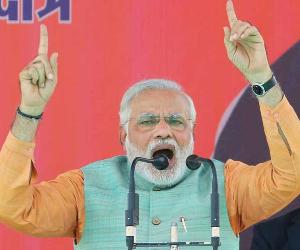
इसे कहते हैं ५६ इंच की छाती

बहुत दहाड़ते हैं फेकू महाराज. गुजरात के शेर. 56 इंच के सीने वाले. यकीन न हो तो यह देख लीजिये बाएँ बाज़ू पर छपी तस्वीर. गरजते हुए शेर के कम लग रहे हैं? ऐसा दहाड़ना, ऐसा गरजना की अच्छे अच्छों की रूह कांप जाए. और क्यों न हो? कौन भूल सकता वो दिन – जिसे आज मीडिया की धुआंदार बमबारी भुला देने पर अमादा है. अंग्रेजी में एक शब्द है इस तरह की बमबारी के लिए – carpet bombing, यानि कालीन कि माफ़िक बम से ज़मीन को ढक देना. पिछले कुछ वक़्त से हमारी इन्द्रियों पर जो हमला हो रहा, कुछ इसी किस्म का है. मगर वो लाख चाहे कि इन महाशय की सारी करतूतें भुला दी जाएँ, ऐसा कैसे हो सकता है? जब जब यह शक्ल सामने आती है तब तब नाखूनों में खून दिखाई दे जाता है. वैसे भूलने भुलाने वाले भी अजीब मिट्टी के बने होते हैं. अब देखिये न जी, हिन्दुओं से कहते हैं की चार सौ साल पुरानी मस्जिद भी मत भूलना – बाबर का बदला लेना है और मुसलमानों से कहते हैं इतनी पुरानी बात – 2002 का रोना अब भी रोये जा रहे हो? इसे कहते हैं “चित भी मेरी, पट भी मेरी – और अंटा मेरे बाप का”. खैर जिन्हें बदला लेना था उन्होंने ले लिया. किस का बदला किससे – कौन जाने? क्या फ़र्क पड़ता है आखिर? वैसे गनीमत है कि पब्लिक सब जानती है – इसलिए ज्यादातर हिन्दू भी इनकी नहीं सुनते. इसी लिए इन्हें हर चुनाव से पहले आग लगानी होती है. खैर, ये तो ठहरे मर्जी के बादशाह – मगर उन मीडिया वालों की क्या कहिये, या उन नए नवेले भक्तों और भक्तिनों की जो सब जान कर अनजान बने हैं?

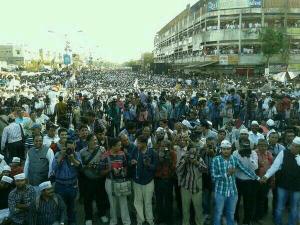
मज़े की बात यह है कि जैसे की यह शेर अकेले में धर लिया जाता है – जहाँ खुले मैदान में दहाड़ना क़ाफ़ी नहीं, जहाँ सवाल का जवाब देना ही होता है, जहाँ चालाकी से किसी को भी “पाकिस्तानी एजेंट” वगैरह कहा नहीं जा सकता है – वहीँ फेकूराम बगलें झाँकने लगते हैं. घूँट भरते हैं, पानी मांगते हैं और फिर मौन व्रत. एक बार तो स्टूडियो से ही उठ कर चल दिए थे. अभी हाल में हेलिकोप्टर में फँस ही गए तो चेहरा फीका पड़ गया (देखिये नीचे दूसरा वीडियो).
Continue reading 56 इंच का सीना और बोलती बंद?

Dalit Students and Journalists – from Classroom to Newsroom: Shivnarayan Rajpurohit

This is a guest post by SHIVNARAYAN RAJPUROHIT

The conscious or unconscious exclusion of Dalits (SC/ST) from the Indian mediascape has given way to a lopsided public sphere which hardly manages to generate comprehensive debates. Corporate interests have aggravated this malaise, given the indifference of the corporate sector towards fomenting a diverse media, cutting across caste, religious and class lines. The following paper looks at the absence of Dalit journalists and students from English press and journalism schools. The primary conclusion of my research is that English-language media as an institution has been undemocratic because it draws its workforce from a homogenous set of people, overlooking the urgent need for diversity. In that sense it is hostile to opposing viewpoints and diversity of arguments. The paper is primarily divided into five parts: counting Dalit journalists, reason for exclusion, classroom to newsroom, need for Dalits in media and Blacks in USA.

Continue reading Dalit Students and Journalists – from Classroom to Newsroom: Shivnarayan Rajpurohit

A Corruption Scandal in Turkey: Tamer Söyler

Guest post by TAMER SӦYLER 

A corruption Scandal in Turkey first broke on December, 17th last year. Under instructions by the public prosecutor Celal Kara, the financial police took into custody several suspects comprising famous businessmen (Ali Agaoğlu and Reza Zarrab), family members of three ministers from the cabinet (sons of ministers Muammer Güler, Zafer Çaglayan and Erdoğan Bayraktar) and high level bureaucrats. Main suspects were immediately arrested by the court.
Prime Minister Erdoğan declared that this was a fabricated investigation to humiliate his government on the eve of coming elections. The Prime Minister accused Fethullah Gülen, the founder of the Gülen Movement, living in a self-imposed exile in the US for the last 15 years, for placing a plot to overthrow his government.

Continue reading A Corruption Scandal in Turkey: Tamer Söyler

Naked Bias Threatens Media’s Credibility – A Statement by Some Mediapersons

An Appeal to Indian Journalist Fraternity by a Group of Media persons, released in Chandigarh, 16 March, 2014

In a terse comment, Aam Aadami Party leader Arvind Kejriwal said that a part of the media, particularly some TV channels “sold itself to Bharatiya Janta Party (BJP) and is indulging in running a propaganda spree in favor of BJP’s Prime Ministerial candidate, Narendra Modi”. As has happened earlier in many cases relating to deprived and unprivileged sections of the Indian society, that section of media took an undue offence to the comment that was completely out of proportion, and it launched a virulent campaign against AAP. This section of media is peeved at Arvind Kerjriwal’s remarks that if his party came to power, a punitive action would be taken against those media outlets which have been biased in their news coverage and suppressed the anti Modi news stories projecting his false claim to an ‘unparalleled development of Gujarat’.

During his field tour to Gujarat, Kejriwal started taking on Modi , attempting to expose the chinks in ‘Gujarat Vikas’, which according to him, is a ‘hollow projection’ made with ‘active support’ of a section of media. In what could be called an overreaction, a naked anti-Kejriwal slant became a routine affair in the coverage of some media outlets. It is not difficult to smell from the reports and debates of these media outlets that their journalists (by order from above or own their own) have shamelessly started walking in the footsteps of Hitler’s notorious spin doctor Joseph Goebbels, who also did a stint in journalism. Continue reading Naked Bias Threatens Media’s Credibility – A Statement by Some Mediapersons

Time For a Code of Conduct for Media

Let us make no mistake, the Big Media in India does not merely report; it is a player in Indian politics in general and elections in particular.

Now that the debate is out in public it is time to insist on a code of conduct for the media as well. After Arvind Kejriwal’s recent allegations against four television channels that have been blown out of proportion and misrepresented, there has been an uproar. A burst of righteous anger, not only from those accused by Kejriwal of having been bought out by a particular party, but also by professional bodies like the News Broadcasters Association (NBA), the Editor’s Guild, the Broadcast Editors Association (BEA) and other senior journalists.

The NBA, which is a private association, threatened to black out Kejriwal and AAP news and then went on to assert its objectivity and fairness against the “unsubstantiated and unverified allegations” against the news channels.

The BEA said in its statement:

“BEA condemns Arvind Kejriwal’s irresponsible statement on media. BEA believes that electronic media is discharging its responsibility in a fair and objective manner. It is wrong to say that TV channels are pursuing a biased agenda in favour of any person or party. BEA believes that such statements are a conspiracy to dilute the credibility of media. We have strong faith in the self regulatory institutions that electronic media has developed…”

Let us concede for the sake of argument that Arvind Kejriwal went overboard and his statement about ‘jailing mediapersons’ was uncalled for. But does the claim of the BEA, NBA and other bodies really stand up to scrutiny? Is the electronic media really dïscharging its  responsibility in a fair and objective manner”? What precisely, may we ask, are the “self regulatory institutions that electronic media has developed” and what have they done by way of reigning in the Indian media that have sunk to new lows in recent years with “paid news”and “advertorials” – not to mention private treaties with big corporations ? We ask the BEA and the NBA and 0ther defenders of the media, is this the ethical behavior they talk of? Is this self-regulation? Maybe Kejriwal’s allegations are “unsubstantiated” in the sense that there is no “proof”, but there is little doubt from the instructions that journalists have been receiving from their bosses, that a lot more than mere reporting is at stake. And just for the record, the the Chairman of one of media houses accused by Kejriwal, Subhash Chandra of Zee News, is currently facing a case of extortion – using his channel’s news-gathering for blackmail. We would love to hear how this qualifies as ‘fair and objective’in the eyes of the BEA and other luminaries. Continue reading Time For a Code of Conduct for Media

Crafting the Modi Mask – India Inc and the Big Media

AAP Rally in Gujarat. Courtesy Mukul Sinha

Two things stand out for their sublime quality in the current round of pre-election campaigning. First, the danger to Indian democracy has assumed unprecedented proportions, and there is a clear sense of desperation in the air. The threat emanates, you guessed right, from a group of anarchists who are poised to take over Indian democracy.  This is perhaps the dirtiest and most dangerous election that India has ever seen – what with the bunch of anarchists ‘fixing the media‘, ‘spreading anarchy‘, ‘hijacking democracy‘, ‘taking foreign funds‘ for their election campaign (while the others, the impeccable democrats of the BJP and the Congress have to make do with ‘local’ capitalists like  Mukesh Ambani). What’s more, these people are ‘political mercenaries‘,  urban Maoists in disguise and they want to wreck the neatly and painstakingly built edifice of our hallowed democracy. This widespread love of democracy is touching. For someone like me who has closely watched (and participated in) politics from the mid 1970s, the panic evident in the tone of those attacking AAP is as unprecedented as it is revealing. It is revealing of the fact that the political class is thrown into disarray by this new way of doing politics that AAP represents. In BJP’s case, in particular, one can discern complete befuddlement – neither its hope to reap the benefit of the mass anger against the Congress, nor its tried and tested polarizing communal vocabulary seem to have any meaning any more.

Thus, during the days of AAP rule in Delhi, the official BJP state executive resolution came up with this claim:

“Delhi is currently being ruled by a bunch of political mercenaries hired, supported and controlled by Congress party. The words and action of AAP leaders expose the fact that it is a Maoist outfit.”

Of course, the Maoists are “hired, supported and controlled by the Congress”!

Continue reading Crafting the Modi Mask – India Inc and the Big Media

The English Media and AAP – Should One Rush to Endorse the Party: Shankar Gopalakrishnan

Guest post by SHANKAR GOPALAKRISHNAN

Over the last few weeks, the blizzard of news about the Aam Aadmi Party – and the move of many independent intellectuals and some activists into the party – has seemed like a roller coaster ride. One week we were told the world had changed, the following week that it had collapsed, and now we have no idea what next week is going to bring. But the roller coaster should not blind us to the deeper dynamics at work. In particular, there’s one that is uncannily familiar – the role being played by the English media. Those rushing to endorse and celebrate AAP should pause to consider recent events before they do so.

A good place to start is the India Against Corruption protests, which were clearly a media mobilisation. It was the media – particularly the English and Hindi electronic media – that called people on to the streets, that announced the locations and demands of the protests, and that consistently described the movement as being “universal” and about “ordinary people” (for examples, see the paragraph in this article on Times Now’s role in April 2011; or The Hoot’s analysis of TV coverage). Social media, the Sangh Parivar and the IAC’s local committees did so too, but they all jumped in after the mainstream media did, and they continued to rely on it. No other mass mobilisation of recent times, except the anti-rape protests, has received this kind of treatment at the hands of the media. Continue reading The English Media and AAP – Should One Rush to Endorse the Party: Shankar Gopalakrishnan

Racist villagers versus hapless Africans and other simplistic binaries

The residents of Khirki are angry. They say they have been misrepresented, their grievances are not being given a patient hearing because the rest of us are doing politics over them. Nobody even wants to hear that they could have a case, that the story could be about more than just skin colour. Kafila and Times Now alike will tell you they are a bad, racist, evil lynch mob who deserve to be disenfranchised.

Even if that is what they are, will the summary dismissal of what they are saying be of help in resolving the situation? Forget the debates about the Aam Aadmi Party. As their elected representative, Somnath Bharti with all his vigilante zeal was doing what representative democracy makes representatives do. The people were making their voice heard through their elected representative. But we don’t want to hear their voice. If we did, we’d realise what the area needs is dialogue and understanding. All the problems with Africans and others in a 14th century ‘urban village’ next to 21st century shopping malls need a conversation that won’t come if we don’t want to appreciate the complexity of a social situation. By refusing to do so, we are being as unhelpful as the vigilantism of Somnath Bharti.

But at least we are thinking about Khirki. As for Sagarpur, where on earth is that?

These last few days, you have been fed one-sided angst by a media eager to help Narendra Modi overcome the pro-AAP mood, by pre-ideological leftists eager to bring down the AAP house so that Narendra Modi can come to power and they can do proper full-time chest-beating over fascism, by big industry already unhappy to see the AAP government move against Walmart. Is there a bigger picture?

For the sake of Form

The Aam Admi Party it seems has now decided to hit back at critics by uploading videos on Youtube to defend the controversial actions of Somnath Bharti, its Law Minister in Delhi done purportedly ‘in public interest’. Bharti has been chastised even by AAP supporters for his vigilantism and for trying to force the Delhi police to raid the house of suspected sex and drug racketeers and who in fact ‘helped’, along with his followers to catch two of the fleeing women.

Eight videos have been uploaded. They, according to the party contain incriminating evidence to prove that sex and drug racketeers were very much active in that area. Reporting the videos The Times of India says “… some of the scenes are not so easy to judge. Two clips show an African national walking around naked in the area. In another, three women in a car are rubbing some substance in their hands. Yet another shows several condoms lying about a car.” .

We do indeed see an African national moving around naked in the video. This is supposed to prove the allegation by the party that drugs are being used as according to one AAP worker “Walking around naked like this is an after-effect of drugs and this is a regular occurrence in the area”. You can also see for yourself condoms lying in the car. Do you need any more evidence to prove that the occupants of the car were indeed prostitutes carrying condoms with them and luring men to indulge in sex? Why are these three women rubbing some substance in their hands or trying to hide something by putting on gloves? Continue reading For the sake of Form

Why AAP’s Stance on Somnath Bharti Is Disturbing, Whether He is Eventually Sacked or Not: Kavita Krishnan

Guest Post by KAVITA KRISHNAN

AAP’s official position is: we’ll sack Bharti IF judicial probe finds him guilty. But what AAP leaders are saying about Bharti’s ‘version’ on TV is as disturbing as Bharti’s own actions and words.

Continue reading Why AAP’s Stance on Somnath Bharti Is Disturbing, Whether He is Eventually Sacked or Not: Kavita Krishnan

सतत क्रान्ति की पैरोडी

पिछले कुछ समय से नागार्जुन और हरिशंकर परसाई की याद बेइंतहा सता रही है: भारतीय राजनीति के इस दौर का वर्णन करने के लिए हमें उनकी कलम की ज़रूरत थी !

क्रान्ति सतत चलने वाली प्रक्रिया है और असली विद्रोही वह है जो छह महीने बाद अपनी कुर्सी खुद उलट दे. आम आदमी पार्टी और दिल्ली सरकार के मुखिया ने केंद्र सरकार के खिलाफ़ बगावत की शुरुआत की,तो ऐसा ही लगा. दिल्ली के केंद्र में रेल भवन के पास दिल्ली की पूरी सरकार  अपने समर्थकों के साथ दस दिनों के धरने पर बैठ गए. उन्होंने धमकी दी कि वे राजपथ को लाखों लोगों से पाट देंगे और केंद्र सरकार की नींद हराम कर देंगे.किसान और सैनिक जब मिल जाएं तो क्रांति शुरू हो जाती है. इसकी पैरोडी करते हुए अरविंद ने दिल्ली के पुलिसवालों को वर्दी उतार कर धरने पर शामिल होने का आह्वान किया. कुछ लोगों को जयप्रकाश नारायण की याद आ गई. एक साथ लेनिन, लोहिया,क्रोपाटकिन और जयप्रकाश का तेज अरविंद केजरीवाल के रूप में पुंजीभूत हुआ. गांधी का आभा वलय अन्ना हजारे से हट कर अरविंद के माथे के पीछे पीछे तो तब ही लग गया था जब उनका भरपूर इस्तेमाल कर ठिकाने लगा दिया गया. क्या यह 2014 का भारतीय तहरीर चौक होने जा रहा है?

दिल्ली के मुख्य मंत्री ने एक बार फिर  आज़ादी की  नई लड़ाई की घोषणा की.यह दृश्य क्रांतिकारियों,समाजवादियों,अराजकतावादियों, सबके के लिए एक पुराने सपने के  पूरा होने जैसा ही था. एक पुरानी, दबी हुई इच्छा के पूरा होने का क्षण!यह आज़ादी झूठी है वाले नारे , वंदे मातरम और भारत माता का जयकार से रोमांचित होने का सुख!! Continue reading सतत क्रान्ति की पैरोडी

Taming of The Vamp: Suchitra Vijayan

This is a guest post by Suchitra Vijayan

When I first read the Myth of Sappho, I was reasonably troubled that a famed Greek poetess would jump off the Leucadian cliffs for love of Phaon, a deeply flawed man. Why would a woman like Sappho kill herself over unrequited love? Did she not realise that she deserved better than the love of a loathsome man? Rationality dictates that no life is worth giving up for another. But the prudent pragmatist in me would beg another version, a rethinking. It was not unrequited love that made Sappho’s leap – a mainstay of our myth – it was something else. It was a comforting misogynistic tale attached as an afterthought, many hundred years after her death. First it suggested that a “woman” who had dared to trespass, and be different had to be mad all along. Second, the subversives always had to be reclaimed. Political rebels, internal subversives and non ideal types had to be tamed or done away with. In Shakespeare’s Taming of the Shrew, a man “acquires” a headstrong woman as his bride. Minus the comedic sub-plots and slapstick humour, the bare bones of the story include “notoriously aggressive” Katherine and her “tamer” husband Petruchio. But Katherine is neither aggressive nor notorious, she wears her indescribable naivety and sheer straightforwardness with the innocent integrity of a woman who is comfortable in her skin. This sits uncomfortably with the author, readers and commentators. Later Petruchio drags Katherine away from her own wedding celebrations, insisting she is his “chattel”, he deprives her of food and sleep until she learns to bend her will to his entirely. Some have argued that Katherine subverts patriarchy by acting like a submissive wife, manipulating Petruchio to her ends. Whatever interpretation you choose to favor, the fact remains that the woman had to be tamed, she had to manifestly re-fashion her self to comply with the new set of realities. To win she had to transform herself into something else, someone she is not.

Continue reading Taming of The Vamp: Suchitra Vijayan

Why I joined AAP and Quit the CPI: Kamal Mitra Chenoy

Guest post by KAMAL MITRA CHENOY

I first became conscious of politics as a student of economics in Kirorimal College, Delhi University in 1969 when I was elected to the students union executive committee. The same year I was persuaded by a senior to stand for the Delhi University Students Union’s Supreme Council. The latter body elected the DUSU office bearers. These were heady days with some of the leading pro- Naxalites students, students like Avdesh Sinha, who later became a highly respected IAS officer, and Rabindra Ray now a sociology professor in Delhi University. Another leading star who has written on his experiences was Dilip Simeon. I also became Left but did not agree with armed struggle. At this stage I watched the mainstream Left parties and along with Marxist texts read some Left Party pamphlets.

However, a deeper and much more expansive debate was snowballing where I joined in JNU in 1972. Prakash Karat who had earlier written a thought provoking book on the nationality and language question in India was widely respected as a political leader of the JNU students and a formidable theorist. In 1973, the Student Federation of India and the All India Students Federation of which I was the unit secretary aligned for the first time after the split in the communist movement in 1964. We called the alliance progressive democratic front. We were also attacked by an extremely erudite Trotskyist Jairus Banaji who considered us revisionist and quoted extensively from Marxist classics as well as literature, philosophy and the social sciences. Because of this challenge all of us had to do our readings. Continue reading Why I joined AAP and Quit the CPI: Kamal Mitra Chenoy

Aam Aadmi, Khaas Politics: Satya Sagar

   Guest Post by SATYA SAGAR                                          

From time to time in the history of every nation there emerges a maverick force that collapses the existing system by taking its logic to the extremes.  Arvind Kejriwal and his Aam Aadmi Party are precisely that, a ‘wild card’ in Indian politics, threatening to turn it upside down in ways no one could have imagined before.

Ever since they were born out of the throes of Anna Hazare’s anti-corruption movement, a couple of years ago, everyone has tried to slot the AAP in the regular political categories of right, left and center. Some have dubbed the Aam Aadmi Party as the ‘new Congress’ and others as the ‘B Team’ of the BJP. Supporters of the party have hailed its leader Arvind Kejriwal as a ‘modern day Gandhi’ while one opponent has intriguingly called his party ‘right wing Maoists’! Continue reading Aam Aadmi, Khaas Politics: Satya Sagar

On the Death of Khurshid Anwar: Kalyani Menon Sen and Kavita Krishnan

Guest Post by KALYANI MENON SEN & KAVITA KRISHNAN

(Find Hindi translation below the English statement)

We are deeply shocked and saddened by the death of Khurshid Anwar.

As activists committed to ending violence against women, we have been trying to ensure the due process of law and justice in relation to the allegations against Khurshid Anwar. Continue reading On the Death of Khurshid Anwar: Kalyani Menon Sen and Kavita Krishnan

A hunt, the aftermath, angry Indian men and a tragedy: Rahul Roy

Guest Post by RAHUL ROY

Nivedita Menon ends her commentary on the unfolding Tehelka sexual assault case in Kafila by asserting – “the time has come. It is now”. It should be, but is it? Are we witnessing the end game of an old Indian patriarchal sport called sexual assault? The sport is akin to another old game called the royal hunt that was an important part of elite political culture of South Asia. The rules of the sport were then as now heavily loaded in favour of the royal huntsman – weapons, support teams, timing, everything required for the thrill of a kill were with powerful men out to conquer. The expeditions however were not just about the kill. The sport was also a means of asserting authority over tracts of the wild and those that lived there and were by some misfortune not aware of prevailing authority structures. The royal hunt was an event to showcase to subjects the might, prowess and authority of the elite rulers. It was the stamping of power over human as well as animal kingdom. The royal huntsman could not but win. He could not but kill.
Continue reading A hunt, the aftermath, angry Indian men and a tragedy: Rahul Roy

Presenting the Perpetrator as Victim

Meet Tarun Tejpal’s spin doctors

image

Unlike Justice (Retd.) Ashok Kumar Ganguly, Tarun Tejpal’s defenders cannot cry innocence given that Tejpal has confessed to his crime, albeit disputing the degree of it. He has even confessed having told his colleague that suffering the sexual assault was the “easiest way of keeping your job”. Even his two decades old comrade Shoma Choudhury is unable to defend him beyond saying that he has his versions. Nobody buys Tejpal’s ludicrous retractions.

This put Tejpal’s friends, fellow molesters and self-defeating secularists in a bind. Many of his friends have chosen silence, which is understandable. It is only human to recuse oneself from the difficult choice between principle and friendship. Though some like Arundhati Roy and Sankarshan Thakur have admirably chosen principle over personal association. But those who wanted to come out and actually defend Tejpal were at a loss for words. How do they defend a crime whose perpetrator has confessed to it? So they came up with a few sly defences which pretend to be nuances. Some like BG Verghese are writing as though they were ghostwriting Shoma Choudhury’s defence.

So let us lacerate these defences one by one.

‘Trial by media, lynch mob’

Continue reading Presenting the Perpetrator as Victim

Not an open letter to Tarun Tejpal: Hartman de Souza

Guest post by HARTMAN DE SOUZA

When I hit out at him, Tejpal stood there with a swagger and a go-fuck-yourself smile on his face. Butter doesn’t melt easily in this guy’s mouth; he was smug when he said he hadn’t run Raman Kirpal’s story on the mining scam in Goa (that he himself had commissioned mind you) because it was not good enough for Tehelka.

 “There were no hard facts, man,” he said, his voice exiting his quasi-American accent in a nasal peeve, “just a lot of conjecture”.

He actually asked me whether I had read his magazine. Probably never even saw the eulogy I wrote for Tehelka, on that magnificent footballer from Kerala, VP Sathyan, who threw himself in front of a train at the age of 41 just plain bloody tired of being broke and ignored.

On July 18, 2006, when Sathyan, stupidly, stopped believing in the beauty of football, Tejpal’s star was in its ascendancy. That was the day – nearly a year and a half after Tehelka shed blood, sweat and tears, that the CBI also charge-sheeted former BJP President Bangaru Lakshman for ‘allegedly’ pocketing money from a fictitious armament firm and influencing a weapon deal.

That’s the ‘scoop’ that put Tejpal on the ladder – and just so that we all know what is what, people still don’t give a shit about VP Sathyan who in 1992 captained what is arguably Kerala’s  best ever football team.

Continue reading Not an open letter to Tarun Tejpal: Hartman de Souza

Tehelka, Jhatka and now Tamasha:Satya Sagar

Guest post by Satya Sagar

Eight years ago I remember listening to Tarun Tejpal in Bangalore as he held forth on how the news media could change the world for the better. It was a gathering of journalism students from Catholic institutions around the country and Tejpal was impressive in his defense of media freedoms.

He was passionate, charismatic, extremely articulate and as Chief Editor of Tehelka- with some of the best stories of Indian journalism behind them- very credible too. After his speech Tejpal left in a hurry, like a star priest dashing off to his next flaming sermon and fawning audience. Continue reading Tehelka, Jhatka and now Tamasha:Satya Sagar

Feminists condemn the BJP lynch mob attack on Shoma Chaudhary

This is the text of the statement released yesterday condemning the  attack on Shoma Chaudhary by a BJP mob led by Vijay Jolly.

We condemn the BJP lynch mob that attacked Tehelka managing Editor Shoma Chaudhuri’s house, physically jostling her at the entrance. Unsurprisingly, the BJP and right-wing forces in general have pounced upon the Tehelka sexual assault case to sweep attention away from the sexual crimes of their own Asaram Bapus and their Sahabs.

While Shoma Chaudhuri failed in her responsibility as an employer when approached by an employee complaining of sexual harassment within the organization, she is neither an accomplice nor an accessory to the crime of sexual assault of which the Tehelka Editor Tarun Tejpal is accused.

We also condemn the online harassment meted out to other women employees in Tehelka by the right wing brigade in the internet. Such harassment is only further evidence of the double standards of the right-wing forces who see this attack on the woman journalist as a political opportunity.

Sexual harassment and violence against women respects no political boundaries, and we are appalled that a party responsible for large scale violence against women should present itself as the saviour of women’s rights, and that, through a physical attack on a woman journalist. We recognize the distasteful political pre-election opportunism at work in these self-righteous stands by an ethically bankrupt party, and demand that Shoma Chaudhuri’s safety be assured by the state.

Nivedita Menon
Rohini Hensman
Ayesha Kidwai
Devaki Jain
Abha Bhaiya
Radhika Desai
Janaki Nair
Urvashi Butalia
Arundhati Dhuru Continue reading Feminists condemn the BJP lynch mob attack on Shoma Chaudhary

The Tangled “Tonalities” of Mr. Tejpal

By now the details are well known: a young journalist describes a harrowing encounter with Tarun Tejpal, owner and editor of Tehelka, in an elevator during Tehelka’s Think fest in Goa. The description of the incident alleges gross sexual misconduct and bodily violation of an aggravated nature.  Her description does not make for easy reading: it clearly demonstrates the incredibly vulnerable position in which young women are placed when confronted with the sexual misdemeanors of powerful men in positions of managerial authority. Indeed Mr. Tejpal says as much, that to cooperate with him is the best way for her to keep her job. She writes to Ms. Shoma Chaudhury the managing editor describing the incident and asks that she be tendered an official apology, and that Tehelka’s senior management constitute an enquiry and anti-sexual harassment committee as per the Vishaka guidelines. Instead what she is offered is a pathos-laden tale of fall and redemption: directed by and starring Mr. Tejpal, producer Ms. Shoma Chaudhury. There has been near continuous discussion across the web and the news and it can get difficult to keep track of all the various versions being produced on an hourly basis by Tehelka’s bullshit factories. So at this stage it might be useful to simply collate and compare various accounts. Continue reading The Tangled “Tonalities” of Mr. Tejpal