Category Archives: Politics

Bovine Intervention

This article on Kashmir by HILAL MIR was written in 2008, when a land transfer dispute became a catalyst for azadi protests of a scale not seen since 1991. Two years later, it remains relevant.

Moo! Moo! Oh ye white men in blue camouflage uniforms and caps, hearken to my bootless cries. Continue reading Bovine Intervention

‘Shastra Pujas’ – What’s Religious About Worshipping Weapons ?

I.

Schools are meant for play and studies where kids slowly blossom into adolescents. Schools are meant for books, laboratories and other cultural activities which cater to the all round development of its students. Schools are meant for opening up of minds, inculcating inquisitiveness and curiosity, explain the wonder that is the world and lead the students towards further enquiries and promoting inclusiveness cutting across different ascriptive categories with which all of us are born with.

Of course, in emergency situations, schools even metamorphose into shelter homes for the victims of a natural calamity or a social catastrophe.

But certainly, no sane person can imagine that school premises can ever be used for worshipping deadly weapons – loaded pistols and illegal rifles. But it appears that on this count RSS – the all hindu male organisation – thinks differently. It is not for nothing that schools which run under the aegis of its affiliated organisation are freely handed over for such programmes under the specious reason that it is a religious programme. Any close watcher of the ground level situation can vouch that worshipping of weapons on Dusshera has nothing to with religion rather it is part of social tradition. Despite this reality organising of ‘shastra pujas’ has of late become a national phenomenon and hindutva organisations are known to play an important role in it. It serves a double purpose for them : consolidate their constituency by using religion as the legitimising force, terrorising the ‘others’ simply by taking out ‘religious processions’ brandishing weapons.

Continue reading ‘Shastra Pujas’ – What’s Religious About Worshipping Weapons ?

Scorched by Blind-spots – Prabhat Babu and the CPI(M): Andaleeb Mondal

Guest post by ANDALEEB MONDAL

[Recently Prabhat Patnaik published an article “Dial M for modernity” in The Telegraph, about what is right about the CPI(M). This piece is a response to that article. There are some very elliptical Bengal-specific references in the piece that have been retained as they add to the flavour. AN]

The CPI(M) regime is alive in West Bengal and Kerala. As the numbers go, it could hardly be more alive in Bengal, its throbbing vitality being underscored by a now-famous comparison of assembly seats between the CPI(M) led Left Front and the principal opposition – “Amra 235, ora 35” ( We are 235, they are 35).This famous phrase was uttered by a self-proclaimed progressive writer with supreme empathy for toiling masses, who incidentally is the nephew of another writer-poet whose progressive credentials and dedication to people’s causes resonated in Bengal and beyond, without having the honour of being propped up by state sponsorship. Of course I am being snide and I do not intend to embark on a comparative literary analysis. To look for evidence of continuity among them is absurd – the filial accident being least of the reasons. However, conjuring up continuities do serve some purpose, occasionally.

Times shape people vice versa and such mutual shaping has always happened – sometimes imperceptibly, sometimes vigorously. They do bear the imprint of past times and ethos and hence in the absence of observable points of radical change, one may fall into the trap of assuming a kind of “historical” continuity. This idea of continuity can obfuscate continuous drifts in time. In the life of political organizations and ideologies , such feigned continuities primarily have a three-pronged way of self-maintainance. Let me call them – rituals, manifestos and lastly, for lack of a better epithet, kula-devatas ( clan deities). This permeates most political formations in the Indian landscape – the present discussion is about the CPI(M). However, a semblance of similarity in these Three Great cliches can be kept up.

Continue reading Scorched by Blind-spots – Prabhat Babu and the CPI(M): Andaleeb Mondal

We are all Kashmiris! Or at least should be!: Dibyesh Anand

Guest post by DIBYESH ANAND

Dibyesh Anand is Associate Professor at Westminster University and writes on majority-minority relations in China and India

Democracy is as much an idea, as it is a political system. An idea for which millions have given life and even more have been killed. When non-democratic or quasi-democratic states suppress people, it is a shame, but when established democracies kill their own citizens for exercising their legitimate right to protest, it is a bigger tragedy. Bigger because it is not only men and women who die, but also the hope that democracy offers a humane and representative form of government at least for its own people.

This is the hope that is dying in the world’s largest democracy as the security forces continue to kill unarmed protestors every day for the last two months in Indian controlled Kashmi. Till date, more than a hundred, mostly young men and children, have been killed by those who are supposed to be the protectors. Evidence of torture, gratuitous killings, and sheer brutal dehumanisation of ordinary people are in abundance and yet the Indian state responds by threatening action against those who reveal the evidence and against forums (such as facebook, youtube) that allow these to be made public. There is no sense of humility, regret or introspection. No promise of impartial inquiry and strict punishment for the law-enforcers who kill and maim with impunity. Not even A of an apology.

Continue reading We are all Kashmiris! Or at least should be!: Dibyesh Anand

Lucas Tete, Maoist violence and K Balagopal: Biswajit Roy

Guest post by BISWAJIT ROY

It’s a welcome development that Arundhati Roy, G N Saibaba, Mahasweta Devi, Sujato Bhadra and others have condemned the killing of Maoists’ POW and Bihar policeman Lucas Tete as reported by Bengal Post. The civil society personalities sympathetic to the Maoist cause and human rights groups in general are sometimes criticized correctly for being silent on brutalities by Maoists and other insurgents while opposing the atrocities by the security forces and private armed squads, in case of West Bengal, CPM’s armed cadres. The Maoist leadership’s response to the intellectuals’ criticism is still not known. But the condemnations seemed to have played a role in their decision to free the rest three policemen. In an earlier occasion in Bengal, senior Maoist leader Kisenji had succeeded in extracting a huge media mileage by using the captive officer-in-charge of Sankrail police station as a pawn to bargain with the state government.

It is another matter that the Maoists could not extract much from the government except bail for some tribal and non-tribal women undertrials who had been languishing in jails as Maoist sympathizers. But the high-profile drama over Kisenji’s on-camera vitriol against the Centre and state in full camera glare and the eventual release of the ‘POW’ police officer through the good office of media persons had definitely made Kisenji a household name in Bengal and allowed him to occupy the political center-stage.

Continue reading Lucas Tete, Maoist violence and K Balagopal: Biswajit Roy

Dressing and Death-Threats in Kerala : Re-former Man’s Second Coming?

(cross-posted on www.countermedia.in)

Shamshad Hussain, J. Devika

The death threats received by a young woman student of engineering, Rayana R Khazi, a native of Cherkalam in Kasaragod, over a period of the past ten months, have been in the news in Kerala recently. The threats which were issued over the phone, on the streets, and by letters, have demanded just one thing: Rayana should comply with ‘Islamic dress-norms’; she should don the purdah. She has received four threatening letters. Of these, three issue death-threats, outright. The fourth is in the form of a warning that offers lengthy advice. One of these says: you have not heeded many warnings issued. We, Muslim brethren, will now decide your fate. This letter, which begins and ends in the name of Allah, is unsigned. Continue reading Dressing and Death-Threats in Kerala : Re-former Man’s Second Coming?

Governing Kashmir: Critical Reflections on the Historical Present

Guest post by RICHARD SHAPIRO

The Indian state’s refrain to the people of Kashmir is as follows: Indian rule of Kashmir is legitimate because India is a secular democratic republic, organized by rule of law and constitutionally guaranteed human rights. As a democratic state, rule of law may be suspended for national security reasons to protect the state, and such action has been necessary in Kashmir because of cross-border terrorism and ‘separatist’ elements in Kashmir that includes armed militants. The suspension of democratic rights in Kashmir, India states, is necessary to protect India as a secular democratic republic. Elections are periodically held and touted as proof of democracy in India, but without a vibrant civil society ensuring social freedoms, electoral processes obfuscate the subjection of Srinagar to New Delhi and give Indian governance greater legitimacy than if the center took official control over the state of Jammu & Kashmir.

What is the logic of the Indian state to which Kashmiris are subjected? The people of Kashmir must be denied the rights guaranteed to citizens of India because every Kashmiri is considered a real or potential threat to India. Kashmiris are citizens of India who are denied the rights of citizens to protect the state as the guarantor of rights. Law and order demands the denial of democratic rights to the people of Kashmir. Freedom of assembly and movement, freedom of speech and expression, freedom of press, freedom of religion are the basic rights that make India a legitimate state, and it is precisely these rights that must be denied all Kashmiris because when Kashmiris exercise these rights it is considered evidence of the anti-national sentiment of Kashmiris. Continue reading Governing Kashmir: Critical Reflections on the Historical Present

A Twist in the Tale, Or, the New Copernican Revolution

Even as the rejection of Vedanta’s application to mine in Niyamgiri is being widely hailed as a victory for tribal rights, there is of course one set of very predictable voices, which has leapt in to start damage control for their corporate heroes. Thus one such cheerleader of Capital tells us that the ‘real twist’ in the script is that the ‘denial of bauxite mining in Niyamgiri’ can mean disaster for the future of a poor region and a poor state!

On the other hand, a statement by the Campaign for Survival and Dignity – a platform of tribal and forest dwellers’ organizations from all over the country has hailed the decision, arguing that: “The project’s main problem was that it violated the Forest Rights Act’s provisions requiring ‘recognition of habitat and community forest rights’ and the consent of the gram sabha prior to taking forest land. This sounds like technical legalisms. But the basic point is that, under the law, the Dongria Kondhs have the power to protect and manage their forests and lands. Simple, but unprecedented; it has never happened before.”

For our scribe however, the “really nuanced” stories of Niyamgiri are not those of the tribals and forest dwellers. They come from “the likes of Raju Sahu who came from Bihar to Kalahandi 10 years ago and runs four tea/food stalls on the state highway that links Lanjigarh – where Niyamgiri and the Vedanta factory are situated – to Bhawanipatna, the district HQ”.  Sahu apparently told our journalist-investigator that his business has more than trebled in the last four years since Vedanta started operations there. This is true for any big economic enterprise that gets set up – a large number of small businesses sprout up around it. There would be as many stories about poor people who benefited from the life that grew up around say, giant public sector units – the end of which is celebrated by these cheerleaders of Capital.  Will the perishing of those small businesses as a fall-out of the closure of PSU’s be accepted by our nuanced story-teller as a justification for the continuation of PSU’s? Never. For we know that there are always different standards for judging the merits of corporate marauders. You can tell even before you start reading a column by a Shekhar Gupta or a Tavleen Singh or a Saubhik Chakrabarti, what is coming – be it Niyamgiri, Bhopal and Union Carbide, the loot of the Commonwealth Games or the studied silence on matters relating to DIAL and GMR. And sometimes, just sometimes, we happen to know why…

Continue reading A Twist in the Tale, Or, the New Copernican Revolution

Building, dead bodies and the emergency decree in Thailand

This is a guest post with photographs by ANON.

Sunday 1 August 2010

Activists and people in the red shirt movement organized the event Building, dead bodies and the emergency decree at the memorial “14 October 1973”, a memorial built to remember those who died fighting against the dictator on that date.  This event was organized to raise funds to help the victims and their families, affected by the Thai government crack down during the pro-democracy Red Shirt Political protests in April 2010 and May 2010. Continue reading Building, dead bodies and the emergency decree in Thailand

Naba Dutta of Nagarik Mancha Arrested Under False Charges

[Well known labour and human rights activist and one of the important functionaries of Nagarik Mancha, Naba Dutta was arrested by the West Bengal police in extremely strange circumstances, after he along with his colleagues was returning from a sit-in programme at the Block Development Officer’s office. The following is a press release issued by Kirity Roy of the Banglar Manabadhikar Suraksha Mancha (MASUM) and Programme Against Custodial Torture & Impunity (PACTI).]

Mr. Naba Dutta along with his 3 companions, Ms. Progna Paromita Dutta Roy Chowdhury, Mr. Gautam Ghosh and   Mr. Dipankar Mazumdar – all attached with Nagarik Mancha, a civil society organization mainly focused on environmental and labor issues –  proceeded for a preannounced programme of sit- in in front of the Block Development Officer’s office at Narayangarh block of West Midnapur. The programme was organized by Lodha Shabar Vumij Kalyan Smiti. Mr. Naba Datta and his companions started from Kolkata by a vehicle (Toyota – Qualis 2.4 D Model) with registration number WB-02M-8565. After reaching the place they peacefully completed the meeting and started for Kolkata by the said vehicle. The driver of the car Mr. Ashok Midhya and Mr. Joydeb Singh of Lodha Shabar Vumij Kalayan Samiti was also in the car with the abovementioned activists of Nagarik Mancha. While Mr. Naba Datta and his associates with the driver (names mentioned above) were on their way to Kolkata, one police vehicle intercepted them and asked to follow their vehicle without showing any reasons. When asked about the reason for such illegal act the police personnel who made the said persons captive replied as, ‘we are taking you at Narayangarh Police Station’. Mr. Naba Dutta’s car followed the police vehicle without making any further argument. All the police personnel who had taken the persons in hostage were not in police uniform but were using a police car while being in plain clothes. When the cars crossed the Narayangarh Police Station, Mr. Naba Dutta and his companions sensed some foul play and asked the police personnel about their actual motive and where they wanted to take them but the police personnel declined to give any answer and told the driver of Naba Datta’s car to follow their vehicle.

Continue reading Naba Dutta of Nagarik Mancha Arrested Under False Charges

University Community for Democracy on relay hunger-strike against CWG evictions

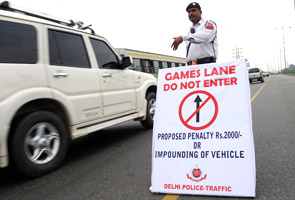
We have had an earlier post on the University Community for Democracy which was formed in the wake of the arbitrary and authoritarian eviction of students from the hostels of Delhi University for the Commonwealth Games, but which raises wider questions about the “reckless logic by which the city is being re-made”.

This is their latest press release, followed by their letter to the National Commission for Women.

University Community for Democracy

PRESS RELEASE 10/08/10

The University Community for Democracy is initiating a RELAY HUNGER STRIKE FROM  9 AM TO 9 PM, 12TH AUGUST THURSDAY ONWARDS at the Arts Faculty Main gate, North Campus. Each day there will be five people (teachers, students and researchers) who will be on a hunger strike, as well as many others who will sit in solidarity.

The University Community for Democracy has been challenging a number of decisions taken by both Delhi University and the government with regard to the commonwealth games for over a month now. The Forum is deeply concerned by the gross violations of rights that the city has witnessed in the name of the Games and condemns the irresponsible manner in which Delhi is being prepared for this mega- event.

Continue reading University Community for Democracy on relay hunger-strike against CWG evictions

Have I Joined the Popular Front?

In the past few weeks, I have been asked over and over again, not always in jest, if I had joined the Popular Front. I am not surprised. The police investigation around the violence against the college teacher at Muvattupuzha has broken all previous records in not only the violation of human and civil rights, but also in the silence of Kerala’s enlightened intellectuals. If I recall right, only Nandigram evoked such a dense and deliberate silence from them. No wonder, anyone who speaks up against the manner in which the police is being armed and authorized against ‘bad muslims’ is immediately dubbed a supporter of the Popular Front. But I am intrigued by this simple question, by which the entire history of that person’s engagement with discussions around religion and the state is erased. Continue reading Have I Joined the Popular Front?

Pushing the Kashmiri to the wall, again

[An edited, shorter version of this article by me appeared last week in The Friday Times, Lahore.]

In the first week of June, I sat at a shopfront with a group of shopkeepers of Kalarus, a small town in Kupwara district in north Kashmir. In 1999, they collected money and bought land for a martyrs’ graveyard, one of many such in Kashmir. Whenever the Indian army killed militants trying to infiltrate from Pakistan to the Indian side of the Line of Control, they would hand over the bodies to the Kupwara police, who would give it to these people to bury after the autopsy.

“Look up at the mountain peak,” said one of them, “It is snow clad all twelve months. It is the LoC, 70 kms from here. Do you think anyone would cross that wearing the traditional Kashmiri Khan dress?” And yet, most of the hundred odd bodies in the graveyard had come wearing clothes unfit for snow. And, most of them had so many bullet marks on the face that they were unidentifiable. Continue reading Pushing the Kashmiri to the wall, again

What Went Wrong in Kashmir? Rekha Chowdhary

Guest post by REKHA CHOWDHARY

This article was also published in Kashmir Times
What went wrong in Kashmir? This is one pertinent question that needs to be addressed seriously before any corrective measures can be applied. Situation would certainly normalise after some time, but apparently ‘normal’ situation in case of Kashmir does not indicate anything. The vibrancy of ordinary life and the day-to-day routine followed for days and even months, takes only moments to break. Underneath the normalcy, the turbulence is ever present and can surface at any point of time. Every turbulent period however provides clues to the real problem, and one should hold on to these clues, if one really wants to do something about it.

So what do we see in the present turbulence? Firstly, though the crisis revolves around the stone-pelting youth, one can clearly say that the real problem is not that of the stone-pelters. Neither the theory of LeT being responsible for it, nor the issue of money being paid to stone pelters, nor the vested interests making the most of the situation explains the crisis.

Pracharak as Terrorist – On the Bhasmasur of Hindutva Terror

I.

Hindu mythology with its plethora of gods and goddesses (which according to a conservative estimate numbers around 330 millions or 33 crores) has n number of stories supposedly to show the human face of the almighty. One such story talks of the creation of a demon called Bhasmasur by one of the gods himself. The said demon had the unique power of turning everything into ash if he could touch anybody’s head. The story goes that after ‘conquering’ the world the demon tries to attack his ‘creator god’ namely Shiva himself and then Lord Vishnu intervenes and manages to eliminate the demon itself.

Whatever might have been the significance of the story then, it bears striking resemblance to the plight of the RSS – the biggest fountainhead of Hindutva politics in the country – today. And this relates to the arrest of many of its senior wholetimers (called Pracharaks in its lexicon) for their role as masterminds, instigators or patrons of terrorist acts in the country and the ongoing questioning of many other senior leaders for their role in aiding and abetting such acts. Interestingly the parent organisation has till date not formally denied their role in all these acts and nor called it witchhunting as it did when investigations into the Malegaon bomb blast II (Sept 2008) were on and the likes of Sadhvi Pragya, Lt Col Purohit and others from the larger Hindutva family found themselves behind bars. In fact, this time it appears more cautious and according to a report it has even sent few of its leaders who supposedly played some role in these acts on a compulsory leave and has plans to send few more. (Bhaskar, 7 th July 2010).

Continue reading Pracharak as Terrorist – On the Bhasmasur of Hindutva Terror

Down with Students’ Eviction from College Hostels!: University Community for Democracy

A Guest Post sent to us by BONOJIT HUSSAIN and NAINA MANJREKAR

[This is a leaflet issued by the University Community for Democracy which has come up in the wake of the arbitrary and authoritarian eviction of students from the hostels of Delhi University for the Commonwealth Games. Initially starting off as a facebook discussion among students, the anger has now snowballed into a movement that seeks to go beyond the immediate question of evictions. – AN]
Down with eviction of students from College Hostels!
Onwards to students self-activity!!
University Community for Democracy poster

The current administration of Delhi University has attempted to reshape the University through a series of sinister agendas – be it the introduction of semester system, the European Studies Programme or the biometric identification system. All of them have shared one thing in common: the thwarting of democratic debate on proposals for change, and the routine violation of regulatory protocols.

The latest episode has been the eviction of students (2,000 students according to reports) from a number of hostels in Delhi University in order to make them available for the Commonwealth Games. Hostels are being renovated and beautified for the officials and visitors of the Games, while students are scrambling around for their own accommodation. The students, like the 40,000 families on the Yamuna bank, are now among the many that have been displaced in the name of national glory. What comes into question is the fact that the University has agreed to avail of 20 crores of rupees from the Commonwealth Games project without taking any cognisance of how and where such resources are generated. It has thus become an accomplice in the larger process of reckless corporatisation that the whole city is undergoing in the bid of becoming a “global city”.

Birthday Wishes from the Hindustan Times

The Hindustan Times marked Rahul Gandhi’s fortieth birthday by tell us 40 things we “may” not know about “India’s most eligible bachelor”.

Nothing surprising about this. Why, don’t you remember how they told you 54 things about you didn’t know about Mayawati on Mayawati’s 54th birthday six months ago?

See also:
Why Hindol Sengupta Needn’t Fear Mayawati
Happy Ambedkar Jayanti

Mohamad Junaid: What Does the Chatham House Poll in Kashmir Tell Us?

Guest post by MOHAMAD JUNAID

The Chatham House poll conducted in the autumn of 2009 in Jammu, Ladakh, Kashmir and Azad Kashmir has revealed an interesting pattern of opinions held across these regions on issues ranging from the perception of major problems people face to effective solutions to the Kashmir issue and the best means to achieve them. Robert Bradnock, under whose supervision the poll was conducted, however presented the results somewhat shoddily leading to confusion over the real import of the opinion poll. This confusion has prompted media in India and Pakistan to portray the polls selectively or in a self-serving manner, largely reflecting their nationalist stances on the Kashmir question. The poll, in reality, points to some interesting developments in Kashmir and indicates a way toward an eventual, mutually agreeable solution.

Consistent with every other poll on the issue, Chatham House poll has shown again that an overwhelming number of people (74—95 percent) in Kashmir region demand independence. This figure comes as no surprise because the support for independence for Kashmir over accession to Pakistan has been steadily growing over the last 20 years. This feeling is more concretely reflected in the fact that most Kashmiris (more than 90 percent) support withdrawal of Indian troops from Kashmir, while a similar figure (around 80 percent) want Pakistan to withdraw its troops from Azad Kashmir. Along with demilitarization, there is a clear demand for de-weaponization (more than 80 percent) and an end to militant violence (around 90 percent) in the Kashmir region. The Line of Control in its present form is uniformly rejected in both Kashmir and Azad Kashmir. Continue reading Mohamad Junaid: What Does the Chatham House Poll in Kashmir Tell Us?

Don’t Treat us Like “Them”!

How inconsiderate of the Israeli spokesperson to club us, the self proclaimed largest democracy in the world and an atomic super power to boot, with the likes of failed states like Pakistan and with two others (Afghanistan and Iraq) that are currently being taught  the basics of democracy by  the marines of the most powerful  democracy in the world.

How  ungrateful of him,  considering the fact we are buying so many weapons from his country, have signed so many MOUs with her,   befriended her after betraying an entire people, who looked up to us because they thought that being founders and leaders of the Non Aligned movement we will stand with them .

We have done all this and more, in the weak -kneed statement protesting the attack on the freedom flotilla we did not even name the country that had perpetrated the crime

Despite all our most sincere efforts to accommodate them, this is how they treat us

Did the Israeli spokesperson think that we will not complain?

Did he really think that we will not seek to draw the attention of the comity of Nations and of Obama?

We will not be denied our democratic right to raise our voice of protest,

We will, with all the power at our command, appeal to world opinion and to the conscience of Benjamin Netanyahu and the entire Israeli cabinet not to club us with Pakistan, Afghanistan and Iraq.

We seek to inform Mr Yahu that we have no idea about the nature of his country’s relations with these three, what we do know is that we are friends of Israel. We have tried so hard to prove it to her and to her close ally the US, why does she not trust us. What more does she want from us? Why won’t she tell us?

Someone please help!

And Now, Fears of ‘Intellectual Jihad’!

Hameed Chennamangalur’s recent article in the Mathrubhoomi Weekly (16 May) in Malayalam seems to have set alight a new round of fears about the ‘hidden agenda’ of Muslim extremism . Over the past weeks many friends, mostly left-liberals, have been urging me to take heed of the warning issued by Chennamangalur, a well-known, long-time critic of Muslim identity politics.

The article that has sparked off such worries takes a line that is quite familiar: it accuses the Jamaat-e-Islami in Kerala of pursuing their ‘hidden agenda’ of establishing the dominance of radical Islam through secular means. Chennamangalur argues that the Jamaat has ‘penetrated’ the space of radical activism through its all-male youth organizations such as the Solidarity Youth Movement, and through setting the terms of radical activist debate through its popular weekly magazine, the Madhyamam. Its recent efforts at discussing such ideas as Muslim feminism, and Muslim feminist thinkers such as Amina Wadood and Fatima Mernissi can only be regarded as cover-ups for a strategy through which it seeks to displace the more liberal and plural Muslim League — something he finds worrying in the present context in which the Jamaat is making a bid to enter local governance through contesting the forthcoming panchayat elections in Kerala. He laments that the radical intellectuals in Kerala are becoming mere pawns of this strategy; they do not see, for instance, that despite all the support that the Madhyamam offers dalit intellectuals, it remains biased heavily towards upper-caste Muslims, unlike the Communist Party in Kerala, which, he claims, offered upward mobility and political presence to dalit leaders in its fold. Continue reading And Now, Fears of ‘Intellectual Jihad’!

The New ‘Bush’ Doctrine: Nirmalangshu Mukherjee

Guest post by NIRMALANGSHU MUKHERJEE

A well-known left intellectual in Delhi, belonging to one of the naxalite “splinter groups”–the term is Arundhati Roy’s to distinguish the maoists from everyone else in the naxalite movement–recently advised me that, whatever be the objections to the CPI (Maoist), we must side with them in their struggle against the state. The argument obviously is that the historical choice is binary is character: either you are with the state or against it. And the underlying assumption is that those who are against the state are somehow “with” the people. Since the maoists are (apparently) against the state, they must be viewed as “with” the people, warts and all. In not siding with the maoists then, intellectuals like Apoorvanand and others in the Kafila forum are actually siding with the state, according to the doctrine.
Continue reading The New ‘Bush’ Doctrine: Nirmalangshu Mukherjee