(Please see an update made at the end of this post.)
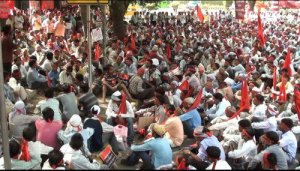
I am watching the fog of tear gas shells descend on Ramlila Maidan on the live television feed on my computer. What was supposed to be a ‘yoga camp’ led by Baba Ramdev, and the fully-funded-free circus of his so-called ‘indefinite hunger strike’ against ‘Black Money’ has now turned into a tear-gas purgatory. It is midsummer, but inside that big tent it looks like a particularly foggy-smoggy night in a Delhi midwinter. It must hurt like hell, in the nostrils, in the lungs. With every breath that Ramdev’s disciples take (and how well they know the art and science of heavy breathing) their eyes must sting. Pranayam was never so painful. I hold my insomniac breath as I sit watching, riveted. Continue reading Pranayam was Never so Painful→
The mainstream Western media that celebrated the democracy movements in the Arab world not very long back, is relatively silent now. For, then it was the Arab youth’s striving for the ‘western values’ of democracy that it was celebrating. Now that the cry of ‘democracy’ is arising from its very midst, it does not seem to quite know what to do. From May 15 on, for almost two weeks Madrid and other Spanish cities have been witnessing some of the largest demonstrations in recent memory. Protesters have thronged the Puerta del Sol, virtually camping there. As government forces started cracking down, demonstrations began to grow in an ever expanding scale spreading to many other Spanish cities. When the government moved to ban demonstrations on May 20, in the run up to the regional and municipal elections, the protests acquired an even more militant form. A ‘snapshot’ of the rallies in defiance of the ban:
The initial protests against the planned multibillion euro bailout plan for banks, austerity measures and against high unemployment almost 45 percent among the youth), according to reports, were not very large but when the government responded by arresting several activists and demonstrators, things started going out of hand. That was the ‘spark that lit the prairie fire’. As Ryan Gallagher’s report in the New Statesmanput it:
A demonstration against the arrests was organised in the city’s main square, Puerta del Sol, and numbers soon snowballed when word got out over the internet. What began as a group of fewer than a hundred activists reached an estimated 50,000 within less than six days.
The protesters whose arrests had sparked the initial demonstration were released and immediately returned to the square. By the time they arrived, the demonstration was no longer just about their treatment at the hands of the police. It was about government corruption, lack of media freedom, bank bailouts, unemployment, austerity measures and privatisation.
Stark indifference of various religious organizations and scholars over suicide bombings and the recurrent target killing in Pakistan during the last few years is appalling. Woefully the mainstream print and electronic media deems it enough to issue the obligatory bland statements signifying absolutely nothing in condemnation of killings of innocent civilians. The act of terrorism in itself is relentlessly condoned, although the lost lives of civilians evoke some reaction which too is quite guarded to say the least. Even while expressing sympathy over the death of civilians, the ‘atrocities’ of the Western powers in general and USA in particular are invariably referred to as the catalyst resulting in all the mess that the Pakistani people find themselves in, at the moment. Thus, unequivocal condemnation of those responsible for all the mayhem in the country is conspicuously missing, which amounts to a tacit approval of these terrorist acts. Far more tormenting than the devil may care attitude of religious parties and their leadership, is the role played by writers of the right wing persuasion, particularly in the Urdu media. While the mass appeal of the religious parties is considerably thin, nevertheless, right-wing ideology is widely shared and adhered to. Continue reading Militant Rationalities: Ali Usman Qasmi→
This note comes fromLATEEF MOHD. KHAN of the Civil Liberties Monitoring Committee, Hyderabad
The Makkah Masjid bomb blast is completely different from all the other blasts of the country because on 18th May 2007, at a time many terrorist attacks took place in the Makkah Masjid. First of all the Hindutva terrorists planted the bombs and targeted the people praying on Friday in the house of Allah i.e. Makkah Masjid, immediately after that, the Hindutva police of Hyderabad through using the firing experts, fired at the praying people and those who were helping the victims. After this, the third terrorist act done by the Police was that they blamed Muslim community itself for the blast through media. Muslims were shocked at this layer by layer terror acts; they never thought that Hyderabad which is considered as the fort of Muslims, the bomb would be blasted at the historical Makkah Masjid. In fact, this act was to attack the fort of Muslims. With this the confidence of Muslims is shaken. Continue reading Four years after the Mecca Masjid Blast, Justice Still Denied: Lateef Mohd. Khan→
The workers of Ankur Udyog Ltd., a factory in the Bargadwa industrial area in Gorakhpur, eastern UP were attacked by goons called by the factory owner the morning of 3 May. At least seven workers were seriously injured in firing by the goons. Apparently, the factory owners of Gorakhpur have been very angry with the workers for attending the May Day rally at Jantar Mantar, Delhi and one of them suspended 18 workers as soon as they went to resume work. The workers protested against this and the factory owner sent hired goons who fired on the workers injuring 19 of them. The workers had cornered the goons inside the factory but the police came and took them away and let them free. FIRs have been registered from both sides.
May Day rally- workers' charter movement
As the tension and repression of the factory owners and the district administration mounts, the workers have planned to go on Satyagraha from May 8 (tomorrow) and the administration is determined to not let it happen. We have received messages saying that trade union organizers fear for the life and safety of the workers and their leaders. The voice of protests from many forums and due to the incident being covered by the local media, the administration has refrained from taking any one sided action till now. But conspiracies are being hatched behind the scenes. Its not a distant reality that the leaders might be killed in fake encounters, or slapped with false charges or lynched by mobs instigated by the factory owners or Adityanath’s goons.
So you’ve been following the Binayak Sen case. What now? What are the aspects and implications of the case to consider now that he is out on bail?
Here are a few that come to my mind. Your mileage may vary.
*The suspicious things Sen is supposed to have done. For example, you have heard often that Sen visited Narayan Sanyal in jail multiple times. Why, you ask. Whatever the reason, think of this: In 2006, before the first time (and indeed before each subsequent time), he wrote to the Raipur Jail Superintendent asking for permission to visit Sanyal. After this request made its way through the police bureaucracy, senior police officials in Raipur wrote to the same Superintendent saying “Central Jail Raipur mein bandi Narayan Sanyal se bhent karne ke liye Dr. Binayak Sen jaata hai to is karyalay ko koi aapatti nahin hai.” (“This department has no objection if Dr. Binayak Sen goes to meet Narayan Sanyal who is detained in Central
Jail, Raipur.”)
If the police had no objection to the visits “at the time”, why was this later an issue at all? Why have learned commenters made so much of this, hinting at dark things Sen must have been doing? One example, note how the author of the ‘report’ says “Admittedly, the meetings took place with prior permission from jail officials”, but has let stand the implication that there was something dark going on).
On Friday morning, when I started for the Supreme Court to attend the bail hearing of Dr. Binayak Sen, like many of our friends and comrades I was not sure of whether he would be granted bail. I was afraid that the case would be adjourned once again, as many of us who are regular visitors of courts expect, aware of the delaying tactics of government counsels, and the history of tareekh par tareekh. Kavita Srivastava, who has been following the case closely and campaigning tirelessly for Binayak’s release along with others, put the spirit back in me. It couldn’t get any worse, she said.
Fortunately, it turned out to be a good Friday. I was happy, as were my friends and comrades. We wanted to scream out of joy and happiness but we restrained ourselves for we were in the court premises and could be booked for ‘contempt of the Court’. Naturally, it was one of the happiest moments our life. Binayak and Ilinia a source of inspiration for hundreds of students and youth like me. I am happy for Binayak, for his family, especially for his mother, for ordinary (read extra-ordinary) people of Chattisgarh and for thousands of his supporters and justice loving people. Continue reading Chidambaram khush hua: Mahtab Alam→
अण्णा हजारे के ‘नेतृत्व’ मे शुरू हुए भ्रष्टाचार विरोधी आन्दोलन का पहला चरण सफलतापूर्वक समाप्त हो गया है. अनेक लोगों को सरकार को हिला देने का सुख और संतोष इस आंदोलन ने दिया है. हजारे ने खुद यह कहा कि एक बार तो भगत सिंह ने अंग्रेजों को भगाया था, इस बार ‘काले’ अंग्रेजों को भगा दिया गया है. इसे दूसरी आज़ादी की लड़ाई भी कहा जा रहा है. इसके पहले एक और ‘दूसरी आज़ादी’ की लड़ाई लड़ी गई थी लेकिन शायद वह असली नहीं रही होगी तभी तो इसे तीसरी नहीं दूसरी आज़ादी की जंग कहा जा रहा है. यह सोचने का विषय है कि इस देश में हर प्रकार के संघर्ष को अपना औचित्य सिद्ध करने के लिए क्यों खुद को स्वतंत्रता संग्राम के रूप में प्रचारित करना पड़ता है. कहा जा सकता है कि यह तो भाषा का रूपकात्मक प्रयोग है, इसे आगे खींचने की ज़रूरत नहीं. इस रूपक को गढ़ने को मजबूर दिमाग जिस ग्रंथि से जूझता है , वह शायद यह है कि हममें से अधिकतर को यह रंज और गम है कि हम 1947 के पहले पैदा नहीं हो सके थे और इस देश को आज़ाद कराने में हमारा कोई हिस्सा नहीं.दूसरे, उस आन्दोलन के अंतिम क्षण के शत्रु रक्त से रंजित न होने के कारण नवीन राष्ट्रीय शिशु के जन्म की वास्तविक अनुभूति से हम वंचित रह गए. इसके कारण हम सबको एक स्तर पर अपना राष्ट्रीय अस्तित्व ही अप्रामाणिक प्रतीत होता है. हर पीढ़ी को इस कुंठा से मुक्ति के लिए कभी न कभी एक स्वतंत्रता संग्राम की आवश्यकता पड़ती है. गोरे अंग्रेजों और काले अंग्रेजों को ‘भगाने’ के जिस विकृत सुख लाभ की आकांक्षा इस तरह के वक्तव्यों में झलक पड़ती है, उसके पीछे छिपी हिंसा को पहचानना भी आसान नहीं होता. क्या यह इसलिए करना होता है कि ऐसे आन्दोलन एक ‘राष्ट्रीय’ कल्पना को उत्तेजित करना चाहते हैं और इस लिए राष्ट्रीय संदर्भों के सहारे अपनी वैधता हासिल करते हैं? जंतर मंतर के अनशन मंच की पृष्ठभूमि में भारत के मानचित्र को आवृत्त किए हुए, बल्कि उसकी सीमा से बाहर राष्ट्रीय ध्वज को लहराते हुए गौर वर्णा भारत माता की छवि के विह्वल आह्वान को जो अनसुना करे क्या उसे दुखियारी माता का पुत्र कहलाने का अधिकार रह जाएगा? क्या उसके उद्धार के लिए, महिषासुर का दलन करने के लिए पुन: अपने अस्त्र-शस्त्र को शाणित न किया जाएगा? Continue reading लोकतंत्र की आत्मसमीक्षा का क्षण→
“The communists’ ideologues conveniently ignore the truth that the roots of Bhagat Singh’s ideology lie in the very concept of Hindu Rashtra,” claims an article by Dipin Damodharan, published on this day last year. Damodharan, as introduced at the end of the article, is a student pursuing Masters in Communication and Journalism (MCJ) at the Calicut University of Kerala. He argues: “To my knowledge, he sacrificed his precious life for a noble cause, for the liberation of Bharat from the invaders, for nationalism. Undoubtedly Bhagat’s legacy belongs to every Bharati. But for the communists (experts in transforming sheep to dog), he died for communism and not for nationalism. They are incessantly advocating Bhagat as their poster boy, for several years they have been using Goebalsian tricks to claim Bhagat’s legacy.” The author further argues, “They are injecting fake stories about Bhagat into the blood of youth who are ignorant about Bharat’s history. Discarding the historical facts, the communists become angry with the Sangh inspired organizations for propagating Bhagat’s ideals”. Continue reading Bhagat Singh and the Hindu Rashtra: Mahtab Alam→
Recently, Shanina K K, a journalist from Kerala, who worked with Tehelka news weekly and now works with Open magazine, received the Chameli Devi Award for being an outstanding woman journalist. While receiving the award she said, “See, I happen to be a Muslim, but I am not a terrorist.” What made her say that and what was she trying to convey or explain? It means, as she explains, “If you belong to the minority community, they will also profile you. It is very difficult to prove that you are not a terrorist. It is equally difficult to prove that you are not a Maoist in our life and times.” Continue reading What does it mean to be a Muslim in India today?: Mahtab Alam→
The Telegraph's "File picture of suspected illegal migrants detained by police"
I think that should be the title of a poem, but since I can’t write poetry, I want to bring to your attention in pithy prose the Congress party’s time-worn ‘soft Hindutva’ election strategy is back in Assam. Which means that while the Congress, BJP and others in Assam want to welcome Hindus from Bangladesh, the Muslims from there are as ever the “illegal” immigrants, the terrorists, the jehadis, the infiltrators.
They want citizenship for Bangladeshi Hindus and the Bangladeshi Muslims kicked out.
As per India’s non-existent refugee policy, Hindus from Pakistan and Sikhs from Afghanistan have been getting citizenship, but so many other persecuted peoples from all over the world come to India and find it very difficult to get by and soon seek resettlement in a developed country.
This, then, is how I want to introduce Indian secularism to you.
1.
Ram Madhav, the bespectacled ex-spokesperson of RSS is not known for his sense of humour.
It is a different matter that some of the media people just could not control their smiles when sometime back (second week of Feb 2011) in a press conference in the capital he enlightened the journos about l’affaire Aseemanand and the broader phenomenon of Hindutva terror.
Giving a completely new and almost unforeseen twist to the Aseemanand episode he said that he (i.e. Aseemanand) had in fact left the RSS in 2006. Of course, as a good spokesperson – although he has become an ex- he had the usual disclaimers in the beginning: RSS does not believe in violence and is a cultural organisation… One does not know whether much on the lines of the School Leaving Certificate, with which lesser mortals like us are more familiar with, Ram Madhav distributed photocopies of ‘Sangh Leaving Certificate’ of Aseemanand or anything similar to give authenticity to his claims or not. Continue reading Why does the RSS dread the terror tag?→
Why does our media get so worked up when someone in Pakistan is accused of or convicted for blasphemy but is not overly perturbed when someone is charged with or convicted for Sedition in India?
Is this differentiated response occasioned by the belief that a modern state should overlook things like blasphemy but give no quarter to sedition?
Do anti-Blasphemy laws encroach upon Individual freedom while anti-sedition laws protect national interests? Is convicting someone for blasphemy essentially undemocratic but doing the same for sedition not so?
History repeats itself, and we learn so little from it. Or rather, we learn too much from it. I am excerpting below about half the text of a report dated 27 January 1992, written byEDWARD A. GARGANin The New York Times, describing in detail Murli Manohar Joshi’s hoisting of the Indian flag in Srinagar’s Lal Chowk. Wish I had a picture!
He [Murli Manohar Joshi] had begun his trek, which he named Pilgrimage for Unity, 44 days before at India’s southernmost point. But the inability of the security forces to protect even their highest officials made it clear that there was no way, despite the presence of several hundred thousand troops in the Vale of Kashmir, to protect a convoy of cars and buses filled with zealous Hindus. So Mr. Joshi and a small contingent of his closest supporters were flown here on Saturday night. Continue reading ‘As followers pushed to get close, the pole broke in several places and the flag tumbled down onto Mr. Joshi’→
Like the unseasonal and tenebrous rain clouds that are hovering over Thiruvananthapuram in what should be a sunny, light-mist-adorned January, a pall of gloom, of impending danger, hangs around my everyday life in Kerala. This is not a general feeling. It is however shared by many of us who write and speak critically about the powers that be. The space to speak and write thus has been shrinking for a while now, but now there is a sense of dangerously teetering on the edge: the Indian state seems to be upon us, and with a vengeance. Continue reading Un-Indianizing Kerala: How to defend K K Shahina→
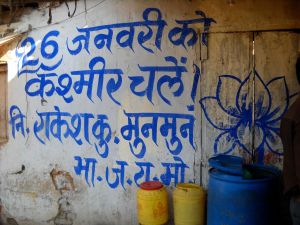
The graffiti reads: '26 Janwari ko Kashmir chalein. Nivedak: Rakesh Kumar Munmun, BJYM'. Trans: 'Let's go to Kashmir on 26 January. Appeal by Raksh Kumar Munmun, BJYM.''
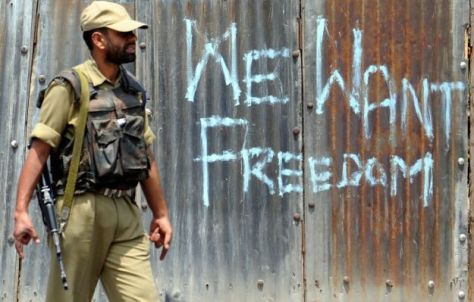
A policeman walks by a street in Kashmir, summer of 2010. Graffiti demanding azadi was all over the Valley this summer.
In Hazaribagh, one of the oldest cities of the newly formed state of Jharkhand, one is more likely to come across the word Kashmir than the name of the city itself these days. Kashmir, a place that most of the residents of Hazaribagh would have only heard of. At almost every nook and corner, teashop, wall of the city one would find an invitation to the ‘raashtriya ekta yatra’ from Kolkata to Kashmir to hoist the revered Indian flag at Lal Chowk. And this public invitation comes from none other than the youth wing of BJP, namely the Bhartiya Janata Yuva Morcha. Continue reading ‘Kashmir ho ya Guwahati, Apna desh, apni maati’: Mahtab Alam→
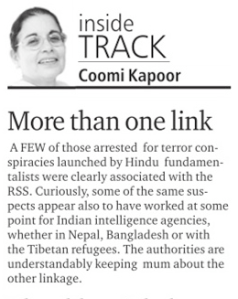
Veteran journalist Coomi Kapoor wrote this small snippet in the Indian Express yesterday. Hope it is only the beginning of more information on what this country’s intelligence agencies have been up to in the name of its citizens.
'Bengal's mothers and daughters are all freedom fighters'
Guest post byJYOTI RAHMAN
Bangladesh will mark its 40th year of independence in 2011. The celebrations have already begun, and will continue until next December. The TV channels are already playing patriotic tunes. One such tune is Shona shona shona. The song says the land, mati, of Bangladesh is better than gold, and under this land sleeps many heroes: Rafiq, Shafiq, Barkat, Titu Mir and Isa Khan.
Who are these heroes? Rafiq, Shafiq and Barkat were killed by the Pakistani authorities during the language uprising of 1952 — a milestone moment in Bangladesh’s nationalism. Titu Mir defied the East India Company and organised a peasant revolt in the 19th century. Isa Khan was a Bengali chieftain who resisted the Mughals in the 16th century.
Notice how all of these heroes are Bengali Muslim men?

 Guest post by MAHTAB ALAM
 To make our point against jingoism.
 Guest post by MAHTAB ALAM


 KAFILA - COLLECTIVE EXPLORATIONS SINCE 2006