Category Archives: Violence/Conflict

A Modest Proposal from EFLU Students, Hyderabad: Anonymous

Anonymous Guest Post

[This is a response to the recent political developments in the English and Foreign Languages University, Hyderabad. On 1nd March, 2013, Mudasir Kamran, a Kashmiri Muslim PhD scholar of the university was taken to the police station by the Proctor and some other professors of the university in pretext of a personal enmity between Mudasir and his erstwhile room-mate, where he was detained throughout the night without any written complaint being filed. Mudasir came back broken, asking why he was treated like a thief and a criminal. On 2nd March, he committed suicide. A section of the students since then has been demanding for the suspension of the Proctor, an apology from the university, and compensation to the family. The university administration dealt with this in a fiercely draconian manner. They refused to meet the students, they enforced police protection, they threatened a null semester, even a total shut-down of the university. They did not issue a single apology, they appeared in front of media and produced false versions of the events hand in glove with the police (that was subsequently refuted by the alleged eye-witnesses), they constituted a faculty-only Fact-Finding Committee without removing the accused from his administrative position. Rumours have been floated about the alleged homosexuality and the mental instability, thus inciting the cultural stereotype of social aberration and criminality. One unofficially Leftist section alleged that the students are spreading rumours and contacting their “Kashmiri friends” to ignite the fire of unrest in Kashmir (although there has been and still is no connection between student’s demand and what is happening in Kashmir). On 8th March, they finally succeeded in coercing the students enough to make them ask for a resumption of normalcy on the campus. The Vice-Chancellor has threatened that any political activity on the campus will result in a null semester. She has ensured that classes will commence under heavy ‘police protection’ on Monday. A section of the teachers who has refused to accept the responsibility for Mudasir’s unfortunate death has demanded for criminal cases to be filed against the protesting students. Since the protesting side has been majorly comprised of dalits, OBCs, minorities, this is an attempt from their side to allegorically (and satirically, in the tradition of Jonathan Swift who once wrote his ‘modest proposal’ that the British landed aristocracy simply eat Irish children as a way to end the problem of poverty in Ireland) express some of the horrors they have to go through to even stage a basic minimum democratic protest in a so-called elite university.]

[This text has been slightly edited and modified, mainly to allow for easier reading, and to correct a few syntactical slips, but the general tone and style, including capitalization and some archaisms have been maintained so that it is clear that this is a legitimate work of satire, written in the public interest. Kafila]

​​A MODEST PROPOSAL FOR PREVENTING THE DALITS, MINORITIES, AND IN GENERAL THE POOR AND THE MARGINALIZED FROM BEING A BURDEN ON THE GLORY OF THE ENGLISH AND FOREIGN LANGUAGES UNIVERSITY, HYDERABAD AND FOR MAKING THEM BENEFICIAL TO THE UNIVERSITY.

Continue reading A Modest Proposal from EFLU Students, Hyderabad: Anonymous

Mayhem in March: Sameer Bhat

Guest post by SAMEER BHAT: The completeness of night’s silence is absolute in Kashmir. Earlier today another boy was put six feet under. Killed in cold blood in Baramulla by the Indian army. Apparently a small crowd was protesting against the hanging of Afzal Guru and driven by pure emotion, pelted a passing army truck with stones. Since Kashmiri blood costs next to nothing, the armymen quickly got down, cocked their machine guns and sprayed the protesting kids with bullets, instantly killing a kid – Tahir — in his 20s. Nothing much. His friends, too shocked to react, smeared his blood on their faces. Grown-ups wept. The army later issued a statement that they didn’t shoot the boy. Period. Continue reading Mayhem in March: Sameer Bhat

Indian Land Grab in Africa: Sputnik Kilambi

images

This is a guest post by SPUTNIK KILAMBIThe rise of China and India in Africa has important implications for the continent’s development. While the two Asian giants provide a much needed alternative to the old and until now sole paradigm of dependence on the West, both countries are accused of being part of the global land grabbing club. Many African governments are complicit in this whole sale plunder of their land, which the FAO has compared to the ‘wild west’.  India’s role in the land take-over underway in Africa raises serious questions about the direction of south-south relations.

Just before the 2010 World Cup of soccer in South Africa, the Indian food and beverages giant Parle Agro ran an ad campaign to promote its new lemon drink LMN. One spot showed a couple of Bushmen digging in the sand for water when their stick breaks. Suddenly, they see a tap and wrench it off.

Fortunately, the Advertising Standards Council of India forced the company to make changes because the spot was racist and made fun of water scarcity, an acute problem in Africa and India.

The Parle ad is an apt metaphor for growing fears in Africa about India’s seemingly insatiable demand for the continent’s land and water. Water scarcity at home and global fears of a looming water and food crisis are among the reasons India has joined the club of land predators.

India now ranks third in the amount of land grabbed from other countries. It is, says environmental journalist Darrel De Monte, “the irony of a former British colony turning into a neo-coloniser”.  Continue reading Indian Land Grab in Africa: Sputnik Kilambi

On the Death of Mudasir Kamran: Achuth Ajit and Ria De

This is a guest post by RIA DE and ACHUTH AJIT: English, the language of a united collective; but also a language that found itself wanting today, as if unable to express the most basic of needs, the most just of demands. Of all days today English was at its banal best.  As if clichés had eaten into it, gnawed the life out of it, bent it into prosaicness. Like “We Want Justice.” As we gather here today, at the English and Foreign Languages University – an institution that is just 5 years old with already four student deaths to its tally – to protest the high-handed and insensitive treatment of Mudasir Kamran, to honor his memory, and most of all to claim on his behalf, and on the behalf of all of us, the students at this University demand and urge “We Want Justice”. The prosaic cliché of this oft-repeated slogan was unable to state on our behalf the bare life of it as well as the spontaneity and the enormity of it. Continue reading On the Death of Mudasir Kamran: Achuth Ajit and Ria De

Meanderings of a Female Atheist Muslim Indian: Samina Motlekar

This is a guest post by SAMINA MOTLEKAR: I come with baggage, with tags not all of my own making. I was born female, and as much as I want to be acknowledged as a person, I learnt early that it was pointless to deny so physical a part of my identity. I was born to Muslim parents, but that does not make me Muslim, a distinction that is unfortunately far too subtle for many minds to comprehend. Complacent in their own inherited identities, they pile on the labels smothering me into little  boxes of their making. Female, Muslim, Indian – all accidents of birth. But not all of me is accidental. By age eleven, the idea of a deity in the sky, concepts of heaven and hell, were at best stories, at worst ramblings of deluded minds to me. Not for me the fence sitting of agnosticism. I was an atheist before I hit my teens, and my belief system has endured the trials and tribulations of time. Yet they call me Muslim.

Continue reading Meanderings of a Female Atheist Muslim Indian: Samina Motlekar

Elements of Bomb (Blast) Making – Understanding Dilsukhnagar: Biju Mathew

hydblast2

This is a guest post by BIJU MATHEW: The story is always the same, isn’t it? A perfectly ordinary day becomes extraordinary. A day when the daily tribulations of thousands of workers and small merchants is instantly transformed into tragedy. 15 dead, 5 still critical and over 100 others injured– some of them maimed for life – thinking of what recovery might mean. Ravinder, a farm hand from a Nalgonda village has lost a leg. His wife, Lakshmi might still yet lose her foot. Their 1 year old is missing. And they were in Dilsukhnagar for a hospital visit because the 1 year old has a congenital heart condition. There is no justice to be had here. Continue reading Elements of Bomb (Blast) Making – Understanding Dilsukhnagar: Biju Mathew

Noida Police keeps a labour leader and 6 citizens under illegal custody: Bigul Mazdoor Dasta

Press release by BIGUL MAZDOOR DASTA:

At the behest of the factory owners, the reign of terror of police continues

Noida, March 1. Several mass organizations including Bigul Mazdoor Dasta have strongly condemned the Noida police’s act of illegal detention of the labour leader Tapish Maindola and 6 common citizens. A petition is also being filed today at the Allahabad High Court against the illegal custody.

Ajay swamy of Delhi Metro Kamgar Union told that on the evening of February 27th, 10-12 persons came in 2 Bolero vehicles to the DTP Centre of Navin Prakash in Ghaziabad and forcibly took him and his employee Raju along with them. They forced Navin to call the activist of Bigul Mazdoor Dasta and his friend Tapish by phone and as soon as Tapish reached there, police captured him. Without informing the people present there as to where they were taking them, the policemen took all three along with them. None of the three were allowed to make a call and their phones were taken away and switched off.

Continue reading Noida Police keeps a labour leader and 6 citizens under illegal custody: Bigul Mazdoor Dasta

The Political Economy of Anti-Muslim Attacks in Sri Lanka

738297541protest

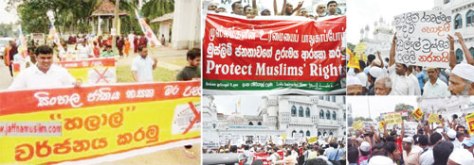
The Muslim community is under attack. There have been increasing reports of attacks on mosques and shops owned by Muslims as part of a broader hate campaign against Muslims. The attack on the Dambulla Khairya Jummah mosque in April 2012 saw a decisive shift in the scale of these attacks. This act of violence was built on anti-Muslim rhetoric and a nascent campaign that had been simmering for years. More recently, the anti-Halal campaign and the boycott of No Limit stores has mobilised much larger sections of society. The mobilisations, together with chauvinistic public discourse, have alerted a few critical journalists, public intellectuals and activists to rightly draw parallels between these developments and the events that led up to the July 1983 pogrom against the Tamil community. Indeed, there needs to be stronger mobilisations and statements of condemnations to arrest this wave of anti-Muslim attacks. In this article, I ask a question that has not received as much attention: Why are these attacks on the Muslim community taking place now?

Published in Sunday Island, Colombo

Kai Po Che and the reduction of 2002: Zahir Janmohamed

Guest post by ZAHIR JANMOHAMED

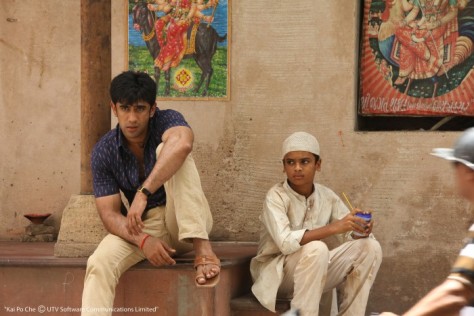
A still from Kai Po Che

When I started conducting research in Gujarat two years ago, I kept being asked the same question among middle class youth in Ahmedabad: “Have you read Chetan Bhagat?” When I asked what other books they have read, I often heard, “Actually I only read Chetan Bhagat.”

So I started to read Bhagat because I wanted to relate to many of the young people I was interviewing. But it was not an easy task.

I understand the frustration with Bhagat’s writing. Unlike other young adult authors like JK Rowling or Suzanne Collins, Bhagat’s books rarely reward a second reading (and yes I have tried). Continue reading Kai Po Che and the reduction of 2002: Zahir Janmohamed

Justice for a rape survivor: Majlis Legal Centre

As we note the unprecedented, if not always productive, attention being drawn to widespread sexual violence in India, we need to remember that in the shadows of media attention, legal activists routinely wage long, arduous and painful struggles in courts. One such set of activists located at MAJLIS LEGAL CENTRE, Mumbai, recently secured the conviction in Sessions Court, of a 60 year old man for the sexual assault of a toddler. Here is the inspiring (and infuriating!) account of this battle in the words of Majlis. Some of us have been making an argument for CCTV’s in police stations, to monitor the behaviour of the police towards complainants, especially of sexual violence. This case only reinforces our belief that the surveillance by citizens, of the coercive apparatus of the state is imperative.

majlisIt’s been two long years of trials and tribulations as we journeyed a difficult path with a very young rape survivor.  In fact, this case started off the ‘Socio-Legal Support to Survivors of Sexual Assault’ Programme of Majlis.
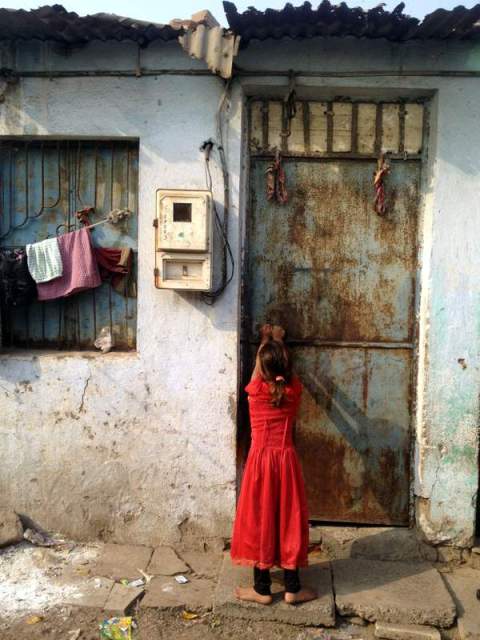
The incident had taken place within the premises of Kalina Education Society in Kalina in February, 2011. When the mother noticed an injury on her child and rushed to the police station, the police, instead of registering a case, recording her complaint and sending the child for medical examination, preferred to call the school principal to the police station.  The Principal, in the presence of the lady Police Sub-Inspector, threatened the mother that if she filed a complaint, her child would be thrown out of the school. This led to valuable medical evidence being lost. The next day the mother was asked to bring to the child to school by the lady Sub-Inspector, for “investigations”.  While the mother was asked to wait outside  the school compound, the child was interrogated alone  by the principal and teachers in the presence of the police, and was threatened.   The case was recorded only when the mother, on the third day, at her own initiative, took the child to a private doctor, who after noticing the injury  referred the child to the Sion Hospital (which is a Government Hospital). Continue reading Justice for a rape survivor: Majlis Legal Centre

तार्किकता, भावुकता और फासिज्म

 28 फरवरी को याद करने पर अब कहा जाने लगा है कि यह नकारात्मक स्मृति है और इंसानी फितरत के मुताबिक़ हमें आगे बढ़ना  चाहिए. हिन्दुओं को, खासकर गुजराती हिन्दुओं, यह नागवार गुजरता है कि उन्हें  बार-बार 28 फरवरी , 2002 की याद दिलाई जाए. आखिर गुजरात में 2002 के बाद पूरा अमन है और वह विकास के मार्ग पर एक दृढसंकल्प मुख्यमंत्री के नेतृत्व में संकल्पपूर्वक बढ़ा जा रहा है और वहां के मुसलमान भी अब कुछ और बात करना चाहते हैं.

दरअसल भुलाने और आगे बढ़ जाने की शुरुआत 2002 में ही हो गई थी. 28 फ़रवरी से राज्य-संरक्षण में शुरू हुए मुसलमानों के कत्लेआम ने भारत के उद्योगपतियों के एक हिस्से को भी झकझोर दिया था. लेकिन कुछ समय बाद ही पूंजीवाद के तर्क ने मानवीयता की कमजोरी पर विजय पा ली और उन्होने नाराज़ मुख्यमंत्री से क्षमायाचना करके गुजरात की प्रगति में उन्हें हिस्सा लेने की इजाजत माँग ली  थी. सार्वजनिक रूप से उन्हें गांधी और पटेल से तुलनीय बताया जाना अब अटपटा भी नहीं लगता, बल्कि उलट कर कहा जा सकता है कि गांधी और पटेल में  ऐसे कई गुण नहीं थे जो गुजरात के ह्रदय-सम्राट में पाए जाते हैं , इसलिए यह तुलना वस्तुतः इन दोनों के प्रति पक्षपात है. पूंजीवाद के मूल अंतर्राष्ट्रीय चरित्र ने अंततः युरोपियन यूनियन को अपनी मानवीय हिचक को किनारे करके गुजराती यथार्थ को कबूल करते हुए कारोबारी नज़रिया अपनाने को प्रेरित किया. यह संभव नहीं था कि आर्थिक निवेश के ठोस आकर्षक आमंत्रण को   न्याय के अमूर्त आग्रह  के चलते ठुकरा दिया जाए. Continue reading तार्किकता, भावुकता और फासिज्म

Nine prisoners at risk of execution in India: Amnesty International

Statement put out on 21 February by AMNESTY INTERNATIONAL

Following two recent secret executions in India, there is fear that the Indian authorities may execute nine other prisoners whose petitions for mercy have not yet been ruled on.

The mercy petitions of eight men and one woman are pending with either the Union Home Ministry or the President: Gurmeet Singh, Dharampal, Suresh, Ramji, Praveen Kumar, Jafar Ali, Sonia (f), Sanjeev, and Sundar Singh. Ministers have publicly stated that decisions on some of these petitions will be made soon, putting the nine in imminent danger of execution. Continue reading Nine prisoners at risk of execution in India: Amnesty International

Kashmir: Civil society objections to proposed Police Bill

List of signatories at the end; statement put out on 25 February
Following a preliminary reading of the Draft Jammu and Kashmir Police Bill, 2013, made public on 15 February 2013, the undersigned condemn the attempt of the Government to formally put in place powers and structures that the Jammu and Kashmir Police have for long enjoyed and employed to carry out systematic human rights violations in Jammu and Kashmir. Further, specific sections of the Draft Bill that are seriously objectionable are listed. As an immediate step, the Government must extend the time allotted for feedback from people.  Continue reading Kashmir: Civil society objections to proposed Police Bill

The Hyderabad blast investigations are doomed to fail: JTSA

This release was put out today by the JAMIA TEACHERS’ SOLIDARITY ASSOCIATION

hyderabad-blasts-probe-feb2

In a grotesque replay of every investigation that follows a bomb blast, prejudice, misinformation and media blitz rules the direction of Dilsukh Nagar bombings investigation too.  The same suspects and shadowy organizations are being paraded as executors of the Hyderabad bombings.

But should we be surprised? A day after the Home Minister’s humiliating capitulation to the RSS-BJP, virtually giving them and their affiliates a clean chit, the message to the investigating agencies must have been crystal clear.  When the Home Minister himself discards the bulk of allegations and material pointing to the existence of Hindutva groups in planning and executing terror attacks, should we really expect the investigating agencies, whose past record inspires hardly any confidence, to sincerely pursue all possible angles and leads? This, when Messrs Aseemanand and company are being tried for the 2007 bombing of the Mecca Masjid.  By asserting that Hyderabad bombing may have been a reaction to the execution of Kasab and Afzal Guru, the Home Minister himself foreclosed any possibility of unbiased investigation. Continue reading The Hyderabad blast investigations are doomed to fail: JTSA

The colonial legacy of capital punishment

G Mohan Gopal writes:

The British and their collaborators had made a similar mistake. They thought that the common people of India would be deterred and cowed down by the violence of the state. A young scholar from Columbia recently shared with me data collected from the National Archives showing that the British were hanging on average three people daily in the 1920s in a desperate bid to frighten Indians into obeying British rule. We know how that ended. The government should know how this will end too. [Frontline]

And Fahad Shah meets Maqbool Butt’s mother:

“Both Maqbool sahib and Guru sahib were innocent and on the right path. India thinks that this freedom movement will stop but it won’t stop. It will continue. There are so many Maqbools in Kashmir” [The Kashmir Walla]


Sanjay and me: Zahir Janmohamed

Guest post by ZAHIR JANMOHAMED

House of a Naroda Patiya massacre survivor. Photo by Zahir Janmohamed

It was 2002. The week before I left for India, my father invited his Gujarati Hindu colleague Rupa Aunty for dinner at our house in California. When I was a kid, I tied the rakhi brotherhood bracelet on her son. When my mom was diagnosed with cancer, Rupa Aunty was the first to spend the night with us at the hospital.

“If you need anything at all,” she told me just before I left for India, “my family is from Ahmedabad and we will be there for you.”

I grew up in California mispronouncing names of Gujarati dishes like thepla and my trip to Ahmedabad in 2002 was the first time anyone in my family had returned since my grandparents left Gujarat for Tanzania in the 1920s. This – my father kept reminding me – was my trip “home”. Continue reading Sanjay and me: Zahir Janmohamed

PUCL statement on Hyderabad blasts

This statement was put out today in Delhi by the PEOPLE’S UNION FOR CIVIL LIBERTIES
PUCL strongly condemns the serial  blasts in Hyderabad on 21.02.2013 which has resulted in loss of life and grievous injuries to many. PUCL extends its sympathies to the families of all those who lost relatives and hopes that the injured recover speedily.
PUCL  re-iterates its stand that all organizations – whether State or non- state players – functioning for the people and in the public arena are accountable and answerable for their acts. PUCL appeals to all organizations to refrain from acts of mindless violence, especially when they endanger innocent persons.  Violence can never offer a solution to any issue however genuine it may be.  Continue reading PUCL statement on Hyderabad blasts

22 Years after Kunan and Poshpora, Rethinking Kashmir: Abhijit Dutta

Guest post by ABHIJIT DUTTA; all photographs by the author unless otherwise mentioned

1-kunan 4

It looks like any other village in Kashmir.

You go past a wooden bridge, past open fields winter-barren and wet with rain. Past mountains with snow on their chin. Past wistful looking poplars. Past a brook with clear water. Past grumpy apple trees gnarled like a grinch.

Then the road narrows, and homes – of timber and brick – come into view. Some have fences, unpainted wood. Heaps of hay, dung cakes, piles of dried leaves left to smoke. Ditches and dykes choked with snowmelt. Leafless walnut trees and brunette willows. The chinars, wild redheads just months ago, now old and arthritic. There is a government school on the right, a madrassa on the left. A few houses of stone, fewer of concrete, tin roofs over all.

Before you walk any further, the village ends. The next village is Poshpora. Like Kunan before it, it looks like any other village in the valley. The two villages are so close that people no longer call them by their individual names. Everyone knows this two-in-one village as Kunan Poshpora. Continue reading 22 Years after Kunan and Poshpora, Rethinking Kashmir: Abhijit Dutta

India Slept Through a Revolution in Bangladesh: Richa Jha

Guest post by RICHA JHA

Dhaka, Bangladesh. 18th February 2013 -- A woman shouts on a microphone. -- A demonstration for the death penalty to be given to war criminals, is continuing at Shahbag crossroads, and has reached its fourteenth day,.
Dhaka, Bangladesh. 18th February 2013 — A woman shouts on a microphone. — A demonstration for the death penalty to be given to war criminals, is continuing at Shahbag crossroads, and has reached its fourteenth day,.

This morning, I changed the ‘sleep’ in the heading of this article to ‘slept’. I woke up to the news that Bangladesh’s nearly twenty days long mass uprising was now getting a structured exit. The most moving and visually spectacular part of the Shahbag movement was coming to an end. India, of course, slept through most of it. The past tense, suddenly, paints our selective insularity in even starker shades. Continue reading India Slept Through a Revolution in Bangladesh: Richa Jha

Shahbagh: The Forest of Symbols: Naeem Mohaiemen

This is a guest post by NAEEM MOHAIEMEN

Shahbagh_SyedLatifHossain
© Syed Latif Hossain

There is a particular way of lensing mass movements, when we are observing from within immediate tactics. In a fast moving situation, with opponents and allies squared off, the first thing to shrink is the space for internal critique. Professor Azfar Hussain uses the term “critical solidarity” for his approach to Shahbagh. A critique that seeks to help the movement, but also a critique some are not ready to hear yet.

For the last sixteen days, Bangladesh has been in an intense new political phase. The ground has shifted and been recast by the scale of the Shahbagh movement. The flash point was the sentencing of the “Butcher of Mirpur” (a war criminal who collaborated with the Pakistan army in 1971). But, by now, the demands have expanded to a call for a ban on the main Islamist party Jamaat-e-Islami, or even Islamist politics altogether. Older leftist thinkers like Badruddin Umar are daring to ask questions of the hallowed place of “state religion” in the constitution. Younger bloggers are urging all to make it clear that the movement is about war criminals, not religion. But of course, with war criminals conflated with the Jamaat-e-Islami, and that party eager to present themselves as standing for “Islam,” category errors will happen. Continue reading Shahbagh: The Forest of Symbols: Naeem Mohaiemen

Footprints on a Timeline: Gayatri Ugra

Guest post by GAYATRI UGRA; photographs by JAYANT UGRA

1-20 _MG_2200

“I travel so that people will lose track of me. Then I write, so they can find me again.”

I read these lines by Pierre Foglia, and I know nothing else about him. I do know more about why I travel: to retrace lost tracks. And why I write: not for people to find me but for me to find my own self. The last journey I made was just that. A long walk back into my past, and from there to the present in Kashmir, a living, growing, tense reality that I had to visit.

Facebook never served a better cause than ours when we planned our trip last June. On the spur of a moment of nostalgia, I posted this message on my page: “A family holiday in Kashmir. Any takers? All we need now is a travel agent and a motivator.” I could not have anticipated the response: so many of us wanted to come, hoped to come. My brother Gopal took up the task of making travel plans, reservations, bookings for accommodation, and ultimately made it happen for the eight of us that finally went. Continue reading Footprints on a Timeline: Gayatri Ugra