Category Archives: Violence/Conflict

This Truth Will Never Be Televised: Saiyed Danish

Guest post by SAIYED DANISH

The death of the police constable Subhash Tomar in the middle of the anti-rape protests at India Gate is eerily reminiscent of the controversial death of Inspector Mohan Chandra during the infamous Batla House encounter in 2008.

 The post-mortem report of Constable Subhash Tomar says that he died of a heart attack which was triggered by internal injuries. The police say those injuries were the result of fatal blows given to him by the angry protestors. However, a protestor named Yogendra had earlier said on national TV that he “saw him running towards the protestors and then collapsing suddenly on his own.” Yet another controversy over the death of a police man,  with a familiar  clash of State vs People’s versions has now begun.

Continue reading This Truth Will Never Be Televised: Saiyed Danish

Bakht Arif, from Pakistan, sings Zinda Lash for Patronizing Indian Politicians (No, Don’t Listen to Honey Singh)

UPDATED : December 28, 2012

Don’t be a zombie. Never be a Zinda Lash.

No. Don’t Listen to Honey Singh talking about what he wants to do to the bodies of young women.

No. Don’t listen to Sushma Swaraj of the BJP talking about what she thinks is the zinda lash when she talks about the body of a young woman. Continue reading Bakht Arif, from Pakistan, sings Zinda Lash for Patronizing Indian Politicians (No, Don’t Listen to Honey Singh)

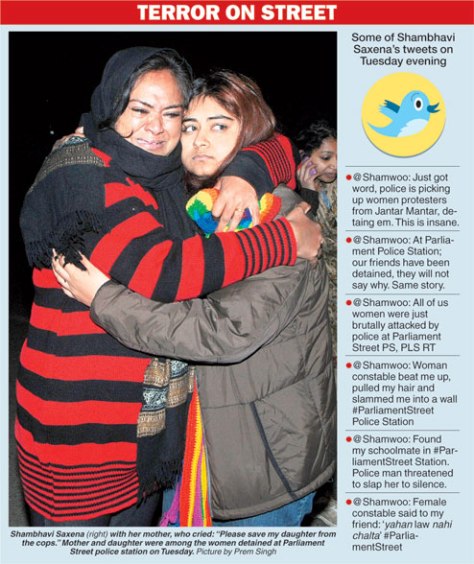
How Delhi police assaulted my daughter on 25 December: Usha Saxena

From The Telegraph

USHA SAXENA writes a letter to Delhi chief minister Sheila Dikshit:

Dear ma’am,

My daughter Shambhavi and I and a colleague of mine Reema Ganguly went to Jantar Mantar today 25th Dec to take part in a peaceful gathering there against the gang-rape.

At around 4pm two girls came running up to us in tears and said that the police had dragged away 2 of their female friends to Parliament Street Police Station and they asked us to help bring them back. The three of us joined 9 other women and we went to the police station. When we reached there we only saw male constables. We demanded to talk to a female senior officer and said that the 3 women must be released immediately. The policemen very rudely and aggressively tried to chase us out. We refused to leave without those 3 women and so one male cop ordered some female cops standing in the courtyard to come in and arrest all of us. Continue reading How Delhi police assaulted my daughter on 25 December: Usha Saxena

An ‘I Witness’ Account of Delhi Police and RAF Violence at India Gate on 23 December: Sangeeta Das

Guest post by SANGEETA DAS

[The Delhi Police has begun systematically lying about what has been happening in the past few days. We have seen spin doctoring around the unfortunate death of Constable Subhash Tomar. There has been efforts to plant generalized and unsubstantiated rumours about the presence of ‘terrorists’ amongst the crowds at India Gate. We have even seen the Chief Minister of Delhi, Shiela Dikshit and a sub divisional magistrate complain about the Delhi Police trying to interfere and influence that process of the recording of testimonies. Here is an important account by an eyewitness, Sangeeta Das, about the way the police behaved on the evening of the 23rd of December. Please note the kind of language that she says policemen were using. Can we trust the city to be safe in their hands.]

I am appalled at the lop-sided relay of events and incomplete images being telecast by some of the NEWS channels on TV, regarding the incident that happened at India Gate yesterday (this is an account of what happened on 23rd of December) at around 5:30 PM.

I was there. We were all on the other side of India Gate towards the Dhyan Chand Stadium.

I think I need to paint the correct picture for the nation. Except for CNN IBN and NEWS X, most other channels are not showing the peaceful gathering. Thus it gives out the wrong message to the nation, to the politicians, to other women that there was violence. Continue reading An ‘I Witness’ Account of Delhi Police and RAF Violence at India Gate on 23 December: Sangeeta Das

Armed Forces Special Powers Act provides impunity for rape: Warisha Farasat

Guest post by WARISHA FARASAT

The protests against the brutal gangrape of a young 23 year-old girl in Delhi have been unprecedented. Finally, it appears that the impunity with which crimes against women in our country are committed is causing outrage, and both men and women are demanding justice. What is encouraging is that although the protests were triggered by the recent incident of rape in Delhi, it has also forced us to reflect on the larger issue of impunity for rape and other crimes against women, particularly when it happens against women belonging to the marginalized communities. Moreover, it is also politicizing an entire generation of young people that are realizing that their voice can create ripples in the political establishment in Delhi.

Shuddhabrata Sengupta in his earlier post has lucidly articulated about how our response to sexual violence should not be selective, and our protests should recognise the brutality of crimes against women in the conflict areas of Kashmir, Manipur and Chhattisgarh. In Kashmir, accusations of rape have been repeatedly made against the security force personnel. It has been alleged that rape and assaults have occurred during crackdowns, cordon and search operations. During these operations the men were held for identification outside their houses, near mosques or in a common ground while the security forces searched their homes. During these search operations, safeguards such as inclusion of a women officer in the search teams were never followed. Continue reading Armed Forces Special Powers Act provides impunity for rape: Warisha Farasat

Stop Shielding Criminals in the Army and Security Forces in Assam: Bondita and Anjuman

This press release was issued on 23 December by BONDITA and ANJUMAN of WING and WSS, Guwahati

Aggravated sexual violence in Guwahati in July 2012 and gang rape in Delhi this month have led to public outrage and anger, compelling the media and the government to take serious note of the rampant sexual violence against women.  Even as the current attention on sexual violence on women raises several questions over laws, their enforcement and policing, there continues to be absolute silence and complete denial about sexual violence by the Army and the Central Armed Police Forces. It is high time to review and repeal laws and practices that promise complete impunity to the armed forces for sexual assault in counter insurgency conflict areas. Continue reading Stop Shielding Criminals in the Army and Security Forces in Assam: Bondita and Anjuman

Play Haze Kay not Honey Singh: Music from Kashmir against Rape for Delhi

“Justice to the girls who were so innocent,
Justice so our sisters can be roaming free,
Justice to Aasiya and Neelofar,
Justice to the girl from Delhi.”

– a song by HAZE KAY (Rapper from Kashmir)

Haze Kay
Haze Kay

Yesterday, we saw placards on Jantar Mantar that sought to draw linkages of solidarity between young people asking for justice for the gang-rape survivor in Delhi and those committed to the memory of the rape and murder of Neelofar and Aasiya in Shopian and many others in Kashmir.

Today, a Facebook post by Fahad Shah alerted me to a song by Haze Kay – a Kashmiri rapper that made the same linkage of solidarity, from Kashmir, to Delhi.

Here is the song. No further words are necessary. Except to say, call up radio stations in Delhi, and ask RJs to find and play Haze Kay, not Honey Singh.

LYRICS

In the memory of Aasiya and Neelofar and thousands of other girls and women who have been victimized by the crime called Rape ..

intro –

their guns and their clicks , i don’t fear all that .
when the police comes around , i don’t fear all that .
disappeared without a trace , i don’t fear all that .
cause i am from Kashmir so i don’t fear all that. Continue reading Play Haze Kay not Honey Singh: Music from Kashmir against Rape for Delhi

Misogyny, Politics and Zombiedom: From Sonia Gandhi to Botsa Satyanarayana

After Sushma Swaraj called a rape survivor a zombie – ‘Zinda Laash’,  it is now the Congress Party’s turn to field its prime misogynists and women haters. If the stalwarts of the BJP have unleased their righteous blood-lust by calling for capital punishment (which they do routinely for many things)  how can the good men and women of the Congress party allow themselves to be left behind in the competition for civilised discourse?

The Times of India has a report which I am quoting below that spells out Andhra Pradesh Congress Chief Botsa Satyanarayana’s thoughts on women’s safety.

“Andhra Pradesh Congress chief Botsa Satyanarayana on Monday opened his mouth to put his foot right in, saying women are asking for trouble if they venture out at night. Worse, he described the assault on the physiotherapy student as a “minor incident” for which party president Sonia Gandhi had reached out to agitating people. Continue reading Misogyny, Politics and Zombiedom: From Sonia Gandhi to Botsa Satyanarayana

Statement by women’s and progressive groups and individuals condemning sexual violence and opposing death penalty

On 16 December, 2012, a 23-year old woman and her friend hailed a bus at a crossing in South Delhi. In the bus, they were both brutally attacked by a group of men who claimed to be out on a ‘joy-ride’. The woman was gang raped and the man beaten up; after several hours, they were both stripped and dumped on the road. While the young woman is still in hospital, bravely battling for her life, her friend has been discharged and is helping identify the men responsible for the heinous crime.

We, the undersigned, women’s, students’ and progressive groups and concerned citizens from around the country, are outraged at this incident and, in very strong terms, condemn her gang rape and the physical and sexual assault.

As our protests spill over to the streets all across the country, our demands for justice are strengthened by knowing that there are countless others who share this anger. We assert that rape and other forms of sexual violence are not just a women’s issue, but a political one that should concern every citizen. We strongly demand that justice is done in this and all other cases and the perpetrators are punished.  Continue reading Statement by women’s and progressive groups and individuals condemning sexual violence and opposing death penalty

To the Young Women and Men of Delhi: Thinking about Rape from India Gate

Dear young women and men of Delhi,

Thank you for the courage and the honour you have brought to Rajpath, the most dishonorable street in our city. You changed Delhi yesterday, and you are changing it today. Your presence, of all twelve thousand of you, yesterday, on Rajpath, that street that climbs down from the presidential palace on Raisina Hill to India Gate, getting soiled by the excreta of the tanks and missiles on Republic Day each year, was for me a kind of purificatory ritual. It made a claim to the central vista of ‘Lutyen’s Delhi’ as a space for democratic assertion in contravention of the completely draconian, elitist and undemocratic prohibitory orders that make the heart of this republic, a zone of the death, not the life and sustenance, of democracy.

From now onwards, consider the heart of Delhi to be a space that belongs, first of all, to its citizens. Yesterday, when thousands of you gathered peacefully, intending to march up Raisina Hill to the president’s palace, you were charged with batons, tear gas and subjected to jets from water cannons. The violence began, not when protestors threw stones, but when the police started attacking people. Stones were thrown in retaliation. The television cameras that recorded what happened show us the exact chronology. The police were clearly under orders not to let people up Raisina Hill. Why? What is so sacred about Raisina Hill? Why can a group of unarmed, peaceful young people not walk to the gates of the president’s palace? So, lets be clear. Violence began when the state acted. Of course, the protest got hijacked by hooligans. But of course it had to be. When hooligans in uniform are let loose on an unarmed crowed, there can be no possibility of averting the possibility that hooligans out of uniform will respond in kind. Continue reading To the Young Women and Men of Delhi: Thinking about Rape from India Gate

A Government in Hiding

Protestors from Raisina Hill began to be forcibly removed late last night. The police action continued in the foggy cold of this December morning. Aghast at the violence on a completely peaceful gathering of students – some of them just school children – many of us too felt compelled to join the demonstrations. A number of left-wing student groups who have been part of the protests had called for collecting at the Neel Gumbaz at Nizamuddin. At 11 am, we all started collecting there – many of us older folk going there in solidarity with what has been one of the most unprecedented student-youth mobilizations in the city. Yesterday, there had been repeated rounds of  water cannons, tear-gas and brutal lathi-charge by the police of a government that has gone into hiding.

Finally, some 600-700 of us began moving in a procession from Nizamuddin to India Gate. When we reached there, we discovered that already large numbers of people had begun recongregating at ‘Rajpath’ – the Power Avenue where every January the Republic displays its military might to the world. The numbers were continuously swelling. A group of supporters of Arvind Kejriwal’s AAP – inclduing Kejriwal and other leaders – were squatting on one side, towards Hyderabad House. This was virtually on the margins of the area where the main crowds were. Apart from the group of people we had come with, there were hundreds who seemed to us to be completely unaffiliated ordinary students, contrary to some claims floating around in Facebook that these were ‘RSS crowds’. At one end a human chain had been erected and slogan shouting for justice continued. Around the Amar Jawan Jyoti, there were processsions of students still coming in. We were there till about 2 pm and there was no question of any violence at all – except for three unprovoked tear gas shells that had been lobbed by the police into the crowd. There had been some minor commotion as the police occassionally tried to push back students with a lathi charge of sorts.

By this time, however, it was apparent that the police was preparing for the offensive. Police briefings were taking place in different groups and gradually the crowd was being surrounded from all sides. And yet, till about 2.50 pm, despite twenty rounds of tear gas being fired by the police, as well as periodic lathi charges  – they did not manage to provoke violence from the crowd to justify a crackdown. But the crackdown had to take place. And lo and behold, the justifications for it materialized, suspiciously, very soon. Continue reading A Government in Hiding

Rape Cultures in India: Pratiksha Baxi

Guest post by PRATIKSHA BAXI

Delhi has tolerated intolerable forms of sexual violence on women from all backgrounds in public spaces for decades. It is a public secret that women are targetted in streets, neighbourhoods, transport and workplaces routinely. There have been countless campaigns and appeals to all agencies concerned to think of safety of women as an issue of governance, planning and prevention. However, prevention of sexual violence is not something, which features in the planning and administration of the city. It is not seen as an issue for governance that extinguishes the social, economic, and political rights of all women.

 It is a public secret that rape of women in moving vehicles is popularly seen as a sport. The sexualisation of women’s bodies accompanies the projection of cars as objects of danger and adventure. Private buses now participate in this sexualisation of moving vehicles as a site of enacting pornographic violence. In this sense, safety is not seen as a commodity that can be bought, purchased or exchanged. Men consume images of a city tolerant of intolerable violence. City planners enable rapists to execute a rape schedule. Streetlights do not work. Pavements and hoarding obstruct flight. Techniques of surveillance and policing target women’s behaviour, movement, and clothing, rather than policing what men do. The city belongs to heterosexist men after all. Continue reading Rape Cultures in India: Pratiksha Baxi

Passage of Amendments to UAPA – Further erosion of Constitutional Rights: JTSA

This release was put out today by the JAMIA TEACHERS’ SOLIDARITY ASSOCIATION

The pushing through of the amendments to Unlawful Activities Prevention Act (UAPA) in the Rajya Sabha, despite protests and calls for further discussion and deferment, indicates the consensus between Congress and BJP on the issue of civil rights. The passage of the amendments, which now bring economic offences under terrorism, and broaden the definition of person to an extent that will criminalize all forms of associations, will provide sweeping powers to the police and security agencies, and create a regime of suspicion.

False Claims of the Government:

Responding to the debate in the RS, Minister of State for Home stated that, “The Act does not give sweeping powers to the police and there are checks and balances that will prevent misuse of the Act.” He further assured the House that the law was “religion neutral” and would not target any particular community.

This is patently false. Continue reading Passage of Amendments to UAPA – Further erosion of Constitutional Rights: JTSA

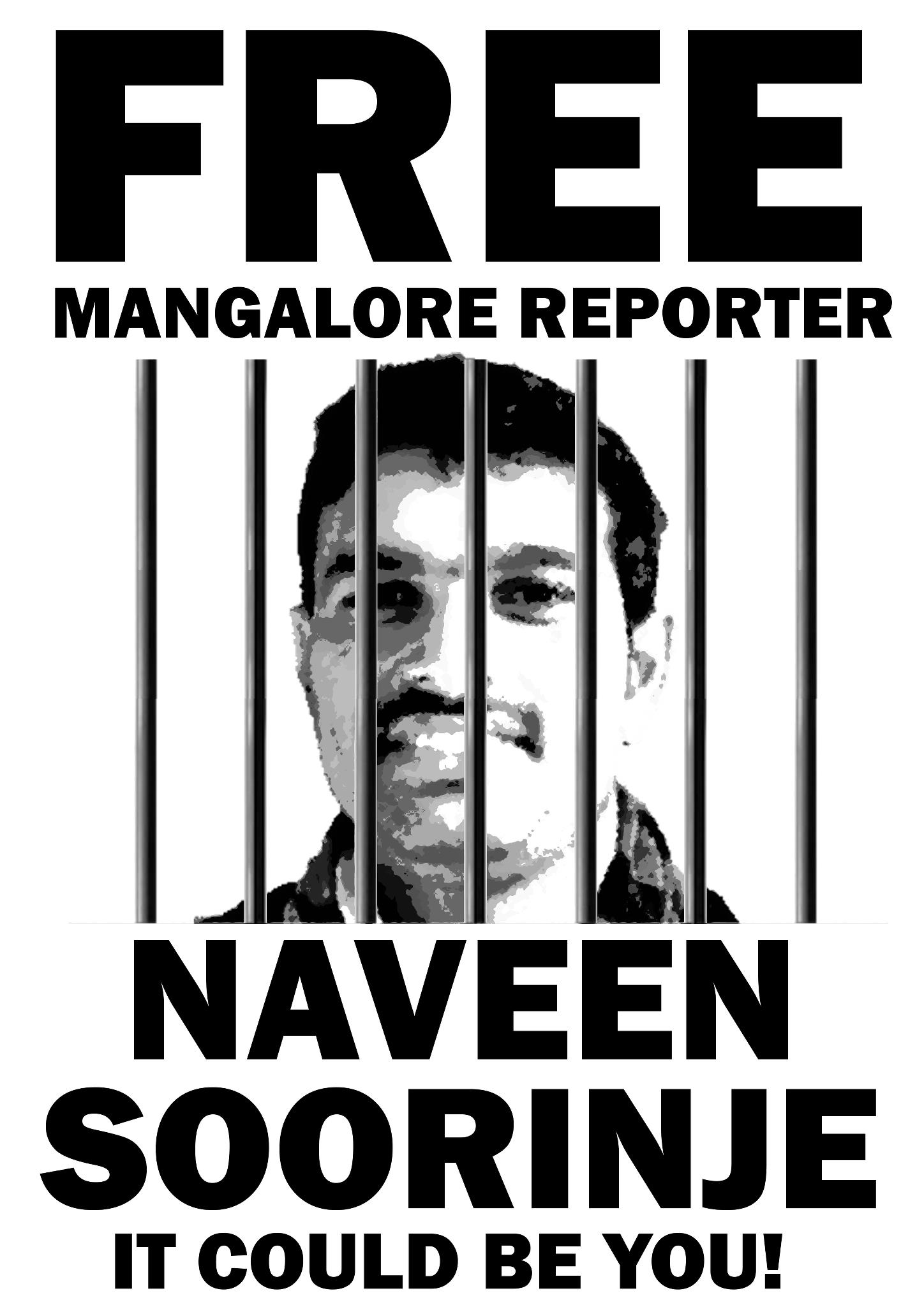
Free Naveen Soorinje

333487_10152333238225258_544394853_o

It is a matter of shame that instead of being celebrated, Naveen Soorinje, who followed journalism’s best traditions in reporting the attack by Hindutva vigilantes in Mangalore earlier this year, is now languishing in jail.

“Being South African, it felt like walking into another apartheid ambush”

The 3 Wise Men blocked by Israels Apartheid Wall

The Three Wise Men blocked by Israel’s Apartheid Wall

A delegation of South African Christian Church leaders has just returned from a one-week solidarity visit to the holy cities of Bethlehem and Jerusalem in Palestine-Israel. On their return, they released this joint statement [extracts]:

“Being South African, it felt like walking into another apartheid ambush. We witnessed violations of international law on so many levels – the multiple Israeli house demolitions, the discriminatory Israeli legal system, the daily intimidation of Palestinians by the Israeli Defence Forces, the Israeli Apartheid Wall and its associated regime of restrictions on movement and access for Palestinians, the imprisonment of a large percentage of Palestinians (including children), the ongoing confiscation of Palestinian water and land, the closure of previously bustling Palestinian streets and businesses, separate pavements for Israelis and Palestinians…”

Continue reading “Being South African, it felt like walking into another apartheid ambush”

A song for snow: Arif Ayaz Parrey

Guest post by ARIF AYAZ PARREY

The beloved is like snow after a chilly wind. The beloved is a bright sun after snowfall. The lover is like the cinders in a kãger that refuse to die. The lover is the immortal heat of ashes.

     In the 2008 Hindi movie Oye Lucky! Lucky Oye! the playing out of virtues of theft in a world of (corrupt) systems is not the only delicious element. As a matter of fact, even more lovable is the song Tu raja ki raj dulari which echoes Shiv’s plea to Parvati after she has hopelessly fallen in love with him, and chosen a path of austerity competing with his asceticism. Tu raja ki raj dulari mein sirf langoti aala sun, bhaang ragd ke piya karoun mein kunde sote aala sun.  He tells her. “You are a king’s royal darling, I possess only a loincloth (Will tiger-cloth be a more helpful description here?), I drink ashes which I grind on a pistil and mortar.” Now there are several ways of looking at this parable. At the surface, and then again at its very core, it is a narration of one of the major themes of storytelling: An independent, beautiful and strong woman poignantly falling for a clumsy, reclusive and basically loser-type man, against better advice and to much heart-ache all around. But this characterisation holds only at the surface, the patriarchy of this theme works through the neat device of depth, the woman is strong, but only on the outside, quite literally when you know that Parvati once shed her outer mantle which became a powerful warrior-goddess in its own right, but in depth and beyond the obvious, she is a woman after all, while the man, clumsy, reclusive, scrawny on the surface, has an inner strength which can gulp Halahal (funnily enough called zahr-e-Hilal or ‘poison of the crescent-moon’ in Kashmiri) without much ado or do the Tandav when he feels like it. Continue reading A song for snow: Arif Ayaz Parrey

An open letter to the President of India: G. Ananthapadmanabhan

Sri Pranab Mukherjee
President of India
Rashtrapati Bhavan
New Delhi – 110 004.
India

12 December 2012

Subject: Open letter regarding the resumption of executions in India

Dear President,

I am writing on behalf of Amnesty International regarding the recent resumption of executions in India after eight years, to urge the Indian authorities to immediately establish a moratorium on executions with a view to abolishing the death penalty. Continue reading An open letter to the President of India: G. Ananthapadmanabhan

Free the innocent undertrials and Jharkhand’s jails won’t be overcrowded: Stan Swamy

Guest post by STAN SWAMY

A Controller and Auditor General (CAG) report tabled recently in Jharkhand  Assembly says most of Jharkhand  jails are housing prisoners beyond their capacity by the end of 2010. Significantly, the most crowded jails are in Garwa, Latehar and Simdega districts where anti-naxalite operations by police and para-military forces are on. The basic question to ask is: are Jharkhandi adivasis & moolvasis increasingly taking to crimes or is the society labeling them criminals.
There are three basis on which young rural adivasi men & women are arrested: Continue reading Free the innocent undertrials and Jharkhand’s jails won’t be overcrowded: Stan Swamy

अकोट में साम्‍प्रदायिक हिंसा: एक पूर्व नियोजित साजिश

Guest post by Sharad Jaiswal, Amir Ajani and others

DSC0036223 नवम्‍बर, वर्धा से गये एक जांचदल, जिसमें महात्‍मा गांधी अंतरराष्‍ट्रीय हिंदी विश्‍वविद्यालय के अध्‍यापक, छात्र, वर्धा के सामाजिक कार्यकर्ता और पत्रकार सम्मिलित थे, ने अकोट (जिला अकोला) का दौरा किया। पिछले 23 अक्‍टूबर को अकोट ताल्‍लुका में साम्‍प्रदायिक हिंसा की घटना हुई थी जिसमें 4 लोग मारे गये थे एवं कई लोग घायल हुए थे। मुस्लिम समुदाय के 22 घरों को आग के हवाले कर दिया गया था और लगभग 25 दुकानों को जलाया गया था। मरने वालों में सभी निम्‍नमध्‍यवर्गीय पृष्‍ठभूमि से थे।

साम्‍प्रदायिक हिंसा की पृष्‍ठभूमि :

साम्‍प्रदायिक हिंसा की पृष्‍ठभूमि 19 अक्‍टूबर को तैयार की जाती है। पूरे अकोट ताल्‍लुके में 65 मंडल देवी के लगाये गये थे। प्रत्‍येक मंडल का संबंध किसी न किसी जातीय समाज से रहता है। मसलन माली समाज, कुनबी समाज, धोबी समाज आदि। धोबी और भोई समाज के एक मंडल, जिसके कर्ताधर्ता बजरंग दल, शिवसेना, विश्‍व हिंदू परिषद के लोग थे, के पास से निकलते हुए एक मुस्लिम बच्‍चे ने गलती से वहाँ पर थूक दिया। उसके साथ उसका हमउम्र दोस्‍त भी था। उसका थूक देवी की प्रतिमा को छुआ तक नहीं लेकिन पर्दे पर उसके कुछ छींटे जरूर पड़े। उस बच्‍चे को मंडल के लोगों ने पकड़ लिया और उसकी पिटाई करने के बाद वहीं पर बैठा लिया। इतनी देर में जब कुछ शोर-शराबा हुआ तो लोगों की भीड़ वहाँ पर एकत्र हुई और मामले को समझने के लिए शोएब नाम का व्‍यक्ति भी वहाँ पर पहुँचा और उसने कुछ हस्‍तक्षेप भी किया और मंडल के लोगों को समझाने की भी कोशिश की। उसने बच्‍चे की उम्र का भी हवाला दिया। बच्‍चे की उम्र 7-8 साल की थी। मंडल के लोगों की तरफ से यह भी कहा गया कि आज ये देवी की प्रतिमा पर थूक रहे हैं कल हमारे मुँह पर थूकेंगे। बहरहाल शोएब ने किसी तरह से मामले को शांत कराया और बच्‍चे को मंडल के लोगों से मुक्‍त कराया। इस घटना की चर्चा लगभग आधे घण्‍टे के बाद आस-पास के इलाके में फैल चुकी थी। एजाज नामक टेलर जिसकी घटना स्‍थल से कुछ दूर पर ही दुकान थी मंडल के लोगों के पास आया और उसने जानना चाहा कि मामला क्‍या है और उसके बाद वह भी लौटकर अपनी दुकान पर वापस आ गया। Continue reading अकोट में साम्‍प्रदायिक हिंसा: एक पूर्व नियोजित साजिश

Full report: Alleged Perpetrators – Stories of Impunity in Jammu & Kashmir

Given below is a report put out this morning by the Srinagar-based INTERNATIONAL PEOPLES’ TRIBUNAL ON HUMAN RIGHTS AND JUSTICE IN INDIAN-ADMINISTERED KASHMIR [IPTK] and ASSOCIATION OF PARENTS OF DISAPPEARED PERSONS [APDP].

Given below is a press release and the executive summary of the report.

Continue reading Full report: Alleged Perpetrators – Stories of Impunity in Jammu & Kashmir

Can we solve Siachen without solving the Jammu and Kashmir dispute?

Myra MacDonald with Pakistani Army officers in the Gyari sector in 2004

Myra MacDonald is a London-based journalist with Reuters and a long-time observer of South Asia. She tracks the turning points in Pakistan politics at the Pakistan: Now or Never. MacDonald is best known for her book on the Siachen conflict, Heights of Madness: One Woman’s Journey in Pursuit of a Secret War. Published in 2007, the research for the book took her to both sides of the conflict, on helicopter and on ground. She was bureau chief of Reuters in India in 2000-2003. She then took leave-of-absence to research the Siachen conflict, becoming one of the very few people to visit the war zone on both the Indian and Pakistani sides. She has given presentations on Siachen to the Royal Military Academy Sandhurst and to the International Institute for Strategic Studies in London. Amidst alarmist rumours that track-two parleys between India and Pakistan are urging India to ‘give up Siachen’, MacDonald tells Shivam Vij in an e-mail interview why resolving Siachen without resolving the Jammu and Kashmir dispute may not be easy.

Q1) The idea of demilitarising Siachen is being seen by some in India as a demand to hand Siachen over to Pakistan, or at the very least, to ‘lose’ the territory for which Indian soldiers have made great sacrifices. Do you agree with such an interpretation of demilitarising the glacier? Do you think India has real strategic advantage with its occupation of the glacier? Continue reading Can we solve Siachen without solving the Jammu and Kashmir dispute?