Nellie, Me and Impunity: Uddipana Goswami

This is a guest post by Uddipana Goswami

I was born around the time the Assam Movement started and grew up in an atmosphere of intense xenophobia. Everywhere, we heard anti-Bangladeshi slogans – which often translated into expressions of anti-Bengali sentiments. Our parents tried their best at home to protect us from such influences. We were sent to convent schools which often isolated us from whatever was going on outside the school walls. But we felt the tensions in the air and tasted the fear. We heard the names of places and people, killed, maimed, tortured.

Nellie was one such name we grew up with. There were others – Dhula, Gohpur, Phulung Sapori – where other genocides happened, but the name Nellie stayed with me. It fascinated me and brought to my mind the image of a distraught woman. Many years later, when I started researching the Muslim community of East Bengali origin in Assam, this amorphous image of Nellie started taking a definite shape. And it translated into a poem one day – ‘If Nellie Was the Name of the Woman’ (Northeast Review).

As I wrote the poem, I realized that I could myself be Nellie, a woman, battered, bruised and abused because of my ‘otherness’, because I could – and would – not sacrifice my ‘otherness’ in my quest for oneness within the institution of marriage.

Continue reading Nellie, Me and Impunity: Uddipana Goswami

Women – rights-bearers, economic assets, or stranded starfish? Uma Narayan

This is a review by UMA NARAYAN of the book Half the sky: Turning Oppression into Opportunity for Women Worldwide by Nicholas D. Kristof and Shirley WuDunn (2010). This review was first published in Perspectives on Politics, Vol. 8, No. 1, March 2010.

Why are we republishing a three year old review? The book has since then become a “movement” with celebrity advocates and a Facebook game that was launched this year. While being widely celebrated across the media in the US, it is also being sharply attacked for its “your women are oppressed, but ours are awesome” rhetoric. 

8065751089_c4fd818f4e

Asks Sayantani Dasgupta in her blog post from which the image above is taken:

For example, would Kristof, a middle-aged male reporter, so blithely ask a 14-year-old U.S. rape survivor to describe her experiences in front of cameras, her family, and other onlookers? Continue reading Women – rights-bearers, economic assets, or stranded starfish? Uma Narayan

No Time for Grieving – Or Why We Should Talk Some More About Kai Po Che: Debashree Mukherjee

Guest post by DEBASHREE MUKHERJEE

Okay, so the popular consensus is that Kai Po Che is a good film. Everyone agrees that it’s well shot and edited, the relatively unknown heroes are excellent, and the narrative is taut and emotionally resonant. It is competent and follows all the right cues worthy of a buddy movie about growing up and testing loyalties. But the film is hardly an event. It has been seized upon as a significant cinematic landmark for its depiction of the Gujarat pogrom of 2002. It might be worth our while to get some perspective here.

Today I will look at some other questions about our collective liberal attitude to this film, and what it indicates about our memory of select incidents of mass violence in this country. The main question to ponder is whether there is something dangerous about a historically-contextualized cultural product that can be coopted by a range of political perspectives? Is there something objectionable about a film (and the emotions it generates) which is deliberately toothless in the face of power? Over the last few weeks we have witnessed a range of informed cultural commentators  protest that critics of the film are making much to-do about what is in fact the first “realistic” and engaging Bollywood depiction of the Gujarat massacre. This post rejects that opinion and appeals for responsible film criticism and an alert, active mode of spectatorship.

Continue reading No Time for Grieving – Or Why We Should Talk Some More About Kai Po Che: Debashree Mukherjee

Aadhar/UID is Against Equality and Democracy: Moiz Tundawala

Guest Post by Moiz Tundawala

After the suppression of the 1857 Mutiny and the British take over of Delhi, Mirza Ghalib was once asked by a military official whether he were Muslim or not. Ghalib is said to have quipped: “Only half Muslim; I drink wine but refrain from swine.” For me, this ripost evinces a flippant disdain for modern forms of rule which essentialize persons and groups purely based on certain attributes which are deemed definitive and prioritized over others. As far as Ghalib’s case was concerned, the idea may have been to find out based on his religious identity if at all he could pose problems for the newly established colonial regime. In later years, this policy, which African intellectual Mahmood Mamdani has recently termed ‘define and rule’, gradually became integral to governmental practices in most parts of the modern world; today, populations are ever so readily classified and enumerated based on empirically observable characteristics in order to make them amenable to effective government. The Aadhaar project of the Unique Identification Authority of India clearly falls within the gamut of such practices, marking a transition to modernity in a radical break from the past. So my reservations with it are just the same as those with any other modernity inspired programme wherein personal and collective identities are reduced to a somewhat arbitrarily determined bare essence which may have no real connection with lived experiences of fuzzy and contextually constructed identities.

Continue reading Aadhar/UID is Against Equality and Democracy: Moiz Tundawala

A Political Hanging: Nirmalangshu Mukherji

Guest Post by Nirmalangshu Mukherji

Since the secret hanging and burial of Afzal Guru in Tihar jail, many writers have justly condemned the manner in which the government conducted the execution . However, once the state decides to hang a person, the issue of whether the killing took place in a ‘transparent’ and ‘dignified’ manner is a largely aesthetic one. The process that initiated the killing continues to be of primary epistemic concern.

No doubt the manner and timing of the hanging clearly indicates that the government had ulterior political motives in mind. Yet, these motives are better understood in terms of the political considerations that guided the case of Afzal Guru from his arrest to the rejection of his mercy petition. His hanging within a few days of the presidential rejection was just the inevitable culmination of this political process.

Continue reading A Political Hanging: Nirmalangshu Mukherji

Carpets and kebabs in Isfahan: Marryam H Reshii

Guest post by MARRYAM H RESHII

iran67

I could write a book about my week in Iran, but will restrict myself to captioning these photographs I took.

The only two cities I visited were Mashad and Isfahan. Mashad is famous for two things. The shrine of the Eighth Imam of the Shia sect of Islam, Imam Reza, the only one out of all twelve Imams to actually be buried in Iran (all the others are buried in Saudi Arabia and Iraq) and saffron that grows far, far more plentifully than it does in Kashmir.

Mashad sells carpets woven/produced elsewhere. While the large carpets are traditionally Iranian, the small ones in frames are too suspiciously perfect to be made with human hand. Most of them have a plethora of shades of white in them, making the weaver something of a genius! Continue reading Carpets and kebabs in Isfahan: Marryam H Reshii

Modi and me: Sharad Mathur

This is a guest post by SHARAD MATHUR

1999

In the summer of 1999, practising our family tradition, we were availing a government LTC that my father was entitled to, being a senior central government officer.  Since we could travel by air, we decided to take a trip to Darjeeling, while halting at Allahabad, Varanasi, Lucknow, and Calcutta for some sight-seeing. Those were the days when flying was an experience for most Indians; yet the emotional memory of this trip did not record much of the excitement induced by flying, but took vivid account of disappointment – with a chance conversation and of missing another.

It was on our flight from Lucknow to Calcutta, I was sitting with my younger brother while my parents were sitting together in a row behind us. I was on the window seat and was too occupied with the process of luggage sliding inside the plane, to notice two gentlemen who came and sat next to my parents and my brother respectively. My gawking was however interrupted by my father excitedly introducing me to one Devi Singh ji, who I was told happened to be Personal Assistant to Shri Bhairon Singh Shekhawat. Being a big BJP enthusiast, partly because of their mesmerizingly bright coloured flags, I looked up to this BJP heavyweight and was elated to meet his personal assistant. My excitement was doubled when Devi Singh ji introduced us to a gentleman sitting next to my brother, on the aisle seat, as Modi ji who was accompanying Bhairon Singh ji to the Bihar convention of BJP. However, this excitement remained short lived.

Continue reading Modi and me: Sharad Mathur

Myths and Facts About the Criminal Law (Amendment) Bill, 2013

This document has been put together by the group pursuing advocacy related to CLRB 2013, in Delhi. It addresses several myths about the new Criminal Law Amendment Bill that are circulating in the media. The note also explains the one change feminists  continue to push for and did not get – to make the victim of rape a person, that is to say, gender neutral. The new law must be expanded to protect all persons, and not be limited to women – because all persons/ anyone can be raped.

The Justice Verma Committee (JVC) report was a landmark statement, applauded by all citizens, welcomed by all Political Parties. JVC was significant because it showed a mirror to the Constitution of India, and reflected its wise and just guarantees of women’s equality. Today the women and youth of India are looking with hope and expectation towards Parliament, and towards all Political Parties. We urge all Members of Parliament to pass a law upholding the spirit and letter of the Justice Verma Committee; to pass a law that makes a step forward in our collective struggle to end sexual violence in India.

Myth 1: The Criminal Law (Amendment) Bill 2013 is against men

Fact: The new anti-sexual violence Bill is NOT against men. For our fathers, brothers, husbands, partners, neighbours and colleagues are men too. Are these Men in our lives not committed to seeking an end to the constant threat of sexual violence lurking around every corner? Continue reading Myths and Facts About the Criminal Law (Amendment) Bill, 2013

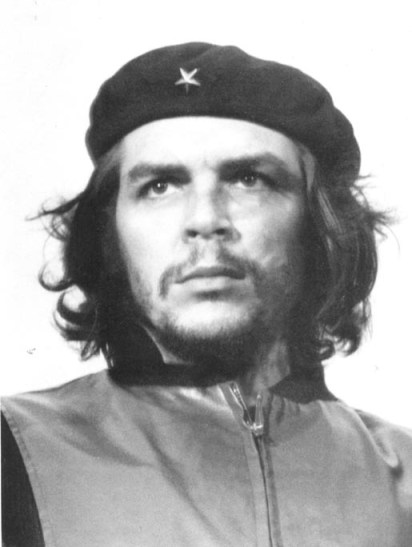
चे का चेहरा: ओम थानवी

ओम थानवी का यह लेख जनसत्ता अखबार में 23 सितंबर 2007 को प्रकाशित हुआ था। ओम थानवी जनसत्ता के संपादक हैं।

che-gu-22

वह तस्वीर चे ने खुद कभी नहीं देखी। उस तस्वीर से उसके छविकार ने कभी एक पैसा नहीं कमाया। मगर दुनिया के हर कोने में आज वह छवि मौजूद है। विद्रोह और क्रांति के एक सशक्त प्रतीक के रूप में। ‘टाइम’ पत्रिका द्वारा चे गेवारा को पिछली सदी की सौ हस्तियों में शरीक करने से बहुत पहले वह छवि दुनिया में सबसे ज्यादा छपी तस्वीर घोषित हो गई थी। Continue reading चे का चेहरा: ओम थानवी

When rape survivor becomes victim: Sherin B.S.

SHERIN B.S. writes from Hyderabad: There is a constant demand for a change in the terminology from ‘rape victim’ to ‘rape survivor’ in the agenda of feminist concerns in discourses related to rape. But beyond the feminist investment on surviving rape, a systematic reading of public discourses presents the traumatic sustenance of layers of violence that follows rape. The Suryanelli girl has survived rape, but the violent experience of life after rape perpetrated by systemic structures of patriarchy places her at the receiving end of a system that consciously alienates, humiliates and hunts her down.

While referring to the Suryanelli rape case there are two kinds of discourses circulated widely. One is the question of legality of the crime involved, with a heavily prejudiced and unsympathetic legal frame work attempting to frame the girl as an eternal victim subject for whom justice is almost impossible, mediated through parallel machinery of the state, including law enforcement. The impossibility of justice is not the intention of the legal machinery but it comes through the operating forces of judgments, prosecution stands, law enforcing offices like police stations and officers, and questions of evidence, alibis and so on. Continue reading When rape survivor becomes victim: Sherin B.S.

Pakistan ka Jugraafiya: Kyunki Patras

This guest post by KYUNKI PATRAS is in Roman Urdu.
KYUNKI PATRAS ka yeh mazmoon Roman Urdu mein hain.

Pakistan samundr-e-kufr mein aik roshan jazeera hai. Continue reading Pakistan ka Jugraafiya: Kyunki Patras

An undivided history of Punjab’s Partition: Ajay Bharadwaj

This is a book review by AJAY BHARADWAJ of an authoritative new book on the Punjab’s Partition by Prof Ishtiaq Ahmed. If you have any questions about the book or about the Partition in general, please leave them in the comments section and we will soon put them to Prof Ahmed.

images
The Punjab Bloodied, Partitioned and Cleansed
By Ishtiaq Ahmed
Rupa Publishers, Delhi; 2011, 754 pp., Rs 995

Ishtiaq Ahmed claims that his work is “the first holistic and comprehensive case study of the partition of Punjab” (p.xlv); he has lived up to it admirably.  A study of rigorous scholarship, with painstaking fieldwork on both sides of the divide, The Punjab Bloodied, Partitioned and Cleansed’ offers unbiased insights into a minefield called the Partition of Punjab. As the title itself suggests, the book delves deep into the most difficult aspect of Partition history which has come to define it — the scale and magnitude of the killings at that juncture.

The primary sources that Ahmed has accessed in his endeavour are equally interesting for a number of reasons. While the historian draws extensively from the classified fortnightly reports (FRs) of the Punjab governors and chief secretaries to the viceroys, he simultaneously pays heed to oral history or the personal narratives of individuals — “witness to or victim of traumatic events” — that he has recorded over a decade and a half. The coming together of the two strands creates an intricate web of high politics and everyday life, which contributes to a layered, richly detailed and immensely moving account of the partition of Punjab — leaving a permanent imprint on the mind of the reader. Continue reading An undivided history of Punjab’s Partition: Ajay Bharadwaj

Dhinkia and Govindpur Mothers go Naked to Protest against Forcible Land Acquisition for POSCO: Minati Dash

Guest post by MINATI DASH

On 7th March 2013, at least two mothers of Dhinkia and Govindpur (Patna village in this panchayat) villages in Jagatsinghpur went naked before the paramilitary station in Mangalpada near Govindpur village. In a rally led by mothers, hundreds of women and children went to the temporary paramilitary station that has more than 5 platoons of forces at the moment. While taking off their clothes, they constantly shouted, ‘why have you come here?, what do you want to see?’.

What must be the extent of desperation and provocation that our mothers decide to become naked before outside men?  In such a site (Eastern Odisha), where women bodies are constructed dominantly as private objects to hide, what does it mean to dare to bare? It is important to read this shocking act as an act of mediation of their political voices. It is in a desperate bid to express their furore, frustration & anger over intrusive presence of police & paramilitary in the area that they bared their bodies to shame them.

But shockingly, instead of recoiling with shame in response to such an act, the paramilitary chose to strike physically. They did not spare even these protesting women and brutally lathicharged them. Continue reading Dhinkia and Govindpur Mothers go Naked to Protest against Forcible Land Acquisition for POSCO: Minati Dash

Ilyas Masih wants to stay in the dustbin: Saad Sarfraz Sheikh

This slideshow requires JavaScript.

SAAD SARFRAZ SHEIKH sends us this photo essay from Lahore: On 9th March, 2013, I saw an entire neighborhood burn right in front of my eyes. All I could do was watch, as the houses fell and their residents watched in vain.

And now, there are burnt teddy bears and dolls, broken doors and melted buckets stuck on the floor. It seems I am on fire.

Nasreen’s defunct washing machine is now as black as the night. Her child sits on it and weeps. Like a surgeon, she salvages the motor and tells me that it could still work. But her microwave, she tells me, is a painful puddle on the floor. Continue reading Ilyas Masih wants to stay in the dustbin: Saad Sarfraz Sheikh

Sahibs, Pandits and the Scholarship on Caste: Manish Thakur and Nabanipa Bhattacharjee

Guest post by MANISH THAKUR and NABANIPA BHATTACHARJEE

Scholarship on caste has always been much more than merely about caste. At stake has been the very idea of India, and the production of knowledge about it. Expectedly, whenever academic knowledge on caste spills over in the public domain (and it does so often, as in the recent Ashis Nandy case), politically charged contestations about the idea of India inevitably follow. In the academy, the privileging of Brahmanical worldview in sociological discourses on India continues to be a source of deep-seated resentment. ‘Indian Critiques of Louis Dumont’s Contributions’ (Khare 2006) notwithstanding, the figure of ‘the learned Brahman’ (Alamgir 2006) looms large in the voluminous corpus of anthropological knowledge about India. So much so that Richard Burghart(1990) views modern anthropological knowledge primarily as a function of multiple dialogues between modern day anthropologists and the Brahmanical tradition of knowledge.

Continue reading Sahibs, Pandits and the Scholarship on Caste: Manish Thakur and Nabanipa Bhattacharjee

Crude Questions about Crude Bombs: Biju Mathew

This is a guest post by BIJU MATHEW

Tarun Mandal, Narahari Sahu and Manas Jena are dead, blown up by what the media has described as a “crude” bomb. All bombs are crude. They kill. They are meant to destroy flesh and bone. They are aimed at sucking out life. Lakshman Mandal battles for his life in a Cuttack hospital. He knows how crude a bomb is. Hopefully he will live to tell the tale of its crudeness.

This is a partisan piece. But it aims to produce balance. Almost all media reports so far have had a strong spin that the three – Narahari, Tarun and Manas – were killed while making a crude bomb. So says Mr. Satyabrata Bhoi, Jagatsinghpur SP. Nobody has bothered to ask him any further questions. It’s quite understandable. Asking any more questions might make the entire spin untenable. For instance, they could have asked: why is it that something illegal, such as crude bomb making, was being done out in the open and not within the confines of a house? Especially given that for the last month, the police have been constantly in and out of the village? Especially because there are at least a few dozen pro-POSCO folks in the village? Why would three leaders of an oppositional movement sit outside on the porch of a house that is fully identified with POSCO Pratirodh Sangran Samiti (PPSS) and make bombs – openly, for all to see – at 6.30 PM when there is enough light for anybody to see them? Isn’t crude bomb making normally confined to the indoors? How many incidents do we know of where crude bomb making was happening outside in broad daylight? Isn’t the RSS, the most famous outfit that makes crude bombs and occasionally manages to blow up its own, always known to make its bombs indoors? Continue reading Crude Questions about Crude Bombs: Biju Mathew

The Jamaat factor in Bangladesh politics: Jyoti Rehman

jamaat-train
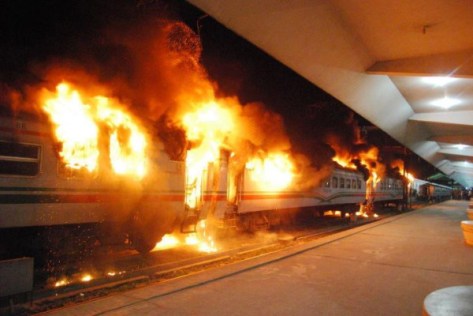
A train in Bangladesh set on fire by activists of the Jamaat-e-Islami Bangladesh

This is a guest post by Bangladeshi commentator JYOTI REHMAN: Delwar Hossain Sayedee, an Islamic preacher and a senior leader of Jamaat-e-Islami Bangladesh, the country’s largest Islam-pasand party, was sentenced to death on 28 February for war crimes committed during the 1971 Liberation War. Within hours, Jamaat cadres and activists clashed violently with police and law enforcement agencies. Scores have been killed in some of the worst political violence the country has experienced in recent years.

Five other senior Jamaat leaders, including its current and former chiefs, are being prosecuted for war crimes committed in 1971. Another leader was sentenced to life imprisonment on 5 February. That sentence triggered what has come to be called the Shahbag Awakening—a month of largely peaceful gathering of tens of thousands of people in the middle of Dhaka. A key demand of the largely government-supported Awakening is to ban Jamaat. Continue reading The Jamaat factor in Bangladesh politics: Jyoti Rehman

Why was Ram Singh killed in Tihar jail?

The chief accused in the Delhi gang rape “found dead” in his cell? Killed with his own shirt? Hanging from a grill, with his three cell mates sound asleep all the while? The moment I heard the news  on Monday, every conspiracy theory-oriented cell in my body did a quick cartwheel. Promptly I sent out a mail to the sisterhood on the Feminists India e-list:

I’m wondering whether there is something more than police negligence involved here. I have always felt that the role of the police on that night was more than simply their usual laparwahi – that bus may have been used often in the past for such activities, remember they didn’t follow up the complaint of the man who had been earlier that night robbed by the same guys? And how they located the bus from their hafta diaries? I’m wondering – and going to sound paranoid and like a loony conspiracy theorist – whether the key accused in court would have revealed more about police complicity in rapes and other activities on buses like Yadav’s than we imagine. Prisoners in jail often carry out attacks on other prisoners on the orders of the police themselves.

Yes, Indian prisons are violent and brutal, and the police callous and vicious. Yes, there should be an enquiry to assign responsibility. But I’m pretty certain I know who killed Ram Singh – some other prisoners. And I think that they did it on orders from the police. Continue reading Why was Ram Singh killed in Tihar jail?

A Curfew in Spring: Rich Autumns

1-rich-autumns2
Photograph by Rich Autumns

RICH AUTUMNS writes from Srinagar: The capital of Kashmir is under tight curfew. Tight does not qualify curfew. It qualifies Srinagar. Srinagar is tight under curfew. The city has stopped breathing. It is an enforced exercise that the Valley undergoes regularly for the sake of law and order. On the deserted streets of Srinagar, Indian Army men stand in army issued jackets nursing rifles under the fresh green leaves of the Chinar. Occasionally a milk man cycles by. Sometimes, he is stopped and turned back. Sometimes he is allowed to pass, after an identity check. Continue reading A Curfew in Spring: Rich Autumns

Pot calling the dynasty black: Ajaz Ashraf

gandhi-family

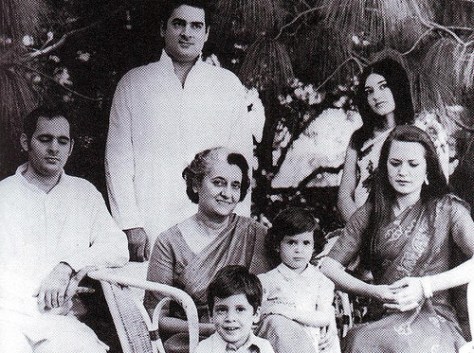
AJAZ ASHRAF writes: It is time we examined the society we have created before we invoke the rather trite argument of dynastic rule to stridently criticise the Gandhis and the Congress. No doubt, dynasty is antithetical to democratic politics. Yet, it is also true that dynastic succession is the norm outside the Indian political realm as well. Its sheer pervasiveness explains why people dismiss outright the hypocritical media outcry against dynastic succession to routinely vote pater familias to power, in state as well at the Centre. Continue reading Pot calling the dynasty black: Ajaz Ashraf

राज्‍य हिंसा का एक और नमूना – धुले

(An edited version of this Fact-Finding Report appeared in February issue of Samayantar)

गुजरात और मध्यप्रदेश की सीमा से लगे हुए महाराष्ट्र के धुले जिले में 6 जनवरी को होटल में पैसे के लेन-देन के आपसी विवाद को लेकर शुरू हुआ झगड़ा जल्द ही हिन्दू एवं मुस्लिम समुदाय के बीच पत्थर बाजी में तब्दील हो गया। इस हिंसा की परिणति पुलिस की गोली से मारे गए छः मुस्लिम नौजवानों (1) इमरान अली कमर अली (25) (2) असीम शेख नासिर  (21) (3) सउद अहमद रईस पटेल (18) (4) हाफिज मो. आसीफ अब्दुल हलीम (22) (5) रिजवान हसन शाह (24) (6) युनुस अब्बास शाह (20) के रूप में हुई। लगभग 55 मुस्लिम नौजवानों, जिनमें से लगभग 40कोगोली लगी, पुलिस की हिंसा के शिकार हुए। 58ऐसे लोग हैं जिनके घर,वाहन, दुकान, ठेलागाड़ी को क्षतिग्रस्त किया गया। धुले में हुई इस साम्प्रदायिक हिंसा की खासियत यह है कि न तो पुलिस और न ही कोई साम्प्रदायिक संगठन झूठ बोल सकता है, क्योंकि धुले में लगभग 3 बजे के आसपास जब विवाद ने पत्थरबाजी का रूप ले लिया तब उसके बाद के ज्यादातर फुटेज वीडियोक्लिपिंग अथवा फोटोग्राफ के रूप में मौजूद हैं। धुले में हुई इस हिंसा की हकीकत जानने के लिए वर्धा के हिंदी विश्‍वविद्यालय के अध्‍यापक, छात्र, सामाजिक कार्यकर्ता एवं पुणे के स्‍वतंत्र पत्रकार ने 19-20 जनवरी को धुले जिले का दौरा किया। Continue reading राज्‍य हिंसा का एक और नमूना – धुले

DISSENT, DEBATE, CREATE