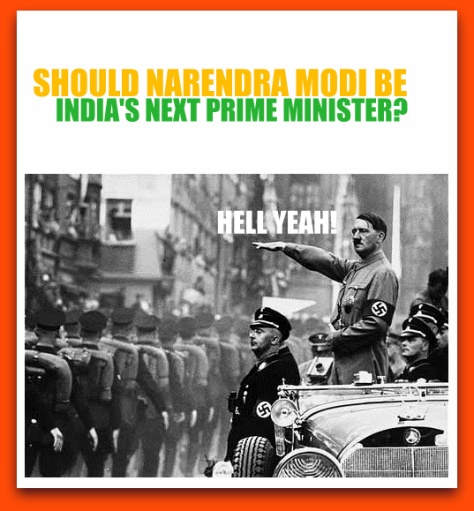
Sheela Bhatt writes: Continue reading Should Narendra Modi be India’s next Prime Minister?

Sheela Bhatt writes: Continue reading Should Narendra Modi be India’s next Prime Minister?
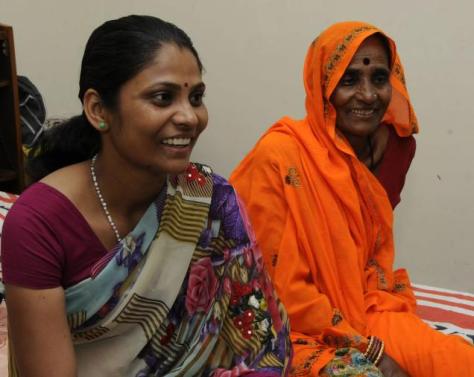
Bhanwari Devi (right) with her daughter Rameshwari, in Mangalore
This is a guest post by LAXMI MURTHY: “Only justice can fill my belly, not awards,” says Bhanwari Devi in response to a question from the audience about whether or not she had been recognised by international awards. She was speaking at a meeting organised by the Alternative Law Forum, Bangalore. The previous day, along with other leaders, Bhanwari had roused a massive rally in Mangalore with her fiery calls for solidarity and action against violence against women. The Mangalore March 8th program itself was phenomenal, from all accounts The unprecedented coalition of women’s and progressive groups (almost a hundred groups) to raise a voice against the saffronization of Karnataka’s coastal belt and increasing attacks on women, has been the outcome of dedicated work by the Forum Against Atrocities on Women (the Mahila Dourjnya Virodi Vedike, Karnataka). With delicious irony, Bhanwari, Urmila Pawar and other invited activists were accommodated at “Morning Mist’, the homestay that was ransacked by right-wing goons who broke up a private celebration there last June. That none of the events, which saw the mobilization of more than 5000 women, made it to even the Bangalore editions of the dailies (can’t even dream of the national media bothering!) is a matter of dismay, but won’t go into that right now. Continue reading The Irony of Iconhood – The life and times of Bhanwari Devi: Laxmi Murthy
A few weeks ago, I mentioned on Kafila a certain gentleman who delivered a memorable address in Government Women’s College, Thiruvananthapuram, which contained sage advice on how to bring under control the unruly bodies of ungovernable women. After that I have been receiving unsigned letters from his admirers who feel that their innocent hero has been most unfairly criticized. Like the grumpy ground-lubber types who are either incapable of ascending or simply unable to climb coconut trees and do not appreciate the free services rendered by the chivalrous heroes high above, I have erred in judgment, they claim. Continue reading Class Feminism vs. Classy Feminism … Or, Everybody Loves the Governable Woman!
When you hear “international school” you may imagine any number of a range of things – let me tell you right off, though, that we aren’t talking top range international school here. As far as school infrastructure goes, my former place of work is a damned sight better than any of the schools the 90% go to in our country, but as far as international schools go, mine lay in the majority of them that are just coming up in the country, especially in Mumbai. The sort that’s less than ten years old and an educational disaster zone of its own kind.
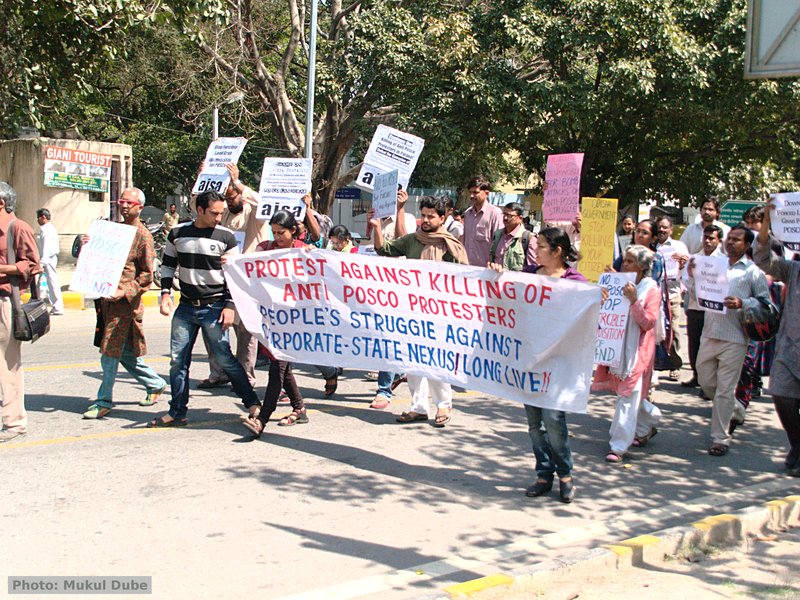
Press release put out on 6 March by AMNESTY INTERNATIONAL: A wave of violent attacks against Bangladesh’s minority Hindu community shows the urgent need for authorities to provide them with better protection, Amnesty International said.
Over the past week, individuals taking part in strikes called for by Islamic parties have vandalised more than 40 Hindu temples across Bangladesh.
Scores of shops and houses belonging to the Hindu community have also been burned down, leaving hundreds of people homeless. Continue reading Wave of violent attacks against Hindus in Bangladesh: Amnesty International
Guest Post by Vrinda Marwah
On 6th March, in the run up to International Women’s Day, I was involved in two panel discussions on women’s rights, both adrenalin-raising but for entirely different reasons. As someone who has been working in feminist organisations, and who, like so many others, is trying to be active and simultaneously make sense of the agitations and conversations following the Delhi gang rape, I decided to write about this experience because it was so revealing about how power operates.
The second panel, which I will talk about first, was in the United Nations Information Center, from 7:00 PM to 9:00 PM approx., organized by the New Delhi hub of the Global Shapers Community of the World Economic Forum, on issues of women’s safety in Delhi and practical measures that can be taken to address these. I don’t know much about this rather fancy sounding group (in their correspondence with me they describe themselves thus: The Global Shapers Community is a network of hubs developed and led by young people who are exceptional in their potential, achievements and drive to make a contribution to their communities). Continue reading A Tale of Two Panels: Vrinda Marwah
Guest Post by Mahum Shabir
Dear Mr. Prime Minister,
Maybe it is silly to think that the Prime Minister of the world’s largest democracy will listen to the sorrows of a young Kashmiri woman-you have a billion more people to worry about. Maybe your interest in this letter would be piqued if I began by telling you that we have something in common-an education from two of the world’s best universities, yours from Oxford, mine from Harvard. Maybe it shouldn’t take a reference to where one went to school to get attention on a serious ethical issue at the center of democratic governance in India but nothing else has worked so far. I hope jaan pehchaan will work its wonders this once too. Continue reading Kindly Deliver My Letter to the PM of India: Mahum Shabir
Anonymous Guest Post
[This is a response to the recent political developments in the English and Foreign Languages University, Hyderabad. On 1nd March, 2013, Mudasir Kamran, a Kashmiri Muslim PhD scholar of the university was taken to the police station by the Proctor and some other professors of the university in pretext of a personal enmity between Mudasir and his erstwhile room-mate, where he was detained throughout the night without any written complaint being filed. Mudasir came back broken, asking why he was treated like a thief and a criminal. On 2nd March, he committed suicide. A section of the students since then has been demanding for the suspension of the Proctor, an apology from the university, and compensation to the family. The university administration dealt with this in a fiercely draconian manner. They refused to meet the students, they enforced police protection, they threatened a null semester, even a total shut-down of the university. They did not issue a single apology, they appeared in front of media and produced false versions of the events hand in glove with the police (that was subsequently refuted by the alleged eye-witnesses), they constituted a faculty-only Fact-Finding Committee without removing the accused from his administrative position. Rumours have been floated about the alleged homosexuality and the mental instability, thus inciting the cultural stereotype of social aberration and criminality. One unofficially Leftist section alleged that the students are spreading rumours and contacting their “Kashmiri friends” to ignite the fire of unrest in Kashmir (although there has been and still is no connection between student’s demand and what is happening in Kashmir). On 8th March, they finally succeeded in coercing the students enough to make them ask for a resumption of normalcy on the campus. The Vice-Chancellor has threatened that any political activity on the campus will result in a null semester. She has ensured that classes will commence under heavy ‘police protection’ on Monday. A section of the teachers who has refused to accept the responsibility for Mudasir’s unfortunate death has demanded for criminal cases to be filed against the protesting students. Since the protesting side has been majorly comprised of dalits, OBCs, minorities, this is an attempt from their side to allegorically (and satirically, in the tradition of Jonathan Swift who once wrote his ‘modest proposal’ that the British landed aristocracy simply eat Irish children as a way to end the problem of poverty in Ireland) express some of the horrors they have to go through to even stage a basic minimum democratic protest in a so-called elite university.]
[This text has been slightly edited and modified, mainly to allow for easier reading, and to correct a few syntactical slips, but the general tone and style, including capitalization and some archaisms have been maintained so that it is clear that this is a legitimate work of satire, written in the public interest. Kafila]
A MODEST PROPOSAL FOR PREVENTING THE DALITS, MINORITIES, AND IN GENERAL THE POOR AND THE MARGINALIZED FROM BEING A BURDEN ON THE GLORY OF THE ENGLISH AND FOREIGN LANGUAGES UNIVERSITY, HYDERABAD AND FOR MAKING THEM BENEFICIAL TO THE UNIVERSITY.
Continue reading A Modest Proposal from EFLU Students, Hyderabad: Anonymous
These three photographs were taken by CHE GUEVARA in Calcutta (now Kolkata) in 1959. The photos are taken from the book Self Portrait by Che Guevara, published by the Centre for Che Studies, Havana, in collaboration with Ocean Books, Australia. They were obtained by Jansatta editor Om Thanvi from the Centre for Che Studies in 2007, and come to us courtesy Thanvi.
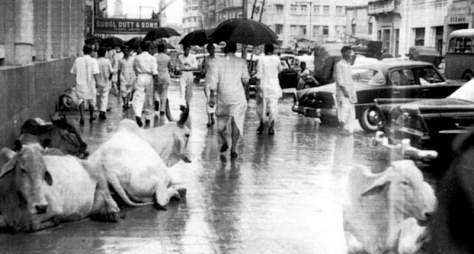
Continue reading Photographs of Calcutta by Che Guevara, 1959
 USHA RAMANATHAN via Women’s Feature Service: We have to marvel at how the world has changed since r*** was a four letter word, and young Lotika Sarkar (1923-2013), the first woman lecturer in the Faculty of Law, University of Delhi, shocked the department by teaching rape to her students.
This is what happens when you let women into hallowed institutions of learning: They don’t understand that, even when they are allowed to be seen, they may not be heard about the obscene. This was our LS-given, early version of the Vagina Monologues, without the theatre. Shift to the present: I suspect some will tell us that the battle to take rape to the classroom is far from over; except, thanks to LS, it is prudery that is on the back foot now. Continue reading The Mind And Heart Of Lotika Sarkar, Legal Radical, Friend, Feminist: Usha Ramanathan
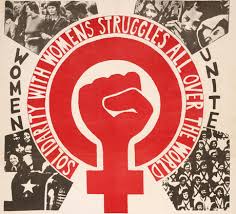
Statement by feminist and queer groups and individuals:
The report of the Parliamentary Standing Committee on the 2012 Criminal Law (Amendment) Bill as well as the 2013 Criminal Law (Amendment) Ordinance not only violates the letter and spirit of the Justice Verma Committee (JVC) recommendations but endangers and deepens women’s vulnerability in this country.
Representatives of women’s groups, democratic and human rights groups and activists are alarmed about major lacunae in current legislative protection to women, upheld by the Standing Committee report, and we insist on the following:
The Accused Must Be Male.
One pernicious provision of the Ordinance 2013, upheld by the Committee report, is blanket gender neutrality of the perpetrator of sexual harassment, assault and rape. Put simply: unlike in existing law where the accused is male, the Committee recommendations if enacted into a proposed new Bill, will make it possible for women to be charged with these offences. This is wholly unacceptable for the following reasons: Continue reading Gender Just, Gender Sensitive, NOT Gender Neutral Rape Laws
Here’s wishing all men and women across borders and boundaries, in New Delhi and New Haven, Ranchi and Russia, Dublin and Damascus, Srinagar and Sri Lanka, Bhutan and the Bermudas, a very happy International Women’s Day. These images are from the ‘I Need Feminism’ Campaign at the Lahore University of Management Sciences
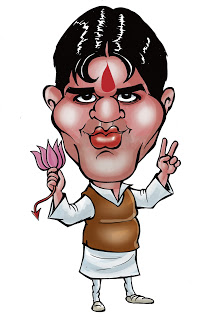
“This is not a hand (Congress symbol), it is the power of the lotus (BJP symbol). It will cut the head of… Jai Shri Ram,” a PTI report quoted Varun Gandhi (29) as telling an election meeting in Pilibhit, his attack directed at the Muslims. At another meeting, the PTI report said, he said: “If anyone raises a finger towards Hindus or if someone thinks that Hindus are weak and leaderless, if someone thinks that these leaders lick our boots for votes, if anyone raises a finger towards Hindus, then I swear on Gita that I will cut that hand.”
(Varun Gandhi’s hate-Muslim speech makes his BJP squirm; Express News Service: Lucknow, Tue Mar 17 2009)
Mr Varun Gandhi, BJP M.P. was all smiles when he emerged from the courts which had acquitted him in the second hate speech case. Expressing confidence in the Indian Constitution and India’s Legal System he said ‘truth has prevailed’. Only a few days ago another court in UP had acquitted him of the first hate speech case. It may be added that when extracts of the speeches he had allegedly delivered during election campaign in 2009 had appeared in a section of the press, the then Mayawati government had promptly filed cases against him and ordered his arrest and had to spend some time behind bars before bail was ultimately granted to him then. Continue reading Spew venom and enjoy life: Who scripted Mr Varun Gandhi’s release?
Update: The Hindu has acknowledged the problem with Mr Manash Bhattacharjee’s article not crediting the source of its information, and has edited his article online to give credit to Mr Thanvi. The paper has also added this note at the end of the article: “This article has been edited to include the original source of Che Guevara’s remarks on India, made during the revolutionary’s first visit to the country. All of his quotes have been drawn from Om Thanvi’s ‘The Roving Revolutionary,’ published originally in Hindi in Jansatta and later in English in Himal magazine in December 2007.”
Also see Mr Bhattacharjee’s response in the comments section of this post.

(In August-September 2007, Om Thanvi, editor of Jansatta, a Hindi daily of the Indian Express group, published in his paper a series of articles giving a vivid account of Ernesto ‘Che’ Guevara‘s historic 1959 visit to India. The articles were accompanied by a few photographs of Che in India: Che talking to peasants in a north Indian village; Che being interviewed by All India Radio at Hotel Ashok where Che and his six Cuban colleagues were staying; Che in a warm handshake with Prime Minister Jawaharlal Nehru at Teen Murti Bhawan, and so on. Jansatta even carried a sketch drawn by the famous cartoonist Abu Abraham, on which Che put his initials on the collar in 1962. Continue reading When Che Guevara came to India: Om Thanvi
Guest post by PARIVARTAN – The Gender Forum of Kirori Mal College, Delhi University
In the lead up to March 8th, International Womens’ Day, I would like to share with Kafila readers, especially those in Delhi University, research done by students of Kirori Mal College on how women students perceive questions of safety and security on campus. The research is richly illustrated with graphs and figures and is especially illuminating for the way in which it reveals attitudes amongst women students about why they they do not trust an increased police presence on campus as a guarantee of their safety and security.
Guest post by SAMEER BHAT: The completeness of night’s silence is absolute in Kashmir. Earlier today another boy was put six feet under. Killed in cold blood in Baramulla by the Indian army. Apparently a small crowd was protesting against the hanging of Afzal Guru and driven by pure emotion, pelted a passing army truck with stones. Since Kashmiri blood costs next to nothing, the armymen quickly got down, cocked their machine guns and sprayed the protesting kids with bullets, instantly killing a kid – Tahir — in his 20s. Nothing much. His friends, too shocked to react, smeared his blood on their faces. Grown-ups wept. The army later issued a statement that they didn’t shoot the boy. Period. Continue reading Mayhem in March: Sameer Bhat

This is a guest post by SPUTNIK KILAMBI: The rise of China and India in Africa has important implications for the continent’s development. While the two Asian giants provide a much needed alternative to the old and until now sole paradigm of dependence on the West, both countries are accused of being part of the global land grabbing club. Many African governments are complicit in this whole sale plunder of their land, which the FAO has compared to the ‘wild west’. India’s role in the land take-over underway in Africa raises serious questions about the direction of south-south relations.
Just before the 2010 World Cup of soccer in South Africa, the Indian food and beverages giant Parle Agro ran an ad campaign to promote its new lemon drink LMN. One spot showed a couple of Bushmen digging in the sand for water when their stick breaks. Suddenly, they see a tap and wrench it off.
Fortunately, the Advertising Standards Council of India forced the company to make changes because the spot was racist and made fun of water scarcity, an acute problem in Africa and India.
The Parle ad is an apt metaphor for growing fears in Africa about India’s seemingly insatiable demand for the continent’s land and water. Water scarcity at home and global fears of a looming water and food crisis are among the reasons India has joined the club of land predators.
India now ranks third in the amount of land grabbed from other countries. It is, says environmental journalist Darrel De Monte, “the irony of a former British colony turning into a neo-coloniser”. Continue reading Indian Land Grab in Africa: Sputnik Kilambi
Guest post by INSHAH MALIK:
Perhaps, beyond angry outbursts and slogans nothing was left of Kashmiri intellectuals engaged in understanding problems of home land. Afzal Guru was hanged and pens were strangulated. I was one of the people who protested at Jantar Mantar, with no strategy, no political statement, I bundled myself with others to the station, to enter a site of ‘mourning’. Kashmir has a rich culture and cultured production of ‘grieving’, when someone dies, everyone assembles and expresses grief verbally and through wailing. That is what I found myself doing. Continue reading What does Afzal’s death mean? : Inshah Malik
 This is a guest post by RIA DE and ACHUTH AJIT: English, the language of a united collective; but also a language that found itself wanting today, as if unable to express the most basic of needs, the most just of demands. Of all days today English was at its banal best. As if clichés had eaten into it, gnawed the life out of it, bent it into prosaicness. Like “We Want Justice.” As we gather here today, at the English and Foreign Languages University – an institution that is just 5 years old with already four student deaths to its tally – to protest the high-handed and insensitive treatment of Mudasir Kamran, to honor his memory, and most of all to claim on his behalf, and on the behalf of all of us, the students at this University demand and urge “We Want Justice”. The prosaic cliché of this oft-repeated slogan was unable to state on our behalf the bare life of it as well as the spontaneity and the enormity of it. Continue reading On the Death of Mudasir Kamran: Achuth Ajit and Ria De
 KAFILA - COLLECTIVE EXPLORATIONS SINCE 2006