Harvard to the rescue!

Some good news for embattled and weary Indian feminists. All those endless submissions to the Verma Committee prepared and submitted, all those critiques of the Ordinance written and disseminated, all those street protests, all those meetings with students and the public, all those delegations to government officials, ministers…not to mention decades of efforts to amend the rape laws.

It’s been a long hard haul, so it’s a great relief that the Harvard Law School has stepped in to take this burden off our shoulders. Continue reading Harvard to the rescue!

Raining Rape-Speech in Kerala

It is hardly news in Kerala by now that its been raining misogynists, rape-talkers, and swollen-rotten masculine egos in these early days of 2013. The PJ Kurien controversy has been a trigger of course. But I am astounded at the collective frenzy of Congress stalwarts. Kerala today is like a coconut garden taken over by a bunch of supremely drunken … well .. simians. Here we are, helplessly watching the tipsy horde ascend the fruit-laden coconut palms, pulling down ripe fruit and raw ones, tender leaves and drying ones, with  nary a care for all of us down here! Everyone, from senior leaders,  many insecure dumb ass-males on FB and Youtube, to minor lawyers in small-town courts with sadly dessicated minds but hugely swollen male-egos, to elected MLAs on the floor of the Kerala State Assembly, and judges whose guardian-angelic misogynist aura glints a bit more menacingly in private conversations,each of them seem to be up their own coconut tree throwing down various half-witted, asinine comments,venting their immense distrust of women who don’t fit into the homely-comely-motherly stereotype. Continue reading Raining Rape-Speech in Kerala

‘Death penalty in India is a legal lottery’

Justice Ajit Shah says that it has been proven beyond doubt that death sentence does not serve as a deterrent against crime; the reason why two third of the world has abolished it all together. He explains the bizarre nature of how the death sentence in India is judge centric and how under the same set of circumstances, some have received the death sentence, while others have been given life and still others acquitted. Death sentence is judge centric with many judges having a history of doling out death penalties and other being kind. Death sentence is thus nothing but a ‘legal lottery’ where if you are lucky you get a lenient judge you survive, else you end up at the gallows. He talks about the caste and class connection to death sentence, where the lower castes and lower classes are usually the ones sent to the gallows because they cannot afford proper legal aid. He says that this discriminatory nature renders death penalty unconstitutional and that there is the need for a larger debate on the same.  Continue reading ‘Death penalty in India is a legal lottery’

Death Penalty – an agenda for abolition: Yug Mohit Chaudhry

This is the audio of the Shahid Azmi Memorial Lecture delivered on 9 February 2013 by YUG MOHIT CHAUDHRY at the Indian Law Institute in Delhi. While the lecture date and topic – death penalty – were scheduled weeks in advance, it co-incidentally happened that Mohd Afzal Guru was hanged on the morning of the lecture. Shahid Azmi was a lawyer in Mumbai. He was 32 when he was shot dead on 11 February 2010.

On Shahid Azmi from Kafila archives:

Previously in Kafila by Yug Mohit Chaudhry:

See also:

More on Afzal Guru from Kafila archives:

Arindam Chaudhuri, Silchar

Given below is the text of a press release put out by THE CARAVAN magazine in 2011. This was first published in Kafila on 22 June 2011 and is being republished today for all those who may be interested in following up on the defamation case filed against The Caravan for a profile of Arindam Chaudhuri. The Supreme Court had stayed the case in August 2011.

When I read The Caravan‘s cover story on Arindam Chaudhuri some months ago, I wondered when he was suing them. And he’s done it! While a court injunction has made The Caravan remove the story from their wesbite, you can read it thanks to Google cache. No wonder Chaudhuri’s sued Google India as well! Given below is the full text of the press release put out by The Caravan. Unlike when Chaudhuri took on bloggers in 2005, I’m glad it is an organisation with the resources to fight the case and take him head on – not to say that requires some spine as well. After you’re done reading the release below, entertain yourself with all the Arindam jokes on Twitter.  

IIPM’s Rs500-million lawsuit against The Caravan
In response to our February profile of Arindam Chaudhuri, the IIPM has sued The Caravan. Here’s why we’re fighting the suit. Continue reading Arindam Chaudhuri, Silchar

When the Indian nation’s ‘conscience’ was satisfied: Gazala Peer

Guest post by GAZALA PEER

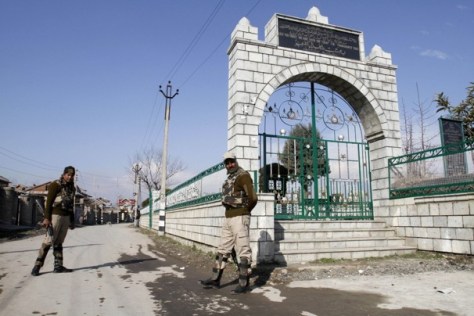
CRPF personnel stand guard at the martyrs' graveyard in Srinagar,preventing entry. The graveyard has a new empty grave, that of Afzal Guru. A similar empty grave waits for Maqbool Bhat, also buried in Tihar jail. Photo credit: Mukhtar Khan/Associated Press
CRPF personnel stand guard at the martyrs’ graveyard in Srinagar, preventing entry. The graveyard has a new empty grave, that of Afzal Guru. A similar empty grave waits for Maqbool Bhat, also buried in Tihar jail. Photo credit: Mukhtar Khan/Associated Press

People who mourn under siege are not supposed to write. We cry and beat our chests. Kashmiris have long faced such predicaments, always forced to find alternatives for everything. Anything that is normal and fair is denied to them! Like a fair trial, for instance. I am not sure if everybody knows Mohd. Afzal Guru’s story. I am not sure if I can be fair to him, but whatever I could gather from legal documents, commentaries and articles, is summarised here. Continue reading When the Indian nation’s ‘conscience’ was satisfied: Gazala Peer

Why the Delhi rapists should not be hanged

The shameless and cynical Manmohan Singh government has found an easy way out to appear strong, deflect attention from its failures and save itself from the opposition’s questioning. Just hang a death row convict before every Parliament session! It is very likely that if the 16 December Delhi rape-and-murder accused are placed on death row by this time next year, the UPA government will hang them just in time for the 2014 general elections.

I am opposed to death penalty in principle, and there are good reasons why so many democracies have abolished death penalty. But even if you do not agree that death penalty should be abolished, please consider why it should not be applied to the five accused in this case.

About a month ago I visited the Ravi Das “camp”, a slum colony near RK Puram where four of the six accused lived. I met the mother of one of them. Champa Devi’s son Vinay Sharma was the first to plead guilty and say he should be hanged; his father agreed on television. Continue reading Why the Delhi rapists should not be hanged

Illegal Antiquities: Vishes Kothari

Guest post by VISHES KOTHARI

As a collector of Indian antiquities wanting to set up an antiquities dealership in the future, I had heard of the wholesale illegal export of Indian art treasures and antiquities out of India- sometimes through newspaper reports, but mostly through word of mouth. This summer I decided to explore this market further. Nothing could really have prepared me for what I was to see over the course of the next month spent between Delhi and Rajasthan.

Contrary to my imagination of the Delhi businesses operating in a very shady and dubious manner out of musty, hidden godowns in obscure corners of Old Delhi, and run by people with barely any idea of what they were handling, what I found instead was that almost all these businesses were located in localities which epitomize mainstream “cosmopolitan Delhi” and run by extremely wealthy upper middle class families. Connaught Place, Greater Kailash, Green Park, Sunder Nagar- these were just some of the places where I was able to locate an open sale of antiquities- happening not through dodgy godowns or via clandestine networks- but instead conducted out of posh showrooms and sold openly to anyone who cared to buy.

Continue reading Illegal Antiquities: Vishes Kothari

Health professionals and sexual assault – some resources from CEHAT

These are some resources available from Centre for Enquiry into Health & Allied Themes (CEHAT)

Role of Health Systems in Responding to Sexual Assault – Frequently Asked Questions

What is the role of Health Professionals in responding to survivors of sexual assault?

Health professionals have a dual role to play in responding to survivors of sexual assault. Firstly, they are required to provide medical treatment and psychological care to survivors as sexual assault has short and long-term physical and psychological effects. Secondly, the health professional  is required to perform a ‘medico-legal examination’. This entails accurate documentation, examination, collection of  forensic evidence and provision of a medical opinion related to the assault, which can serve as evidence in the
court of law.

Read the rest of this manual here.

Links to more resources for health professionals dealing with sexual assault


Lessons from Delhi and Dhaka: Nagesh Rao and Navine Murshid

Guest post by NAGESH RAO and NAVINE MURSHID

Photo credit: AFP/Getty Images

In the early hours of Saturday morning, a secret execution was carried out by the Indian government. Afzal Guru, a Kashmiri, was put to death for his alleged involvement in the 2001 attack on the Indian Parliament. Afzal’s family in Kashmir were cruelly denied a last visitation. They were informed that the Indian President had rejected his mercy petition, and of his imminent execution, by mail—the letter reached Afzal’s wife Tabassum two days after he was executed and buried in an unmarked grave inside Tihar Jail.

Meanwhile, across the border in Bangladesh, hundreds of thousands of Bangladeshis from all walks of life have occupied Shahbag Square near Dhaka University, outraged that a notorious war criminal might walk free after having been spared the death penalty by the Bangladeshi International War Crimes Tribunal. Abdul Quader Mollah, leader of the right-wing Islamist party Jamaat-i-Islami, and convicted of multiple counts of rape, torture and murder, was photographed flashing a victory sign as he left the court. Continue reading Lessons from Delhi and Dhaka: Nagesh Rao and Navine Murshid

‘In the land of Buddha and Gandhi, death penalty has no place’: 83 feminist activists

This public statement was put out on 13 February by a group of 83 feminist activists; names of signatories at the end.

We, women from various organizations in India, condemn the hanging of Afzal Guru in Tihar Jail early on the morning of 9.2.2013.

The tearing hurry and secrecy with which Afzal Guru was hanged, accompanied by the flouting of all established norms by not giving his family their legal right to meet him before taking him to the gallows, clearly indicates that there were political considerations behind taking this step. More shameful is the explanation of the Home department that the wife and family of Afzal Guru were intimated of the hanging by a mail sent by Speed Post and Registered Post. Decency and humanity demanded that the Union Government give prior intimation to the family and an opportunity to meet him. Such surreptitious action of the government also deprived the family of Afzal Guru to right to seek legal remedy. Continue reading ‘In the land of Buddha and Gandhi, death penalty has no place’: 83 feminist activists

A letter of protest to the President of India against the execution of Afzal Guru: JTSA

This letter, signed by 202 citizens whose names are given at the end, has been put out by the JAMIA TEACHERS SOLIDARITY ASSOCIATION

To,
The Hon’ble President of India

Respected Sir,

We write to you in deep anguish, despair but in outrage as well. Afzal Guru was hanged on Saturday (9th February 2013) in secrecy. We have been told – after the hanging – that you rejected the mercy petition filed by Guru’s wife Tabassum, on 3rd February. We believe that you made a grave error in rejecting the mercy petition. If you had perused the trial records and the lengthy documentation put together over the years by lawyers and civil rights activists, or even the Supreme Court judgement which sentenced Afzal to death, you would have known, that his guilt was never established beyond reasonable doubt. The fact that the Court appointed as amicus curiae (friend of the court) a lawyer in whom Afzal had expressed no faith; the fact that he went legally unrepresented from the time of his arrest till his so-called confession, the fact that the court asked him to either accept the lawyer appointed by the Court or cross examine the witness himself should surely have concerned you while considering his mercy petition. Continue reading A letter of protest to the President of India against the execution of Afzal Guru: JTSA

Freedom of speech in India is for the rich and the powerful

While freedom of speech and expression in India is under attack from all sides, have you noticed how the rich and the powerful can say what they like without getting arrested, facing FIRs and courts, hiring lawyers and so on?

While an innocuous tweet or Facebook status update can land you in police lock-up on a Saturday night or Sunday morning 5 am, a Digvijaya Singh can say sexist crap against Rakhi Sawant and get away with it.

Here’s another example from Twitter recently. Lalit Modi of IPL infamy, who wants us to believe his coming to India and facing the law is a security threat to him, tweeted that the BJP’s  Arun Jaitley would lose his deposit if he contested the Lok Sabha seat from Jaipur. (Lalit Modi thinks he’s the Maharaja of Rajasthan.) In response to that, one Ankush Jain replied… Continue reading Freedom of speech in India is for the rich and the powerful

What Afzal Deserves: Chandan Gomes

20130212-185109.jpg

Guest post by CHANDAN GOMES

Ever since the news of Afzal Guru’s execution broke out on the 9th, I have witnessed my personal space descend into a state of chaos. I woke up that morning to a number of emails/facebook messages by friends requesting me to join them at Jantar Mantar to protest against Guru’s execution. Many called that particular protest farcical, some even going to the extent of labelling these young men and women as traitors. Battle lines were drawn and a country stood divided. The more I thought about the execution, the more it saddened me. I could see myself and people like me (the ordinary citizens of this great nation) as pawns in a game of ugly power play, waiting to be sacrificed at the altar of ‘opportune moment’. Continue reading What Afzal Deserves: Chandan Gomes

We, the Barbarians: Vipul Rikhi

Guest post by VIPUL RIKHI

 We’re not a civilisation. We’re a horde. And baying for blood is the new flavour of the season.

Let us have a few more executions while we’re at it. Why stop the fun now? Let us distribute sweets and dance on the streets. Why hide these killings inside jails? Let’s bring them out into the open, so the whole populace can rejoice and the collective conscience of the people can be appeased.

If there’s not enough terrorists, there are rapists. There are enough people to round up and hang. As with the six who raped and murdered a girl on a bus in Delhi, our collective cry must be, ‘kill them all!’ There are clear villains in each piece, and we are the pure ones who are always getting outraged. Continue reading We, the Barbarians: Vipul Rikhi

राष्ट्रवादी न्याय से करुणा की विदाई

“अगर हम ‘लोकतांत्रिक सरकारों के छिपे इरादों और गैरजवाबदेह खुफिया शक्ति संरचनाओं की जांच करने और उन पर सवाल उठाने से इनकार करते हैं तो हम लोकतंत्र और मानवता, दोनों को ही खो बैठते हैं.” पत्रकार जॉन पिल्जर का यह वाक्य आज हमारे लिए कितना प्रासंगिक हो उठा है! हमें नौ जनवरी को खुफिया तरीके से अफज़ल गुरु को दी गयी फांसी के अभिप्राय को समझना ही होगा. काम कठिन है क्योंकि इसे लाकर न सिर्फ़ प्रायः सभी संसदीय राजनीतिक दल एकमत हैं बल्कि आम तौर पर देश की जनता भी इसे देर से की गई सही कार्रवाई समझती है.

नौ जनवरी के दिन के वृहत्तर आशय छह दिसम्बर जैसी तारीख से कम गंभीर नहीं क्योंकि इस रोज़ भारतीय राज्य ने गांधी और टैगोर की विरासत का हक खो दिया है.अगर अब तक यह साबित नहीं था तो अब हो गया है कि भारत की ‘संसदीय लोकतांत्रिक राजनीति’ का मुहावरा उग्र और कठोर राष्ट्रवाद का है. और राजनीतिक दलों में इस भाषा में महारत हासिल करने की होड़ सी लग गयी है.

Continue reading राष्ट्रवादी न्याय से करुणा की विदाई

Afzal Guru’s story – in his own words

Via Hindustantimes.com

Guru wrote in a letter in 2004:

In the Parliament attack case I was entrapped by Special Task Force of Kashmir. Here in Delhi the designated court sentenced me to death on the basis of special police version which works in nexus with STF, and also came under the influence of mass media in which I was made to accept the crime under duress and threat by special police ACP. Rajbir Singh. That threat even get confirmed to designated court by T.V. interviewer (Shams Tahir Aaj-Tak).

[…]

Special police told me that if I will speak according to their wishes they will not harm my family members and also gave me false assurance that they will make my case weak so that after sometime I will get released. Continue reading Afzal Guru’s story – in his own words

The Languages of Sexual Violence: Anupama Mohan

Guest post by ANUPAMA MOHAN

I teach a big word in my critical theory classes: phallogocentrism. It is the idea that our societies are centred by the phallus and language (logos) and is a word that often scares, perplexes, and disturbs my students, but I unpack it using an example. In English, the word seminal, which means something important and path-breaking, derives from “semen” and in contrast, the word hysterical or hysteria, which is a word that has for long been associated with peculiarly female physical and mental disorders (and often used for recommending women’s confinement), derives from “hystera” or the womb. What does such loading of the language – what a 20th century Russian thinker, Mikhail Bakhtin, called the formation of the verbal ideological world  – in terms of the perspective, validation, and supremacizing of one gender over the other do to/in our varied lives? Think of the word vanilla that, at least since the 1970s, has meant the ordinary and bland: its etymology derives from the Latin word for vagina (vaina) or “little vagina” for the pods of the plant that reminded someone of women’s genitals. The word porcelain – a thin, fragile kind of clay – too comes from the word for “cowrie shell” whose Italian links to porcella or young sow (a female pig) for someone recalled the shape of a piglet’s orifice. One more: the word amazon which refers to a legendary race of female warriors and has come to mean a strong woman derives possibly from many sources: from the Classical Greek a-mazos or breastless to the Iranian *ama-janah or “virility-killing” – a meaning that interprets the idea of women’s strength as both a mutilation of her physical self and/or as a threat to men. Continue reading The Languages of Sexual Violence: Anupama Mohan

When women ask for it: Veena Venugopal

Guest post by VEENA VENUGOPAL

To me, the most memorable scene in Dev D is the one where Paro takes a mattress from home and ties it to her cycle. When she reaches the edge of the field, she abandons the cycle, lifts the mattress on her shoulder and marches to the clearing where she lays it down and waits for her lover. There are no words spoken and the camera holds her face close. Her expression is one of intense seriousness. You can see her desire is a field force of intensity that fuels every step. She is determined to see it through, to let that desire take over herself completely; not surrender to it but to let it explode out of her. You know that when she meets Dev, the sex would be passionate and powerful.  And yet, in the south Delhi multiplex where I was watching the film, most of the audience burst into rapacious laughter. The women smiled embarrassedly at each other. Which made me wonder, why is female desire a laughing matter? Continue reading When women ask for it: Veena Venugopal

The Day Afzal Died: Nirmalangshu Mukherji

Guest post by NIRMALANGSHU MUKHERJI

There are days in which streaks of hope shine through dark clouds of misery. The 9th of February, 2013, was such a day.

The day broke with the news that the noose of the Indian state had finally seized the throat of Mohammad Afzal Guru after years of careful conspiracy. With ill-concealed admiration, the television screens reported the military swiftness, the secrecy, and the perfection with which a nuclear-powered state with one of the largest armies in the world escorted an unarmed, hapless Kashmiri to the gallows, performed its rituals, and pulled the bolt. As the murder was officially videographed with full legal sanction, the body was kept dangling for thirty minutes before it was pulled down and immediately buried in an ‘unmarked’ grave, protected by layers and layers of impenetrable walls. The case of Afzal Guru was thus brought to a ‘closure’. So hoped the state. Continue reading The Day Afzal Died: Nirmalangshu Mukherji

Secret hanging a major setback: Human Rights Watch on the execution of Afzal Guru

Statement put out on February 9 by HUMAN RIGHTS WATCH

(New York) –The hanging in New Delhi of Mohammad Afzal Guru makes it more urgent for India to reinstate its previous informal moratorium on executions as a step towards abolishing the death penalty, Human Rights Watch said today. Azfal Guru, executed on February 9, 2013, was convicted for his role in the attack on the Indian parliament in 2001.

In November 2012, India ended its eight-year unofficial moratorium on executions when it hanged Ajmal Kasab, convicted for his role in the 2008 Mumbai attacks. Continue reading Secret hanging a major setback: Human Rights Watch on the execution of Afzal Guru

DISSENT, DEBATE, CREATE