Satyashodhak – A Performance

(A shorter version of this review appeared in Tehelka)

Writer: G P Deshpande

Director: Atul Pethe

Performed by Pune Safai Karmacharis Union

Image

It was apt that a landmark production of G P Deshpande’s 1992 play Satyashodhak on the life of the 19th century anti-caste crusader Jyotiba Phule was performed in a week that witnessed the killing of the head of the Ranbir Sena – a week in which we were reminded that the bitter legacy of caste haunts us as strongly as ever. It was unusual however, that the performance should be held at the recently-opened May Day café and bookstore in Delhi – a space dedicated to the different and more hopeful legacy of the international working class movement, and located close to the heart of a former industrial district in a city that practices careful amnesia about its working classes. It is entirely unusual further that the performers were both Dalit and members of the Pune Municipal Safai Karmacharis Union. While the ancient, poisoned streams of caste and class have often overlapped on the subcontinent, they have not, as we are aware, produced unified or even similar political responses.

Continue reading Satyashodhak – A Performance

The Myth of the Muslim Vote Bank

The recently concluded assembly elections in U.P were marked once again by an intensified debate on ‘Vote Bank Politics’. The debate was not provoked by the emergence of any new trends in political mobilization but was the standard fare that is dished out by so called commentators, experts, political analysts and people who not only think that they have inside information about how entire communities think and react, they also claim that there are agencies capable of engineering conditions that programme these communities to go and vote for this or that party.

The essential argument behind this discourse hinges on two presuppositions, one that particular religion or caste based communities can be mobilised and made to move in one pre-determined direction and two that this becomes possible because such communities react and behave as one individual and therefore all that is required is to catch hold of a handful of community leaders and you can as good as have the entire community in your pocket. Continue reading The Myth of the Muslim Vote Bank

Terrorism in India – Between Facts and Fiction: Imran Khan

Guest post by IMRAN KHAN

More and more concerns are being expressed by human rights activists in India today on the question of fabricated and false charges on innocent people. When Dr. Binayak Sen spent his time in jail on such charges, activist groups all over the country and abroad came out and protested. For the first time in the history of human rights movement in India, around two dozen Nobel Prize Winners came out to defend him. It should also be noted that there were even protests against such fabrication in front of Indian embassies in different parts of the world.

However, with the arrest of Binayak Sen, the contemporary history of `fabricating false cases’ by the Indian state took a new turn. The arrest took place while Dr. Sen was a national leader of India’s pioneering human rights organization, People’s Union for Civil liberties (PUCL).  The activists felt that the message was loud and clear: That even human rights defenders can be imprisoned for no reason under repressive laws of the post-independent India.

Dr. Sen was released due to public pressure. But thousands are still languishing behind bars, waiting for justice. The nameless adivasis who were arrested like Sen from different parts of Chhattisgarh, speak of an unknown territory even to the best of our human rights activists. And new messages are given. Even journalists can be grilled. Thus, K.K. Shahina, Azmi, Seema Azad, Advocate Naushad Kasimji and others have become victims of attacks on freedom of expression. Fabricating false cases has become a norm today rather than an exception, according to human rights groups. Minorities, dalits, adivasis,  people’s movements and self determination movements become an easy prey to false charges. Continue reading Terrorism in India – Between Facts and Fiction: Imran Khan

False Charges and Brutality in Prison: Mohd Amir Khan

Guest post by MOHD. AMIR KHAN

[ Mohd. Aamir Khan has spent 14 years in prison and was acquitted earlier this year]

I am in deep pain today. As though terrible, terrible memories, locked away in the deep recesses of my mind have been pried open. Heard on news that an accused in terror case was killed in judicial custody in Yerwada jail. That too in his high security cell.

I had read that the British rulers unleashed physical and mental torture on prisoners in colonial jails, but have never heard that they carried out killings of hapless convicts or undertrials in their custody. The naked truth of Abu Ghraib and Guantanamo has been brought before the world. But who will illumine the dark secrets of the netherworld of our prisons? Brutalisation and torture are routine in our jails.

I speak from experience, having lived for fourteen long and seemingly unending years in prisons in three states. There was a near fatal attack on me twelve years ago while I was lodged in the model prison of India, Tihar Jail. But when I survived the attack, a case was slapped on me. While I was thankfully acquitted in the case, not one of those who attacked me was charged until my father – who was still alive then—appealed to the court to intervene. Mercifully, the Court accepted his complaint and registered a case, which still goes on in Tees Hazari court. Continue reading False Charges and Brutality in Prison: Mohd Amir Khan

The (Auto)Rakshasa and the Citizen

A petition from an organization called Change India invaded my Facebook wall today right before – rather ironically, it turns out— my morning auto ride. The petition is filed under a category on the site called “petitions for economic justice.” When you open it, the image pasted below opens. A sharp fanged, dark skinned “auto-rakshasa” demands one-and-a-half fare. The commuter is “harassed.” The petition that accompanies this image urges the ACP of police to create “an efficient system” so that complaints made to report auto-drivers who overcharge or refuse to ply can be tracked. How, it asks, can “concerned Bangalorean citizens” expect “justice” if their complaints are not tracked?  We all must, it urges, “join the fight.”

Image

Let me first say quite clearly that I do not mean to undermine the intentions and frustrations of those who launched this campaign and, yes, when the meter goes on without asking, it eases a morning commute significantly. The question is: if this does not happen at times (and indeed it doesn’t) then why is this so and what does one do about it? There is a lot to be said about the economics of the issue itself and I welcome others reading who know more to write about it more extensively. But this piece is not about that. It is about the campaign itself and how we articulate political questions in our cities. It is fundamentally about the easy, unremarked way in which a working urban resident and citizen – who is also, after all, a “fellow Bangalorean” and concerned with “economic justice”– can be termed and portrayed a “rakshasa” as if it were a banal utterance.

Continue reading The (Auto)Rakshasa and the Citizen

Consent, Age and Agency: reflections on the recent Delhi High Court judgement on minors and marriage: Flavia Agnes

This is a guest post by FLAVIA AGNES

I am responding to the sense of despair expressed by some women’s groups and more specifically to the press conference called by Bharatiya Muslim Mahila Andolan (BMMA)  to condemn the judgment of the Delhi High Court which permitted a minor (almost 16-year old) girl to marry the man of her choice rather than restore her back to her parental authority.  In their campaign for codification of Muslim law, BMMA has asked for laying down 18 as the minimum age of  marriage for girls (and 21 for boys), the underlying presumption being that all underage marriages must be declared as void.

Before we come up with a knee jerk response to the hype created by the media and bite the bait,  we need to have greater clarity on whose side we (feminists) are batting in this confrontation between  parental authority and the active  agency expressed by a teenaged girl. Also I wish to raise a connecting question — if the Muslim law was codified and minimum age for marriage was stipulated, as has been done under the Hindu Marriage Act, would the High Court have responded differently?  Would the judges have sent the girl back to her parental custody?  And the last question – could that have been construed as a ‘progressive ruling’ by us, those claiming to be “feminists”? Continue reading Consent, Age and Agency: reflections on the recent Delhi High Court judgement on minors and marriage: Flavia Agnes

Response to “In defense of the democratic struggle against Shankar’s cartoon”

This is a longer version of an article published today in The Hindu. This version includes a section with illustrative examples that refute the contention of the petition that there is “inadequate representation of the role of Ambedkar” in the new textbooks.

At the end of this, I respond to the points raised by K. Satyanarayana and Anoop Kumar in their response to my article, also published today in The Hindu, to which I have linked below.

The petition against the Ambedkar – Nehru cartoon published in the Hindu makes for sad reading. Sad, because it bears the signatures of some of our best scholars, universally admired for their rigorous scholarship, who nevertheless chose to sign a petition short on facts. The petition asks the Thorat Committee to “reconsider the Ambedkar cartoon (and possibly other such insensitive material)”and urges “Kapil Sibal, the Union HRD Minister, to desist from seeking any major overhaul of the basic National Curriculum Framework on which the textbooks are based.” Perhaps the petitioners are not aware that the particular cartoon is now beyond the purview of the committee. A decision to remove it had already been taken by the Minister himself, and a commitment made to this effect on May 11 by Kapil Sibal on the floor of the Rajya Sabha. It was after this announcement that the parliamentarians intensified their attack and targeted other cartoons in all the textbooks claiming that they mocked and ridiculed the political class in general. It was in response to this outrage that the government announced the formation of a review committee to be chaired by Prof. S K Thorat to find out if there is any ‘educationally inappropriate’ material in the textbooks. Continue reading Response to “In defense of the democratic struggle against Shankar’s cartoon”

Qateel Siddiqi killed in Judicial Custody – Who is Responsible?

This public statement comes via Manisha Sethi; see full list of signatories at the end.

Twenty-seven year old Qateel Siddiqi, arrested in November 2011 by the Special Cell for his alleged Indian Mujahideen links, has been killed in Yerwada Central jail in Pune today. The murder has ostensibly been carried out fellow inmates for unknown reasons. Qateel had been shifted to Yerwada only a few days ago after the Maharashtra ATS had taken his custody for a test identification parade.

Qateel’s killing raises several important questions:

– Siddiqi was kept in high security anda jail and not in the common barracks. How then did the attack take place?

– Could the attack have taken place without the complicity, even if passive, of the Yerwada jail authorities?

– Given the claim of the investigating agencies that Qateel was the key to unraveling the IM network, what happens now to those investigations?

– The fact that Siddiqi was to be moved out of the Yerwada Jail and was eliminated just before that smacks of a conspiracy. Continue reading Qateel Siddiqi killed in Judicial Custody – Who is Responsible?

Open Letter from Anonymous to the Government of India

Dear Government of India,

We are Anonymous. It has come to our attention that you have blocked filesharing websites in India. We also know you are in the process of making a Great Indian Firewall, to censor the internet in India. Anonymous believes, however, that pursuing this direction is a sad mistake on your behalf. Not only does it reveal the fact that you do not seem to understand the present-day political and technological reality, we also take this as a serious declaration of war from yourself, the Indian government, to us, Anonymous, the people. Continue reading Open Letter from Anonymous to the Government of India

Anonymous, India and the Blackhat Spectacle: Oxblood Ruffin

Guest post by OXBLOOD RUFFIN

If there be time to expose through discussion the falsehood and fallacies, to avert the evil by the process of education, the remedy to be applied is more speech, not enforced silence.
— Justice Louis D. Brandeis, Whitney v. California

Any discussion of Anonymous is problematic. One is never sure which Anonymous is being referenced: the meme, the group as a whole, or an individual operation. And the press doesn’t appear to know or care. It has gone into a rapturous fap over the loose knit collective, declaring them, inter alia, the most influential group in the world, terrorists, and – wait for it – very dangerous hackers. This last descriptor is particularly amusing. There are, in fact, so few real hackers within Anonymous that they could petition the U.N. as an endangered species.
Continue reading Anonymous, India and the Blackhat Spectacle: Oxblood Ruffin

Disability Law Violations in Delhi University admissions – notes from the margins: Rijul Kochhar

Guest post by RIJUL KOCHHAR

Contrary to what they may tell you, they don’t really give a damn about the disabled in this country. Systemically flouted laws, polite terms substituted for impolite realities, and stony silences meted to those who seek to question—these comprise the working of the disability model in this nation, a model that only goes so far as the abundance of obligation and ‘feel-good’ eye-wash will take it. The juggling of words—‘disabled’ for handicapped, then annihilation of ‘crippled’, and finally that awful phrase regnant in contemporary fashionable use, ‘differently/specially-abled’—constitutes our single biggest achievement as far as dealing with the disabled as rights-bearing persons is concerned. Continue reading Disability Law Violations in Delhi University admissions – notes from the margins: Rijul Kochhar

कॉरपोरेट और मीडिया का नया खेल: विनीत कुमार

आदित्य बिड़ला समूह ने इंडिया टुडे, बिजनेस टुडे जैसी पत्रिकाएं प्रकाशित करने वाली कंपनी लिविंग मीडिया इंडिया के साढ़े सत्ताईस फीसद शेयर खरीद लिए हैं। इसकी बदौलत टीवी टुडे नेटवर्क, जिसका 57.46 फीसद लिविंग मीडिया के पास था और उस पर मालिकाना हक अरुण पुरी का ही है, अब उसमें भी आदित्य बिड़ला समूह का व्यावसायिक दखल हो गया है।

Continue reading कॉरपोरेट और मीडिया का नया खेल: विनीत कुमार

Cartoon controversy – In conversation with Satyanarayana: Sharmila Rege

Guest post by SHARMILA REGE

Satyanarayana’s interview addresses the crucial issue of a sharp division between the dalit and the left/liberal viewpoint on the NCERT textbook cartoon controversy. Clearly, Satyanarayana’s foregrounding of this difference is not a denial of the differences between the positions taken by dalit intellectuals in this debate. Further, Satyanarayana is referring not just to responses by dalit academicians but to the presence of critical viewpoints in the larger dalit public sphere – the very perspective/viewpoints that Liberal/Left/feminists have in a sense not seriously engaged with, equating them to ‘manipulations by opportunistic dalit leadership’ or /and ‘always and already emotional iconisation of Ambedkar’.  In fact, despite   important differences between the arguments put forth by Satyanarayana, Gopal Guru, Anoop Kumar, Harish Wankhede, Raj Kumar and other dalit intellectuals; all of them interrogate these hasty conclusions about irrational or manoeuvred dalit publics. Gopal Guru  contends   that the controversy has created a field of power in which even the supporters of Ambedkar and Dalits have ended up reproducing the compounded insult  through two assumptions –that Ambedkar belongs to the dalits and that dalits are pathologically emotional and thus not capable of rational independent views.

Continue reading Cartoon controversy – In conversation with Satyanarayana: Sharmila Rege

A Pilgrimage to Ajmer: Kaveri Gill

Guest post by KAVERI GILL

There is no point living in India if one cannot make spontaneous journeys, of all kinds and in all directions, for there is scarcely another country in which one can move so seamlessly and rapidly between such different worlds, both literal and metaphorical. It is the great charm of not residing in the bosom of the capitalised, industrialised west, with its clockwork uniform comforts. So when the serendipitous sighting of a photo of Ajmer Sharif, all lit up for Urs – celebrating the death anniversary of Khawaja Moinuddin Chishti, in this case – prompted a yearning to be there, I decided for once to ignore the rational self with all its programmed misgivings, and just go. Continue reading A Pilgrimage to Ajmer: Kaveri Gill

India must deliver on its repeated commitments to the human rights council: Amnesty International

This release was put out by AMNESTY INTERNATIONAL on 1 June

On 24 May 2012, India’s human rights record came under renewed international scrutiny during its second Universal Periodic Review (UPR) at the UN Human Rights Council. Amnesty International welcomes the recommendations made to India by the reviewing states, many of which reflect concerns raised previously by the organization.

Amnesty International is disappointed, however, that despite India’s assertion that it sees the UPR mechanism as one of “constructive engagement,” the government did not immediately accept any of the recommendations made, some of which were put forward in 2008 during India’s first UPR. Amnesty International urges India to demonstrate by September 2012, a genuine resolve to deliver on its outstanding human rights commitments and the UPR recommendations, when the report on India’s second UPR is formally adopted at the 21st session of the Human Rights Council. Continue reading India must deliver on its repeated commitments to the human rights council: Amnesty International

Foregrounding Insult: Gopal Guru

Guest post by GOPAL GURU

Let me at the very beginning make it clear that I do not want to discuss insult in the context of the recent cartoon. Although I think that a progressive interpretation of that recent cartoon may not lead to the feeling of insult and hurt.

I would like to discuss here who should feel insulted and under what subjective conditions? Those who have inherited insult from the past, not invented it for the present, are the ones who should feel insulted. The past which continues to unfold in a series of social interactions necessarily insults, and gets reproduced through rigid and regressive assumptions.

The gut level or unmediated reaction finds quick expression because those who express it know that it would yield desired reaction from the dalit community which has graduated only in thick emotionalism. Those who offered this unmediated reaction exactly had the same background assumption that Ambedkar exclusively belongs to dalits and dalits have heavy emotional attachment to Babasaheb.

This assumption is insulting for two reasons: Continue reading Foregrounding Insult: Gopal Guru

“The more they censor the internet the bigger we become” – An interview of Anonymous India

In which I interview “Anonymous India” who have organised a massive protest against internet censorship across 11 Indian cities on 9 June.

Some say such attacks (hacking and defacement of Web sites) could be used by the political class to actually strengthen their argument in favour of control and regulation of the Internet. What do you say to that?

Anamikanon: People on the ground are vulnerable to people with a lot of power and no problems misusing it. Anonymous can’t be found to defame, threaten, suppress, stall…. wrong means? Ok. Worth it.

Netcak3: I say the more they censor the Internet, the bigger we become. We strive in users from across the world. Pro tip: Once an idea has been made, you cannot kill it.

Anamikanon: In my view, these are the means that can be safely used without risking life, limb, careers, reputations, family…

Gummy: Defacing is like posting a nill which is illegal and can be removed. Like people post their advertisement bill (poster) at the back of buses and other public places.

Anamikanon: Except we post it in inside their drawing rooms! [Read the full interview.]

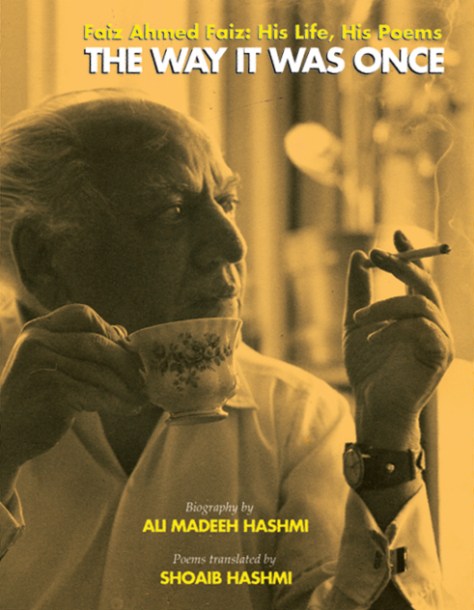
KK Aziz and the Coffee House of Lahore: Chris Moffat

Guest post by CHRIS MOFFAT 

During a recent trip to Lahore, I visited the Sang-e-Meel bookshop on Lower Mall Road in search of K.K. Aziz’s The Coffee House of Lahore. Happily, the store was well stocked with the late historian’s final work, and I spent the afternoon reading the text at a table outside the nearby Tollinton Market. It was a betrayal, perhaps, to read the book in this way, sipping cold drinks from the Hafiz Fruit and Juice Corner rather than something appropriately caffeinated, purchased amidst a flurry of conversations in a busy café. I took some solace in the fact that I was sitting not a stone’s throw away from the former Pak Tea House, once a hub of cultural life in the city and among the many spaces of discourse and dissent mapped by Aziz in his narrative of mid-twentieth century Lahore.

Today, the Pak Tea House appears hollowed and shuttered, no longer decorated with a sign to declare its name or to suggest life inside. In spite of recent rumours of a revival, its vacant façade appears a testament to Aziz’s loud lament in The Coffee House of Lahore: that the city’s culture has “disappeared from view”, that its original landmarks “have been obliterated”. The book emerged out of the historian’s desire to capture, before it is lost, the memory of a period of free thought, argument and cultural effervescence, encapsulated in the life of institutions like the Tea House, the Indian Coffee House, the Arab Hotel, the Nagina Bakery, and other important places of assembly, all of which have now vanished from the urban fabric. Aziz chooses to focus on the particularly tumultuous period between 1942 and 1957, when he was an active participant in this culture as a student of politics and later as a lecturer in Lahore’s Government College.
Continue reading KK Aziz and the Coffee House of Lahore: Chris Moffat

Ambedkar’s Cartoon and the Caste question: Rajkumar

Guest post by RAJKUMAR

A harrowing monologue is in vogue in the popular media and academic forums apropos a cartoon of Dr. Ambedkar in a Political Science textbook prepared by NCERT for its Class XI students. Apparently, in the cartoon, Ambedkar is depicted being whipped by Jawaharlal Nehru for delaying the framing of the constitution. The cartoon was first published in 1949 and was drawn by cartoonist Shankar Pillai. Though in interior Dalit circles, the cartoon was being despised for denigrating ‘Baba Saheb’ as they lovingly call him, no heed was paid to their sentiments till the issue was raised in the Parliament and taken up by Bahujan Samaj Party chief Mayawati. Government had to concede and the cartoon was removed from the textbook and HRD minister made a public apology for the goof-up followed by resignation of two academicians involved with the curriculum committee.

Continue reading Ambedkar’s Cartoon and the Caste question: Rajkumar

Humiliation condemned to remain ‘Hurt’ – Notes from a talk by Gopal Guru: Parth Pratim Shil & Ankita Pandey

Guest post by PARTH PRATIM SHIL and ANKITA PANDEY

Unni [a cartoon character] asks:

“Am I just a figurehead or am I asking real questions? Did the textbook writers give me power to ask questions I wish to ask or am I asking questions they have in their mind?” [Page 85, Chapter 4: Executive, Indian Constitution at Work, for class XI]

This cartoon appears in the context of the discussion on the powers of the President of India in the political science textbook of NCERT. It seems this question has a function far wider than the limited task of revealing the institutional blueprint of Indian politics. It pushes the student to ask something very uncomfortable. Am I really the one asking the questions I ask? Or am I rehearsing questions that someone else has decided for me?

As teachers of political science, our constant effort is to understand the ways in which power operates. None of the themes of our syllabi can be taught without reference to the resistance, critique and offending positions taken by groups who challenge the status quo. Sanitizing the history of critique and resistance that is encapsulated in satirical modes of representation like cartoons, can only be at the cost of keeping the discipline of political science uprooted from its very object of study. In the recent cartoon controversy, however, the issues at stake are many more than a defence of critical pedagogy.

Continue reading Humiliation condemned to remain ‘Hurt’ – Notes from a talk by Gopal Guru: Parth Pratim Shil & Ankita Pandey

Mangoes and me

My childhood memories are so deeply intertwined with mango eating that it is difficult to separate the two. One reason for this is probably because the season of mangoes and the summer breaks in school coincided. We took our last exam and the schools closed their doors, to reopen after two and a half months. Educationists had not yet discovered Holiday Homework, the Summer Break torture, For parents and children and the summer vacations were an unmitigated joy. Those days we stayed at Aligarh, and every year we travelled to Delhi to spend time with our aunts and uncles, all cousins of our father.

Continue reading Mangoes and me

DISSENT, DEBATE, CREATE