Kudankulam Udpate

From Nityanand Jayaraman

Dear all:
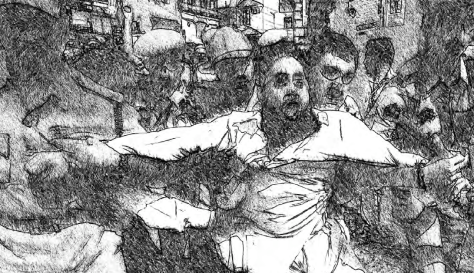
The state’s propaganda and witch-hunt has taken a fresh and disturbing turn with an engineered FIR filed by the husband of Vijayapathi Panchayat President and his brother Stalin. 

I spoke to V. Pushparayan at 1015 a.m. today. According to media reports, a gang instigated by Pushparayan and Udayakumar, attacked and injured Sahayaraj (President’s husband) and Stalin (Sahayaraj’s brother) at 830 p.m. on 14 April, 2012. The media reports do not even bother to interview the people accused of this alleged crime. The allegation is made into a fact, as if the reporter had observed the attack.

Here’s the version from Idinthakarai:  Continue reading Kudankulam Udpate

Workers Struggle in Dehradun

The following is a statement from Uttarakhand Nav Nirman Mazdoor Sangh and the Inquilabi Mazdoor Sangh received via Shankar Gopalakrishnan

Between 12 and 1 yesterday, 15 April 2012, the Uttarakhand police lathi charged more than 300 workers who have been sitting on a protest in Dehradun for the last ten days. 11 workers who have been on hunger strike (six from April 6th and five who joined them on April 9th) have been forcibly hospitalised in Doon Hospital, where they are resisting attempts to force-feed them. 326 workers have been arrested and detained in various jails in the city.

The workers have been on strike for more than three weeks now. They are employees of the Rockman and Satyam Auto plants in Haridwar, both major suppliers of Hero Motors. As in Manesar, Haryana last year, these workers are being paid extremely low wages for more than 12 hours of work a day; when they sought to form a union to demand respect for labour laws, the five leaders of the union were illegally sacked immediately and the others threatened with a similar fate. On March 19th the majority of permanent workers at Rockman came out on strike in protest at this illegal brutality, and on March 22nd they were joined by all the permanent workers at Satyam. Continue reading Workers Struggle in Dehradun

Why does Ratan Tata have a diplomatic passport?

Update: Tata Sons has clarified that Mr Ratan Tata does not hold a diplomatic passport. See comments section.

*

Is he an Indian diplomat?

“After all, you have given Ratan Tata a diplomatic passport. He always travels with the red passport,” the American continued.

[…]

The American told him that he had once travelled first class with the industrialist, he had seen Tata’s diplomatic passport and when they both alighted at New York, Tata went to the special immigration enclosure for diplomatic passport-holders .

When S.M. Krishna became external affairs minister in May 2009, one of his earliest discretionary decisions was to issue a diplomatic passport to Tata, recognising his emergence as a global investor and industrialist who has to travel extensively worldwide, some of those trips on behalf of the government or representing his country. [KP Nayar]

And that is not the only shocking thing there. There’s also the revelation that the Maharashtra government allowed an American government group to fly out without security check!

The Indian state is India’s biggest embarrassment.

क्या खलील चिश्ती अपने जीवन में पाकिस्तान वापिस जा पाएंगे?: आशीष महर्षि

आशीष महर्षि
पी.यू.सी.एल. के सदस्य डॉक्टर खलील चिश्ती को बैल मिलने के बाद उनके साथ
बीस साल बाद भले ही डॉक्टर खलील चिश्ती खुली हवा में सांस ले रहे हों लेकिन उन्हें अभी भी सरकार की दया की दरकार है। उम्र के ८क् बरस गुजार चुके डॉ. खलील अब अपने वतन लौटना चाहते हैं। खलील साहब की जमानत भले ही हो गई हो लेकिन उन्हें और उनके परिवार को इंतजार है संपूर्ण रिहाई का। Continue reading क्या खलील चिश्ती अपने जीवन में पाकिस्तान वापिस जा पाएंगे?: आशीष महर्षि

After extracting US apology over Shahrukh Khan, the Indian Government owes several apologies too: JTSA

This release comes from the JAMIA TEACHERS’ SOLIDARITY ASSOCIATION

15th April 2012

After extracting US apology over Shahrukh Khan, the Indian Government owes several apologies too

The Indian government has rejected the ‘mechanical apology’ being offered by the US for detaining the super star Shahrukh Khan at the airport for 90 minutes too long. The US Deputy Chief of Mission has been summoned, and institutional mechanisms to ensure that there is no repeat of such an incident.

Now, may we ask the hyper active and sensitive Indian government to tender apologies—and genuine apology please, not a mechanical one—for detaining (illegally), incarcerating, torturing—in short, destroying and tearing apart the lives of hundreds of its own citizens in supposedly fighting terror.

  1. The government could do well by starting with apologizing to Md. Amir Khan, who has spent half his life in prisons before 17 of the 19 blasts cases in which he was accused, fell apart because there was simply no evidence against him. Could someone please say sorry to him: for a lost childhood, for his grief-crazed mother’s paralysis, for his heartbroken father’s early death, for his broken, crumbling home. Continue reading After extracting US apology over Shahrukh Khan, the Indian Government owes several apologies too: JTSA

A State of ‘Encounters’: Madhumita Dutta

This guest post has been written by MADHUMITA DUTTA, a Chennai-based activist and writer, in conversation with Savukku Shankar, a former employee of the police department and a freelance journalist

“This state has witnessed more than 90 encounters in the last 15 years.  Tamil Nadu is a state of encounters!” laments ‘Savukku’ Shankar. ‘Encounters’, a euphemism for extra-judicial killings, began in the state in the 1980s when the government started cracking down on members of Maoist organisations around Dharmapuri district of Tamil Nadu.

On April 9th of this year, a Division Bench constituted by the Madras High Court was to commence its final hearing on PILs filed by Advocate Puzhalenthi, asking filing of murder charges against policemen involved in the recent ‘encounter’ deaths of five alleged bank robbers in Velachery; and questioning the magisterial enquiry ordered by the government under Cr. P.C. 176 (1A). Said Shankar, “That section applies only to custodial deaths, but this is an encounter killing”. The matter finally got adjourned to 5th of June. It is not uncommon for cases like this to drag on for years in the Courts. A special bench constituted by the court to hear 26 ‘encounter’ cases that took place in Tamil Nadu between 2006 and 2010 is yet to commence its hearings. Continue reading A State of ‘Encounters’: Madhumita Dutta

Does your misogyny have enough racism in it? Fairer vaginas for all

The recent advertisement on television for fairer vaginas has done its bit to engage, enrage and amuse. What more can a little ad do, after all?

Rupa Gulab “shamefully confessed” to not being outraged by the ad, she was so busy rolling on the floor with mirth. In any case, it’s not advisable, she sagely counsels, to look down your nose on fairness cream manufacturers:

“they may notice that your nostrils resemble black holes and cannily invent a specialized fairness cream to lighten them up.”

Lindy West is thrilled:

“Splendid! God, I was just saying the other day that my misogyny didn’t have enough racism in it.”

Continue reading Does your misogyny have enough racism in it? Fairer vaginas for all

India must reciprocate Pakistan by sending back Dr. Chishty and Pakistani fishermen

This is a statement put out by some of us; names of signatories is given at the end

We, the undersigned, welcome the decision of Pakistan government to release 26 Indian fishermen on humanitarian grounds. They were in Pakistani prison for more than two years for allegedly violating territorial border. The Pakistani gesture came in the background of a meeting, which took place in New Delhi, between the Indian Prime Minister Manmohan Singh & the Pakistani President Asif Ali Zardari on last Sunday. The poor Indian and Pakistani fishermen find it extremely difficult to recognize other country’s territorial border in the mid-sea.

We appeal to the Government of India to reciprocate Pakistani gesture by sending Dr. Khaleel Chishty and Pakistani fishermen back home. This will be a major confidence building measure. It will help in creating a conducive atmosphere in taking forward peace process. Continue reading India must reciprocate Pakistan by sending back Dr. Chishty and Pakistani fishermen

Support the annulment of IT Rules 2011, protect internet freedom in India

Given below is the text of a petition put out by SFLC.in. You can sign it here. Do urge others to sign it too. Please also consider writing directly to your or any or all Members of Parliament urging them to annul IT Rules 2011. You can read SFLC.in’s very brief primer on the IT Rules here. The web address www.IT2011.in also redirects you to the petition page.

Image credit: Aseem Trivedi / saveyourvoice.in. Please consider making this image your Facebook 'cover' picture or Twitter background image or your blog header till the end of April.

Dear Member of Parliament,

The Constitution of India praovides the citizens of this country the fundamental right to freedom of speech and expression subject to reasonable restrictions as laid down in the Constitution itself. Now, with the spread of the Internet and the availability of tools like blogs and social networks we are able to enjoy this freedom to the fullest and have a true participatory democracy.

You, as legislators recognised the importance of intermediaries like Google, Facebook, Twitter and Internet Service Providers for e-commerce as well as for free expression, helping us to express ourselves and provided them protection from any legal liability that could arise out of content generated by users. Such a protection provided in the Information Technology Act, 2000 was important for these intermediaries to operate freely without threats of frivolous legal action. Continue reading Support the annulment of IT Rules 2011, protect internet freedom in India

Eviction of Slum Dwellers and Repression of Anti-Eviction Demonstrators in West Bengal

[We are publishing below the following report based on materials received courtesy Sanhati, whose members were also arrested in the course of the struggle]

“If Didi could rush to the scene for one Tapashi Mallik, then she could surely hear the voices of 800 poor people and come here to see us” –Residents of Nonadanga slum in Kolkata

It is the same story once again. Cleaning up and beautification of cities in the clamour for urban space for consumption and the luxury of the rich. And as we have seen, it makes little difference whether the government/s are Leftist or Rightist, whether they claim to represent the oppressed poor or not. Thus, on 30th March, 2012 the TMC government forcefully evicted around 300 poor families from the Nonadanga slum area in South 24-Parganas, in the name of ‘development’ and ‘beautification’ of Kolkata. Their shanties were razed to ground by the Kolkata Metropolitan Development Authority. The homeless slum-dwellers have been staying in an open field and are facing constant police harassment. Despite these harsh conditions, they have refused to depart and are presently on hunger strike. Their demand has to date failed to draw any favourable attention from the government. This neglect comes on the heels of the Planning Commission agreeing to annual Bengal plan around 16 per cent more than last year’s.

Continue reading Eviction of Slum Dwellers and Repression of Anti-Eviction Demonstrators in West Bengal

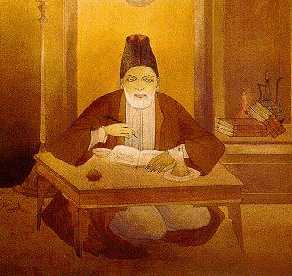
My name is Mirza Asadullah Beg Khan ‘Ghalib’ and I am not a terrorist!

Image from http://www.the-south-asian.com

Update: If you’re on Twitter please help make #Ghalib trend @ Twitter India – Tweet his sher’s!

That is what it has come down to. DNA reports that according to Maharashtra police, a Ghalib couplet on a piece of paper is proof the Students Islamic Movement of India is into the business of mass violence:

Of the several affidavits — filed in court asking for the ban on the group to continue — accessed by DNA, one by inspector Shivajirao Tambare of Vijapur Naka, Solapur, cites a Ghalib verse — as part of evidence — to show how dangerous SIMI (Students Islamic Movement of India) is.

Mauje khoon ser se guzer hi kiyon na jay, Aastane yaar se uth jaein kaya! A loosely translated Marathi version in the affidavit concludes that these lines speak of bloodshed and animosity. Continue reading My name is Mirza Asadullah Beg Khan ‘Ghalib’ and I am not a terrorist!

On the Supreme Court granting bail to Dr Khaleel Chishty: PUCL statement

Given below is the statement of the PEOPLE’S UNION FOR CIVIL LIBERTIES on the Supreme Court’s decision yesterday to grant bail to Dr Khaleel Chishty. Given below the statement is the full text of the court order

The PUCL is extremely relieved that the SC decided to set free from the Prison 80 year old Dr. Khalil Chishty serving a life sentence in Ajmer Central Jail for a murder case. This is an extremely significant step but not sufficient as bail for Dr. Chishty as seen earlier when the trial was underway for 19 years, was like house arrest. he had to report regularly to the police and could not step out of his house and area. We hope that the next step of sending Dr. Chishty back home happens soon as it would be better for all that we send him back alive, when he can be with those who care for him and love. The PUCL appreciates the wisdom of the Supreme Court for this judgement.
While Judicial remedy would be pursued in the Supreme Court, we would like to remind all that the executive remedy as provided in the Indian Constitution of President and the Governot of a State granting Mercy to an individual at any stage of the judicial process, was stalled by the Governor of Rajasthan, who despite being recommended twice by the Chief Minister of Rajasthan that Dr. Chishty be pardoned, the Governor only let the file gather dust. Continue reading On the Supreme Court granting bail to Dr Khaleel Chishty: PUCL statement

Gurgaon workers – damned if they do, damned if they don’t: Anumeha Yadav

Guest post by ANUMEHA YADAV

In last three weeks, over a thousand workers went on a rampage on the streets of Gurgaon in two separate incidents.  On March 19,over 2000 workers from Orient Craft, India’s largest apparel-maker and exporter, attacked the office premises pelting stones at it and set 10 vehicles on fire, including a police van. They were reacting to the news that Naseem Ahmed a worker in his 20s in the hosiery unit in Sector 34 had been stabbed in the arm with a pair of scissors by Harinder ‘Lovely’ Singh, alabour contractor at Orient Craft. Continue reading Gurgaon workers – damned if they do, damned if they don’t: Anumeha Yadav

Review: ‘Behind the Beautiful Forevers’ by Katherine Boo

Guest post by MITU SENGUPTA

In a remarkable book about slumdwellers in Mumbai, Katherine Boo brings to light an India of “profound and juxtaposed inequality” – a country where more than a decade of steady economic growth has delivered shamefully little to the poorest and most vulnerable.  But though indeed a thoroughgoing and perceptive indictment of post-liberalization India, the book fits into a troubling narrative about the roots of India’s poverty and squandered economic potential.

This is a beautifully written book.  Through tight but supple prose, Boo offers an unsettling account of life in Annawadi, a slum near Mumbai’s international airport.  In Boo’s words, this “single, unexceptional slum” sits beside a “sewage lake” so polluted that pigs and dogs resting in its shallows have “bellies stained in blue.” It is hidden by a wall that sports an advertisement for elegant floor tiles (“Beautiful Forevers” – and hence the title).  There are heartrending accounts of rat-filled garbage sheds, impoverished migrants forced to eat rats, a girl covered by worm-filled boils (from rat bites), and a “vibrant teenager,” who kills herself (by drinking rat poison) when she can no longer bear what life has to offer.

Continue reading Review: ‘Behind the Beautiful Forevers’ by Katherine Boo

Mamata’s order that stoked the media war: Independent Observer

[This is a guest post by an independent journalist journalist and in Kolkata]

How difficult is to make a choice between the Caligula and the powerful senators who plotted against him, purportedly to save Rome from the populist-turned paranoid emperor?
The question comes to one’s mind in view of the ongoing public spat between Bengal chief minister Mamata Banerjee and a powerful section of Bengal media which has virtually likened her to a female (a non-libidinous also) version of Caligula. The row, that now involves pro and anti-Mamata media blocs also, has been triggered by a recent government order asking 2500 plus state-run and aided libraries to subscribe, initially, to eight pro-government newspapers —five Bengali, two Urdu and one Hindi— barring the market leaders in these segments. The circular of the state libraries and mass education department cited the ‘promotion of free-thinking’ as the reason behind favouring the chosen newspapers.

However, the issues involved are neither limited to Mamata’s increasing attempts to browbeat critical media as the aggrieved houses are complaining about nor her well-meaning effort to support ‘small’, resource-starved newspapers against their big brothers as she herself and beneficiaries of her patronage are claiming. A closer scrutiny reveals that there are more to it beyond the binary of Oraamra (them and us), now part of Bengal’s political and media lexicon after Buddhadeb Bhattacharjee’s infamous bragging over his government’s brute majority in the state assembly in order to rubbish all opposition to his policies. Continue reading Mamata’s order that stoked the media war: Independent Observer

The Case That Never Was: A JTSA Report on the ‘SIMI’ Trial of Jaipur

In September 2001, the central government banned Students Islamic Movement of India (SIMI) through a notification. Since then, the ban has become a convenient pretext for the police and investigative agencies to arbitrarily pick, detain and then arrest and frame Muslim youth, ostensibly on charges of carrying on the activities of the banned organization. Sections 3, 10, 13 of Unlawful Activities Prevention Act (UAPA 1967) have been invoked against scores, if not hundreds of Muslim youth across the country. Some of these men had been active in SIMI prior to its ban; some had outgrown the organization because they had crossed 30 years—the age limit for membership in the organization; some were guilty of having acquaintances, friends or relatives who had been involved or had been office bearers in SIMI.  On most occasions, the cases against former members or purported activists of SIMI have rested on seizure of banned literature, namely copies of magazines published by SIMI before the ban. The flimsiness of evidence –and the sketchiness of charges— has resulted in dozens of acquittals; but equally true is the fact that the overwhelming nature of the ‘war on terror’ discourse and its institutional structures has allowed the conviction of many even in face of glaring lack of evidence.

The JAMIA TEACHERS SOLIDARITY ASSOCIATION (JTSA) profiles here one such case, which came to be known as the Jaipur blasts case, even though the accused were not charged with either conspiracy or execution of bomb blasts in Jaipur in 2008.  So what were these men guilty of? According to the FIR and chargesheet, they were responsible for carrying out activities of the banned SIMI.  How and why did these men come to be identified with the Jaipur blasts? Theirs is a terrible and tragic tale of frame up by the Rajasthan police.  It is above all testimony to the employment of UAPA against alleged or former members of SIMI and of the manner in which rule of law is subverted, violated and discarded as soon as the ‘T’ word is uttered.

Download the full report here (.pdf, 1.1 MB, 36 pages).

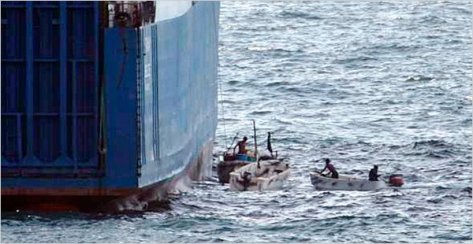
Bring home the crew of MV Albedo: Yusra Askari

Guest post by YUSRA ASKARI

Karachi: The MV Albedo and its crew; 7 Pakistanis, 7 Bangladeshis, 6 Sri Lankans, 2 Indians and 1 Iranian national have been held hostage by pirates off the coast of Somalia, for over 17 months now. With the final deadline fast approaching, last ditch efforts are underway in Pakistan to ensure the safe return of all 22 sailors. Continue reading Bring home the crew of MV Albedo: Yusra Askari

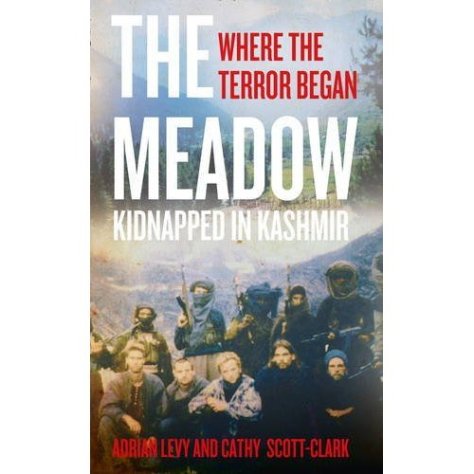
Who killed four foreign tourists in Kashmir in 1995?

Given below is the text of a petition submitted to the Jammu & Kashmir State Human Rights Commission by the INTERNATIONAL PEOPLE’S TRIBUNAL ON HUMAN RIGHTS AND JUSTICE IN INDIAN-ADMINISTERED KASHMIR (IPTK) together with the ASSOCIATION OF PARENTS OF DISAPPEARED PERSONS. A Division Bench of the SHRC will hear the case on 17 April 

To,
Mr. Tariq Ahmad Banday,
Secretary,
Jammu and Kashmir State Human Rights Commission,
Srinagar

Date: 6 April 2012

Dear Mr. Banday,

The International People’s Tribunal on Human Rights and Justice in Indian-administered Kashmir [IPTK] (a brief on the Tribunal’s premise and objectives may be found here) and the Association of Parents of Disappeared Persons [APDP], present before you the following submission:

  1. In July 1995, during a trekking expedition, six persons were reportedly kidnapped by a group that referred to itself as “Al-Faran” [a front of the Harkat-ul-Ansar]. The six persons kidnapped were: John Childs [Simsbury, Connecticut, USA], Dirk Hasert [Bad Langensalza, Germany], Don Hutchings [Spokane, Washington State, USA], Keith Mangan [Teesside, Middlesbrough, England], Hans Christian Ostrø [Oslo, Norway], and Paul Wells [Blackburn, Lancashire, England]. Continue reading Who killed four foreign tourists in Kashmir in 1995?

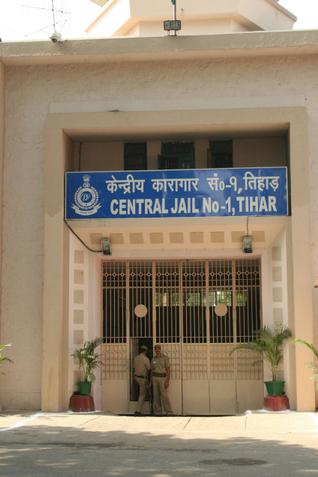
My Days in Tihar Jail

Mrs Gandhi, the then Prime Minister of India, represented the Rai Bareli seat in the Lok Sabha. On 12th June 1975 she was unseated on charges of election fraud and misuse of state machinery in a landmark judgement by Justice Jagmohan Lal Sinha of the Allahabad High Court.  Fakhr-ud-Din Ali Ahmad, the then President of India, declared internal emergency on the 25th of June,  on the recommendation of a pliable cabinet presided over by Mrs G. The people of India lost all civil liberties for a period of 21 months.

Trade unions were emasculated, political opponents were arrested, newspapers censored, the only place where a semblance of freedom survived, for a short while, were the universities, most were in turmoil and were being singled out for special attention. Students unions were being banned and activists were being picked up and thrown in jail.

Continue reading My Days in Tihar Jail

Between Aid Conditionality and Identity Politics – The MSM-Transgender Divide and Normative Cartographies of Gender vs. Sexuality: Aniruddha Dutta

This guest post by ANIRUDDHA DUTTA continues a theme raised on Kafila by Rahul Rao

Late last year, the UK and US governments made announcements supporting the global propagation of LGBT (lesbian-gay-bisexual-transgender) rights as human rights, suggesting that the future disbursal of aid might be made conditional on how LGBT-friendly recipient countries are perceived to be. The potential imposition of ‘gay conditionality’ on aid has been rightly critiqued for imposing a US/European model of sexual progress on ‘developing’ countries, which may justify covert geopolitical agendas and fail to actually benefit marginalized groups. But whatever form such conditionalities may take in the future, a more implicit and routine form of aid conditionality has been already at work, relatively unnoticed, for several years now – the presumption of distinct and enumerable minorities corresponding to categories like homosexual or transgender as target groups for aid in socio-cultural contexts where gender/sexual variance may not be reducible to such clear-cut categories or identities. Increasingly, community-based organizations (CBOs) working to gain gender/sexual rights or freedoms need to define themselves in accordance with dominant frameworks of gender-sexual identity to get funding both from foreign donors and the Indian state, creating identity-based divisions among CBOs and presenting existential challenges to communities that do not exactly fit these categories.

Continue reading Between Aid Conditionality and Identity Politics – The MSM-Transgender Divide and Normative Cartographies of Gender vs. Sexuality: Aniruddha Dutta

Life After Capitalism? A Document From Another Time

The French Marxist philosopher Louis Althusser, who perhaps reflected most on the question of ‘ideology’, once wrote that “ideology moves, but with an immobile motion that keeps it where it is”. Althusser did not make any claim about the truth or falsity of ideology. At a certain level, ideology undoubtedly refers to something that is real or true. What interested Althusser instead, was the relationship of ‘ideology’ to what he called ‘science’ – namely, that critical activity, which continuously works to take knowledge forward. Science, according to him, always lived by focusing on that which it did not know; ideology on the other hand, was that which remained with the obviousness of the already-known. Every new question that a science poses is effectively subsumed by ideology to give us something that we already knew. That is why science, he believed, was always  pursued, beseiged and occupied by ideology and had to continuously struggle to free itself from its grasp in order to live.

The CPI(M)’s ‘Draft Resolution on Some Ideological Issues’ prepared by the party for discussion and adoption at the party’s 20th Congress that began in Kozhikode today, is truly an ideological document in Althusser’s sense. It claims to move with the times and update the party thought apparatus but in reality, moves in order to stay where it is. It works to relentlessly re-present all the difficult questions of our times as if they were already known to the founders of something called ‘Marxism-Leninism’.

Continue reading Life After Capitalism? A Document From Another Time

DISSENT, DEBATE, CREATE