…and now Judicial Impunity?: JKCCS

This release comes from the JAMMU KASHMIR COALITION OF CIVIL SOCIETY
2 May 2012: The recent Supreme Court judgment in the Pathribal case is very disappointing.
Fake encounters, along with various other human rights violations, have been a reality for the people of Jammu and Kashmir over the last twenty two years. In 2008, according to media reports, Supreme Court Justices Aftab Alam and G.S. Singhvi made observations in court in relation to the practice of fake encounters for rewards in Jammu and Kashmir. With about 8000 persons disappeared, 70,000 persons killed, numerous cases of torture, rape and other human rights violations, Jammu and Kashmir has seen institutional denial of justice. Continue reading …and now Judicial Impunity?: JKCCS →

Pathribal ruling a setback for justice in Jammu and Kashmir: Amnesty International

This press release comes from AMNESTY INTERNATIONAL

1 May 2012

Special powers that allow India’s armed forces suspected of involvement in extra-judicial killings to sidestep the civilian courts have been reinforced in a disappointing court ruling over the notorious killings of five Kashmiri civilians 12 years ago.

India’s Supreme Court has contradicted a reported statement by its Justices in February 2012 that army personnel suspected of murder should be placed in front of a civil judge.

Instead it opted to give military authorities eight weeks to bring about the court martial of eight army officials allegedly responsible for the unlawful killing of five youths in Pathribal, in March 2000. Failing that, the Central Bureau of Investigation (CBI), may apply to prosecute the army personnel. Continue reading Pathribal ruling a setback for justice in Jammu and Kashmir: Amnesty International →

Resisting Culinary Fascism: Nabanipa Bhattacharjee

 Guest post by NABANIPA BHATTACHARJEE

At the end of last month (March 2012) students of Jawaharlal Nehru University (JNU), New Delhi under the banner of a recently formed group called the New Materialists (NM) organized a public meeting to debate the issue of (dis)allowing certain kinds of food – beef and pork in particular – on the campus. The group, as one of its members Suraj Beri said, intended to petition the university administration to allow the sale of beef and pork in the canteen(s), and fight for inclusion of the same in the hostels’ menus; it was a struggle, as the NM declared, against the Brahmanical dietary impositions on Dalits and other minority community students of JNU. In fact, Francis (JNU students of the 1990’s would remember the man from Kerala) who ran a canteen at the basement of the School of Social Sciences II did serve beef curry on Saturdays, and it would not be an exaggeration to say that there would be more than a mad rush for that. However, he was pressurised – by Hindu right wing groups and other similar forces – to stop the sale of the “forbidden” food, and the canteen was eventually closed down.

Continue reading Resisting Culinary Fascism: Nabanipa Bhattacharjee →

A Statement Supporting the Delhi HC Judgment on Section 377: Ruth Vanita

Guest post by RUTH VANITA, Professor at the University of Montana. This statement was written in the context of the teachers’ intervention in the Supreme Court in the appeal by religious groups against the Delhi High Court judgement on Section 377 . This statement does not form part of court documents. You can read Shivaji Panikkar’s statement here

I belong to a middle-class family of educationists, various members of which migrated to Delhi from Rangoon and Lahore at Partition. I was educated entirely in Delhi, first at Springdales School, and then at Miranda House. I got my Ph.D.  from Delhi University. I started teaching at the age of 20 at Miranda House; I taught there for 18 years and then for two years as a Reader in the English Department, Delhi University, before taking early voluntary retirement in 1997.

Continue reading A Statement Supporting the Delhi HC Judgment on Section 377: Ruth Vanita →

A Statement Supporting the Delhi HC Judgment on Section 377: Shivaji Panikkar

Guest post by SHIVAJI K PANIKKAR,  art historian and Dean, School of Culture & Creative Expressions, Ambedkar University, Delhi. This statement was written in the context of the teachers’ intervention in the Supreme Court in the appeal by religious groups against the Delhi High Court judgement on Section 377 . This statement does not form part of court documents.

You can read Ruth Vanita’s statement here.

I was born in a traditional, upper caste Hindu family and lived in Kerala till I was 22 years old, and since then shifted to study, work and live inBaroda,Gujarat. In 1975c I completed a B.A in Kerala with Economics and History as my subjects. InBarodathrough 1980s, at MS University I did another B.A. in Dance (Bharatanatyam), an M.A. and Ph. D in Art History as specialization. I was appointed as Professor in 1998. Till recently I was Head of Department of Art History & Aesthetics, Faculty of Fine Arts, M.S. University of Baroda. I have an experience of teaching at the University of about 25 years.

Since childhood    I knew I had homosexual inclinations, and lived it secretively till the age of about 43/45 years. Since then I lived an openly gay life; a fact that I couldn’t any more hide in my personal life as well as in my professional life. It was a matter of emotional and intellectual honesty and integrity that I accepted in public my sexual orientation, and no more live a life of fear and oppression.

Continue reading A Statement Supporting the Delhi HC Judgment on Section 377: Shivaji Panikkar →

Teachers’ Intervention in the Supreme Court on Section 377

The Delhi High Court judgement reading down Section 377 to decriminalize consensual sex between adults was appealed against in the Supreme Court by several religious groups. However during the appeal, the Government of India withdrew its objections to the High Court judgement. In addition, there were some parties that intervened to support the judgement – parents, medical practitioners and teachers, among others. The Supreme Court judgement is awaited, but meanwhile, I am posting below the  position of the 16 teachers who intervened in this matter. This statement does not form part of court documents.

As teachers we essentially wanted to make the argument that Section 377 vitiates for everybody (and not just for gay people) the general atmosphere of free expression, learning, enquiry, and dignity that an academic environment should ensure.  That we oppose Sec 377 because its existence on the statute books legitimizes an atmosphere that runs counter to the spirit of openness and acceptance of difference that should mark modern academic spaces.  Its existence is not only an affront to those who are non-heterosexual, but it is an affront to each and every person in the academy who believes that every teacher and student has dignity that should be respected, and that learning is a continuous and life-long process, in which fixed ways of thinking are continuously challenged and reshaped by winds of change.

  Continue reading Teachers’ Intervention in the Supreme Court on Section 377 →

Unpacking India’s Internet Censorship Debate

Recent debates on Internet censorship in India have focused to the allegedly free-for-all nature of the internet. Those of us who have argued against internet censorship have been somewhat misrepresented as arguing for absolute freedom whereby the reasonable restrictions laid down in Article 19 (A) of the Constitution of India don’t apply. Nothing could be farther than the truth.

It has been said that the internet can be used to incite violence, particularly inter-communal violence, and there needs to be a mechanism to prevent that. Communications minister Kapil Sibal wants internet giants to “self-regulate” for this reason, denying that he wants to censor political dissent on the internet. Following on the heels of his expression of such concern in December 2011, Mufti Aijaz Arshad Qasmi and journalist Vinay Rai filed cases against various internet companies for similar material that is religiously offensive.It needs to be pointed out, however, that the cases filed by Qasmi and Rai are under the Indian Penal Code and do not even invoke the Information Technology Act. So if the Indian Penal Code can be used against religiously offensive material why do we need any new mechanism to “regulate” or even “self-regulate” the internet? Continue reading Unpacking India’s Internet Censorship Debate →

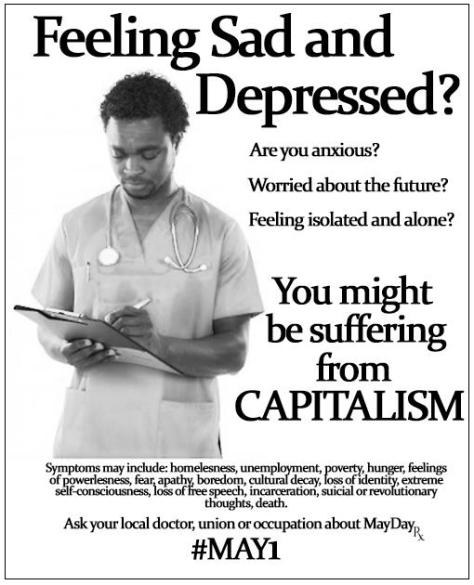
Happy May Day!

The Semiotics of Happiness

Guest post by ABHIJIT DUTTA

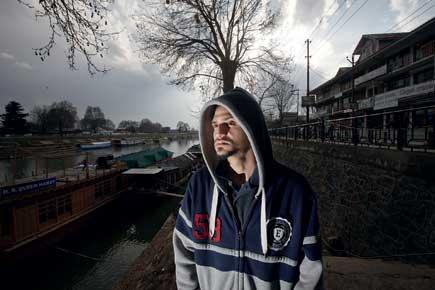
MC Kash - Photo by Ashish Sharma / Openthemagazine.com

It is not every day that you wake up to find your Twitter timeline flooding with the assertion that Kashmir – of all places – is happy. Dangerous? Of course. Beautiful? well, yes, the postcards are pretty enough. Angry? Sure, they look it. Radical? Oh god, yes. Happy?

If you ask Manu Joseph, author of Serious Men and editor of Open, the answer is yes. In this article, he talks about his interactions with “regular” people in the valley – the non elite, the non journalist, the non artist, the non writer – and is convinced that Kashmir is ready to move on. That it has already moved on. That Kashmir is happy. As proof, he offers these exhibits: (a) record high tourism numbers, (b) 2010 IAS topper Shah Faesal (who tells him “commonsense is finally winning”), (c) a meeting of a District Magistrate with elected leaders of a village (“not a word about politics”, says the DM to Mr. Joseph, “They want to talk about things that matter to them and their families”) and (d) the desire for city life (“we want KFC”).

Continue reading The Semiotics of Happiness →

A Brief Summary of the Interlocutors’ Report on Kashmir: Shoaib Rafiq

This guest post by SHOAIB RAFIQ is an analysis of the Home Ministry-appointed group of interlocutors’ report on Kashmir 

We swear by the fundamentals of absurdism
of that all we have learned
our solutions will mimic the ludicrousness
that we employ in our education, research, and other related shit. Continue reading A Brief Summary of the Interlocutors’ Report on Kashmir: Shoaib Rafiq →

‘Sau Mein Pachees Haq Hamara’: Caste of a Scam

This press release was put out by the SC/ST BUDGET ADHIKAR ANDOLAN after a large protest in Delhi on 24 April

Massive uproar and agitation by over a thousand SC/ST’s marked the initiation of the campaign “Sau Mein Pachees Haq Hamara” at Jantar Mantar on 24 April, 2012. The protesters flooded the roads of Jantar Mantar as they marched along the high pitch drum beats, adding to the rhythm of the march. Even the scorching heat did not deter those who joined the protest march from several other states. They hooted in unison, “Hamara Haq Idhar Rakho!” Continue reading ‘Sau Mein Pachees Haq Hamara’: Caste of a Scam →

Things Fall Apart: A Review of Behind The Beautiful Forevers

This week, I reviewed Kate Boo’s Behind The Beautiful Forevers for The Hindu. At the outset, I liked the book and, as a reporter, was blown away by a number of things that the review doesn’t really address – the way the book was organised, the reporting and research process etc. The review also addresses some of the points made by Mitu Sengupta in her review of the book – published a few weeks ago on Kafila.

Behind a low wall near the taxi stand adjacent to the Sahar Police Station in Mumbai is a ledge of concrete suspended seventy feet above the Mithi River. “By some trick of wind in the sluice,” Katherine Boo writes in Behind the Beautiful Forevers, “trash tossed over the wall tended to blow back and settle on this sliver of concrete. It was a space on which a small boy could balance.”

That small boy is Sunil, a 12-year-old garbage collector determined to find as much trash as it takes to buy food lest hunger stunt his growth and leave him a runty man-child forever shorter than his younger sister. “To jump start his system, he saw he’d have to become a better scavenger. This entailed not dwelling on the obvious…” Read on

Freedom in the Cage: Photos from a protest against internet censorship in Delhi

These photographs were taken at Delhi’s Jantar Mantar on Sunday, 22 April, by MUKUL DUBE. This protest was organised by the Aseem Trivedi led Save Your Voice campaign against India’s IT Rules 2011 that, as has been explained earlier on this blog, are a set of procedures that are already causing internet censorship in India bypassing the right to legal remedy and natural justice. Trivedi’s website, http://www.cartoonsagainstcorruption.com, was taken down by its domain registrar and he was not even informed in advance, thanks to these rules. The Rajya Sabha, upper house of the Indian Parliament, will debate these rules any time between 24 April and 9 May. You can urge all Rajya Sabha MPs to vote for the motion in a petition here or write directly to Rajya Sabha MPs from your state, in just a few clicks, here.

This slideshow requires JavaScript.

NWMI Condemns The Violent Abuse Of Meena Kandasamy

[We at Kafila are absolutely horrified at the abuse directed at poet and activist Meena Kandasamy for expressing her views on twitter regarding the beef-eating festival at Osmania University. That supposedly ‘neutral’ educational institutions replicate upper-caste Hindu dietary taboos, is no surprise, nor that the ABVP reacted with its customary violence to that questions upper caste privilege. What is shocking is the attitude of the Vice Chancellor and the sexist, misogynist, violent speech directed at her on the web. It is telling that those who take such umbrage at the eating of cows, think nothing of advocating the public rape of women. Below is a statement issued by the The Network of Women in Media condemning the hate speech directed at her. We stand in solidarity with Meena Kandasamy.]

The Network of Women in Media, India (NWMI), strongly condemns the violent and sexist abuse unleashed on poet, writer, activist and translator Meena Kandasamy, presumably in response to her posts on Twitter about the beef-eating festival at Osmania University, Hyderabad, on 15 April 2012 and the ensuing clashes between groups of students. Continue reading NWMI Condemns The Violent Abuse Of Meena Kandasamy →

Press Release Against IT 2011 Rules

PRESS RELEASE

The notification of the Information Technology (Intermediaries Guidelines) Rules 2011 in April 2011 has resulted in the creation of a mechanism whereby intermediaries (such as Google, Facebook, Yahoo, etc) receive protection from legal liability in return for trading away the freedom of expression and privacy of users.

The Rules demand that intermediaries, on receiving a complaint that any content posted online is considered grossly harmful, harassing, blasphemous, defamatory, obscene, pornographic, paedophilic, libelous, invasive of another’s privacy, hateful, or racially, ethnically objectionable, disparaging, relating or encouraging money laundering or gambling, or otherwise unlawful in any manner, have to disable the content within 36 hours of receipt of complaint. The rules also require the intermediaries to provide the Government agencies information of users without any safeguards.
Continue reading Press Release Against IT 2011 Rules →

Freedom in the Cage: 22 April, 2012

Press Invitation

FREEDOM IN THE CAGE:

We urge the Parliament TO SAY NO TO INTERNET CENSORSHIP

Jantar Mantar, 22nd April 2012, Sunday, 11AM to 5PM

Artists, musicians and Internet users will participate and talk. We are putting cages at Jantar Mantar with artists inside playing guitars and painting canvases. This symbolises that IT rules have caged our freedom which was granted by the constitution of free India. It is about our basic democratic right of free speech. It is about police not knocking on our doors for forwarding emails. It is about what you and I can put up on our blogs without worrying whether it hurts the rich and the powerful.
We support free speech, free knowledge and free software. Continue reading Freedom in the Cage: 22 April, 2012 →

Hyderabad Riots

Report of the Fact Finding Team

Civil Society Organisations of Hyderabad constituted a Fact Finding Team at a meeting held on 12th April to enquire into the riots and disturbances in Hyderabad between 8th to 12th April 2012.

The Team Comprised of Mr. Jeevan Kumar (HRF), Syed Bilal (HRF), Ms. Audhesh Rani, Mr. M.A. Hakeem, (ICAN), Mr. B. Ramakrishnam Raju (NAPM), Ms. Noor Jahan (COVA) and Dr. Mazher Hussain (COVA). The Fact Finding Team received local facilitation from Mr. Azeem Khan (Advocate), Mr. Vijay Kumar (AITUC), Mr. Yadgiri Reddy, Mr. Samad and Mr. Waheed Ansari.

The Team made field visits on 16 and 17 April 2012 and met the following:
1.  Members of the Hindu and Muslim communities in Madannapet, Kurmaguda and Saidabad
2. Mr. Sahadev Yadav, Local Corporator
3.  Mr. Iqbal Siddiqui- ACP Malakpet
4.  Mr. Amit Garg IPS, Additional Commissioner, Law & Order, Hyderabad City Police
5. Mr Madan Mohan Rao District Revenue Officer, Hyderabad.6.
Earlier, on 14th April a team of Interfaith Forum had visited all the 7 places of worship that were desecrated between 8th and 12th of April and had met the priests and community leaders of these areas.

Events

At about 6.30 am on 8th April the priests of Sri Abhaya Anjaneya Swami Devalayam located in a by lane in Kurmaguda noticed green colour (associated with Islam and Muslims) sprayed on the walls of the temple and  burnt leg pieces of a cow placed on the grill. The priests informed Mr.Sahadev Yadav, the local Corporator from the BJP party who in turn informed the police who reached the spot by about 7 am.

Continue reading Hyderabad Riots →

What’s up with India’s IT Rules?

*

The IT Rules of 2011 will come up for discussion in the Rajya Sabha very soon under an annulment motion.

Urge all Rajya Sabha MPs to vote for the motion in a petition here or write directly to Rajya Sabha MPs from your state, in just a few clicks, here.

Here’s an FAQ on the IT Rules by SFLC.in and here’s an analysis of the rules by PRS Legislative Research.

Is India’s HRD Ministry Barking Up The Wrong Tree?

Guest post by RAM KRISHNASWAMY

HRD Minister Kapil Sibal seems to be getting a lot of flak from so many quarters on Jan Lok Pal Bill, HRD Computer Tablet Aakash and now his backing of ISEET, one common national entrance exam for science and engineering. Now as HRD Minister he has inadvertently attracted the wrath of over 1,75,000 IIT alumni globally; as also faculty and students of all IITs who are opposed to his idea of killing IIT-JEE and replacing it with a common national exam called ISEET.

Yes, Kapil Sibal is the HRD Minister but he is a lawyer and a politician and is not a technologis. It appears that he is being advised by technologists who are misleading him and telling him what he wants to hear, as opposed to giving him solid advice in the interest of the nation.

Let us just look at IITs and JEE alone.

Let us see what truly is wrong with IITs & JEE and what recommendations the HRD Minister has received and from whom.

If we were to simplify the problem with JEE as it is administered in 2012 they can be listed as follows (not a comprehensive list):

Continue reading Is India’s HRD Ministry Barking Up The Wrong Tree? →

Rajya Sabha to consider repealing Kapil Sibal’s IT Rules

When the Parliament’s budget session re-opens on April 24, the Rajya Sabha will vote on an annulment motion against the IT Rules promulgated in April 2011 that provide for “intermediaries” to remove the online content they are asked to by anyone. The motion has been moved by P Rajeeve, Rajya Sabha member from the Communist Party of India-Marxist.

Speaking on the phone from Thrissur, Rajeeve said, “The IT Rules go against the Fundamental Rights of the Constitution and against the principles of natural justice which are the foundation of our criminal justice system. The rules ask intermediaries to remove content without giving the content owner an opportunity to defend it. They will cause private censorship.”

The Left parties have decided to back the motion and efforts are on to mobilise members of Parliament across party lines. If the motion is accepted by the Rajya Sabha, it will be sent to the Lok Sabha, probably in the monsoon session. Continue reading Rajya Sabha to consider repealing Kapil Sibal’s IT Rules →

Forget Hair-Oil-Powered Indulekha, Remember the Muditheyyam

Well, the truth is that I care two hoots for Indulekha Hair Oil, their stupid ads, and the wide-eyed chubby-cheeked teenage girls who they usually cast as epitomes of Malayalee feminine grace. All of Mallu FB world is agog with discussion about a brainless ad for the Indulekha Hair Oil, in which a fiery-looking woman whose dress-style follows the dress conventions of our Malayalee AIDWA Stars, bursts with indignation over the terrible harassment that women with long hair face on buses, how we are all forced to cut off “the hair that we have” (‘Ulla mudi’) and go about with short hair “like men” because of this horrible injustice, and finally, how we all ought to grow our hair long (and let it down, possibly) and hit back at such harassers. This stupid ad is actually only one among other stupid ads for this hair-oil which uses currently-common ideas like ‘women’s collectives’ (stree koottaimakal). All of them are jarring since the concepts they use, and what they aim at, simply don’t mix.Part of the outrage has been fueled by the fact that the ad uses as a model Sajitha Madathil, who is well-known as a feminist theatre activist in Kerala. Continue reading Forget Hair-Oil-Powered Indulekha, Remember the Muditheyyam →

DISSENT, DEBATE, CREATE