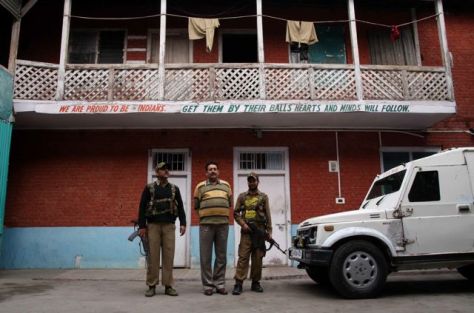
This photograph of an Ikhwani camp in south Kashmir was taken by JAVED DAR in 2008. Standing in the middle is a well-known ‘government gunman’, Jehangir Khan. Photo courtesy Conveyor.

This photograph of an Ikhwani camp in south Kashmir was taken by JAVED DAR in 2008. Standing in the middle is a well-known ‘government gunman’, Jehangir Khan. Photo courtesy Conveyor.
Guest post by SANKAR RAY
The CPI(M) general secretary Prakash Karat and the Left Front chairman Biman Bose deserve thanks for referring to the WikiLeaks revelation about the US enthusiasm in seeing a change of guard at the Writers’ Buildings, the seat of the Government of West Bengal.
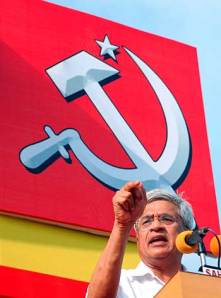
Quoting the cable no 230353 10/20/2009, Mr Karat conveyed the gist of it as follows: “Since the May 2009 parliamentary elections elevated West Bengal’s regional party, All India Trinamool Congress, from obscurity to the second largest constituent party in the United Progressive Alliance, its leader, Mamata Banerjee, has conscientiously sought to re-brand herself as West Bengal’s Chief Minister-in-Waiting. She is using the considerable administrative resources at her disposal as Railway’s Minister, political resources as leader of the state opposition party, and personal resources to initiate this transformation. Supporters and critics acknowledge the new image, but question whether it is indeed a new product, or simply new packaging. Backed by a large parliamentary constituency and allied with the ruling Congress party, Banerjee’s Trinamool is well placed to win the 2011 state assembly elections if she can continue along her current path of self-restraint and avoid making any mistakes along the way.” For details, the reader has to visit http://pragoti.org, even though it’s unabashedly pro-CPI(M).
The CPI(M) supremo observed that the AITC brass “is very much within private outreach. I’m in no position unfortunately to investigate and tell you what they are doing to fulfill this general direction they’ve given in the cable”.
Continue reading Did You Say ‘US Imperialism’, Prakash Karat? Sankar Ray

For many of us in India he was Amitabh Bachhan and Dilip Kumar combined in one, although he did no action. His action consisted of something else altogether. He could play any character in the world, sometimes animals too. His impersonations of Dilip Kumar were sometimes better than the thespian’s own act. He could speak well, emote well, mimic brilliantly, parody, caricature, satirize and imitate almost anything and anybody. He could do all of this without appearing crude in the slightest way. His understated demeanour, his timing and his ability to retain a straight face through the most ridiculous of situations was more than a gift, through it he brought class to whatever he did. He has often been described as a comedian but if he was a comedian then he redefined the art of comedy and created a genre which could be performed only by himself. He was a one man entertainment industry and unlike film starts from this side of the border he needed nothing other than himself. He was his own writer, performer, director, presenter. Here was a fusion of an artist and his material that is rarely seen in the performance arenas in the subcontinent. Continue reading A Tribute to Moin Akhtar (1950-2011)
It has to be seen and heard to be believed! Former Arambagh CPM(M) MP Anil Basu , addressing an election rally in his home turf likened Mamata Banerjee to a ‘whore of Sonagachi’, who is now getting rich clients from the US to give money for her election campaign! I draw attention to this with the greatest of respect for the women he is referring to, sex workers who work hard to make a living. When Basu refers to them, however, it nothing but a statement of misogynist contempt for women in public and reveals, once again the mindset of the Left leadership that rules West Bengal.
Some extracts from today’s Indian Express report:
“Addressing a rally yesterday, Basu made references to Sonagachi — Kolkata’s red-light area. “Where is she getting the money from?” he asked. “From which bhatar (Bengali derogatory slang for a woman’s “illicit male partner”) did she get Rs 24 crore to fund the Trinamool Congress’s poll expenses?”
Saying that prostitutes in Sonagachi “do not even look at smaller clients” when they get a “big client”, Basu said now that the Trinamool has got a “big client” — the USA — to fund its poll expenses, it is not interested in the “smaller clients” from Chennai, Andhra Pradesh and other places in the country.”
Continue reading The ‘Whore of Babylon’ – Or, Misogyny, Sexism, CPM Style
Guest post by TAHA MEHMOOD

1.
Simon Bar Jona was a fisherman based in small town called Bethaida. They say one day Simon’s brother, Andrew, led him to a man who called himself Jesus. They say Simon and Andrew became disciples of Jesus.
One day Jesus asked his disciples, “Who do you think I am?”
His disciples looked at each other. They did not know anything about him. They did not know who he was. Some disciples said Jesus was actually John the Baptist: some said he was Elijah; and others though he was Jeremias. Jesus could have been any of these or none of these. But Jesus was not satisfied with the answer, so he asked again, “Who do you think I am?”
At that point Simon Bar Jona, the fisherman answered, “Are you not Christ, the Son of the living God?’“
Jesus was pleased, he replied, “Bless you, Simon Bar Jona: for flesh and blood has not revealed it to you, but my Father who is in heaven.” Continue reading The gospel according to a divine identifier – An essay on the biblical origins of UID: Taha Mehmood
Guest post by MONOBINA GUPTA
With the coming assembly elections, West Bengal seems to be poised on the edge of a historic upheaval that will, in all probability, enter the collective memory of its people, much like the momentous 1977 elections. The most palpable moment of this churning will manifest in what looks like an unbelievable denouement – that of the thirty-four year old monolithic rule of the Left Front. Equally stunning might be the image of Mamata Banerjee, bringing the red fortress down – a politician, almost bludgeoned to death by CPI-M cadres on 16th August 1990, now transformed into the emblematic face of this extraordinary hour. The 2011 polls may be billed as the great unraveling of West Bengal, its politics and culture – but also, I think, of gender relations. Banerjee is on the verge of acquiring a unique status, becoming the first woman head of a state well known for its misogynist culture, notwithstanding many claims to the contrary.
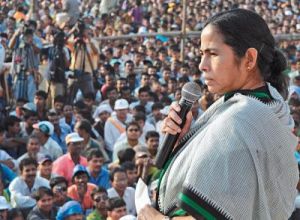
An important aspect of Banerjee’s ascendancy may be lost if we fail to locate her persona within this grid of power and gender relations; if we do not contextualize her in Bengal’s thriving culture of male chauvinism. The association of West Bengal and its ruling Marxists with the autonomy and radicalization of women – who are supposedly respected in Bengal unlike in other parts of the country – is a well preserved myth. Bengal respects its women, but only if they belong to the hallowed league of ‘Mothers and Sisters’. Like elsewhere, ‘deviant’ women have little place in the land of the Renaissance.
Continue reading The Paradoxical Figure of Mamata: Monobina Gupta
Guest post by SAROJ GIRI
Till very recently it was not possible to discuss Binayak Sen without referring to the corporate land grab and state repression in Chhattisgarh. Somehow Salwa Judum, the displacement of thousands of adivasis and the Maoist movement would come in the picture. Above all, what would come out is Sen’s work in the specific context of the suffering of the adivasis. Indeed soon after the bail order was granted, it came so naturally for Sen’s beaming wife to state that he will of course go back to resume his work in Chhattisgarh.
Upon his release from Raipur Central Jail on April 18 2011, Sen immediately called for a dialogue between the Maoists and the government and reminded us of so many other political prisoners languishing in the country’s jails. In the video showing Sen being greeted by his supporters after his release he enthusiastically joins in giving slogans saying, ‘Shankar Guha Niyogi Zindabad’. But the supporters soon after break into ‘Binayak Sen Zindabad’. You could immediately see this embarrassed look on his face, totally disapproving this iconisation.
Indeed, Sen seems very far off from celebrating his release as a major victory for democracy or a boost forIndia’s image as a modern democracy and so on. He seems really far off from the dominant discourse which seeks to cleanse the ‘Binayak Sen issue’ of the harsh realities of India’s dirty war, the inequality and the injustice towards the adivasis and their suffering. Continue reading Chronicle of a Bail Foretold: Saroj Giri
Guest post by DILIP D’SOUZA
So you’ve been following the Binayak Sen case. What now? What are the aspects and implications of the case to consider now that he is out on bail?
Here are a few that come to my mind. Your mileage may vary.
*The suspicious things Sen is supposed to have done. For example, you have heard often that Sen visited Narayan Sanyal in jail multiple times. Why, you ask. Whatever the reason, think of this: In 2006, before the first time (and indeed before each subsequent time), he wrote to the Raipur Jail Superintendent asking for permission to visit Sanyal. After this request made its way through the police bureaucracy, senior police officials in Raipur wrote to the same Superintendent saying “Central Jail Raipur mein bandi Narayan Sanyal se bhent karne ke liye Dr. Binayak Sen jaata hai to is karyalay ko koi aapatti nahin hai.” (“This department has no objection if Dr. Binayak Sen goes to meet Narayan Sanyal who is detained in Central
Jail, Raipur.”)
If the police had no objection to the visits “at the time”, why was this later an issue at all? Why have learned commenters made so much of this, hinting at dark things Sen must have been doing? One example, note how the author of the ‘report’ says “Admittedly, the meetings took place with prior permission from jail officials”, but has let stand the implication that there was something dark going on).
Continue reading He’s Out on Bail- Time to Think Again: Dilip D’Souza
This post is dedicated to Nadeem F. Paracha.

[Photo by ‘Life Church Burnley’ on Flickr: “shoorkot road toba tek singh love this place but need much improvement”]
So on Facebook I saw a fellow Punjabi who lives in vilayat has listed his hometown as Toba Tek Singh, Pakistan, which I thought was very cool. Why didn’t I get this idea? Never mind, I thought, like all good ideas this must be stolen. My hometown on Facebook now is also Toba Tek Singh, Pakistan. It was only much after going mad over Manto’s story did I discover that Toba Tek Singh was a real place in west Punjab. Always wondered what its people thought about the story. Continue reading Do I look painDoo?
On 9 April 2011, 11 members of the English Department of Delhi University (almost the entire Department) resigned from various (non-statutory) work committees within the Department. They carried on all their other duties, including teaching, regardless. This mass resignation followed repeated requests from them to their Head of Department to call a meeting of the Department Council of the English Department. By resigning (only from the non-statutory committees), the members of the Department were hoping to bring largely symbolic and moral pressure to bear on the Head, to perform his duties!!
You know something is seriously wrong with a workplace when members of Department have to bring pressure to bear on a Head to perform his or her regular, statutory duties. You should really smell a rat when it’s not the minions and juniors but the bosses at the highest levels that are bending and twisting rules to their advantage; publicly ignoring long-standing statutes and conventions; inventing new ones almost overnight; and practising selective amnesia about procedures.
Guest post by Pratiksha Baxi
The UGC’s new regime of qualifications, evaluation and supervision of teachers employed in universities makes fascinating reading for those who are entertained by the sublime ludicrousness of those with the power to shape our everyday lives in the academia.
The new regime betrays a lack of understanding of the basic enterprise of what academics do. The new regime is too voluminous to be read with lucidity at once. However it is not too difficult to understand immediately that the new regime, ushered in with the new pay hike, has imposed adverse conditions of employment. This is specially true for assistant professors who now are eligible for associate professorship only after 12 years of serving the University (instead of 5 years as earlier). The doctrine of reasonable and legitimate expectations stands fully violated by the UGC, as assistant professors at the time of employment would not have expected the imposition of these adverse conditions.
The UGC has ignored the fact that the revision of pay scales cannot enforce a contract – signed or otherwise – on any faculty to adhere to the new rules since such a contract can only be constituted as un-free and therefore, not valid. In other words, better pay which was ostensibly ushered in to meet the rising cost of living cannot be conditional to the UGC’s homogenising and uncreative vision of how to enhance evaluation of teachers’ performance and determine promotions.

Update: A hopeful note from Kavita Srivastava
An appeal by AMNA CHISHTY
16th April 2011
My father is almost 80 years old. He received his PhD from University of Edinburgh, Scotland in 1968 in Public Health Virology. He had an illustrious career as a professor and head of department of virology and microbiology at Karachi University. In the late 80’s he retired from his last job as the Director of Public Health at King Abdul Aziz Airport in Jeddah Saudi Arabia. He is a principled man who is well‐read, well bred and well traveled. He worked hard to raise a family of six children – one son (oldest, with engineering diploma), five daughters (one is a doctor, one is a Pharmacologist, two are graduates and myself an MBA in marketing). He educated us and built a house for us in Karachi and supported his younger brother in India as well. After retirement he wanted to live in that house in Karachi and enjoy his retirement with his family and his grandchildren.
The following events led to his current plight: In 1992 my father went to Ajmer to visit his ailing mother at his brother’s house near Dargah Sharif. Continue reading Free Dr Khaleel Chishty: Amna Chishty
 Guest post by MAHTAB ALAM
On Friday morning, when I started for the Supreme Court to attend the bail hearing of Dr. Binayak Sen, like many of our friends and comrades I was not sure of whether he would be granted bail. I was afraid that the case would be adjourned once again, as many of us who are regular visitors of courts expect, aware of the delaying tactics of government counsels, and the history of tareekh par tareekh. Kavita Srivastava, who has been following the case closely and campaigning tirelessly for Binayak’s release along with others, put the spirit back in me. It couldn’t get any worse, she said.
Fortunately, it turned out to be a good Friday. I was happy, as were my friends and comrades. We wanted to scream out of joy and happiness but we restrained ourselves for we were in the court premises and could be booked for ‘contempt of the Court’. Naturally, it was one of the happiest moments our life. Binayak and Ilinia a source of inspiration for hundreds of students and youth like me. I am happy for Binayak, for his family, especially for his mother, for ordinary (read extra-ordinary) people of Chattisgarh and for thousands of his supporters and justice loving people. Continue reading Chidambaram khush hua: Mahtab Alam
Guest post by ADITYA SARKAR
On the afternoon of 25 March, Nehru Place felt different. The rectangular maze of shops and offices wore its usual air of busy activity, but instead of being concentrated around a million acts of individualized consumption as it normally is, the energy humming through the place circulated around a public spectacle. Visitors, bystanders, and low-paid office and shop employees clustered in the central square, and on the balconies of the first floor, their gazes fixed on a street play taking place right outside the central Bajaj office. About twenty young men and women, all dressed in black, raised fists, shouted slogans, and mocked the usual suspects – MNCs, netas, and plutocrats, in the name of the aam aadmi. Shop after shop emptied out. Hundreds of people watched, many applauding loudly. The specific target of this public campaign, though, seemed opaque to most, as the publicity leaflets circulated rather more sluggishly than the sentiments evoked by the performers.
Guest post by MIR LAIEEQ ISHTIYAQ
As all of India celebrated the well-deserved Indian victory in the cricket world cup finals, the mood in the Kashmir valley was different. Their favourite team was ousted in the semi-final itself. On the eve of the semi-final between India and Pakistan at Mohali, a friend asked on Facebook: “That Kashmiris don’t support the Indian cricket team is well understood, but why is there so much support for Pakistan? Seems INDEPENDENCE IS JUST A MYTH…” There are no simple answers to this question.
[Pictures taken in Kashmir during the India-Pakistan Mohali semi-final by ISHAN TANKHA for Open magazine.] Continue reading Cricket, Azadi and Pakistan: Mir Laieeq Ishtiyaq
Guest post by JYOTI RAHMAN
Exactly ten years ago yesterday, upon arriving at a friend’s place, instead of ‘Shubho Nobo Borsho’ (Bangla new year greeting), I was greeted with: ‘Have you heard the news? Call home now. Hope family’s okay!’ Militant jihadis struck the new year’s dawn cultural events in Ramna, the major park at the heart of Dhaka, killing over half a dozen people. Since these events are attended by most of my family in Dhaka, and by most of my friends, we were worried. Frantic phone calls and MSN chats (or did we still do ICQ then, I forget) ensued. Fortunately, the families were safe. But this wouldn’t be the last time such phone calls were made.
Over the following years, militants bombed cinema halls, killed progressive politicians, carried out suicide attacks against judges, and tried to enforce shariah rule in rural northern parts of the country. Things got so bad that when a friend called to tell me about Muhammad Yunus winning the Nobel Peace Prize, upon hearing, ‘Have you heard about Yunus?’, my first reaction was ‘Oh no, another assassination’. Continue reading Still Bangali: Reflections on a New Year: Jyoti Rahman
 This release comes from AMNESTY INTERNATIONAL
Urgent Action: Child Detained Without Charge or Trial
UA: 115/11 Index: ASA 20/015/2011 India Date: 14 April 2011
Murtaza Manzoor has been held in administrative detention since 8 February by police in Jammu and Kashmir, India. His official birth certificate states that he is only 17 years old.
Murtaza Manzoor was arrested on 21 January by police in Srinagar, the capital of Jammu and Kashmir. He was arrested in relation to a case from June 2010 on allegations of attempted murder, assault and rioting. According to the police, he is an “incorrigible antisocial element” who was leading a protest march that resulted in protestors pelting police with stones. Continue reading Free Murtaza Manzoor

Sometime today, the Supreme Court bench of the honorable Justices H. S. Bedi and C.K. Prasad will hear arguments for and against the petition asking that Dr. Binayak Sen, currently sentenced to life imprisonment by the Chhattisgarh High Court on charges of sedition and several other sections of the Indian Penal Code, be given bail. Continue reading ‘Justice on Trial’ in the Times of Tilism: The Absence of Binayak Sen and the Presence of Anna Hazare on Television in April 2011
(I am posting a much longer version of my previous article that will also respond to some of the queries and comments. This article is based on my research, field work and interviews in Ralegan Sidhi since 1991.)
This article is focussed mainly on understanding how exactly the rural environmental works in the journey of Anna Hazare and Ralegan Sidhi are articulated within a coherent ideological framework, to acquire their legitimacy and authority, which are fed by, and fed into, some dominant political cultures of the state. Any political theory and practice, built on this framework, can open the possibilities of a strengthening of the conservative and nationalist forces. Certainly, the ideology of a rural organisation or a movement and its appeal is not based on a single plank. In the case of Anna Hazare and his programme, though the developmental and the environmental works form the core of its ideological structures, it includes other issues as well. At times it provides a different scale of activities to its audience, but eventually reinforces its principal ideological framework. Some understanding of the ideological DNA of the green villagers and the fellow environmental travellers also gives us an idea as to what elements of this endeavour and ideology motivate villagers and environmentalists.
The Historical Context of Maharashtra
Anna Hazare and Ralegan Siddhi are not a new addition to the social history of the Maharashtra state. Indeed, the movement has borrowed many features from the historical evolution of the region, and the political culture of the state, with which it negotiates at different levels. There are many factors at play, though three are of prime importance in the context of this paper: (i) nativism and regionalism in Maharashtrian culture and politics (ii) structure and nature of caste and class and (iii) agrarian economy and local environmentalism.
Continue reading The Making of an Authority: Anna Hazare in Ralegan Siddhi
अण्णा हजारे के ‘नेतृत्व’ मे शुरू हुए भ्रष्टाचार विरोधी आन्दोलन का पहला चरण सफलतापूर्वक समाप्त हो गया है. अनेक लोगों को सरकार को हिला देने का सुख और संतोष इस आंदोलन ने दिया है. हजारे ने खुद यह कहा कि एक बार तो भगत सिंह ने अंग्रेजों को भगाया था, इस बार ‘काले’ अंग्रेजों को भगा दिया गया है. इसे दूसरी आज़ादी की लड़ाई भी कहा जा रहा है. इसके पहले एक और ‘दूसरी आज़ादी’ की लड़ाई लड़ी गई थी लेकिन शायद वह असली नहीं रही होगी तभी तो इसे तीसरी नहीं दूसरी आज़ादी की जंग कहा जा रहा है. यह सोचने का विषय है कि इस देश में हर प्रकार के संघर्ष को अपना औचित्य सिद्ध करने के लिए क्यों खुद को स्वतंत्रता संग्राम के रूप में प्रचारित करना पड़ता है. कहा जा सकता है कि यह तो भाषा का रूपकात्मक प्रयोग है, इसे आगे खींचने की ज़रूरत नहीं. इस रूपक को गढ़ने को मजबूर दिमाग जिस ग्रंथि से जूझता है , वह शायद यह है कि हममें से अधिकतर को यह रंज और गम है कि हम 1947 के पहले पैदा नहीं हो सके थे और इस देश को आज़ाद कराने में हमारा कोई हिस्सा नहीं.दूसरे, उस आन्दोलन के अंतिम क्षण के शत्रु रक्त से रंजित न होने के कारण नवीन राष्ट्रीय शिशु के जन्म की वास्तविक अनुभूति से हम वंचित रह गए. इसके कारण हम सबको एक स्तर पर अपना राष्ट्रीय अस्तित्व ही अप्रामाणिक प्रतीत होता है. हर पीढ़ी को इस कुंठा से मुक्ति के लिए कभी न कभी एक स्वतंत्रता संग्राम की आवश्यकता पड़ती है. गोरे अंग्रेजों और काले अंग्रेजों को ‘भगाने’ के जिस विकृत सुख लाभ की आकांक्षा इस तरह के वक्तव्यों में झलक पड़ती है, उसके पीछे छिपी हिंसा को पहचानना भी आसान नहीं होता. क्या यह इसलिए करना होता है कि ऐसे आन्दोलन एक ‘राष्ट्रीय’ कल्पना को उत्तेजित करना चाहते हैं और इस लिए राष्ट्रीय संदर्भों के सहारे अपनी वैधता हासिल करते हैं? जंतर मंतर के अनशन मंच की पृष्ठभूमि में भारत के मानचित्र को आवृत्त किए हुए, बल्कि उसकी सीमा से बाहर राष्ट्रीय ध्वज को लहराते हुए गौर वर्णा भारत माता की छवि के विह्वल आह्वान को जो अनसुना करे क्या उसे दुखियारी माता का पुत्र कहलाने का अधिकार रह जाएगा? क्या उसके उद्धार के लिए, महिषासुर का दलन करने के लिए पुन: अपने अस्त्र-शस्त्र को शाणित न किया जाएगा? Continue reading लोकतंत्र की आत्मसमीक्षा का क्षण
Guest post by MRIDU RAI
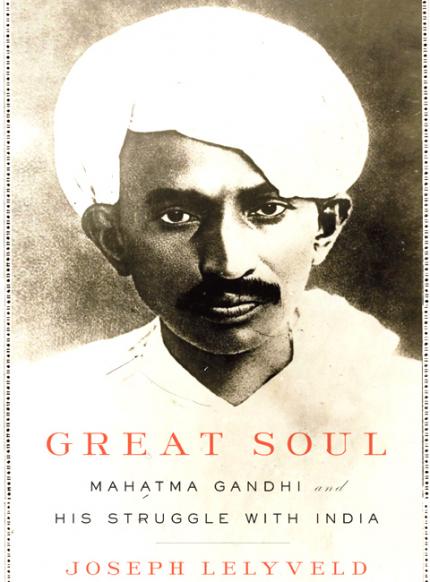
Joseph Lelyveld’s book was banned in Mohandas Karamchand Gandhi’s native state of Gujarat a day after its publication in the United States. On 30 March 2011, the Hindu right-wing Bharatiya Janata Party that rules the state, led by its chief minister Narendra Modi, charged Lelyveld with committing “the most reprehensible act by hurting the sentiments of millions of people and demanded that he tender a public apology”. The provocation for this proscription was the mention in some reviews that Lelyveld had suggested Gandhi was bisexual and racist. At the very least, it is surprising that the first public outcry in India against the review — the book has not yet been released in India — should come from the Hindu Right, the political constituency of Nathuram Godse who assassinated Gandhi on 30 January 1948. This must join the many ironies Lelyveld’s book brings out, not least that of latter-day politicians in India (and South Africa) claiming to be his heirs and yet honouring his teaching, if at all, only in their most diluted and least recognizable versions. As Lelyveld writes in his author’s notes, ‘‘[I]t was hard to see what remained of him beyond his nimbus”. Continue reading Joseph Lelyveld’s “Great Soul” or How to Damn with Faint Praise: Mridu Rai
 KAFILA - COLLECTIVE EXPLORATIONS SINCE 2006