WikiLeaks, Azadi and Arnab Goswami: Monobina Gupta

Guest post by MONOBINA GUPTA

This Friday Dean Baquet, Washington Bureau Chief of the New York Times defended his paper’s publishing of explosive information gathered by WikiLeaks, putting the US intelligence and the military establishment squarely in the dock for the Iraq war. The largest ever classified military leak in history, the WikiLeaks revelations have exposed the complicity of the US military and civil administration in whittling down the number of civilian deaths/casualties as well as ignoring hard information about the torture of US soldiers in the hands of Iraqi forces.

Baquet said that his paper worked on stories culled from nearly 4,00,0000 documents furnished by WikiLeaks as “it would any other journalistic project.” He also pointed out that it is not often that reporters get to scrutinize documents testifying to the largest US intelligence leak ever.

Continue reading WikiLeaks, Azadi and Arnab Goswami: Monobina Gupta
Bhagwat Purana of a Different Kind

(This post is by SUBHASH GATADE. It was initially inadvertently posted under Aditya Nigam’s name. The error is deeply regretted.)

I. Conflating Hinduism and Hindutva

Mr Mohan Bhagwat, the ‘young’ Supremo of an eighty plus year old exclusively male cultural organisation called Rashtriya Swayamsevak Sangh is in high spirits these days.

It is not very difficult to understand the glee on his face which has to do with the latest developments in the cause celebre of Sangh Parivar. One can even notice that every member of this different kind of ‘family’ also seem to be upbeat , whose representatives can be traced on neighbourhood playground in the morning doing drills, playing games or listening to ‘sermons’ of their seniors which they call Baudhik.

Continue reading Bhagwat Purana of a Different Kind

Let Delhi have its thali

Guest post by HILAL MIR

During the convention, Azadi the only Way, at LTG auditorium on Thursday, a potbellied man was standing on the aisle, listening intently to the speech of professor of history at Jadavpur University Sugata Bhadra. The man, I reckon, might be easily burdening earth with nearly 130 kilograms of his fair, north Indian bulk.  The professor was stripping the Indian state to its bare minimum and the audiences clapped. The man could stand it no more. I soon found out his voice was equally weighty, and gravelly—a cross between Shatrugan Sinha and Kulbushan Kharbanda. Quite audibly he said jis thali ma khatey hai usi main chaid kartey hain. In Bollywood films this saying condemning treachery is reserved for domestic helps who fall in love with the pretty daughters of their employers. Here, the context was different. A Maoist sympathizer was sharing the dais with a Kashmiri pro-freedom leader who was sharing the dais with a Sikh secessionist who was sharing the dais with a Naga human rights defender…A veritable thali of secessionism and dissent indeed. No wonder Arnab Goswami was hysterical. Continue reading Let Delhi have its thali

The Japanese are telling you something, MMS

Manmohan Singh is in Tokyo, trying to conclude yet another nuclear deal with yet another country. As the deal is under a cloud, many Japanese citizens have written an open letter to him:

It is true, as India has repeatedly pointed out, that the Nuclear Non-Proliferation Treaty (NPT) is an unequal treaty. However, looking at India now, one cannot help thinking that India believes power and prestige derive from the possession of nuclear weapons. India might have adopted a nuclear no-first-use strategy, but seen from the perspective of the experience of the Hibakusha, the possession of nuclear weapons is by no means a source of power and prestige. Rather, it is the epitome of immorality.

India reaffirmed its moratorium on nuclear testing when the Nuclear Suppliers Group (NSG) amended its guidelines to allow a special exemption permitting nuclear cooperation with India, which is not a member of the NPT. However, India has not promised never again to conduct a nuclear test. Nor has it agreed to IAEA safeguards that would prevent it from using domestically produced material to produce nuclear weapons. Under these circumstances, given that India has not promised not to produce nuclear weapons in future, if Japan were to proceed with cooperation on nuclear technology with India, this would be interpreted by other countries, including Pakistan and other Islamic countries, as meaning that Japan, the victim of nuclear weapons, is cooperating in India’s development of nuclear weapons. [Read the full letter]

Azadi: The Only Way – Report from a Turbulent Few Hours in Delhi

Dear Friends,

I was present and speaking a few hours ago at a meeting titled ‘Azadi: The Only Way’ on the situation in Jammu and Kashmir, organized by the Committee for the Release of Political Prisoners at the Little Theatre Group in Delhi yesterday (21st October). I was not present from the beginning of the meeting as I was traveling from another city, but can vouch for what occurred from around 4:30 pm till the time that the meeting wound up, well after 8:00 pm in the evening.

The meeting took place in the packed to capacity auditorium of the Little Theatre Group on Copernicus Marg at the heart of New Delhi. Several speakers, including the poet Varavara Rao, Prof. Mihir Bhattacharya, Sujato Bhadra, Gursharan Singh, Mr. Shivnandan (?) an activist from Jammu, Professor G.N.Saibaba, Professor Sheikh Showkat Hussain – Professor of Law, Srinagar University, the journalist Najeeb Mubaraki, Dr. N. Venuh of the Naga Peoples Movement for Human Rights, the writer Arundhati Roy and myself spoke at the meeting. (I may be missing out some names, for which I apologize, but I was not present for a part of the meeting, at the very beginning) The climax of the meeting was a very substantive and significant speech by Syed Ali Shah Geelani of the Hurriyat Conference (G), which spelt out the vision of liberation (Azaadi) and Justice that Syed Ali Shah Geelani held out before the assembled public, of which I will write in detail later in this text.

Continue reading Azadi: The Only Way – Report from a Turbulent Few Hours in Delhi

Lovely’s Lane: Alok Rai

Guest post by ALOK RAI

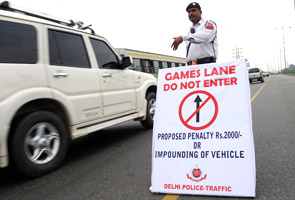
It was bound to come sooner or later. The wonder – the absolute, outrageous, impudent surprise of it all is that it has come so soon. The Games have barely limped to their pathetic conclusion – and those of us who are waiting for the post-Games reckoning are waiting but impatiently, inadequately consoled by the sound of the sharpening of the knives, the braiding of the hangman’s rope – or, most likely, the Japanese water torture of the promised Shunglu probe. And in the midst of this unfolding fiasco, this still-running disaster, the lovely Mr Arvinder Singh Lovely, Delhi’s Transport Minister, has made the suggestion that the insult of the Games lane, the closing off to the public of a significant part of the road which has been made with public money, be made permanent. This – as we were told in full-page ads paid for by us – was done with threats of  a hefty fine or, worse, far worse, being exposed to the courtesies of a Delhi cop. The ineffable experience of crawling along patiently (but proudly, always proudly!) while sundry others flashing CWG insignia whizzed past in the CWG lane – an experience that so many of us chose to miss, could now become a permanent feature of the metro experience. I can’t wait!

Continue reading Lovely’s Lane: Alok Rai

Reading Ayodhya Judgement II: Biswajit Roy

Guest post by BISWAJIT ROY

In my earlier piece, I had noted Justice Khan’s pluralist-nationalist sentiments and his anguished pleas to Muslims to ‘avail the opportunity to impress others with the message’ of ‘peace-friend ship- tolerance’ by accommodating Hindu faith-based claims to the area under the central dome of the demolished mosque as Ram Janamsthan. But I failed to find similar sentiments or espousal of the need of inter-community reconciliation on equal footing in the ‘bulky’ exposition of Justice Agarwal, despite his concurrence to Khan’s order for three-way partition of the disputed land, as well as justice Verma’s judgment that had awarded entire place to Hindus.

Continue reading Reading Ayodhya Judgement II: Biswajit Roy

After the Games: Alok Rai

Shera

Guest post by ALOK RAI

I had imagined that there would be time after the Games. Kalmadi and his cronies would have to hang, of course, but it could have been done in a measured fashion. Now, it appears that there is no time to lose. The Shameless One has actually said something about bidding for the Olympics! And with the promise of enough money in the trough, we can expect the pigs to grunt their approval too – just like they did the last time. But in the name of all the people who have been uprooted, and had their livelihoods destroyed; the students who have been thrown out of their hostels; the long-suffering citizenry of Delhi that is currently undergoing the final stage of the insult and humiliation that has been heaped on them over the past year in the name of the Games, I say, enough! Hang the bastards, now!

But I should clarify quickly. I am not so naïve as to be outraged by the corruption. It is the stupidity I am particularly offended by. After all, corruption is only one half of the story. And, frankly, the corruption is hardly surprising. Corruption, to my lay understanding, is the whole point of these large “public” enterprises – it enables the crooks-in-power to get their hands on the money that has been gouged from the poor. That is exactly what everyone expects – the poor victims, the crooked beneficiaries. But surely the stupidity is gratuitous?

Continue reading After the Games: Alok Rai

No to social apartheid! JNU students protest today against CWG ‘view cutters’


AP photo by Manish Swarup


Latest Indian addition to the English language: View cutter.
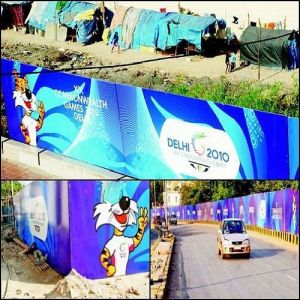
The government and civic agencies in association with the Commonwealth Games Organising Committee (OC) had identified several sites central to hosting the Games where view cutters were put up to conceal the eyesores as well as for security reasons.
A government official said one of the purposes to put up the view cutters was to screen the beggars who crowd major religious and historical landmarks.
The plan is to relocate the destitute to parks and surround the place with slick banners and paraphernalia sporting Games mascot Shera and other logos, the official said.
Protest March today, 13th of October, 4 p.m. from Ganga Dhabha to the slum dwellings at the Priya crossway. 


Leaflet issued by the joint protest committee, JNU

Friends, CWG 2010 is now almost coming to an end. The whole country has been in a celebratory frenzy for the last two weeks. The government has made the successful completion of these games an issue of “National pride”. They have left no stones unturned to impress the whole world. The same government which claims to have no money when it comes to the issues of drought, health and education has wasted thousands of crores on just the opening ceremony. It is distressing to see that while we are counting medals won by India, we have completely forgotten that there is a vast section of people who instead of benefitting are adversely affected during our blind celebration of this “colonial hangover”.

Continue reading No to social apartheid! JNU students protest today against CWG ‘view cutters’

Jats rock, caste shocks

This post is dedicated to a Facebook friend who, when I asked her her caste, replied: “Now, now, now! In any case, with the brouhaha surrounding the census, what’s the proper form these days? Mention of caste in or out?”

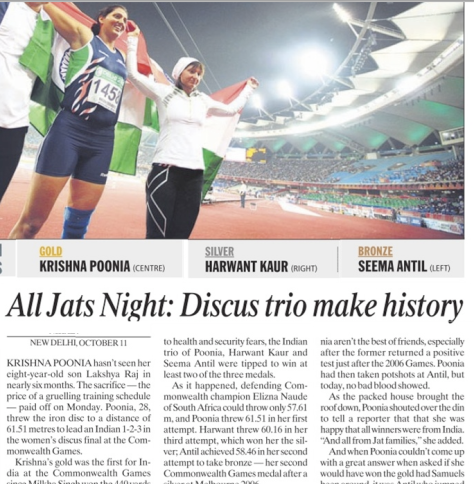
I woke up to this headline in The Indian Express today. My reaction was to wonder what many others’ reaction would have been? Those who argue that reservation and ‘caste census’ and such measures serve to solidify caste identities rather than weaken them – I wonder what they would make of this headline?  Continue reading Jats rock, caste shocks

The Ayodhya Verdict: Rohini Hensman

This is a guest post by ROHINI HENSMAN

Reactions to the Allahabad High Court verdict in the Babri Masjid case have varied widely, from triumphalism from some actors, through appeals for calm and hopes of reconciliation from others, to expressions of disappointment and dismay from yet others. This is partly a consequence of the complex character of the split verdict. On the issue of whether a Hindu temple had been destroyed in order to build the Babri Masjid in 1528, S.U. Khan, in a minority opinion, said that it was built on the ruins of a temple, but nothing was destroyed, while Justice D.V. Sharma and Justice S. Agarwal held that a Ram temple had been destroyed in order to build the mosque. On the issue of whether it was the Ram Janmabhoomi, Justice Sharma, in a minority judgment, ruled that the site was the birthplace of Lord Ram, and therefore the entire property should go to the Hindu litigants. The majority judgment of Justice Agarwal and Justice Khan stated that Hindus believed it was the birthplace of Ram, and divided the property three ways, giving one-third to the Sunni Waqf Board and two-thirds to Hindu litigants. The status quo was to be maintained for three months, during which the parties were free to appeal the judgment in the Supreme Court (Allahabad High Court 2010).

Continue reading The Ayodhya Verdict: Rohini Hensman

Reading the Ayodhya Judgement: Biswajit Roy

Guest post by BISWAJIT ROY

In this piece, I would like to share my reading of judgments on Ayodhya. I have only managed to go through the judgment of Justice Khan in detail and parts of justice Agarwal and Sharma’s expositions. Though the Lucknow bench of Allahabab High Court accepted the Hindu faith-based claims about Ram’s birth at the disputed site and the 2-1 verdict went for its three-way partition, all the three judges differed in their takes on the issues related to claims and counter-claims reflecting not only their individual subjectivity but also social loci. To be more candid, they hardly hide their community background and their stakes as insiders.

The bench has anchored its verdict it by referring to religious scriptures, medieval memoirs, foreigners’ travelogues, colonial records, and history books well as folklore and oral tradition. But the judges’ reading of these texts differed much less on legal nuances and more on interpretations and inferences based on their own religio-political understanding and beliefs.
Here is what I found interesting in Justice Khan’s judgment. He differed with other two judges on substantial points: the acceptance of disputed site, to be precise, the area under the central dome of the demolished mosque as Ram’s birthplace, Babar’s demolition of a pre-existing Hindu temple and the mosque’s validity as a proper mosque.

Continue reading Reading the Ayodhya Judgement: Biswajit Roy

Tehelka’s Populist Turn? Bobby Kunhu and Sudeep KS

Guest post by SUDEEP KS and BOBBY KUNHU

The magazine joins the Great Kerala Terrorist Hunt. This was sent as a rebuttal to Tehelka, but has not been published.

Kerala’s Radical Turn – cries the cover of the last issue of Tehelka (dated 9th October, 2010). The cover story by V K Shashikumar, that plays the familiar tunes of Islamophobia, hints at Tehelka‘s Populist Turn. It will be interesting to see where Tehelka goes from here, and what happens to its current reader base that distinguished the magazine from the likes of The Indian Express and The Times of India and India Today.

In the article, Here Come the Pious, Shashikumar lists some facts and his personal fears, on the eve of the Allahabad High Court judgment on the Babri Masjid land dispute. What is missing in the entire article is reason. The byline says that “A new Islamist body, the Popular Front of India, is causing alarm with its religious overdrive in the south.” After one goes through the article, however, what one gets is a glorified picture of the outfit. Whether the author likes it or not.

Continue reading Tehelka’s Populist Turn? Bobby Kunhu and Sudeep KS

Notes from a Beautiful City


Research and Edit:
Rintu Thomas

Photography and Sound:
Sushmit Ghosh

Produced by:
Open Space & Black Ticket Films

Sri Lanka’s 18th Amendment: A Charter for Dictatorship: Rohini Hensman

Guest post by ROHINI HENSMAN

Different sections of Sri Lankans protest against the 18th Amendment

Sri Lanka’s claim to be a democracy has been tenuous for years, but the passing of the Eighteenth Amendment to the Constitution by parliament on 8 September 2010 dealt it a fatal blow. It changed Sri Lanka into a de facto dictatorship like Zimbabwe and Myanmar, where it is abundantly clear that elections alone cannot unseat Mugabe or Than Shwe.

Continue reading Sri Lanka’s 18th Amendment: A Charter for Dictatorship: Rohini Hensman

Nirmohi Akhara and Ram Lalla Virajaman: Susmita Dasgupta

[In this guest post, Susmita Dasgupta throws light on some important aspects of the Ayodhya issue that have been misunderstood. First, she argues that there is an anomaly in treating the Nirmohi Akhara as a “Hindu” group, when in fact historically, akharas (aakhra in Bengali) were gymnasiums associated with sects that were usually opposed to organized and/or textual religions like Hinduism and Islam and claimed themselves to be non-Hindus. More importantly, she points out that the worship of the child-God – Ram Lalla, or Balkishan – was an important ingredient of defiance against organized religion. The Hindu appropriation of Ram Lalla, she argues, is therefore the greatest anomaly in the case, and this is the anomaly, she suggests, that historians should have focused on.]

Archaeologists are divided over the issue of whether a Ram Temple at all existed under the dome of the Babri Masjid and the Muslim theologicians are divided over whether the Babri is a legitimate mosque at all because in Islam if a mosque is built over a heathen’s structure of worship then it is not fit for prayers. Historians from JNU are almost universally concerned that whatever the archaeology is, the mosque should remain intact as a historical monument. The secularists are upset that the fictitious Ram Lalla be accepted as a party to a dispute and every structure of the Muslims could be pulled down on the flimsiest belief that the land archaeologically belonged to the Hindus. Such a judgment would then be a precedent in pulling down every mosque in the land and may even cast aspersions on the continued existence of the Taj Mahal and Red Fort !! I, too share similar concerns.

Continue reading Nirmohi Akhara and Ram Lalla Virajaman: Susmita Dasgupta

Eight reasons why you should oppose Unique Identification: Stop UID Campaign

Drafted by KALYANI MENON-SEN for the Stop UID Campaign

AN APPEAL TO CITIZENS

The National Identification Authority of India Bill approved by the Union Cabinet on Friday has sidestepped critical privacy aspects relating to profiling and function creep — a term used to describe the way in which information is collected for one limited purpose but gradually gets used for other purposes.

Here are some reasons why you should oppose this Bill:

1. False claims

The Government of India and Nandan Nilekani, Chairperson UIDAI, have been claiming that the UID scheme will enable inclusive growth by providing each citizen with a verifiable identity, that it will facilitate delivery of basic services, that it will plug leakages in public expenditure and that it will speed up achievement of targets in social sector schemes.

Continue reading Eight reasons why you should oppose Unique Identification: Stop UID Campaign

Seen in Delhi

On the Day of the Games

On the morning of the Games, what should many of us — who have dissented against them in different ways and forms — make of our dissent?

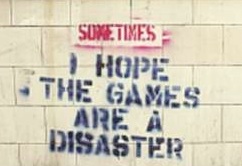
Let me begin with a confession. I am one of the authors of this graffiti that dots some of South Delhi and, ironically, remains on the wall opposite the main entrance of the JLN stadium, though now its probably hidden under a hoarding of Shera who appears to be not nearly as endangered as his real life inspiration:

It was a few months ago when the Games fervour was just beginning. The magnitude of all that they would become hadn’t quite sunk in. The graffiti felt, at that time, like a momentary defiance that opened up some space to breathe in a city where the deafening and deadening drum rolls that precede any spectacle were inching closer. You could hear them. You could tell that soon little else would be audible.

Continue reading On the Day of the Games

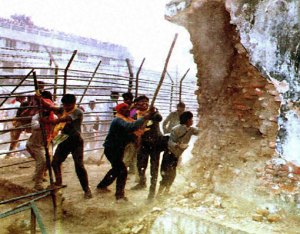
The Second Demolition: Ayodhya Judgement September 30, 2010

December 6, 1992

A shameful and shocking judgement.

I am shattered by what it does, by its implications for democracy, and by the statement it makes about what we can expect for the future.

My rage is growing with every statesman-like pronouncement from one pompous man after the other in the media, gravely holding forth on the maturity of the compromise that has been reached.

Continue reading The Second Demolition: Ayodhya Judgement September 30, 2010

How to Not Read the Ayodhya Judgement: Hilal Ahmed

Guest post by HILAL AHMED

There are three areas which I think we need to underline.

A. Technical problem: The question of applied principles

I ask a very fundamental question: How could a modern secular judiciary- technically an institutionalized ‘interpreter’ of the Constitution- determine the legal disputes related to religious places of worship on the grounds of ‘faith-based’ evidences?

All the three judges seem to recognize the fact that the Hindu beliefs should be (must be) taken as legal facts. Interestingly, these beliefs are supported by archeological report of 2003 to form an argument of judicial nature.

However, and quite astonishingly, the Sunni Wakf Board’s (SWB) case was dismissed on legal-technical grounds following a very mechanical interpretation of the Limitation Act.

But for Nirmohi Akhara and VHP case (referred as Ram Lalla virajman) the principle of faith was given primacy and in order to substantiate it further ASI report which is full of contradictions, is expanded to arrive on a conclusion.

Continue reading How to Not Read the Ayodhya Judgement: Hilal Ahmed

DISSENT, DEBATE, CREATE