आज़ादी और विवेक के पक्ष में प्रलेस, जलेस, जसम, दलेस और साहित्य-संवाद का साझा बयान

देश भर में चल रहे लेखकों व साहित्यकारों  के विरोध के सन्दर्भ में  लेखकों के पांच संगठनों – प्रगतिशील लेखक संघ, जनवादी लेखक संघ, जन संस्कृति मंच, दलित लेखक संघ व साहित्य-संवाद – ने आज दिल्ली में निम्नलिखित बयान जारी किया :  

देश में लगातार बढ़ती हुई हिंसक असहिष्णुता और कट्टरपंथ के ख़िलाफ़ पिछले कुछ समय से जारी लेखकों के प्रतिरोध ने एक ऐतिहासिक रूप ले लिया है. 31 अगस्त को प्रोफेसर मल्लेशप्पा मादिवलप्पा कलबुर्गी की हत्या के बाद यह प्रतिरोध अनेक रूपों में प्रकट हुआ है. धरने-प्रदर्शन, विरोध-मार्च और विरोध-सभाएं जारी हैं. इनके अलावा बड़ी संख्या में लेखकों ने साहित्य अकादमी से मिले अपने पुरस्कार विरोधस्वरूप लौटा दिए हैं. कइयों ने अकादमी की कार्यकारिणी से इस्तीफ़ा दिया है. कुछ ने विरोध-पत्र लिखे हैं. कई और लेखकों ने वक्तव्य दे कर और दीगर तरीक़ों से इस प्रतिरोध में शिरकत की है.

दिल्ली में 5 सितम्बर को 35 संगठनों की सम्मिलित कार्रवाई के रूप में प्रो. कलबुर्गी को याद करते हुए जंतर-मंतर पर एक बड़ी प्रतिरोध-सभा हुई थी. इसे ‘विवेक के हक़ में’ / ‘इन डिफेन्स ऑफ़ रैशनैलिटी’ नाम दिया गया था. आयोजन में भागीदार लेखक-संगठनों – प्रलेस, जलेस, जसम, दलेस और साहित्य-संवाद — ने उसी सिलसिले को आगे बढाते हुए 16 सितम्बर को साहित्य अकादमी के अध्यक्ष विश्वनाथ प्रसाद तिवारी को एक ज्ञापन सौंपा जिसमें उनसे यह मांग की गयी थी कि अकादमी प्रो. कलबुर्गी की याद में दिल्ली में शोक-सभा आयोजित करे. विश्वनाथ त्रिपाठी, मुरली मनोहर प्रसाद सिंह, चंचल चौहान, रेखा अवस्थी, अली जावेद, संजय जोशी और कर्मशील भारती द्वारा अकादमी के अध्यक्ष से मिल कर किये गए इस निवेदन का उत्तर बहुत निराशाजनक था. एक स्वायत्त संस्था के पदाधिकारी सत्ता में बैठे लोगों के खौफ़ को इस रूप में व्यक्त करेंगे और शोक-सभा से साफ़ इनकार कर देंगे, यह अप्रत्याशित तो नहीं, पर अत्यंत दुखद था. अब जबकि अकादमी की इस कायर चुप्पी और केन्द्रीय सत्ता द्वारा हिंसक कट्टरपंथियों को प्रत्यक्ष-परोक्ष तरीके से दिए जा रहे प्रोत्साहन के खिलाफ लेखकों द्वारा पुरस्कार लौटाने से लेकर त्यागपत्र और सार्वजनिक बयान देने जैसी कार्रवाइयां लगातार जारी हैं, यह स्पष्ट हो गया है कि लेखक समाज इन फ़ासीवादी रुझानों के विरोध में एकजुट है. वह उस राजनीतिक वातावरण के ख़िलाफ़ दृढ़ता से अपना मत प्रकट कर रहा है जिसमें बहुसंख्यावाद के नाम पर न केवल वैचारिक असहमति को, बल्कि जीवनशैली की विविधता तक को हिंसा के ज़रिये कुचल देने के इरादों और कार्रवाइयों को ‘सामान्य’ मान लिया गया है. Continue reading आज़ादी और विवेक के पक्ष में प्रलेस, जलेस, जसम, दलेस और साहित्य-संवाद का साझा बयान
The Man And His Words

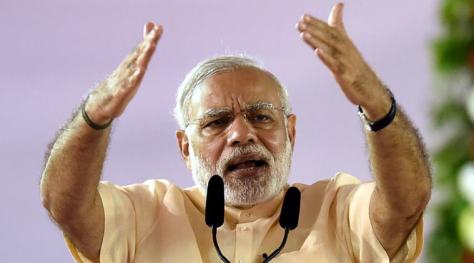
Narendra Modi has finally spoken. More than a fortnight after a Muslim man was lynched in Dadri by a Hindu mob over rumours of storing and eating beef, the prime minister summoned his deepest indignation and employed the strongest adjective he thought befitted the murder: “unfortunate”. “The Dadri incident or the opposition to Pakistani ghazal singer Ghulam Ali are sad and undesirable,” he told the Bengali daily Anandabazar Patrika in an interview.
In Modi’s esteemed view clearly, Dadri shouldn’t be given undue importance. It should be treated like another law and order issue – “regrettable” is all it deserves. In the prime minister’s book, the mob lynching of 50-year-old Mohammad Akhlaq can be clubbed with the cancellation of Ghulam Ali’s concerts in Mumbai and Pune after threats of violence by the Shiv Sena.  Continue reading The Man And His Words

The Indian Unconscious : Ravi Sinha

Guest Post by Ravi Sinha

There is yet another head on the political platter of the world’s largest democracy. This head is not metaphorical. It does not signify a disgraced leader or a government that has fallen. It is a literal head dripping with literal blood – battered with bricks that supported a leg-less bed. The bed belonged to one Muhammad Akhlaq who lived in a village called Basehara in Dadri, Uttar Pradesh, not too far from the national capital of India. The head too belonged to him.

It has been only a few days but this latest episode in the long-running Indian serial is already well-known to the world. On a late September night it was announced over the loudspeakers of the village temple that there was going to be beef on Akhlaq’s dinner plate. A mob hundreds-strong – some say thousands – gathered within no time. It attacked the family killing Akhlaq on the spot and badly injuring his son, Danish.

In the meantime, meat-loafs confiscated from the family fridge have been sent for forensic examination. The system of justice must check whether it actually was beef, although, as one commentator points out, “…mere possession of beef isn’t illegal in Uttar Pradesh.”[1] Shedding helpful light on feebly lit corners of the Hindu moral universe, a prominent Hindutva ideologue wrote in a national daily, “Lynching a person merely on suspicion is absolutely wrong, the antithesis of all that India stands for and all that Hinduism preaches.”[2] The lynch-mob should have waited till the forensic reports came.

A few suspects have been apprehended for the murder. This has made the village livid with anger. There are protestations that those arrested are innocent. Journalists have been attacked for making such a big thing out of a small matter and bringing a bad name to the village. Cameras have been broken and OB vans damaged. There is a pertinacious wall of angry women guarding the village against any further intrusion by outsiders who can neither understand the village mind nor the Indian culture.

It is not easy to understand the collective mind of an Indian village. Even learned anthropologists are of little help. Their ethnographic techniques of studying a form of life from its internal standpoint are particularly susceptible to the rationalizations of a complex cultural species. If anyone has a chance, it would, perhaps, be a villager who has stepped out – an Archimedean Point created out of the same cultural universe. Ravish Kumar, by now a near iconic journalist and anchor of a prominent Hindi news channel, stood out for this very reason.[3] His eyes could see the natural rhythm and the instinctual response of an Indian village in the immediate aftermath of a collective crime. Nearly everyone had disappeared from the village. Whoever could be found claimed that he was miles away at the time of the incident. The lynch-mob had materialized instantaneously out of thin air. It had as quickly melted away after the job was done. Everyone has now returned to defend the honor of the village and strategize about how to deal with the unwarranted intrusions of modernity including that of the law. Continue reading The Indian Unconscious : Ravi Sinha

The Indiscreet charm of Narendra Modi: Joyojeet Pal

Guest post by Joyojeet Pal

Why the Silicon Valley (Generally) Loves Narendra Modi

“Indians are the most prosperous group in the United States of America,” said comedian Rajiv Satyal, the compère of the Narendra Modi speech at the San Jose Arena in the Silicon Valley on Sept. 27. No flash of Gandhian embarrassment stood in the way of the booming cheer that followed. Later on when repeated technical bungling (ironic next to the tech bombast of the setting) led the compère to step back on stage, he kept repeating this idea alongside “Bharat Mata ki Jai!” to keep the ardor up among the 17,000-strong crowd. There appeared to be a few thousand more outside, either supporting or protesting the event. Several U.S. legislators were present, including House Minority Leader Nancy Pelosi.

Continue reading The Indiscreet charm of Narendra Modi: Joyojeet Pal

The Curious Case of a Study on Bihar Elections: Kamal Nayan Choubey and Nishant Kumar

Guest post by KAMAL NAYAN CHOUBEY and NISHANT KUMAR

[This article is a response to the lead news-cum-article written by Sanjay Kumar and Suhas Palshikar and published in The Indian Express as well as Jansatta on 7th October about the pre-poll survey related to the Bihar Legislative Assembly Election. We had sent this article to the The Indian Express, but they could not give any space to our views. – Authors]

Politically, Bihar is one of the most complex states in India. It is often difficult to provide a substantially cogent electoral prediction because of the multivariate factors that impact the political outcome in the state. The other obvious reason is the political maturity of the electorates of Bihar, who decide the fate of the candidates based on several considerations including caste orientation and the candidates’ performance in the past. Still many analysts have tried to provide a picture regarding the possible outcome of electoral fray for the Bihar Assembly Elections based on quantitative surveys. The opinion poll conducted by Lokniti-CSDS and published in The Indian Express and Jansatta, two of India’s most respected newspapers, on 7th October, 2015 was one such attempt. In the last two decades election studies in India has seen a dramatic evolution with poll surveys gaining immense popularity among both analysts as well as electorates. Lokniti-CSDS has been one of the most reliable institutions for such studies because unlike other market oriented institutions it has always focused on serious academic and intellectual understanding of electoral competition. Many reputed academicians have been part of its election studies and its publications have given new dimensions to the study and understandings about the dynamics and churnings of Indian democracy. However, the pressure of media as well as the rush to publish opinion polls seems to have affected the way CSDS-Lokniti is known to release its analysis.

The news-item in the front page of The Indian Express read ‘Advantage BJP as Bihar gets ready’. It was claimed in that news-cum-article that BJP led NDA had an advantageous edge in the forthcoming Bihar Assembly Elections over Nitish Kumar’s Grand Alliance. We are not sure whether it was the editors who chose the headline to attract attention of its readers or it was consciously decided by the poll conductors based on their analysis. Whatever the case may be, the projection of ‘Advantage BJP’ exposes fissures at several levels, most of which are evident from the data itself. The publication also forces us to pose significant questions about the way in which such opinion polls are conducted both in terms of methodology as well as the analytical categories used to understand electoral politics in a complex society as in the case of Bihar. It further creates doubts about the aim of such published opinion polls. Continue reading The Curious Case of a Study on Bihar Elections: Kamal Nayan Choubey and Nishant Kumar

House of Cards


Courtesy Indian Express
Courtesy: Indian Express.

Anybody with a passing interest in consistency or coherence might be forgiven for being stumped at the political spectacle unfolding right now. Yesterday, Prime Minister Narendra Modi assured us that his government was committed to reservations. The statement was made at a ceremony to inaugurate the Ambedkar memorial at the Indu Mills compound in Mumbai. The fact that ordinary Dalits, in the habit of thronging any joyous celebration on Ambedkar in big numbers, were kept out of the ceremony, is possibly irrelevant. After all, officialese is officialese, and no political party – certainly not the BJP – has a monopoly on stiff-necked commemorations of people’s leaders that want nothing to do with the people. It is Modi’s commitment to reservations and the Indian constitution that is of interest. In some ways a statement of this nature made at the inauguration of an Ambedkar memorial, makes perfect sense. Apart from the occasion and locale, also not coincidental was the timing of Modi’s statement – one that he himself alluded to, when he referred to the bitterly fought Bihar elections now underway, “With a BJP government in power and polls getting under way, a malicious propaganda is being spread that the government is against reservation…”. The fact that the anti-BJP mahagathbandhan (grand alliance) in Bihar has made reservations one of their chief planks, with Lalu Prasad Yadav declaring in his inimitable style that he will kill himself if reservations are removed, is relevant.

Zooming back from the Ambedkar memorial event, the PM was clearly also responding to the threat to his Sabka Saath Sabka Vikas model begun a couple of months ago by the irrepressible Hardik Patel. Patel – erstwhile BJP supporter, self-styled Patidar-Patel revolutionary and a wild child in imminent danger of being silenced (or coopted) by the BJP – was temporarily subdued by the Gujarat administration following the wave of violence over his first call for reservation, but resurfaced a couple of days ago to be the nightmare Modi hadn’t dreamed yet – saying his aim was to expose the “Gujarat model of development”. This is for the current party nothing short of the youngest born of a rambling illustrious family running into the street from the family mansion saying our house is made of mud! our house is made of mud!

Continue reading House of Cards

श्रीराम सेने से नफरत, सनातन संस्था पर इनायत !

उत्तरी गोवा के बंडोरा गांव की पंचायत का एक फैसला पिछले दिनों राष्ट्रीय स्तर पर सुर्खियों में आ गया। उन्होंने न तो किसी नए सड़क की मांग की न किसी स्कूल की। वे एक संस्था पर पाबंदी चाहते थे। वे चाहते थे कि उस संस्था का मुख्यालय गांव से हटे। उनका कहना था कि उस संस्था के चलते गांव की बदनामी हो रही है। उसी के कारण आए दिन पुलिस और गुप्तचर एजेंसियों के लोग वहां पहुंचते रहते हैं। उनका कहना था कि अगर उनकी मांग नहीं मानी गई तो इसके लिए वे जल्द ही आंदोलन शुरू करेंगे। गौरतलब है कि कुछ साल पहले भी उन्होंने यह मांग की थी, जिस पर ध्यान नहीं दिया गया था। दरअसल हाल के दिनों में नए सिरे से चर्चा में आई ‘सनातन संस्था’ का मुख्यालय इसी गांव में है।

नैतिक पहरेदारी

यह वही संस्था है, जिससे जुड़े सांगली के समीर गायकवाड़ को पिछले दिनों कॉमरेड गोविंद पानसरे की हत्या की साजिश रचने के आरोप में गिरफ्तार किया गया। इस साजिश में उसके अन्य साथी भी पकड़े गए। पुलिस को उसके अन्य कार्यकर्ताओं रुद्र पाटिल और सारंग अकोलकर की भी तलाश है, जिन्हें अक्टूबर 2009 के मडगांव बम विस्फोट में फरार घोषित किया गया है। महाराष्ट्र के मुख्यमंत्री ने बयान दिया कि लंबी निगरानी के बाद ठोस सुरागों के आधार पर ही ये गिरफ्तारियां हुई हैं। पानसरे की हत्या की जांच के आगे बढ़ने के क्रम में इस बात के भी संकेत मिल रहे हैं कि 2013 में हुईर डॉ. नरेंद्र दाभोलकर की हत्या और पिछले दिनों कर्नाटक में हुए प्रोफेसर कलबुर्गी के मर्डर में भी आपसी रिश्ता रहा है।

आध्यात्मिकता की बात करने वाली, मगर अपने कार्यकर्ताओं की हिंसक कार्रवाइयों के कारण विवादास्पद बनी ‘सनातन संस्था’ पर पाबंदी की मांग कांग्रेस और आम आदमी पार्टी के अलावा वामपंथी दलों ने भी की है। फिलवक्त बीजेपी इस बात को लेकर असहज है कि संस्था पर पाबंदी की मांग उठाने वाले अपने ही विधायक विष्णु वाघ को क्या जवाब दे? वाघ ने अतिवादी संगठनों पर पाबंदी को लेकर सरकार के दोहरे रुख को उजागर किया है। उन्होंने सनातन संस्था की तुलना प्रतिबंधित संगठन ‘सिमी’ (स्टूडेंट्स इस्लामिक मूवमेंट ऑफ इंडिया) से करते हुए दलील दी है कि इस संस्था पर अगर बाहर के कई देशों में पाबंदी लग सकती है, तो यहां क्यों नहीं? अगर प्रमोद मुतालिक की अगुआई वाली श्रीराम सेने की गतिविधियों पर रोक लगाई जा सकती है तो सनातन संस्था पर क्यों नहीं? Continue reading श्रीराम सेने से नफरत, सनातन संस्था पर इनायत !

Destroying Hinduism From Within

Hindus need to worry. The Hindus of Dadri, Atali, Trilokpuri, Bawana, Muzaffanagar, Ranchi… the list is getting longer and longer. To make it even more precise, one should probably phrase it like this: Hindus everywhere in the world need to worry, especially after the mass violence in Dadri.

The usual argument against incidents like Dadri is that such violence would give legitimacy to those inciting the Muslim masses to take up terrorism – which would endanger the internal security of India.

In my view, Hindus need not worry about whether this latest instance of violence will fuel anger in Muslim hearts and drive them towards extremism.

When visiting the victims in Atali, who were Muslims, of course, one of us sanctimoniously warned them against yielding to the temptation of terrorism. It sounded obscenely jarring in the deathly silence of that room, crowded by young and old Muslim men, most of whom never raised their heads during the entire conversation.

This is the best argument we seem to have with us, while talking to other Hindus: do not allow such violence for it will invite retribution. Continue reading Destroying Hinduism From Within

Why I am returning my Sahitya Akademi Yuva Puraskar

In 2012, I was awarded the Sahitya Akademi Yuva Puraskar, an award given by the Akademi for writers under the age of 35. At the time, I was conflicted about accepting the award as I wondered if I should accept an award conferred by the state.

I chose to accept the award as I believed the Akademi’s official charter that states that the institution is an autonomous, publicly funded body registered as a society under the Societies Registration Act of 1980. Thus, the Akademi, to use an analogy, is an autonomous institution much the same way that public universities are autonomous – they are state-funded, i.e. they are run on public money, but are not government run. The Akademi award is thus a state honour, not a “government” honour – and this is an important distinction. Continue reading Why I am returning my Sahitya Akademi Yuva Puraskar

Modi’s Speech, his Silence and Dadri Redux in Mainpuri

Every newspaper in India carried the same headline on Friday, the 9th of October: ‘Modi breaks silence on Dadri lynching.’ It says something about the breathless desperation of the Indian press to hear the prime minister say something, anything, that could be interpreted as his disapproval of political barbarism, that there wasn’t, in fact, a word in his speech about the Dadri lynching. – Mukul Kesavan in ndtv.com

You know what has been agitating the minds of millions of us, Indians — the future of our pluralism. You have stated your position in terms of ‘sabka sath, sabka vikas‘. And this is quoted and cited on your behalf repeatedly as a mantra. But, Pradhan Mantriji, this is certainly not adequate. We need to hear you, our Prime Minister, directly and clearly and with an urgent reference to the present situation, which is nothing less than a tragedy. Over the last few months we have had more than one tragedy. Can we really not see the connections between the so-called stray incidences all over the country, from the murders of Dabholkar, Pansare and Kalburgi to that of Mohammad Akhlaq. Your direct voice needs to be heard now, unless you do not consider this an event of significance. And now, the ambiguity of what you said yesterday only makes me send you this appeal for your truthful intervention. TM Krishna’s Open Letter to the Prime Minister

While Modi’s cheer leaders in the media were telling us that the prime minister had finally ‘broken his silence’ (see Apoorvanand’s piece on this here), there were others who read the meaning of his speech far more  accurately.They knew exactly what Modi was saying; they knew without having to do a content analysis of His speech that, if anything, despite being shamed to an extent by the President, Pranab Mukherjee’s statement the previous day, he actually refused to say anything about the Dadri incident let alone condemn the crime or its perpetrators. They understood clearly that his speech was merely a continuation of his sinister and devious silence. They understood like no media commentator or analyst did that what he said in Munger was a green signal for them to go ahead with their activities. Thus what happened in Mainpuri today is nothing to be surprised about.

Mainpuri: Police in action after villagers vandalised properties and resorted to arson in Mainpuri district on Friday over rumours of cow slaughter in the area. PTI Photo (PTI10_9_2015_000290B)

Continue reading Modi’s Speech, his Silence and Dadri Redux in Mainpuri

#Pinjratod: On the Eve of a Public Hearing: Akash Bhattacharya

This is a guest post by AKASH BHATTACHARYA

 
feminist coomrades

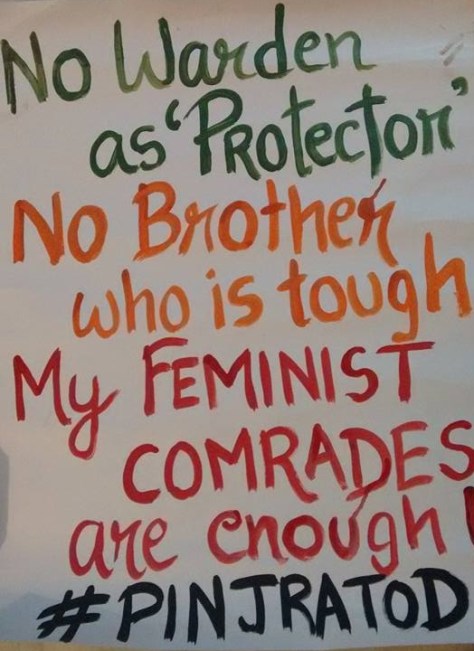
#Pinjratod! Break the Cages! A word, rather mysterious in its appearance, has announced its presence across university campuses in Delhi. The movement has gathered steam in a short period of time, attracting media attention and gaining currency over social media. Pinjratod has touched a raw nerve, venting the anger of a new generation of students – mostly female but also male – about the forms of controlled learning in higher educational spaces. The students, in turn, are articulating the democratic futures they imagine for themselves and for society as a whole.

Pinjratod Parcha

Spearheaded by a few female students and alumni of the Delhi University, Pinjratod calls itself an “autonomous collective effort” to ensure “secure, affordable, and not gender-discriminatory accommodation” for women students across Delhi. In denying the same, the women argue, the university authorities incapacitate female students from making the most of higher education, where their presence itself is a product of long and uncompromising struggles. They step out of the family home only to be locked up in hostels with the in-time sometime as early as 7 pm and any relaxation of the same requiring the permission of parents or local guardians. In hostels as well college campuses they are subject to rampant moral policing. In colleges women are left vulnerable by the lack of mechanism to prevent/address sexual harassment. Instead college and hostel authorities impose severe restrictions on women’s freedom to “protect” them from possible harassment. The cages of protectionism, that promises safety at the cost of liberty stunt the capacities of women and prevent them from fighting their own battles. These are the cages the women of Pinjratod want to break free from; the social attitudes caged by sexism, they want to destroy.

Continue reading #Pinjratod: On the Eve of a Public Hearing: Akash Bhattacharya

Modi Communalises Bihar Elections

Modi said nothing about Dadri, he just brought beef into the Bihar election

The media, however, rushed to report that Prime Minister Narendra Modi has finally broken his silence on the Dadri lynching during his speech in Munger. But what has happened is actually the reverse. Modi has cleverly brought beef into the centre-stage of Bihar’s electoral battle.

Beef is now THE issue in Bihar-elections. Modi’s timing was perfect. Remember, these are the last few days of campaigning before the first phase of polling on 12 October. Continue reading Modi Communalises Bihar Elections

Open Letter to FB : Change the Authentic Name Policy — Nameless Coalition

Nameless Coalition, a group of NGOs, has written an open letter to Facebook demanding justice for individuals who have been affected by it’s ‘authentic identity’ policy. Please read it at the Electronics Frontier Foundation Action Centre.Those interested in supporting this effort are requested to sign the petition.

In Kerala, the abuse of women online became a hotly-discussed issue over the heavy online abuse suffered by Preetha G P, which provoked a wider debate on FB policy and strong responses in support of Preetha from other women politically active on FB. The campaign For A Better FB was initiated by them.

I add below reflections by Anila Balakrishnan expressed on FB, on her support for the campaign. They have been translated from the Malayalam and posted here with her permission:

Facebook has never given me the feeling that it is a space where I can behave and speak out my views freely. On the contrary, it has always reminded me that I am a woman and must therefore tread carefully. That is the reason why I decided to reduce myself into someone who had nothing to say in public, someone who spoke only in the presence of friends. I just decided that I will not sacrifice my peace for the misogyny and hate-speech of the hordes who know nothing of me or my politics; I was not willing to spend time and energy on confronting them. When my posts became public because of sheer necessity or even by mistake, these hordes reminded me quickly that they should be confined to friends alone. Those were not ideological confrontations; they were vicious attacks the female gender itself. And so I have not felt brave enough to say anything that could invite public comment on FB. Women who have showed the courage to say such things have not been spared by the hordes, for sure.

But this was never my choice. I do believe that opinions ought to be public; that one must engage with each and every person in the crowd. But I am not willing to take on myself from the social media personal wounds that go beyond differences and diversity in views . So the decision to reduce myself is not my choice – it was imposed on me. I have not heard of any man who makes his views public being abused because of his body. I do not know of any man who has to maintain constant vigilance against such attacks. That’s how Facebook remains as patriarchal as any other social media, as society itself. And that’s precisely why I am part of this campaign for a better FB.

Another One Bites the Dust: “Cultural Pollution” and the Nehru Memorial Museum & Library: Niyati Sharma and Snigdha Kumar

This is a guest post by NIYATI SHARMA AND SNIGDHA KUMAR

Courtesy thequint.com.

The latest in a line of institutions to fall victim to the BJP government’s campaign against “cultural pollution” is The Nehru Memorial Museum and Library (NMML). The agenda is loud and clear – anything which ‘pollutes’ the current government’s preferred way of life and thinking will be done away with. Bans such as the recent ones on porn and meat are the most obvious instruments at the disposal of the government to achieve this goal. The more effective interventions, however, are not those which instantly deny people their choices and freedoms. Presented instead as minor improvements and renovations, interventions in art, history and academic institutions allow the government to introduce subtle long term changes – changes with the capacity to access and alter our very being.

Given the enormity of these interventions in the long run then, it is particularly curious how the clear recent attempts to take over academic institutions such as the ICHR, FTII and now NMML have managed to raise only a few eyebrows while the bans on porn (and meat to an extent) have met with much protest and were subsequently lifted. Perhaps this is because such spaces appear to be remote islands inhabited only by those interested in history, film and/or academic research. Only such an impression can explain the rather meek public debate and outcry that these clearly targeted changes have generated.

Continue reading Another One Bites the Dust: “Cultural Pollution” and the Nehru Memorial Museum & Library: Niyati Sharma and Snigdha Kumar

दादरी मामले में साम्प्रदायिक रंग पहले से ही है : मोहम्मद ज़फ़र

Guest Post by MOHAMMAD ZAFAR

दादरी मामले में राजनाथ सिंह व महेश शर्मा के बयान जो मामले को साम्प्रदायिक रंग देने को मना करने के हैं वो हास्यास्पद व खीझ पैदा करने वाले लगते हैं| जिस तरह से खबरों में बार बार आ रहा है उस तरह से तो ये बात साफ़ है कि मामले को साम्प्रदायिक रंग दिया नहीं जा रहा बल्कि इसकी बुनियाद ही सांप्रदायिक रंग पर टिकी है|और सच्चाई क्या है शायद ये आगे पता चले परएक बात तो ये तय है कि किसी की भीड़ द्वारा जान लेने पर भाजपा के संगीत सोम को उतना क्रोध नहीं आ रहा जितना गाय काटने की खबर का वो हवाला दे रहे हैं| अभी कुछ दिन पहले कानपुर के पास ही एक खेत में घुसने पर खेत के मालिकों ने एक गाय और उसके बछड़े कोलाठियों से पीट कर मार डाला था, कितनी ही गायें शहरों में ठंड में ठिठुरकर या कचरे खाते हुए मर खप जाती हैं मगर ताज्जुब है तब ना कोई गोरक्षा समिति सामने आतीहै और ना इस गाय-बछड़े के खेत में मारे जाने पर आई और ना ही उस वक्त संगीत सोम जैसे नेताओं को गाय के मरने पर कोई दिक्कत हुई| कारण स्पष्ट है वहाँ ध्रुवीकरण की राजनीति जो नहीं होनी थी जबकि अब इसके बहुत मौके हैं| औरआश्चर्य की बात तो यह है कि राजनाथ सिंह जी इसे साम्प्रदायिक रंग ना देने की बात कर रहे हैं और महेश शर्मा (भाजपा सांसद) का कहना है कि इसे एक दुर्घटना की तरह लिया जाए| बात ठीक है, जांच होने के बाद बातें करनी चाहिए लेकिन क्या फिर संगीत सोम जो उनकी ही पार्टी के हैं उनका ऐसी संवेदनशील जगह पर जाना और एक पक्ष को उकसानाठीक है? अगर अखिलेश सरकार को सोम एक पक्ष को समर्थन देने की बात कर रहे हैं तो वे खुद क्या कर रहे हैं?असल बात तो यह है कि भाजपा खुद भी उसी विचारधारा को समर्थित हैऔर यही हाल पार्टी केआलानेताओं का भी है| बस एक ही बात है कि थोड़ा सहज तरीके से वे उस विचारधारा पर कोई प्रतिक्रिया करने से बच जाते हैं और उनके ही दल के लोग उलटे कांग्रेस व सपा पर हीसिर्फ़ साम्प्रदायिकता करने का आरोप लगाते हैं| जबकि सच्चाई यह है कि भाजपा की पूरी बुनियाद ही एक समुदाय के ध्रुवीकरण पर टिकी हुई है| आखिरवहदेश की एक मुख्य बड़ी पार्टी के रूप में भी तो राम मंदिर आन्दोलन के बाद ही आई थी|दादरी में भाजपा के नेता संगीत सोम को उनअभियुक्तों की चिंता है तो उन्हें उस मृत व्यक्ति इखलाक की भी होनी चाहिए थी मगर द हिन्दू की खबर के अनुसार तब तो उन्होंने मुस्कुराते हुए जांच होने देने की बात कर दी|

Continue reading दादरी मामले में साम्प्रदायिक रंग पहले से ही है : मोहम्मद ज़फ़र

Christians oppose demand for ban on Agnes of God: Press Statement

We, the following signatories,  object to Mr. Joseph Dias, Secretary, Catholic Secular Forum, issuing press statements, representing himself as the spokesperson of the entire community while he seeks bans on films and plays on the ground that they hurt the sentiments of the Catholic religious community in India.  Since such demands tarnish the image of the entire community, we appeal to the press that they should not be projected as the views of the entire Christian community.
 
We wish to state that the views expressed by him are his own, or at best, that of his organization and this by no stretch of the imagination, can be portrayed as the views of the entire Catholic community, as is being done in recent times. His demands are sensational in nature and are self serving to attract media attention unto himself and we are opposed to the same.  

Dadri Beef Rumour and Lynching – A Report from Bisara village

The following is a report on the Dadri beef rumour and lynching, prepared by a fact finding team from NEW SOCIALIST INITIATIVE, PEOPLE’S ALLIANCE for DEMOCRACY and SECULARISM, SAHELI and DELHI SOLIDARITY GROUP, released in New Delhi on 05/10/2015

 The investigation team with the following members visited the village on 3 October 2015: Bonojit Hussain (New Socialist Initiative), Deepti Sharma (Saheli), Kiran Shaheen (writer and activist), Naveen Chander (New Socialist Initiative), Sanjay Kumar (People’s Alliance for Democracy and Secularism and New Socialist Initiative) and Sanjeev Kumar (Delhi Solidarity Group)

Akhlaq's house
Akhlaq’s house

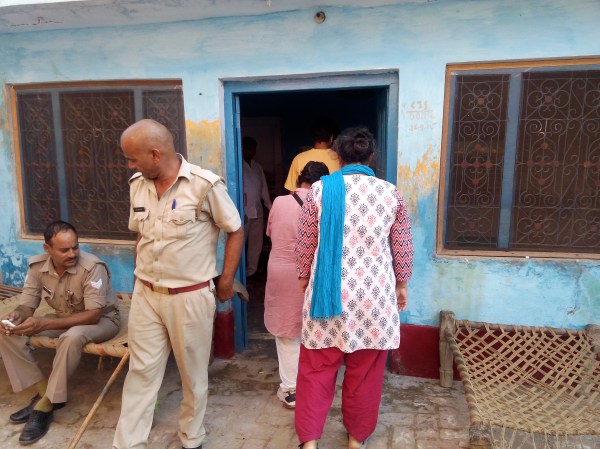
On the night of 28 September, in a heinous instance of hate crime Mohammad Akhlaq a resident of Bisara village of Dadri in western Uttar Pradesh was lynched to death and his son Danish brutally assaulted by a mob of villagers over a rumour that Mr. Akhlaq and his family had slaughtered a calf and consumed its meat. Just before the lynching, an announcement was made from the local temple to spread the rumour, and within moments a mob constituted itself and attacked Mr. Akhlaq resulting in his lynching. Mr. Akhlaq’s son Danish has been in hospital since that night and despite undergoing two brain surgeries his condition is still said to be critical. Continue reading Dadri Beef Rumour and Lynching – A Report from Bisara village

Stop Interfering in Nepal : Statement in Protest Against India’s Interference

After seven tumultuous years following the overthrow of the more than two century old monarchy which led to elections to form a Constituent Assembly, and many governments failing to fulfill the task of finalizing a Constitution, at last on 20th September the President of Nepal has promulgated the new Constitution amidst support from overwhelming majority of the CA and people. The Constitution creates seven states in a secular, federal system. Continue reading Stop Interfering in Nepal : Statement in Protest Against India’s Interference

Volkswagen, Deutsche Bank and Ordoliberalism: Shrinivas Dharma

Guest post by SHRINIVAS DHARMA

News of Volkswagen’s systematic cheating in emission tests by making its cars appear far less polluting than they are, has proved to be a bolt from the blue for the Global Automobile industry, financial markets, European politicians and German society at large. VW is more than just another car company. For German society, it is a heritage brand with iconic status. In a reputed poll last month, two-thirds of Germans named Volkswagen as the country’s number one national symbol, putting it before Merkel, the national football team and Goethe. No wonder, this news destroyed 10% of market value of the VW brand in a single trading day.

VW’s so-called “defeat device”  a piece of software in the car’s computer is already there on 11 million cars on the road which are emitting up to an extra 1m ton of a toxic gas responsible for killing tens of thousands people in various countries. With this insidious deception, VW has not only let down Germans but the entire Global Society by showing sheer contempt typical of a Big Business towards the continuing environmental degradation. No wonder, the news wiped out billions of dollars off the market value of entire car industry providing credence to the suspicion that emissions test rigging may be more widely practiced art, than what has come to light so far. Continue reading Volkswagen, Deutsche Bank and Ordoliberalism: Shrinivas Dharma

बढ़ती असहिष्णुता और फासीवादी प्रवृतियां : किशोर

Guest Post by KISHORE

(Image : Courtesy – http://www.huffingtonpost.in)

अख़बारों में आई खबर के अनुसार ग्रेटर नॉएडा में भीड़ ने एक व्यक्ति को इस अफवाह के आधार पर मार दिया कि वह गौमांस के व्यापार में लगा था. यह बताने की जरूरत नहीं कि मरने वाला किस धर्म को मानने वाला था और मारने वाले किस धर्म के अनुयायी थे. अब आ रही खबरों के अनुसार यह अफवाह झूठी थी और जिस पुजारी ने इस अफवाह की शुरूआत करी. उस पुजारी को यह अफवाह उड़ाने के लिए मजबूर किया गया था. कुछ लोग यहाँ तक कह रहें हैं कि यह बर्बर हत्या किसी ग़लतफ़हमी के कारण हुई है, पर मेरे एक मित्र ने बड़ा ही प्रासंगिक प्रश्न उठाया कि हम अगर यह मान भी ले की वह व्यक्ति गौ मांस के व्यापार से जुड़ा हुआ था तो क्या उसकी हत्या को उचित ठहराया जा सकता है.

इस बात में कोई दो राय नहीं कि अगर मेरा धर्म मुझसे अपेक्षा रखता है कि मैं ये खाऊँ और ये ना खाऊँ और मैं उसमे विश्वास रखता हूँ, तो यह मेरा चयन हो सकता है कि मैं कुछ ना खाऊँ. कोई मुझे वह चीज़ खाने के लिए मजबूर नहीं कर सकताण. पर क्या यह जरूरी है कि मेरे खाने या ना खाने के चयन का पालन बाकि लोग भी करें. खाना.पीना, पहनना-ओढना और कुछ अच्छा लगना या न लगना हर किसी का निजी मामला है. क्या समाज यह तय कर सकता है कि मैं क्या खाऊँ और क्या ना खाऊँ ? और एक वर्ग की प्राथमिकताओं के हिसाब से न चलने पर उसको मौत के घाट उतारना किसी न्यायोचित समाज की निशानी है या बर्बर समाज की ? Continue reading बढ़ती असहिष्णुता और फासीवादी प्रवृतियां : किशोर

Principal Anandarajan and the Legacies of a Long and Pointless War: Luther Uthayakumaran

Guest post by LUTHER UTHAYAKUMARAN

A lot has happened since the early 1980’s, when I first got to know Anandarajan. Nearly thirty-five years later, it seems a different world. A way of life has died between then and now. It is through these multiple layers of life and memories that I remember that evening. It was nearly dusk when the news spread through Jaffna ‘Principal Anandarajan shot dead” and then the other three words followed in a hushed tone, like a reluctant trailer, ‘….. by the boys’.

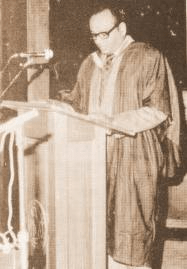
AnandarajanI first met Anandarajan when I was fourteen years old, a few weeks before I was to join St John’s. Anandarajan was introduced to me at a family function, as my would-be principal. The first thing I noticed about him was the total lack of aloofness. His response was ‘I say, I was a classmate of your mother at St John’s, and she was the only girl in the class whom I was scared of’ (which my mother vehemently denied!). In the years that followed I came to know Anandarajan more closely, first as a teacher, and then as a close family friend. In those days at St John’s the first year Advanced Level classes occupied the open sheds opposite the Vice-Principal’s house, and everyday from my classroom I would see Anandarajan walk purposefully across the school grounds from his residence to the principal’s office. If it was a Monday, I would see him again a few minutes later, wearing a black academic-gown walking up the stage of Peto Hall to chair the assembly. I used to enjoy those Monday morning assemblies, as they provided a welcome reprieve from the stress of cramming for exams. Anandarajan would invite interesting speakers to address us, from Hindu mystics to those who spoke on more earthy topics such as pollution and war in the Middle East. Ironically for many of us in those days, war was something that happened only in distant places. If there were no outside speakers Anandarajan would address the assembly himself. It was on one such occasions that I learnt a value that I have cherished ever since then. It is in Anandarajan’s own words: “Always defend yourself. Never let anyone accuse you falsely – not anyone – not even me. If you let that happen, part of the blame is yours”. Continue reading Principal Anandarajan and the Legacies of a Long and Pointless War: Luther Uthayakumaran

DISSENT, DEBATE, CREATE