Tag Archives: Delhi

Make Delhi Metro safe for women! Please Mend The Gap

PLEASE MEND THE GAP is a citizen- led initiative to promote gender equality and commuter safety in public spaces. 
Follow these two links for some background:

A few weeks ago, a friend was molested on the Yellow line of the Delhi Metro

A flash mob of citizens got together to protest against the Delhi Metro, claiming that it is promoting a gender divide.

Sign PMTG’s Petition to Chief Minister and DMRC

We believe that a majority of women do not feel safe while travelling in the Delhi Metro. We have spoken to a cross-section of Metro commuters who have shared with us their experiences most of which include instances of verbal and physical harassment mostly faced by women, specifically in the women’s-only compartment. In fact, a few days ago, some of the members of our group who were traveling at night observed that the women’s-only compartment was populated with men who had occupied almost all the seats forcing the women to stand, leaving them with no choice but to actively demand the seats they were entitled to. The men were unapologetic and dismissive. Most shrugged off the women’s protest by claiming falsely that the women’s-only compartment turns general post 9 p.m..

Women who choose to travel in the general compartment are also harassed. There have been many instances where men have told women that they are not welcome in this compartment and should use the compartment reserved for them. This attitude has become so deeply entrenched in commuters’ mindsets that most accidentally refer to the general compartment as the ‘men’s compartment’. There have been times when authorities have driven out men from the women’s-only compartments, but without having imposed any fine whatsoever…

The situation needs to change. It is the duty of the State and the DMRC to spearhead this change.

Read the full petition and sign.

Death of a River

This was first presented as a paper in a seminar on “The River” organised by the Max Muller Bhawan on 11 and 12 December 2010. Photo credits: Gigi Mon Scaria, Himanshu Joshi and Sohail Hashmi. Maps: The coloured map of Delhi is the restored version of an 1850 map; restoration is by E Ehlers and T Krafft. The black and white map is based on an 1807 map of the draingage of Delhi, made by a British cartographer. The three current three maps have been drawn by Shela Hashmi Grewal. You can stop at any image in the silde show above, by using the controls that you will discover once you hover the cursor over the slideshow.

This slideshow requires JavaScript.

The Final scene in the epic tragedy of the Jamna is being enacted at these very moments and the agencies that have wrought this havoc continue to initiate decisions that will permanently erase all signs of the river that has sustained the city that you and I call Hamari Dilli.

Before coming to my understanding of what needs to be done to save the Jamna, instead of what is being done to destroy it. I would like to draw your attention to certain geographical features of the land around Delhi, in order to better understand the factors that contributed to the location of the several Delhis and their relationship to the river. Continue reading Death of a River

Ab Bhi Dilli Dur Hain: On ‘No One Killed Jessica’: Kartik Nair

Guest post by KARTIK NAIR

Why does No One Killed Jessica open with the execution of Jessica Lal but rush so quickly to the windswept altitudes of Kargil? And why, when she first blasts on to the screen as embedded journalist Meera reporting on the war, does Rani Mukerji look more like she’s embedded inside an SNL skit on Barkha Dutt? I let out a little laugh then, but the laughs only got bigger from there. Here is a film that knows nothing about how the media works; worse, it fails to pass off its version of the media as believable. Here are a few lessons I learned watching the film:

1. Aspiring reporters will be glad to note that though journalists generally fight tooth-and-nail at press conferences to get their questions heard, a helpful “Yaar, please, mujhe poochne do!” will elicit total co-operation and rapt attention.

Continue reading Ab Bhi Dilli Dur Hain: On ‘No One Killed Jessica’: Kartik Nair

New Delhi – A Heritage Zone at 80!

[This article by Sohail Hashmi was earlier inadvertently posted under the name of Shivam Vij. The error is regretted.]

Connaught Place renovation for the Commonwealth Games, September 2010. Photo credit: AP

In 1988 Lutyen’s Delhi, was declared a heritage zone by prohibiting building activity within the 26 square kilometre area out of the 43 Sq. Km. area that falls within the civic control of New Delhi Municipal Committee (NDMC). A move has now been initiated to get the entire area declared a UNESCO World Heritage site.

The very logic of an area being declared a Heritage Zone should preclude any interference with the layout and design of the entire zone. Non-interference also means that, future building and development activity, if at all permitted, has to conform to the original parameters of design, materials, fittings and fixtures used, building techniques, landscaping and the kinds of trees planted in the heritage zone.

Even before the 1988 freeze on construction, there was a master plan for Delhi and it clearly identified the Lutyen’s Bungalow Zone as an area where high rises were not to be permitted. Continue reading New Delhi – A Heritage Zone at 80!

Who is a Dilliwala?

Chhat Puja at India Gate, Delhi. Photo credit: S. Subramanium / The Hindu

For most residents of New Delhi, the region known as Old Delhi falls within the realm of the unknown. Aside from business people and those who earn a living inside the walled city only a few from outside the walled city used to venture into, what is derisively called Dilli 6. At least this was the picture till very recently.

With the introduction of the Metro entry into and exit from the heart of the city, it has become less daunting. More and more people from outside the “walled city area” have begun to tentatively explore the narrow winding lanes of Shahjahanabad. Except for those who come to explore ‘history and heritage’ and their numbers are small, consisting mostly of fair skinned tourists, most others arrive to explore the fabled flavours of the street food of Old Delhi or Shahjahanabad to give the place its correct name.

Continue reading Who is a Dilliwala?

Islam Colony Riders vs. Ward 2 Worriers [sic]

You are a young politician in Delhi and you want to make a mark in an area, in a seat. You want to be known, you want to be a leader, you want followers, you want to be taken seriously. You want votes. You have the right kind of Delhi first name – Mahender rather than Mahendra – and an even better surname – who better than a Chaudhary to be your leader? But there would be many Mahender Chaudharys. What can you do? You can get basic work done – permissions and pipelines and land conversions and garbage clean-up. But anyone with the right contacts can do that. Anyone can become a protege of a Congress leader like Yoganand Shastri. In a city like Delhi, in a city of migrants, in a city whose citizens think they have the right to be treated better than the rest of India, in a city that does not seem to be ‘politicised’ like the seemingly distant world of the ‘real’ India, in a city that is a state – how do you begin being taken seriously as someone with political ambitions? One Mahender Chaudhary has this poster put up all over Mehrauli (which was once all there was to Delhi). Check it out: Continue reading Islam Colony Riders vs. Ward 2 Worriers [sic]

Azadi: The Only Way – Report from a Turbulent Few Hours in Delhi

Dear Friends,

I was present and speaking a few hours ago at a meeting titled ‘Azadi: The Only Way’ on the situation in Jammu and Kashmir, organized by the Committee for the Release of Political Prisoners at the Little Theatre Group in Delhi yesterday (21st October). I was not present from the beginning of the meeting as I was traveling from another city, but can vouch for what occurred from around 4:30 pm till the time that the meeting wound up, well after 8:00 pm in the evening.

The meeting took place in the packed to capacity auditorium of the Little Theatre Group on Copernicus Marg at the heart of New Delhi. Several speakers, including the poet Varavara Rao, Prof. Mihir Bhattacharya, Sujato Bhadra, Gursharan Singh, Mr. Shivnandan (?) an activist from Jammu, Professor G.N.Saibaba, Professor Sheikh Showkat Hussain – Professor of Law, Srinagar University, the journalist Najeeb Mubaraki, Dr. N. Venuh of the Naga Peoples Movement for Human Rights, the writer Arundhati Roy and myself spoke at the meeting. (I may be missing out some names, for which I apologize, but I was not present for a part of the meeting, at the very beginning) The climax of the meeting was a very substantive and significant speech by Syed Ali Shah Geelani of the Hurriyat Conference (G), which spelt out the vision of liberation (Azaadi) and Justice that Syed Ali Shah Geelani held out before the assembled public, of which I will write in detail later in this text.

Continue reading Azadi: The Only Way – Report from a Turbulent Few Hours in Delhi

After the Games: Alok Rai

Shera

Guest post by ALOK RAI

I had imagined that there would be time after the Games. Kalmadi and his cronies would have to hang, of course, but it could have been done in a measured fashion. Now, it appears that there is no time to lose. The Shameless One has actually said something about bidding for the Olympics! And with the promise of enough money in the trough, we can expect the pigs to grunt their approval too – just like they did the last time. But in the name of all the people who have been uprooted, and had their livelihoods destroyed; the students who have been thrown out of their hostels; the long-suffering citizenry of Delhi that is currently undergoing the final stage of the insult and humiliation that has been heaped on them over the past year in the name of the Games, I say, enough! Hang the bastards, now!

But I should clarify quickly. I am not so naïve as to be outraged by the corruption. It is the stupidity I am particularly offended by. After all, corruption is only one half of the story. And, frankly, the corruption is hardly surprising. Corruption, to my lay understanding, is the whole point of these large “public” enterprises – it enables the crooks-in-power to get their hands on the money that has been gouged from the poor. That is exactly what everyone expects – the poor victims, the crooked beneficiaries. But surely the stupidity is gratuitous?

Continue reading After the Games: Alok Rai

Notes from a Beautiful City


Research and Edit:
Rintu Thomas

Photography and Sound:
Sushmit Ghosh

Produced by:
Open Space & Black Ticket Films

Seen in Delhi

To Delhi

I had used Baudelaire for the post pasted below because on the day  I sat to write about the CWG, nothing I wrote made any sense or captured my frustration other than the poem. Yet, as an email I got this morning reminded me, I have partially substituted one injustice with another. Since good critiques are so wonderfully rare and this one voiced so well, I cite the email below (with permission) as an amendment to my own post since my agreement with its charges are complete:

“Dear Gautam,
I was disappointed to read your post on Kafila , the one where you posted an extract from Baudelaire [http://kafila.org/2010/09/25/to-delhi/]. It is very tiring to read of woman / the feminine as characterized by caprice and associated with luxury + cruelty.
Even if it is Delhi , the city, that one is supposed to read as the woman, unfeeling, capricious, this still ties up with the discourse around women as the consumers of luxury goods, thus responsible for the exploitation resulting from the production / trade of these goods. [Off the top of my head – look at Pope’s Rape of the Lock , Gray’s goldfish-enamoured cat, and the sequel to Love Story – Oliver’s Story with the woman who works for the sweatshop-patronising firm]. I don’t see how the sexism in this piece can be excused or explained away. And to quote it without atleast pointing out the problems in it?

Also, isn’t caprice a problem in itself? Aren’t you disappointed in the reporting that characterizes the Commonweath expenditure as resulting from the caprice of a few in power? Without exploring the systems, structures of thinking/ideology that make such expenditure possible in the first place? Without connecting this, the commonwealth-exploitation, to the histories of similar exploitation?

Yes, it is possible to see that you were highlighting injustice and class – but –
the piece ends up valourizing a man who feels what – pity? guilt? A little shame. Shame is so comfortable – he can occupy moral high ground, diss the woman, use the services of the cafe, and do nothing after that.

I hope your work goes okay.
Best wishes,
Akshi.”

The original post:

“Oh!  You want to know why I hate you today.

Continue reading To Delhi

Commonwealth Postcards

This and other postcards, expressing what many Delhi residents feel about the Commonwealth Games, have been put out by Delhi Commons (Facebook). They are available at Sarai CSDS (North Delhi), People Tree (Central Delhi) and Yodakin Bookstore, Hauz Khaz Village (South Delhi).

The Banality of Shame

BANAL: everyday, ordinary, commonplace

SHAME: the  painful  feeling  arising  from  the  consciousness  of  something  dishonourable done  by  oneself  or another


Jana gana mana adhinayaka jaya he

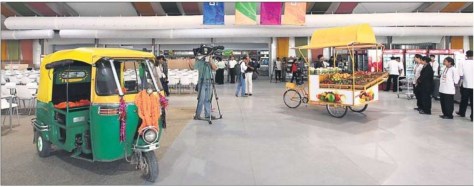
An auto-rickshaw and a street hawker’s pushcart as showpieces in the Commonwealth Games Village dining hall

* MCD to raze dhabas on Games route: It doesn’t matter if you are running your business legally or illegally. If your shops fall on the route of a Games event, chances are that you will have to shut shop. A shop and taxi stand in front of Bal Bhawan — which have been running for 20 years — were demolished by MCD on Saturday and the civic agency is planning to raze all dhabas  functioning along the stretch in the coming days even as the dhaba owners claim that they have been paying rent to MCD.

Continue reading The Banality of Shame

Two Overheard Conversations, Delhi 2010

Guest post by ANAND VIVEK TANEJA

Conversation One. I’m sitting in a barber-shop in Sector 34, Noida, getting a haircut. The older guy sitting next to me, getting a shave, asks this younger fellow who’s just got up from a haircut –

  • Tu kahaan se hai bhai? Where are you from?
  • Main to Noida se hi hoon. I’m from Noida only.
  • Noida ka to na laage hai. You don’t look like you’re from Noida.

The young man in question was slight and skinny, and was dressed in what could be described as  generic global college student/hipster style. The conversation continued. The barber said, no he’s definitely not from Noida. The young man turned on him and said, Tum kaunse Noida ke ho, Well, you’re not from Noida either. The barber says, Main to Bihar se hoon. Main thodai hi chhupa ke rahkta hoon. I’m from Bihar. I don’t hide the fact. Then the barber says, Yeh to lawaris hai ji. He has no parentage, sir.

The Truth Behind the Strike

In a recent guest post, SIMON HARDING of Delhi’s AMAN Trust had explained why Delhi’s autowallah is not the villain he is made out to be but a victim of the Delhi government’s policies, the Supreme Court’s whims and the financier mafia’s greed. In this post he writes about the strike by Delhi’s auto drivers yesterday and why a majority of the drivers were not in support of it.

Yesterday there was an auto strike in Delhi. The city was crippled. Taxis tripled their fares and buses ran full to bursting. The strike, called by Rajendra Soni of the Dilli Autorickshaw Sangh (DAS) and supported by many other auto unions, was well observed with few drivers plying the streets. The striking unions demanded that Sheila Dikshit retract her recent comments about “phasing out” autos. They also called for a raise in the meter fare (Rs.4.5 per km) following an increase in the price of CNG. Continue reading The Truth Behind the Strike

Auto-rickshaws in Delhi: Why Sheila Dikshit’s comments are misguided

Guest post by SIMON HARDING

As every Delhite knows, taking an auto journey in the capital is not a pleasant experience. Drivers speed off at the very mention of your home or office, leaving you stranded on the roadside. When an auto-wallah finally agrees to go where you want, he steadfastly refuses to run by the meter and instigates a minute or so of stressful haggling. You arrive at your destination frazzled, irritated and over-charged. This situation has not gone unnoticed. Chief Minister, Sheila Dixshit recently announced plans to phase out the auto-rickshaw after five decades of service. Auto-rickshaws are “not a good option”, she complained, auto-wallahs “harass” passengers and up to half are plying the streets “illegally”. With the Commonwealth Games fast approaching, the eyes of the world will soon turn to Delhi. Auto-rickshaws do not fit with the CM’s desire to see visitors return home “with the impression that they have been to a truly civilised city”. She promised futuristic battery powered taxis, which thrilled middle class Delhi.

But before the auto-rickshaw and the much-maligned auto-wallah can be condemned, we must look at how the auto-rickshaw sector in Delhi operates: at the rules, regulations and policies, which govern the livelihoods of the city’s 80000 or so auto-drivers. Some questions need to be answered: why are Delhi’s auto-wallahs so greedy and grumpy? Why won’t they switch on the meter? Why do so many ply “illegally”? Continue reading Auto-rickshaws in Delhi: Why Sheila Dikshit’s comments are misguided

Levelling the playing field before the Commonwealth Games

Ahead of the Commonwealth games, the capital city of the country with aspirations towards being anointed First Side-Kick to the only super-power left in the world, is busy cleaning up. Beggars, protesters, poor-looking people in general, out, out, all out.

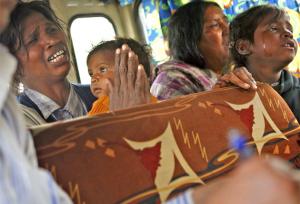
Pholpata, her child and a friend inside a mobile court in a mini-bus, caught begging and brought before a magistrate who will decide whether to jail them for a year or release them. [The Independent on Sunday]


Also, see Partha Banerjee’s post on this in his blog
The Real Slumdog Story: India’s Ghastly Commonwealth Cleanup.

Meanwhile, of course, the labourers working day and night to complete the endless amounts of construction required to host an event of this magnitude, are “working and living in highly dangerous and deplorable conditions;  earning less than the stipulated minimum wage;  with no access to basic sanitation and health facilities;  and, lacking safety equipment”, found a Committee appointed by the Delhi High Court.

Continuing the saga of national triumph, below, we have AKHIL KATYAL and SHALINI SHARMA on the forced evictions of protesters from Jantar Mantar.

The Delhi State Government and New Delhi Municipal Corporation (NDMC) seem to have a particularly limited vision of a beautiful city. In the run up to the Commonwealth Games, Delhi is seeing a massive beautification drive which is really about an intolerant attitude towards democratic dissent and towards the urban poor. It is an idea of beauty that deals with urban protest or poverty simply by excising it from view.

Continue reading Levelling the playing field before the Commonwealth Games

Bagh-e-Bedil

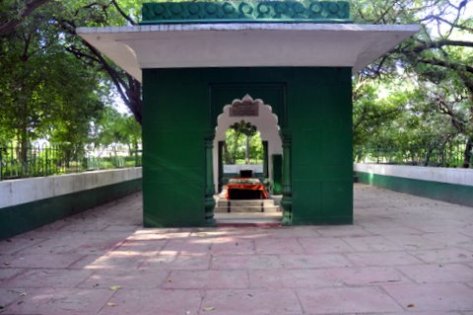
As part of the Festival of Spiritual Music being organised in February 2010, we are trying to rekindle interest in Mirza Abdul Qadir “Bedil’ one of the most significant poet of Persian from India. In fact Khusrau, Bedil and Ghalib are rated very highly in persian speaking countries. Khusrau and Ghalib need no introduction but Bedil has almost totally been forgotten in the Land of His Birth. Mirza Bedil is buried roughly opposite the dargah of Matka Peer, that all of you must be familiar with because of Bundoo biryaani wala.

We have got one of the finest qawwals of Delhi, Chand Nizami, and his group to specially prepare a few ghazals of Mirza Bedil and they will be presented in a qawwali mehfil at the shrine of Mirza Bedil on Feb 25,at 6.30 pm. Continue reading Bagh-e-Bedil

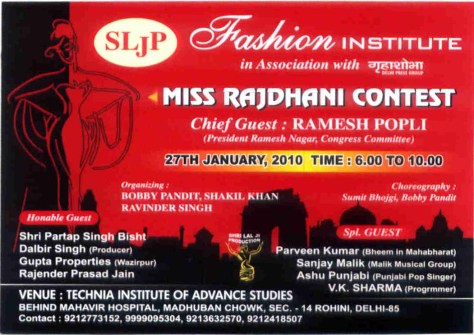
Miss Rajdhani Contest

You are cordially invited

City Walls that Talk

[Part of  a Series. See For Movement]

The Khirki and the Begumpur Mosques

This is to be read as a sequel to my earlier post, A Tale of Two Mosques.

First published in Landmark. Photographs by DEVNDRA CHAUHAN. Credit for the map drawings: NITIN SAINI.

The east gate of the Begumpur mosque

With the exception of Humayun’s tomb, and it is an exceptional structure, I have up to now stuck to my brief of talking about lesser known monuments of Delhi and will hopefully continue doing so as long as some monuments continue to exist incognito or till I am told to layoff. Considering that some of the readers have reacted favourably to my output I hope to continue to tread on what used to be a lonely trail.

Of late I have discovered fellow travellers on my jaunts, this path is no longer as lonely as it was when I began to see them in my teens in the company of my father who had strayed into archaeology from furniture designing, interior decoration and draughtsmanship. Continue reading The Khirki and the Begumpur Mosques