Tag Archives: human rights

‘constitutional’ Realities: Priya Thangarajah

Guest post by PRIYA THANGARAJAH

The piece is unfinished, consciously so. The thought is unfinished and needs to be fleshed out and thus posting this, so that this important idea can be evolved collectively. It raises a range of questions and contributes to existing debates on constitutional law from a social change/human rights perspective. (consciously the words ‘constitution’ and ‘india’ are not capitalised. ) It contributes significantly to an understanding, not just of north east india but the realities of chattisgarh, jharkhand, bihar, kashmir to name a few. It helps us understand all the wars fought within the country – ‘constitutionally’ about which much is being said in the media and elsewhere by state and non-state actors.

The constitution, some argue, is an aspirational document. Baxi states that it is created to protect the rights of the impoverished. Created to protect the weaker sections of society and that’s how the Dworkinian trumping of rights works. Rights of the weaker parties always trumps that of the stronger. But whatever the aim of the constitution maybe, its sacrosanct. Sacred. Amendments can be made with great difficulty but the constitution per se cannot be done away with for a new one. Continue reading ‘constitutional’ Realities: Priya Thangarajah

A response from a Sri Lankan friend: Priya Thangaraja

By PRIYA THANGARAJAH

The last two days have left me like I have just come from a storm and I dont even feel the tingling of rain drops on me. But this began long before. The state media I hear showed movies of Idi Amin and Hitler and a constant barrage of pro Mahinda Rajapakse propaganda. “they were brainwashed” is what I am hearing. I agree with everyone that its not like we had a better option. A military man who got rid of many when asked to get rid of one cant be the harbinger of a new era. Continue reading A response from a Sri Lankan friend: Priya Thangaraja

The absurd theatre of Sri Lanka, applauded by India

Every time I go to Sri Lanka, my historical sensibility gets heightened. I still remember this huge hoarding of Mahinda Rajapaksa ‘lovingly’ holding an old woman, obviously Tamil as she was wearing a pottu. That woman could be one of the 2.5 lakh people who have lost their homes, belonging and land in the war. She could be part of the other lakhs who have lost all of this in the more than twenty-five years of war.

The day before yesterday, 26th January, was the first ‘free’ election ‘after the war’. During the months before the election, 700 incidents of violence were reported, leading to the death and injury of many. Yesterday, as the results rolled out, chaos hit the streets of Colombo. We don’t even have enough information about what happened in the rest of the country yesterday. Rumours were floating about. I shall not dwell on the rumours and provide them legitimacy, although I am tempted to, as some of them are shocking and could be true. Ethics come in the way. Continue reading The absurd theatre of Sri Lanka, applauded by India

Silencing Social Activists

An escalating wave of attacks on social activists has been sweeping the country. Several recent incidents indicate an increase in the number of cases alleging grave human rights abuses against social activists, and a shift from low-level targeting, such as intimidation and harassment, to more serious violations, such as detention, prosecution, imprisonment and threats to their physical integrity. The authorities are also trying to silence them through unfair trial, denial of bail and long prison terms. There is excessive use of force, torture and other ill-treatment by the police. Women social activists are facing further violations, as women and as human rights defenders, including sexist verbal abuse and derogatory accusations. Continue reading Silencing Social Activists

Kashmir Tribunal Memorandum to CM Omar Abdullah

To: Mr. Omar Abdullah
Chief Minister
Jammu and Kashmir

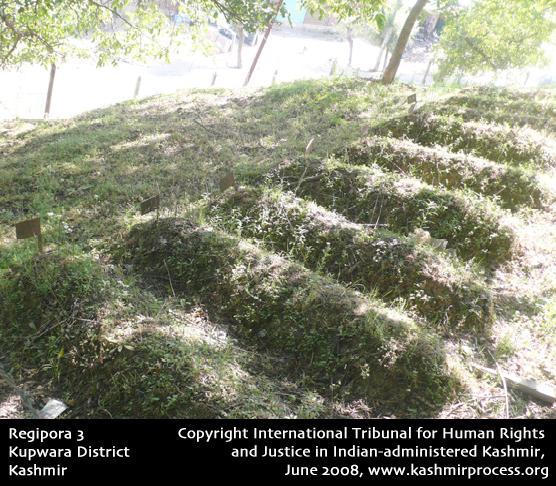
From: The International People’s Tribunal on Human Rights and Justice in Kashmir Continue reading Kashmir Tribunal Memorandum to CM Omar Abdullah

Beyond violence and non-violence – K Balagopal

Via Jamal Kidwai

[We are posting this piece by K Balagopal, hoping to continue our reflections on violence and non-violence in political movements. – AN]

The public arena is witness to dispirited discussion of the ineffectiveness of people’s movements, which are at the most able to slow down things, and nothing more. The discussion often turns around violence and non-violence, not as moral alternatives but as strategic options. Those who are sick of sitting on dharna after dharna to no effect are looking with some envy at violent options,
while many who have come out of armed groups find the Narmada Bachao Andolan (NBA) fascinating.

It is good that there is some openness in the matter now, for dogmatic attitudes have done considerable harm. To say that one should not be dogmatic about violence may be morally a little unsettling but it is a defensible position even without adopting a relativistic attitude towards the preciousness of life or a casual attitude towards one’s moral responsibility for injury caused in the course of a struggle. More of that in the right context. But the
discussion will unavoidably be based on assessments  of the effectiveness of the alternatives, and a distant view is likely to colour the reality with hopes and assumptions, even illusions. A realistic assessment of what each strategy has been able to achieve would better inform the debate.

The plain and stark fact is that while all strategies have been effective in curbing some injustice, none has succeeded in forcing the government to take back a single major policy in any sphere. And none has been able to reverse the trends inherent in the structures of society and economy. Yet no serious political movement or social struggle we know of is only for softening oppression or improving relief. The general understanding is that governance of the country – and may be the systemic infrastructure of society – is fundamentally wrong and needs remedying, maybe overturning. Do we know of any
effective strategy for that? I am not talking of political strategies,
but strategies of struggle that will successfully put pressure upon the State and the polity to stop them in their tracks. The struggle may be built around class or caste or any other social combination. It may in the end seek reform or the upturning of the polity. It may operate mainly or in part within the polity or keep out of it altogether. Whichever it is, the common problem is this: the experience of this country is that governments do not stop doing some thing merely because it has been demonstrated to be bad. Or even contrary to constitutional directives and goals. They stop only if going along is made difficult to the point of near impossibility. No democratic dispensation should be thus, but Indian democracy is thus. Short of that, you demonstrate the truth of your critique till you are blue in the face or shout till you are hoarse in the throat, it is all the same.

Continue reading Beyond violence and non-violence – K Balagopal

Corporate Complicity and Gujarat

The 4th ‘Vibrant Gujarat Global Investors’ Summit, organized by the Gujarat government on 12-13 January 2009 in Ahmedabad, and the statements by some prominent Indian corporate leaders, have spawned protests, analysis, debates and questions about corporate accountability, complicity, responsibility and rights in Indian democracy. At this biennial event, ‘Jai Jai Garvi Gujarat’ has been showcased as an ‘ideal investment destination, both for Indian and foreign investors’, where prospective investors have ‘only Red Carpet and no Red Tape and it is where investors can sow a rupee and reap a dollar as returns’ (see Official portal of Gujarat Government).

Bringing together business leaders, investors, corporations and policy makers by a democratically-elected government, exploring business opportunities and signing memorandum of understandings are legitimate economic activities. However, the projection of the Chief Minister of the State, Narendra Modi, as the next Prime Minister of India by corporate cheerleaders is much more than mere economic activity. It is turning a blind eye to gross abuses of rule of law, and knowingly assisting a political leader and his government to continue committing them. It is becoming party to a specific political vision in a manner that incurs responsibility and blame. Such corporate leaders thus become complicit with a government and its leader in serious human rights abuses. It is negative and unacceptable.

Continue reading Corporate Complicity and Gujarat

Guantanamo and Illegal U.S. Detentions: Time for Real Change

[On the seventh anniversary of Guantanamo Bay, 11 January]

The United States detention facilities at Guantanamo Bay, Cuba – seven years old on 11 January 2009 – have become emblematic of the gross human rights abuses perpetrated by the US Government in the name of fighting terrorism. Though the U.S. President-elect Barack Obama has pledged to close down the Guantanamo Bay, there are undoubtedly substantial challenges to closing. Every day that Guantánamo is kept open is another day in which hundreds of detainees and their families are kept in the legal shadows. Distressing to the individuals concerned and destructive of the rule of law, the example it sets – of a powerful country undermining fundamental human rights principles – is dangerous to us all. It would be no less dangerous, and no less unlawful, if the USA were simply to transfer the problem it has created at Guantánamo to another locations.

Detainees at Guantanamo Bay

The detention facility at Guantánamo Bay isn’t the only prison where the United States is holding detainees from the ‘war on terror.’ At Bagram Air Force Base in Afghanistan, Camp Bucca and Camp Cropper in Iraq, and many more – some known and others secret – are used to detain those captured by the U.S. military. Camp Bucca alone has at times held 20,000 prisoners, most of whom live in groups of tents surrounded by wire. Most detainees are held unlawfully, without warrant or charge, and without recourse to challenge their detention. Even when Guantánamo is closed, the need to push for detainee human rights will continue.

Continue reading Guantanamo and Illegal U.S. Detentions: Time for Real Change

Victims of Terrorism

The multiple terror attacks in Mumbai are unprecedented and blatantly violate the most fundamental principles of law and justice. Regrettably, as Mumbai shows today, there is a huge gap between governmental counter terror rhetoric and the reality of human security observance on the ground. Much more needs to be done to mainstream counter terror strategy and action throughout the government security system and states must demonstrate the political will and promptness to translate human security and rights commitment into action. Continue reading Victims of Terrorism

Some images do not disturb

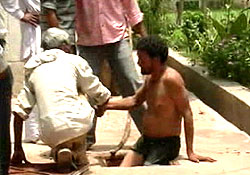
CBI-employed manhole workers in Noida

guest post by S. ANAND

There are times when our critical antennae do not perk up. We do not wish to decode certain signs because we are all implicated in them. Following the 14 September blasts in Delhi, suddenly the media found a new value in ragpickers, street vendors, auto drivers and others who live on the fringes of the city and are generally looked down upon by people who inhabit apartments, blogs, cars (and autos, I must add).

Suddenly, by 15 September, ragpicker Krishna was canonized as a ‘hero’ by the media, the police and the state (the Delhi government claims credit for saving some lives with its ‘eyes and ears’ policy). Yet, Times of India prefaced its report about Krishna thus: Continue reading Some images do not disturb

AFSPA – 50 Years of a Law

Come September 2008, and the Armed Forces Special Power Act (AFSPA) is now fifty years old in our country. It is a law in force in large parts of the northeast that gives armed forces special powers in a locality declared as ‘disturbed area’. However, while AFSPA is considered necessary by the state and army officials to protect the state against internal disturbances, to uphold the integrity of nation, to fight against terrorism and insurgency, and to protect sensitive border areas, it is being vehemently opposed and discarded by human rights groups, women’s organizations and political groups, as it is seen as facilitating grave human rights abuses, impunity, rape and torture, and silencing of democratic dissent. The Act has long been challenged internally through country-wide campaigns, coalitions, self-immolation, fast until death, and naked protests. It is also regularly referred to internationally, for example in the recently concluded UN Human Rights Councils’ Universal Periodic Country Review or in the previous Human Rights Committee, as an issue of serious concern.

Continue reading AFSPA – 50 Years of a Law

Flashpoint Chengara: March Against Blockade Tomorrow

AN APPEAL from the PANCHAMI DALIT FEMINIST COLLECTIVE, Kottayam, to join the march on August 14th, against sexual harassment and human rights violations at the site of the struggle for land at Chengara, Pathanamthitta, Kerala.

[Below is an urgent appeal from Chengara, Kerala, where a land struggle has been on for the past one year. There seems to be a general elite consensus about refusing citizenship to the 7500 landless families that have occupied government land there; more ominously, there seems to be also the determination to punish them. Since early August a road blockade has been going on led by the united front of trade unions defending the right of (eighty) workers in the occupied Chengara plantation. Apparently, there are also ‘criminal elements’- the trade unions and the police, poor things, know nothing of them – who have been violently stopping activists from reaching the settlement.The CPM intellectuals in Kerala are patiently waiting for ‘more and accurate’ information, as they were when some of us approached them proposing a protest around Nandigram last year. Reports of starvation, sickness,and sexual assault are reaching us from Chengara but there is no way we can get there.Now, what is this? A new form of illegal custody? A new form of sexual harassment in custody? On 14 August, dalit activists and organisations are planning a march to Chengara, and hopefully food and medical supplies can be taken there. Please circulate this appeal widely – we have to stop another Nandigram– JD]

A historic land struggle has been unfolding at Chengara in Pathanamthitta district, Kerala, involving about 7500 families, Continue reading Flashpoint Chengara: March Against Blockade Tomorrow

“Madam, we know you’re leaving. Think wisely before coming back”

Continue reading “Madam, we know you’re leaving. Think wisely before coming back”

Individuals at Risk

At the heart of all peoples’ rights work is the individual – as the person at risk of human rights abuses, as the survivor, as the partner in the defense of rights, and as the activist speaking out, and working with and for other individuals. Individuals, as part of the political, social and cultural collective and spread over the length and breadth of the country, lie behind much of the activism of Indian social-political groups, working at local, grassroots and community levels in India today. They try to change lives by acting on their own or with other people and political groups making the same demand – an end to injustice in all its forms.

These individuals are increasingly at risk in India today. We have witnessed the killings at regular intervals of activists like Safdar Hashmi, Shankar Guha Niyogi, Satyendra Dubey, Sarita and Mahesh, S. Manjunath, Mahendra Singh and Chandra Shekhar in the past two decades. We have had a series of cases of arrest and detention of people like Dr. Binayak Sen and T. G. Ajay. At a time when the patterns of human rights abuses against rights activists are becoming widespread and showing signs of further deterioration, with the governments showing their apathy, we need to draw attention to the situation, point to the concrete failures of the governments to live up to their obligations, and plan on some concrete actions, so that the human rights activists can carry out their important work free from attacks, fear or reprisals. Continue reading Individuals at Risk