Mecca Masjid police firing report dumped in cold storage: Lateef Mohd. Khan

Guest post by LATEEF MOHD. KHAN

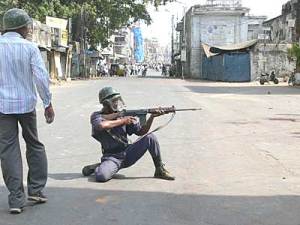
On Friday, 18th May 2007, the RSS terrorists planted bombs at historic Makkah Masjid and immediately after the bomb blast, a group of communal minded policemen started firing on the people who were helping the injured people in the blast. 9 people were killed and hundreds got injured in the blast. The sharp shooter policemen were chosen for firing on the people who came for prayers and who came forward to help the injured and this communal group of policemen was monitored by  the then Additional Commissioner of Police (Crime). Continue reading Mecca Masjid police firing report dumped in cold storage: Lateef Mohd. Khan

Indians who want Pakistan to win and Pakistanis who want India to win!

To make our point against jingoism.

To say that no one needs a cricket match to prove their patriotism.

To hope the best for those we’re told we should hope the worst for.

Please join this Facebook Event page and ask your friends across the border to do so, too.

Four Months the Kashmir Valley Will Never Forget: A Fact Finding Report

A fact-finding team of VRINDA GROVER, RAVI HEMADRI, BELA BHATIA and SUKUMAR MURALIDHARAN will release their report, Four Months the Kashmir Valley Will Never Forget at a press conference in the Committee Room of the Constitution Club in Delhi, today, 4 pm. You can download the report (.pdf) here. Given below is the text of the introduction.

The mass uprising of mid-2010 in Kashmir sent shock waves across all of India. It caught most experts on Kashmir thoroughly unawares, after they had managed to persuade themselves that the situation in the valley – routinely referred to as “troubled” – had rapidly changed for the better. Continue reading Four Months the Kashmir Valley Will Never Forget: A Fact Finding Report

Why Bangladesh?: Jyoti Rahman

Guest post by JYOTI RAHMAN

Singing Amar Shonar Bangla with the whole stadium — the highest point during a cricket match attended by fellow blogger Rumi Ahmed.

For those of us born in Bangladesh, which turns 40 today, along with the red-and-green flag, there is an instinctive, natural identification with Amar Shonar Bangla. Less recognised is the fascinating history of the song, which also tells us the twists and turns in the history of the 20th century Bengal. Continue reading Why Bangladesh?: Jyoti Rahman

Hundreds of lives reduced to rubble in Delhi: Paul Divakar

Guest post by PAUL DIVAKAR

This slideshow requires JavaScript.

This was written yesterday, 24 March 2011: Today we witnessed most humiliating, fascist nature of pulverising already vulnerable communities – most of whom are Dalits and backward castes in Gayatri colony near Faridpur of Baljit Nagar. Continue reading Hundreds of lives reduced to rubble in Delhi: Paul Divakar

The Earthquake and Japan: Kojin Karatani

[We are posting below a piece by Japanese philosopher and literary critic Prof Kojin Karatani, sent to us by a friend. Karatani has authored a number of works, including a very important recent book Transcritique: On Kant and Marx (MIT Press 2003). In this brief but thoughtful piece, Karatani talks about the ways in which the experience of the earthquake is forcing many Japanese people to rethink the whole idea of becoming a world economic power and its concomitant idea of development. AN]

I was on the streets of Tokyo when the earthquake struck. The ground shook violently, while buildings swayed around me for a long time. It was beyond anything I had experienced before, and I sensed that something terrible had happened.  My first thought was of the Kobe earthquake that killed more than 6,000 people in 1995.  Although I did not experience the Kobe earthquake first hand, it hit the region of my hometown where many close relatives lived, and so I headed immediately to the scene of the disaster. I walked the streets where building after building had collapsed into rubble.

Clearly, the scale of the current disaster far surpasses that of the Kobe earthquake. For it also includes the damage caused by the tsunami to coastal regions across hundreds of kilometers as well as the danger of nuclear catastrophe. Yet these are not the only differences. The Kobe earthquake was completely unexpected. Aside from a small number of experts, no one had imagined the possibility of an earthquake there. The recent earthquake, on the other hand, had been anticipated. Earthquakes and tsunamis have struck the Northeastern region of Japan throughout its history, and frequent warnings had been sounded in recent years. Meanwhile, nuclear power had always given rise to strong opposition, criticism, and warnings.  Yet the scale of the earthquake went far beyond any prior anticipation.  It was not that anticipating the scale of such a disaster was impossible, just that people had purposely avoided doing so.

The full article can be read in Counterpunch.

 

Enter the Paavam: Women Candidates in Kerala’s Elections

I am not surprised that  neither the LDF nor the UDF both of which had endorsed the reservation of fifty percent seats in the panchayats for women, have not fielded a significantly higher number of women in the forthcoming elections to the Kerala State Assembly.  Anyone who has observed the shaping and widening of the division between ‘high politics’ and ‘local governance’ in Kerala since the mid-1990s can well see that the rules of the game remain totally unchanged in ‘high politics’ and it will stay so even if ‘local governance’ is entrusted completely to women’s love and care.  None of the women leaders who entered public life through the panchayats and have by now completely got beyond the loving-caring-maternal stereotype are in, of course. At least one of them,Latika Subhash, who had indeed been a successful leader in local governance, saw the writing on the wall well in advance. I had a chance to listen to an interview she gave a researcher from our team studying gender and governance a few years back, in which she clearly indicated that in order to move up the political ladder, it was necessary to move into high politics. This is how she justified her decision to get back into politics despite being quite popular as a leader of the panchayat.Not surprisingly, most of the women who have indeed become candidates are well-versed with the ways of high politics and possess the necessary connections. Continue reading Enter the Paavam: Women Candidates in Kerala’s Elections

हिरोशिमा से फ़ुकुशिमा: अनिल मिश्र

Guest post by ANIL MISHRA

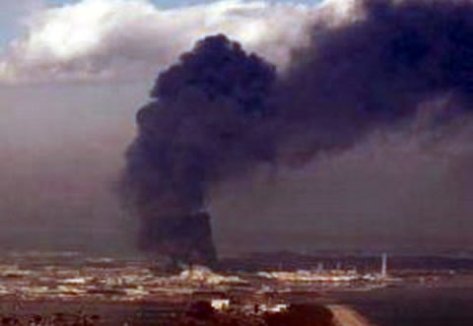
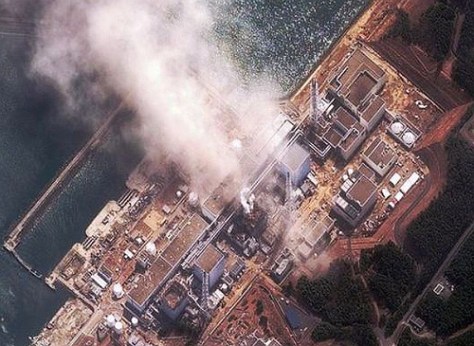
पिछले सप्ताह जापान में सुनामी के साथ आए भूकंप ने समूची दुनिया को दहला कर रख दिया है. इस विभीषिका से होने वाले नुक़सानों का वास्तविक आकलन, एड़ी चोटी के प्रयासों के बावजूद, अभी तक नहीं हो पाया है. सब कुछ धरती के नीचे दफ़्न हो जाने की सैकड़ों ख़बरें अभी तक आ रही हैं. रही सही कसर  परमाणु संयंत्रों में विस्फ़ोट के बाद विकिरण के ख़तरे ने पूरी कर दी है जिसके असर कई कई सालों और पीढ़ियों तक मारक होते हैं.

People evacuated from a nursing home
Fukushima - evacuated people

जापान के प्रधानमंत्री नाओतो कान के बयान कि ’दूसरे विश्वयुद्ध के बाद यह उनके देश में सबसे भयानक तबाही है, और कुछ मायनों में उससे भी ज़्यादा विनाशकारी’, के कई पहलू हैं. इसे प्राकृतिक आपदा में नष्ट हो चुके एक देश द्वारा महज वैश्विक मानवीय सहायता और सहानुभूति की अपील की तरह देखना पर्याप्त नहीं होगा. प्रधानमंत्री का बयान परमाणु ऊर्जा के ख़तरनाक पहलुओं की भी एक स्वीकारोक्ति है. मानवतावादी संकटों से निपटना निश्चित ही एक अहम और तात्कालिक चुनौती है. लेकिन परमाणु संयंत्रों में विस्फ़ोट और विकिरण के जो खतरे पैदा हो रहे हैं उनसे निपटना आने वाले दिनों में बेहद कठिन होगा. साथ ही, ऊर्जा के लिए परमाणु ईंधन को प्रोत्साहन देने वाले अन्य देशों की योजनाओं के लिए इससे कई महत्वपूर्ण सबक़ मिले हैं.
Continue reading हिरोशिमा से फ़ुकुशिमा: अनिल मिश्र

I Wish You Egypt: An open letter to people of conscience in the West. Omar Barghouti

Guest post by OMAR BARGHOUTI

I wish you Egypt!

I wish you empowerment to resist; to fight for social and economic justice; to win your real freedom and equal rights.

I wish you the will and skill to break out of your carefully concealed prison walls. See, in our part of the world, prison walls and thick inviolable doors are all too overt, obvious, over-bearing, choking; this is why we remain restive, rebellious, agitated, and always in preparation for our day of freedom, of light, when we gather a critical mass of people power enough to cross all the hitherto categorical red lines. We can then smash the thick, cold ugly, rusty chains that have incarcerated our minds and bodies for all our lives like the overpowering stench of a rotting corpse in our claustrophobic prison cell.

Your prison cells, however, are quite different. The walls are well hidden lest they evoke your will to resist. There is no door to your prison cell — you may roam about “freely,” never recognizing the much larger prison you are still confined to. Continue reading I Wish You Egypt: An open letter to people of conscience in the West. Omar Barghouti

Anti-Nuclear Parliament March on 25th March, 2011

Organized by  Anti-Nuclear Struggles Solidarity Forum

Mandi House to Parliament. Assemble in front  of the Sahitya Academy Lawns at 12.00 noon.

This protest march is to state our stand that we oppose all  forms of nuclearisation of India, including nuclear (fission) power and weaponisation plans and programmes.

We further demand an immediate moratorium on all new projects, and a stringent review of existing plants by independent experts.

We demand investment in exploring sustainable alternative forms of energy.

Continue reading Anti-Nuclear Parliament March on 25th March, 2011

Bhagat Singh and the Hindu Rashtra: Mahtab Alam

Guest post by MAHTAB ALAM

“The communists’ ideologues conveniently ignore the truth that the roots of Bhagat Singh’s ideology lie in the very concept of Hindu Rashtra,” claims an article by Dipin Damodharan, published on this day last year. Damodharan, as introduced at the end of the article, is a student pursuing Masters in Communication and Journalism (MCJ) at the Calicut University of Kerala. He argues: “To my knowledge, he sacrificed his precious life for a noble cause, for the liberation of Bharat from the invaders, for nationalism. Undoubtedly Bhagat’s legacy belongs to every Bharati. But for the communists (experts in transforming sheep to dog), he died for communism and not for nationalism. They are incessantly advocating Bhagat as their poster boy, for several years they have been using Goebalsian tricks to claim Bhagat’s legacy.” The author further argues, “They are injecting fake stories about Bhagat into the blood of youth who are ignorant about Bharat’s history. Discarding the historical facts, the communists become angry with the Sangh inspired organizations for propagating Bhagat’s ideals”. Continue reading Bhagat Singh and the Hindu Rashtra: Mahtab Alam

The evidence from Fukushima: nuclear power means nuclear catastrophe – Daniel Tanuro

Excerpts from an article by Daniel Tanuro, an eco-socialist environmentalist

What has happened is entirely predictable: yet another major nuclear “accident”. At the time of writing, it is not yet certain that it will take on the dimensions of a disaster similar to Chernobyl, but that is the direction in which things, alas, look set to evolve. But whether it develops into a major disaster or not, we are once again faced with evidence that the technology can never be 100% secure. The risks are so frightening that the conclusion is obvious: it is imperative to abandon nuclear energy, and to do so as quickly as possible. This is the first lesson of Fukushima, one which raises absolutely fundamental social and political questions, requiring a real debate throughout society about an alternative to the capitalist model of infinite growth…

Continue reading The evidence from Fukushima: nuclear power means nuclear catastrophe – Daniel Tanuro

Praful Bidwai on Lessons for India from Fukushima

Excerpts from a recent article by Praful Bidwai, journalist, social science researcher and activist on issues of human rights, the environment, global justice and peace.

The crisis holds a number of lessons for India as it embarks on a massive nuclear power expansion programme, which will double and then further triple India’s nuclear power capacity.

First, nuclear power generation is inherently hazardous. It is the only form of energy production that can lead to a catastrophic accident with long-time health damage and environmental contamination. Human error or a natural calamity can trigger a catastrophe—but only because reactors are themselves vulnerable.

Reactors are high-pressure high-temperature systems in which a high-energy fission chain-reaction is only just controlled. Nuclear reactors are both systemically complex, and internally, tightly coupled. A fault or malfunction in one sub-system gets quickly transmitted to others and gets magnified till the whole system goes into crisis mode.

Continue reading Praful Bidwai on Lessons for India from Fukushima

Compromise in Rape Cases: Whither Constitutional Morality?: Kalpana Kannabiran

Guest post by KALPANA KANNABIRAN

The Supreme Court judgement reported in some newspapers on 24 February 2011, legitimizing compromise in rape cases, is cause for serious concern.  For thirty years now human rights groups and women’s groups have fought difficult battles to have rape recognised as a serious offence both in communities and by courts.  Rights advocates have been concerned by the fact that all too often the view of the judiciary converges with the view of the community in seeing women’s sexuality as communally owned property, thus removing any articulation of violence from the crime of rape.

Some years ago, at a workshop of judicial officers, we had one senior officer arguing that if a man found guilty of raping a woman offered to marry her, this offer should be considered as a “mitigating circumstance,” and his sentence reduced to the bare minimum.  That done, since his continuing in jail will be detrimental to his new family life, he should be set at liberty under the provisions of the Probation of Offenders Act.  Fortunately in that gathering, the majority of officers, most of them junior to the officer concerned, felt strongly that this is a gross misapplication of the law.  But the existence of the possibility that a judge might actually rationalize the gross misinterpretation of a law as critical to women as this, has far reaching consequences.

Continue reading Compromise in Rape Cases: Whither Constitutional Morality?: Kalpana Kannabiran

The Hindu, WikiLeaks and Me: Malarvizhi Jayanth

Guest post by MALARVIZHI JAYANTH

Once upon an election, the ruling party was bullying and booth-capturing recklessly. I was there. I saw it. Outside one booth, three Tata Sumos drove away at mad speeds, their screeching, spinning wheels blowing dust into my eyes in a scene straight out of the Tamil movies. I walked into the booth to find it had been ransacked minutes earlier. I saw weeping government officials and ballots with the stamp over the rising sun scattered everywhere. Other reporters saw similar scenes. Reporters received complaints of cash and biriyani(!) being distributed to voters.The management of the newspaper I worked for chose to run the Election Commission’s claims that the elections had been without incident, rather than accounts from several reporters who had seen the captured booths and heard from voters who had been offered bribes. Two days later, when almost all other media (barring the usual suspects) had run outraged stories about the brazenness of the booth capturing, hesitantly, The Hindu followed suit. Today, they announce to us that cash for votes is a way of political life in Tamil Nadu. Yeah, thanks, we know that already. Too bad you couldn’t believe your lowly brown-skinned reporters who told you all about it. A white man sends off a cable about it to his masters and then it becomes news? Really? Continue reading The Hindu, WikiLeaks and Me: Malarvizhi Jayanth

Emboldening Khap Panchayats?

It’s Here, The Privatisation of Higher Education In India

I do not exaggerate. I am not being hasty. The writing is on the wall. What started as a glimmer in the eyes of the IIC-frequenting bureaucrat, the industrialist with profit-making dreams and the politician with an obscenely large government house in Lutyens’ Delhi is now a raging reality. Pick up any newspaper or magazine and check out the number of advertisements for private universities. Do a google search for the latest news reports on committees on higher education. If you have the time and patience, go through all the government documents on higher education in the past five years, almost neatly coinciding with the exit of Arjun Singh as Human Resources Minister and the entry of Kapil Sibal. Speaking of Mr. Sibal, if his cheerfully unapologetic blundering on the 2G scam is anything to go by, we should have an idea of the kind of subtle and layered approach he has in mind when he speaks of ‘reforming the education system.’

Continue reading It’s Here, The Privatisation of Higher Education In India

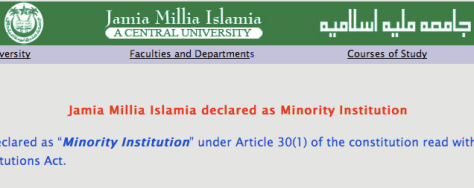
Ghettoes of the Mind: Khalid Anis Ansari on ‘minority status’ for Jamia Milia Islamia

Guest post by KHALID ANIS ANSARI

Teri azaān mein nahin meri sahar ka payām. [Your call to prayer heralds not my dawn] – Allama Iqbal

A grab from the university's website

The recent judgment of the National Commission for Minority Educational Institutions (NCMEI), favoring ‘minority status’ for Jamia Millia Islamia University, has generated vigorous debate. While it seems to me that most of the articulations have probably been reluctant in staging the immanent logics governing the entire controversy, I see this debate as offering yet another opening for democratic transformation within the Muslim community. While I will resist from taking a straightforward for/against position on the issue, it would be my endeavor to trace the discursive ruptures that instantiated the articulation around the ‘minority status’ for Jamia, and to indicate at the need to frame the Muslim ‘community’ now as a contested terrain with multiple sites of negotiations, cleavages and transformations.

Continue reading Ghettoes of the Mind: Khalid Anis Ansari on ‘minority status’ for Jamia Milia Islamia

What does it mean to be a Muslim in India today?: Mahtab Alam

Guest post by MAHTAB ALAM

Shahina KK

Recently, Shanina K K, a journalist from Kerala, who worked with Tehelka news weekly and now works with Open magazine, received the Chameli Devi Award for being an outstanding woman journalist. While receiving the award she said, “See, I happen to be a Muslim, but I am not a terrorist.” What made her say that and what was she trying to convey or explain? It means, as she explains, “If you belong to the minority community, they will also profile you. It is very difficult to prove that you are not a terrorist. It is equally difficult to prove that you are not a Maoist in our life and times.” Continue reading What does it mean to be a Muslim in India today?: Mahtab Alam

India’s ‘Lawless Law’ that Keeps Dissidents ‘Out of Circulation’

Amnesty International has released a report calling on India to repeal the Jammu & Kashmir Public Safety Act. The report, called A ‘Lawless Law’: Detentions Under the Jammu and Kashmir Public Safety Act, can be downloaded here. Given below is the text of the Introduction and Summary of the report.

‘We have to keep some people out of circulation…’ – Samuel Verghese, (then) Financial Commissioner – Home, Jammu and Kashmir in a meeting with Amnesty International, Srinagar, 20 May 2010 Continue reading India’s ‘Lawless Law’ that Keeps Dissidents ‘Out of Circulation’

Nukes, Wikileaks and Corruption: National Alliance of People’s Movements

Press Release by NAPM

PM Must Reveal Truth to Nation
Cancel all the Proposed Nuclear Power Plants and Related Facilities
Moratorium on Dams in High Seismic Zones

New Delhi Delhi, March 18 : Prime Minister Manmohan Singh’s statement after the nuclear disaster in Japan that there is no need to be panicky as India will take all safety measures is not only amateurish but also lacks wisdom.
His statement gives the impression that the Japanese have not taken adequate safety measures. What type of natural calamities or man made lapses are in store for us, no one can visualise or predict leave alone taking safety measures against them.

The Prime Minister who has no control over his own cabinet ministers and has unashamedly wailed in public that he was ineffective due to coalition government, and caused the nation unimaginable and unprecedented loss by allowing mind blowing scams, issuing such absurd statements like taking all safety measures- lacks any tangible weight. Continue reading Nukes, Wikileaks and Corruption: National Alliance of People’s Movements