
It is surreal watching leaders from Sushil Kumar Shinde to Sushma Swaraj make tough statements, one after another, on television. Statements about taking strong measures, the latter even demanding, as is her wont, death sentence to rapists. I felt like asking, do you even realize what the people are angry about? Do you even know what is at issue here? Who will you hang? Case after case, even after December 16, it is being revealed, suffers from the same problem: the refusal of the police to even register a case! What is the meaning of this high histrionics then, when you do not even have a culprit to punish? I am not even raising the question of the ethics of death penalty because that is a redundant question at the moment. Except for the raving right wingers who – like Sushma Swaraj and Shinde – have to make some song and dance about the issue merely for effect, no one else really believes that at the moment there is any issue other than the criminality of Delhi Police. Continue reading Dismiss the Delhi Police Commissioner
All posts by Aditya Nigam
The Bastar Land Grab: An Interview with Sudha Bharadwaj
This intervew with SUDHA BHARADWAJ of Chhattisgarh Mukti Morcha was conducted by JUSTIN PODUR in Raipur on 5 March 2013
JP: As a lawyer and an activist, how do you see the relationship between legal work and activism?
SB: I see myself primarily as a trade unionist. I joined the union movement over twenty years ago, and it was the union that made me a lawyer. They felt that workers needed a good lawyer in their fight with the corporations. Our union is one of contract workers and has been striving to overcome divisions in the working class. Here, workers have a close connection with the peasants. So, we believe that working with the peasants is part of unionism.
When I got to the High Court, I found that all the people’s organizations were in a similar situation. The laws that give you rights are poorly implemented. When you fight, the status quo has many legal weapons, launches malicious litigation, etc. So we have a group of lawyers now (Janhit), and we work on group legal aid, not individual legal aid. The idea is that if you help a group, that can bring about some kind of change, create some space. I’ve also gotten involved with the People’s Union for Civil Liberties (PUCL), for which I am the General Secretary in Chhattisgarh. Continue reading The Bastar Land Grab: An Interview with Sudha Bharadwaj
Debating the Attack on Presidency University: Pratyay Nath
Guest post by PRATYAY NATH.
This piece is in response to Waled Aadnan’s post on Kafila titled ‘Because Presidency is an Idea – All You Need to Know about What Happened at Presidency University’ (dated 15 April 2013). Mr. Aadnan’s well-written and succinctly argued piece is not an isolated voice; it echoes a dominant way of thinking that has been noticeable among the various protests against the recent incident of vandalism in the Presidency University (erstwhile Presidency College). Let me begin by stating, like many others already have, that the vandalism that happened in Presidency on 10 April 2013 should be condemned in the harshest of terms. My discomfort lies in some of the ways in which these condemnations are being articulated in the public domain over the past few days. I would suggest that the majority of the protests emanate from a sense of hurt delivered to the idea of eliteness of the educational institution in question, which cannot unfortunately be supported because it tries to detach this incident from the broader socio-political forces of our times by sensationalising the issue. Continue reading Debating the Attack on Presidency University: Pratyay Nath
Spin Doctors, Propagandists and the Modi Make-over
Elsewhere on Kafila, we have published a 7000 word long response by Madhu Kishwar to Zahir Janmohamad’s open letter to her which appeared on 15 January, followed by Zahir Janmohamad’s response. Perhaps a few things need to be stated here clearly with respect to her ‘response’. It seems to me to violate every tenet of reasoned debate and argument and is replete with name calling and stereo-typing of not just the secularist ‘other’ [who is her real other, not the Muslim] but even of the adversary she is arguing with. So if Zahir is a Muslim, he has to be X, Y, Z and has to be believing in A, B, C. Everything starts and ends in bad faith. But then that is what distinguishes Madhu Kishwar from others. She is in her element especially in relation to those whom she disagrees with. With her there can be no disagreement – you have to be sneered and jeered at, irrespective of whether you are a Medha Patkar or an Aruna Roy. I suppose these are matters of personal style and I shall not dwell on them further.
Let me rather, turn to some of the more substantive issues raised in Madhu’s response. Zahir has answered most of them but it seems to me that a couple of vital questions still remain. Even here, though, a caveat is necessary. I have great admiration for Madhu Kishwar’s battle in defense of the rikshaw pullers in Delhi and have often said so openly to her as well as others. However, I do know that it is possible to talk to her when only we agree, which is very rare. On matters that we disagree about, I have decided that I do not want to enter into any kind of an argument with her. In any case, large parts of her ‘response’ are like Modi’s PR handouts, served to us without any sense of critical examination. Therefore, what follows below is not my reply to her but my reactions to a set of allegations she has raised about whosoever is opposed to Narendra Modi – all lumped together in a breathtaking move of reductio ad absurdum, first as secularists , who are reduced to Leftists/ NGO activists and finally to Congress-supporters (because, she says in her Modinama1, the Congress has been equally responsible for all the riots till date). I therefore, lay my cards on the table at the outset: I am an inveterate Modi-hater (and a Congress-hater as well, if that makes sense to anyone in her dichotomized universe) and Kafila is a forum with a certain, if very broad, politics that, at the minimum rules out being pro-Modi. Continue reading Spin Doctors, Propagandists and the Modi Make-over
Mining in Goa and Odisha and the CPI, Then and Now: Hartman de Souza
Guest post by HARTMAN DE SOUZA. The article was written a few days before April 12, the CPI’s day of solidarity with Odisha mine workers.
When the Goa State Committee of the erstwhile Communist Party of India (CPI) and its national secretary, our very own Comrade Christopher Fonseca, tells you that April 12th will be observed all over India as a day of solidarity with the Adivasi people of Odisha struggling for seven years to save more than 4000 acres of their ancestral lands from falling to mining conglomerates as rapacious as their Goan counterparts, ageing leftists in the village bar are not too sure whether they should laugh or just weep.
Perhaps one needs to paint the larger picture to highlight the irony that lurks in the shadows.
There was a time it needs to be said, when the CPI ran a long, hard and lonely battle in Goa, led by Comrade George Vaz who it is hard to believe was once Comrade Fonseca’s mentor. He was a short, somewhat portly, soft-spoken, widely-travelled man fluent in at least four languages. Not many Goans would know that Comrade Vaz ran a free kitchen in his home at Assenora open to anyone in need of a simple, nourishing meal, or that some of us who now want to weep in our glasses have eaten there several times…
Continue reading Mining in Goa and Odisha and the CPI, Then and Now: Hartman de Souza
Plucked, Consumed and Discarded: Dhruba Jyoti Purkait and Deepshikha Hooda
Guest post by DHRUBA JYOTI PURKAIT and DEEPSHIKHA HOODA.
Sakhra (Yavatmal): Deep in the heartland of Maharashtra’s suicide-ravaged Yavatmal district, the Gond tribal settlement of Sakhra holds a surprise. “There are no husbands here, just children,” explains Kishore Tiwari, president of the Vidarbha Jan Andolan Samiti. A member of the VJAS accompanies us on the bumpy two-hour ride out of Pandarkawada.
We turn onto a dirt trail that runs through a forest clearing; an hour passes before we start spotting cotton fields. We stop and our guide calls out to two female labourers. Only then does it strike us. Most of the labourers picking cotton are women.
It has been 10 years since Laxmi, now 24, gave birth to a son. She met a rich, upper caste boy who had promised to marry her. “Pyaar jataya tha mujhse,” After the delivery, he refused to acknowledge the parentage of the baby. “Congressi tha woh,” she says.
Continue reading Plucked, Consumed and Discarded: Dhruba Jyoti Purkait and Deepshikha Hooda
To Break a Siege: Justin Podur
This is a review by JUSTIN PODUR of Nirmalangshu Mukherji’s book Maoists in India: Tribals Under Siege (Pluto Press 2012)
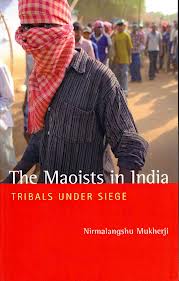
Central India is a place where all the fault lines of “development” in today’s world converge. Indigenous people, vast stretches of natural forest, mineral-hungry corporations; media, government institutions, and political parties heavily compromised by private interests; people’s struggles, armed insurgency, counterinsurgency, military occupation, paramilitarism – all are present, and until recently, it has all been a well-kept secret.
The struggles play out differently in different parts of Central India. In Orissa, indigenous people’s movements have battled mining companies and stalled projects for years, in Kashipur and Lanjigarh. In Chhattisgarh, in the northern Bastar region, one of India’s billionaires, Naveen Jindal of the Jindal Group (also a polo player and a Congress Party Member of Parliament for a different district), wields tremendous economic and political power. The mines use captive power plants, coal or hydro, so each mine causes massive ecological and agricultural damage. In a profile by Mehboob Jeelani in Caravan Magazine on March 1, 2013, Jindal explained his philosophy: “We don’t control all the raw materials, but we have captive mines for 60 or 70 percent. This is something my father really believed in—that we must control our raw materials. If we don’t, then other people control us. So we made a conscious effort to acquire coal and iron ore mines.” In southern Bastar in Chhattisgarh, a Maoist insurgency is fighting against government forces, police, paramilitaries, and vigilante groups, from bases deep in the forest, in a war that was largely unknown for decades.
In India, the secret of the insurgency was broken by a series of atrocities committed by a group called Salwa Judum, starting around 2005. Salwa Judum in the Americas would be called paramilitaries, but in India is called a vigilante group. Salwa Judum was organized by the state and headed by a Congress Party politician named Mahendra Karma. It burned hundreds of villages, committed murder and rape, and tried to channel the indigenous people of the forest villages into roadside camps, where their movements could be controlled. This was all done in the name of fighting the Maoist insurgency, and it largely failed on those terms: Maoist numbers increased, the indigenous people went deeper into the forest. But it was a human disaster, and that human disaster has continued. The objective is the lands where the indigenous people (in India called adivasis) live – specifically the minerals underneath those lands, which put them in the way of the extractive development model and hence, in the line of fire. Continue reading To Break a Siege: Justin Podur
Appeal from Tamil Civil Society to the International Community on Sri Lanka
This appeal was published in groundviews.org and has been sent to us by V. Geetha. We are publishing it here to give a different view from the kind of view that dominates now. Even though the appeal was made before the voting took place in the UN Human Rights Council, it is nevertheless an important view.
This appeal, signed by civil society activists who live and work in the North and East of Sri Lanka, seeks to state our position with regard to the resolution on Sri Lanka to be tabled at the 22nd sessions of the UN Human Rights Council. We understand that the resolution will seek to provide more time to the Government of Sri Lanka to implement the recommendations contained in the Lessons Learnt and Reconciliation Commission and that it will fall short of calling for an international independent investigation to hold to account those responsible for the Crime of Genocide, War Crimes and Crimes Against Humanity. If this resolution would contain only the above and no further, in our opinion, it would be truly unfortunate. Read the full statement here.
Dhinkia and Govindpur Mothers go Naked to Protest against Forcible Land Acquisition for POSCO: Minati Dash
Guest post by MINATI DASH
On 7th March 2013, at least two mothers of Dhinkia and Govindpur (Patna village in this panchayat) villages in Jagatsinghpur went naked before the paramilitary station in Mangalpada near Govindpur village. In a rally led by mothers, hundreds of women and children went to the temporary paramilitary station that has more than 5 platoons of forces at the moment. While taking off their clothes, they constantly shouted, ‘why have you come here?, what do you want to see?’.
What must be the extent of desperation and provocation that our mothers decide to become naked before outside men? In such a site (Eastern Odisha), where women bodies are constructed dominantly as private objects to hide, what does it mean to dare to bare? It is important to read this shocking act as an act of mediation of their political voices. It is in a desperate bid to express their furore, frustration & anger over intrusive presence of police & paramilitary in the area that they bared their bodies to shame them.
But shockingly, instead of recoiling with shame in response to such an act, the paramilitary chose to strike physically. They did not spare even these protesting women and brutally lathicharged them. Continue reading Dhinkia and Govindpur Mothers go Naked to Protest against Forcible Land Acquisition for POSCO: Minati Dash
Sahibs, Pandits and the Scholarship on Caste: Manish Thakur and Nabanipa Bhattacharjee
Guest post by MANISH THAKUR and NABANIPA BHATTACHARJEE
Scholarship on caste has always been much more than merely about caste. At stake has been the very idea of India, and the production of knowledge about it. Expectedly, whenever academic knowledge on caste spills over in the public domain (and it does so often, as in the recent Ashis Nandy case), politically charged contestations about the idea of India inevitably follow. In the academy, the privileging of Brahmanical worldview in sociological discourses on India continues to be a source of deep-seated resentment. ‘Indian Critiques of Louis Dumont’s Contributions’ (Khare 2006) notwithstanding, the figure of ‘the learned Brahman’ (Alamgir 2006) looms large in the voluminous corpus of anthropological knowledge about India. So much so that Richard Burghart(1990) views modern anthropological knowledge primarily as a function of multiple dialogues between modern day anthropologists and the Brahmanical tradition of knowledge.
Pot calling the dynasty black: Ajaz Ashraf
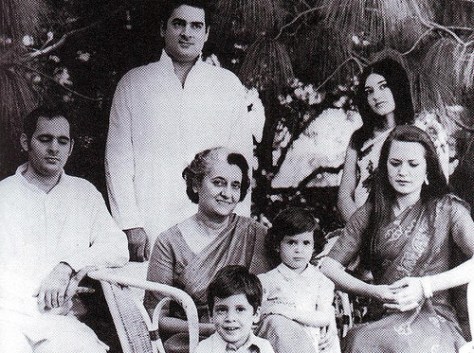
AJAZ ASHRAF writes: It is time we examined the society we have created before we invoke the rather trite argument of dynastic rule to stridently criticise the Gandhis and the Congress. No doubt, dynasty is antithetical to democratic politics. Yet, it is also true that dynastic succession is the norm outside the Indian political realm as well. Its sheer pervasiveness explains why people dismiss outright the hypocritical media outcry against dynastic succession to routinely vote pater familias to power, in state as well at the Centre. Continue reading Pot calling the dynasty black: Ajaz Ashraf
Leaping Across a Troubled History – Launch of Pratiman
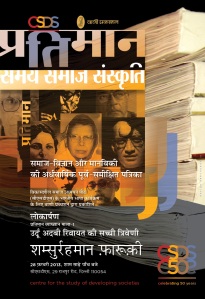
A new research journal in Hindi, Pratiman – Samay, Samaj, Sanskriti, was launched on 28 February 2013, at the Centre for the Study of Developing Societies, Delhi. The occasion was historic in many ways. Given the long and troubled history of the great language divide between Hindi and Urdu and the lost traditions of Hindustani, the fact that the launch was marked by a public lecture by noted Urdu scholar-poet Shamsur Rahman Faruqi cannot but be anything but historic. There is a certain impertinence and perhaps even insolence, in the move to leap across that history of over a century and a quarter, in complete disregard of the custodians of purity on both sides, in the insistence that language is not what the custodians make of it but what lives in the world of creativity and exchange.
It was only befitting of this occasion that Faruqi chose to speak on “Urdu Adabi Ravayat ki Sachchi Triveni.” In what turned out to be a remarkable and breathtaking tour de force, Faruqi turned his scholarly apparatus to the task of dissecting the Urdu poetic and aesthetic tradition in a manner that revealed its three currents (the ‘triveni’) – namely, Arabi, Persian and Sanskrit.Through the metaphor of the Triveni at Allahabad, where the Ganga and Yamuna meet the third river Saraswati, which is invisible but nonetheless ‘present’, Faruqi too perhaps wanted to stress the significance of the third but invisible current of Sanskrit poetics.
Continue reading Leaping Across a Troubled History – Launch of Pratiman
The Great Right-Wing Convergence – Towards 2014: Ruchi Gupta
Guest post by RUCHI GUPTA
For those of us, whom the well organized Right on the internet describes as “sickular”, the prospect of Modi as Prime Minister is unthinkable. Congress is then a reflexive default – not a party of choice. Its secular credentials too are tarnished with 1984, but its communal capitulations are opportunistic (and thus contained) unlike the BJP with its official Hindutva party plank. Moreover with all its corruption and contradictions, the Congress has always had a strong left-liberal strand, providing some space for engagement to further progressive agenda, enacting for instance the landmark Right to Information Act, NREGA and FRA. However faced with a Rahul Gandhi versus Modi contest – the former a reluctant prince leading a dithering party, the latter the decisive machismo king of no-nonsense governance – it appears that Congress has decided to move so far to the Right that 2014 looks set to become a Modi versus ‘sickular’ Modi contest.
Continue reading The Great Right-Wing Convergence – Towards 2014: Ruchi Gupta
Illegal Antiquities: Vishes Kothari
Guest post by VISHES KOTHARI
As a collector of Indian antiquities wanting to set up an antiquities dealership in the future, I had heard of the wholesale illegal export of Indian art treasures and antiquities out of India- sometimes through newspaper reports, but mostly through word of mouth. This summer I decided to explore this market further. Nothing could really have prepared me for what I was to see over the course of the next month spent between Delhi and Rajasthan.
Contrary to my imagination of the Delhi businesses operating in a very shady and dubious manner out of musty, hidden godowns in obscure corners of Old Delhi, and run by people with barely any idea of what they were handling, what I found instead was that almost all these businesses were located in localities which epitomize mainstream “cosmopolitan Delhi” and run by extremely wealthy upper middle class families. Connaught Place, Greater Kailash, Green Park, Sunder Nagar- these were just some of the places where I was able to locate an open sale of antiquities- happening not through dodgy godowns or via clandestine networks- but instead conducted out of posh showrooms and sold openly to anyone who cared to buy.
Is Prof Nandy a Holy Cow?: K Satyanarayana
We are posting below an interview of Dr K SATYANARAYANA on the issues arising out of the ‘Ashis Nandy case’. The interview was conducted by DALIT CAMERA and sent to us by RAVICHANDRAN
The interview raises some important issues that call for a reasoned public debate and we welcome this opportunity provided by this interview.
Many authors missing at Jaipur Lit Fest: Sajan Venniyoor
Guest post by SAJAN VENNIYOOR, our cultural correspondent
Threats from Hindu, Muslim and other cultural organizations may derail the Jaipur Literature Festival set to begin on Thursday, 24 January.
The BJP and RSS have threatened not to allow seven Pakistani authors to attend the event. “Looking at present Indo-Pak relations, it is unacceptable to allow Pakistani writers to be here as guests. We will make sure they are not allowed to enter Rajasthan. If they come, they will meet the fate of many others who have met similar fates,” said Suman Sharma, BJP state vice-president.
The Pakistani authors included in this blanket ban are British-Pakistani Nadeem Aslam, Canadian-Pakistanis MA Farooqi and Sharmeen Ubaid Chinoy and plain old garden variety Pakistanis Mohammed Hanif, Jamil Ahmad, Fahmida Riaz and Ameena Saiyid. Continue reading Many authors missing at Jaipur Lit Fest: Sajan Venniyoor
Remembering Laxmi Orang and the Gender Question in Assam: Mayur Chetia and Bonojit Hussain
Guest post by MAYUR CHETIA AND BONOJIT HUSSAIN
The Delhi gangrape case has led to country-wide outrage, with young women and men still pouring out on to the streets to protest against the widespread culture of sexual violence. The outrage has not just stopped at Jantar Mantar, India Gate or university campuses; it has also led to a wave of intellectual reflection on the issue. For most protesters the demand for justice has not stopped with the Delhi gang rape victim, but has led to a demand for justice for all victims of sexual violence. These protesters have forced us to remember a litany of names that get buried by the TRP driven media and a public with a notoriously short attention span of memory. It is time to remember names that we are losing to public amnesia, names like Soni Sori, Manorama, Asiya and Neelofar. It is time we remember another forgotten name – Laxmi Orang.
In the Interest of Remembering: Who is Laxmi Orang?
On 24th November 2007, Laxmi Orang, a young adivasi woman, was forcibly stripped naked, thrashed and paraded by a violent mob of “mainstream” Assamese [1] men. This took place just 100 meters away from State Legislative assembly, in the very heart of Guwahati, in the full glare of the media and police forces. As with her fellow protesters, it was her first trip to the city, the mythical land where the modern day Swargodeo’s [2] listen to their subjects, where appeals are heard, where miracles happen, where riches and wonders thrive. She had come to the city as participant of a protest organized by the All Adivasi Students’ Association Assam (AASAA) to demand Schedule Tribes status for the Adivasi community of Assam. Continue reading Remembering Laxmi Orang and the Gender Question in Assam: Mayur Chetia and Bonojit Hussain
Harassment by Times Now: Statement by Shabnam Hashmi
[The following is a public statement issued by Shabnam Hashmi regarding her harassment by Times Now. The report is truly alarming and shows the extent to which this form of ‘media vigilantism’ – Arnab Goswami/ Times Now style can go. It is of course, another matter that when confronted by a Raj Thakre, the same macho anchor can turn into a small and helpless mouse. We are reproducing this statement in public interest.]
I was in Gujarat for over six months and returned to Delhi two weeks ago. While in Gujarat I was asked to appear on different television channels constantly. On one such talk show on Times Now I felt that I was especially being pushed into a corner and it was an absolutely unbalanced panel, I told the Times Now guest coordinator that I will not come on the channel any longer. It continued for about a week or so. Then a representative came from Mumbai and met me in Gujarat office and ensured that it will not happen in future and requested me to come for the Talk Shows.
I agreed and went again whenever I was called.
On December 28, 2012 I released a public statement in Delhi regarding the Gujarat Verdict 2012 and resigned from various UPA committees that I was part of. On the same day I was invited to Times Now and I found the same attitude of being highly aggressive towards me.
January 2, 2013, I filed a police complaint against Mr Akbaruddin Owaisi in Parliament Street Police Station against the hate speech which he made in Andhra Pradesh. I was called on Times Now and met the same uncivilized and aggressive behavior.
Continue reading Harassment by Times Now: Statement by Shabnam Hashmi
Armed Forces Special Powers Act provides impunity for rape: Warisha Farasat
Guest post by WARISHA FARASAT
The protests against the brutal gangrape of a young 23 year-old girl in Delhi have been unprecedented. Finally, it appears that the impunity with which crimes against women in our country are committed is causing outrage, and both men and women are demanding justice. What is encouraging is that although the protests were triggered by the recent incident of rape in Delhi, it has also forced us to reflect on the larger issue of impunity for rape and other crimes against women, particularly when it happens against women belonging to the marginalized communities. Moreover, it is also politicizing an entire generation of young people that are realizing that their voice can create ripples in the political establishment in Delhi.
Shuddhabrata Sengupta in his earlier post has lucidly articulated about how our response to sexual violence should not be selective, and our protests should recognise the brutality of crimes against women in the conflict areas of Kashmir, Manipur and Chhattisgarh. In Kashmir, accusations of rape have been repeatedly made against the security force personnel. It has been alleged that rape and assaults have occurred during crackdowns, cordon and search operations. During these operations the men were held for identification outside their houses, near mosques or in a common ground while the security forces searched their homes. During these search operations, safeguards such as inclusion of a women officer in the search teams were never followed. Continue reading Armed Forces Special Powers Act provides impunity for rape: Warisha Farasat
A Government in Hiding
Protestors from Raisina Hill began to be forcibly removed late last night. The police action continued in the foggy cold of this December morning. Aghast at the violence on a completely peaceful gathering of students – some of them just school children – many of us too felt compelled to join the demonstrations. A number of left-wing student groups who have been part of the protests had called for collecting at the Neel Gumbaz at Nizamuddin. At 11 am, we all started collecting there – many of us older folk going there in solidarity with what has been one of the most unprecedented student-youth mobilizations in the city. Yesterday, there had been repeated rounds of water cannons, tear-gas and brutal lathi-charge by the police of a government that has gone into hiding.
Finally, some 600-700 of us began moving in a procession from Nizamuddin to India Gate. When we reached there, we discovered that already large numbers of people had begun recongregating at ‘Rajpath’ – the Power Avenue where every January the Republic displays its military might to the world. The numbers were continuously swelling. A group of supporters of Arvind Kejriwal’s AAP – inclduing Kejriwal and other leaders – were squatting on one side, towards Hyderabad House. This was virtually on the margins of the area where the main crowds were. Apart from the group of people we had come with, there were hundreds who seemed to us to be completely unaffiliated ordinary students, contrary to some claims floating around in Facebook that these were ‘RSS crowds’. At one end a human chain had been erected and slogan shouting for justice continued. Around the Amar Jawan Jyoti, there were processsions of students still coming in. We were there till about 2 pm and there was no question of any violence at all – except for three unprovoked tear gas shells that had been lobbed by the police into the crowd. There had been some minor commotion as the police occassionally tried to push back students with a lathi charge of sorts.
By this time, however, it was apparent that the police was preparing for the offensive. Police briefings were taking place in different groups and gradually the crowd was being surrounded from all sides. And yet, till about 2.50 pm, despite twenty rounds of tear gas being fired by the police, as well as periodic lathi charges – they did not manage to provoke violence from the crowd to justify a crackdown. But the crackdown had to take place. And lo and behold, the justifications for it materialized, suspiciously, very soon. Continue reading A Government in Hiding
Appeal to Dalit Groups for Solidarity with Laxmipet Dalit Victims: Hyderabad Political Economy Group
Statement issued by the HYDERABAD POLITICAL ECONOMY GROUP, received via RAVICHANDRAN BATHRAN
It is necessary for all of us to look beyond whatever we do. The killing of Laxmipet Dalits on 12th June 2012 and subsequent events indicate that divided houses of Andhra Pradesh Dalit Mahasabha must re-examine the nature of political divisions that have long since afflicted it leading to numerous splinter dalit groups and the formation of two major groups, the Mala Mahanadu demanding status-quo and the Madiga Dandora claiming for categorisation in reservation policy. There are three major issues emerging over the last six months after Laxmipet events unfolded which is why we appeal to both political groups of Dalits to show support and solidarity with each other.
First, time has now come for these Dalit organisations to realise how their persistent bickering has divided them and has weakened their struggle for justice. The Dalit organisations, especially the Mala Mahanadu and the Madiga Dandora, must realise that a full-fledged reservation system in Laxmipet, ensuring representation of Dalits in administration and politics, have failed to protect Dalits from atrocities committed by dominant castes over land issues. Continue reading Appeal to Dalit Groups for Solidarity with Laxmipet Dalit Victims: Hyderabad Political Economy Group
 KAFILA - COLLECTIVE EXPLORATIONS SINCE 2006