All posts by Nivedita Menon

The right time to decide on state funding of polls: Raghavan Srinivasan

Guest Post by RAGHAVAN SRINIVASAN

The Election Commission proved itself to be totally unequal to the task of curbing money power in the recent state assembly elections in Tamil Nadu. State funding of the electoral process holds a lot of promise in ensuring a level playing field for all participants.

If one were to add up the cash-for-votes given to voters during the recent TN assembly elections, as reported in the press, then the cost per vote would easily be the highest among all Indian States. Money paid to cadres during election campaigns, fees paid to advertising agencies, and direct cash transfers to voters – all provide a temporary euphoria in the economy. Everyone is happy since apparently there is no one who is left out. But the money for these huge expenditures have to come from somewhere and that is invariably, the people’s pockets.

The massive monitoring force deployed by the  Election Commission of India (ECI) consisting of  a battalion of general observers, police observers, expenditure observers, assistant expenditure observers, video surveillance teams, and others seized more than Rs. 105 crores of cash. Though a considerable sum, this was just the tip of the iceberg. Surely the observers would have recorded considerable evidence on other surreptitious methods of transferring cash-for-votes. In response to petitions against this blatant violation of electoral rules, the Commission first postponed elections in Aravakurichi and Thanjavur constituencies and issued notices to two political parties on freebies in their election manifestos. The ECI did not exercise the plenary powers conferred to it under the Constitution to countermand/cancel these elections at that point.

However, in a first in India’s electoral history, the Election Commission decided on May 28 to rescind the notification and conduct polls afresh “in due course of time” to these two Tamil Nadu Assembly seats following evidence of use of money to influence voters. The Election Commission said it took the decision after considering reports of observers, special teams of central observers, report of the special team of observers of Aravakurichi and Thanjavur constituencies and representations of contesting candidates.

This is unfortunately, only the tip of the iceberg.

Continue reading The right time to decide on state funding of polls: Raghavan Srinivasan →

Who will Educate the Educators? Reflections on JNU today: Janaki Nair

Guest Post by JANAKI NAIR

 In an interview to the journal Frontline on February 16, 2016, just 11 days before he took over one of India’s most prestigious universities, Prof Jagadesh Kumar had this to say:

I am a defender of free expression of thought in a democratic set-up and students are free to question me or challenge my views. I believe in constructive criticism, and as long as it is done peacefully and within the boundaries of the law, there is no problem.

Declaring his  two top priorities, of which one was the redressal of  infrastructural shortcomings, he desired

to improve the learning environment by making it more student-centric. Some of the faculty are great researchers, but they do not have much understanding of teaching. What I want to do requires cooperation from faculty members.

These words, which Prof Kumar has thus far not refuted or denied, should be recalled today, more than three months after his takeover, the  most tumultous months the University has ever known.  It is too early to judge the VC on his infrastructure  promise, as some of us continue to make  bone rattling journeys on cycles over  the most rutted roads on the campus.  Continue reading Who will Educate the Educators? Reflections on JNU today: Janaki Nair →

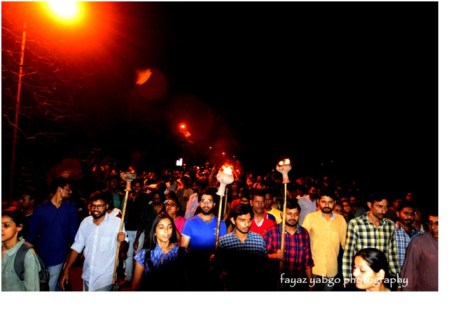
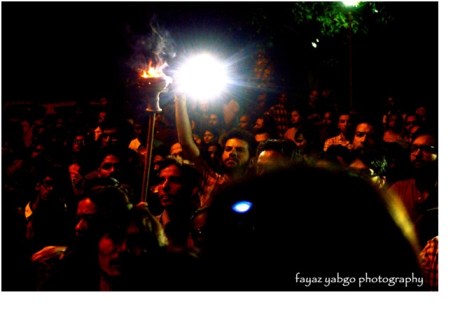
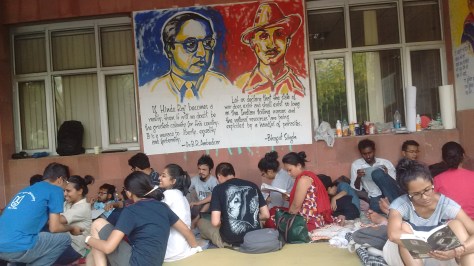
#FightBackJNU through the lens of Fayaz Ahmad

Photo Essay by FAYAZ AHMAD, JNU student on indefinite hunger strike

Untitled

March against the biased and unjust HLEC Report, culminating in hunger strike

Untitled 2

Continue reading #FightBackJNU through the lens of Fayaz Ahmad →

Where are we heading? A Bangladeshi feminist’s reflections: Khushi Kabir

Guest Post by KHUSHI KABIR

Very soon after Professor Rezaul Karim Siddque of Rajshahi Univeristy was hacked to death in the morning of April 23, 2016, I wrote my feelings, my frustrations, my concerns and my fears. From all the information we received, Professor Karim appeared to be a quiet man, a man who was of a peaceful nature, a lover of music and a committed teacher.  As is the case with most Bangalis, he loved music.  Cultural activities were in his bloodstream.  He tried to, or did set up a cultural hub in his home, where he lived, not too far from the University where he taught.  He was not a declared atheist, nor a blogger, not even an armchair or facebook activist.  Not one of the usual argumentative Bangalis, the usual picture of the intellectual.  Not one of those who were in the frontlines of activism, not a talk show star, not one who wrote long opinions and editorials about the state of affairs of the country.  Why would he be killed?

We read from the reports that we get from all the different forms of media that exists, that he was what I often describe as the typical example of a citizen of this land, the kind of people I grew up with, secular in his thinking by encouraging culture, music, playing his favourite sitar, reading books, yet sensitive and responsive to the practice of religion of the people he lived amongst, his family perhaps, certainly his neighbours.  We heard of his large donations to the building of the local mosque as a proof of this perception.  His daughter has been very vehement in stating that he was a believer.  I find it very telling on our current state of affairs that we have to insist that we are all believers.  Why should it matter?  A murder is a murder and a gruesome murder has to be taken in all seriousness no matter what one’s beliefs are or where one stands.  We all grew up learning to sing, dance, play an instrument, and write poetry, recite etc.  Where else do we find that recitation is considered a part of cultural practice, a part of the performing arts?  Was his fault that he embodied this very nature of the Bangali? Was he murdered so brutally simply to be used as an example of what not to be?  Was he simply targeted because he embodied the very spirit of 1952, of 1971 in the quiet nature of his being?

Continue reading Where are we heading? A Bangladeshi feminist’s reflections: Khushi Kabir →

The JNU administration now faces a crisis of credibility: Ayesha Kidwai

AYESHA KIDWAI in scroll.in

students on hunger strike

The indefinite hunger strike by 17 Jawaharlal Nehru University students has been continuing since April 28, with university teachers and students also showing their solidarity by joining as relay hunger strikers.

Despite the searing heat and failing health of many – including Chintu Kumari, Umar Khalid and Kanhaiya Kumar – the declaration by the Vice Chancellor of JNU that a hunger strike is an “unlawful activity” has only fuelled the strikers’ determination. Although over a hundred teachers met the Vice Chancellor and his team (as he likes to call them) in a bid to break the deadlock, no progress has been made because the JNU administration seems to believe that the fight here is one about the quantum of punishment.

Such is the chasm that separates the current JNU administration’s understanding of what the law is and what justice actually demands that the law has become something of a fugitive in JNU these past few months. The extremely obstinate, vengeful and motivated enquiry proceedings anddisciplinary action over the February 9 event have so perverted university procedures and institutions that the entire JNU administration now faces a crisis of credibility.

Continue reading The JNU administration now faces a crisis of credibility: Ayesha Kidwai →

What is wrong with setting up a Sex Offenders’ Registry? Shweta Goswami

Guest Post by SHWETA GOSWAMI

The NDA government seems to have started pushing forward the regressive proposal of the previous UPA government to set up a sex offenders’ registry in the country, on the lines of those maintained in some western countries including the U.S. and the U.K.

According to the proposal the details of sex offenders even below 18 years of age would be included in the database, which will be put up on the website of National Crime Records Bureau (NCRB).The government plans to publicize their photographs, addresses, PAN card details, Aadhaar card number, fingerprints and DNA samples through this registry.

The information on offenders to be collected for the Registry include those related to their jobs, professional licenses, information of schools, colleges, institutions with which they have been associated, vehicle information, date of birth and criminal history.

The details would be put up only after they have been convicted and completed their sentence in jail. The details will not be included if the cases are under trial and are in appeal in a higher court.

Failed logic of deterrence

Considered to be a handy tool for the law enforcement agencies, the offenders’ registry is being envisaged as a deterrence by the ministers in the government since it will instill fear in the minds of repeat sexual offenders and the public would benefit from it. My concern is, whom does the government want to deter? Individual offenders or men in general? (I say men, because I understand sexual violence as male violence and women offenders as an anomaly). If it is the individual offender, only a couple of offenders would make it to the list given the low conviction rate and the snail-paced judicial processes. Given the inconsistency between the rate of crime committed and the rate of conviction, I doubt if the registry would be of any help for the public to stay vigilant against sex offenders. Continue reading What is wrong with setting up a Sex Offenders’ Registry? Shweta Goswami →

‘The queer fight is against Western hegemony, not by its side’: Queer activists of Bangladesh

Received through Meena Seshu

Anindya Hajra, a friend and Queer activist in Kolkata posted this on FB.

The following letter was sent to me very early this morning over WhatsApp by a queer activist friend from Bangladesh with who I have been trying to establish contact over the past few days (and was successful only yesterday) and who wanted this to be shared as widely as possible. They said this letter was a joint one written by many persons, specifically ‘their comrades’. I have kept the original spellings. On asking them as to what this letter should be called if anything at all, they said, “Naam naai” (There is no name). Hence that is how I am sharing this letter – Anindya

“…while the West has hand-picked extremist Islam as its enemy (with the banner of ISIS) – speaking out against the violence of labor practices and money-making in third world nations is not high on their agenda.”

Dear all,

I am writing to you from a rather desperate place in the hope that you will heed my plea. I am sure that this is reaching you because you have posted something or the other about the two murders of the gay activists in Bangladesh. We are all outraged,shaken and deeply saddened by their untimely brutal deaths. Having said that please read this carefully. Let us honor the dead but not forget the living. Please stop circulating any content containing the following, especially if you are from the North America, Europe:

Xulhaz Mannan as the face of the entire LGBT movement

Roopbaan, or any other organization associated with the term “LGBT”

Bangladesh as an islamic fundamentalist country unsafe for secular bloggers, free thinkers or gender deviants.

“Freedom, diversity and tolerance are Bangladeshi values”.

You see, when you sit on powerful land and demand justice from a government, whether you are well-intentioned radical queers or people of color or marginalized activists who want to demand justice alongside us, sharing these contents, or making this news viral will not help right now. Putting pressure on your local/national governments will not help either. However, what will happen is that this will create a false image of an “islamic” fundamentalist country out to kill queers demanding that international wellwishers (read: Europe and USA) come and save them from the brown men. The deviants and queers are hiding but the international call for justice is making it difficult to avoid being visible. Continue reading ‘The queer fight is against Western hegemony, not by its side’: Queer activists of Bangladesh →

Statement of solidarity for HCU from students and faculty of University of Texas at Austin

An Ode To Women’s Struggle In Matoi: Shailza Sharma

Guest Post by SHAILZA SHARMA

In the remote corners of Sangrur district of Punjab, 20-something year old women got together during a village celebration of Ravidas Jayanti. These girls from Matoi village had one purpose that day, to declare the formation of their Ekta Club, a club formed with the objective of fighting for equal status, equal opportunities and most importantly, claiming a share in the village land by participating in the annual auction of Shamilat land.

Upon making this valiant declaration, they were bombarded with insults and mocked for demanding their rights. “Who are you to claim rights over land, you are just a bunch of Dalit girls! What will you even get out of owning a piece of land?”, people questioned. To this, the women replied, “It is a matter of legal right and our demands are legitimate claims for what belongs to us. In claiming our legal rights, we seek equal status, satisfaction and self respect”.

Out of this group of ten women were two sisters leading the struggle, Gurmeet Kaur and Sandeep Kaur. They had been at the forefront of formation of the Ekta Club and the fight for claiming Shamilat land.

The Punjab Village Common Lands Regulation Act, 1961 (the Punjab Act)

This was the scene in 2014, a day on which a few Dalit families led by this group of young women, stood up against the upper caste families and farmers of Matoi, to claim their share in the Shamilat land.

Under the Punjab Act, Shamilat land has been defined as inter alia the land used or reserved for the benefit of the village and community. Such land may be utilised for various purposes including constructing schools, drinking wells, roads etc. 30% of the Shamilat land is reserved for families from the Scheduled Castes, 10% for families from the Backward Classes and further 10% for dependants of army personnel killed in war after the independence of India (Reserved Land). Continue reading An Ode To Women’s Struggle In Matoi: Shailza Sharma →

Statement by feminists against R K Pachauri’s intimidation of complainants’ lawyer, Vrinda Grover

Sexual Harassment At The Workplace In India: Over-Powering Patriarchy At Work 

We, the undersigned activists and organizations of the Indian women’s movement express our outrage at the fact that R.K. Pachauri has filed a civil suit for injunction and demanded damages of Rs. 1 crore against Advocate Vrinda Grover. The attempt is to hold Ms. Grover liable in a civil suit for her efforts towards bringing official cognizance of two complaints of sexual harassment at the workplace brought against Mr. R.K. Pachauri by two of his former colleagues. Both these women have complained that they were sexually harassed at TERI by Mr. Pachauri much prior to the complainant of FIR dated 18th February 2015, in which Mr. R.K. Pachauri has now been charge-sheeted in February 2016. Alarmingly, despite the fact that Ms. Grover has sent repeated written communications to senior officers of the Delhi police informing them that her two clients would like their statements to be recorded, the police have till date not taken any steps in this regard.The very public attack on Ms. Grover is a matter of concern for all those who, like the signatories to this letter, are struggling to deliver substantive justice under the laws on sexual harassment in the workplace in India today.  Continue reading Statement by feminists against R K Pachauri’s intimidation of complainants’ lawyer, Vrinda Grover →

Who will take responsibility if the threat to “storm JNU” and kill students is carried out?

One Amit Jani has received considerable media attention with his threats to JNU students, promising a ‘shoot-out’ if JNUSU President Kanhaiya Kumar and Umar Khalid, do not meet the ‘deadline’ he has given for them to leave campus.
Almost immediately as this came to the attention of the JNU community, students and teachers took steps to bring this threat to the attention of Facebook, where the threat was initially posted; of Delhi Police and of JNU Administration.
These steps are listed below, so that later, nobody should be able to say We Did Not Know. The media, which covers every petty letter written to the police by ABVP with great alacrity, has not seen fit to recognize the steps being taken by an increasingly anxious JNU community over clear and specific threats to the life of our students, and indeed to everyone on JNU campus.
1. JNUSU wrote to the VC, bringing this time-bound threat to his attention. JNUSU also filed a complaint at the Vasant Kunj North Police Station to take appropriate action against those indulging in intimidation and threat to students. Students also met the SHO personally and requested him to take the issue seriously and file an FIR. A Complaint has also been sent to Commissioner of Police by JNUSU, with a copy of the complaint to LG and CM.
There has been no response from the police so far.

Interim Report of the Independent National Fact Finding team on violence at HCU

Excerpts from the Interim Report published in Round Table India

Members of the Fact Finding Team:

Henri Tiphagne, Human Rights Defenders Alert, India, Tara Rao, Amnesty Intl, Burnard Fatima, International Movement against all forms of Discrimination and Racism, Kuffir Nalgundwar, Round Table India, Kiruba Munusamy, Supreme Court Lawyer, Beena Pallical, National Campaign on Dalit Human Rights, Ramesh Nathan, National Dalit Movement for Justice, Asha Kowtal, All India Dalit Mahila Adhikar Manch, Paul Divakar, Asia Dalit Rights Forum.

The team comprising of senior activists, academicians and lawyers have met with the students, faculty members, the police, the Home Minister and local civil society organisations. The team will be presenting a more detailed report at a later date based on the compiled narratives and testimonies. This team was constituted as a response to the terrifying news of the escalation of violence at HCU on March 22, 2016.

Recommendations:

The Fact Finding Team gives the following recommendations in restoring the normalcy and peace in the University:

1. In the best academic interest and in restoring a peaceful environment in University and in order to ensure a fair investigation is done, the FF Team recommends that the Vice Chancellor Mr Appa Rao must be suspended pending the outcome of the investigation.
2. Police need to step up their response in dealing with the cases filed (VC, and student arrests) with efficiency and due legal process both in the case of the VC and the arrested students.
3. Normalcy of the University must be restored immediately. Free mobility in and out of the University and this must be brought back to regular functioning. This is essential for the academic health of the University, which has suffered significantly.
4. Criminal investigation should be immediately conducted and action should be taken against the police who have wilfully neglected their duty under Section 4 of the SC ST PoA Amendment Act 2016.
5. Recommendation to the State Government should play a facilitating role in bringing back normalcy to the campus.
6. The Central Government must swiftly and efficiently ensure a smooth transition of the leadership of the University in the best interest of the primary objective of the University of Academic Excellence by replacing the Vice Chancellor in close consultation with the University students and Faculty.

For the full Interim Report, follow this link.

Updates from Hyderabad Central University

A Suneetha, The Citizen Bureau, Kalpana Kannabiran, Preethi Raghunath.

A. SUNEETHA, Anveshi Research Centre for Women’s Studies, Hyderabad:

This is to inform you all that strong local support is building up in Hyderabad for the students and faculty of University of Hyderabad. Here are some of the details.

a) During the two day shut down of UOH by the administration, students and faculty of EFLU and others sent food to UOH. Lamakaan opened their canteen to the students. A few offered their homes to the students who may have wanted to leave the campus.

b) On the legal front, support has poured in from the faculty and students. The faculty have offered generous support to stand surety for their students. Also crowds of students and faculty are in the court to express solidarity.

Continue reading Updates from Hyderabad Central University →

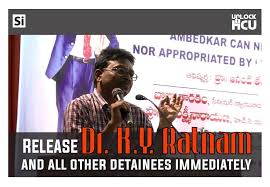
Why is Prof K.Y. Ratnam being targeted? Friends of Prof Ratnam

indexProf K.Y.Ratnam is the last person one expects to get arrested on charges of destruction of public property or provoking violence. So we were dismayed to find that he is one of the people arrested in UOH along with 27 young students and a faculty member in this week’s crackdown in the University.

But perhaps one should expect that he is on the watch-list of the current Vice Chancellor Prof. Appa Rao Podile. In 2001, Prof Ratnam, then an assistant warden of hostels, was targeted by administrative humiliation, which led to student support and the rustication of eight dalit students from the university. The current vice chancellor Prof Appa Rao Podile was then the chief warden of the hostels. He was the authority who handed out the humiliating posting to Ratnam. He has also been charged with pursuing the rustication of the nine dalit students. His antagonism with Ratnam therefore is well known.

Prof. Ratnam has been one among the SC/ST faculty who have extended whole hearted support to the Joint Action Committee for Social Justice in HCU formed after Rohith Vemula’s suicide two months ago. In the melee which led to his arrest, Ratnam was seen and heard pleading with the police not to be too harsh with the students. And this seems to be the ‘offence’ that he was arrested for. According to those who visited him in the Cherlapally prison he was beaten by the police in the van and in the police station too. And sustained injuries in his face.

Following his arrest he is likely to be suspended from the university. If this happens his course with 72 students is likely to remain unfinished. This would definitely trouble him, being the conscientious teacher that he is. He has had several dalit M Phil and PhD students successfully defend their work under his guidance over the past two decades. And his gentle and persuasive force towards rational thinking in the anti-caste struggles is too well known in the university and the states of Telangana and Andhra Pradesh too.

A few lines about his other academic credentials will not be out of place here. He started the Centre for Ambedkar Studies in the University of Hyderabad. And is the first teacher to take up Ambedkar’s writings in the curriculum and has taught the issue of caste and oppression in the department of political science. He has been part of a recent collective initiative that published a volume  analyzing and criticizing the attempt by the RSS to appropriate the thought of Ambedkar.

Conscientiousness, academic credentials and political commitment seem to be the crimes for which Prof. Ratnam is being targeted by Prof. Appa Rao Podile’s administration. Fortunately they are not crimes in the Indian Penal Code.

Friends of Prof.K.Y.Ratnam 
(R.Srivatsan, A.Suneetha, Gogu Shyamala and others) 

Women Against Sexual Violence and State Repression in solidarity with HCU

Women Against Sexual Violence and State Repression (WSS) strongly condemns the brutal police action against the students of the University of Hyderabad. The students, who were exercising their democratic right to protest, were lathi-charged, beaten and manhandled and women students were mauled and threatened with sexual assault. Students and faculty members were forcibly dragged into police vans, thrashed and moved from thana to thana to prevent them from contacting their lawyers and families. They have also been mercilessly beaten while in custody. As many as 34 students and three faculty members have been sent to jail – the beatings have continued even after remand.

For the last two months, the students of the Universty of Hyderabad have been protesting the institutional murder of Dalit scholar Rohith Vemula. Their campaign for justice for Rohith has reverberated across the country and has rallied thousands in support of their call for an end to caste discrimination in educational institutions.

The police action follows hard on the heels of the re-appearance of the VC on the campus. This individual is one of the key actors in the events leading to Rohith’s death, and stands charged with offences under the SC/ST Atrocities Act. He was supposedly on indefinite leave pending the results of the inquiry instituted against him, and the students protested against this stealthy attempt at his re-instatement with a gherao of the VC’s lodge.

The response of the Government of Telengana and the University has been to turn the campus into a war zone. The students are under siege – hostel messes have been locked down, electricity and water have been cut off and the gates sealed to prevent the entry of media persons and “outsiders” trying to provide food, water and medical aid to the injured. Students who have volunteered to keep the kitchens running to feed their comrades have been beaten and their provisions confiscated. At least one of these volunteers is critically injured and still not out of danger. The media is being fed with concocted reports that are contradicted by video footage taken by students, with testimonies describing the attacks and showing their injuries. The continued presence on the campus of large numbers of armed police tells its own story.

The strategy of the BJP government – to crush all dissent and establish a totalitarian saffron regime in institutions of higher education – is now visible in campuses across the country, from Hyderabad to JNU, Pune and Chennai. The HRD Ministry is brazenly using every possible instrument to foist their regressive, limited and flawed version of education on the academic community. The government has shown its willingness to use force to stifle critical enquiry and independent thought, and to silence dissent and questioning.

We stand strongly with the students of the University of Hyderabad in their struggle to protect democracy on the campus and to challenge and combat casteism and discrimination in educational institutions. We salute them, and their comrades in struggle in universities across the country, for bringing new energy and hope to our democracy through their determined opposition to the repressive casteist, communal and patriarchal ideology and world view that the Hindutvavadi regime seeks to foist on us.

We salute Radhika Vemula for her determination to claim justice for her son and for the lakhs of Dalit students who are daily facing violence and discrimination in their pursuit of education.

We condemn the actions of the state government, which has shown its subservience to the Modi sarkar and cynically sold out its commitment to the students without whom Telengana would not have come into being.

We demand Continue reading Women Against Sexual Violence and State Repression in solidarity with HCU →

JNUTA Condemns Repression in Hyderabad Central University

The Jawaharlal Nehru University Teachers Association, which currently holds Secretary’s position in the Federation of Central University Teachers’ Associations (FEDCUTA), is disturbed by the repots of attacks on the autonomy and democratic life of Hyderabad Central University (HCU). JNUTA condemns in unequivocal terms the brutality unleashed by the Police on unarmed students and teachers in Central University of Hyderabad. JNUTA denounces the resuming of office by the Vice Chancellor of Hyderabad Central University when a Judicial Enquiry is pending against him for his alleged role in the tragic death of Rohit Vemula. It is a matter of concern that basic services including water supply and Internet connections are disrupted in HCU.

JNUTA expresses its concern over the arrest of faculty members and students in HCU and demands their immediate release. It urges upon all to maintain restrain and not to resort to violence of any kind. It appeals to the Administration of Hyderabad Central University to immediately restore the basic services in the residential units of students to ensure that their academic activities do not suffer.

Use of police and coercion is not going to help in the smooth functioning of a University, which is meant to protect justice and democracy and uphold the Constitution of India in letter and spirit.  The Hyderabad Central University VC and administration should bear this in mind before using mindless force against teachers and students.

Prof. Ajay Patnaik                                                Dr. Bikramaditya Choudhary

President, JNUTA                                                              Secretary, JNUTA


Joint Action Committee for Social Justice condemns police brutality at University of Hyderabad

The Joint Action Committee for Social Justice condemns in the strongest terms the brutal physical and sexual assaults unleashed by the police, Rapid Action Force (RAF), Central Reserve Police Force (CRPF) and security personnel, acting upon the orders of the Central and state government, upon students and teachers at the University of Hyderabad on 22nd March. While male personnel were hitting women students, men students, faculty they hurled abuses. During the lathi charge, the CRPF and RAF badly beat hundreds of protesting students in campus, abusing them as “anti-nationals” and yelled that they will file sedition charges on us. Students were beaten for even standing outside their departments, with the police telling them to “go sit inside and study”. Women students were beaten and grabbed by male police officers. After the forcible eviction from the lodge compound the police chased us for another 2 kilo meters, and grabbed and arrested students.Students suffered grievous injuries and were taken to hospitals. The phones of several students were confiscated while they video recorded the brutality. During the lathi charge the police singled out students and hit them even after the crowd had dispersed. Hostels were searched as police appeared to have a pre-determined list of students and faculty they were trying to pick up, which media have said was a list directly supplied by the Podile Apparao.

36 students including 3 professors were picked up yesterday around 5 pm, they were brutally beaten in a police van, and detained in unknown locations all night. We have some information now that they were detained in Miyapur and Narsing police stations; the police blatantly lied to people who went to Miyapur police station that they were not holding any people there.

Emergency like situation imposed on campus.

The moment Podile Apparao entered the campus, the first thing that happened was absolute internet shut down for students. Continue reading Joint Action Committee for Social Justice condemns police brutality at University of Hyderabad →

Medical professionals challenge Indian Medical Association (IMA)

STATEMENT BY MEDICAL PROFESSIONALS RAISING QUESTIONS TO IMA

The National President and Honorary Secretary General of Indian Medical Association (IMA), on behalf of its 2.6 lakh members, have written a letter to Home Minister Shri Raj Nath Singh condemning the ‘anti-national’ incident that had taken place recently at JNU. The office bearers have appealed to the government to take strict and necessary action against any persons or organizations or group carrying out any ‘anti-national’ protests, speeches, debates or writings in the country. They have also appealed to the government that investigations should be fair and free and the culprits be punished as early as possible as per the law so that in future no one can dare to do ‘anti-national’ activities in the country. The office-bearers have extended their whole-hearted support to the government in this matter, again, on behalf of it 2.6 lakh members. As per the statement of IMA’s Honorary Secretary General published in The Hindu on 24th February 2016, this letter is also an intervention to tell medical students, nursing students etc. that ‘anti-national’ activities will not be tolerated and that such ‘anti-national’ incidents should be curbed and not debated upon.

For anybody who may be unaware of the ‘anti-national’ incident at JNU being referred to in the above-mentioned letter, here is a description: Continue reading Medical professionals challenge Indian Medical Association (IMA) →

‘Danger to Constitutional Values’: Statement by retired civil servants

Full text of the appeal sent to the President of India and the PMO,  issued by 17 retired civil servants belonging to different All India and Central Services.

We, the persons listed below, a group of retired civil servants belonging to different All India and Central Services who have worked in the Government of India (GoI), State Governments and a wide range of governmental and other institutions would urge all Constitutional institutions in India, the media and the general public to reflect upon the deeply disquieting trends visible in the public sphere and in our polity today. These developments are causing deep anguish to us as they question some of the fundamental Constitutional principles and legal safeguards we have long taken for granted. Some of these are mentioned below:

1) The discrimination against Scheduled Caste students and an attempt to clamp down upon Ambedkar study groups as found in IIT, Chennai, and in the University of Hyderabad. The tragic suicide of Rohith Vemula has highlighted the unwarranted interference of the GoI in the University of Hyderabad and its targeting a group of students, who did not subscribe to a narrow concept of nationalism.

Continue reading ‘Danger to Constitutional Values’: Statement by retired civil servants →

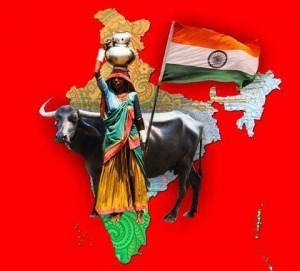
Many faces of the mother – Four voices on Bharat Mata and a quiz

Articles by SHACHI SETH, SADAN JHA, OM THANVI AND SHOAIB DANIYAL

Bharat-Mata-by-Dr.-Lal-Ratnakar-300x271

Bharat Mata by Dr Lal Ratnakar

This image is from a post by Shachi Seth on India Resists:

Are demands for ‘azadi’ from blind state worship, systems of power and exploitation, such an impediment in the identity of Bharat Mata? Is the idea of Bharat Mata not ironic, given the depth to which the roots of patriarchy infiltrate our society? Is it not ironic that the Gau Maata and Bharat Maata which must mandatorily be respected and protected are bound by ideas of selfless giving and motherhood? Is the maata really not okay with being called by other names? Does the maata get to retaliate when her rights are violated, or is she an eternal symbol of sacrifice and docility? Where does the maata go when her resources are stripped to bring about development and when other females are stripped of their dignity on a daily basis? Is this benevolent, great mother in such great need of patronizing protection from the same men that threaten it when it isn’t dressed in a tri color sari? Will the mother ask me to go to the neighbors’ place if I happen to get in an argument with her? Am I not patriotic if I criticize my nation for knowingly or unknowingly allowing exploitation of its people?

Continue reading Many faces of the mother – Four voices on Bharat Mata and a quiz →

ABVP Attack on Prof Chaman Lal at event on Bhagat Singh: Vidhya

Guest Post by VIDHYA

On the 18th of March, Bhagat Singh Chhatra Ekta Manch – a student organization in Delhi University and Aahwan: Ek Janwadi Sanskritik Muhim – a cultural organization, organized a talk and discussion with Prof. Chaman Lal on ‘The Life and Writings of Bhagat Singh’. Dr. Vikas Gupta of the History Department in DU introduced it and facilitated the discussion. This event was organized in the Main Gate of the Arts Faculty of DU after several attempts to book a venue inside Arts Faculty failed. We had hoped to organize a discussion on the life of a revolutionary and the relevance of his message today to the students of the university.

The talk was scheduled to begin at 12 pm. At the same time, another cultural organization, namely Sangwari, came to the area outside the Main Gate to perform a play (nukkad-natak) on the JNU issue. Though this play disrupted our talk, since they were not permitted to perform in the Law Faculty, we agreed and asked our speaker and discussant to wait till the end of the performance. Minutes into the play, the ABVP goons disrupted the performance. At first, it wasn’t clear if the fracas was part of the play or not. But as soon as we realized that 15 or so members of ABVP had taken over, all those who had gathered there intervened to stop the hooliganism of these goons. It is important to state here that during the entire time, around 60 to 70 police officers and constables were mute spectators. These ABVP goons started sloganeering and those performing the play dispersed when they realized that they would not be able to perform. Meanwhile, we were waiting to resume the talk by Prof. Chaman Lal.

Continue reading ABVP Attack on Prof Chaman Lal at event on Bhagat Singh: Vidhya →

DISSENT, DEBATE, CREATE