All posts by Nivedita Menon

Not an open letter to Tarun Tejpal: Hartman de Souza

Guest post by HARTMAN DE SOUZA

When I hit out at him, Tejpal stood there with a swagger and a go-fuck-yourself smile on his face. Butter doesn’t melt easily in this guy’s mouth; he was smug when he said he hadn’t run Raman Kirpal’s story on the mining scam in Goa (that he himself had commissioned mind you) because it was not good enough for Tehelka.

 “There were no hard facts, man,” he said, his voice exiting his quasi-American accent in a nasal peeve, “just a lot of conjecture”.

He actually asked me whether I had read his magazine. Probably never even saw the eulogy I wrote for Tehelka, on that magnificent footballer from Kerala, VP Sathyan, who threw himself in front of a train at the age of 41 just plain bloody tired of being broke and ignored.

On July 18, 2006, when Sathyan, stupidly, stopped believing in the beauty of football, Tejpal’s star was in its ascendancy. That was the day – nearly a year and a half after Tehelka shed blood, sweat and tears, that the CBI also charge-sheeted former BJP President Bangaru Lakshman for ‘allegedly’ pocketing money from a fictitious armament firm and influencing a weapon deal.

That’s the ‘scoop’ that put Tejpal on the ladder – and just so that we all know what is what, people still don’t give a shit about VP Sathyan who in 1992 captained what is arguably Kerala’s  best ever football team.

Continue reading Not an open letter to Tarun Tejpal: Hartman de Souza

Former Tehelka journalist speaks out

This is the full text of the statement issued today to the media by the gutsy woman journalist who refused to take sexual harassment as routine. More power to her and others like her!

I am heartened by the broad support I have received over the past fortnight. However, I am deeply concerned and very disturbed by insinuations that my complaint is part of a pre-election political conspiracy.

I categorically refute such insinuations and put forward the following arguments:

The struggle for women to assert control over their lives and their bodies is most certainly a political one, but feminist politics and its concerns are wider than the narrow universe of our political parties. Thus, I call upon our political parties to resist the temptation to turn a very important discussion about gender, power and violence into a conversation about themselves.

Continue reading Former Tehelka journalist speaks out

Feminist interventions and the agency of the survivor: A Statement

We write as feminists and activists in the women’s movement, disturbed by imputations of motive to some fellow activists who have spoken out publicly in the Tehelka sexual assault case. These allegations of pandering to the Tehelka management’s attempts to cover up the serious charges against Tarun Tejpal, have come expectedly from the Right, but also disturbingly, from sections of the Left, who interpret the insistence on respecting the decisions of the complainant, as disrespect of the law on sexual assault.

Many of us have been in the position of being confidantes to women who come to us with complaints of sexual harassment and assault. In such situations, we see our prime responsibility as that of offering unconditional support to the complainant, making available to her the largest possible range of options, helping her to take difficult decisions. Among these options is always the recourse to the police and criminal prosecution. But we believe it would be entirely counterproductive to insist that the complainant report to the police if she is not prepared to do so immediately. And until she expresses her readiness to move forward on that path, we try to build her courage to take that step, while remaining quietly supportive of whatever steps she does wish to take in the interim.

Continue reading Feminist interventions and the agency of the survivor: A Statement

Sexualized workplaces, predatory men and the rage of women

Listen. Can you hear it? That low growl on the horizon, coming closer, growing louder? It’s the dam bursting its bounds. It’s the quiet shriek of convivial silence being ripped apart.

The silence around the normalizing of a range of behaviour from the apparently casual to the outrightly violent. The laughing sexual innuendo; the misogynist jokes; the well-known ‘displaced squeeze’ of the upper arm, the shoulders; the repeated, relentless expression of romantic or sexual interest despite clear NO’s; the grabbing of the breast, the unwanted kiss, the out-of-town work trip ending in physical assault, presented as flattering interest; and through it all, the clear invocation of the power relationship.

You look great, Sir, retirement suits you, says a younger female colleague to a Professor visiting his former institution. Really, he smirks. Two other people told me this, and they are both women. What do you think it means? She smiles uncomfortably and hurries out of the office of the male head of the institution in whose presence this comment is made.

Continue reading Sexualized workplaces, predatory men and the rage of women

“Equality is like gravity – we need it to stand on this earth” Joss Whedon

WHY DO YOU CREATE STRONG WOMEN CHARACTERS?

A question Joss Whedon (creator of Buffy the Vampire Slayer) gets asked every single time by reporter after reporter (a question that Indian reporters may be spared from ever having to ask any man – or anyone – in TV or cinema here?)

This video gives you Whedon’s answer:


Voting with their feet – Religious conversion as a democratic right

Voting with one’s feet:  to express one’s dissatisfaction with something by leaving, especially by walking away.

2007052806851201_590863g

More than 1 lakh Dalits and tribal Hindus converted to Buddhism in May 2007 to commemorate the 50th anniversary of B.R. Ambedkar’s conversion, in what is considered the largest mass conversion in the country

What business is it of any government if I want to convert from one religion to another? Why should I seek permission from, or inform the government that I intend to follow a different god or gods from the one/s I was taught to worship from birth? There is absolutely no justifiable basis for the various anti-conversion laws in India, every one of which should be struck down as anti-constitutional.

Recently, Godie Osuri commented on the paradox of anti-conversion legislations being named ‘Freedom of Religion’ Acts when in fact they entail religious unfreedom.  And so they do. The Gujarat government has ordered a probe into the mass conversions of Dalits to Buddhism at Dungarpur village in Junagadh district last Sunday (October 12, 2013). Why? Because under the state’s Freedom of Religion Act of 2003, it is mandatory for the organizers to have taken prior permission. Turns out that the organizers did in fact inform the authorities, who provided facilities such as an ambulance, microphone and so on. It is clear that this ‘probe’ is a belated and panic stricken response from the Gujarat government upon realizing how great the Dalit response was to the event.

Continue reading Voting with their feet – Religious conversion as a democratic right

India First and the BJP anti-conversion platform: Goldie Osuri

Guest Post by GOLDIE OSURI

We seem to live in an age where paradoxes become parodic simplifications in the seemingly global race to support all manner of fascist majoritarian nationalisms. I recently saw a youtube video, where P.P. Hegde of the NaMo Brigade linked the meaning of Namo Namaha—the letting go of ego in meditation—to the image of a giant saffron-vested image of Narendra Modi.

Namo Namaha. Literally, not-me, not my ego-self. Linked to a giant PR machine promoting an individual, the face of Hindutva fascism, nothing but ego. The lack of an ironic sensibility in such campaigns is perhaps sadly characteristic of our time.

Similarly anti-conversion campaigns targeting Christians seem paradoxical and parodic in their demand for Acts of Religious Freedom which literally entail religious unfreedom. Recently, the BJP leader of Andhra Pradesh, Venkaiah Naidu stated that the ‘BJP will bring an anti-conversion law to ban religious conversions in the country if it is voted to power in 2014 General Elections’. 

Continue reading India First and the BJP anti-conversion platform: Goldie Osuri

A Tihar Experience: Nitheesh Narayanan

Guest Post by NITHEESH NARAYANAN 

This account of a young student’s experience of a week in Tihar Jail as a political prisoner gives us the opportunity to reflect afresh on ‘appropriate’ punishment, in the context of the recently revived debates on the death penalty. In those debates, incarceration is assumed to be the more humane punishment, but Nitheesh’s account reopens even older debates on the prison itself as a mode of disciplining society (Foucault), Angela Davis’s stirring question – Are Prisons Obsolete? – in which she argues that the current prison system perpetuates the same power relations of race, class and gender that society is based upon, and widespread critiques of the prison industrial complex in the USA, where private corporations run prisons for profit, using prisoners as practically free labour. (It is alarming therefore, to see an argument for privatizing prisons in India being put forward as a measure to “reform” prisons!)

Here then, offering us a view of prison as a microcosmic reflection of every oppressive power structure outside it, is Nitheesh Narayanan:

Tihar Jail, Central Jail no. 4, Ward no.1, and seven days spent in Barracks 1, 2 and 3. Around thirty of us, including SFI’s National President Com. V Sivadasan and some comrades from JNU decided on a protest demonstration at Kerala House, New Delhi, in solidarity with the series of protests in Kerala against the Chief Minister involved in the Solar Panel scam and to mark our indignation at any form of corruption. There were no policemen at the gate as the protest was unexpected. We entered the compound and sat in the portico of the main building. We burned Kerala Chief Minister Oommen Chandi’s effigy, raising slogans all the while. It was when Com. Sivadasan was addressing the protestors that about a hundred policemen entered the compound and started unleashing violence on us and arrested us. Nine of us were booked under severe offences.

We spent that night in a shabby lockup room full of filth and spit, lying on a newspaper sheet. One of the inmates in that lock-up room was an accused in a crime involving a core and a half rupees and a murder. We were shocked when he told us that in order to weaken the charges against him, he had poured almost fifteen lakhs into the pockets of corrupted officials.  Continue reading A Tihar Experience: Nitheesh Narayanan

Casting a backward glance after a court order – the UID project: Usha Ramanathan

Guest Post by USHA RAMANATHAN

On September 23, 2013, the Supreme Court ‘s directed that “no person should suffer for not getting the aadhaar card in spite of the fact that some authority had issued a circular making it mandatory”. Reacting to an argument of Mr Anil Divan, Justice Puttaswamy’s counsel, the judges added that “when any person applies to get the Adhaar Card voluntarily, it may be checked whether that person is entitled for it under the law and it should not be given to any illegal immigrant”. The order regarding making the UID mandatory  was made in the context of the questionable legality of the project, and the instructions being issued, as it has been in Maharashtra, that  teaching and non-teaching staff and judges of the High Court would not get their salaries unless they have a UID. The latter part of the order on `illegal immigrants’ echoes those who wanted, and got, an amendment to the Citizenship Act in 2003 authorising the creation of a National Register of Citizens. This was inherently illogical and opportunistic; for, the rhetoric of threat from the outsider drew upon the Kargil standoff in 1999, when it was Pakistan that was seen as sending in terrorists who needed to be identified and dealt with, but the politics of the day made the migrant from Bangladesh the `threat’. The Home Minister of the day saw them in every shadow. The UID project is a part of this enterprise.

The UID Project, with Mr Nandan Nilekani at its helm, has developed ambitions of its own in the four years since it was set by executive notification. In these four years, what observers and analysts have seen of the project has produced disturbing questions around what constitutes identity and how it will be established: [1]

Continue reading Casting a backward glance after a court order – the UID project: Usha Ramanathan

In the shadow of AFSPA – Not so uncommon lives: Chonchuirinmayo Luithui

Article on Armed Forces Special Powers Act in Manipur by CHONCHUIRINMAYO LUITHUI received via Repeal AFSPA list

AFSPA Nagaland_thumb[1]

My father was picked up from home by the Indian Army late one evening, tortured till dawn, he was pushed down a slope and left for dead. It was a miracle that he survived that night. I had just started kindergarten and was learning the Alphabets. I remember screaming the A B Cs outside the window of his room at the hospital so that he could hear me because I was told not to make noise inside. I wanted him to know what I was learning at school. I was a few months shy of my fourth birthday.

It was from that age that my idea of the ‘enemy’ was drawn. Any big guys in uniform were the real life villains. Dogra Regiment, Sikh Regiment, Assam Rifles, etc were common names. You could only hate them. But this was not an exceptional situation. It was common to most of the children from my generation in the Naga areas. We grew up knowing of, at least, one person tortured or killed by the Indian army and associated them with everything that we were scared of. Parents would frighten us when we were out of line that the ‘shipai’ (soldiers) were coming or that they would give us to the ‘shipai’. Not the best way to discipline a child but it worked. We might never witness the violent acts of the Indian army but we heard and knew when the grownups talked in hush hush manner. Children are smart that way.  Continue reading In the shadow of AFSPA – Not so uncommon lives: Chonchuirinmayo Luithui

If It Happened There … the Government Shutdown: Joshua Keating

This is the first installment by JOSHUA KEATING of “If It Happened There,” a regular feature on SLATE in which American events are described using the tropes and tone normally employed by the American media to describe events in other countries. 

182532993.jpg.CROP.promo-mediumlargeWASHINGTON, DC – SEPTEMBER 30: The sun sets on an uneasy capital.
WASHINGTON, United States—The typical signs of state failure aren’t evident on the streets of this sleepy capital city. Beret-wearing colonels have not yet taken to the airwaves to declare martial law. Money-changers are not yet buying stacks of useless greenbacks on the street.

But the pleasant autumn weather disguises a government teetering on the brink. Because, at midnight Monday night, the government of this intensely proud and nationalistic people will shut down, a drastic sign of political dysfunction in this moribund republic.

READ THE REST OF THIS ARTICLE HERE

Modi says sorry to Kafila

Invitation from Kafila

Dated: Saturday, 28 September, 2013

Dear Narendrabhai,

We at Kafila would like to invite you to a small get-together in Lodi Gardens tomorrow (Sunday 29th) at 10 am. We really really (really!)  hope you can make it.

Best wishes forever,

Kafila Team

From the Office of Mr Narendra Modi, CM, Gujarat

Dated: Monday, 30 September, 2013

Dear Kafila team,

We thank you for your kind invitation to Mr Modi. He sends his regrets that he was unable to attend your get-together as he was otherwise occupied on Sunday 29th at 10 am.

US EMBASSY SORRY FOR NOT ATTENDING SUNDAY RALLY, CLAIMS BJP

Aadhaar – What next after the SC ruling? Kalyani Menon-Sen

Guest Post by KALYANI MENON-SEN

Poor Mr Nilekani. Just when everything was going swimmingly for him – adulatory interviews in the foreign press, tantalising rumours of a Congress ticket for the 2014 polls, lots and lots of votes on a poll to select the Greatest Living Indian – comes another well-aimed spanner in his works from that bunch of litigacious Jokers who have been playing rasta roko with his Batmobile for some time now.

The Supreme Court ruling of 23rd September is curt and unequivocal – a) two other challenges to Aadhar in the High Courts of Chennai and Mumbai to be clubbed with this one and heard by a Constitution Bench; b) an immediate freeze on linking Aadhar to benefits under social schemes; and c) a direction to tighten up the registration process to make sure that only Indian citizens are enrolled.

Every line of this ruling is a painful blow for Aadhar. It’s bad enough that the Court has taken seriously the charge that Aadhar violates Constitutional rights. The implication that there are serious errors in the registration process is even worse, and pulls the plug on one of the main arguments in support of the UID  – that it will stop leakages in government schemes by weeding out bogus beneficiaries. Worst of all is the decoupling from the “Apna Paisa Apne Haath bandwagon. If the UPA decides not to  jettison the cash transfer scheme – its big-ticket strategy for the 2014 polls – it will find a way to keep it going without Aadhar. Whether or not this strategy pays off, Aadhar will be the loser. Continue reading Aadhaar – What next after the SC ruling? Kalyani Menon-Sen

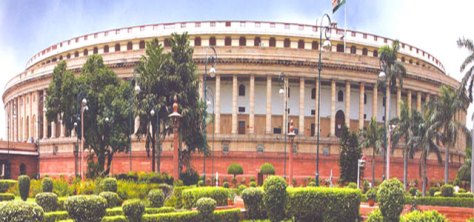
World’s Biggest Old Age Home with Cheapest Canteen

parliamnthouse

Information received via Rakesh Chaturvedi

The only place in India where food is cheap.

Tea- 1.00
Soup-5.50
Daal-1.50
Meals-2.00
Chapati-1.00
Chicken-24.50
Dosa-4.00
Biryani-8.00
Fish-13.00

Rakesh Chaturvedi suggested that instead of the Food Security Bill, let the Government give food to the poor at the Parliament canteen rates.

Good idea. That may allay the corporate media’s fears that the Food Security Bill  may further strain India’s weakening economy.

Taking off from this interesting price list, some idle research  on this rainy Sunday morning yielded the following information: There has been a noticeable shift in the age profile of MPs in  Lok Sabha. Continue reading World’s Biggest Old Age Home with Cheapest Canteen

Online mapping of sexual harassment in Mumbai

header_mumbai-1024x409
After the spate of rapes and molestations in Mumbai and of course, the daily sexual harassment of women, AKSHARA CENTRE decided to launch HarassMap-Mumbai. it is a socio techno tool using crowdsourcing to enable women to report their experiences and citizens to spot and report unsafe spaces. The idea is to get women to report and engage local groups and the police to take action. This is possible if people use their mobiles and internet connections.
Check it out: HarassMap-Mumbai

Muzaffarnagar 2013 – Violence by Political Design: Centre for Policy Analysis

This fact-finding exercise was coordinated by the CENTRE FOR POLICY ANALYSIS. Team members were the human rights activist and former civil servant Harsh Mander; former Director-General of the Border Security Force, E N Rammohan; Professor Kamal Mitra Chenoy of Jawaharlal Nehru University; National Integration Council member John Dayal; senior journalist Sukumar Muralidharan and CPA Director and senior editor Seema Mustafa.

Introduction and Overview

The first impression of the Muzaffarnagar countryside, now green with the sugarcane ripening for harvest, is of utter desolation. Villages are tense with fear.  Kasbas and hamlets are purged of their Muslim presence and the Hindu quarters have also emptied out in a self-imposed curfew even at midday, as women and children peep out from behind closed doors and windows, their menfolk having fled to avoid arrest as criminal complaints are made out against them. Fear is in the air. The atmosphere reeks of embitterment and betrayed trust, with neighbour now unwilling to trust neighbour, and apprehensive of ever returning to their accustomed lives. All the evidence points towards people who were forced to flee their habitations in sheer terror and seek out the safety of gathering among others of their own faith, occupying any vacant space in areas where they could be sure of not being targets just because of who they were.

“We will never go back to our villages”, say Muslim women refugees in a makeshift camp in the tehsil town of Budhana, some twenty kilometres from Muzaffarnagar. Continue reading Muzaffarnagar 2013 – Violence by Political Design: Centre for Policy Analysis

Common sense and Hindu nationalism – Why the Catholics in Goa are not Hindu: Albertina Almeida & Others

This Guest Post by ALBERTINA ALMEIDA, AMITA KANEKAR, DALE LUIS MENEZES, JASON KEITH FERNANDES AND R. BENEDITO FERRÃO is a response to a statement by Chief Minister of Goa, Manohar Parrikar.

Can a Goan Catholic be Hindu? Can Catholics professing a tradition of Catholicism that is over five centuries old be considered Hindu in culture? This is what the Chief Minister of Goa, Manohar Parrikar, sought to suggest in a recent interview with Sambuddha Mitra Mustafi of the New York Times India blog India Ink, where he said:

I am a perfect Hindu, but that is my personal faith, it has nothing to do with government. India is a Hindu nation in the cultural sense. A Catholic in Goa is also Hindu culturally, because his practices don’t match with Catholics in Brazil [a former Portuguese outpost like Goa]; except in the religious aspect, a Goan Catholic’s way of thinking and practice matches a Hindu’s. So Hindu for me is not a religious term, it is cultural. I am not the Hindu nationalist as understood by some TV media – not one who will take out a sword and kill a Muslim. According to me that is not Hindu behavior at all. Hindus don’t attack anyone, they only do so for self-defense – that is our history. But in the right sense of the term, I am a Hindu nationalist.

Parrikar’s bizarre statement was in response to the question of whether he saw himself as a Hindu nationalist. Of course, a quick and easy response to his statement would be to summarily dismiss it as expected rhetoric flowing from his saffron affiliations; yet, questions persist, not least because of the peculiar and oft-misrepresented Goan scenario. Continue reading Common sense and Hindu nationalism – Why the Catholics in Goa are not Hindu: Albertina Almeida & Others

The Many Avatars of Fear: Amrita Nandy

Guest Post by AMRITA NANDY

I have recently come to the US for a year. My “settling down” has happened under the viral shadows of the Rose Chasm debates. (See HERE and HERE)

Personally, the online exchanges struck a chord for me because I too, like Rose, am a student who is new in a foreign country and to its culture, trying to feel at home, adjust, mingle, accommodate and, most of all, make sense of some new experiences.

Before you point out that this juxtaposition of Rose’s context with mine is too simplistic and reductive, allow me to say “of course”.

Of course! A comparison, contrast or parallel of our respective experiences is not where I am headed to.

This is merely my account of being an outsider in America. More precisely, this is my attempt to engage with the articulation of fear in its many avatars and contexts.

Yes, fear!

Continue reading The Many Avatars of Fear: Amrita Nandy

Report of the Fact Finding Investigation conducted to ascertain facts in the case of alleged rape and murder of Dalit girl in Jind district of Haryana

Report of Fact Finding Team put together by  ALL INDIA DALIT MAHILA ADHIKAR MANCH. Received via Kalyani Menon-Sen

01TH-DIVYA-Coun_02_1570280e

Women activists protest outside Haryana Bhavan in Chandigarh on September 1 demanding a CBI probe into the death of the Dalit girl in Jind. Image from The Hindu

On 24th August, a 20 year old Dalit girl was brutally raped and murdered in Jind, Haryana, while she was on her way to write an examination. Her body was found near a canal the next day by the police. There were cigarette burn marks on her body and significant indications of sexual violence. It is clear that she was kidnapped, raped and then murdered.

However, at the time of the fact finding, even after four days the culprits had not been identified or arrested, and there was no progress on the investigation beyond sending the body for post mortem. In fact, the parents of the girl, members of her village and various Dalit activists refused to cremate the body and were sitting on dharna in front of the Jind Civil Hospital to protest against police and administrative apathy and callousness. It was very clear that the Haryana police and administration was exhibiting gross negligence in this case, ignoring the law and evading established investigative procedure.

It is at this point that the All India Dalit Mahila Adhikar Manch (AIDMAM) decided to put together a fact finding committee to visit the area, meet the key people involved and ascertain the facts of the case. Continue reading Report of the Fact Finding Investigation conducted to ascertain facts in the case of alleged rape and murder of Dalit girl in Jind district of Haryana

The One Thing White Writers Get Away With, But Authors of Color Don’t: Gracie Jin

In this article, GRACIE JIN asks why only white writers are assumed to be capable of writing about cultures not their own.

Bill Cheng’s first novel, Southern Cross the Dog, debuted in June. His book, a fine example of writing what you don’t know, has been billed as “audacious” and “ambitious,” but you’ll be hard-pressed to find a review that doesn’t wonder at the novelty of a Chinese-American man from Queens, New York, writing about rural black Mississippi…

Unfortunately, most reviewers and interviewers seem to care less about the quality of Cheng’s writing than they do about the answers to these questions: Did the Chinese guy get it right? Can an authentic picture of the South come from a man of Asian descent who grew up in Queens?

…How many celebrated white writers have written characters who were not exactly like them? William Faulkner, Joseph Conrad, Mark Twain, Pearl S. Buck, Colum McCann, Yann Martel, and Arthur Golden immediately come to mind. In a society masquerading as post-racial, it is still only the white man who can speak authoritatively for every man. People of color, on the other hand, are expected to speak only for themselves….

Ideally, the authority of a work of fiction should be judged against the standards of the world that it creates, not by its alignment with a rigid notion of reality. By this measure both Cheng and Johnson’s books are empathetic, engaging, and deeply imaginative. Both are worth a read. Both are fiction.

Read the full article here.

Let taxpayers pay for ‘our’ treatment abroad, while they rot in government hospitals: Harsh Taneja

Guest post by HARSH TANEJA

The Government of India has recently gifted its bureaucrats a privilege. The state will reimburse the total cost of medical treatment abroad for the three highest civil services officers (the IAS, IPS and IFS).

And this entitlement is not limited to procedures that cannot be carried out in India.

According to this newspaper report, these officers and their families can decide to go abroad for even routine procedures such as bypass surgeries. A privilege that is unfair, undemocratic and borders on institutionalized corruption. Here’s why.

First, the most obvious argument pointed out in the newspaper article itself, is the huge expenditure to the exchequer. However that to me is the beginning of why this is problematic. The following two concerns are perhaps more grave. Continue reading Let taxpayers pay for ‘our’ treatment abroad, while they rot in government hospitals: Harsh Taneja