All posts by Nivedita Menon

Heading for a Bloodbath: Rohini Hensman

This post by ROHINI HENSMAN is an article  published on the Outlookindia.com website on April 22, 2010.

To people desperately trying to avert a bloodbath in the forest belt, the recent PUDR statement on the massacre of 76 CRPF jawans in Dantewada caused considerable consternation, and Sumanta Banerjee’s response to it even more so. According to the PUDR statement,

‘As a civil rights organization we neither condemn the killing of security force combatants nor that of the Maoists combatants, or for that matter any other combatants, when it occurs’.
Sumanta Banerjee objected to the equating of Maoist violence and state violence, saying that
‘these soldiers, by being cannon-fodders of the Indian state, however tragic it might be, suffered the fate that – I’m sorry to say – they deserved…To come back to the latest incident of the Maoist attack on the CRPF camp in Chhattisgarh…. if we accept it as a part of a civil war, such killings are inevitable (just as the CRPF killings of Maoists) in a violent system that has been institutionalized by the Indian state. The difference between the CRPF violence (involving ‘false encounters’, raping of tribal women, burning their homes, etc.) on the one hand, and the Maoist violence on the other (which means attacks on oppressive landlords and the police and para-military forces like the CRPF which come to the aid of the landlords) – has to be distinguished by civil society groups’
Both the statement and the response assume that a civil war is already in progress, and therefore the killing of combatants is not illegal.

Continue reading on outlookindia.

Batla House ‘Encounter’: Whom is the JP Trauma Centre Shielding?

Statement by Jamia Teachers’ Solidarity Association

Days after the startling revelation of the post mortem reports of Atif Ameen and Md. Sajid, which conclusively nailed the lie of the Delhi Police claims that the two boys were killed in cross fire, the security establishment has swung into damage control to ensure that no further information is made public. It is to be recalled that the post mortem reports could be made public only through the persistent efforts of RTI activist and Jamia student, Afroze Alam Sahil and the resolute resistance offered by the teachers and students of Jamia as well as other civil rights activists.

While the post mortem reports have made it amply clear that both Atif and Sajid have been shot from close range and possibly in captivity (as illustrated by the injury marks made by blunt force); the reports also raised several questions: Continue reading Batla House ‘Encounter’: Whom is the JP Trauma Centre Shielding?

An Open Letter to the Democratic and Progressive Groups and Individuals in Aligarh Muslim University and Other Universities in India to Demand Justice for Dr.Siras

To sign this statement, click here

The unforeseen death of Dr Srinivas Ramachandra Siras (Reader and Chair of Modern Indian Languages at Aligarh Muslim University) and the circumstances surrounding it have thrown us into a web of shock, despair and great concern. As an academic community, there are a number of questions that we need to ask and address.

The role of the Aligarh Muslim University authorities in this incident has been nothing short of condemnable. The invasion of Dr Siras’ privacy, the subsequent authoritarian impulse to suspend him and the complete lack of sensitivity by the administration has been outrageous. It has created anxiety about our vulnerability to the exercise of arbitrary powers. The use of such surveillance is not simply a threat to our freedom to make life choices (and sexual choices); it also leads to “self-discipline” due to fear of transgressing majoritarian norms. Continue reading An Open Letter to the Democratic and Progressive Groups and Individuals in Aligarh Muslim University and Other Universities in India to Demand Justice for Dr.Siras

Response to Rohini Hensman: Soumitra Ghosh

SOUMITRA GHOSH is with the National Forum of Forest Peoples and Forest Workers. This post came as a response to Rohini Hensman’s recent post Getting Indian Democracy Right

Is India a democracy? This question has to be seen in context of the complex and plural character of the present Indian state and several other state like formations(for instance the Maoist People’s Sarkar in the liberated zones, the parallel administration run by the Nagas, areas and times where and when the extreme hegemony of one or the other mainstream political party or the feudal landlords substitutes the process of law—and others). There is also the fallacy whether India is a nation-state in the way other nation-states(for instance, China, USA, England) are, and whether the concept of a monolithic Western-type at all democracy applies in the Indian context (and if so, how far?). However, the question Rohini tries to raise deals more perhaps with our ethical constructs of democratic values than the character of the Indian state. If it is the former we enter the realm of ethical a-priories, which I too share: democracy is something that as a political process tolerates pluralism and leaves some space for minority dissents against dominant majorities. To take the democracy debate further and to include the Indian state in it will mean a different discourse, in which I am not going for the time being.

Continue reading Response to Rohini Hensman: Soumitra Ghosh

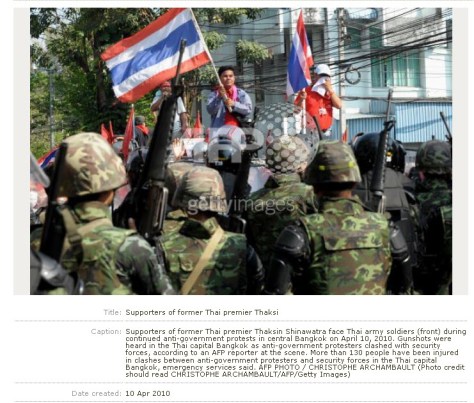
Thai tyrants use violence to cling to power: Giles Ungpakorn

This is a guest post by Giles Ungpakorn, Thai academic and social activist, formerly Associate Professor at Faculty of Political Science, Chulalongkorn University. He fled to the UK after facing lese-majeste charges in Thailand for his book A Coup for the Rich.

More images of Thai military crackdown on unarmed pro-democracy protesters

Abhisit’s Democrat Party, the Military and the Bureaucratic Elites, can only cling to power through violence and lies. As they use armed troops and tanks against pro-democracy demonstrators in Bangkok for the 5th time in forty years, the tyrants hope that a blanket of censorship throughout Thailand will allow them to do their dirty work in secret. But their censorship is not working and the assembled masses of pro-democracy Red Shirts are resisting. On the 10th April 2010 the army shot dead 17 unarmed Red Shirt protesters and a Japanese camera man in Bangkok in an attempt to crush a peaceful demonstration. Yet Abhisit Vejjajiva continues to lie. He claims that soldiers “only shot into the air” when they were threatened. Many reports from foreign journalists, and the deaths of 18 people, indicate that the soldiers fired live ammunition directly into the crowd.

Continue reading Thai tyrants use violence to cling to power: Giles Ungpakorn

Response to Arundhati Roy: Jairus Banaji

This is a guest post by JAIRUS BANAJI

Arundhati Roy’s essay “Walking with the Comrades” is a powerful indictment of the Indian state and its brutality but its political drawbacks are screamingly obvious.  Arundhati clearly believes that the Indian state is such a bastion of oppression and unrelieved brutality that there is no alternative to violent struggle or ‘protracted war’. In other words, democracy is a pure excrescence on a military apparatus that forms the true backbone of the Indian state. It is simply its ‘benign façade’. If all you had in India were forest communities and corporate predators, tribals and paramilitary forces, the government and the Maoists, her espousal of the Maoists might just cut ice. But where does the rest of India fit in? What categories do we have for them?  Or are we seriously supposed to believe that the extraordinary tide of insurrection will wash over the messy landscapes of urban India and over the millions of disorganised workers in our countryside without the emergence of a powerful social agency, a broad alliance of salaried and wage-earning strata, that can contest the stranglehold of capitalism?  Without mass organisations, battles for democracy, struggles for the radicalisation of culture, etc., etc.?  Does any of this matter for her?

Continue reading Response to Arundhati Roy: Jairus Banaji

Sree Narayana Guru, the Left, and Chitralekha: Joe.M.S.

This is a guest post by JOE M. S.

The recent controversy associated with the brutal persecution of a Dalit working woman, Chitralekha  by the hoodlums of a ‘leftist’ union has gained wide attention, bringing into limelight the plight of  Dalits in Kerala. The men who participated in this ’festival of masses’, according to reports, predominantly belong to the  backward caste Ezhava/ Theeya community. Anybody with a bit of social concern would have definitely condemned the incident . They would even have expressed their regrets at the deviation of the people belonging to Ezhava caste, the disciples of Srinarayana guru, the famous social reformer, from the avowed policies advocated  by him. But I think, here lies a problem. A re-look at the social history of Kerala is needed   to understand whether the Chitralekha incident is a deviation from the pronounced objectives of the Srinarayana movement as  such, as it is popularly understood, or  the roots for  such a development  was inherent in the   trajectory of   the Narayana movement itself. This does not belittle  the genuine intentions Guru had for social emancipation, at a personal level.

In spite of the cultural specificities of northern Kerala  where  these atrocities were perpetrated on Chitralekha, I think a general study of the impact of Srinarayanism on the whole of Kerala may be of some help to analyse the increasing backward caste arrogance vis-a-vis Dalits. This is particularly so as the discourse on the assumed efficacy of Sri Narayana Guru’s thought is  invoked constantly  by the civil society of Kerala, eternalising his importance  in all spheres. So  I think, a glance at the  impact of his life and efforts  can shed light on the of the constitution/ construction of modern Ezhava identity and the problems associated with it.

Continue reading Sree Narayana Guru, the Left, and Chitralekha: Joe.M.S.

Levelling the playing field before the Commonwealth Games

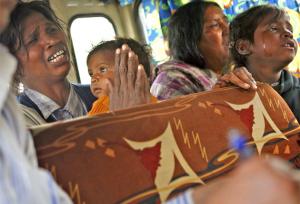
Ahead of the Commonwealth games, the capital city of the country with aspirations towards being anointed First Side-Kick to the only super-power left in the world, is busy cleaning up. Beggars, protesters, poor-looking people in general, out, out, all out.

Pholpata, her child and a friend inside a mobile court in a mini-bus, caught begging and brought before a magistrate who will decide whether to jail them for a year or release them. [The Independent on Sunday]


Also, see Partha Banerjee’s post on this in his blog
The Real Slumdog Story: India’s Ghastly Commonwealth Cleanup.

Meanwhile, of course, the labourers working day and night to complete the endless amounts of construction required to host an event of this magnitude, are “working and living in highly dangerous and deplorable conditions;  earning less than the stipulated minimum wage;  with no access to basic sanitation and health facilities;  and, lacking safety equipment”, found a Committee appointed by the Delhi High Court.

Continuing the saga of national triumph, below, we have AKHIL KATYAL and SHALINI SHARMA on the forced evictions of protesters from Jantar Mantar.

The Delhi State Government and New Delhi Municipal Corporation (NDMC) seem to have a particularly limited vision of a beautiful city. In the run up to the Commonwealth Games, Delhi is seeing a massive beautification drive which is really about an intolerant attitude towards democratic dissent and towards the urban poor. It is an idea of beauty that deals with urban protest or poverty simply by excising it from view.

Continue reading Levelling the playing field before the Commonwealth Games

Democracy and the Communist Party: Aniket Alam

This is a guest post by ANIKET ALAM

This paper, rather preliminary note towards a full paper, attempts to look at the troubled history of democracy (both as a concept as well as a practice) and parties claiming affiliation to Marxism-Leninism. It tries to understand the historical paradox of parties and movements influenced by Marxism being among the more important contributors to democratising our world, but States ruled by parties owing allegiance to Marxism denying democratic rights to their own citizens. It then tries to identify some of the reasons for this large democratic deficit.

But before I begin, two short points about the structure of the paper may be in order. First, I have been fairly hesitant to write on this topic. I can hardly lay any claim to expertise on theoretical debates among Marxists as well as on the details of the history of countries ruled by communist parties. That apart, I am also conscious of my weakness in political theory, specially that relating to democracy and related ideas of liberty and representation. Therefore, the stress will remain more on the historical experience rather than the theoretical arguments. Second, and following from my hesitation laid out above, this paper is basically structured around three writings by two Marxists: Karl Marx himself , and Rosa Luxemburg. You may say I am merely paraphrasing them, or you may say that they are the burqa I wear during this excursion into unfamiliar territory.

Continue reading Democracy and the Communist Party: Aniket Alam

Deshbhakts at Arthur Road Jail: Susan Abraham

This is a guest post by SUSAN ABRAHAM

Shahid Azmi

It took Shahid Azmi’s cold-blooded murder on 11th February 2010 at his office near Kurla, for the world to come alive to his  importance.  Soft spoken and modest, it is the sweep of the cases he fought, challenging the State’s calculated targeting of innocent Muslims, that marked Shahid’s  remarkable achievements as a lawyer within a short span of six years in the legal profession.

One of these cases related to the brutal lathi charge in Arthur Road Jail in central Mumbai, on 28th June 2008, by the jail staff along with convicts and undertrials from the so-called `patriotic’ underworld gangs,  on a select group of undertrial-inmates. This assault was conducted under the overall supervision of the-then Jail Superintendent Swati Sathe. To the outside world, Ms Sathe was a tough no-nonsense, non corrupt woman officer who probably wished to become the next Kiran Bedi. But underneath her stiff khakhi uniform ruled a tough no-nonsense hindutva heart, no less.

Continue reading Deshbhakts at Arthur Road Jail: Susan Abraham

Appeal for talks with broader section of people’s struggles in the forest and mineral belt

Aditya Nigam, Dilip Simeon, Jairus Banaji, Nivedita Menon, Rohini Hensman, Satya Sivaraman, Sumit Sarkar, Tanika Sarkar

In the light of the recent demands raised by sections of the intelligentsia urging the government to heed the CPI (Maoist) “offer of talks”, we insist that “civil society” should rather, put pressure on the government to initiate talks with representatives of all struggling popular and adivasi organizations. The CPI (Maoist) cannot be treated as the sole spokesperson of all the people in the forest and mineral belt, convenient though this may be for the state and for that party. Does the government believe that violent insurgents are the only deserving interlocutors? Continue reading Appeal for talks with broader section of people’s struggles in the forest and mineral belt

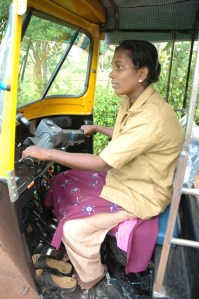
“Living outside the track”: A woman worker’s struggle against caste and patriarchy in Kerala

This is the report of a solidarity mission that was invited by Feminists Kerala Network to visit Payyanur and attempt to ascertain the facts around an incident of violence involving Chithralekha, a Dalit woman auto driver, on January 20, 2010.

Feminists Kerala Network is a loose network based in Kerala and outside, of feminists, Dalit activists, queer activists and other individuals involved with new social movements in Kerala.

The solidarity mission consisted of

Gail Omvedt, Professor, B. R. Ambedkar Chair at Indira Gandhi National Open University, Delhi; V Geetha , Publisher (Tara Books), author and social activist, Chennai; K.K Preetha, Advocate, Kerala High Court, Ernakulam; Nivedita Menon, Professor, Jawaharlal Nehru University, Delhi.

The team visited Payyanur on February 7-8, 2010.

Continue reading “Living outside the track”: A woman worker’s struggle against caste and patriarchy in Kerala

Jayaram and Tamil – Some scattered thoughts on the anti-black mass culture in Kerala: JoeMS

This is a guest post by JOE MS

The recent ‘jest ‘of film star Jayaram against the Tamil as black skinned , buffalo like and therefore less human has been taken as just a joke in the cultural scene of Kerala. Not only has sympathy been expressed for the poor victim that he is, inadvertently cracking an innocent joke and becoming the target of the ire of ‘violent’ Tamils, even solidarity was expressed with the right to crack such jokes by the ’ordinary folks’. The latent ideological and cultural premises hidden behind this whole controversy needs to be enquired into, to understand the reality. The natural outburst of violence against Jayaram for upholding the dignity of the Tamil has been understood by the ‘superior’ Malayali culture as typical of those who are inferior, passionate, emotional, devoid of political education , filmy  so on and so forth.

The height of irony was the sigh of relief heaved by Sebastian Paul, the (retired? ) left liberation   theologist, in his newspaper article in Madhayamam   (dated 12th February), for the end of the controversy as the fight against Jayaram subsided in Tamilnadu. Here he presumes that Jayaram only made a joke,  and therefore absolved him of all sins (because of the kinship of the Malayali fraternity), and holds that the Tamils reacted violently and unnecessarily , which is nothing but parochialism. This is no wonder. At the level of mass culture, cracking of jokes and the ‘wit’ mania , epitomised by ‘mimicry’ as a form of entertainment, which basically insultingly ‘mimics’ a range of people from the physically challenged to the people of subaltern cultures, and internalised by the Malayalee to fill the philosophical void in his competitive life, is simply racist. Popular culture as practiced in Kerala, is naked racism, which would have called forth acts of reprimand even from a capitalist state in the west. And all such jokes have however escaped criticism of the left-oriented Kerala.

Continue reading Jayaram and Tamil – Some scattered thoughts on the anti-black mass culture in Kerala: JoeMS

Bt brinjal – understanding the issues involved: Sunita Narain

In the prevailing arguments and counter arguments on the baingan gaatha, I found the following brief piece in Times of India by Sunita Narain, Director, Centre for Science and Environment, Delhi, invaluable for outlining the critical issues involvedevaluation of risks to health, control over seeds, threat to biodiversity, consumer choice and independence of research.

Jairam Ramesh, the Union minister for environment and forests, has agreed to put Bt brinjal on hold. I believe this is the right and only decision that he could have taken.

The fact is that we are not talking about a new technology of genetic modification here. We are talking about its use in a daily-use vegetable, cooked in our homes. Let us understand that Bt brinjal, if permitted would have been the world’s first genetically modified vegetable. It is therefore completely erroneous to argue that Bt brinjal should be cleared because the world is already growing genetically modified plants and believe these are safe.

The Two Zizeks

Slavoj Zizek spoke on Tragedy and Farce in Delhi on January 5, 2010. He spoke for about an hour and a half, then I responded for about 18 minutes, then he came back spiritedly for about forty-five minutes. This post is in two parts. The first part is the brief intervention I made at Stein Auditorium. In the second part of this post, I expand on my critique in the light of his response. I could not of course, speak after he had spoken the second time, so I’m doing it here.

I

A jinn appeared to a man and granted him three wishes. First, said the man excitedly, I want to be Slavoj Zizek. You idiot, said the jinn. You are Slavoj Zizek.

This is one of the many stories that the internet throws up on the eminent Slovenian Lacanian whom it has been our pleasure to listen to today. His own jokes and anecdotes are of course legendary, the medium through which he makes complex theoretical points. It thus becomes the burden of every unfortunate person writing about him or commenting on his work, to tell a few jokes themselves. Often Profesor Zizek’s own.

So. It struck me that the truth of the joke with which I began is that Slavoj Zizek longs to be Slavoj Zizek. He never quite makes it, though, because Zizek keeps escaping himself. In an interview to The Guardian a couple of years ago, he was asked – What do you most dislike about your appearance? And he replied – That it makes me appear the way I really am.

Having followed Professor Zizek’s work for a while now in growing bewilderment, I understand his predicament There are at least two Zizeks in there, and whichever one manifests himself, Slavoj is taken aback and rather dissatisfied. This is me? He seems to ask.

Continue reading The Two Zizeks

Forster’s Times and Our Times: Shashi K Jha

This guest post was sent to us by SHASHI K JHA, an independent researcher.

These days I am reading E. M. Forster’s ‘Two Cheers for Democracy’- one of his last collections of essays. This book is a treat to read as it seems to me a display of the author’s personal memorabilia about people, places, art, literature and discourses around his time. Many of us would well remember one of his essays on India which we read during our school or college days. Yes, I am talking about ‘India Again’ which he wrote in 1946, during his third visit to India after a long gap of 25 years. This essay, along with Pearl S. Buck’s rather less telling travelogue ‘India through a Traveler’s Eye’ was always a favorite pick for our old aged teachers to make us read and reread. For last few days, I was out on a hunting spree to find these two essays again from our old textbooks of our school days which finally ended up on a totally different planet. While the scanned copy of Buck’s essay was e-mailed by one of my jugaadoo friends in Bihar; Forster’s essay was really a challenge to find.

Continue reading Forster’s Times and Our Times: Shashi K Jha

Iranian scholar Kian Tajbakhsh faces execution?

There is terrible news about Kian Tajbakhsh, Iranian scholar with many friends in India. We are horrified to learn from sources familiar with his case that he  was

“unexpectedly hauled before a separate IRGC court over the weekend [November 21-22],  evidently because a hardline SEPAH (IRGC military intelligence) group is determined to pin the post-election unrest on a foreign scapegoat and is demanding Kian’s execution. The Deputy Chief of Staff of SEPAH supposedly identified ‘new evidence’ among Kian’s emails showing that he is a spy and the IRGC is supposedly lodging new charges of espionage against Kian that carry the death penalty and is transferring him to another prison.”

Kian, an Iranian-American who had moved back to live in Teheran some years after obtaining a doctorate from Columbia University,  was arrested in July 2009 in the wake of the pro-democracy uprising in Iran. On August 1st, he was among the numerous political prisoners dragged out for a staged mass trial, where he was accused of collaborating with outside governments to orchestrate the post-election protests that have rocked Iran. At that point he was sentenced to 15 years in prison.

He had been previously arrested in 2007 by the regime on grounds of being an American agent, and imprisoned in Tehran’s Evin prison for four months. On his release he resigned from his job in an American research foundation and focused on his own academic writing, avoiding any activity that might be frowned upon by the Ahmadinejad regime. He had not in fact participated in the pro-democracy protests in any way.

Kian Tajbakhsh is a scholar and Iranian patriot who chose to continue living in Iran even after his previous arrest, because of his love for his land, its culture and its people.

Those of us in India who have been consistently anti-imperialist and critical of the US, and who respect Iran’s anti-US imperialist position, have been deeply disturbed by the Iranian regime’s crushing of the pro-democracy protests and its attempts to characterize these massive uprisings as fomented by the US.  It’s tragically ironic that the US should be dubbed as “pro-democracy” by the Iranian regime!

Scholars at Risk wrote:

“The suddenness of Dr. Tajbakhsh’s arrest and the lack of any clear basis for his detention and conviction raise grave concerns about the ability of internationally recognized scholars and intellectuals to safely visit Iran…

Scholars at Risk therefore joins with the many national and international academic associations, scholarly societies, human rights organizations and individual scholars that respectfully urge the Iranian government to examine the circumstances of Dr. Tajbakhsh’s arrest and conviction.”

His friends here in Delhi, including myself, who know him from his vists here since the 1990s, who know his wife Bahar and baby daughter Hasti, who know him as a scholar and academic, are shocked, bewildered, and feel utterly helpless.

Siddharth Varadarajan who interviewed  Iran’s Foreign Minister Manouchehr Mottaki for The Hindu on his recent visit to Delhi, before we had this most recent piece of appalling information, said to him:

“Among well-wishers of Iran in India, there is concern about the recent secret trial of the Iranian scholar, Kian Tajbakhsh, for his alleged involvement in the post-election protests. Now he has been sentenced to 12-15 years. We hope his case can be reviewed because he is a scholar and not someone involved in subversion.”

Mottaki replied:

“All judicial verdicts can be reviewed and the opportunity of appeal is there for him. I am not aware of the details of his case. But our great effort is to see that those entering court can use all their rights, including appeal or using the capacity and potentiality of pardon.”

We can only hope that the Iranian regime will take seriously the plea of well-wishers of Iran and friends of Kian in India that Kian Tajbakhsh be released.

Visit the Free Kian 2009 website for more information.

The curses of Paikdev. A lament for water: Hartman de Souza

My very old and lovely friend Hartman sent me the following:

To keep the blues at bay I am back to carving logs. This one attached is titled ‘The Curses of Paikdev, A Lament for Water’. It was a birthday present for my sister and is planted on her farm [in Goa]. It faces Paikeachi Zor (Paik’s Spring), which will disappear very shortly hanks to the rampant mining in the area. My sister plans to court arrest again, and this time refuse bail. She hopes that at least will get the Goans out.

In the thickly forested hills between the villages of Maina and Kawrem, to the south east of Quepem Town, a poignant story once fortunate enough to have had a happy ending, is now destined to end more sadly than it could ever have begun.

800 overloaded trucks groaning through the town throughout the day barring a few hours respite to let schoolchildren in the area to scamper to and from school is testament to this. It is this very same business, though ‘greed’ may be a better term, that is ‘legally’ destroying a myth of almost epic proportions, and with it, again ‘legally’, the water sources and bodies of the area.
Continue reading The curses of Paikdev. A lament for water: Hartman de Souza

WHOSE LAND IS IT ANYWAYS? Public Meeting organized by National Alliance of People’s Movements

An open discussion on the relevance and implications of Land Acquisition (Amendment) Bill  and Rehabilitation and Resettlement Bill 2009
Saturday, November 21, Gandhi Peace Foundation, Deen Dayal Upadhyay Marg, New Delhi 2 – 6 pm.

Friends,

The current economic model of growth prevalent in India , with strong neo-liberal leanings, needs to be re-assessed in the wake of increasing alienation and dispossession of vast populations from their land and the wave of resistance, both violent and non-violent, against such activities that are being played out in many parts of the country.

In the wake of an armed operation against escalating Maoist insurgency; adivasis, particularly in Chhattisgarh, Jharkhand, West Bengal Orissa, Andhra Pradesh and Maharashtra are stiffly resisting the industrial development that threaten their traditional way of life; farmers around the country raging against acquisition of their lands in the name of growth and development – the importance of revisiting the proposed Land Acquisition (Amendment) Bill, 2009 (LAA) and Rehabilitation and Resettlement Bill 2009 (R&R) is paramount, if not imperative.

We the struggling communities from different regions of the country have resisted the government’s machinations of enacting a faulty Resettlement and Rehabilitation Act and introducing amendments to the Land Acquisition Act, promoting private and corporate interests over public good. We gathered recently in Delhi in July 2009 and our struggle gained a significant boost when the Acts could not be passed in the Budget session of the Parliament. We have been in Delhi since 18th November and held meetings at Kanjhawala, Jantar Mantar and JNU and explained our concerns on these two Bills but also on the fires raging in the country and the path of growth on which the country is being pushed today.

It is in this context that we invite you to discuss the relevance and implications of these half hearted measures for the millions of people who are struggling to retain their means of livelihood and seek meaningful rehabilitation from a system in which they no longer seem to have faith.

The panelists for this meeting are :

K B Saxena, Former Secretary, Ministry of Rural Development and Agriculture, Union of India now at Council for Social Development, New Delhi

Ramaswamy Iyer, Former Secretary, Ministry of Water resources, Union of India and Government’s nominee on the Sardar Sarovar review Committee now at Centre for Policy Research, New Delhi

Sanjay Parikh, Senior Counsel, Supreme Court of India.

Roma, Kaimur Kshetra Mahila Mazdoor Kisan Sangharsh Samiti, NFFPFW  (Sonbhadra)

Gautam Bandopadhyay, Nadi Ghati Morcha , Chattisgarh

Dayamani Barla, Adivasi Mulnivasi Astitva Raksha Manch, Jharkhand, INSAF [to be confirmed]

Sandhya Devi, Kalahandi Mahila Mahasangh, Orissa

Praffula Samantray, NAPM Orissa

Medha Patkar, Narmada Bachao Andolan & NAPM

MODERATOR : Anand Mazgaonkar, Paryavaran Suraksha Samiti, NAPM Gujarat

Dhinkia to Beladal: A Protest Padayatra to Make the Orissa Coast Free of Capitalist Investments

An Appeal to join this  Padayatra November 29 to December 5, 2009

(Mail sent by Mamata Dash)

Dear Comrades/Friends,

Coastal Orissa and hundreds of thousands of its inhabitants who have been living for generations on its precious resources such as agriculture, beetle-vines, fisheries and village art and craft industry are facing today a great crisis of existence imposed on them all over the coast by capitalist investors with the active patronage of the state at the centre and in Orissa.  Be it POSCO or Vedanta or any other name, the most favorite investment destination for everyone is our natural resources and our rich coast line. No iron and steel factory can manufacture sustainable livelihood systems and life centric ecology. No world class university can take care of education of economically deprived who can’t even afford minimum primary education. The Nabin Pattnaik government knows this truth. But they also know another truth-the amount of black money these corporations can pump in for the benefit of the ruling elites no other work in the state can ensure that much for them.  The farmers, the peasants, the workers protest and they take the shape of powerful people’s movements in the form of Posco Pratirodh Sangram Samiti or Vedanta Viswavidyalaya Virodhi Sangharash Samiti. The people threatened by a project resolve not to give in, but they take the pledge to fight back even if they have to pay a price. Many fighters have been killed but the fight continues in Kalinganagar, Kashipur, Keonjhar, Sundergarh, Lanjigarh, Hirakud, Dhinkia and Beladal. Hundreds of false cases have been filed against the people resisting destruction. But it has only added their resolve to fight with determination. In order to spread the messages of continuing the fight against unjust capitalist aggression on our resources the PPSS has initiated along with the help of Vedanta Viswavidyalaya Virodhi Sanghrash Samiti and several other mass movements, a Padyatra which will start on 29th November 2009 from Dhinkia and culminate on the 5th of December 2009 at Beladal.

We request you to please join this Padyatra to raise your voice against the powerful corporations who are eying shamelessly on our resources. The coast is to protect our livelihood and also to protect the environment. Let us not allow any private investment in the coast of Orissa. Let us make Padayatra a great success. We meet at Dhinkia in the evening of 28 November 2009. The Dhinkia villagers have arranged for food and stay for every pad Yatri. On 29th, the Yatra starts from Dhinkia (Centre of anti POSCO struggle) which ultimately will end on the 5 December 2009 at Beladal (Centre of anti Vedanta University struggle) where everything will be taken care of by the Beladal villagers.

Yours Sincerely

Abhaya Sahu, Posco Pratirodh Sangram Samiti, Dhinkia, Jagasingpur-( Mobile 9437571547)

Pitambar Das, Jatadhar Bacao Andolan, Ersema

Babuli Behera, Devi Muhan Surakhya Samiti

Benudhara Pradhan, Vedanta Viswavidyalaya Virodhi Sangharsa Samiti,

Bhagaban Majhi, Prakrutika Sampada Surakhya Parishad, Kucheipadar

Lingaraj Azad, Niyamgiri Surakhya Samiti

Rabindra Jarika, Vistapan Virodhi Janmanch, Sukinda

Ashok Pradhan, Paschima Odisha Krushak Sangathan Samanwaya Samiti

Muralidhar Sardar, Mittal Virodhi Manch

Khirod Singh Deo, Hirakud-Rengali Budi Anchal Sangram Samiti

Akhaya Das, Jala Surakhya Jan Manch

Prafulla Samantra, Lok Shakti Abhiyan

Budha Gamango, Lok Sangram Manch

Sibaram, Jiban Jibika Surakhya Samiti

Natabar Sarangi, Prachi Chasi Meli

Narayan Redy, Gana Sangram Samiti, Ganjam

Jogendra Gadanayak, Sidheswar Anchalika Surakhya Committee, Naraj

Nikunja Bhutia, Odisha Jana Adhikar Mancha

Dandapani Mohanty, Odisha Forest Majdoor Union

Jayadeb Nayak, Basi Surakhya Manch

Nitu Chakhia, Rajdhani Basti Unayan Parishad

Tatte Girao, Hijra Hattao: Satya Rai Nagpaul

This guest post was sent to us by  SATYA RAI NAGPAUL, Transman, Cinematographer, Founder Member: SAMPOORNA: A Network for Asian & Diasporic Asian Trans Persons.

‘Tatte Girao, Hijra Hattao’ was written in response to Farrukh Dhondy’s article ‘The male eunuch & other chromosomes’ in The Asian Age newspaper, August 29th, 2009.  The Asian Age did not publish Satya’s response, and so it has been circulating on relevant e-lists for a while.


Caster Semenya’s record breaking run in the Berlin World Athletic Games this August, not only raised doubts in the organisers about her ‘real sex”, but back home, has precipitated our very own Mr Farrukh Dhondy’s jounalistic activism to save our boys from falling into any possible sexual/gender ambiguity.
His prescription: Get ‘the apparatus’ and you shall be a ‘man’!

If the medical and legal communities were not enough, we have now to fight our so called “progressive” journalists who write columns about ‘so called eunuchs’, who their medical friends tell them ‘were not eunuchs at all’.

The transphobia, gender essentialism and high moral ground in Mr Dhondy’s article couldn’t have been more naked. What appears throughout the article as his well meaning and sympathetic concern, finally reveals its true face in that last draconian sentence: ‘Make hijras history’. How could the corporeal realities of the hijra be so lost on a journalist [and one who is himself a minority, being a parsi, as stated in his article] that he can wish for the wiping out of an entire way of life? Instead of espousing their human rights, he wishes them not to exist at all?!

Mr Dhondy’s statement that all hijras suffer from Cryptorchidism, and that it is a simple medical procedure that will make men out of them, not only reveals his journalistic smugness but also that he has been completely absent from all discourses on sex/gender emerging ever since the years of the second world war. The binary conceptualisation of sex/gender is long dead in cutting edge academia and even the medical sciences have begun to open out their sex/gender categories to the new conceptualisations.
Continue reading Tatte Girao, Hijra Hattao: Satya Rai Nagpaul