All posts by Shivam Vij

Shivam Vij is a writer and journalist based in New Delhi.

An appeal to release three Pakistani fishermen imprisoned in India since 1999: Jatin Desai

Given below is the text of a letter sent yesterday by JATIN DESAI to the Indian foreign secretary

Shri Ranjan Mathai,
Foreign Secretary,
Ministry for External Affairs,
Government of India,
New Delhi -110001

Shri Ranjan Mathai ji,

Greetings from Pakistan-India Peoples’ Forum for Peace & Democracy (PIPFPD).

This is in regarding three Pakistani fishermen arrested in 1999 when their boat was destroyed in a cyclone and they strayed into Indian water. The Indian Coast Guard arrested few Pakistani fishermen including Nawaz Ali Jat, Usman Sachu son of Haji Ibrahim Jat, Zaman Jat son of Haji Jat and Usman Jat son of Ali Mohammad Jat.

Nawaz Ali passed away on September 8 2012 in Civil Hospital, Ahmedabad and his body was sent to Karachi, Pakistan on October 1 2012 by PIA’s Mumbai-Karachi flight. We believe, remaining 3 arrested Pakistani fishermen are in some prison of Gujarat and most probably in Rajkot as Nawaz was taken to Civil Hospital, Ahmedabad from Rajkot Prison. Continue reading An appeal to release three Pakistani fishermen imprisoned in India since 1999: Jatin Desai
Shabbo Kumari patrols the border

Photo by Poulomi Basu

The Lens blog at NYTimes.com has a photo essay by Poulomi Basu about women guards of the Indian Border Security Force.

Most of the recruits were from impoverished rural areas. If she could observe them not only in training but with their families as well, she would be able to tell the story of their transformation from villagers into soldiers.

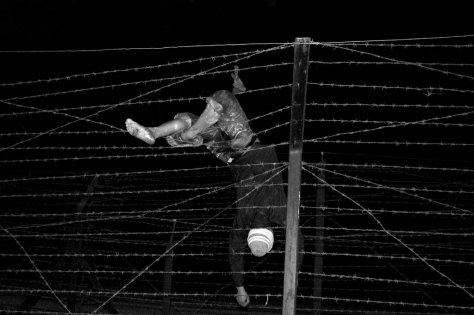
The most haunting image Basu has  is the one above.

One of the most riveting photographs shows a dead man hanging upside down, his legs caught in the high barbed wire fence that India has constructed to demarcate the border. Guards had shot the man as he and others tried to enter Pakistan near Attari, in Punjab State, Ms. Basu said. Continue reading Shabbo Kumari patrols the border

The intruders were not found in possession of any objectionable material apart from a large cache of fish

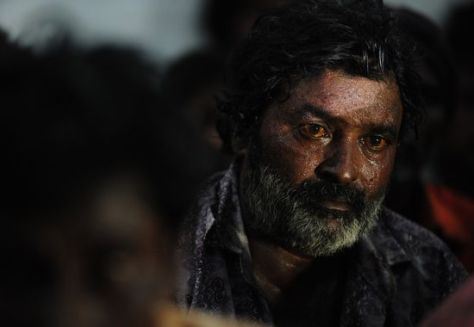
An arrested Indian fisherman sits at a police station in Pakistan’s port city of Karachi on October 1, 2012. Pakistan maritime security agency arrested 33 Indian fishermen and seized five boats for allegedly fishing illegally in Pakistan’s territorial waters. By Asif Hassan/AFP/Getty Images.

The insensitive governments of India and Pakistan are not moved even when one of their citizens dies in the other country, especially if the citizen was a poor fisherman arrested for the crime of inadvertently crossing a maritime boundary.

After 23 days of lying in the morgue of Ahmedabad’s Civil Hospital, the body of 32 year old Nawaz Ali Jat will finally reach Karachi on Monday by a Pakistan International Airlines flight. His family waited 14 years for his return, but they didn’t even get to know when he died of kidney failure on September 8. Continue reading The intruders were not found in possession of any objectionable material apart from a large cache of fish

How not to handle online hate speech in India

The first amendment to the Indian Constitution, passed in 1951, allows the government to impose “reasonable restrictions” on a citizen’s right to freedom of speech and expression, in order to protect “the interests of the sovereignty and integrity of India, the security of the State, friendly relations with foreign States, public order, decency or morality or in relation to contempt of court, defamation or incitement to an offence”.

The means to impose these “reasonable restrictions” are described in several sections of the Indian Penal Code (IPC) and the Code of Criminal Procedure (CrPc). Section 298 of the IPC makes punishable words uttered “with the deliberate intent of wounding religious feelings”; section 504 addresses “intentional insult with intent to provoke breach of peace”; section 153 makes punishable speech acts that lead or could have led to rioting; section 295A could land you in jail for three years over “deliberate and malicious acts, intended to outrage religious feelings”; section 153B permits the punishment of speech acts that question any social, religious or linguistic group’s allegiance to the Constitution of India or that such a group be denied Constitutional rights. Read more…

Allow UNWGEID to probe disappearances in Jammu and Kashmir: APDP

This press release was put ou on 28 September 2011 by the ASSOCIATION OF PARENTS OF DISPLACED PERSONS, The Bund, Amira Kadal, Srinagar – 190001
In Pakistan the judiciary is attempting to provide justice to the family members of those who have been subjected to enforced disappearance. In 2008, the Chief Justice of Pakistan entered into confrontation with the then President of Pakistan for taking a pro-active stance against disappearances. That confrontation ultimately emboldened the judicial system in Pakistan to be more pro-active on human rights issues. This judicial intervention on enforced disappearances has created an atmosphere in Pakistan which has pushed Pakistani government to invite United Nations Working Group on Enforced or Involuntary Disappearances (UNWGEID). The UNWGEID recently concluded its first 10 day visit to Pakistan and have begun their investigations on enforced disappearances. Continue reading Allow UNWGEID to probe disappearances in Jammu and Kashmir: APDP

GPS and receipts will not stop Delhi’s auto-wallahs from overcharging: Simon Harding

Guest post by SIMON HARDING

Last week, the Delhi High Court gave the go-ahead for the compulsory installation of GPS systems and printers in the capital’s auto-rickshaws by dismissing petitions against the policy from auto unions (download judgement .pdf here). The GPS kits are supposed to allow the Transport Department to track the movement of Delhi’s autos. The printer will provide the passenger with a fare-receipt, which will show the distance travelled and the amount paid. The policy will eliminate over-charging and will provide “secure and transparent travel” to the capital, claims The Hindu.

Sadly, the installation of GPS systems will do little to address the problem of over-charging. On the contrary, it may actually exacerbate it. Continue reading GPS and receipts will not stop Delhi’s auto-wallahs from overcharging: Simon Harding

Evidence, Consensus and Policy: Kaveri Gill on the curious case of changes proposed in India’s public health policy

Guest post by KAVERI GILL

The world of development is as prone to fashions as any other. In recent times, ‘evidence-based policy’ has become the new gold standard, following hot on the heels of participation and ownership of policy processes and outcomes by academics, activists and civil society groups. This applies within nation states, especially of the global South. India today epitomises such objective and bottom-up democratic largesse in favour of the ‘aam admi’- for largesse it is, make no mistake – with a near constant refrain of the avowed aim of ‘inclusive growth’. And yet, does it really?

Or is politically correct discourse and seemingly open decision-making processes in the social sector sphere merely dangerous fig leaves for seismic and opaque shifts in policy, which have very little to do with evidence and even less to do with broad-based consensus? Rather, they are an outcome of fixed ex-ante views – which may be termed as a distinct partiality to the Chicago School of Economics – about the path to a fictitious endpoint of a mainstream development paradigm, which itself is faith-based. It is not justified by theory or a heterodox reading of the empirical experiences of presently developed countries, let alone latecomer developing nations which are, for various exogenous and endogenous reasons, likely to have different trajectories altogether. I refer here to the hackneyed line about faster growth being pursued as a necessary, if not sufficient, condition for eventual trickle down, no matter that the ‘dur khaima’ of an equitable society is never arrived at! Continue reading Evidence, Consensus and Policy: Kaveri Gill on the curious case of changes proposed in India’s public health policy

A statement against the arrest of Punjabi publishers and editors for publishing the poetry of Babu Rajab Ali

Names of signatories given at the end; for more details on the campaign, see Whitewashing History

The arrest of two Punjabi publishers and two editors for reprinting old books of poet Babu Rajab Ali which allegedly contained some then used caste names, under the Prevention of Atrocities Against Scheduled Castes and Scheduled Tribes Act, is a totally thoughtless, callous and ruthless action taken by the Punjab government.

We understand that Mr. Amit Mittar of Tarak Bharti Prakashan and Mr. Ashok Garg of Sangam and editors Mr. Jagjeet Singh Sahoke from Moga and Mr. Swatantar from Samana, were arrested by the police on September 15 at the behest of the Punjab government. This is absolutely against academic freedom. Continue reading A statement against the arrest of Punjabi publishers and editors for publishing the poetry of Babu Rajab Ali

The Unsolved Mysteries of the Universe

What came first? Murgi or man?

The murgi is looking at the camera slyly, or so the camera thinks. Why did the man not bat an eyelid? Surely he could not have missed that a camera-phone came out of a pocket, was tilted horizontally, focused on him and on the murgi on his knee, proceeding to click? The camera was impressed at the discovery of this man and his murgi; they were not posing.

Why is the main wearing a red shirt with maroon pyjamas? Why not a maroon shirt with red pyjamas? Did he place the hen on his knee? If all he wanted to do was to ponder over the unsolved mysteries of the universe why would he want to be disturbed by his murgi? Given the terrain, just how much manoeuvrability does the murgi have? Could the murgi be helping the man meditate? Is the murgi a hypnotic tool?Is the murgi disoriented to be looking at the ground beneath from a precarious vantage point?

Is the murgi soon going to be food? Biryani or qorma?

The camera did not want to ask questions lest the man’s meditation be disturbed. The questions remain.

Our search for Charasi Kababs: Saba Dewan

Guest post by SABA DEWAN

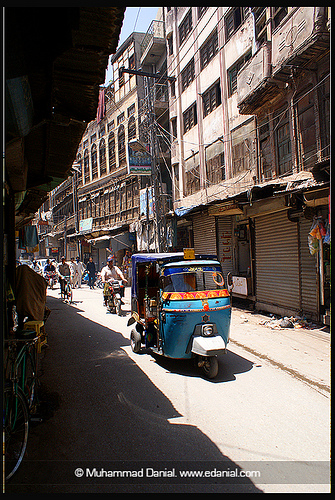
Qissa Khwani bazaar, Peshawar

I was last in Pakistan in 2006 during Ramzan. Rahul had some work in Islamabad, Peshawar and Lahore and I had used that as an excuse to visit my mother’s place of birth. While I had visited my mother’s beloved Lahore a few times earlier this was to be my first trip to Islamabad and Peshawar.

To cut a long story short, on our first evening in Peshawar, post iftaar, we found ourselves in the fabled Qissa Khwani bazaar, the Bazaar of Story tellers. It was here that in 1930 British troops had fired upon an anti-colonial demonstration of non violent, unarmed nationalist Khudai Khidmatgars leaving more than 400 amongst them dead. History has come a long way since then marking contemporary Peshawar as one of the more violence prone cities of Pakistan. Continue reading Our search for Charasi Kababs: Saba Dewan

JTSA responds to Delhi Police’s comments on their report “Framed, Damned, Acquitted”

This guest post by the JAMIA TEACHERS’ SOLIDARITY ASSOCIATION is a response to the Delhi Police’s comments on their report, “Framed, Damned, Acquitted”

Did you think that the Special Cell or the Delhi Police would introspect on its ways after the publication of Framed, Damned, Acquitted? How wrong you were. It is now attempting desperately to defend the indefensible by hiding behind a maze of statistics, ignoring the real questions that the report has raised: namely the brazen and systematic violation of all established legal norms and due process. Continue reading JTSA responds to Delhi Police’s comments on their report “Framed, Damned, Acquitted”

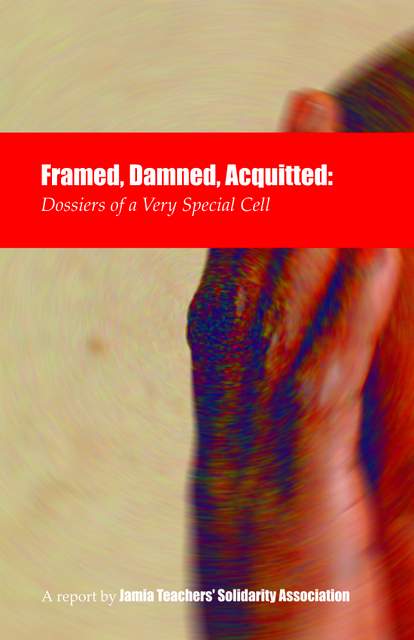
Framed, Damned, Acquitted: Dossiers of a ‘Very’ Special Cell

Given below is the report Framed, Damned, Acquitted: Dossiers of a ‘Very’ Special Cell, released yesterday in Delhi by the JAMIA TEACHERS’ SOLIDARITY ASSOCIATION.

When human rights activists, or families of those arrested on charges of terrorism, allege foul play on part of the investigating agencies, the usual response is this: Surely, there must have been some involvement, or else why would the police arrest him, and not me? Continue reading Framed, Damned, Acquitted: Dossiers of a ‘Very’ Special Cell

The Unreality of Wasseypur: Javed Iqbal

Guest post by JAVED IQBAL

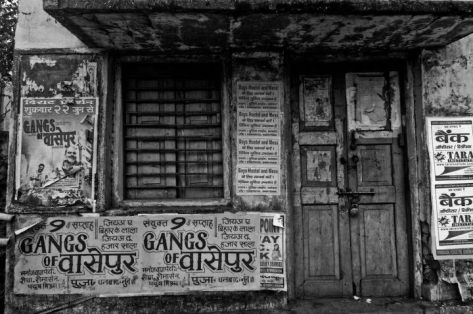
Posters for ‘Gangs of Wasseypur’ in Dhanbad. All photographs by Javed Iqbal.

‘The ending of the film was shown properly,’ speak unanimous voices, the well-known folklore of Wasseypur, Dhanbad, ‘Gangster Shafiq Khan was really gunned down at the Topchachi petrol pump like it was shown in the first part of the film.’

‘That’s how it’s done in Dhanbad.’ Continue reading The Unreality of Wasseypur: Javed Iqbal

Joga’s disappearance: Amandeep Sandhu

Rupa Publications; pp 252; Rs 275

This guest post by AMANDEEP SANDHI is an extract from his new book, Roll of Honour, a novelset in the backdrop of the Indian Army’s Operation Blue Star in 1984

During the last summer vacation (from my military school), when I was at home in Patiala, the soldiers had taken away my friend Joga. The government had already censored the newspapers, but the airwaves sneaked in the news of what was happening elsewhere in Punjab. In our living room, Nanaji’s white beard had trembled when we listened to Mark Tully from the British Broadcasting Corporation on our Murphy radio:

The battle of the Golden Temple in Amritsar is being fought hard and constantly. At the height of the battle, there were three hours of hand-to-hand fighting. Weapons allegedly recovered from the separatist Sikh militants were displayed to the world. The fatalities are not… Unofficial estimates go into thousands… Continue reading Joga’s disappearance: Amandeep Sandhu

The abandoned mandirs of Rawalpindi: Shiraz Hassan

Guest post by SHIRAZ HASSAN

The entry to a temple in Gunjmandi. All photos by Shiraz Hasan

In the early 19th century, the British made Rawalpindi the central seat of military power as they aimed towards Afghanistan. This was in line with their strategic approach towards the Russian Empire in order to enjoy and retain complete control over central Asia. Known as the Great Game, the conflict continues today in another form. Continue reading The abandoned mandirs of Rawalpindi: Shiraz Hassan

Aseem Trivedi and the guardians of good taste

There’s a time for everything. When a cartoonist is being arrested for his cartoons, for cartoons that caused no harm, incited no violence, killed no people, then do you discuss his art or his incarceration? Continue reading Aseem Trivedi and the guardians of good taste

Will there be justice in the Bhaderwah triple murder case?

This press release was put out by the JAMMU KASHMIR COALITION OF CIVIL SOCIETY on 13 September

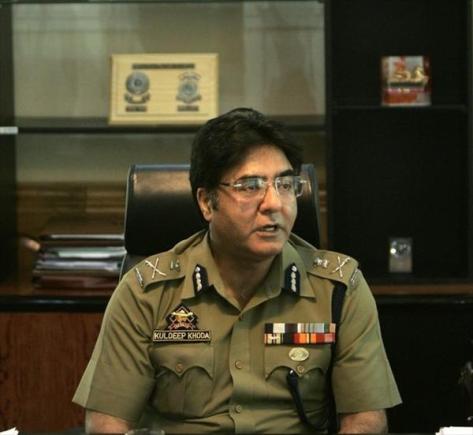
Kuldeep Khoda, former Director General of Police, Jammu and Kashmir
On 12 September 2012, a little less than five months after the son of one of the victims of the infamous Bhaderwah triple murder case filed a complaint before the State Human Rights Commission [SHRC]. The SHRC dismissed the case implicating Kuldeep Khoda, ex-Director General of Police, Jammu and Kashmir [retired from service on 31 May 2012]. No notice was given to the complainant or his advocate to appear for the hearing. On 13 August 2012, the advocate for the complainant had sought an opportunity to advance further arguments on 22 August 2012. While this request was granted, no hearing was held on 22 August 2012. Instead of providing notice for the subsequent hearing on 12 September 2012, the SHRC chose to dismiss the case. Continue reading Will there be justice in the Bhaderwah triple murder case?

I am a Hindu and I am not a terrorist

I am a Hindu and I am not a terrorist. Don’t get me wrong. Not all Hindus are terrorists and not all terrorists are Hindus. Heck, all Hindus don’t even subscribe to the political ideology called Hindutva. No, I am not saying all Hindutvawaadis are terrorists or that all terrorists are Hindutvawaadis. Let’s get this straight: terror has no religion. Continue reading I am a Hindu and I am not a terrorist

Sedition? Who, me?

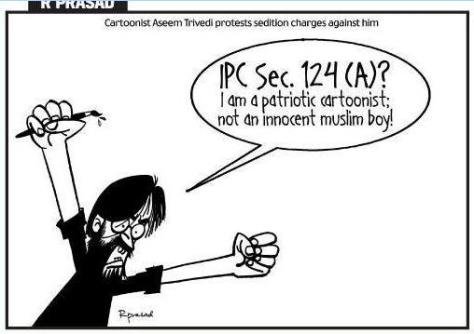
I am taking the liberty of sharing here this brilliant cartoon by R PRASAD of Mail Today

We Are All Seditious Now

If speaking the truth is sedition then I am guilty of sedition: Aseem Trivedi writes from jail

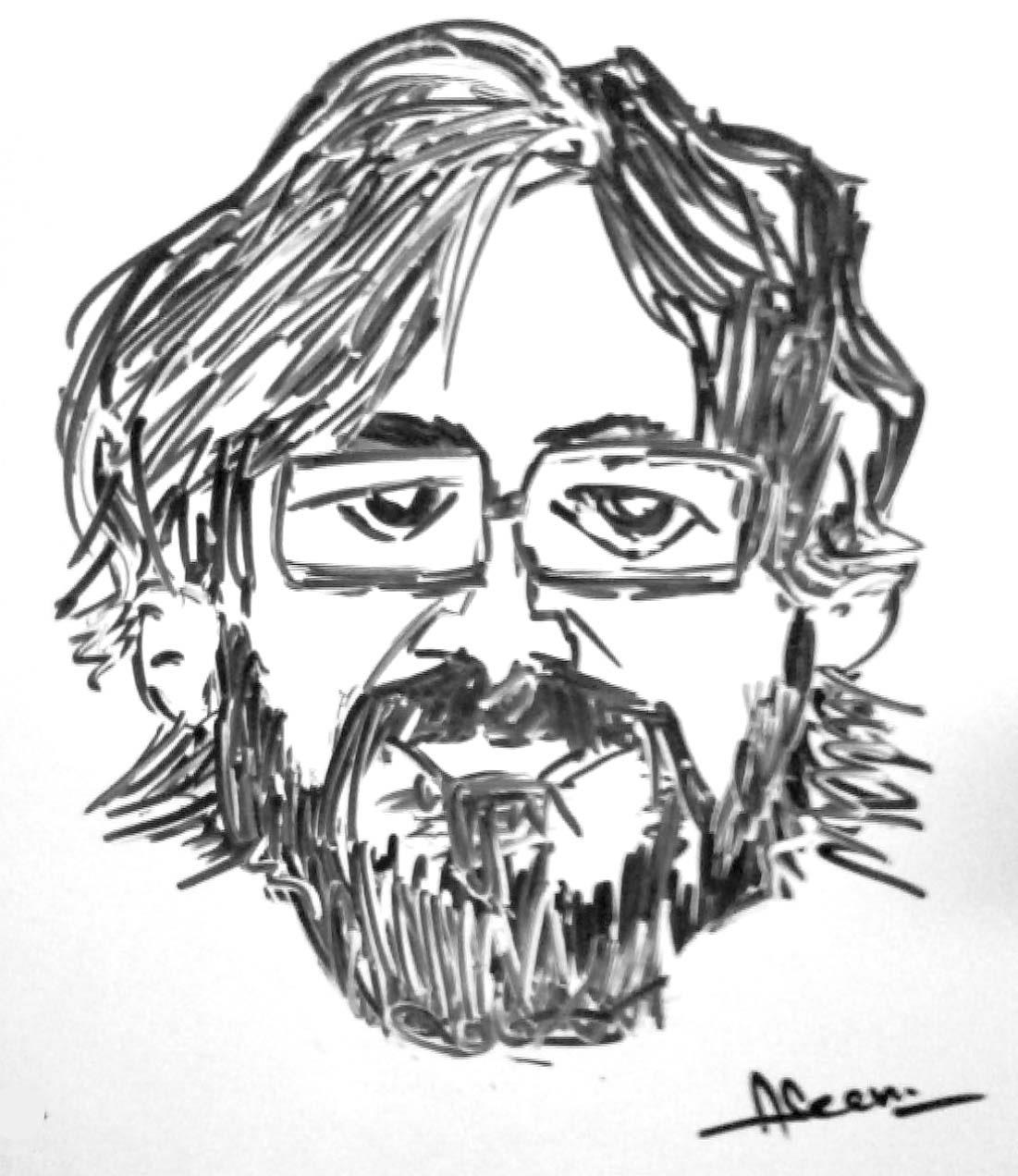
Aseem Trivedi: self-portrait

This is the text of a statement issued by ASEEM TRIVEDI from inside a jail in Mumbai. Trivedi has been remanded to judicial custody till 24 September for displaying and publishing cartoons that are allegedly seditious, insult national honour and, under the IT Act, are “grossly offensive” and of “menacing character”. An English translation of his letter is followed by the Hindi original.

Friends,

I am a true citizen of this country, not someone who has committed sedition.

If speaking the truth is sedition, then I am indeed guilty of sedition. If raising one’s voice against injustice is sedition, then I am guilty of sedition. If patriotism and the definition of patriotism have changed, then you could say I am guilty of sedition. If Gandhi, Bhagat Singh and Azad were guilty of sedition, so am I.

Even a small child of this country can understand my motive. I oppose the insulting of the people and the Constitution of India. I have been opposing the insulting of the people and the Constitution of India through my cartoons. Continue reading If speaking the truth is sedition then I am guilty of sedition: Aseem Trivedi writes from jail

Ten Reasons Why You Should Sign the Petition at RepealSeditionLaw.in

  1. Section 124(A) of IPC criminalizes the ‘disaffection’ towards the government by words, either spoken or written, or by signs or by visible representations
  2. This 1860 draconian colonial law was created to stifle dissent during colonial rule.
  3. Tilak, Gandhi, Maulana Azad and Annie Besant were convicted under this law
  4. Today, the law is used to suppress legitimate criticisms of the government
  5. Journalists, Human rights activists, political dissenters, public intellectuals, and even farmers and tribals are targetted by this law
  6. The law goes against the inalienable fundamental right to expression enshrined in our Constitution
  7. The law goes against the very nature of democratic process which relies on active consent and dissent/opposition
  8. The law goes against the Universal Declaration of Human Rights, which guarantees freedom of speech and expression
  9. All major world democracies have either repealed this law or discontinued prosecutions
  10. The existence of sedition laws in India’s statute books and the resulting criminalization of ‘disaffection’ towards the state is unacceptable in a democratic society.

To sign the petition, go to RepealSeditionLaw.in

See also: