Category Archives: Bad ideas

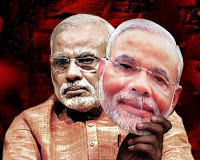
Modi says sorry to Kafila

Invitation from Kafila

Dated: Saturday, 28 September, 2013

Dear Narendrabhai,

We at Kafila would like to invite you to a small get-together in Lodi Gardens tomorrow (Sunday 29th) at 10 am. We really really (really!)  hope you can make it.

Best wishes forever,

Kafila Team

From the Office of Mr Narendra Modi, CM, Gujarat

Dated: Monday, 30 September, 2013

Dear Kafila team,

We thank you for your kind invitation to Mr Modi. He sends his regrets that he was unable to attend your get-together as he was otherwise occupied on Sunday 29th at 10 am.

US EMBASSY SORRY FOR NOT ATTENDING SUNDAY RALLY, CLAIMS BJP

Aadhaar – What next after the SC ruling? Kalyani Menon-Sen

Guest Post by KALYANI MENON-SEN

Poor Mr Nilekani. Just when everything was going swimmingly for him – adulatory interviews in the foreign press, tantalising rumours of a Congress ticket for the 2014 polls, lots and lots of votes on a poll to select the Greatest Living Indian – comes another well-aimed spanner in his works from that bunch of litigacious Jokers who have been playing rasta roko with his Batmobile for some time now.

The Supreme Court ruling of 23rd September is curt and unequivocal – a) two other challenges to Aadhar in the High Courts of Chennai and Mumbai to be clubbed with this one and heard by a Constitution Bench; b) an immediate freeze on linking Aadhar to benefits under social schemes; and c) a direction to tighten up the registration process to make sure that only Indian citizens are enrolled.

Every line of this ruling is a painful blow for Aadhar. It’s bad enough that the Court has taken seriously the charge that Aadhar violates Constitutional rights. The implication that there are serious errors in the registration process is even worse, and pulls the plug on one of the main arguments in support of the UID  – that it will stop leakages in government schemes by weeding out bogus beneficiaries. Worst of all is the decoupling from the “Apna Paisa Apne Haath bandwagon. If the UPA decides not to  jettison the cash transfer scheme – its big-ticket strategy for the 2014 polls – it will find a way to keep it going without Aadhar. Whether or not this strategy pays off, Aadhar will be the loser. Continue reading Aadhaar – What next after the SC ruling? Kalyani Menon-Sen

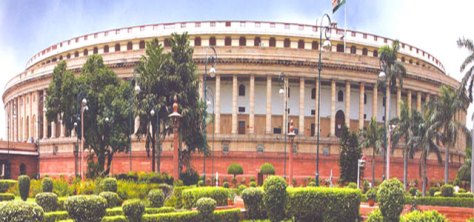
World’s Biggest Old Age Home with Cheapest Canteen

parliamnthouse

Information received via Rakesh Chaturvedi

The only place in India where food is cheap.

Tea- 1.00
Soup-5.50
Daal-1.50
Meals-2.00
Chapati-1.00
Chicken-24.50
Dosa-4.00
Biryani-8.00
Fish-13.00

Rakesh Chaturvedi suggested that instead of the Food Security Bill, let the Government give food to the poor at the Parliament canteen rates.

Good idea. That may allay the corporate media’s fears that the Food Security Bill  may further strain India’s weakening economy.

Taking off from this interesting price list, some idle research  on this rainy Sunday morning yielded the following information: There has been a noticeable shift in the age profile of MPs in  Lok Sabha. Continue reading World’s Biggest Old Age Home with Cheapest Canteen

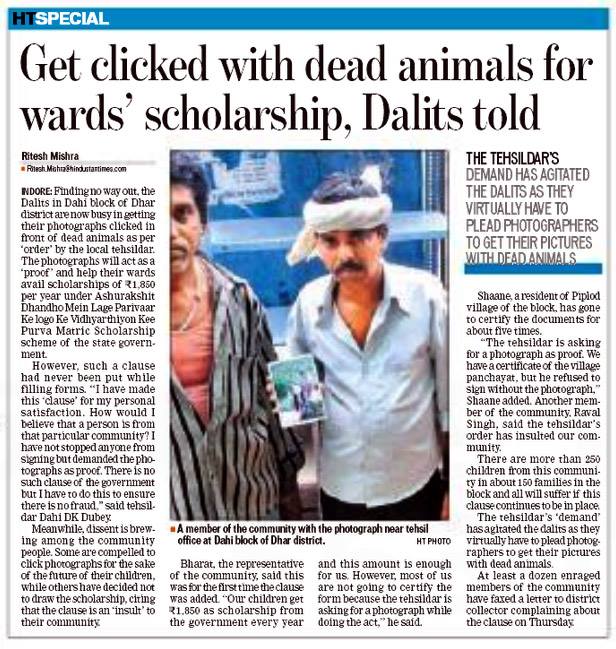
Get Clicked With Dead Animals for Wards’ Scholarship, Dalits told

Image

The chief architect of Indian constitution Dr. B. R. Ambedkar had declared in 1948 ‘democracy in India is a top-dressing on an Indian soil, which is essentially undemocratic.’ How true this is, even after sixty years of Indian democracy! Why have all the legal provisions, and valiant struggles of dalits to emancipate themselves failed to annihilate Caste system? As the ruling elites of India celebrate their arrival on the world scene, these are the skeletons in the cupboards of their rule they are most ashamed to admit.  Continue reading Get Clicked With Dead Animals for Wards’ Scholarship, Dalits told

Commonwealth giving Sri Lanka carte blanche for human rights abuses: Amnesty International

This release was put out by AMNESTY INTERNATIONAL on 27 September 2013

Sri Lanka’s disturbing human rights record means it should be barred from hosting a key Commonwealth summit in November or chairing the organization, Amnesty International said ahead of a key meeting of Commonwealth foreign ministers today.

The Commonwealth Ministerial Action Group – made up of foreign ministers and Secretary-General Kamalesh Sharma, who gather to address violations of the Commonwealth’s fundamental values, including human rights – is meeting in New York today.

“Today’s meeting is an opportunity for the Commonwealth to show some real leadership on human rights. The organization has been shamefully silent so far about Sri Lanka’s human rights crisis– including the persistent lack of justice for past crimes and ongoing attacks on human rights defenders and other activists,” said Polly Truscott, Amnesty International’s Deputy Asia- Pacific Director. Continue reading Commonwealth giving Sri Lanka carte blanche for human rights abuses: Amnesty International

Twenty myths about the Pakistani Taliban: Raza Rumi

Continue reading Twenty myths about the Pakistani Taliban: Raza Rumi

PUCL statement on the police raid at Prof GN Saibaba’s residence

24th September, 2013
STOP THE WITCHHUNT!
PUCL STATEMENT CONDEMNING THE POLICE RAID OF PROF. GN SAIBABA’S RESIDENCE

The People’s Union for Civil Liberties (PUCL) condemns the illegal raid and search of the residence Professor GN Saibaba of Delhi University on 12th September, 2013. Professor Saibaba is a differently abled person and is wheel chair bound. Ironically, over 50 police persons and intelligence officers raided his house! Prof Saibaba and his entire family including his minor daughter and the driver were all locked in different rooms, during the three-and-half-hour search. It is believed that the raid is pre-cursor to the imminent arrest of Prof Saibaba.

SEARCH WARRANT ILLEGAL

Continue reading PUCL statement on the police raid at Prof GN Saibaba’s residence

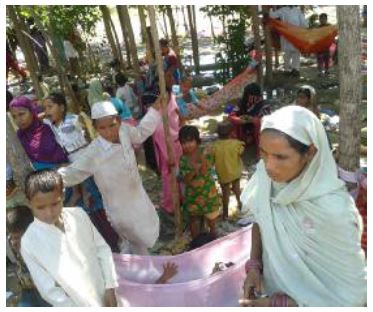
In the relief camps of Muzaffarnagar and Shamli

This report was prepared by a group of citizens (whose names are given at the end), and released on 20 September 2013.

shamli

A human tragedy unfolds, as the State watches, In the relief camps of Muzaffarnagar and Shamli Districts

A Preliminary Citizens’ Report
September 20, 2013

A. On September 17-18, 2013, an 11 member team consisting of both independent activists as well as activists affiliated with 5 organizations based in Lucknow, Chitrakoot, Muzaffarnagar and Delhi visited relief camps in two affected districts of Muzaffarnagar (3 Relief Camps – Madrasa camp at Bassi Kalan, Madrasa camp at Tawli and camp at Haji Aala’s house, Shahpur) and Shamli (3 Relief Camps – Madrasa camp on Panipat Road in Kairana, Malakpur camp in Kairana, and the Idgah camp in Kandhla). In Shamli District the team also met with senior members of the district administration – the District Magistrate and the Superintendent of Police.

B. This was not conceived of as a fact-finding visit, but was a recce visit to determine the human needs on the ground in the relief camps, and to see how we might plan to help survivors in initiating procedures towards criminal justice (lodging of FIRs and complaints), accessing compensation for death, injury, destruction of property, planning rehabilitation, and also to confirm unverified news reports of sexual violence against women. Continue reading In the relief camps of Muzaffarnagar and Shamli

भाषा का फासीवाद

भाषा का कार्य न तो प्रगतिशील होता है और न प्रतिक्रियावादी, वह  फासिस्ट है: क्योंकि फासिज़्म अभिव्यक्ति पर पाबंदी नहीं लगाता, दरअसल वह बोलने को बाध्य करता है. रोलां बार्थ का यह वक्तव्य पहली नज़र में ऊटपटांग और हमारे अनुभवों के ठीक उलट जान पड़ता है. हम हमेशा से ही फासिज़्म को अभिव्यक्ति का शत्रु मानते आए हैं. लेकिन बार्थ के इस वक्तव्य पर गौर करने से, और हमारे आज के सन्दर्भ में खासकर, इसका अर्थ खुलने लगता है. इसके पहले कि हम आगे बात करें, यह भी समझ लेना ज़रूरी है कि बार्थ की खोज कुछ और थी. वे अर्थापन की नई विधि या पद्धति की तलाश में थे. अंततः उनकी खोज अर्थ से मुक्ति की थी, एक असंभव संधान लेकिन दिलचस्प: स्पष्टतः वह एक ऐसी दुनिया का स्वप्न देखता है जिसे अर्थ से मुक्ति हासिल होगी( जैसे किसी को अनिवार्य सैन्यसेवा से छूट मिली होती है). हम हिन्दुस्तानियों के लिए इसका पूरा अभिप्राय समझना कठिन  है लेकिन एक अमेरीकी या रूसी या इस्राइली के लिए नहीं. उन्हें पता है कि वयस्क होते ही राज्य उनको  सेना में भर्ती होने के लिए बाध्य कर सकता है. प्रसंगवश अनेक न्यूनताओं के बावजूद भारतीय लोकतंत्र के पक्ष में  यह बात भी है कि उसने अपने नागरिक को सैन्य पदावली में परिभाषित नहीं किया. भारतीय होने की शर्त या उसकी कीमत अपना सैन्यीकरण नहीं है. Continue reading भाषा का फासीवाद

No Country for Visually Challenged Persons ?

Yesterday I got a call from Lucknow regarding an article I had penned down for a Hindi newspaper.

The focus of the write-up was the plight of four candidates – all of them visually challenged – who had cleared the UPSC (Union Public Service Commission) examinations way back in 2008, scored more marks than many ‘normal’ students and were still waiting for appointment letters. The Commission as everybody knows is India’s central agency authorised to conduct civil services and other important examinations.

The caller said that he was one among the four and shared with me the long struggle he along with others were engaged in to get their due. Apathy exhibited by people in the higher echelons of the Commission as far as visually challenged persons are concerned is really disturbing. And it was not for the first time that it had failed to give appointment letters to such candidates. Merely three years back Ravi Prakash Gupta had to approach the highest courts of the country namely the Supreme Court to get his appointment letter. Last February it was the Prime Minister’s Office  which had to intervene so that seven candidates from similar category could join their duty. Continue reading No Country for Visually Challenged Persons ?

NaMo NaMo or Namaste Sada Vatsale ..

Image Courtesy : http://www.truthofgujarat.com


It is now time for NaMo NaMo in BJP.

To quote a newspaper, Hindutva poster boy Narendra Modi has been declared candidate for Prime Minister’s post by the highest body of the Party.

As planned earlier there were celebrations at different party offices of the BJP spread over the country. It is a different matter that the party could not hide the fact that it was not a unanimous decision rather a majority decision. The ‘tallest leader’ or ‘mentor’ of the party L K Advani made his displeasure clear in a letter the very same day. And not only Advani till a day ago three members of the highest body – whose strength is 12 only – were vehemently opposing the proposal that the candidature be announced immediately and wanted it to be deferred till the assembly elections to five states were over. Two amongst them – Ms Sushma Swaraj and Murli Manohar Joshi – could be persuaded to join the anointment at the last moment only.

The comical part of the whole anointment has been the gentleman who had only a week ago declared that he would like to serve the state – where he was elected CM for the third time – till 2017, had no qualms in dropping all pretensions and rush to Delhi for the coronation. Continue reading NaMo NaMo or Namaste Sada Vatsale ..

In Delhi’s defence

Reuters photo
Reuters photo

By SHIVAM VIJ: The census counts ’urban agglomerations’, and the Census of India says that Mumbai is India’s largest urban agglomeration. This includes Mumbai’s suburbs. In counting Delhi, the suburbs are not added because They are separated by state boundaries. If you were to add suburbs of the ’National Capital Region’, Delhi’s population would be not 16 million but over 22 million, making it the world’s largest urban agglomeration after Tokyo. This bustling urban centre is made of its people. Today’s Delhi cannot be stereotyped as just the seat of power. There is more to Delhi than the endless roundabouts of Lutyens’ capital.

Delhi’s core – the Partition refugee Punjabi – is not xenophobic like the Marathi ’manoos’ of Mumbai. In fact Delhi today is what Bombay once was, India’s foremost cosmopolitan metropolis. It is the city of choice for people from across India to migrate to with dreams of riches.

A lot has been written about “the Delhi gang-rape”. 16 December 2012 started a conversation that doesn’t seem to end. This conversation has largely been about rape, not about Delhi.
Continue reading In Delhi’s defence

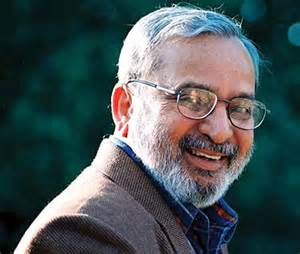
विनोद रायना

मेरी मिट्टी जब मिट्टी में मिल रही हो तो मुझे तसल्ली रहे और मेरे दोस्तों को भी कि इसने वाकई अपने आप को खाक कर दिया था. मेरी आखें जो और जितना देख सकती हों, देख चुकी हों, मेरी त्वचा जितने स्पर्शों का अनुभव कर सकती थी, कर चुकी हो, मेरे पैर जितना चल सकते थे, चल चुके हों ;मेरे हरेक अंग और एक-एक इंद्रिय ने, कुदरत ने जो कुछ उन्हें बख्शा था और फिर उन्होंने खुद जो कुछ भी उस नेमत में जोड़ा था, सब का सब लौटा दिया हो.मैं अपने आखिरी लम्हे में मिट्टी के अलावा कुछ और न रह जाऊं , अपने साथ जो कुछ कमाया था, उसमें से कुछ बचा ले जाने का अफ़सोस न रह जाए. मैं ऐसी ही मौत और ऐसी ही ज़िंदगी चाहता हूँ.

4916512513_64a025b94b_mक्या विनोद रायना ने लैटिन अमरीकी कवि हिमनेज के जीवन-सिद्धांत की इस कसौटी पर खुद को कस कर इत्मीनान की आख़िरी साँस ली होगी?विनोद रायना सिर्फ तिरसठ साल के थे. कैंसर ने जब उनकी हंगामाखेज ज़िंदगी पर शिकंजा कसना शुरू किया होगा और उन्हें इसकी भनक लगी होगी,उन्होंने भी जवाब में अपनी रफ़्तार चौगुनी कर दी होगी,ऐसा मुझे लगता है. क्या एक साल को चार साल के बराबर जिया जा सकता है? क्या आप एक घंटे में चौबीस घंटा कस दे सकते हैं ? विनोद ने जैसे यही करना तय कर लिया हो. लेकिन यह वे कोई अभी ही कर रहे हों,कैंसर की पहली आहट जब उन्होंने अपने शरीर में सुनी होगी, ऐसा नहीं है. हम उनसे मजाक किया करते कि हिन्दुस्तान के ऐसे कोने का नाम बताइये जो आपके चरण रज से पवित्र न हुआ हो! विनोद हमेशा कहीं-से-कहीं के बीच में होते थे. फिर भी आप जब इस बीच उनसे मिल रहे होते तो वे आपसे इतने इत्मीनान से बात करते कि इसका अहसास ही नहीं हो पाता कि यह शख्स अभी एक घंटा पहले ट्रेन या हवाई यात्रा करके आया है और इसे घंटे भर बाद ही कहीं और के लिए रवाना हो जाना है. व्यक्तित्व में यह इत्मीनान दुर्लभ है,विशेषकर उनमें जो ‘एक्टिविस्ट’ कहे जाते हैं. इस वजह से उनसे मिलने वाले किसी में कभी न तो हीनता बोध आया और न अपराध बोध. यह भी विरल है. अक्सर ऐसी मुलाकातों के बाद आप आत्म-भर्त्सना के शिकार हो सकते हैं कि आपकी ज़िंदगी उस एक्टिविस्ट के मुकाबले हेच है, आप किसी काम के नहीं. विनोद ने सामनेवाले को कभी यह अहसास होने नहीं दिया, बल्कि इसका उलटा ज़्यादा ठीक है : हर किसी को यह विश्वास दे पाना कि वह सार्थक जीवन जी रहा है और उसमें संभावना है. Continue reading विनोद रायना

How Would You Like your Death Penalty Steak, Rare, Well Done, or Medium Rare?: Arguments Against the Death Penalty

The anger that I felt when a young woman was brutally raped and killed by a group of men on the night of December 16 last year is not something that will ever go away. It marked not just me, but millions of people in Delhi, and elsewhere. That anger has no closure. Nor do I seek the convenience of such a closure. I do not seek the convenience of closure for the rape and murder of dalit women in Haryana, or of women in Kunan-Poshpora and elsewhere in Jammu & Kashmir or in Manipur who were raped and killed by the soldiers of the Indian army and who are still unpunished. I would like such men to be punished, but I will never demand the penalty of death for them. Not because I have any affection for rapists, but because I have a greater regard and respect for human life, which I do not think that we should allow the state to take away, in cold pre-meditation, whatever the circumstances.

Continue reading How Would You Like your Death Penalty Steak, Rare, Well Done, or Medium Rare?: Arguments Against the Death Penalty

Let taxpayers pay for ‘our’ treatment abroad, while they rot in government hospitals: Harsh Taneja

Guest post by HARSH TANEJA

The Government of India has recently gifted its bureaucrats a privilege. The state will reimburse the total cost of medical treatment abroad for the three highest civil services officers (the IAS, IPS and IFS).

And this entitlement is not limited to procedures that cannot be carried out in India.

According to this newspaper report, these officers and their families can decide to go abroad for even routine procedures such as bypass surgeries. A privilege that is unfair, undemocratic and borders on institutionalized corruption. Here’s why.

First, the most obvious argument pointed out in the newspaper article itself, is the huge expenditure to the exchequer. However that to me is the beginning of why this is problematic. The following two concerns are perhaps more grave. Continue reading Let taxpayers pay for ‘our’ treatment abroad, while they rot in government hospitals: Harsh Taneja

Modi’s ‘Vanzara’ Moment : Encounter killings as State Policy?

Resignation letters of suspended officers – who are in jail under serious charges-  are never a cause of concern for the powers that be. But with Dahyaji Gobarji Vanzara, suspended DIG of Gujarat police and head of its Anti Terrorist Squad, who once happened to be very close to the powers that be and has the potential of further embarrassing them, situation is entirely different. It is not for nothing that the government led by Narendra Modi has decided to reject the said resignation by not forwarding it to the Central government.

Imagine a murder accused sitting in jail who wants to leave the government service and the state government – which has received enough opprobrium because of these murders – wants to keep the accused in service. The only logical explanation seems to be that the accused officer must be privy to secrets which the government does not want to divulge in public. It is a known fact that till his arrest, Vanzara had been privy to the entire goings on in Gujarat since 2002, which included 2002 riot investigations which were handled by the crime branch, the Pandya murder case and the Akshardham attack, apart from the fake encounters. Continue reading Modi’s ‘Vanzara’ Moment : Encounter killings as State Policy?

How to dress for your body shape

How to dress for your body

Courtesy Pramada Menon’s Facebook Page

Is bypassing the state the best way to push for land reform?

Last month, I visited Harare to cover the Zimbabwe elections but found myself fascinated by the controversial fast track land reform process. This story was first published in The Hindu, but – as always – I am happy to take questions here. A thought worth considering: In the context of the discussion around the Land Bill in India, does Zimbabwe’s experience suggest that questions of land are best resolved outside of the ambit of the state?

For as long as anyone remembered, the border was a dusty track of red sun-baked earth that separated the tidy communal lands in Mhondoro, where the Shona people grew maize, from the fenced farms and private hunting reserves where white farmers grew tobacco and foreign tourists shot antelope.

Young men and women crossed over to work on estates like John Dell, Solitude and Damvuri but hurried back before dusk lest they be arrested for trespass. In the communal lands, children watched that the cattle weren’t confiscated for grazing on white lands. One night in 1998, a young man called Julius was fatally shot on the Damvuri hunting reserve on suspicion that he was poaching wildlife meant for paying guests. Border relations, villagers say, deteriorated from that day on.

A little over a year later, over 200 villagers from Mhondoro walked into Damvuri, a 32,000-acre private game reserve, as part of a nationwide wave of farm invasions that reverberated across the world. At the time, about 4,500 predominantly white farmers owned 11 million hectares, or about 35 per cent of all agricultural land in Zimbabwe while the black population was squeezed onto communal lands.

“For twenty years after independence we waited, we knew, the land is ours,” said a shopkeeper from Mhondoro. Today, 181 families live, farm, and raise cattle on Damvuri. The fences have been torn down and a new community is coalescing around the local bar, pool tables and provisions store. Across Zimbabwe, 170,000 families have settled on 10 million hectares of land since 2000.

Continue reading Is bypassing the state the best way to push for land reform?

Indians of Another Colour, Or why Goans are More than Just Portuguese: Hartman de Souza

This guest post by HARTMAN DE SOUZA is in response to Europeans of An Other Colour – Why the Goans are Portuguese

The news that Goa’s Catholics obtain Portuguese citizenship and flee wherever they can with their families, availing in fact of whatever loopholes are available, is not that new a phenomenon to Goans following matters on the ground – even though it may now serve to open out a new thread in the discussion of postcolonial societies, and in particular, the travails of immigrant communities in what is supposedly a ‘globalized’ world.

It helps to keep in mind that it is Goa that is the classic case of a ‘failed state’, and not Pakistan, as Indians like to believe. Goa was once a beautiful territory protected by Ghats on three sides, rich with an abundance of water, blessed with fertile land, and made up of villages each of which had control of their commons through a sophisticated system of village governance that far predated the Portuguese Colonialists. Today however it is a state governed by politicians who work hand-in-glove with their crony partners whether in mining, real estate or industry,  a state in a freefall towards entropy. Continue reading Indians of Another Colour, Or why Goans are More than Just Portuguese: Hartman de Souza

A Burden of Proof: A Response to “White Woman’s Burden” by Ameya Naik

This is a guest post by AMEYA NAIK

[On the 26th of August 2013, Newslaundry carried a piece by Rajyasree Sen titled “White Woman’s Burden“. This post is offered as a rebuttal of the views expressed in the essay.]

Dear Rajyasree,

Michaela Cross, aka RoseChasm’s CNN blog piece about her experience of India is, as you say, currently unavoidable on the internet. It does seem to be provoking a dialogue on women and safety in India – at least in social media circles. If the result is that Indian girls and women acknowledge and share their own negative experiences, perhaps thereby to make some Indian men re-examine their perceptions and behaviour, it would still be a step forward.

Unfortunately, some responses represent two steps backwards instead. Your writing (“White Woman’s Burden”, 26 Aug, 2013) is one such; it made me profoundly uncomfortable. The gist of your argument appears to be this: Michaela was not suitably prepared, and she *SHOULD* have known better. Indeed, given her account of her actions and experiences, and the trauma she has experienced therein, it is surprising (to you) how unprepared she was.

Did I just read a young, educated Indian woman entrepreneur – from the hospitality industry, no less – say that an exchange student left traumatised after experiencing molestation (and worse) because she was unprepared? I describe myself as a cynic, but surely this is a new low!

What, pray tell, would suggest she was sufficiently prepared? That she came here, had the experiences she did, and considered them “par for the course” in India? Or that she came here aware of (what you call) the skewed psycho-sexual dynamic between Indian men and women in all its rich and diverse forms, behaved in the most conservative and appropriate fashion – only dancing in “safe places”, avoiding public transport entirely, staying only with trusted hosts or in one of Goa’s five star hotels – and left having experienced only milder forms of violation, like the persistent gaze (which she would know to expect)?

This assertion of yours does have one unexpected benefit – it lets us ignore the fair skin debate. If complexion plays no role, she should still be at least as careful as any Indian woman. If complexion does play a role, she should be even more careful! As silver linings go, though, this is pewter on a thundercloud.

How, pray tell, would the students or the University prepare for their visit to the land of the skewed psycho-sexual dynamic? With little docu-dramas of all the kinds of harassment you can expect, and how to be safe at all times? Would you not seed the most pernicious mistrust in your potential visitors? In fact, why would any of them come at all? Surely the University would simply cancel the trip!

And, while you seem to suggest that this is precisely what the “easily traumatised” should do, we would be the first to protest. Already we cry ourselves hoarse over travel advisories saying India is unsafe for women. That, apparently, is an insult to our national pride. And that seems to be the source of this article: “how dare this unprepared white girl write about India this way?” Only Indian writers can suggest that India has a skewed psycho-sexual dynamic, right? (An interesting dynamic which, of course, makes some – but not all – lechers or potential rapists. And on current evidence, I shudder to ask you who these corrupted ones are, and why only they succumb to this taint.) Because Indian women are prepared for such behaviour, and they know – even when they face it abroad – that it is only an aberration.

Too many responses, too many comments, seem to be in this vein. Why this parochial-with-my-fingers-crossed-so-as-not-to-offend-gendered-perspectives reply at all? My thesis is that it is because Michaela’s account makes us ask a few uncomfortable questions. Such as, how many aberrations to make a norm? How much preparation is enough?

Answering those questions is not a White Woman’s Burden – the onus to answer to them lies on us. Discrediting the person who asked them as “easily traumatised” – and really, as someone who says she has lived through incidents enough of her own, how dare you! – is a thoroughly inadequate reply.

[Ameya Naik is currently in a graduate programme in Boston. A psychologist and lawyer by qualification, he worked in New Delhi across 2012-13.]