Category Archives: Bad ideas

Why is Sachin Pilot in My Dreams? Or, Three Visas, and No More, to India: Fawzia Naqvi

Guest Post by Fawzia Naqvi

Sachin Pilot was in my dreams last night, with all due apologies to his wife, because I swear, I am not secretly fantasizing at all about India’s youngest cabinet minister. He just showed up. I think it was in Srinagar, though I’ve never been there, I swear. And why Srinagar? Well that’s another matter, requiring numerous sessions of therapy. But the good Minister made a cameo appearance and told me quite categorically that I had already been granted three visas to India and should expect no more. Don’t get me wrong. I like Minister Pilot. I admired the way he handled corporate America when he visited New York to deal with all the whining and complaining about Indian reforms and that pesky CSR Bill. But why is he in my dreams? An Indian friend tells me it’s because I’m constantly nervous about going to India. And herein lies the truth. I observe, analyze, obsess about, pontificate upon, call, email and travel to India more than most Pakistanis, without actually being a spy. Yes. Really. And I resent how easy the spooks have it. I’m guessing they aren’t dreaming about a finger wagging minister, ok Sachin Pilot, telling them they can’t get a visa! But such are the incessant covert and overt anxieties of Pakistanis like me who have careers involving India. And if Sachin Pilot, he of the new generation of Indian leaders is also telling me (in my dreams of course) that I can’t get a visa, then surely the news for Indo-Pak and hence my career, is not good. The twain of course is twinned.
Continue reading Why is Sachin Pilot in My Dreams? Or, Three Visas, and No More, to India: Fawzia Naqvi
Europeans of An Other Colour – Why the Goans are Portuguese: R. Benedito Ferrão & Jason Keith Fernandes

Guest post by R. BENEDITO FERRÃO & JASON KEITH FERNANDES 

This article serves as a response to Sir Andrew Green’s comment on the alleged misuse of Portuguese citizenship by Indian nationals of Goan origin whom the Daily Star and the Daily Mail have characterized as immigrants who travel to Great Britain to take advantage of it. Green’s perspective from a few months ago mirrors prevalent xenophobic views on the rights of immigrants to Europe; hence, the counterpoint offered here hopes to challenge such bias as it will surely continue to be expressed.

On 13 May, 2013, the Goan Ethernet was aflame with outrage at statements made by Sir Andrew Green, chairperson of Migration Watch, carried in the Daily Star and the Daily Mail. The Daily Star reported, “An Indian national from Goa can obtain Portuguese citizenship if their parents were Portuguese citizens prior to 1961,” and quoted Green as saying, “They can then move straight to the UK with their family. On arrival they can avail themselves, immediately, of all the benefits available to UK citizens.” The Daily Mail seems to have been spurred on by Green’s statement, going on to claim that “[a] number of Indian nationals from the former Portuguese territory of Goa are thought to have taken advantage of the loophole. Indians living in Goa can claim they have Portuguese heritage and so claim Portuguese citizenship. They can then move directly to Britain – without ever having to visit Portugal – and bring a family without meeting any qualification test.”

Given the manner in which the matter regarding Goan access to Portuguese citizenship has been reported in the British press, as academics studying Goa and the Goan community, we believe that there is a need to redress such misrepresentations and firmly call out, not only the wilful amnesia about Britain’s imperial past, but also the Anglo-centric interpretation of colonialism, the post-colonial, and de-colonised world order that motivates such representations. In so doing, our aim is to address not merely a need for Goans and others of former Portuguese India to assert the legitimacy of their actions, but to also enable a view of the global order from a position that is more respectful of the formerly colonised. Continue reading Europeans of An Other Colour – Why the Goans are Portuguese: R. Benedito Ferrão & Jason Keith Fernandes

To the German ambassador in India, a letter from Kashmir

This letter was faxed from Srinagar on 26 August 2013 to the German embassy in New Delhi and the Bavarian State Opera. List of signatories given at the end.

To,
Ambassador Michael Steiner,
German Embassy,
New Delhi, India.

Subject:  URGENT Protest Letter to German Embassy on scheduled Zubin Mehta concert in Srinagar, Jammu and Kashmir on 7 September 2013

On 22 August 2013, a press release was issued by the German Embassy that Zubin Mehta would be conducting an orchestra on 7 September 2013 at Shalimar Bagh, Srinagar, Jammu and Kashmir.

The press release quoted you as stating that the concert was for the people of Jammu and Kashmir by way of a cultural tribute. The press release also reads that the concert was intended to give a message of hope and encouragement to the people of Jammu and Kashmir. The concert, said to be a part of a “broader engagement” is being organized by the German Embassy and supported by the “competent authorities both at Central as well as at Union State level”. The costs of the concert are covered by “benevolent sponsors mainly from the business world in India and Germany, as well as “Incredible India‟ and the German Foreign Office”. Continue reading To the German ambassador in India, a letter from Kashmir

FTII Students’ Association Calls for Solidarity : Against violence by fascist forces

Students’ Association, Film and Television Institute of India, Law College Road, Pune

On the 21st of August 2013 students of the Film and Television Institute of India (FTII) and Yugpath, Pune organized a screening of ‘Jai Bhim Comrade’, followed by a discussion with Anand Patwardhan and a performance by members of the Kabir Kala Manch. At the close of this event, five students of FTII were physically attacked by twelve members of the Akhil Bharatiya Vidyarthi Parishad (ABVP).

Maharashtra has for centuries produced socially progressive activists. Dr. Narendra Dabholkar was one among them. The event on the 21st was organized by the students of FTII to also pay homage to Dr. Narendra Dabholkar. It is unacceptable that an attack of this nature can be inflicted on students for organizing cultural events, in a state, which has a rich and diverse cultural tradition.

This is not an incident in isolation. The attacks on Amdavad ni Gufa an art gallery in Ahmedabad and the cancellation of Sanjay Kak’s film at Symbiosis College of Arts and Commerce, Pune are recent examples of mindless violence by right-wing fascist groups. It is critical to challenge the growing impunity with which fascist groups are intolerant of artists, thinkers, students and any individual who are either opposed or not inclined to their politics. Such attacks by any fascist force violate the fundamental right to freedom of speech and expression. At a time when such attacks are becoming increasingly routine we appeal to the student community and all concerned individuals to register their protest.

On the 26th, this Monday, we are organizing a Solidarity March starting from FTII Campus, Law College Road to Omkareshwar Chowk at 4 PM. This march is a protest against the assassination of Dr. Narendra Dabholkar, the attack against the five FTII students, and all other acts of mindless violence by fascist forces. We demand that those guilty of attacking the FTII students be brought to justice and the charges against the FTII students be dropped immediately. Join us in solidarity as we peacefully march to celebrate the right to democratic dialogue and reclaim the right to expression.

We appeal to students and free thinking individuals across the country to voice their protest. We urge you to use your art, your words and your ideas in defiance of such fascist forces.

Vikas Urs

General Secretary

Students’ Association, F.T.I.I

Contact- 09158737954,

ftiistudentsbody@gmail.com,

http://ftiistudentsbody.blogspot.com


Why Do ‘They’ Love Narendra Modi ?: Shankar Gopalakrishnan

Guest Post by Shankar Gopalakrishnan

On August 14th, Narendra Modi declared that his Independence Day speech would attract as much attention as that of the Prime Minister. He appears to have been right. The fact that this is hardly unexpected should not obscure the deeper puzzle that it hides. It is a rare occurrence for a state level leader to suddenly get so much prominence in the media, and that too for such a long period. Why, then, have powerful forces in our society – including most of the media – chosen to endorse Modi? Why the sudden promotion of this particular leader at this particular time? What is it that he and his regime are offering?

Continue reading Why Do ‘They’ Love Narendra Modi ?: Shankar Gopalakrishnan

FTII Students’ Statement on the Attack on them by the ABVP in Pune

FTII Students’ Association Press Release, 22/08/13
 
Five students of the Film and Television Institute of India (FTII) were attacked outside of the National Film Archives of India (NFAI) on Wednesday 21/08/13 by the Akhila Bharateeya Vidyarti Parishad (ABVP).
 
The attack took place soon after the screening of Anand Patwardhan’s documentary Jai Bheem Comrade and the performance of Kabir Kala Manch at NFAI. The programme was organized by the FTII student’s body in association with Yugpath, a youth forum based in Pune. This was the  first public performance of Kabir Kala Manch after two and a half years.
 
The five students attacked are Shameen a second year cinematography student, Ansar Sha a third year cinematography student, Kislay a third year Editing student, Sriram Raja also a third year Editing student and Ajayan a third year Sound student.
 
The screening of the documentary and the performance by Kabir Kala Manch (KKM) was finalized two weeks ago. There was a request to cancel the programme from various quarters respecting the call for bandh as a mark of protest against the murder of anti-superstition activist Narendra Dhabolkar. But Yugpath and the FTII student’s body decided to stick to their plan and go ahead with the screening and performance as a mark of respect and homage to Mr. Dhabolkar. Continue reading FTII Students’ Statement on the Attack on them by the ABVP in Pune

Assassination of an Activist : Who Killed Dr Narendra Dabholkar?

REPLUG: Narendra Dabholkar -- Duty to Develop Scientific Temper | NewsClick           ( Photo : Courtesy ‘Newsclick)                                                                   “There are only two ways to live your life. One is as though nothing is a miracle. The other is as though everything is a miracle.”

– Albert Einstein

Words have an uncanny ability of impinging on the receiver with clinical detachment. It is upto the receiver to unpack them or try to derive meaning out of them. It is still difficult to get over the sense of grief and shock one experienced when one received the news of the assassination of renowned rationalist Dr Narendra Dabholkar on the streets of Pune on Tuesday 20 th August.

Continue reading Assassination of an Activist : Who Killed Dr Narendra Dabholkar?

Communalisation in the name of Security and Sovereignt: JKCCS

As Kishtwar continues to be under curfew, this public statement put out on 15 August 2013 by the Srinagar-based JAMMU AND KASHMIR COALITION OF CIVIL SOCIETY is pertinent.
On 29 July 2013, Village Defence Committee [VDC] members were alleged to have killed 16 year old Shamim Ahmed Lone, resident of Noutaas, Thatri, Doda. Further, a few days prior to the murder of Shamim Ahmed, a 16 year old girl, resident of Kuntwara, Kishtwar, was kidnapped and raped by persons backed and protected by the VDC. According to newspaper reports from last over a month at many places in Doda-Kistwar region masked men have terrorized people. Over the last week, several places in the Jammu region, particularly Kishtwar, have been subjected to violence at the hands of VDC members, supported by Hindu communal groups, which resulted into loss of three lives, numerous injuries and loss of public property. The unabated support and encouragement to VDCs by Government of India, has ensured deepening communal strife. Continue reading Communalisation in the name of Security and Sovereignt: JKCCS

Modi’s ‘Singur’ : The Other Independence Day


Image


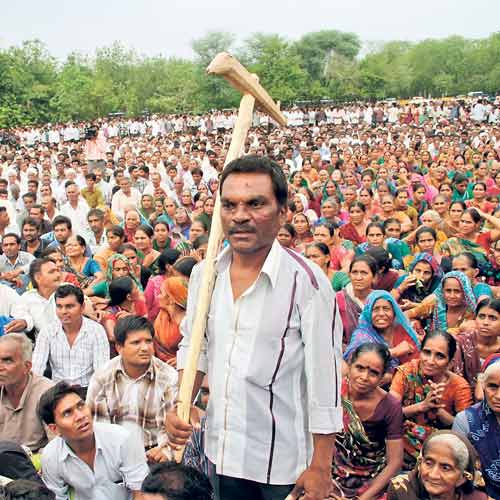
It was also an Independence Day celebration albeit of a different kind.

Far away from the 24 7 media and far away from the usual rhetoric one witnesses on any such date it was effectively people’s celebration which was resisted by the state at every level. Held at a non descript village called Dalod around 150 kilometers from Ahmedabad the state capital, it was attended by around 15,000 men and women, old and young, according to conservative estimates, .

There was unprecedented police patrolling and barricades on all roads leading to village Dalod and people coming to the flag hoisting were being stopped. One can easily guess that if the state would not have gone out of the way to thwart the programme, and had not cancelled the initial permission to hold it in Hansalpur, – where the Maruti Suzuki plant is supposed to come up – more than 50,000 people could have easily reached there. The celebration was attended by delegations from other groups waging a struggle against land acquisition in their areas, such as from Mahua (against the Nirma cement plant led by politician-activist Kanubhai Kalsaria), from Mithi Virdi in Bhavnagar (against the nuclear power project), the Junagadh by-pass road etc. who came there to show their solidarity. Continue reading Modi’s ‘Singur’ : The Other Independence Day

Nationalism in India: Rabindranath Tagore

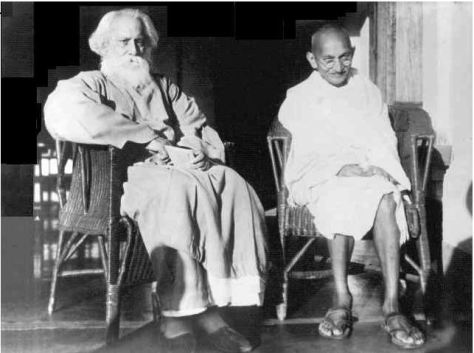
From RABINDRANATH TAGORE‘s lectures on Nationalism, 1917

tagore-gandhi

Our real problem in India is not political. It is social. This is a condition not only prevailing in India, but among all nations. I do not believe in an exclusive political interest. Politics in the West have dominated Western ideals, and we in India are trying to imitate you. We have to remember that in Europe, where peoples had their racial unity from the beginning, and where natural resources were insufficient for the inhabitants, the civilization has naturally taken the character of political and commercial aggressiveness. For on the one hand they had no internal complications, and on the other they had to deal with neighbours who were strong and rapacious. To have perfect combination among themselves and a watchful attitude of animosity against others was taken as the solution of their problems. In former days they organized and plundered, in the present age the same spirit continues—and they organize and exploit the whole world. Continue reading Nationalism in India: Rabindranath Tagore

The Curious Case of Hamid Ansari

large-p-9-aa

You may think he is a spy or a saboteur. If he is one, would he have spent months trying to reach Kohat from Mumbai and then get caught in just two days?

Sitting in Mumbai, Hamid Ansari fell in love with a Pakistani Pashtun girl over Facebook. He was a 26 year old management teacher, she was a B.Ed. student. After over a year of obsessing about each other over the internet, phone and phone messengers, she called him one day, crying. She had confided in her sister about this online affair, but the sister told the parents, who decided it was time to find her a husband. It was the last phone call. She soon disappeared from Facebook too. Continue reading The Curious Case of Hamid Ansari

परिसर, प्रेम और हिंसा : अपूर्वानंद

जवाहरलाल नेहरू विश्वविद्यालय – जे. एन.यू. में एक छात्र द्वारा अपनी सहपाठिनी पर प्राणघातक हमले और आत्महत्या की घटना ने विश्वविद्यालय के अलावा बाहरी दुनिया  को भी  हिला दिया है.जे.एन.यू. के शिक्षक और छात्र आत्मनिरीक्षण कर रहे हैं.आखिर जे.एन.यू. में, जो उदारवादी, ‘कॉस्मोपौलिटन’मूल्यों का परिसर माना जाता है, ऐसी घटना हो ही कैसे सकती थी! अनेक लोगों को बरसों पहले लिखी उदय प्रकाश की कहानी ‘ रामसजीवन की प्रेम कथा’ की याद हो आई. कहानी की पृष्ठभूमि में जे.ने.यू. के परिसर का जीवन ही है. गाँव से आया और दिल्ली से चौंधियाया हुआ रामसजीवन एक अंग्रेज़ी माध्यम के परिवेश से आई छात्रा के इर्द-गिर्द प्रेम की एक फंतासी बुन लेता है और उसे सच मानने लगता है. कहानी के विस्तार में जाने की ज़रूरत यहाँ नहीं है, लेकिन उसमें एक चेतावनी तो थी जिसे ठीक से सुना नहीं गया. उसे कुछ इस तरह समझा जा सकता है: परिसर को अपने आप में उदार, आधुनिक मूल्यों का वाहक मानना भ्रामक स्थितियों को जन्म दे सकता है. जे. एन.यू. में ही अनेक प्रकार के सामाजिक स्तर  हैं और ऐसा नहीं कि वहाँ की शिक्षा इन्हें कमज़ोर ही करती हो. वे और सख्त भी होते जा सकते हैं. ये स्तर आर्थिक कारणों से लेकर भाषाई सम्पन्नता तक से जुड़े हुए हो सकते हैं. मसलन अंग्रेज़ी माध्यम के छात्रों का एक अलग वर्ग-स्वभाव अपने आप ही बन जाता है. उससे बाहर रह गए छात्रों में वंचित रह जाने की भावना हिंसा को जन्म दे सकती है. दूसरी स्थिति यह हो सकती है कि अपनी भाषाई और वर्गपृष्ठभूमि का अतिक्रमण करने की सम्भावना यहाँ दिखलाई पड़ने लगती है और इसलिए उससे मुक्त होने की आकांक्षा उसी पृष्ठभूमि के छात्र मित्रों से अलगाव भी पैदा कर सकती है. इसके कारण भी हिंसा जन्म ले सकती है. हमेशा वह व्यक्त ही हो, आवश्यक नहीं. अव्यक्त रूप में रह कर भी वह व्यक्तित्व को विकृत कर सकती है. Continue reading परिसर, प्रेम और हिंसा : अपूर्वानंद

Where Are The Emile Zolas of Our Times !

On Minority Rights and State Violence

Each one has his reasons: for one, art is a flight; for another, a means of conquering. But one can flee into a hermitage, into madness, into death. One can conquer by arms. Why does it have to be writing, why does one have to manage his escapes and conquests by writing? Because, behind the various aims of authors, there is a deeper and more immediate choice which is common to all of us.

What is Literature? Jean Paul Sartre

It is difficult to start when you are among an august gathering of masters and students of a subject you are not much aware of and are asked to say something to them. Today I find myself in that unenviable situation.

Let me admit here that when I received the information of the seminar I was really very excited to learn that scholars of literature would be focusing themselves on human rights, an issue which demands urgent attention from every thinking and concerned human being. But when the question of joining the debate arose, I was really in two minds. In fact, I was bit reluctant to come here for two simple reasons.

Firstly, being a left activist for larger part of my social life, I have been more accustomed to address public meetings on specific issues or share my ideas on a particular theme among activist circles. There have not been very many occasions when I had the opportunity to come to such gatherings. Continue reading Where Are The Emile Zolas of Our Times !

A Guantanamo of the Intellect


Close on the heels of the axing by Calicut Uniersity of a poem from an English textbook, for the alleged ‘terrorist links’ of the poet, comes the news of cancellation of a scheduled lecture of Dr. Amina Wadud , a US based Islamic scholar by the authorities of the Madras University.

Calicut University succumbed  to the demand of the ‘Shiksha Bachao Andolan’ , one of the many outfits of the RSS pariva,r that the poem ‘ Ode to the Sea’ be removed from the textbook ‘ Literature and Contemporary Issues’ as its author Ibrahim al- Rubaish was a ‘terrorist’. It was also demanded that the persons responsible for the selection of the poem be identified to ‘uncover’ the network of the ‘sympathizers’ of terrorists in the board of studies and academic council of the university. Continue reading A Guantanamo of the Intellect

Terror and the Indian Mujahideen – A Response to Ashish Khetan: Sharib Ali

Guest Post by Sharib Ali

There is something disquieting in what Ashish Khetan has written and said recently on terror in India (in The Hindu and on Tehelka.tv), and centrally within it, the Indian Mujahideen. More so, because it comes from one of the most credible journalist’s today, who has done some commendable work over the years. A journalist I personally respect. But there are several reasons which compel this response. And yet, this is not just a response, but also an attempt to elucidate the many complex processes within which ‘terror’ is located today, and the way the discourse has transformed, and has implications for a people’s negotiated relationship with their state.

Continue reading Terror and the Indian Mujahideen – A Response to Ashish Khetan: Sharib Ali

Minority Report – Deaths followed by Executions : Ramray Bhat

This is a guest post by RAMRAY BHAT

The collective conscience of our prominent democracies works in very strange ways. India is yet to come to terms with the killing of a nineteen-year-old Mumbaiite student Ishrat Jahan in an encounter by officers of the Gujarat Police in collaboration with the Intelligence Bureau. Along with three other individuals, Javed Sheikh (for whom Ishrat worked as a secretary), Amjad Ali Rana and Zeeshan Johar, Ishrat was first announced to have died in police firing and the alleged plan hatched by these four individuals to assassinate prominent politicians of India, thereby thwarted. Inquiries at the level of the Ahmedabad metropolitan magistrate court as well as by the Central Bureau of Investigation (CBI) as directed by the Gujarat High Court confirmed what had been suspected all along, that Ishrat had been murdered in cold blood while she was in police custody. Continue reading Minority Report – Deaths followed by Executions : Ramray Bhat

आत्ममुग्ध क्रांतिकारिता और वरवर राव : अपूर्वानंद

हर वर्ष इकतीस जुलाई को दिल्ली में ‘हंस’ पत्रिका की ओर से किसी एक विषय पर एक विचार-गोष्ठी का आयोजन किया जाता रहा है. बातचीत का स्तर जो हो, यह एक मौक़ा होता है तरह-तरह के लेखकों, पाठकों और साहित्यप्रेमियों के एक-दूसरे से मिलने का. कई लोग तो वहीं सालाना मुलाकातें करतें है. मेरी शिकायत हंस के इस कार्यक्रम से वही रही है जो दिल्ली में आमतौर पर होने वाले हिंदी साहित्य से जुड़े अन्य कार्यक्रमों से है: इंतजाम के हर स्तर पर लापरवाही और लद्धड़पन जो निमंत्रण पत्र में अशुद्धियों और असावधानी से लेकर कार्यक्रम स्थल पर  अव्यवस्था, मंच संचालन में अक्षम्य बेतकल्लुफी तक फैल जाता है.प्रायः वक्ता भी बिना तैयारी के आते हैं और जैसे नुक्कड़ भाषण देकर तालियाँ बटोरना चाहते हैं.ऐसे हर कार्यक्रम से एक कसैला स्वाद लेकर आप लौटते हैं. श्रोताओं के समय, उनकी बुद्धि के प्रति यह अनादर परिष्कार के विचार का मानो शत्रु है. मैं हमेशा अपने युवा  छात्र मित्रों को ऐसी जगहों पर देख कर निराशा से भर उठता हूँ : ये सब यहाँ से हमारे बारे में क्या ख्याल लेकर लौटेंगे?

यह भी हिंदी के कार्यक्रमों की विशेषता है कि जितना वे अपने विषय के कारण नहीं उतना आयोजन , आयोजक और प्रतिभागियों के चयन से सम्बद्ध इतर प्रसंगों के कारण चर्चा में बने रहते हैं. चटखारे लायक मसाला अगर उसमें नहीं है तो शायद ही मंच पर हुई ‘उबाऊ’ चर्चा को कोई याद रखे. अक्सर सुना जाता है कि फलां को तो बुलाया ही इसलिए गया था कि  विवाद पैदा हो सके. विवाद अपने आप में उतनी भी नकारात्मक चीज़ नहीं अगर उससे कुछ विचार पैदा हो. लेकिन प्रायः विवाद और कुत्सा में अंतर करना हम भूल जाते हैं. विवाद में फिर  भी मानसिक श्रम लगता है, कुत्सा में मस्तिष्क को  हरकत में आने की जहमत नहीं मोल लेनी पड़ती. Continue reading आत्ममुग्ध क्रांतिकारिता और वरवर राव : अपूर्वानंद

Beyond Reasonable Doubt? The Conviction of Shahzad Ahmad: JTSA

Guest Post by Jamia Teachers’ Solidarity Association ( JTSA ), Delhi.

Beyond Reasonable Doubt? The Conviction of Shahzad Ahmad is a detailed analysis and critique by the Jamia Teachers’ Solidarity Association of the judgment awarded on the 25th of July by the 2nd Additional Session Judge, Delhi-South East (Saket) Court in the ‘State vs. Shahzad Ahmad@Pappu’ case, also known as the ‘Batla House Encounter’ case. Yesterday, on the 30th of July, the judge confirmed his verdict of ‘guilty’ and awarded Shahzad Ahmad the punishment of imprisonment for life and a fine of Rs. 95,000/-. The JTSA, which has been following the Batla House Encounter since 2008 presents its findings on the trial in this booklet, and disputes the guilty verdict awarded to Shahzad Ahmad. Kafila is carrying this publication (as part of a series of posts on the Batla House Encounter) as a downloadable pdf format file.

The Batla House Judgement and the Impossibility of Closure

The word ‘closure’ has a reassuring, comforting resonance, particularly when it comes to matters of death. One achieves closure. It is granted.  Those who are fortunate receive it as recompense for the necessary tasks of grief and mourning. We move on.

On the 25th of July, last week, after Rajender Kumar Shastri, 2nd Addiitional Sessions Judge of the South East (Saket) Court in New Delhi announced in open court that a young man named Shahzad Ahmad of Khalispur village in Uttar Pradesh’s Azamgarh Disttrict was guilty of causing the death of Inspector Mohan Chand Sharma of the Special Cell of the Delhi Police in Flat No. 108, L-18, Batla House, in South Delhi’s Jamia Nagar on the 19th of September, 2008, the word ‘closure’ began to ring out on prime time television.  We were given to believe that the infamous ‘Batla House Encounter’ case had finally achieved closure. That the ‘martyrdom’ and sacrifice of Inspector Mohan Chand Sharma had now been vindicated. That all unseemly controversy could now be put to rest. We were told that it was time to move on.

Continue reading The Batla House Judgement and the Impossibility of Closure

आतंकवादी कविता के विरुद्ध युद्ध: अपूर्वानंद

‘शिक्षा बचाओ आन्दोलन’ ने आतंकवाद के खिलाफ अंतर्राष्ट्रीय युद्ध में नई जीत हासिल की है. वह कालीकट विश्वविद्यालय के स्नातक स्तर की  अंग्रेज़ी की पाठ्यपुस्तक –‘लिटरेचर एंड कंटेम्पररी इश्यूज’ से ‘अल कायदा से जुड़े एक आतंकवादी’ इब्राहिम अल रुबाईश की कविता ‘ओड टू द सी’ को निकलवा देने में सफल रहा है.  आन्दोलन की केरल इकाई के सचिव ने इस कविता को पाठ्यपुस्तक में शामिल करने को ‘गंभीर मामला’ बताते हुए कहा था कि किताब को वापस लेने और विश्वविद्यालय द्वारा माफी माँगने के बाद इसकी जांच होनी चाहिए कि ‘बोर्ड ऑव स्ट्डीज़’ और अकेडमिक काउन्सिल’ में आतंकवादियों के समर्थक कौन हैं जिससे इस तरह की सामग्री के चुनाव के पीछे की साजिश का पर्दाफ़ाश हो सके.

कुलपति ने फौरन अपने डीन प्रोफ़ेसर एम.एम. बशीर को मामले की जांच करने को कहा. उन्होंने कहा कि ऊपर से निर्दोष लगने वाली इस  कविता में रुबाइश ने अत्यंत अर्थगर्भी प्रतीकों का इस्तेमाल किया है जो खतरनाक भी हो सकते हैं.मसलन, उसने ‘फेथलेस’ शब्द का प्रयोग किया है जो अरबी शब्द ‘काफिर’ का अंग्रेज़ी अनुवाद है. फिर जैसा आज का अकादमिक रिवाज है, वे इंटरनेट पर गए और पता किया कि इस कवि  ने अमरीका के खिलाफ जंग का आह्वान भी किया था. भला इसके बाद और सोचने की ज़रूरत ही क्या रह जाती है?पाठ्यपुस्तक के संपादकद्वय में से एक ने लगभग माफी माँगते हुए कहा कि डेढ़ साल पहले इसे संपादित करते वक्त रुबाइश के बारे में ज़्यादा सामग्री ‘ऑनलाइन’ मौजूद न थी. अगर उन्हें कवि के  राजनीतिक रुझान  का जरा भी अंदाज होता तो वे इसे कतई न चुनते. Continue reading आतंकवादी कविता के विरुद्ध युद्ध: अपूर्वानंद

GUANTANAMO II : K Satchidanandan

This is a guest post by K SATCHIDANANDAN

A poem by Ibrahim al-Rubaish, a Guantanamo Bay prisoner written in the tragic circumstances of illegal incarceration  has given rise to a baseless controversy in Kerala as it was included in a section titled ‘Literature and Contemporary Issues’ of the English  text book for the third semester undergraduates in the University of Calicut. The poem was recommended for inclusion by the Board of Studies chaired by Dr K. Rajagopalan, and rightly so as the section dealt with creative writing based on contemporary issues including the issue of human rights. The poem goes like this: Continue reading GUANTANAMO II : K Satchidanandan