Category Archives: Bad ideas

Wave of violent attacks against Hindus in Bangladesh: Amnesty International

Press release put out on 6 March by AMNESTY INTERNATIONAL: A wave of violent attacks against Bangladesh’s minority Hindu community shows the urgent need for authorities to provide them with better protection, Amnesty International said.

Over the past week, individuals taking part in strikes called for by Islamic parties have vandalised more than 40 Hindu temples across Bangladesh.

Scores of shops and houses belonging to the Hindu community have also been burned down, leaving hundreds of people homeless. Continue reading Wave of violent attacks against Hindus in Bangladesh: Amnesty International

A Tale of Two Panels: Vrinda Marwah

Guest Post by Vrinda Marwah

On 6th March, in the run up to International Women’s Day, I was involved in two panel discussions on women’s rights, both adrenalin-raising but for entirely different reasons. As someone who has been working in feminist organisations, and who, like so many others, is trying to be active and simultaneously make sense of the agitations and conversations following the Delhi gang rape, I decided to write about this experience because it was so revealing about how power operates.

The second panel, which I will talk about first, was in the United Nations Information Center, from 7:00 PM to 9:00 PM approx., organized by the New Delhi hub of the Global Shapers Community of the World Economic Forum, on issues of women’s safety in Delhi and practical measures that can be taken to address these. I don’t know much about this rather fancy sounding group (in their correspondence with me they describe themselves thus: The Global Shapers Community is a network of hubs developed and led by young people who are exceptional in their potential, achievements and drive to make a contribution to their communities). Continue reading A Tale of Two Panels: Vrinda Marwah

Kindly Deliver My Letter to the PM of India: Mahum Shabir

Guest Post by Mahum Shabir

Dear Mr. Prime Minister,

Maybe it is silly to think that the Prime Minister of the world’s largest democracy will listen to the sorrows of a young Kashmiri woman-you have a billion more people to worry about. Maybe your interest in this letter would be piqued if I began by telling you that we have something in common-an education from two of the world’s best universities, yours from Oxford, mine from Harvard. Maybe it shouldn’t take a reference to where one went to school to get attention on a serious ethical issue at the center of democratic governance in India but nothing else has worked so far. I hope jaan pehchaan will work its wonders this once too. Continue reading Kindly Deliver My Letter to the PM of India: Mahum Shabir

A Modest Proposal from EFLU Students, Hyderabad: Anonymous

Anonymous Guest Post

[This is a response to the recent political developments in the English and Foreign Languages University, Hyderabad. On 1nd March, 2013, Mudasir Kamran, a Kashmiri Muslim PhD scholar of the university was taken to the police station by the Proctor and some other professors of the university in pretext of a personal enmity between Mudasir and his erstwhile room-mate, where he was detained throughout the night without any written complaint being filed. Mudasir came back broken, asking why he was treated like a thief and a criminal. On 2nd March, he committed suicide. A section of the students since then has been demanding for the suspension of the Proctor, an apology from the university, and compensation to the family. The university administration dealt with this in a fiercely draconian manner. They refused to meet the students, they enforced police protection, they threatened a null semester, even a total shut-down of the university. They did not issue a single apology, they appeared in front of media and produced false versions of the events hand in glove with the police (that was subsequently refuted by the alleged eye-witnesses), they constituted a faculty-only Fact-Finding Committee without removing the accused from his administrative position. Rumours have been floated about the alleged homosexuality and the mental instability, thus inciting the cultural stereotype of social aberration and criminality. One unofficially Leftist section alleged that the students are spreading rumours and contacting their “Kashmiri friends” to ignite the fire of unrest in Kashmir (although there has been and still is no connection between student’s demand and what is happening in Kashmir). On 8th March, they finally succeeded in coercing the students enough to make them ask for a resumption of normalcy on the campus. The Vice-Chancellor has threatened that any political activity on the campus will result in a null semester. She has ensured that classes will commence under heavy ‘police protection’ on Monday. A section of the teachers who has refused to accept the responsibility for Mudasir’s unfortunate death has demanded for criminal cases to be filed against the protesting students. Since the protesting side has been majorly comprised of dalits, OBCs, minorities, this is an attempt from their side to allegorically (and satirically, in the tradition of Jonathan Swift who once wrote his ‘modest proposal’ that the British landed aristocracy simply eat Irish children as a way to end the problem of poverty in Ireland) express some of the horrors they have to go through to even stage a basic minimum democratic protest in a so-called elite university.]

[This text has been slightly edited and modified, mainly to allow for easier reading, and to correct a few syntactical slips, but the general tone and style, including capitalization and some archaisms have been maintained so that it is clear that this is a legitimate work of satire, written in the public interest. Kafila]

​​A MODEST PROPOSAL FOR PREVENTING THE DALITS, MINORITIES, AND IN GENERAL THE POOR AND THE MARGINALIZED FROM BEING A BURDEN ON THE GLORY OF THE ENGLISH AND FOREIGN LANGUAGES UNIVERSITY, HYDERABAD AND FOR MAKING THEM BENEFICIAL TO THE UNIVERSITY.

Continue reading A Modest Proposal from EFLU Students, Hyderabad: Anonymous

Campaign for Affordable Trastuzumab

KALYANI MENON-SEN (on behalf of the Campaign for Affordable Trastuzumab)
 
The Campaign for Affordable Trastuzumab has called on the Commerce Minister to mark International Women’s Day 2013 with an announcement of compulsory licensing for Trastuzumab, a life-saving drug for women with HER2+ breast cancer. Trastuzumab, the patent for which is held by Swiss pharma giant Roche, is currently priced at Rs.6-8 lakhs for a full course of 12 injections, and is out of reach for all but the most privileged. An estimated 25,000 new cases of HER2+ breast cancer are recorded in India every year, with younger women in the majority among patients.
Trastuzumab has been recommended for compulsory licensing by an Expert Committee set up by the Health Ministry. The recommendation is currently under the consideration of the Department of Industrial Policy and Promotion in the Ministry of Commerce. Continue reading Campaign for Affordable Trastuzumab

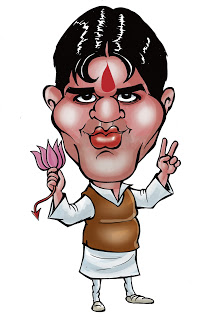
Spew venom and enjoy life: Who scripted Mr Varun Gandhi’s release?

Image

“This is not a hand (Congress symbol), it is the power of the lotus (BJP symbol). It will cut the head of… Jai Shri Ram,” a PTI report quoted Varun Gandhi (29) as telling an election meeting in Pilibhit, his attack directed at the Muslims. At another meeting, the PTI report said, he said: “If anyone raises a finger towards Hindus or if someone thinks that Hindus are weak and leaderless, if someone thinks that these leaders lick our boots for votes, if anyone raises a finger towards Hindus, then I swear on Gita that I will cut that hand.”

(Varun Gandhi’s hate-Muslim speech makes his BJP squirm; Express News Service: Lucknow, Tue Mar 17 2009)

 Mr Varun Gandhi, BJP M.P. was all smiles when he emerged from the courts which had acquitted him in the second hate speech case. Expressing confidence in the Indian Constitution and India’s Legal System he said ‘truth has prevailed’. Only a few days ago another court in UP had acquitted him of the first hate speech case. It may be added that when extracts of the speeches he had allegedly delivered during election campaign in 2009 had appeared in a section of the press, the then Mayawati government had promptly filed cases against him and ordered his arrest and had to spend some time behind bars before bail was ultimately granted to him then. Continue reading Spew venom and enjoy life: Who scripted Mr Varun Gandhi’s release?

Gender Safety Audit of Delhi University: Parivartan

Guest post by PARIVARTAN – The Gender Forum of Kirori Mal College, Delhi University

In the lead up to March 8th, International Womens’ Day, I would like to share with Kafila readers, especially those in Delhi University, research done by students of Kirori Mal College on how women students perceive questions of safety and security on campus. The research is richly illustrated with graphs and figures and is especially illuminating for the way in which it reveals attitudes amongst women students about why they they do not trust an increased police presence on campus as a guarantee of their safety and security.

Mayhem in March: Sameer Bhat

Guest post by SAMEER BHAT: The completeness of night’s silence is absolute in Kashmir. Earlier today another boy was put six feet under. Killed in cold blood in Baramulla by the Indian army. Apparently a small crowd was protesting against the hanging of Afzal Guru and driven by pure emotion, pelted a passing army truck with stones. Since Kashmiri blood costs next to nothing, the armymen quickly got down, cocked their machine guns and sprayed the protesting kids with bullets, instantly killing a kid – Tahir — in his 20s. Nothing much. His friends, too shocked to react, smeared his blood on their faces. Grown-ups wept. The army later issued a statement that they didn’t shoot the boy. Period. Continue reading Mayhem in March: Sameer Bhat

What does Afzal’s death mean? : Inshah Malik

Guest post by INSHAH MALIK:

Image

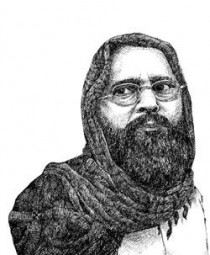
Perhaps, beyond angry outbursts and slogans nothing was left of Kashmiri intellectuals engaged in understanding problems of home land. Afzal Guru was hanged and pens were strangulated. I was one of the people who protested at Jantar Mantar, with no strategy, no political statement, I bundled myself with others to the station, to enter a site of ‘mourning’. Kashmir has a rich culture and cultured production of ‘grieving’, when someone dies, everyone assembles and expresses grief verbally and through wailing. That is what I found myself doing. Continue reading What does Afzal’s death mean? : Inshah Malik

On the Death of Mudasir Kamran: Achuth Ajit and Ria De

This is a guest post by RIA DE and ACHUTH AJIT: English, the language of a united collective; but also a language that found itself wanting today, as if unable to express the most basic of needs, the most just of demands. Of all days today English was at its banal best.  As if clichés had eaten into it, gnawed the life out of it, bent it into prosaicness. Like “We Want Justice.” As we gather here today, at the English and Foreign Languages University – an institution that is just 5 years old with already four student deaths to its tally – to protest the high-handed and insensitive treatment of Mudasir Kamran, to honor his memory, and most of all to claim on his behalf, and on the behalf of all of us, the students at this University demand and urge “We Want Justice”. The prosaic cliché of this oft-repeated slogan was unable to state on our behalf the bare life of it as well as the spontaneity and the enormity of it. Continue reading On the Death of Mudasir Kamran: Achuth Ajit and Ria De
Modi’s Social Engineering

The system of untouchability has been a goldmine for the Hindus. This system affords 60 millions of untouchables to do the dirty work of scavenging and sweeping to the 240 million Hindus who are debarred by their religion to do such dirty work. But the work must be done for the Hindus and who else than the untouchables?

– Dr. B. R. Ambedkar

 Whether Shit Collection or cleaning of gutters – which has condemned lakhs of people to a life of indignity since ages – could be considered a ‘Spiritual Experience.’ Definitely not. Everybody would yell. Well, Mr Narendra Modi, chief minister of Gujarat, has a different take on this, which he mentions in the book ‘Karmayog’ (Publication year 2007). Continue reading Modi’s Social Engineering

The love story of Quli Qutub and Bhagmati, and other tragic endings

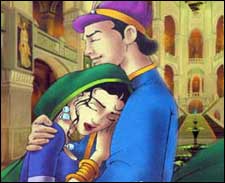
Still from an animation film, 'Bhaggmati'
Still from an animation film, ‘Bhaggmati’

For some strange reason, all, or almost all love legends have a tragic end. I cannot recall too many that end with “and they lived happily ever after”. In fact, Romeo-Juliet, Laila-Majnun, Heer-Ranjha, Sohini-Mahiwal, Sassi-Pannun, Dhola-Maru, Saif-ul-Malook-o-Badi-uj-Jamaal – the list of unhappy lovers separated by the cruel hands of society, scheming relatives, jealous rivals, misunderstandings and plain simple divine design is endless.

Amidst such tears and tragedies, poison-tipped swords and daggers, deceit and chicanery, there is a story of love that makes you believe that this world can’t be all bad. The most fascinating and enduring quality of this legend of love is that it is not a legend, it is fact, well mostly. And this is how it goes. Continue reading The love story of Quli Qutub and Bhagmati, and other tragic endings

Noida Police keeps a labour leader and 6 citizens under illegal custody: Bigul Mazdoor Dasta

Press release by BIGUL MAZDOOR DASTA:

At the behest of the factory owners, the reign of terror of police continues

Noida, March 1. Several mass organizations including Bigul Mazdoor Dasta have strongly condemned the Noida police’s act of illegal detention of the labour leader Tapish Maindola and 6 common citizens. A petition is also being filed today at the Allahabad High Court against the illegal custody.

Ajay swamy of Delhi Metro Kamgar Union told that on the evening of February 27th, 10-12 persons came in 2 Bolero vehicles to the DTP Centre of Navin Prakash in Ghaziabad and forcibly took him and his employee Raju along with them. They forced Navin to call the activist of Bigul Mazdoor Dasta and his friend Tapish by phone and as soon as Tapish reached there, police captured him. Without informing the people present there as to where they were taking them, the policemen took all three along with them. None of the three were allowed to make a call and their phones were taken away and switched off.

Continue reading Noida Police keeps a labour leader and 6 citizens under illegal custody: Bigul Mazdoor Dasta

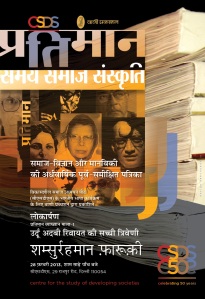
Leaping Across a Troubled History – Launch of Pratiman

Poster of the launch event  for Pratiman
Poster of the launch event for Pratiman

A new research journal in Hindi, Pratiman – Samay, Samaj, Sanskriti, was launched on 28 February 2013, at the Centre for the Study of Developing Societies, Delhi. The occasion was historic in many ways. Given the long and troubled history of the great language divide between Hindi and Urdu and the lost traditions of Hindustani, the fact that the launch was marked by a public lecture by noted Urdu scholar-poet Shamsur Rahman Faruqi cannot but be anything but historic. There is a certain impertinence and perhaps even insolence, in the move to leap across that history of over a century and a quarter, in complete disregard of the custodians of purity on both sides, in the insistence that language is not what the custodians make of it but what lives in the world of creativity and exchange.

It was only befitting of this occasion that Faruqi chose to speak on “Urdu Adabi Ravayat ki Sachchi Triveni.” In what turned out to be a remarkable and breathtaking tour de force, Faruqi turned his scholarly apparatus to the task of dissecting the Urdu poetic and aesthetic tradition in a manner that revealed its three currents (the ‘triveni’) – namely, Arabi, Persian and Sanskrit.Through the metaphor of the Triveni at Allahabad, where the Ganga and Yamuna meet the third river Saraswati, which is invisible but nonetheless ‘present’, Faruqi too perhaps wanted to stress the significance of the third but invisible current of Sanskrit poetics.

Continue reading Leaping Across a Troubled History – Launch of Pratiman

Kai Po Che and the reduction of 2002: Zahir Janmohamed

Guest post by ZAHIR JANMOHAMED

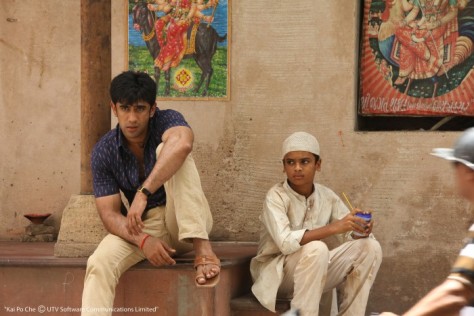
A still from Kai Po Che

When I started conducting research in Gujarat two years ago, I kept being asked the same question among middle class youth in Ahmedabad: “Have you read Chetan Bhagat?” When I asked what other books they have read, I often heard, “Actually I only read Chetan Bhagat.”

So I started to read Bhagat because I wanted to relate to many of the young people I was interviewing. But it was not an easy task.

I understand the frustration with Bhagat’s writing. Unlike other young adult authors like JK Rowling or Suzanne Collins, Bhagat’s books rarely reward a second reading (and yes I have tried). Continue reading Kai Po Che and the reduction of 2002: Zahir Janmohamed

A Future for the Left: Ravi Sinha

Guest post by RAVI SINHA

It is with considerable satisfaction and with a mild sense of accomplishment that we arrive at this moment. For those of us who have been a part of this process, it has been an exciting but difficult journey. One little climb is over. After every climb, howsoever small, one gains a view. And a view we have gained.

I speak of satisfaction, and of a sense of accomplishment. But, I also speak of trepidation. I do so because a climb much steeper and far more challenging begins from here.

We have gained a view, admittedly still hazy, but much clearer than the one we had in the valley we come from. Most of the climb, however, lies ahead of us.

Fortunately, it is not like climbing in the mountains. Fortunately, metaphors have their limitations. There, in the mountains, as you gain height, the air gets thinner and climbers begin to drop out. There, it gets lonely at the top.

The terrain of history is different. Climbing has a different meaning in the movement. Here, the air gets thicker as you climb higher. Here, you join others as you gain a clearer view. With clarity comes a higher but broader platform for unity.

Here, a summit is reached when an entire revolutionary class stands united in its resolve to overturn the status quo. Here, a summit is gained when an invincible mass of humanity comes together to bend the course of history. Continue reading A Future for the Left: Ravi Sinha

The sickening political opportunism of Chetan Bhagat

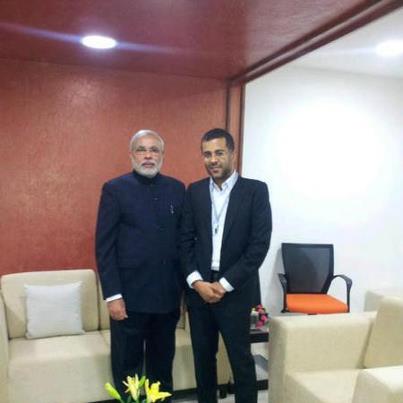
modi-chetan-bhagat

Snigdha Poonam watches Kai Po Che, whose script was written by Chetan Bhagat, based on his book The Three Mistakes of My Life:

In the film adaptation, Mr. Bhagat has also added what seems like justification for some Hindus to turn violent, like the death by burning of both of the parents of one of the three protagonists in the Sabarmati Express; in the novel, it was his nephew. We all know the level of vengeance with which Bollywood heroes respond to the targeting of their mothers: “Teri maa mari hai kya (Is it your mother who has died?),” the bereaved son explodes at a sensible friend trying to stop him from losing control of himself.

In his book, Mr. Bhagat clearly showed the 2002 riots as a state-sanctioned exercise (“Whatever it takes to quench the hurt feelings,” says a “senior Hindu Party leader”). But he excised that from the film completely. [Read]

That image above is via DeshGujarat.com, where an article quotes Bhagat as saying in a TV debate:

“It has been discussed much that Modi ji has done well in Gujarat, but what I believe is that he is a very good politician. A politician has to change with public mood. When communal issue mood was there in the country, that was Modi version 1, when he elected for the first time. And when he won the election for second time, he won it on development agenda.”

Clearly, Mr Chetan Bhagat is also a good politician.

तार्किकता, भावुकता और फासिज्म

 28 फरवरी को याद करने पर अब कहा जाने लगा है कि यह नकारात्मक स्मृति है और इंसानी फितरत के मुताबिक़ हमें आगे बढ़ना  चाहिए. हिन्दुओं को, खासकर गुजराती हिन्दुओं, यह नागवार गुजरता है कि उन्हें  बार-बार 28 फरवरी , 2002 की याद दिलाई जाए. आखिर गुजरात में 2002 के बाद पूरा अमन है और वह विकास के मार्ग पर एक दृढसंकल्प मुख्यमंत्री के नेतृत्व में संकल्पपूर्वक बढ़ा जा रहा है और वहां के मुसलमान भी अब कुछ और बात करना चाहते हैं.

दरअसल भुलाने और आगे बढ़ जाने की शुरुआत 2002 में ही हो गई थी. 28 फ़रवरी से राज्य-संरक्षण में शुरू हुए मुसलमानों के कत्लेआम ने भारत के उद्योगपतियों के एक हिस्से को भी झकझोर दिया था. लेकिन कुछ समय बाद ही पूंजीवाद के तर्क ने मानवीयता की कमजोरी पर विजय पा ली और उन्होने नाराज़ मुख्यमंत्री से क्षमायाचना करके गुजरात की प्रगति में उन्हें हिस्सा लेने की इजाजत माँग ली  थी. सार्वजनिक रूप से उन्हें गांधी और पटेल से तुलनीय बताया जाना अब अटपटा भी नहीं लगता, बल्कि उलट कर कहा जा सकता है कि गांधी और पटेल में  ऐसे कई गुण नहीं थे जो गुजरात के ह्रदय-सम्राट में पाए जाते हैं , इसलिए यह तुलना वस्तुतः इन दोनों के प्रति पक्षपात है. पूंजीवाद के मूल अंतर्राष्ट्रीय चरित्र ने अंततः युरोपियन यूनियन को अपनी मानवीय हिचक को किनारे करके गुजराती यथार्थ को कबूल करते हुए कारोबारी नज़रिया अपनाने को प्रेरित किया. यह संभव नहीं था कि आर्थिक निवेश के ठोस आकर्षक आमंत्रण को   न्याय के अमूर्त आग्रह  के चलते ठुकरा दिया जाए. Continue reading तार्किकता, भावुकता और फासिज्म

Nine prisoners at risk of execution in India: Amnesty International

Statement put out on 21 February by AMNESTY INTERNATIONAL

Following two recent secret executions in India, there is fear that the Indian authorities may execute nine other prisoners whose petitions for mercy have not yet been ruled on.

The mercy petitions of eight men and one woman are pending with either the Union Home Ministry or the President: Gurmeet Singh, Dharampal, Suresh, Ramji, Praveen Kumar, Jafar Ali, Sonia (f), Sanjeev, and Sundar Singh. Ministers have publicly stated that decisions on some of these petitions will be made soon, putting the nine in imminent danger of execution. Continue reading Nine prisoners at risk of execution in India: Amnesty International

Kashmir: Civil society objections to proposed Police Bill

List of signatories at the end; statement put out on 25 February
Following a preliminary reading of the Draft Jammu and Kashmir Police Bill, 2013, made public on 15 February 2013, the undersigned condemn the attempt of the Government to formally put in place powers and structures that the Jammu and Kashmir Police have for long enjoyed and employed to carry out systematic human rights violations in Jammu and Kashmir. Further, specific sections of the Draft Bill that are seriously objectionable are listed. As an immediate step, the Government must extend the time allotted for feedback from people.  Continue reading Kashmir: Civil society objections to proposed Police Bill

The Hyderabad blast investigations are doomed to fail: JTSA

This release was put out today by the JAMIA TEACHERS’ SOLIDARITY ASSOCIATION

hyderabad-blasts-probe-feb2

In a grotesque replay of every investigation that follows a bomb blast, prejudice, misinformation and media blitz rules the direction of Dilsukh Nagar bombings investigation too.  The same suspects and shadowy organizations are being paraded as executors of the Hyderabad bombings.

But should we be surprised? A day after the Home Minister’s humiliating capitulation to the RSS-BJP, virtually giving them and their affiliates a clean chit, the message to the investigating agencies must have been crystal clear.  When the Home Minister himself discards the bulk of allegations and material pointing to the existence of Hindutva groups in planning and executing terror attacks, should we really expect the investigating agencies, whose past record inspires hardly any confidence, to sincerely pursue all possible angles and leads? This, when Messrs Aseemanand and company are being tried for the 2007 bombing of the Mecca Masjid.  By asserting that Hyderabad bombing may have been a reaction to the execution of Kasab and Afzal Guru, the Home Minister himself foreclosed any possibility of unbiased investigation. Continue reading The Hyderabad blast investigations are doomed to fail: JTSA