
Category Archives: Bad ideas

Why This Kavala-Worry Kavala-Worry Di?

As somebody recently said about the Mumbai flash mob video, if you haven’t seen it, you probably don’t have internet. I’m speaking of the recent ‘Tamil’ hit song of course, ‘starring’ Dhanush.

The one with the catchy tune and simple ‘lyrics’? See, this is what worries me, the fact that I have already used so many quotation marks – for ‘Tamil’, ‘starring’ and ‘lyrics’. Which is why I titled this piece “why this kavala-worry kavala-worry di”. “Kavala” means worry in Tamil (without quotes). So kavala-worry really means worry-worry, which should be nonsense, but it isn’t, given the massive ‘success’ (can’t keep away from the quote marks sorry) of the original ‘Kolaveri’ song, full of double-double words, because this is how we speak in soudh indiya. “Kolaveri”, for those suddenly-uncool nordh indiyans who don’t understand ‘Tamil’ or even plain old Tamil, means ‘murderous rage’ – kolla (murder) + verri (rage).

Continue reading Why This Kavala-Worry Kavala-Worry Di?

Hindi and Urdu: Sa’adat Hasan Manto

This is MUHAMMAD UMAR MEMON‘s translation of an article by SA’ADAT HASAN MANTO. The translation first appeared in The Annual of Urdu Studies.
The Hindi-Urdu dispute has been raging for some time now. Maulvi Abdul Haq Sahib, Dr Tara Singh and Mahatma Gandhi know what there is to know about this dispute. For me, though, it has so far remained incomprehensible. Try as hard as I might, I just haven’t been able to understand. Why are Hindus wasting their time supporting Hindi, and why are Muslims so beside themselves over their preservation of Urdu? A language is not made, it makes itself. And no amount of human effort can ever kill a language. When I tried to write something about this current hot issue, I ended up with the following long conversation:

Munshi Narain Parshad:  Iqbal Sahib, are you going to drink this soda water?

Mirza Muhammad Iqbal: Yes, I am.

Munshi: Why dont you drink lemon?

Iqbal: No particular reason. I just like soda water. At our house, everyone likes to drink it.

Munshi: In other words, you hate lemon. Continue reading Hindi and Urdu: Sa’adat Hasan Manto

Oxford University Members Demand that OUP-India Stand by Ramanujan Essay

Shahid Amin has earlier written about the role of the Oxford University Press (India) in the censorship of AK Ramanjuan’s essay on the Ramayana. This press release, signed by a group of Indian scholars at Oxford University, comes to us via Agrima Bhasin.

Press Statement
Oxford, England
Date: 30 November 2011

A petition by members of Oxford University has condemned Oxford University Press (OUP) India’s unflattering role and its deafening silence on the controversy surrounding Delhi University’s recent decision to drop A.K. Ramanujan’s essay (Three Hundred Ramayanas: Five Examples and Three Thoughts on Translation). This petition has gained the abounding support of Oxford intelligentsia across 15 departments and 20 constituent colleges. Signatories include distinguished faculty members, senior academics and students.

In 2008 OUP India unceremoniously decided to stop publication of the only two books (Paula Richman’s Many Ramayanas and Vinay Dharwadker’s The Collected Essays of A.K. Ramanujan) containing Ramanujan’s essay. This happened to coincide with legal proceedings instituted inter alia against OUP India by fringe religious and cultural groups. OUP India’s prolonged subsequent silence on this matter lent widespread credence to the contention that OUP India caved in to external pressure thereby compromising its stated goals of “…[furthering] excellence in research, scholarship… by publishing worldwide.”

Continue reading Oxford University Members Demand that OUP-India Stand by Ramanujan Essay

When Openness is Unfreedom (alternatively, when data is unfreedom) – Part II

This is the second post in the series that I began in October. I want to thank Rasagy Sharma for prompting me to put down the second post in this series.

This evening, Rasagy raised a question on twitter about whether the effort of a developer to make the database of the Indian railways downloadable is ‘official’ or not? As Rasagy later explained, the downloadable database is a list of trains, stations and the railway timetable. This list has has been made available in various downloadable formats (such as .csv, .pdf, etc) to encourage developers/interested persons to make web/mobile based applications. Rasagy’s question was more in the nature of checking the legality of  the act of putting this information/database on another website when it is explicitly copyright of the Indian Railways (as declared on their website). He argued that cities such as New York and some countries across the world have made this information ‘open’, meaning available to the ‘public’. Hence, it is unreasonable for this government entity i.e., the Indian railways, to be ‘closed’ about reuse of this information by private entities and individuals.

Continue reading When Openness is Unfreedom (alternatively, when data is unfreedom) – Part II

An appeal to seven distinguished individuals to decline the Maulana Mohd Ali Jauhar Award

You can add your name to this appeal in the comments section.

Delhi, 3 December 2011

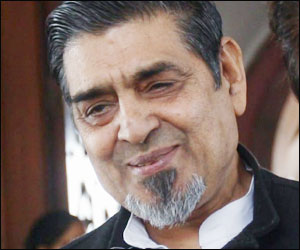
According to a news report in the Milli Gazette of 1 December 2011, Jagdish Tytler, an accused in the anti-Sikh pogrom of 1984, will be awarded the Maulana Mohd Ali Jauhar Award on 10 December 2011 at the India Islamic Cultural Centre, New Delhi. Seven others will share this award. The undersigned appeal to the other seven awardees to not accept the award as a mark of protest against honouring Mr Tytler, whose contribution in the 1984 anti-Sikh pogrom has been recorded by several fact-finding reports, including those by PUCL and PUDR.

The seven names are:

Continue reading An appeal to seven distinguished individuals to decline the Maulana Mohd Ali Jauhar Award

Why are Americans so mean to Walmart? Never mind, come to India

They don’t want you in California…


They don’t want you in Chicago… Continue reading Why are Americans so mean to Walmart? Never mind, come to India

Andre Schiffrin in conversation with S Anand

‘Most publishing conglomerates are owned by people very far to the right’ said André Schiffrin to S Anand of Navayana, his Indian publisher, during this conversation, of which a short version appeared in The Hindu Sunday Magazine on 20 November 2011.

Legendary publisher André Schiffrin warns us that we are witnessing ‘a rebirth of the old colonialist methods of export and import’.  Schiffrin founded the The New Press in 1991 after being forced to quit Pantheon (a division of Random House), where he could no longer work with the new CEO, Alberto Vitale, who would ask Schiffrin who Carlos Ginzburg was and why books could not have a sell-by date like cheese and milk do. Schiffrin, who has published Jean-Paul Sartre, Michel Foucault, Noam Chomsky, Günter Grass, Art Spiegelman, Matt Groening, Margurite Duras and Gunnar Myrdal among others, was in India earlier in November for the launch of the Indian edition of his memoir The Business of Words, a combined edition of The Business of Books (2001) and Words & Money (2010). Continue reading Andre Schiffrin in conversation with S Anand

Some FAQs about Koodankulam and Nuclear Power: Nityanand Jayaraman and G. Sundar Rajan

Steel drums with nuclear waste. The inescapable byproduct generated from the fission of nuclear fuel in the form of uranium or plutonium creates what is called nuclear waste. This waste comes in a huge variety of extremely radioactive material with half-lives ranging from 8 days to hundreds of thousands of years. In other words their radioactivity takes a really, really long time to decay, thousands of times our human life-times. These fission products if released to the environment will last a long time, and it is almost impossible to decontaminate them.

NITYANAND JAYARAMAN and G. SUNDAR RAJAN of the Chennai Solidarity Group for Koodankulam Struggle developed  the  fact-sheet below in response to real questions that they encountered during the course of street and college campaigns. They say: “The questions were sincere, so we felt a sincere response was warranted.”

Continue reading Some FAQs about Koodankulam and Nuclear Power: Nityanand Jayaraman and G. Sundar Rajan

Arrested Development – a comparative study of Delhi’s schools and prisons: Sajan Venniyoor

Guest post by SAJAN VENNIYOOR

“Schools are prisons,” sang the Sex Pistols. “Another brick in the wall,” raged Pink Floyd, “Teacher, leave them kids alone!” Schools and prisons have been so frequently equated in the popular imagination that it has become a cliché almost never held up to scrutiny. But even a cursory study of Delhi’s schools and prisons belies the comparison.

Sure, Delhi’s schools and prisons are both dreadfully overcrowded. Delhi’s jails, built for 6250 prisoners, house 10500 on an average.  We cannot say with any statistical certainly just how overcrowded our schools are, as the Dept. of Education has no idea how many schools it runs or the actual number of teachers and students therein.

But in almost every major indicator of human development, the penal system far outperforms the public school system in Delhi. Continue reading Arrested Development – a comparative study of Delhi’s schools and prisons: Sajan Venniyoor

A few questions about a few thousand new auto-rickshaws in Delhi: Simon Harding

Guest post by SIMON HARDING

On Friday, Supreme Court judges KS Radhakrishnan and CK Prasad gave the go-ahead for 45,000 new auto rickshaw permits to be issued in Delhi. The move has the potential to drastically improve the city’s auto-rickshaw service for passengers and drivers alike, but many unanswered questions about distribution, implementation and numbers remain.
There are currently around 55,000 auto-rickshaws in the capital. The number of autos has not grown since the Supreme Court stopped the issuing of new auto permits in 1997 due to concern about the pollution emitted from the old dirty two-stroke petrol engines (now replaced with CNG).

The number has not remained frozen. Evidence suggests that it has actually fallen since 1997 because around 20,000 autos were lost during the CNG switchover as many drivers had their permits cancelled as they were too slow to convert their autos to the new fuel or simply could not afford the conversion. The fall in numbers contrasts with the growing demand for autos from Delhi’s population, which grew 21.6% in the period 2001-2011.

Continue reading A few questions about a few thousand new auto-rickshaws in Delhi: Simon Harding

Clean Chit to Law-Breaker Lavasa, a Blot on India’s Democracy and Environmentalism: NAPM

This press release was put out by the NATIONAL ALLIANCE FOR PEOPLE’S MOVEMENTS on 14 November 2011

Post-facto Green signal to Phase-I of Lavasa by the Union Ministry of Environment and Forests (MoEF) given on the November 9th is a blot on the democratic process and a shockingly dangerous precedent in the history of environmental action in India. MoEF’s improper action has infact sent shock-waves to eco-activists within the country and also across the world. Although it is not the first time in the long history of Indian Environmental clearance regime that political highhandedness has been used to subvert rule of law and the ends of justice, this case is unique since the clearance has disregarded well established evidence based on facts collected by no other than the MoEF itself. It is surprising that the Ministry’s decision has come in the wake of the case filed by the Maharashtra government against 15 persons including promoters of Lavasa Corporation for alleged violations of the Environment Protection Act (EPA), while the Maharashtra Chief Minister on the other hand has recommended that Lavasa be considered for environmental clearance, exposes the double standards of the state government.  Continue reading Clean Chit to Law-Breaker Lavasa, a Blot on India’s Democracy and Environmentalism: NAPM

‘A Call for Rejecting 2011 Land Acquisition Bill’

This joint statement, signed and endorsed by various organisations and individuals from across India, named at the end, was put out on 12 November 2011. 

The 2011 Land Acquisition, Resettlement and Rehabilitation Bill is a dangerous exercise in doublespeak that will worsen the injustice and devastation caused by the present law. Below is a joint statement on this legislation from a number of organisations and individuals, calling for the rejection of the new Bill and raising the basic issues that need to be addressed by any legal framework.

The statement points out that:

Continue reading ‘A Call for Rejecting 2011 Land Acquisition Bill’

A Curious Silence and an Un-Crossed Line: In the Wake of A Disbanded Exhibition

A news item from some weeks ago, which has gone curiously unremarked and un-commented upon has made me think about the limits that the freedom of expression debate and the discourse on secularism in India unwittingly or knowingly does not seem to be able to cross, despite repeated provocation.

We all know that when the Hindu right comes to town –  declaring that this or that text should not be taught in the university, or this or that painting should not be seen, or this or that film should not be shown – the secular left-liberal intelligentsia in India automatically gets outraged, signs petitions, holds press conferences and generally vents it righteous anger. I know this because I do all these things, along with all my friends. I sign the online petitions, attend the demonstrations, express my anger and do some (or all) of that which needs to be done, that should be done. We should never give an inch to the hoodlums of Hindutva.

However, when it comes to responding to the equally aggressive, reactionary and utterly arbitrary actions of sections of the Muslim clergy and other self appointed leaders on the ‘Muslim Right’ a strange inertia seems to take hold of the best and boldest foot-soldiers of secularism in India.

Continue reading A Curious Silence and an Un-Crossed Line: In the Wake of A Disbanded Exhibition

Hooligans of Bhagat Singh Kranti Sena strike again

Maraa, a media and arts collective in Bangalore, has been organizing a monthly event called Pause: Creative Practice in Conflict.  This is a public event, inviting one speaker to present examples of creative practice in a conflict afflicted area. Previous events have showcased examples from Palestine and Afghanistan. In November, Maraa had planned a similar event on Kashmir, scheduled to be held on November 5th 2011.  

Bhagat Singh Kranti Sena (the same people who physically assaulted Prashant Bhushan recently for his statement on Kashmir), and its president, Mr. Tejinder Pal Singh Bagga, wrote a letter to the police alleging that the event which was to be held in the premises of a theatre organization, rafiki, was being organized by the Hurriyat Conference, at which Syed Shah Geelani or Mirwaiz Umar Farukh from the Hurriyat Conferece would speak. They warned the police that if they would not come to stop the event, their organization would make it a situation with unpleasant consequences.

Further, the Bhagat Singh Kranti Sena and Mr. Tejinder Pal Singh Bagga, posted online invitations on social networking site, Facebook, inviting people to come with stones, paint, eggs and tomatoes, to merge in with the audience, and then create chaos. There have been various comments responding to it, by promising violence to those who attend and organize such events.

The following statement has been issued by Maraa in this context:

Continue reading Hooligans of Bhagat Singh Kranti Sena strike again

Naming the Seven Billionth Child: Mitu Sengupta

Photo via The Hindu / Subir Roy

Guest post by MITU SENGUPTA

Last Monday, Nargis Yadav was declared the world’s symbolic seven billionth resident by Plan International, a child rights group. She was born to a family of farmers in a sleepy little village in Uttar Pradesh.

Nargis is surely an unwelcome child, given the grim projections that surrounded the UN Population Fund’s declaration last month, that the world’s population was about to breach seven billion.  Experts have issued sombre warnings of the devastating impact of the growing number of humans on earth. We face a bleak future of environmental distress and scarcity, they say, in which even the basics of food and water will be in short supply.

One wonders why, on October 31st – Halloween, to be precise – the UN did not name a blue-eyed baby boy from Washington, Bonn, Sydney or Toronto as our uncertain world’s symbolic seven billionth? To be sure, this would be politically incorrect, for we live in times when the well-meaning, in their bid to be representative and inclusive, scramble to push women and minorities to the forefront.  But here is an instance where keeping to pedantic liberal pieties has suppressed an honest portrayal of things as they are.

Continue reading Naming the Seven Billionth Child: Mitu Sengupta

‘Who isn’t a Shabaab these days?’: Alia Allana reports from the Tunisia-Libya border

This guest post by ALIA ALLANA is part of a Kafila series of despatches from the Arab Spring

When does a boy become a shabaab?

Literally, in Arabic, shabaab means young men. Before the fever of the Arab Spring raged in the minds of the youth, back when boys used to gather in squares aimlessly, girls eyeing them would call them shabaab.

But that was then; before the political architecture of the Arab world was reconstructed.

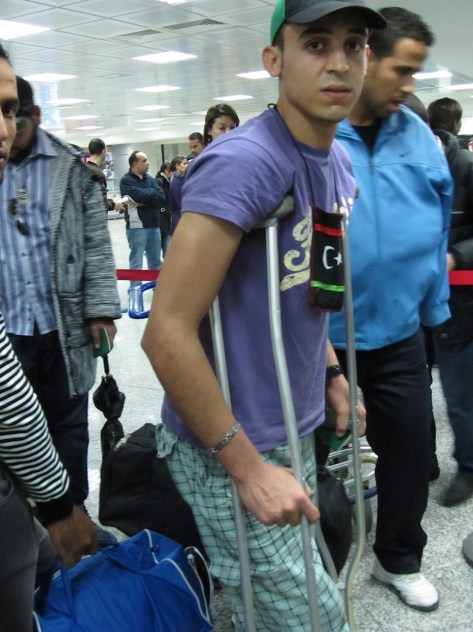
Today the shabaab are the disenchanted youth, the angry boys of Benghazi with deathly toys devoid of opportunity, angry at their condition, aware of the world through the Internet and their mobiles, acting out their rebellion. Today the shabaab, the rebels of Libya, want what they think is theirs: the right to self-determination, a say in politics and freedom.

Continue reading ‘Who isn’t a Shabaab these days?’: Alia Allana reports from the Tunisia-Libya border

What ails Pakistan?

Op-eds. Yes.

Bad things only happen so that columnists may write Op-eds about them. Before the advent of newspapers there were no terrorists, no sectarian divide, nothing was on the brink, nobody was at a crossroads; the insidious Op-ed writers have invented all these things to scare us under our beds, like parents who tell their children ghost stories because they don’t want them wandering around in the dark lest they flip the light switch at an inappropriate time. [Read the full post by Haseeb Asif]

From Kafila archives:

Kashmir’s Horcrux: Sameer Bhat

Guest post by SAMEER BHAT

Hectic parleys are on at the moment to jettison the dreaded AFSPA in the valley. By conservative estimates the army must have beaten about one in every five Kashmiris at one point or the other since this piece of horrible legislation was slapped on us. An unjust law, is no law at all, Martin Luther, the symbol of protestant reformation, verbalized the sentiment of St Augustine in the 15th century. Rings true to this day.

For more than twenty years people have been punched, thrown in the back of military trucks, knocked down by gun-butts, given kicks, pushed around as they got off a bus or simply slapped around for no apparent reason. Just for being themselves, perhaps. No you could not question the moral turpitude of a military-walla from Madras if he clubbed your aging father.  Continue reading Kashmir’s Horcrux: Sameer Bhat

Invitation to a Debate: Queer Politics and Aid Conditionalities

Breaking from usual practice, I am cross-posting a piece from Akshay Khanna writing as part of the Participation, Power and Social Change blog over at the Institute of Development Studies at the University of Sussex. Akshay is writing in response to this statement by UK Prime Minister David Cameron where, in a nutshell, he threatens cutting off aid to countries that still ban or make homosexuality illegal. Continue reading Invitation to a Debate: Queer Politics and Aid Conditionalities

‘The Quality of Mercy’: Kindness and Compassion in Higher Education: Prasanta Chakravarty

Guest post by PRASANTA CHAKRAVARTY

There is a moral compass that every freshman must inculcate, says Harvard College Dean Thomas Dingman. To that end, Dean Dingman has asked incoming Harvard students to sign the ‘Class of 2015 Pledge,’ a solemn testament that reflects a set of distinctive values: “That message serves as a kind of moral compass for the education Harvard College imparts. In the classroom, in extracurricular endeavors, and in the Yard and Houses, students are expected to act with integrity, respect, and industry, and to sustain a community characterized by inclusiveness and civility.” The document goes on to hope that entryways and yards will be places where everyone can thrive and where the “exercise of kindness holds a place on a par with intellectual attainment…we want to have an environment in which people can flourish academically.”

Continue reading ‘The Quality of Mercy’: Kindness and Compassion in Higher Education: Prasanta Chakravarty

Guardian Angelic Moral Police

[co-authored with Bobby Kunhu]


Of all the different kinds of moral police that inhabit the land of Kerala, the species that should be feared most must probably be the ‘Guardian Angelic Moral Police'(GAMP). The GAMP is just as potent as the Goonda-Activist Moral Police (G-AMP) but in striking contrast to the latter, the former thrives on the surface precisely on values dear to the Malayalee middle-class – the sanction of law, paternal concern, state protectionism of women as the ‘weaker sex’. This makes it much harder for victims of moral policing to fight off their intrusions all of which are couched in the language of benevolent concern. We just got a taste of that from the Hon. Justice V R Krishna Iyer with his controversial Women’s Code Bill, but since so much of his language is such antiquated hyperbole, it was impossible to take any of it seriously. However, it appears that the judiciary in Kerala has more sophisticated GAMP, and  recent orders passed by the bench consisting of Justices R Basant and M C Hari Rani of the Kerala High Court seem to leave no reason for scepticism. Continue reading Guardian Angelic Moral Police