Guest post by RAJSHREE CHANDRA: In the backdrop of the on going battle in the Delhi High Court, between publishers (OUP, CUP and Taylor and Francis) and Rameshwari photocopiers-Delhi University (next hearing 8th May, 2013), there are two perspectives to which attention needs to be drawn. The first, of course, is a legal one which allows for course pack to be compiled for dissemination of course and research material, provided they adhere to stipulated norms. What are these stipulated norms? Have DU, and its network of photocopying, infringed these legal guidelines or even transgressed internationally evolved, legally acceptable norms of “fair use”. Continue reading Is there anything like ‘copying’ fairly?: Rajshree Chandra→
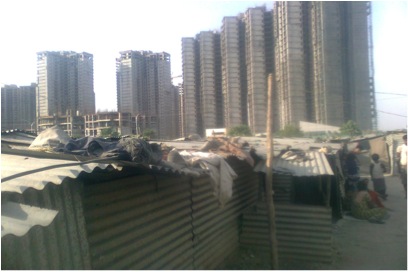
This is a guest post by Bigul Mazdoor Dasta Noida is one among those places which are highlighted as the hub of the ’emerging’ and ‘shining’ India. The glittery shopping malls, world class expressway, flyovers, F1 International circuit, luxury apartments, villas etc. are cited as the symbols of India’s ‘growth story’ and Noida has all of these. For the last couple of decades, the mainstream corporate media has been busy selling this growth story to the emerging urban upper middle class; in the process making them a customer of artificially inflated dreams such as having one’s own luxurious house. But, curiously, the harrowing stories of those whose labour power is responsible for this so called development are conspicuous by their absence in the mainstream media’s narrative. The labourers come into the news only when some untoward incident happens and they are immediately held responsible for any such incidents without carrying out any investigation. One such horrendous incident took place on April, 28 at one of the hundreds of construction sites in Noida in which the security guards of the site opened fire on the labourers and in the process injuring some of them. On the morning of the April 28, the workers of the 3C Lotus Panache company’s constructions site at Noida’s Sector 110 witnessed the naked reign of terror by the company’s management. At the beginning of the morning shift at around 8 a.m., the workers had reached the construction site to join the construction work of the multi-story apartment complex, but they had to stand in a big queue because the security guards at the gate were taking a long time to intensively check each worker and make an entry. When some workers protested against this lax attitude of the guards, saying that they had to listen to the supervisor’s abuses if they were late even by one minute, a heated exchange took place between the security guards and workers and suddenly the guards started firing indiscriminately over the workers. As per the media reports, two workers were injured, but when a team of Bigul Mazdoor Dasta visited the workers settlement adjacent to the construction site, some workers said that the number of the injured workers could be four which includes a child as well and one of the workers is seriously injured and his life is in danger. As per the records of the district hospital in Noida, only one worker was admitted on April 28. Other workers were admitted to some private hospital.
The workers settlement adjacent to the construction site where the incident took place
President Mahinda Rajapakse in Sri Lanka and Gujarat’s Chief Minister Narendra Modi in India have positioned themselves as champions of development and good governance. Hardly a day passes without a media comment in the two countries on their respective development achievements. By and large, claims and counter-claims regarding development in Gujarat and Sri Lanka have tended to focus on mobilising data and ‘facts’ pertaining to a range of vital indicators—economic growth, levels of foreign investment, per capita income, employment, industrial or agricultural output, housing, rural infrastructure, roads, electrification, social welfare allocations, etc.
While working with development data is useful and necessary, an approach that relies too heavily on them tells us little about why development matters to the two regimes and how and to what ends it is actually deployed and leveraged by them at this point in time—the focus of this commentary. The question is not just what Modi and Rajapakse are doing for development but also what development is doing for them. Notwithstanding the significant differences between Gujarat and Sri Lanka, as argued herein, there are many striking similarities with respect to how and why Modi and Rajapakse are constructing, invoking and championing the cause of development. Continue reading Same Difference? The Politics of Development in Rajapakse’s Sri Lanka and Modi’s Gujarat: Anonymous→
With the Sarandha chit fun scam in West Bengal, a side-effect has been the going bust of its media investments. Seema Guha, Delhi bureau chief of the recently shut down Bengal Post writes in The Hoot:
The executive editor Ranabir Roychowdhury and several of the core journalist team were known to us, but none of us had ever heard the name of Sudipta Sen, the owner. We in Delhi were far away, but our colleagues in Kolkata too did not know anything about him, except that he was a real estate tycoon with a land bank of 100 acres or more. He was also into chit funds. It was much later that we came to know that this was his main business, our money was basically derived from the collections Saradha made from the poorest people in Bengal and other eastern states. He had business in the north east as well as in Odisha. [Read the full article]
This intervew withSUDHA BHARADWAJof Chhattisgarh Mukti Morcha was conducted byJUSTIN PODURin Raipur on 5 March 2013
JP: As a lawyer and an activist, how do you see the relationship between legal work and activism?
SB: I see myself primarily as a trade unionist. I joined the union movement over twenty years ago, and it was the union that made me a lawyer. They felt that workers needed a good lawyer in their fight with the corporations. Our union is one of contract workers and has been striving to overcome divisions in the working class. Here, workers have a close connection with the peasants. So, we believe that working with the peasants is part of unionism.
When I got to the High Court, I found that all the people’s organizations were in a similar situation. The laws that give you rights are poorly implemented. When you fight, the status quo has many legal weapons, launches malicious litigation, etc. So we have a group of lawyers now (Janhit), and we work on group legal aid, not individual legal aid. The idea is that if you help a group, that can bring about some kind of change, create some space. I’ve also gotten involved with the People’s Union for Civil Liberties (PUCL), for which I am the General Secretary in Chhattisgarh. Continue reading The Bastar Land Grab: An Interview with Sudha Bharadwaj→
Christophe Jaffrelot gives us perspective on why Gujarat’s development numbers don’t look as impressive as Gujarat’s economic growth – it’s about Modi’s neglect of the rural:
Modi’s policy, over the last 10 years, has benefited the urban middle class more than anybody else. If Gujarat ranks only 11th out of 23 states in terms of the human development index, it’s because groups in rural Gujarat continue to lag behind. Indeed, Gujarat is a case of social polarisation with the new rich in the cities and most of the groups that are at the receiving end concentrated in the villages. There, the number of families below the poverty line has jumped from 23.39 lakh in 2000 to 30.49 lakh in July 2012, according to the rural development commissioner. Unsurprisingly, 9 lakh of the 11 lakh houses without electricity, according to the Gujarat 2011 census, are in rural areas. In terms of education, the excellent report of the NGO, Pratham, shows that rural Gujarat was lagging behind states like Haryana.
Dalits and Adivasis (11.3 and 16.5 per cent of the state population, respectively) are particularly affected. For instance, the percentage of tribal underweight children (0-5 years old) is much higher in Gujarat than the tribal average at the national level (64.5 per cent compared to 54.5 per cent). The under-five mortality rate of tribal children is also much higher. Similarly, the percentage of Dalit participation in the NREGA programme is three times less in Gujarat (7.83 per cent) than in India at large (22.67 per cent). In fact, development has meant socio-economic polarisation, because Gujarat is a typical case of growth without development for all. The Gujarat chapter of the India Human Development Report of 2011 concluded that “the high growth rate achieved by the state over the years has not percolated to the marginalised sections of society, particularly STs and SCs, to help improve their human development outcomes”. [Full article here]
Guest post by HARTMAN DE SOUZA. The article was written a few days before April 12, the CPI’s day of solidarity with Odisha mine workers.
When the Goa State Committee of the erstwhile Communist Party of India (CPI) and its national secretary, our very own Comrade Christopher Fonseca, tells you that April 12th will be observed all over India as a day of solidarity with the Adivasi people of Odisha struggling for seven years to save more than 4000 acres of their ancestral lands from falling to mining conglomerates as rapacious as their Goan counterparts, ageing leftists in the village bar are not too sure whether they should laugh or just weep.
Perhaps one needs to paint the larger picture to highlight the irony that lurks in the shadows.
There was a time it needs to be said, when the CPI ran a long, hard and lonely battle in Goa, led by Comrade George Vaz who it is hard to believe was once Comrade Fonseca’s mentor. He was a short, somewhat portly, soft-spoken, widely-travelled man fluent in at least four languages. Not many Goans would know that Comrade Vaz ran a free kitchen in his home at Assenora open to anyone in need of a simple, nourishing meal, or that some of us who now want to weep in our glasses have eaten there several times…
On 23 March 2013, NDTV featured one of its Walk the Talk features with Shekhar Gupta interviewing Yukiya Amano, the Director General of the International Atomic Energy Agency (IAEA). This was reproduced a few days later in the Indian Express. Coming shortly after the second anniversary of the multiple accidents at Fukushima, the purpose of the interview is made clear by Gupta late in the interview when he says:
…some of us who support the idea of [expanding] nuclear power [in India] need more reassurance from people like you.
And Amano does oblige by asserting,
with more caution, with further measures, I am very confident that nuclear power is much safer than before.
To those already supportive of more nuclear reactors, the interview is likely to have been successful in offering them the assurance that they need, not so much for themselves, but to silence those skeptical of the expansion. But if one reads the interview more carefully, it is clear that the assurance is not really a guarantee that no catastrophic accidents will happen. Continue reading Nuclear Energy – Reassurances Don’t Guarantee Safety: M V Ramana→
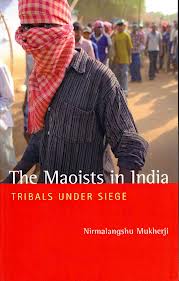
This is a review by JUSTIN PODUR of Nirmalangshu Mukherji’s book Maoists in India: Tribals Under Siege (Pluto Press 2012)
The Maoists in India, Nirmalangshu Mukherji
Central India is a place where all the fault lines of “development” in today’s world converge. Indigenous people, vast stretches of natural forest, mineral-hungry corporations; media, government institutions, and political parties heavily compromised by private interests; people’s struggles, armed insurgency, counterinsurgency, military occupation, paramilitarism – all are present, and until recently, it has all been a well-kept secret.
The struggles play out differently in different parts of Central India. In Orissa, indigenous people’s movements have battled mining companies and stalled projects for years, in Kashipur and Lanjigarh. In Chhattisgarh, in the northern Bastar region, one of India’s billionaires, Naveen Jindal of the Jindal Group (also a polo player and a Congress Party Member of Parliament for a different district), wields tremendous economic and political power. The mines use captive power plants, coal or hydro, so each mine causes massive ecological and agricultural damage. In a profile by Mehboob Jeelani in Caravan Magazine on March 1, 2013, Jindal explained his philosophy: “We don’t control all the raw materials, but we have captive mines for 60 or 70 percent. This is something my father really believed in—that we must control our raw materials. If we don’t, then other people control us. So we made a conscious effort to acquire coal and iron ore mines.” In southern Bastar in Chhattisgarh, a Maoist insurgency is fighting against government forces, police, paramilitaries, and vigilante groups, from bases deep in the forest, in a war that was largely unknown for decades.
In India, the secret of the insurgency was broken by a series of atrocities committed by a group called Salwa Judum, starting around 2005. Salwa Judum in the Americas would be called paramilitaries, but in India is called a vigilante group. Salwa Judum was organized by the state and headed by a Congress Party politician named Mahendra Karma. It burned hundreds of villages, committed murder and rape, and tried to channel the indigenous people of the forest villages into roadside camps, where their movements could be controlled. This was all done in the name of fighting the Maoist insurgency, and it largely failed on those terms: Maoist numbers increased, the indigenous people went deeper into the forest. But it was a human disaster, and that human disaster has continued. The objective is the lands where the indigenous people (in India called adivasis) live – specifically the minerals underneath those lands, which put them in the way of the extractive development model and hence, in the line of fire. Continue reading To Break a Siege: Justin Podur→
“Open” Journalism – it’s all about transparency, challenging, correction and clarification.
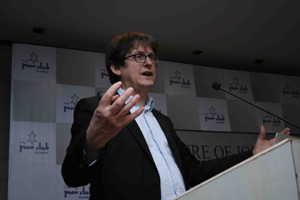
Marking a refreshing departure from the hackneyed “economic model” analysis of digital journalism, Alan Rusbridger, The Guardian’s Editor-in-Chief recently held forth on its effects and manifestations from the perspective of “journalistic practices”. Whether to fortify stories and content behind “gigantic (pay)walls” or not, is the wrong starting point, because one has to see if actions are “journalistically right,” he said. Continue reading Alan Rusbridger on Open Journalism and the Looming Threat of Supra-Regulation: Saurav Datta→
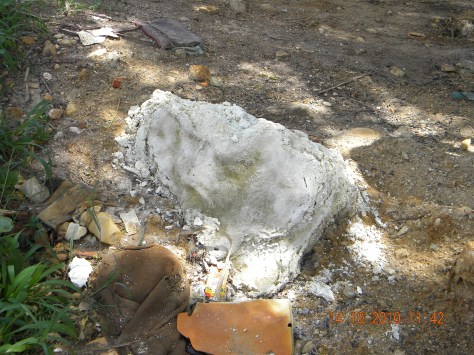
A toxic hotspot in the backyard of a house in Therkuveerapandiapuram, a village adjoining the Sterlite factory. Dangerous levels of iron and arsenic were found in the soil here. (Picture by Nityanand Jayaraman)
On 23 March, 2013, a toxic gas leak from Vedanta-subsidary Sterlite’s copper smelter in Thoothukudi spread panic and discomfort for several kilometres around the plant. The leak once again highlighted the increased potential for major catastrophes due to an atmosphere of collusion between regulators and polluters. The company, which was shut down for maintenance, resumed operations in the early hours of 23 March. Within hours, people in the nearby areas complained of suffocation and eye and nose irritation. A 35-year old Bihari contract labourer, who was working at Sterlite’s thermal power plant nearly a kilometre away, reportedly succumbed to the effects of the toxic gas. Irate residents rallied to the District Collector’s office demanding permanent closure of the offending factory. Continue reading Vedanta-Sterlite – Dangerous by Design: Nityanand Jayaraman→
Guest Post by MARUTI SUZUKI WORKERS UNION
(Reg. No. 1923, IMT Manesar)
Appeal from Jail
Stand in Solidarity with us for Justice
We are workers of Maruti Suzuki, who are behind bars since 18.07.2012 as part of a conspiracy, and without any just investigation. 147 of us are inside Gurgaon Central Jail. Since July, 2500 permanent and contract workers have been terminated from our jobs. In these past more than 8 months, we have sent our appeal to almost all administrative officials and elected representatives, including Chief Minister Haryana and the Prime Minister of India. But neither have our appeals been heard nor have we been granted bail.
Taking the debate on nuclear energy forward (after the wonderful review of MV Ramana’s book by Nityanand Jayaraman), here’s an exchange between Rahul Siddharthan and Madhumita Dutta in The Hindu in September 2012, Siddharthan advocating nuclear power, Dutta pointing to its utter indefensibility.
In the case of Kudankulam, the fisherfolk have been…asking to see the disaster management plan which, till date, remains a secret, even under the Right to Information Act. Given the inherent uncertainties of natural disasters, questions about preparedness to mitigate impact of calamities such as tsunami waves of higher magnitude are being asked. Continue reading Responding to a debate on the Kudankulam struggle against nuclear energy→
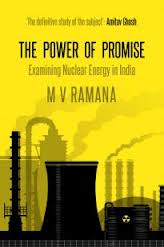
This is a review by NITYANAND JAYARAMAN of M.V. Ramana’s book The Power of Promise: Examining Nuclear Energy in India (Penguin/Viking).
Narayanasamy’s monthly promises of power from the Koodankulam nuclear plant may be something of a joke in Tamil Nadu. But the periodic promises served a function. They kept one section of Tamil Nadu hopeful that commissioning Koodankulam will solve the state’s power crisis, and therefore resentful of the agitators who were seen to be putting their own lives, livelihoods and safety over the needs of the state.
In late 2012 Penguin published the first solo book by Princeton University-based physicist M.V. Ramana. The book is titled The Power of Promise: Examining Nuclear Energy in India.
Ramana’s commentary is witty, articulate and rich with anecdotes. He makes a solid case for his central thesis – that delivering on the promises of power or security were never the actual goal of India’s nuclear program, and probably never will be. Rather, promises are the engines that power the program, he argues. By holding out the twin ideals of unlimited electricity and infallible security in the form of a credible nuclear deterrent, India’s nuclear establishment has carved for itself an enviable position. It is answerable to no one but the Prime Minister, and can spend billions over decades with nothing to show for the expense.
This is a review by UMA NARAYAN of the book Half the sky: Turning Oppression into Opportunity for Women Worldwide by Nicholas D. Kristof and Shirley WuDunn (2010). This review was first published in Perspectives on Politics, Vol. 8, No. 1, March 2010.
Why are we republishing a three year old review? The book has since then become a “movement” with celebrity advocates and a Facebook game that was launched this year. While being widely celebrated across the media in the US, it is also being sharply attacked for its “your women are oppressed, but ours are awesome” rhetoric.
Asks Sayantani Dasgupta in her blog post from which the image above is taken:
On 7th March 2013, at least two mothers of Dhinkia and Govindpur (Patna village in this panchayat) villages in Jagatsinghpur went naked before the paramilitary station in Mangalpada near Govindpur village. In a rally led by mothers, hundreds of women and children went to the temporary paramilitary station that has more than 5 platoons of forces at the moment. While taking off their clothes, they constantly shouted, ‘why have you come here?, what do you want to see?’.
What must be the extent of desperation and provocation that our mothers decide to become naked before outside men? In such a site (Eastern Odisha), where women bodies are constructed dominantly as private objects to hide, what does it mean to dare to bare? It is important to read this shocking act as an act of mediation of their political voices. It is in a desperate bid to express their furore, frustration & anger over intrusive presence of police & paramilitary in the area that they bared their bodies to shame them.
Tarun Mandal, Narahari Sahu and Manas Jena are dead, blown up by what the media has described as a “crude” bomb. All bombs are crude. They kill. They are meant to destroy flesh and bone. They are aimed at sucking out life. Lakshman Mandal battles for his life in a Cuttack hospital. He knows how crude a bomb is. Hopefully he will live to tell the tale of its crudeness.
This is a partisan piece. But it aims to produce balance. Almost all media reports so far have had a strong spin that the three – Narahari, Tarun and Manas – were killed while making a crude bomb. So says Mr. Satyabrata Bhoi, Jagatsinghpur SP. Nobody has bothered to ask him any further questions. It’s quite understandable. Asking any more questions might make the entire spin untenable. For instance, they could have asked: why is it that something illegal, such as crude bomb making, was being done out in the open and not within the confines of a house? Especially given that for the last month, the police have been constantly in and out of the village? Especially because there are at least a few dozen pro-POSCO folks in the village? Why would three leaders of an oppositional movement sit outside on the porch of a house that is fully identified with POSCO Pratirodh Sangran Samiti (PPSS) and make bombs – openly, for all to see – at 6.30 PM when there is enough light for anybody to see them? Isn’t crude bomb making normally confined to the indoors? How many incidents do we know of where crude bomb making was happening outside in broad daylight? Isn’t the RSS, the most famous outfit that makes crude bombs and occasionally manages to blow up its own, always known to make its bombs indoors? Continue reading Crude Questions about Crude Bombs: Biju Mathew→
Here are some statistics detailing the current state of education in India. 4% of Indian children – eight million – never start school. 57%, 74 million, don’t complete primary school. 90% – 172 million children – don’t complete secondary school. To call the situation alarming is an understatement; we have in our country a full-blown disaster. 90% of our nation’s children are victims of this disaster, with barely 10% emerging as survivors. But how fortunate are the 10% really?I’ve been a teacher since 2010, a year after I graduated from university. I taught social studies for a while, pottered a bit in the areas of curriculum and school policy development for a while longer, and have, for the past two years, taught English to middle school students. If these terms – middle school, curriculum and school policy development seem a bit foreign to you, it’s because they are. I happen to work – or happened to, until very recently – in an international school.
When you hear “international school” you may imagine any number of a range of things – let me tell you right off, though, that we aren’t talking top range international school here. As far as school infrastructure goes, my former place of work is a damned sight better than any of the schools the 90% go to in our country, but as far as international schools go, mine lay in the majority of them that are just coming up in the country, especially in Mumbai. The sort that’s less than ten years old and an educational disaster zone of its own kind.
This is a guest post by SPUTNIK KILAMBI: The rise of China and India in Africa has important implications for the continent’s development. While the two Asian giants provide a much needed alternative to the old and until now sole paradigm of dependence on the West, both countries are accused of being part of the global land grabbing club. Many African governments are complicit in this whole sale plunder of their land, which the FAO has compared to the ‘wild west’. India’s role in the land take-over underway in Africa raises serious questions about the direction of south-south relations.
Just before the 2010 World Cup of soccer in South Africa, the Indian food and beverages giant Parle Agro ran an ad campaign to promote its new lemon drink LMN. One spot showed a couple of Bushmen digging in the sand for water when their stick breaks. Suddenly, they see a tap and wrench it off.
Fortunately, the Advertising Standards Council of India forced the company to make changes because the spot was racist and made fun of water scarcity, an acute problem in Africa and India.
The Parle ad is an apt metaphor for growing fears in Africa about India’s seemingly insatiable demand for the continent’s land and water. Water scarcity at home and global fears of a looming water and food crisis are among the reasons India has joined the club of land predators.
This is a guest post by NEHA SAIGAL: The Budget Session is upon us and we might be witness to one of UPA’s most ambitious flagship programmes, the National Food Security Bill (NFSB), becoming a reality. So it seems like Food Security is the flavour of this session with President, Mr Pranab Mukherjee, reiterating UPA 2’s commitment to food security in his maiden speech at the start of the Budget Session.
But this commitment comes under serious question when one of the responsible agencies of the Government dilutes the issue of food security and further misleads the debate on an important issue like hunger and malnutrition. I am referring to the Ministry of Agriculture (MoA) under Sharad Pawar mindlessly promoting GM crops as a solution to food security. Continue reading Some Urgent Considerations on Genetically Modified Crops and Food Security: Neha Saigal→
At the behest of the factory owners, the reign of terror of police continues
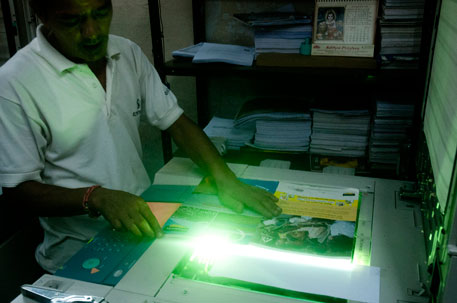
Noida, March 1. Several mass organizations including Bigul Mazdoor Dasta have strongly condemned the Noida police’s act of illegal detention of the labour leader Tapish Maindola and 6 common citizens. A petition is also being filed today at the Allahabad High Court against the illegal custody.
Ajay swamy of Delhi Metro Kamgar Union told that on the evening of February 27th, 10-12 persons came in 2 Bolero vehicles to the DTP Centre of Navin Prakash in Ghaziabad and forcibly took him and his employee Raju along with them. They forced Navin to call the activist of Bigul Mazdoor Dasta and his friend Tapish by phone and as soon as Tapish reached there, police captured him. Without informing the people present there as to where they were taking them, the policemen took all three along with them. None of the three were allowed to make a call and their phones were taken away and switched off.

 Ramana’s commentary is witty, articulate and rich with anecdotes. He makes a solid case for his central thesis – that delivering on the promises of power or security were never the actual goal of India’s nuclear program, and probably never will be. Rather, promises are the engines that power the program, he argues. By holding out the twin ideals of unlimited electricity and infallible security in the form of a credible nuclear deterrent, India’s nuclear establishment has carved for itself an enviable position. It is answerable to no one but the Prime Minister, and can spend billions over decades with nothing to show for the expense.

 KAFILA - COLLECTIVE EXPLORATIONS SINCE 2006