Category Archives: Capitalism

The Changed Face of the Newsroom: Monobina Gupta

 Guest post by MONOBINA GUPTA. DelhiUniversity teachers are fighting back to hold on to the fast vanishing autonomy of academics and academia. For me, this is a significant moment. Not just because the teachers are setting an example in their refusal to submit to the destructive moves disguised as ‘reform’, slammed through by well-connected and powerful authorities at the top. I must confess to my own selfish reasons for celebrating this moment. As a journalist, I can’t but think of all that we too could have held on to had only we walked this path of resistance, stalled the first assault on the newsroom, resisted the first strike, shrinking what I would describe as our ‘journalistic territory.’

Had we moved in that difficult yet honourable direction, we too might have guarded our space, not allowed non-journalists to take it over, bit by bit. Is it too late to recover and reclaim what was once an autonomous, if not a radical newsroom? Maybe. Maybe not.

For journalists like me who entered the newsroom in the 1980s, it’s the transformation of that space that I find both fascinating as well as frightening, in equal measure. Tune out the deafening noise of  24×7 news – cut the frills – journalism emerges in all its bare bones as the craft it really is or should be: an incisive tool for chronicling and analysing events. Ring side spectators or distant observers, members of the media, under all circumstances, are supposed to have their ear to the ground. In an ideal world, these couriers of news – mostly nasty and brutish these days – shouldn’t be attuned to corporate boardroom culture or its fiat.  Continue reading The Changed Face of the Newsroom: Monobina Gupta

‘Ladies Still not Empowered in Kerala?’ Questions Raised by the Solar Scam

How does one respond critically and effectively when non-politics, non-government, and non-sense, all rolled together, assail the political public? I have been thinking about this recently — surely, this is a question that troubles all those who would wish to keep the focus of public life on politics and power. We witness, in present-day Kerala,politics being reduced to the internal bickerings over power indulged in by the powerful elite interest-groups that constitute the ruling UDF. Or, reduced to ‘sex scandals’ or ‘domestic squabbles’ when gender politics surfaces.  Simultaneously, we are witnessing the era of non-government and the severing of the link between public politics and government. While the bickerings between the coalition partners of the UDF continues unabated, news of infant deaths and severe malnutrition continue to flow from tribal hamlets in Attappady; the problems of mounting waste in both towns and rural areas continues to be criminally neglected; dengue and other dangerous fevers continue to exact daily, rising tolls all over the state. And even as the consequences of widening social inequalities become more and more visible, this government’s discourse of welfare remains pegged insistently on human mercy and charity. It continues to be dismissive of concerns of social justice and power — even as these harrowing tales continue to appear in the press, there is no dearth of advertisement of the goverment’s kaarunyam. And in the midst of all this, the Chief Minister being projected as the exemplar of human goodness and chairty! Or, the UN, ever-interested in ‘innovation’, conferring an award on his Mass Contact Programme at a time when his government has been least innovative or imaginative in solving problems that now stare us in the face. the This of course is the non-sense — the absurdity of it all. Continue reading ‘Ladies Still not Empowered in Kerala?’ Questions Raised by the Solar Scam

The unbearable lightness of drowning in your own myth: Tamer Söyler

This guest post by TAMER SÖYLER is the third of a three-part series on Istanbul’s Taksim Square protests.

 995434-130611-turkey-protests

This is the final segment of a three-part account of the unrest in Turkey. The first part of the commentary discussed the unrest from the perspective of the political life course of Erdoğan. According to the protestors it was the Prime Minister as the key political figure who set the cat among the pigeons. Neither the opponents and nor the supporters of Erdoğan can make sense of Erdoğan’s turn to authoritarianism on the eve of critical election season. There are two possibilities: First, Erdoğan could have lost his emotional equilibrium and started to react to the events carelessly. Since the Prime Minister surrounded himself with advisors and party members who cannot dare to challenge him, he lost his bearings. Second, as an experienced politician Erdoğan must have a political strategy. Even if he is emotional his emotions are closely related to the concrete problems he faces. Continue reading The unbearable lightness of drowning in your own myth: Tamer Söyler

Huge Rally of Narmada Dam Oustees in Bhopal: Jeevan Adhikar Satyagraha and Upwaas begins with Demand for Rehabilitation and Resettlement

This is a press release by the NARMADA BACHAO ANDOLAN

28th June 2013

Rally 2

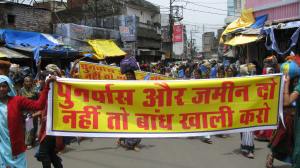
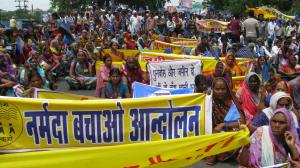
Thousands of oustees affected by the Indira Sagar, Omkareshwar, Maheshwar, Upper Beda and Man dam demonstrated in capital city Bhopal today and began their Satyagrah. Despite continuous rain in the entire Narmada valley, over 8000 men and women displaced persons have reached Bhopal to camp here for the next 5 days. The affected people demand that all the oustees of these dams should be rehabilitated and resettled with land and all other entitlements, and the injustice being wreaked on them for decades be stopped. Shri Alok Agarwal, senior activist of the Narmada Bacahao Andolan along with 4 men and women oustees have started their fast for 5 days in this “Narmada Jeevan Adhikar Satyagraha and Upwaas”.

Gyapan

Continue reading Huge Rally of Narmada Dam Oustees in Bhopal: Jeevan Adhikar Satyagraha and Upwaas begins with Demand for Rehabilitation and Resettlement

Hydro Power Projects and Northeast India: Ecology and Equity at Stake

This is a guest post by RICHARD KAMEI

Recently a two-day North East People’s Convention on water and dams was held at Bethesda Youth Welfare Centre, Dimapur (on 17th May-18th May 2013) which brought together a group of 26 organisations from North East India under the banner of the North East Dialogue Forum. This forum called for a focus into the objectives raised in this two day convention, by writing to leaders of India, China and Bangladesh over the imminent adverse impact of the issue of water, impacts of constructing big dams and mining in various regions of North-East India. The outcome of this two-day North East People’s Convention on water and dams, is the joint appeal known as ‘Dimapur Declaration’.  At the time of this declaration, prime address was made to the Prime Minister of Bangladesh, Sheikh Hasina; the Premier of China, Li Keqiang and Prime Minister of India, Dr Manmohan Singh. The main objectives of Dimapur Declaration are:  to protect the inherent rights of local people over their water, land, forest and other resources based on customary and international laws as guaranteed by the Universal Declaration of Human Rights and UN Declaration on the Rights of the Indigenous People 2007 etc., and their self-determined development of their water bodies in the region. The recommendations of the World Commission on Dams, 2000 have also been given a special mention in terms of its implementation in all decision making processes on dam constructions over Brahmaputra (Tsangpo) River. “The Thatte-Reddy Expert Committee said the present hydropower work on Subansiri contravenes the basic premise of the Brahmaputra Board Act with regard to flood control, irrigation and other benefits. The report agreed that the present planning of the project ignored the flood control aspect. Therefore, the committee agreed that the very purpose of the project and purpose of the Brahmaputra Board Act is defeated and the mandate of the board diluted by this action,” opined Akhil Gogoi, Krishak Mukti Sangram Samiti ( KMSS). Continue reading Hydro Power Projects and Northeast India: Ecology and Equity at Stake

The Greater Common Omelette

This is a guest post by NITYANAND JAYARAMAN

Governments like victims. Distressed people make for thankful recipients of public largesse. Within a week of Uttarakhand’s watery disaster of June 16 and 17, the Tamil Nadu Chief Minister announced a Rs. 5 crore relief in solidarity with the “Government and people of Uttarakhand.”

This generous gesture stands in stark contrast with the way the Chief Minister is dealing with people in her own state who are concerned about their increased vulnerability to natural disasters. Around the time that she handed out her cheque to Uttarakhand, 19 fishermen from Sulerikattukuppam, a hamlet about 40 km south of Chennai, begged their way to bail after spending a month in prison. They were arrested for demanding relocation and rehabilitation; the celebrated 100 million litres per day Nemmeli seawater desalination plant constructed by Chennai Metrowater had triggered severe sea erosion and brought the sea dangerously close to their homes. The highly toxic brine rejects were polluting their seas. Continue reading The Greater Common Omelette

For Erdoğan, you are with him or against him: Tamer Söyler

This guest post by TAMER SÖYLER is the second of a three-part series on Istanbul’s Taksim Square protests for Kafila.

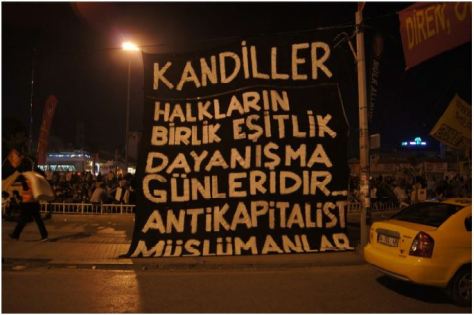
“Kandils (Islamic holy nights) are the times for equality, unity and solidarity.” Anticapitalist Muslims   Note: “Kandil” refers to the celebration of one of the five Islamic holy nights. While Erdoğan was accusing the protestors to be drinking beer and having some kind of a youth festival, anticapitalist muslims who were against the Taksim project from the very early on, wanted to give their support to the protestors. It was an interesting thing to witness. Socialists and communists were creating space for the members of the Anticapitalist Muslims to perform a public prayer in the square. This is already evidence enough that this is not secularists vs. pious.
“Kandils are the times for equality, unity and solidarity – Anti-capitalist Muslims,” this banner reads.
Kandil refers to the celebration of one of the five Islamic holy nights. While Erdoğan was accusing the protestors to be drinking beer and having some kind of a youth festival, anti-capitalist Muslims who were against the Taksim project from the very early on, wanted to give their support to the protestors. It was an interesting thing to witness. Socialists and communists were creating space for the members of the Anti-capitalist Muslims to perform a public prayer in the square. Clearly,the Taksim protests were not about secular vs. religious.

The first part of this commentary argued that as a part of his political strategy early Erdoğan had embraced a kaleidoscopic approach in governance by including various perspectives coming from citizens situated in different milieus. Erdoğan had given the impression to the citizens that his government was willing to hear the views of the citizens situated in all kinds of milieus. A simple strategy of inclusion proved to be extremely efficient for Erdoğan. Citizens who were not ideologically close to Erdoğan were quick to feel flattered by the symbolic gesture and did not hesitate to support Erdoğan. Continue reading For Erdoğan, you are with him or against him: Tamer Söyler

Shahrukh Khan, Surrogacy and Sex-Selection: Sneha Banerjee

Guest post by SNEHA BANERJEE: It was a Monday morning that didn’t bring me blues, after many weeks of sweltering heat I could keep the door to my balcony open without fearing the skin-burning ‘loo’ and my room filled with the pleasant breeze which had the promise of bringing in rains once again.  I decided to keep my diligently prepared to-do list aside and embarked on staring at the neem tree observing the avian cohabitants of my neighbourhood with the radio on my phone tuned to a FM station.  It was then that the unnecessarily loud, over-enthusiastic voice of a radio-jockey broke the serenity of the surroundings.  His shrieky voice exhorted a promise to keep Dilliwalon up-to-date with the latest controversies in Bollywood.  Now, that was not something that I was very interested in – imagined competition among biggies, who ate what, who holidayed where and with whom and after betraying whom was going to be too depressing to handle, but before I could reach out to change the station, he took somebody’s name that still makes my heart skip a beat even after couple of leap-years have come and gone since I was sweet-sixteen.  Yes, any and every news about this ‘star’ interests me and I want to know it all, true or untrue, gossip or through ‘reliable sources’.

But what I heard then, broke my heart.  The RJ quoted a Mumbai tabloid, that Shah Rukh Khan (SRK) is having a third child through surrogacy and that he has ensured it is a son through sex-selection.  Continue reading Shahrukh Khan, Surrogacy and Sex-Selection: Sneha Banerjee

Can late Erdoğan learn from early Erdoğan?: Tamer Söyler

This guest post by TAMER SÖYLER is the first of a three-part series on Istanbul’s Taksim Square protests for Kafila.

taksim8
Photographs by Tamer Söyler

The 42nd President of the United States, Bill Clinton, is said to have remarked: being President is like running a cemetery; you have got a lot of people under you and nobody is listening. As is the case with any good politician, Clinton is known for his bamboo-like character. During his presidency whenever he looked the weakest, he proved to come stronger out of the chaos. Clinton’s remarkable flexibility provided him the ability to bend as much as he needed to achieve his goals without breaking. The Prime Minister of Turkey, Recep Tayyip Erdoğan, proved again that he does not have Clinton’s sense of humour, his presidency or his flexibility.

Turkey is a parliamentary representative democracy. Erdoğan has been expressing his intention to transform the country into a presidential system and become the first president of the country. The government plans to put the question of a constitutional referendum to a vote in the year 2014. The people of Turkey are suffering from a great anxiety related to a fear of finding themselves in an authoritarian, charismatic presidential system. Protestors worry that without adequate mechanisms to enforce the separation of powers in the constitution, Erdoğan can easily transform Turkey into an authoritarian regime.
Continue reading Can late Erdoğan learn from early Erdoğan?: Tamer Söyler

Aap Kare toh Renovation, Hum Kare toh Gentrification

It appears that a Delhi bookstore has relocated. This, in itself, isn’t news in a city of relocation,dislocation, demolition, destruction; a city built, looted and sacked at least seven times. Yet, the emotional coverage of Yodakin’s move – from one part of Hauz Khaas village to another – assures us that Delhi has lost a vital cultural hub, a “safe space”, an “indie book store with the ambience of a salon“. In a city of “aggression, pollution and anxiety”, Yodakin apparently offers us “reassurance”.

The problem, familiar to any intellectual in search of reassurance, is skyrocketing rents. As one particularly maudlin tribute explains: (emphasis in original):

I remember sitting with Arpita and Smita (of 11.11 Celldsgn/ The Grey Garden/ Elma’s/ Edward’s & TLR) at Elma’s across the street from Yodakin (the bakery was still only open for tastings) and vociferously advocating a shopkeeper’s union of sorts back in 2011.We were concerned about the escalating rates, discussing the impending gentrification (and doom) of our little alternative urban village. Everything popular gets subsumed into consumer culture eventually, we argued. The alternative is always being wiggled out of the spaces it fosters. The little guys make the place and then the big rich guns swoop in to ruin it, commercialize it.

But, don’t panic just yet, the bookstore is now sharing space with an organic food and art cafe called Tattva, where a  Tattvaamrita “Fruit Yogurt with Honey and Nuts” costs Rs 245, and a “cooling fennel juice” costs Rs. 175.  If the little guys are charging Rs 625 plus tax for a couscous salad, one genuinely fears what the “big rich guns” will charge. This of course brings us to a much needed conversation about all the things that you talk about in when you live in Delhi: Gentrification, alternative publishing, independent bookstores, and the all things that New York has and Delhi shall soon acquire.

Continue reading Aap Kare toh Renovation, Hum Kare toh Gentrification

Theme Park Mumbai: Hussain Indorewala

This is a guest post by HUSSAIN INDOREWALA: The draft of Mumbai’s twenty year Development Plan is scheduled for release soon. There is another plan that is worth looking at, if only to get a sense of what the city’s power elite have in mind for its future. This plan may be found on the website of the Mumbai Transformation Support Unit (MTSU) by the name Concept Plan for MMR. Though not a statutory document, it claims to become the “guiding framework” for all the subsequent Development Plans in the MMR region, and also the basis for local sectoral schemes on transportation, infrastructure, housing, industrial development, and others.

Mumbai’s Concept Plan

In May 2011, a Singapore based planning firm, Surbana Corporation, with experience in planning for cities in Africa, Asia and the Middle East, submitted a “Concept Plan” for the Mumbai Metropolitan Region (MMR) to the MTSU. The object of the plan is to provide a “long-term development framework which directs future investments and urban growth in the region.”[1] With a population of 37 million, by 2032 the MMR will become a “world class metropolis,” with a “vibrant economy” and “globally competitive quality of life.” By 2052, with a population of 44 million, the Region will be “elevated” to become a “Global City,” recognised around the world as an “international business hub, a leading technological innovator, a melting pot of local and cosmopolitan cultures, and a centre of excellence for urban environmental management.”

Continue reading Theme Park Mumbai: Hussain Indorewala

Pakistan beyond liberal and conservative: Ayesha Siddiqa

Guest post by AYESHA SIDDIQA

As Pakistan battles with militancy, part of the war is also being fought in the arena of ideas.

In order to fight militancy, some argue, Pakistani society has to win hearts and minds back from extremists. It is the ‘fundamentalist’ thinking in our midst that prevents us from confronting militants wholeheartedly. On the other side of the talking divide stand those who feel that ‘liberals’ are forcing the state to declare a war on its own people under the guise of fighting militancy.

There is, however, at least one way in which both camps are similar. Regardless of who is right or wrong, the two sides view each other as being incompatible binaries with nothing in common. This is a flawed approach. No society, and especially not one as complex as Pakistan, can be divided so cleanly into two groups that do not overlap. Continue reading Pakistan beyond liberal and conservative: Ayesha Siddiqa

The Jamhuriyat Road to Taksim Square: Shilpi Suneja

Guest post by SHILPI SUNEJA

Istanbul, 4 June

istanbul11

The evening of 3 June, 2013 was the first time I’d experienced the sting of pepper spray. I was walking on Cumhuriyet Caddesi near Taksim Square in central Istanbul, where, for the past five days, civilians and the Turkish police have been clashing over what the international media has called “a matter of a few trees”. Certainly, the spark of what is now a huge mass protest spanning multiple cities with over 1,000 injured, was the issue over Gezi Park, an area in central Istanbul where the Prime Minister, Tayyip Erdogan has proposed to build a shopping complex. The plan was to graze the green space and create a shopping complex. This in an area that already boasts of a Hyatt, a Hilton, a Swiss hotel and shopping centers with national and international brands. “There’s already so many shopping malls here,” said a Turkish friend speaking about the government’s decision. “Why build another?” The grazing of the park was supposed to start on Thursday, May 30th. By that time, hundreds of people gathered and occupied the park, bringing tents, books, and children. The police, in response, burned their tents and dispersed the protesters using pepper spray and tear gas. Continue reading The Jamhuriyat Road to Taksim Square: Shilpi Suneja

Workers in Maruti Suzuki Manesar plant – Justice Delayed is Justice Denied: ICLR

Preliminary report of the findings of the INTERNATIONAL COMMISSION ON LABOUR RIGHTS, released on 31 May 2013, New Delhi

The International Commission for Labor Rights (ICLR) constituted a team of lawyers and trade unionists from France, Japan, South Africa, the USA and India to investigate the incidents that led to the summary dismissal of over 500 permanent workers and over 1800 contract workers at the Manesar plant of Maruti Suzuki India Limited (MSIL) in August 2012. The team was constituted to bring international law and policy perspectives to bear on a situation that has festered for almost a year, with – at a minimum – 147 workers in jail over that period. The Commission reminds the Government of India that, under well-recognised international and domestic principles, “justice delayed is justice denied.”

The group also brings important comparative perspectives on the current or proposed role of this company in the global economy. MSIL has a parent company in Japan, substantial exports to Africa and Europe, a proposed assembly plant in South Africa, and an investor base in the United States – understanding the company’s practices in India is an imperative for those committed to corporate accountability and sustainable development jurisdictions outside India. Continue reading Workers in Maruti Suzuki Manesar plant – Justice Delayed is Justice Denied: ICLR

Promises and Perils of FYUP: An Appeal to Students and Citizens: Sunny Kumar

This is a guest post by SUNNY KUMAR At the current moment, Delhi University is caught in a tremendous crisis. On the one hand, the DU administration is hurriedly forcing through the Four Year Undergraduate Programme (FYUP). On the other hand, students, teachers, intellectuals and all those concerned with education are opposing it. The DU administration has declared that all students taking admission in DU will enter a four year honours degree. Within this FYUP scheme, if students wish they can leave at the end of two years with a Diploma or at the end of three with a Bachelor degree (without honours). It is only at the end of four years that they can leave with a Bachelor (Hons) degree. Teachers and academics have raised many valid objections about the way in which this tectonic shift is being imposed on DU. Here, we will not belabour many of the arguments that have been made effectively elsewhere. Instead, we will mainly address the Vice Chancellor’s two central claims – of greater employability and flexibility – being made in defence of the FYUP.

To understand the new scheme better, let us look at what will be taught under FYUP.

Will the FYUP, with the above course content and its multiple exit options truly make students more employable? Will it help them get better jobs or give them extra advantage in choosing future academic options? Let us look at some of the facts: Continue reading Promises and Perils of FYUP: An Appeal to Students and Citizens: Sunny Kumar

How to respond to a legal notice from The Times of India

Shamnad Basheer shows the way:

We strongly object to the vile language and the highly aggressive tone used in the notice. We can respond in kind, but we choose to be a bit more civil with you.

You choose to issue this highly malevolent letter, hoping to intimidate us into a meek apology. Unfortunately, while the meek may inherit the earth, they are bound to be shown no favour by corporate powerhouses such as your client.

So, let’s cut to the chase and explore your alleged grievances articulated rather flatulently in over seven pages of a highly intemperate legal notice.

Read the full story at Sans Serif.

Shamnad Basheer for PM!


Manifesto of a New Initiative: Statement by New Path

This guest post is a statement by NEW PATHa collective of people, mostly from backgrounds in social movements and mass organisations, who have been discussing how the work of people’s struggle and revolutionary transformation can be taken forward in the Indian context. Those discussions led to the decision to found a new organisation, tentatively called “New Path”.

Below is the draft manifesto, sent to us by friends associated with the initiative. It is being circulated for comments, criticism, suggestions and observations. New Path does not aim to be a traditional revolutionary party. Rather, it seeks to be a political formation that seeks out opportunities, through struggle, to weaken bourgeois hegemony in this country.
Continue reading Manifesto of a New Initiative: Statement by New Path

Gujarat and the Illusion of Development: Shipra Nigam

This Guest post by SHIPRA NIGAM is a review of a volume of essays edited by Atul Sood Poverty Amidst Prosperity: Essays on the Trajectory of Development in Gujarat (Aakar Books 2013).

gujarat-farmers_507544e

Thousands of farmers protested in March this year in Ahmedabad against the state’s industrialization policies

This volume of essays is the outcome of a detailed study by a team of contributing research scholars led by Atul Sood. This timely evaluation provides an insight into many crucial questions: What are the constituent elements of Gujarat’s growth story? To what extent can the successful features of Gujarat’s growth story be attributed to the political regime fashioned by Narendra Modi? Is it possible to replicate even this limited success story at the national level – as Modi’s starry eyed upper and middle class following would like to believe? More significantly: what are the implications of Gujarat’s Development Model in terms of its sustainability and its desirability? What happens when we assess this development through a set of comprehensive   measures, judge its implication for the average citizen’s material wellbeing, and see what it means for the political and economic rights of citizens?  Continue reading Gujarat and the Illusion of Development: Shipra Nigam

Stop the Police Brutality Against Maruti Suzuki Workers: Joint Statement

The following is a joint statement issued by ADR Punjab, PUCL Haryana, PUDR and NTUI against police repression on Maruti Suzuki workers

Kaithal, 19 May 2013: The Haryana Government yet again in a brazen and outright cowardly manner has sought to protect the interest of capital and particularly the management of Maruti Suzuki India Ltd by refusing to allow the victimised workers and their families to undertake a peaceful demonstration planned for today which was expected to draw in ten thousand people from across the state.

A short while ago, police lathicharged a peaceful demonstration of workers families outside the residence of State Industry Minister Randeep Singh Surjewala. Scores have been hurt in the lathicharge and the demonstrators are being arrested.

The Haryana Government, on the eve of this peaceful protest at Kaithal, imposed IPC Section 144 in the town and arrested close to 100 workers and their family members from the dharna site at the Kaithal Mini Secretariat at 11:30 pm last night. Several more were picked up from the entry points to the town including the bus terminus this morning. The workers and their family members have been sitting on an entirely peaceful dharna at the Mini Secretariat from 28 April 2013 demanding release of the 147 workers in Gurgaon Jail and reinstatement of the workers, both permanent and contract, terminated without enquiry following the 18 July incident. Despite the heavy police mobilisation and barricades at entry points of the town, thousands of people from across Haryana have been pouring into the city to gherao the State Industries Minister, Randeep Singh Surjewala at his residence. Wives, mothers and sisters of workers are present in large numbers at this demonstration demanding a just inquiry and an end to the state effort at criminalisation of the workers.

Continue reading Stop the Police Brutality Against Maruti Suzuki Workers: Joint Statement

End of Postcolonialism and the Challenge for ‘Non-European’ Thought

A lively debate has been going on lately in Al Jazeera, following the question posed by Hamid Dabashi in an article provocatively titled “Can Non-Europeans Think“? Dabashi’s piece, published earlier in January this year was a response to an article by Santiago Zabala, Research Professor of Philosophy at the University of Barcelona. Zabala’s article, entitled “Slavoj Zizek and the Role of the Philosopher”, was actually on an entirely different issue, as will be evident from the title. Zabala attempts, in this article, to read in Zizek’s persona and oeuvre, the possible implications for the philosopher as such. He dwells on Zizek as a figure who is at once a philosopher and a public intellectual – a role not very easily available, according to him, to academic philosophers.

If most significant philosophers become points of reference within the philosophical community, he says, “few have managed to overcome its boundaries and become public intellectuals intensely engaged in our cultural and political life as did Hannah Arendt (with the Eichmann trial), Jean-Paul Sartre (in the protests of May 1968) and Michel Foucault (with the Iranian revolution).” Zabala explains this rare ability/ possibility by invoking Edward Said on the ‘outsider’ status of the intellectual and by underlining the direct engagement of the thought of such philosophers with contemporary events. He says:

These philosophers became public intellectuals not simply because of their original philosophical projects or the exceptional political events of their epochs, but rather because their thoughts were drawn by these events. But how can an intellectual respond to the events of his epoch in order to contribute in a productive manner?

In order to respond, as Edward Said once said, the intellectual has to be “an outsider, living in self-imposed exile, and on the margins of society”, that is, free from academic, religious and political establishments; otherwise, he or she will simply submit to the inevitability of events.

Read the full essay here at Critical Encounters.

When the Levee Breaks: A report from a very large farm

IMG_0980 Earlier this month, I travelled to Gambella in South West Ethiopia to visit the 100,000 ha farm managed by Karuturi Global Ltd ; an Bangalore-based company that hopes to use its farm in Ethiopia to become one of the largest food producers in the world. Karuturi has become the most visible symbol of what activists have termed “land grab” in Africa; a term that is as contentious as the process itself. At various times, Kafila has also carried pieces on the subject. Some the material put out by groups like Human Rights Watch has been  hard to verify, but the process itself is worth following. Appended below, my Sunday story for The Hindu.

Gambella (Ethiopia): Last August, Ojulu sat smoking a cigarette outside his thatch-roofed hut in Pino village when a rising tide of water seeped through the reed fence. “The water came in the morning,” Ojulu said, “And stayed for a month.”

As Ojulu and his neighbours scrambled to higher ground the Baro river swirled through the village, gathering in force until it breached a series of dykes, built by Bangalore-based Karuturi Global, and swamped the company’s vast 100,000-hectare farm. “Karuturi blocked the natural route of the water [with the dyke], so the water came into our village,” Ojulu said. “Karuturi was the cause of the flood.” Read the rest of the story here