Category Archives: Culture

Open Letter to FB : Change the Authentic Name Policy — Nameless Coalition

Nameless Coalition, a group of NGOs, has written an open letter to Facebook demanding justice for individuals who have been affected by it’s ‘authentic identity’ policy. Please read it at the Electronics Frontier Foundation Action Centre.Those interested in supporting this effort are requested to sign the petition.

In Kerala, the abuse of women online became a hotly-discussed issue over the heavy online abuse suffered by Preetha G P, which provoked a wider debate on FB policy and strong responses in support of Preetha from other women politically active on FB. The campaign For A Better FB was initiated by them.

I add below reflections by Anila Balakrishnan expressed on FB, on her support for the campaign. They have been translated from the Malayalam and posted here with her permission:

Facebook has never given me the feeling that it is a space where I can behave and speak out my views freely. On the contrary, it has always reminded me that I am a woman and must therefore tread carefully. That is the reason why I decided to reduce myself into someone who had nothing to say in public, someone who spoke only in the presence of friends. I just decided that I will not sacrifice my peace for the misogyny and hate-speech of the hordes who know nothing of me or my politics; I was not willing to spend time and energy on confronting them. When my posts became public because of sheer necessity or even by mistake, these hordes reminded me quickly that they should be confined to friends alone. Those were not ideological confrontations; they were vicious attacks the female gender itself. And so I have not felt brave enough to say anything that could invite public comment on FB. Women who have showed the courage to say such things have not been spared by the hordes, for sure.

But this was never my choice. I do believe that opinions ought to be public; that one must engage with each and every person in the crowd. But I am not willing to take on myself from the social media personal wounds that go beyond differences and diversity in views . So the decision to reduce myself is not my choice – it was imposed on me. I have not heard of any man who makes his views public being abused because of his body. I do not know of any man who has to maintain constant vigilance against such attacks. That’s how Facebook remains as patriarchal as any other social media, as society itself. And that’s precisely why I am part of this campaign for a better FB.

Another One Bites the Dust: “Cultural Pollution” and the Nehru Memorial Museum & Library: Niyati Sharma and Snigdha Kumar

This is a guest post by NIYATI SHARMA AND SNIGDHA KUMAR

Courtesy thequint.com.

The latest in a line of institutions to fall victim to the BJP government’s campaign against “cultural pollution” is The Nehru Memorial Museum and Library (NMML). The agenda is loud and clear – anything which ‘pollutes’ the current government’s preferred way of life and thinking will be done away with. Bans such as the recent ones on porn and meat are the most obvious instruments at the disposal of the government to achieve this goal. The more effective interventions, however, are not those which instantly deny people their choices and freedoms. Presented instead as minor improvements and renovations, interventions in art, history and academic institutions allow the government to introduce subtle long term changes – changes with the capacity to access and alter our very being.

Given the enormity of these interventions in the long run then, it is particularly curious how the clear recent attempts to take over academic institutions such as the ICHR, FTII and now NMML have managed to raise only a few eyebrows while the bans on porn (and meat to an extent) have met with much protest and were subsequently lifted. Perhaps this is because such spaces appear to be remote islands inhabited only by those interested in history, film and/or academic research. Only such an impression can explain the rather meek public debate and outcry that these clearly targeted changes have generated.

Continue reading Another One Bites the Dust: “Cultural Pollution” and the Nehru Memorial Museum & Library: Niyati Sharma and Snigdha Kumar

Christians oppose demand for ban on Agnes of God: Press Statement

We, the following signatories,  object to Mr. Joseph Dias, Secretary, Catholic Secular Forum, issuing press statements, representing himself as the spokesperson of the entire community while he seeks bans on films and plays on the ground that they hurt the sentiments of the Catholic religious community in India.  Since such demands tarnish the image of the entire community, we appeal to the press that they should not be projected as the views of the entire Christian community.
 
We wish to state that the views expressed by him are his own, or at best, that of his organization and this by no stretch of the imagination, can be portrayed as the views of the entire Catholic community, as is being done in recent times. His demands are sensational in nature and are self serving to attract media attention unto himself and we are opposed to the same.  

Dadri Beef Rumour and Lynching – A Report from Bisara village

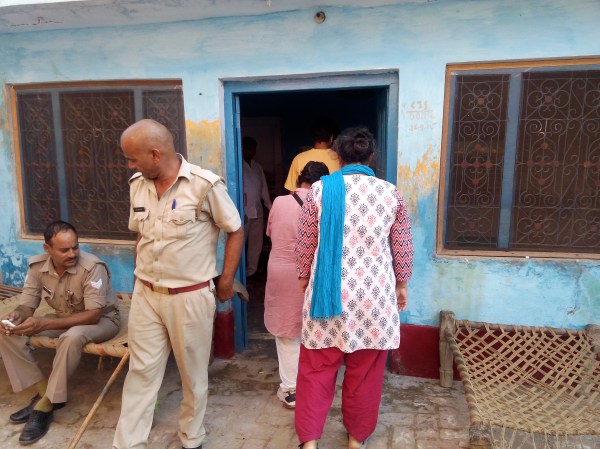
The following is a report on the Dadri beef rumour and lynching, prepared by a fact finding team from NEW SOCIALIST INITIATIVE, PEOPLE’S ALLIANCE for DEMOCRACY and SECULARISM, SAHELI and DELHI SOLIDARITY GROUP, released in New Delhi on 05/10/2015

 The investigation team with the following members visited the village on 3 October 2015: Bonojit Hussain (New Socialist Initiative), Deepti Sharma (Saheli), Kiran Shaheen (writer and activist), Naveen Chander (New Socialist Initiative), Sanjay Kumar (People’s Alliance for Democracy and Secularism and New Socialist Initiative) and Sanjeev Kumar (Delhi Solidarity Group)

Akhlaq's house
Akhlaq’s house

On the night of 28 September, in a heinous instance of hate crime Mohammad Akhlaq a resident of Bisara village of Dadri in western Uttar Pradesh was lynched to death and his son Danish brutally assaulted by a mob of villagers over a rumour that Mr. Akhlaq and his family had slaughtered a calf and consumed its meat. Just before the lynching, an announcement was made from the local temple to spread the rumour, and within moments a mob constituted itself and attacked Mr. Akhlaq resulting in his lynching. Mr. Akhlaq’s son Danish has been in hospital since that night and despite undergoing two brain surgeries his condition is still said to be critical. Continue reading Dadri Beef Rumour and Lynching – A Report from Bisara village

अखलाक़ की मौत उठा रही है हमारी सभ्यता और जनतंत्र पर सवाल

दिल्ली के करीब दादरी के बिसराड़ा गाँव की अस्करी गमी में है। अपने पचास साल के बेटे मोहम्मद इख़लाक़ की मौत का गम वह मना रही है।  और साथ में उसका  परिवार। बाईस साल का उसका पोता दानिश हस्पताल में मौत से जूझ रहा है।यह शोक मामूली नहीं है और न यह मौत साधारण है। यह आपको तब मालूम होता है जब आप देखते हैं कि  गम की इस  घड़ी में अस्करी के कंधे पर रखने वाला कोई पड़ोसी हाथ नहीं है।

अस्करी पूछती है, जहां कोई हमारा पुरसाहाल न हो, उसे हम अपना देस  कैसे कहें! हमारे यहाँ  गाँव को देस कहने का रिवाज है।  अस्करी का  सवाल वाजिब है: जहां गम बँटाने पड़ोसी न आएं, वह अपना देस कैसे हुआ!

Akhlaq's family, image courtesy rediff.com
Akhlaq’s family, image courtesy rediff.com
इख़लाक़ की मौत का शोक  कितना ही एकाकी क्यों न हो मौत उसकी एकाकी न थी. वह मारा गया, ऐलानिया, खुलेआम-शोर-शराबे  के बीच।
बिसाराड़ा गाँव में मोहम्मद अखलाक़ की हत्या जितनी दिल दहलाने वाली है, उसके बाद की प्रतिक्रियाएं उस ह्त्या से अधिक चिंतित करने वाली हैं। सबसे ज़्यादा मुखर भारतीय जनता पार्टी के नेता हैं। मोहम्मद अखलाक़ के घर पर हमला करके उन्हें पीट-पीटकर मार डालने और उनके बेटे को गंभीर रूप घायल करने वाली भीड़ के छह  लोगों को पुलिस ने नामजद किया है। लेकिन भाजपा के नेताओं ने इस पर गहरा ऐतराज जताया है। उनका कहना है कि यह इरादतन किया गया क़त्ल न था, इसलिए ह्त्या की धाराएँ न लगा कर गैर इरादतन ह्त्या की धारा लगानी चाहिए। तर्क यह यह है कि  अखलाक़ की ह्त्या की कोई पूर्व योजना न थी, वह तो ‘गोवध’ और ‘ गोमांस’ खाने की खबर से हिंदू ग्रामीणों की धार्मिक भावनाएं भड़क उठीं। उन्होंने कुछ कड़े रूप में  अपनी भावनाएं व्यक्त कीं, जिसके नतीजे में अलखलाक़ की मौत हो गयी। वे उलटे अखलाक़ के परिवार पर गोवध और गोमांस भक्षण के लिए आपराधिक मामला दर्ज करने की मांग आकर रहे हैं। धमकी दी जा रही है की अगर ऐसा न किया गया तो महापंचायत की जाएगी।

Continue reading अखलाक़ की मौत उठा रही है हमारी सभ्यता और जनतंत्र पर सवाल

तर्क और विचारों से कौन डरता है ? – दाभोलकर, पानसरे और कलबुर्गी की शहादत के बहाने चन्द बातें

1

Photo : Courtesy – http://www.newslaundry.com

1.

आग मुसलसल जेहन में लगी होगी
यूं ही कोई आग में जला नहीं होगा

दोस्तों

कातिल के पिस्तौल से निकली ऐसी ही आग का शिकार हुई तीन अज़ीम शख्सियतों की याद में हम सभी लोग ‘कलम विचार मंच’ की पहल पर यहां जुटे हैं। विगत दो साल के अन्तराल में हम लोगों ने डा नरेन्द्र दाभोलकर, कामरेड गोविन्द पानसरे और प्रोफेसर कलबुर्गी को खोया है। गौरतलब है कि सिलसिला यहीं रूका नहीं है। कइयों को धमकियां मिली हैं। ऐसा समां बनाया जा रहा है कि कोई आवाज़ भी न उठाए, उनके फरमानों को चुपचाप कबूल करे। दक्षिण एशिया के महान शायर फैज़ अहमद फैज़ ने शायद ऐसे ही दौर को अपनी नज्म़ में बयां किया था। ‘निसार मैं तेरी गलियों पे ऐ वतन, के जहां ; चली है रस्म के कोई न सर उठा के चले..’

और इसी माहौल के मददेनज़र हम इसी अदद मसले पर आपस में गुफतगू करना चाह रह हैं कि आखिर तर्क और विचार से इस कदर नफरत क्यों दिख रही है ? कौन हैं वो लोग, कौन हैं वो ताकतें जो विचारों से डरती हैं, तर्क करने से खौफ खाती हैं ? चन्द रोज लखनउ की सड़कों पर उतर कर भी आप ने ऐसे हत्यारों के खिलाफ आवाज़ बुलन्द की थी। और एक तरह से समूचे देश के विभिन्न नगरों, कस्बों में जो इस मसले पर जो बेआरामी, बेचैनी देखने को मिली थी, उसके साथ अपनी आवाज़ जोड़ी थी। आज की यह चौपाल, आज की यह गोष्ठी दरअसल इसी सिलसिले की अगली कड़ी है। हम उन चिन्ताओं को आपस में साझा करना चाह रहे हैं ताकि यह जो माहौल बन रहा है, जो गतिरोध की स्थिति बनती दिख रही है उसमें थोड़ी हरकत पैदा की जा सके।

इसे दिलचस्प संयोग कहेंगे कि इस गोष्ठी का आयोजन बीसवीं सदी के पूर्वार्द्ध के महान सामाजिक विद्रोही पेरियार रामस्वामी नायकर / 17 सितम्बर 1879-24 दिसम्बर 1973/ के 139 वें जन्मदिन के महज एक दिन बाद हो रहा है। कल ही देश के तर्कशील समूहों, संगठनों ने, विचारों की अहमियत जाननेवाले तमाम लोगों ने उनका जन्मदिन मनाया, वही पेरियार जिन्होंने ताउम्र तार्किकता, आत्मसम्मान, महिला अधिकार और जातिउन्मूलन के सिद्धान्तों का प्रचार किया और आन्दोलन किए। मालूम हो कि तमिल लिपि में नए बदलावों के जनक पेरियार समाजवादी रूस की उपलब्धियों से भी प्रभावित थे और उन्होंनेे नास्तिकता एवं तर्कशीलता के प्रचार के लिए अभिनव मुहिमों का आयोजन किया था।

Continue reading तर्क और विचारों से कौन डरता है ? – दाभोलकर, पानसरे और कलबुर्गी की शहादत के बहाने चन्द बातें

Sovereign Imagination – The Art Of Leonard Peltier: Frances Madeson

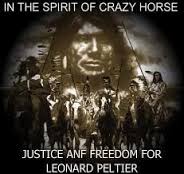
September 12 was Native American artist Leonard Peltier’s birthday, his 40th behind the bars of a jail in the USA. FRANCES MADESON pays tribute to him.

images

Leonard Peltier is the longest held Native American political prisoner in the U.S. He was wrongfully convicted in the 1975 killing of two FBI agents on the Pine Ridge Reservation in South Dakota. Leonard was at Pine Ridge at the request of the traditional elders who witnessed the brutal murders of over sixty Native people in what is termed the “reign of terror.” To date, no one has been charged or brought to trial [for those 60 murders] and yet he has served over 40 years for standing between the line of fire and the Keepers of our Sacred Ways on the very soil that was witness to the massacre at Wounded Knee. The trial for Leonard consisted of numerous documented constitutional violations, intimidation and coercion of government witnesses, falsifying of information, and manufactured evidence. Although the prosecutor admits “we don’t know who killed the agents,” and Mr. Peltier was denied the right to present a defense, he remains in a super-max penitentiary.

The Peltier capture and incarceration story is an important through line in the ongoing narrative of colonization of Native peoples. As much as one might desire to assign him dual hats — a jaunty beret for artist, a feathered warbonnet for AIM (American Indian Movement) freedom fighter — the identities are merged, and not readily separable; donning and doffing haberdashery is a privilege a man in Leonard Peltier’s position does not possess. He has but one vulnerable hatless, head, and it’s been on the chopping block for a very long time.

Read this article here.

An Attempt to Make Sense of Culture in Islam: Raoof Mir

Guest post by RAOOF MIR

Purity and corruption has remained one of the recurrent themes in the entire history of Islam. The arrival of Islam in Arabia did not mean a radical departure from the past. Wael B. Hallaq, a noted scholar on Islamic law and Islamic intellectual history establishes through his commendable work that “much of Arabian law continued to occupy a place in the Shari’ah, but not without modification.” Prophet Mohammed, who founded this new faith by introducing new nomos, also let several old customs and institutions to remain unchallenged. Despite his critical attitude toward the local social and moral environment, Prophet Muhammad was very much part of this environment and was deeply rooted in the traditions of Arabia.

Though the new converts to Islam entered into a new cosmological order, they at the same time, continued to adhere to the practices of old pagan culture. Since the arrival of Islam many individual reformists or reform movements have intended to reform Islam and decontaminate it from its ‘accretional’ aspects. These reformative endeavours envisaged a Muslim community that is not only socially distinct but also repudiates the pre-existing cosmological order. However, so far, there has been no end to this conflict. This conflict between the formal ideology of reformists (Textual Islam) and functional behaviour of the majority of the Muslims (Lived Islam) continues till today. Continue reading An Attempt to Make Sense of Culture in Islam: Raoof Mir

Appeal by the Striking Students of Delhi College of Art – Students of Delhi College of Art and Ambedkar University, Delhi

Guest Post by Students of Delhi College of Art, with a statement in solidarity by students of  Ambedkar University, Delhi (Department of Visual Arts)

[ This post compiles communications sent out by students of the College of Art, Delhi, their charter of demands (which include very basic and fundamental demands – and it is indeed a revelation that students have to resort to a strike to get this charter even noticed) and a letter in solidarity (see end of the post) with the College of Art students from Students of the Department of Visual Arts, Ambedkar University, Delhi. We are posting this to continue to bring to attention the condition of students of art, media and film in the country. Kafila has already posted articles on the conditions of the students of the Film & Television Institute of India. This post also needs to be seen in the context of the recent statement by the Minister of Culture, Government of India, about ‘cultural pollution’. Clearly, the rot is within institutions, and has not been caused, as the minister seems to think, by the ‘encroachment of Western culture’. We hope that this series of posts can contribute to a real debate about the state of art, culture and cultural institutions in India and the rest of South Asia. ]

Students of College of Art, New Delhi have been on strike for last thirteen days. The strike had to happen, when the individual voice of art students in the college was ignored and suppressed for years. This bundling up of dissent was inevitable.

Continue reading Appeal by the Striking Students of Delhi College of Art – Students of Delhi College of Art and Ambedkar University, Delhi

Old Age Culture Homes and other Cultural Pollutants – Lessons in Toxicity from the Minister of Culture

The world’s largest ‘cultural’ organization, the Rashtriya Swayamsevak Sangh (National Volunteer Organization) recently met with the minister responsible for what is probably, in real terms, the world’s smallest ‘culture’ ministry, the Ministry of Culture, Government of India. Under Khaki shorts, size does matter. The big tell the small, what’s what.

Continue reading Old Age Culture Homes and other Cultural Pollutants – Lessons in Toxicity from the Minister of Culture

Statement Against Prof. Kalburgi’s Murder: Academics for Democracy, Chennai

The following statement against the murder of Professor Kalburgi was issued by Academics for Democracy, a forum of academics based in Chennai.

As a group of academics and scientists who are involved in various ways towards promotion of democratic values, we wish to condemn the murder of Prof. M. M. Kalburgi, who was shot dead by unidentified gunmen on August 30th , in strongest possible terms.

Prof. Maleshappa Madivalappa is a well known writer in Kannada and a former Vice Chancellor of Hampi university, who  raised his voice against religious malpractices and superstitious ideas on several different occasions. He is an authority on vachana sahitya, whose collection of research articles titled Marga were academically acclaimed. He was awarded the Karnataka Sahitya Academy Award in 2006 for Marga. Continue reading Statement Against Prof. Kalburgi’s Murder: Academics for Democracy, Chennai

Muzaffarnagar Baaqi Hai – Critical Readings Online and Offline: Akash Bhattacharya and Arif Hayat Nairang

These are guest posts by Akash Bhattacharya and Arif Hayat Nairang

The film Muzaffarnagar Baaqi Hai has been in the news recently, and not always for the right reasons, having attracted disruptive and abusive protest at some screenings. Following a day of counter-protest in which the film was screened all over the country, a friend teaching in a Delhi University college suggested screening it in her college, only to be told by the student representative that it would “cause trouble” (“bawwal mach jayega ma’am!!”). She asked what that meant and if he had seen the film, and he simply said, “nahin, bhaiyya logon ne kaha hai ki woh film bahut buri hai” (No, but our elder brothers have said it’s a bad film). 

In an atmosphere where political self-censoring comes as easily to the current generation of students as scouring the net for “blocked content” we present below two readings of the reception of the film, the first ruminating on whether the film addresses the complexities of communal mobilisation adequately; and the second inquiring in the context of social media and particularly Facebook, what constitutes the ‘liking’ of an image or idea. The idea of posting these comments is as much to give space to these arguments as it is to make a larger point that the ‘sickular left’ voices that are presumably behind the film love discussion, critique and disagreement. That to my mind is the way forward, not pre-empting the always-already hurt sentiments of the bhaiyya log whosoever they may be.

Continue reading Muzaffarnagar Baaqi Hai – Critical Readings Online and Offline: Akash Bhattacharya and Arif Hayat Nairang

Hindutva: A Political Theory of Nationhood?: Aman Verma

Guest post by Aman Verma

It is disheartening to see amongst supporters of Hindutva these days a silent acquiescence and at times even active support for extra-constitutional techniques being adopted by organizations like the RSS and its offshoots towards attaining the goal of Ram Rajya. An assessment is necessary of what would ultimately entail on the social, political and economic fronts if such a policy that envisages a supposedly ‘Hindu’ cultural and linguistic hegemony over cultures and languages represented by minority communities becomes reality. However, being a student of law what disturbs me more is the absence of any socio-political entity or civil society movement rooted in values of democracy that can effectively counter the impact of Hindutva organizations on the Indian social fabric. While the BJP has its RSS, every other political party claiming to be the upholder of secularism lacks its equivalent, or at the very least an effective social protégé.

Further, my personal interactions with supporters of BJP reveals that there is some deep sense of hurt and helplessness, part valid for the sake of argument, but for the most part carefully manufactured by Hindutva propaganda, which manifests itself in questions a friend recently put to me, “What are the other ways in which the Hindus can also claim their rights and send out a message that they have been too tolerant for too long?” and another which sounded like “How else to keep our dignity and identity alive in our land?”. These questions, based upon presumptions like those of “Hindu tolerance” of acts perpetrated by other communities supposedly only against Hindus and, protection of a completely vague concept of “Hindu identity” are clearly an outcome of a campaign strategy that relies upon upping the antics on the romantic-nationalist front.

Continue reading Hindutva: A Political Theory of Nationhood?: Aman Verma

P.A.D.S. Statement on the killing of Prof MM Kalburgi – a sane voice against communalism and superstition

People’s Alliance for Democracy and Secularism (PADS)

Murder of another rational voice against communalism and superstition

The respected and loved Kannada scholar and writer MM Kalburgi was murdered by two unidentified men on August 30 at his home in Dharwad. The seventy seven year scholar was actively researching Vachanas literature of early Kannada and literature produced during the Adil Shahi period in Northern Karnataka. He was a source of wisdom for many students and scholars, and his killers gained access posing as students. He was also a vocal critic of religious superstitions and had been targeted by fundamentalists within his own Lingayat community and by Hindutva organisations. He had received many threats and his house had been attacked with stones and bottles. He was given police protection, which was withdrawn only days before his murder.

Professor Kalburgi’s cold-blooded murder has caused widespread shock and dismay in the literary and intellectual circles of Karnataka. Many protests involving ordinary citizens have been held in Bangalore and Dharwad. At least one Hindutva Bajrang dal activist has publicly welcomed the assassination, warned another rationalist of Karnataka, Prof KS Bhagwan of the same fate.

Prof Kalburgi’s killing comes after the murders of two other prominent critics of religious superstitions. Dr Narender Dabholkar was killed in 2013 in Pune. Trade Unionist and Communist Govind Pansare was killed in Kolhapur in February this year. There are uncanny similarities in the modus operandi of all three cases. It is likely that as in the earlier cases, the police will fail to solve Prof Kalburgi’s murder. Continue reading P.A.D.S. Statement on the killing of Prof MM Kalburgi – a sane voice against communalism and superstition

On keeping Open the Door that was Opened by Dr. Malleshappa Kalburgi

On Sunday morning, seventy seven year old scholar Dr. Malleshappa Kalburgi opened his door in Dharwad town in Karnataka to some people who asked for ‘sir’. They pumped bullets into ‘sir’ when he appeared in front of them. Throughout his life, Dr. Kalburgi had the habit of opening doors. His scholarship into Kannada literature opened many doors. Those who killed Kalburgi abused not just his hospitality, and his willingness to open his doors to strangers (he had asked that his security be ‘lifted’ despite threats to his life), they abused all the traditions in the world that promise kindness to strangers, and keep doors open.

Continue reading On keeping Open the Door that was Opened by Dr. Malleshappa Kalburgi

India Census 2011 – Where are the Atheists?

The consternation witnessed around release of religious figures in Census 2011 has rather overshadowed an interesting fact which has emerged through this mammoth exercise. It tells us that India has 2.87 million people who have no faith in any religion, which is around 0.24 per cent of our population. Definitely it includes not only atheists, rationalists but all those people who do not believe in any faith but some ‘unknown’ force.

Definitely it is a welcome development that the state has finally acknowledged their existence and what Dravid Kazhagam leader K Veeramani said ‘recorded their voice for the first time in the census’. but a cursory glance at earlier surveys and studies makes it amply clear that the figures are on the lower end. Continue reading India Census 2011 – Where are the Atheists?

The Murky Fourth Estate: Asifa Zunaidha

This is a guest post by ASIFA ZUNAIDHA.

[Some time ago, I wrote on Kafila about my experience of attending a televised interaction with HRD Minister Smriti Irani. The audience, packed with supporters of the particular party Irani belongs to, was set up in that debate as the neutral ‘public’, thereby killing two birds with one stone – boosting the popularity of the Minister on news media, and legitimising the news channel as a site of punchy political debate. We have below a similar case of manipulation of the powerful medium of electronic news media, this time by another channel.] 

What is the role of the news media in a society if not to disseminate information and opinions as an impartial media(tor)? ‘Half truth is no truth’ is a popular aphorism, but ‘selective’ truth is also a lie and certainly does not befit the content of a news channel. It seems that in an age of corporate media, one would be foolish to expect impartial truths, let alone ‘undiluted or uncensored’ opinion of diverse groups. A recent episode inside the JNU campus shows how ‘news’ presented by News Channels can be easily manipulated and the opinion of a ‘select few’ is showcased as the ‘unanimous opinion’ emerging from the premier higher educational institute of the country.

Continue reading The Murky Fourth Estate: Asifa Zunaidha

जनगणना में अल्पसंख्यक : नकली डर पैदा करने की कोशिश

‘ लोकप्रिय स्तर पर लोगों के लिए इस हकीकत पर गौर करना या उसे जज्ब़ करना मुश्किल जान पड़ता है जब उन्हें बताया जाता है कि बहुसंख्यक मुस्लिम आबादी वाले इंडोनेशिया की प्रजननक्षमता (कुल प्रजनन क्षमता दर 2.6) की दर बहुसंख्यक हिन्दू आबादी वाले भारत की तुलना में (कुल प्रजनन क्षमता दर 3.2) कम है। दरअसल इंडोनेशिया में प्रजनन क्षमता में कमी को परिवार नियोजन पर कारगर अमल, जो मुल्क की स्वास्थ्यसेवाओं के साथ अभिन्न रूप से जुड़ी हैं, से जोड़ा जा सकता है। हाल के समयों में बांगलादेश में भी परिवार नियोजन के बढ़ते स्तर ने वहां की प्रजनन क्षमता को में काफी तेजी से कमी दिखाई दी।’’
/फेक्ट एण्ड फिक्शन आन हिन्दुत्व क्लेम्स, आर बी भगत, सितम्बर 25, 2004, इकोनोमिक एण्ड पोलिटिकल वीकली )

1.
जनगणना के आंकड़े एक गतिशील समाज के तेजी से बदलते परिद्रश्य को उदघाटित करते रहते हैं। आंकड़ों का यह समुच्चय नीतिनिर्धारकों को ही नहीं समाजविज्ञानियों, राजनीतिक विश्लेषकों या सामाजिक-राजनीतिक कार्यकर्ताओं के लिए एक खजाने के तौर पर उपस्थित होता है, जिसका विश्लेषण करके वह अपनी समझदारी तय करते हैं या अपने हस्तक्षेप की रूपरेखा बनाते हैं। एक सौ बीस करोड़ से अधिक आबादी का भारतीय समाज – जहां दुनिया के लगभग सभी धर्मों के अनुयायी मिलते हैं – और जो अपने उपमहाद्वीपीय आकार के चलते ; भाषाई, सांस्क्रतिक तथा अन्य विविधताओं के चलते दुनिया भर के जनसंख्याविशारदों के लिए कुतूहल एवं अध्ययन का विषय बनता है, ऐसा ही नज़ारा उपस्थित करता है।

यह अलग बात है आज जबकि दक्षिण एशिया के इस हिस्से में बहुसंख्यकवाद अर्थात मेजोरिटेरियानिजम का बोलबाला बढ़ा है और भारत के इस हिस्से के धर्मनिरपेक्ष एवं समावेशी जनतंत्र के क्षरण की कोशिशें तेज हो चली हैं हम पा रहे हैं कि जनगणना के आंकड़ों के माध्यम से अपनी संकीर्ण राजनीति को ही हवा देने की कोशिशें तेज हो रही है, और उसके व्यापक निहितार्थों पर परदा डाले रखने के प्रयास चल रहे हैैं। यह महज इत्तेफाक नहीं कि बिहार विधानसभा चुनावों के ऐन मौकों पर जनगणना के धार्मिक आंकड़ों को जारी किया गया है ताकि उसके आंशिक निष्कर्षों को सामने लाकर अल्पसंख्यकों की ‘बढ़ती आबादी’ के नाम पर बहुसंख्यकों का ध्रुवीकरण किया जा सके और चूंकि 2001-2011 के दरमियान हिन्दुओं की आबादी की तुलना में मुसलमानों की आबादी अधिक बढ़ने के आंकड़े सामने आए हैं, लिहाजा उसी को लेकर एक नए ध्रुवीकरण के फिराक में वह दिखती है। विडम्बना है कि जनगणना के जाति सम्बन्धी आंकड़ों पर अभी भी चुप्पी है, जिसकी लम्बे समय से मांग हो रही है। Continue reading जनगणना में अल्पसंख्यक : नकली डर पैदा करने की कोशिश

Askmebazar.com – Dystopian Hyper-Consumerism and Pushy Advertising : Adnan R. Amin

This is a guest post by ADNAN R AMIN

It was an entertaining skit.

It opens with an animated evangelist (played by a dashing Bollywood leading man) talking about the dangers of stress and how it drains us. To the applause of an enthralled, glazed-eyed audience, he presents a man quivering uncontrollably – tap-dancing even – from extreme work-related stress. With the uproarious consent of the crowd, the evangelist introduces the poor specimen to Askmebazar.com. Miraculously, the man stops shaking and starts browsing through shopping items. He is instantly relieved of his stress and bathed in a halo-like glow. As the plot winds up, he is seen drowning in a deluge of delivery crates and boxes.

“One Click Therapy.”

This is the comical, over-the-top television commercial from Askmebazar.com, an online marketplace. While undeniably funny, the positioning idea is discomforting, if not problematic. Once we get past the comedy and the antics, the message of the commercial is darkly dystopian. It seems to say: if earning gives you stress, spending will relieve that stress. Meanwhile, here’s an app just for that. Continue reading Askmebazar.com – Dystopian Hyper-Consumerism and Pushy Advertising : Adnan R. Amin

A Different kind of India-Pakistan Dialogue

As NSA talks between India and Pakistan were suspended, another kind of cross border conversation was taking place.

The vocalist of Indian Ocean band, Rahul Ram along with Varun Grover and stand up comedian Sanjay Rajoura produced a song to the tune of Kishore Kumar’s ‘Mere Samnewali Khidki mein’ (from Padosan). Their song ‘Mere Samnewali Sarhad Pe’ is a delightful and gentle parody of the mirror image pathologies in both our countries.
In response,  Muhammad Hassan Miraj, who identifies himself as a Major in the Pakistan Army, wrote an equally disarming reply,  sung by Mujtaba Ali, with Ali and Kamran on guitar while Gul Durrani directed the video.
Here’s to cross border solidarities!

Of Hanuman, Pakistan and Bhaijaan: Prabhat Kumar

Guest post by PRABHAT KUMAR

Hanuman in the Enemy Land

What did our Ram-bhakt Hanuman do in Lanka, the land of his master’s enemy when he went there in the golden past? Everybody knows. What will Hanuman do, if today he is sent to Pakistan? Lankan voyage of Hanuman then, and cinematic expedition of his modern counterparts now (Sunny Deols of Border, The Hero, Ghadar, etc.), leave no room for imagination. Pakistan – the enemy land of India’s nationalist imagination – must be taught a lesson, as Rashtra-bhakt TV news anchors keep shouting from behind fire and embers on the screen.

We have seen on almost daily basis the bhakts, posing variously as Rashtra-bhakt or Ram-bhakt or lately as NaMo-bhakt. Bhakts, who persistently wish to annihilate the enemy land in TV studios, social media, or movie theatres. However, what a latest Hindi film Bajrangi Bhaijan shows is an unusual, or should I say, an abnormal bhakt. A bhakt, who does not want to destroy Pakistan! Lo and behold, he is a Hanuman-bhakt! He is called Bajrangi-Bhaijaan (Salman Khan). For, the word Bajrangi is a synonym of Hanuman, the ubiquitous monkey-god. He is bhaijaan because he is unable to lose his affection for a cute little girl even after knowing that she is a Muslim and, more than that, a Pakistani! Continue reading Of Hanuman, Pakistan and Bhaijaan: Prabhat Kumar