Category Archives: Culture

“Trashy Tastes” and Permeable Borders – Indian and Iranian Soap Operas on Afghan Television: Wazhmah Osman

We apologize to readers for having to take down this guest post by WAZHMAH OSMAN, which was a chapter from her Ph.D thesis from New York University, Thinking Outside the Box: Television and the Afghan Culture Wars.

The author has since written to us that she does not have permission to reproduce the entire chapter. Apologies to everybody all round!

download

A young Afghan poster seller displaying Smriti Irani as Tulsi

Image: Reuters/Ahmad Masood 

#youhadonejob: Or, A Quick Legal Primer for Publishers. Or, What (Not) to Do When Dinanath (and other busybodies) Strike

This post is co-authored by Aarti Sethi and Shuddhabrata Sengupta

Dinanath Batra is at it again. Not content with having bullied Penguin and Aleph into withdrawing Wendy Doniger’s “The Hindus: An Alternative History”, and “On Hinduism”, respectively, he has now trained his guns on Orient Blackswan. And, in what seems to be emerging as a frighteningly predictable pattern, Orient Blackswan has succumbed to Dinanath Batra’s “legal suits”, not just by agreeing to consider the withdrawal of  a book that had attracted Batra’s attention, but also by withdrawing another book, on sexual violence during communal riots in Gujarat, as a ‘preventive measure’ regardless of the fact that it had not even been targeted by Batra and his organization. Clearly these are interesting times for publishing in India.

There is no need to rehash arguments on the importance of free speech and the circulation of books and words and texts. These have been extensively discussed here on Kafila, and everywhere else. At this stage it might be useful to simply clarify some pressing “legal” matters as there seems to be a bewildering confusion rife amongst publishers as to what exactly a legal notice is. Thus, to begin:

What a Legal Notice Is:

A Legal Notice is a grouse sent by registered post and has the same legal standing. Namely, none whatsoever. Any crank with half an hour, a typewriter and money for postage can send a legal notice to anyone about anything. You do not even have to get a lawyer to draft it. You just need a few minutes on the internet where pre-drafted forms are available for free. Or, just for fun, try drafting one yourself. Since it has no legal validity anyway, be creative! Continue reading #youhadonejob: Or, A Quick Legal Primer for Publishers. Or, What (Not) to Do When Dinanath (and other busybodies) Strike

A Brave and Startling Truth: Maya Angelou

mayaangelou

April 4, 1928 – May 28, 2014

We, this people, on a small and lonely planet
Traveling through casual space
Past aloof stars, across the way of indifferent suns
To a destination where all signs tell us
It is possible and imperative that we learn
A brave and startling truth

And when we come to it
To the day of peacemaking
When we release our fingers
From fists of hostility
And allow the pure air to cool our palms

When we come to it
When the curtain falls on the minstrel show of hate
And faces sooted with scorn are scrubbed clean
When battlefields and coliseum
No longer rake our unique and particular sons and daughters
Up with the bruised and bloody grass
To lie in identical plots in foreign soil

When the rapacious storming of the churches
The screaming racket in the temples have ceased
When the pennants are waving gaily
When the banners of the world tremble
Stoutly in the good, clean breeze

When we come to it
When we let the rifles fall from our shoulders
And children dress their dolls in flags of truce
When land mines of death have been removed
And the aged can walk into evenings of peace
When religious ritual is not perfumed
By the incense of burning flesh
And childhood dreams are not kicked awake
By nightmares of abuse

When we come to it
Then we will confess that not the Pyramids
With their stones set in mysterious perfection
Nor the Gardens of Babylon
Hanging as eternal beauty
In our collective memory
Not the Grand Canyon
Kindled into delicious color
By Western sunsets

Nor the Danube, flowing its blue soul into Europe
Not the sacred peak of Mount Fuji
Stretching to the Rising Sun
Neither Father Amazon nor Mother Mississippi who, without favor,
Nurture all creatures in the depths and on the shores
These are not the only wonders of the world

When we come to it
We, this people, on this minuscule and kithless globe
Who reach daily for the bomb, the blade and the dagger
Yet who petition in the dark for tokens of peace
We, this people on this mote of matter
In whose mouths abide cankerous words
Which challenge our very existence
Yet out of those same mouths
Come songs of such exquisite sweetness
That the heart falters in its labor
And the body is quieted into awe

We, this people, on this small and drifting planet
Whose hands can strike with such abandon
That in a twinkling, life is sapped from the living
Yet those same hands can touch with such healing, irresistible tenderness
That the haughty neck is happy to bow
And the proud back is glad to bend
Out of such chaos, of such contradiction
We learn that we are neither devils nor divines

When we come to it
We, this people, on this wayward, floating body
Created on this earth, of this earth
Have the power to fashion for this earth
A climate where every man and every woman
Can live freely without sanctimonious piety
Without crippling fear

When we come to it
We must confess that we are the possible
We are the miraculous, the true wonder of this world
That is when, and only when
We come to it.

Maya Angelou

Continue reading A Brave and Startling Truth: Maya Angelou

Beyond the Elections – Need for a Vibrant and Credible Left

The Peaceful Counter-revolution

It may not be an exaggeration to say that what has just transpired is nothing short of a peaceful counter-revolution. Counter-revolution, not because there was an imminent threat of revolution that has been put down, but because the big bourgeoisie has finally put an end to the challenge from mass struggles that corporate interests had been facing. Struggles around land acquisition, the pressures for environmental clearance that held-up corporate projects, social welfare programmes that came in the way of the most unbridled pursuit of profit, and subsidies that supposedly introduced market distortions – all these had been greatly troubling the corporate sector and their ideologues. A campaign was built up, gradually over the past few years, to install a strong leader with a solid majority, who would give the bourgeoisie a free hand. And it must be admitted today that most of us failed to see where and how that threat was building up. We failed to see that for at least three, perhaps four years, the idea of the ‘Gujarat model’ was being put in place as a shorthand for an unrestrained play to private big capital.

Even when we realized that Modi was being pushed seriously, our eyes were still fixed on the older question of Modi’s culpability or otherwise in the 2002 carnage in Gujarat. The dream of the Gujarat model was sold over the years in many different ways, among precisely those sections whose support the Left (in its broadest sense) would have liked to enlist. The UPA government, of course, left no stone unturned in alienating itself from its popular support. Thus while important social welfare programmes, formulated under pressure from popular and social movements lagged behind in implementation, the neoliberal axis of Manmohan Singh, Chidambaram and Montek Singh Ahluwalia pushed relentlessly on matters like abolishing subsidy on cooking gas and direct cash transfers. The UPA government’s experience, in fact, showed that you cannot be all things to all people; that the interests of the big bourgeoisie and those of common people stand in irreconcilable contradiction. The balancing act cannot really go on for very long. Continue reading Beyond the Elections – Need for a Vibrant and Credible Left

Fly, Manju, fly!

For some time now, I have been arguing that the apparent acceleration of tension around gender in Kerala, especially on the male-female axis,is because Malayalee women of this generation, as a group, have become far more individuated than their mothers.

Several friends have been quick to point out that I may be wrong — there seems to be quite a bit of evidence that women of this generation, despite improved access to higher education, are crawling before patriarchy when asked to bend. I do not deny this, but I would still argue that it may not be evidence for their lack of agency and that their subversive behaviour may, in the long term, actually confuse the system enough to render it ineffective. My fieldwork of the last seven years has only made my belief stronger: wherever I go, I have met women who struggle within the system, whose fights may not be feminist in a certain familiar sense but yet contain a noticeable anti-patriarchal charge.

But more importantly, I say this because it is hard to ignore what I experienced for eleven whole years of my life when I was a housewife-cum-research student, in a very middle-class, upper caste, very average Malayalee family that typically embodied the uniquely modernised patriarchy of twentieth century Malayalee society. More than ten years after I escaped its confines, Manju Warrier’s comeback movie, How Old are You? made me return there. Fourteen years ago when Manju decided to quit acting, she was admittedly the most successful female actor in Malayalam, and perhaps the most talented as well. Before she became a successful actor, she had shown tremendous potential as a classical dancer. She chucked all this, to become an ‘ideal’ housewife, retreating behind the fame enjoyed by her husband, the actor, the very ordinary Dileep – in fact so ordinary that he almost symbolizes the ‘average’, mediocre, insecure, young-to-middle aged Malayalee male both in his roles and his off-screen behaviour.That was the time when I had begun to plot my escape. I knew how wrong her decision was — and it saddened me that members of yet another generation of Malayalee women were mistaking what was a gaping cellar-hole to be a snug refuge. Continue reading Fly, Manju, fly!

How The AAP Won Punjab: Harjeshwar Pal Singh

 This is a guest post by HARJESHWAR PAL SINGH

Amidst the unprecedented Tsunami of Modi which swept away opposition in most of the country, one result stood out as truly exceptional. AAM AADMI PARTY’s (AAP) stunning debut in Punjab. The virtually unheard of party in Punjab even 5 months before won 4 Parliamentary seats out of 13 and secured 25% of the popular vote announcing itself to be an equal of the ruling SAD/BJP combine and the opposition Congress. Two of its candidates Bhagwant Maan (Sangrur) and Prof Sadhu Singh (Faidkot ) won with a stunning margin of over 2 lakhs and 1.7 lakhs respectively. This popular groundswell of support which was ignored by most political analysts, conventional media and political parties had begun to take visible form through buzz on the street, social media and in common discourse by the election day.

What explains this massive upsurge by a fledgling political outfit lacking money, muscle, men and a local organization to humble two of the most well equipped political machines -SAD/BJP and Congress? Continue reading How The AAP Won Punjab: Harjeshwar Pal Singh

There’s a G on my Neck (again): Simran Kaur

Guest post by SIMRAN KAUR

Shekhar Gupta is at it again: lacing an insidious agenda with just enough actual facts that even the targets of his vitriol become eager to swallow. Aspiring Indian Journos, this is how a good Sardar Joke—and while you are at it, jibe at the poor, the rural, the unemployed, the mourning—is done, while earning your paycheck yet again as an esteemed Editor-in-Chief, at best with head-in-clouds, at worst, a stake-in-oppression.

Shekhar G’s latest thesis: The rest of the country has moved on but Punjab has become a prisoner of its boisterous old stereotype. It has forgotten its entrepreneurial energy, its competitive spirit and slipped into a complacent, decadent trance of perpetual balle-balle.

His first argument for the thesis of Punjab’s decline: “the Punjabification”…of Punjab. He bemoans that signs and posts are in Punjabi, in Punjab.

The 50s and 60s saw Punjabi Hindus becoming the unique community to denounce their own mother-tongue. Upping the ante, G. ridicules Punjabis who use Gurmukhi, the script developed in the time of the Sikh Gurus. He finds tell-tale signs over Punjab (he notes his fieldwork of actually travelling on the Grand Trunk Road and flying over Punjab by helicopter recently) of the people being un-couth:  signage on Punjabi establishments, in poor English.

You will take a minute figuring out what the “burgars” and “nudles” painted on so many fast-food shops mean, or why Lily is always spelt “Lilly”, whether it be the name of a restaurant in Phagwara or a beauty parlour in Bathinda…If you haven’t figured out already that this, indeed, is Singh’s English.

Brilliant two-birds strike, Shekhar G. Continue reading There’s a G on my Neck (again): Simran Kaur

BJP’s Campaign of Intimidation – A Report from Banaras: Monobina Gupta

Guest post by MONOBINA GUPTA

The narrow streets of Goduliya Chowk were bursting at the seams yesterday. It was the time of the famous Varanasi aarti at the ghats of the Ganga, a time when the crowd multiplies by several hundreds of people. Narendra Modi was preparing to head out on his triumphant road show through this area, choc-a-bloc full. The BJP’s activists were in a frenzied trance – waving saffron flags, flaunting Modi caps (a tawdry imitation of the original AAP trademark), dancing and chanting: Modi, Modi. As a person with no love lost for Modi, I responded to the exultant mood with some apprehension. My thoughts were straying to the nukkad sabha of the AAP that I attended last evening when a group of 20 young and old AAP volunteers had gone around campaigning for Medha Patkar’s meeting. I found myself thinking about the evening a couple of days ago when I stood with Anand Patwardhan and some activists who were distributing leaflets right there at Goduliya Chowk, and a group of BJP men came surrounded us. I thought about another night spent at Kabir Math Chowk after watching the Dastangoi performance – when a group of young men from Bangalore and Maharashtra were confronted by BJP supporters. I was worried about their safety standing amidst a crowd which appeared dangerous in its swaggering triumph. Yesterday, with Modi’s cavalcade approaching, frictions were reaching fever pitch – encounters one could not possibly see on the images on TV at home.

Standing there amidst the crowd, I spotted an elderly Sikh gentleman walking through the throng of people wearing his AAP topi. Suddenly a roar went up, as Modi sympathisers lunged after him shouting ‘pagal, pagal’ (mad/mad). A little distance ahead I saw another man wearing the AAP cap. The crowd spotted him too, and ran after them both, gesticulating, heckling. As I start walking quickly towards the men I saw them, seemingly unperturbed, walk right through the charging hoard, not a sign of nervousness about their gait. They were walking the confident walk of men who know no fear. Continue reading BJP’s Campaign of Intimidation – A Report from Banaras: Monobina Gupta

Attitudes towards Menstruation – Notes from Assam: Priyanka Chakrabarty

This is a Guest Post by PRIYANKA CHAKRABARTY 

GOOD NEWS, GOOD NEWS…They are blessed with a child! Oh, what child, boy or girl? This is the most common response that new parents will encounter, one that indicates what people find most interesting about a new birth. We examine its genital parts and then say, it is a boy or girl. During this time, the difference between male and female is only the biological difference of sex,  of the presence of the penis or the vagina. Gradually the child is ‘socialised’ (read normalised) into a ‘woman’ or a ‘man’.

One of the key aspects of a girl’s socialization is her introduction to the bodily process of menstruation. Superficially, and as a purely biological process, menstruation is the discharge of blood from the vagina. This is widely considered to be the ‘development’ of the female body and after the start of menstruation, a girl is believed to have attained womanhood –attained puberty. Continue reading Attitudes towards Menstruation – Notes from Assam: Priyanka Chakrabarty

Condemn the Massacre in Assam: A Statement by Civil Society Groups, Activists and Concerned Citizens

Text of a statement issued by Civil Society Groups and Concerned Citizens

5th May 2014

Condemn the Massacre in Assam, Demand immediate arrest of Pramila Rani Brahma; Ensure safety of Muslims in BTAD: A Statement by Civil Society Groups, Activists and Concerned Citizens

We, the undersigned, express our profound sense of grief and alarm over the gruesome massacre of Bengali-speaking Muslims on 2nd May. This most recent round of killings — in which 32 people, mostly women and children have lost their lives – is another link in the long and… bloody sequence of ethnic cleansing being carried out by tribal Bodo militant groups with impunity.

For years, Hindutva politics has successfully created the bogey of the ‘Bangladeshi’, rendering Muslims as suspects and targets, locked in a perpetual battle with the tribal Bodos. In his rally at Silchar, the BJP’s Prime Ministerial candidate reiterated precisely this. He said: “There are two kinds of people who came from Bangladesh to Assam: those brought as part of a political conspiracy for vote bank politics of a particular party (Muslims) and others who were harassed in the neighbouring country (Hindus). Those brought for vote bank politics and smugglers must be pushed back, while the second category must be accommodated.” (Silchar, 22nd February). Continue reading Condemn the Massacre in Assam: A Statement by Civil Society Groups, Activists and Concerned Citizens

नरेंद्र मोदी और मुसलमान

कुछ दिन पहले तक माफी की माँग की जा रही थी. पिछले कुछ सालों से नरेंद्र मोदी से बार बार अनुरोध-सा किया जा रहा था कि वे मुसलमानों से माफी भऱ माँग लें,बात रफ़ा दफ़ा हो जाएगी।मुसलमानों को सुझाव दिया जा रहा था कि वे माफी की सूरत में इंसाफ की अपनी जिद छोड़ दें.  ऐसे मुसलमान खोज लिए गए हैं जो यह बता रहे हैं कि इस्लाम में तीन दिन से ज़्यादा शोक की इजाजत नहीं है,अब तो बारह साल गुजर चुके हैं. यह भी कहा गया कि 2002 के बाद गुजरात में जो सामान्य विकास हुआ है, उसका लाभ आखिर वहाँ के मुसलमानों को भी हुआ है. मानो हत्याओं और बलात्कार की भरपाई उस विकास के माध्यम से कर दी गई है.

अब पिछले कुछ वक्त से यह कहा जाने लगा है कि नरेंद्र मोदी तो अपने अतीत से आगे बढ़ जाना चाहते  हैं, ये तो उनके निंदक हैँ जो उन्हेँ आगे बढ़ने देना नहीं चाहते. इस तर्क से नरेंद्र मोदी प्रगतिशील, भविष्यद्रष्टा और उनके आलोचक प्रतिक्रियावादी व शिकायती दिखने लगे हैं. मुसलमानों को पहले से ही कहा जाता रहा है कि उन्हें पीड़ित-ग्रंथि से बाहर निकलने और आगे देखने की आदत डालने की ज़रूरत है. इस प्रकार का सुझाव कई बार दबे-ढँके तरीके से और अब तो खुले आम दिया जाने लगा है कि उन्हें यथार्थवादी होना चाहिए. मतलब मान लेना चाहिए कि भारत में यह सब कुछ बीच-बीच में उनके साथ होता रहेगा. अगर वे इंसाफ वगैरह की जिद पर अड़े रहे तो उनकी बाकी जिंदगी का क्या होगा ! क्या वे तमाम ज़िंदगी रोते-कुढ़ते ही गुजार देंगे? Continue reading नरेंद्र मोदी और मुसलमान

What is ‘communal’? The problem of false equivalence: Sheba Tejani

Guest post by SHEBA TEJANI

Although the BJP has attempted to build a campaign around the issue of “vikas” during this election, the hate filled fumes of “communalism” keep slipping through the cracks. Last week, we heard Ramdas Kadam say that Modi would find a permanent solution for recalcitrant Muslims and ship them off to Pakistan, which he would also incidentally destroy in six months. Giriraj Singh wanted to send everyone who opposed Modi to Pakistan. A video clip showed Praveen Togadia inviting his audience in Bhavnagar to evict Muslims and forcibly occupy their homes, openly encouraging criminal activity. FIRs have been filed against Kadam and Togadia after the Election Commission took note of their speeches while Singh has been barred from campaigning.

But then some would say other candidates and parties are no better and make similarly incendiary remarks: Shazia Ilmi, AAP’s candidate from Ghaziabad recently urged a group of Muslims to be more “communal” and less “secular” in deciding whom to vote for. She urged them to defend their own interests and to vote for one of “their own”, including Arvind Kejriwal in that category. Continue reading What is ‘communal’? The problem of false equivalence: Sheba Tejani

Modi Thugs on the Rampage – Where is the EC?

UPDATE on yesterday’s news

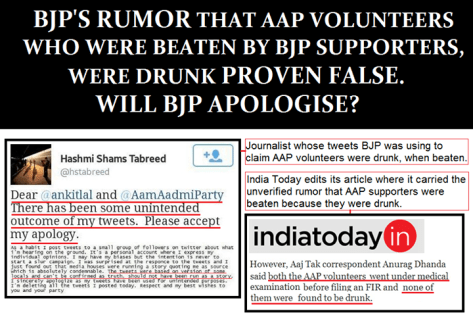
BJP's lie exposed

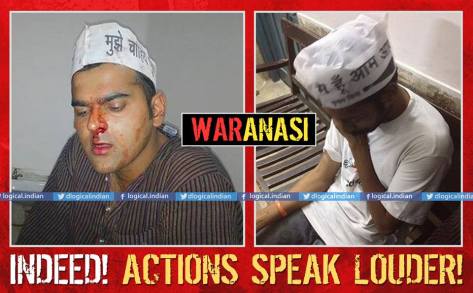
Reports of Modi Thugs on the rampage in Benaras: Over the last few days, as the days of the election appraoch, Modi supporters have become more and more desperate and violent. This is just one in a long series of disruptions of meetings and attacks that has been meted out by the goon squad to AAP volunteers.

जिन्हें नाज़ है हिन्द पर वो कहाँ हैं? उन्हें  ये गलियाँ, ये कूचे, ये मंज़र दिखाओ…

AAp activists attacked by Modi Thugs

Continue reading Modi Thugs on the Rampage – Where is the EC?

Implausible Deniability – Reading Amish Tripathi’s ‘Shiva’ Trilogy: Eric Gurevitch

Guest Post by Eric .M. Gurevitch

A few years ago I had the pleasure of sitting in on a seminar Wendy Doniger taught on Hindu Mythology. On the final day of the class, Professor Doniger was addressing the continuing questions of students. A young man raised his hand and was called upon. “Professor Doniger,” he said somewhat sheepishly, “why do Indians keep retelling the same stories over and over again?” The rest of the students looked on somewhat aghast—clearly this student hadn’t understood the point of the class at all. But Doniger just chuckled. “Well,” she said, a sly grin creeping across her face, “because they can never get them quite right.” Her point is a simple but powerful one. As she went on to explain to the class (and in her book The Implied Spider), the stories we tell reflect the world around us. And as soon as we write a story down, the world we were trying to capture has changed. We cannot help but retell the stories that we value—after all, they are never quite right for us—in our time. And even if we manage to get them quite right, they are only right for us—other people living around us will have different reasons for telling similar stories, for appealing to the same stock of authoritative figures for different purposes. The importance of analyzing the implications of retelling of Indian stories takes on new meaning in a modern India where Wendy Dongier’s controversial book The Hindus, an Alternative History is no longer sold in stores.

Continue reading Implausible Deniability – Reading Amish Tripathi’s ‘Shiva’ Trilogy: Eric Gurevitch

Modi-Fascism and the Rise of the Propaganda Machine

Almost every day, Modi takes off from Ahmedabad airport in an EMB-135BJ, an Embraer aircraft, for his rallies. The jet is owned by Karnavati Aviation, a group company of the Adani Group. “We record two movements of Modi’s aircraft daily. No matter where he goes to address rallies, he always comes back home,” said an air traffic control official.

Recently, Modi’s aircraft was denied permission to fly by DGCA in Delhi for over two hours, following which he lashed out at the central government for stalling his movement. Ever since, Modi has increased the use of choppers to cover smaller distances. “Mostly, politicians use chopper to reach places where bigger aircraft can’t reach,” said an ATC official.

Over the past few days, Modi flew in an Augusta AW-139 chopper, owned by the DLF Group, for his rallies in north India, especially in Uttar Pradesh and Bihar. ‘Fleet of 3 aircrafts ensures Modi is home every night after day’s campaigning’, Times of India, April 22, 2014

The Political Culture of Fascism

In an earlier post, I had joined issue with a section of liberal intellectuals, whose ‘liberalism’ was either rendering them too gullible or simply complicit in the formation of the Narendra Modi phenomenon – which I have no hesitation in referring to as the Indian edition of fascism. The gullibility or complicity of many of these intellectuals also manifests itself in the myopia that grips them when the talk about the impending challenge before democratic politics in India – a brief glimpse of which is provided in the quote above, that indicates the alliance, the power bloc that will rule, were Modi to come to power.

The Modi-formation is ‘fascism’, in the sense that it takes direct inspiration from the particular history that goes by that name, especially its Nazi episode and knows that even though it cannot replicate the conditions of its existence in India, it can nevertheless use its cardinal ideas. The exaltation of the Nation/ nation-state, the manic obsession with ‘national security’ to the extent of the destruction of democratic rights, identification and suppression of scapegoats – the Other (the Jew, the Muslim, the homosexual, and all kinds of ‘wayward’ sexualities – often, all rolled into one) and of course, the intellectuals, artistes and human rights activists. A key aspect of this political culture is the combination of violence with mass frenzy that is sought to be continuously whipped up and directed against the imagined enemies of the ‘Nation’. Continue reading Modi-Fascism and the Rise of the Propaganda Machine

Lesser Citizens: Trapped in a Queer world of Dystopia: Indrani Kar, Shuvojit Moulik & Somya Tyagi

This is a guest post by Indrani Kar, Shuvojit Moulik & Somya Tyagi

Any dominant, mainstream model undoes the very idea of multiple modes of living and diversity which excludes the real demands of the minority groups and contributes to their social exclusion. Whereas everyone is entitled to equal and inalienable rights and opportunities set forth in the Preamble to the Constitution of India without distinction of any kind, such commitments are yet to be translated into action. Although Article 21 of the Constitution guarantees ‘Right to life and personal liberty’ to all, of which the Right to Healthcare forms an integral part, a large section of the society is still insensitive to the healthcare needs of the transgender community.

n1

The transgender population faces grave misunderstanding, prejudice, harassment, ridicule, rejection and even exploitation at the hands of health service providers as they do not fit into the society’s prescribed, rigid gender roles. Though the transgender community is hardly a homogeneous entity and is considerably diverse in terms of gender identity and livelihoods, in public imagination such complex identities of gender ranging from hijra to transgender are all lumped into one category, which becomes extremely problematic. Unfortunately, government policies also seem to feed on these generalisations, making use of such umbrella terms rather than focus on the specific needs of different groups.

Continue reading Lesser Citizens: Trapped in a Queer world of Dystopia: Indrani Kar, Shuvojit Moulik & Somya Tyagi

The Pro-Establishment Intelligentsia and the Modi Phenomenon

For several months, I have been hearing Narendra Modi’s campaign speeches quite regularly, paying attention to his themes, rhetoric and imagery. As expected, he has vigorously attacked key political opponents — the Nehru-Gandhi family, Nitish Kumar, Mulayam Singh Yadav. But a systematic silence has also marked his campaign. Quite remarkably, Hindu nationalism has been absent from his speeches.

This is the opening paragraph from an article by an important US-based Indian political scientist, Ashutosh Varshney. This article, published in the Indian Express on 27 March 2014, under the caption “Modi the Moderate” has been now followed up by another piece in the same newspaper that somewhat modifies the earlier position, this time by “Hearing the Silence”. Strange that he did not hear the silence in the first instance, even after having listened to Modi’s speeches closely (‘paying attention to his rhetoric and imagery’). Not that he did not ‘hear the silence’ then. He did, but just two weeks ago, identified the silence as being about Hindu nationalism. In the second piece, the silence is apparently about  minority rights. How did he read the silence as one thing two weeks ago and as just the opposite two weeks down the line? What exactly was he reading?

Intellectuals generally take words very seriously. Words in their insularity, words in their most manifest meanings. But really, do words mean anything in and of themselves? One line of argument that derives from within the ancient Mimamsa tradition, for example, would argue that meaning lies in the way words are chosen, arranged and formed into sentences. There is something that happens in this process which Mimamsa scholars call ‘akanksha’ – or the expectation that this arrangement within a text generates in the reader of the text. The meaning that a text produces then, is a matter of a complex negotiations between the text and the reader – the bearer of akanksha. And since the reader is never one but many, the expectations that the text generates in different readers could arguably be many. Continue reading The Pro-Establishment Intelligentsia and the Modi Phenomenon

लोकतंत्र का अंतिम क्षण

कैमरा बार बार जा कर उसी क्षण पर टिकता था.मेरी बेटी ने विचलित होकर कहा, “चैनल बदल दो, अच्छा नहीं लग रहा.” लेकिन चैनल उस थप्पड़ की आवाज़ न सुना पाने की लाचारी की भरपाई उस दृश्य को दुहरा-दुहरा कर कर रहे थे. उन्हें सोलह साल की मेरी नवयुवती बेटी की तड़प क्योंकर सुनाई दे? चैनल बदलते अधीर दर्शक इस दृश्य से वंचित न रह जायें, इस चिंता के मारे उसे हथौड़े की तरह बार-बार बजाया गया.

यह हमला था. लेकिन हिंदी में हमला कहने पर हिंसा का बोध अधिक होता है,सो अखबारों ने ‘केजरी को थप्पड़’,‘पहले माला फिर थप्पड़’, ‘केजरीवाल को फिर थप्पड़’ जैसे शीर्षक लगाए. भाषा का अध्ययन करने वाले जानते हैं कि शब्दों के चयन के पीछे की मंशा उनका अर्थ तय करती है. ‘थप्पड़’ कहने से हिंसा की गंभीरता कम होती है और हिंसा के शिकार की कमजोरी ज़्यादा उजागर होती है. थप्पड़ से किसी की जान नहीं जाती, उसकी निष्कवचता अधिक प्रकट होती है. उसमें किसी योजना की जगह एक प्रकार की स्वतःस्फूर्तता का तत्व होता है. कहा जा सकता है कि थप्पड़ मारने वाले की मंशा सिर्फ नाराजगी का इजहार था.अंग्रेज़ी में भी ‘स्लैप’ शब्द का ही इस्तेमाल किया गया, यह भी लिखा गया, “केजरीवाल स्लैप्ड अगेन”. इसमें हमला करने वाले से ज़्यादा हमले के शिकार की ही गलती नज़र आती है, मानो उसे मार खाने की आदत सी पड़ गई हो. आदतन मार खाने वाला सहानुभूति की जगह हास्य का पात्र बन जाता है. Continue reading लोकतंत्र का अंतिम क्षण

Some Myths About Muslims

Received via Shankar Gopalakrishnan

As the 2014 elections begin, the time has come again to state the obvious. In the context of massive propaganda campaigns, the subtle use of stereotypes, and the fact that both the Western and the Indian media share certain basic biases, many people end up believing in a range of myths about the adherents of the world’s second largest religion. This is a quick attempt at exposing those myths.

Myth: ‘Muslim’ countries are never secular. Muslims do not tolerate minorities in ‘their’ countries but demand minority rights in other countries.

The world’s largest Muslim majority country is Indonesia (total population approximately 25 crores, larger than Pakistan). Indonesia is a secular democracy. Indeed, its population is almost a mirror image of India’s – 88% Muslim, 9% Christian, 3% Hindu, 2% Buddhist, etc. (as compared to India, which has a population that is 80% Hindu, 13.4% Muslim, 2.3% Christian, etc.) Indonesia’s national slogan is “Unity in Diversity.” Yes, Indonesia has occasional riots and bomb blasts, but so does India.

In reality the majority of Muslim majority countries in the world are secular. Several large examples include Turkey, Mali, Syria, Niger, and Kazakhstan. Despite having Islam as ‘state religion’, Bangladesh’s government is also secular in law. The same is true of many other countries. Only six countries in the world claim to use Islam as the basis of their law making – and their total population is roughly the same as the population of Indonesia, Turkey and Kazakhstan combined. In other words, the vast majority of Muslim majority countries are secular, and the vast majority of Muslims live under secular governments.

Myth: Not all Muslims may be terrorists, but most terrorists are Muslims.

Continue reading Some Myths About Muslims

मर्दवादी और असमान सामाजिक व्यवस्था में स्त्री प्रतिरोध – ‘हाईवे’: धर्मराज कुमार

Guest Post by धर्मराज कुमार

वर्त्तमान परिदृश्य में हमारे इर्द-गिर्द जितने भी विमर्श मंडराते नजर आ रहे हैं उन सबके के आक्रामक शुरुआत को सोलह दिसंबर की बलात्कार की घटना से जोड़े बगैर नहीं देखा जा सकता है। इसमें कोई शक नहीं कि उस रात को दहला देने वाली घटना तक को कई खांचों में रखकर देखा जाता है। उदाहरणस्वरूप, आलोचना के तौर पर यह भी कहा गया कि निर्भया अभिजात वर्ग से आती थी इसलिए उसके बलात्कार ने पूरे देश की राजनीति को झकझोर कर रख दिया। जबकि उसी दरम्यान दिल्ली के करीब हरियाणा में कई दलित और सामाजिक रूप से प्रताड़ित लड़कियों और महिलाओं का निर्ममता से बलात्कार किया गया और मारकर फ़ेंक दिया गया और जिसका आज तक कोई अता-पता तक नहीं है। इससे भी इंकार नहीं किया जा सकता कि दिसंबर की घटना के पहले भी अनगिनत बलात्कार की घटनाएं हररोज हो रही थी और उसके बाद भी हो रही है। मगर कभी भी किसी विरोध ने इतना विकराल रूप धारण नहीं किया जिससे देश की राजनीति को हिलानी तो दूर उससे आजतक न्याय प्रक्रिया में गति तक आ सके। इसके कई कारण हैं।
मेरा उद्देश्य उस तरफ ध्यान खींचना कतई नहीं है। मेरा उद्देश्य है मुख्यधारा में इन मुद्दों से जुड़ती सवालों को उठाये जाने की तरफ ध्यान ले जाना। मैं बात कर रहा हूँ मुख्यधारा में चल रही फिल्मों और उससे जुड़े सवालों के ऊपर। फ़िल्म समीक्षा की दुनिया में ऐसा कम ही देखने को मिलता है जब कोई फ़िल्म अपनी रिलीज के बाद एक चर्चा का विषय हो या विवाद का हिस्सा हो। बल्कि तमाम विचारधारा से जुड़े लोग जब किसी फ़िल्म के ऊपर अपनी प्रतिक्रिया जताने लगे इसका मतलब है कि ऐसी फिल्में लोगों को संवाद करने के लिए विवश कर रही हैं। Continue reading मर्दवादी और असमान सामाजिक व्यवस्था में स्त्री प्रतिरोध – ‘हाईवे’: धर्मराज कुमार

गोधरा भूल भी जाएँ पर इन आंकड़ो को कैसे भूलें, मोदी जी? : संजीव कुमार

Guest post by SANJEEV KUMAR

अगर हम 2002 के गोधरा के जनसंहार को भूल भी जाये तो भी आतंकवाद के दमन के नाम पर सिलसिलेवार ढंग से हो रही फर्जी मूठभेड़ो में मुसलमानों की हत्या को हम कैसे भुला पाएंगे। कुछ देर के लिए अगर हम इन क़ानूनी हत्यारों को भी भूल जाएँ और प्रदेश में पिछले 10 वर्षों के दौरान मुसलमानों की आर्थिक और शैक्षणिक विकास पर नजर दौड़ाए तो पता चलेगा की मोदी सरकार ने गुजरात के मुसलमानों के साथ किस प्रकार की भेदभाव की नीति को सुविचारित ढंग से आपनाया है।
गुजरात में मुसलमानों की जनसंख्या गुजरात की कुल जनसंख्या का 9.7% है पर वर्तमान सरकार द्वारा पिछले एक दशक में चलाये गए SJSRY (स्वर्ण जयंती शहरी रोज़गार योजना)  और NSAP (नैशनल सोशल असिस्टेंस प्रोग्राम)  योजना को छोड़कर ज्यादातर योजनाओं में मुसलमानों की भागीदारी उनके जनसंख्या के अनुपात से कम ही है (सच्चर समिति रिपोर्ट, पृ.स. 178)। उदहारण के तौर पर कृषि बीमा योजना में मुसलमानों की भागीदारी मात्र 3.5% है, जबकि पॉवर टिलर आवंटन के मामले में मुसलमानों की भागीदारी मात्र 1.4% और ट्रेक्टर के मामले में 4.1% है। गुजरात में मोदी के शासन काल में सहकारी बैंक या ग्रामीण विकास बैंक से वहां के मुसलमानों को किसी प्रकार का कोई कर्ज नहीं मिला है (सच्चर समिति रिपोर्ट, पृ.स. 373-75)। Continue reading गोधरा भूल भी जाएँ पर इन आंकड़ो को कैसे भूलें, मोदी जी? : संजीव कुमार