
In the past few weeks, I have been asked over and over again, not always in jest, if I had joined the Popular Front. I am not surprised. The police investigation around the violence against the college teacher at Muvattupuzha has broken all previous records in not only the violation of human and civil rights, but also in the silence of Kerala’s enlightened intellectuals. If I recall right, only Nandigram evoked such a dense and deliberate silence from them. No wonder, anyone who speaks up against the manner in which the police is being armed and authorized against ‘bad muslims’ is immediately dubbed a supporter of the Popular Front. But I am intrigued by this simple question, by which the entire history of that person’s engagement with discussions around religion and the state is erased. Continue reading Have I Joined the Popular Front?
Category Archives: Culture
SMS booklets – guidelines for messaging addicts: Rafay Mahmood
 [Sent to us by S. Akbar Zaidi, this article by RAFAY MAHMOOD was first published in The News of Pakistan. We are reproducing the this brilliantly funny report of the complete absence of boundaries between different forms (sms, print, internet) and the eclectic urge to take and assemble, to crack jokes, to create poetry – all in the service of the joy of life.]
“Tum Bijli, Pani or Train ko Rote ho Faraz / Is Mulk Mae Tau Toofan Bhi Time Per Nahin Aata”… This message was circulated all over the city when cyclone Phet proved to be an anti-climax for Karachiites by arriving late and then changing course before it hit the city’s coast. The brains behind this poetic gem is ‘Faraz’, who baptizes every new cell phone with one of his socially relevant yet romantic poetic masterpieces. He is a legend, the undisputed king created by messages being forwarded on cell phones.
The Short Messaging Service (SMS) plays a key role in our lives today and the SMS culture has not only redefined the identity of people like Faraz but has also spawned the creation of an SMS book industry. Continue reading SMS booklets – guidelines for messaging addicts: Rafay Mahmood
Maya Bazaar
Its 6.30 am on a mid-May Sunday morning in Bombay, India’s favourite metropolis-on-the-sea. Like a sudden gift from a dying relative, an unseasonal chilled breeze is blowing in from the ragged beaches of the city. I put my sandals on and go downstairs from my flat to meet three friends; all of us having decided to do what Bombay dwellers do periodically – use a Sunday to make friends with the city again, to momentarily cease the war that rages, unbidden, every other day of the week. Continue reading Maya Bazaar
Gallows, Memorial, Prison, Fort, Lost City
(First published in the May 2010 issue of Terrascape. Photographs by HIMANSHU JOSHI.)

I am old and cranky and am getting balder and cynical by the day, I have started looking more and more like the medieval ruins that I haunt. This haunting of forgotten ruins, is probably the reason why I am a little out of touch with T20, IPL and such other earth shaking events. This is also perhaps why I tend to get more than a little edgy when people begin to talk of memorable matches, great catches and those classic innings, the moment I say Firozeshah Kotla ! These gentlemen and ladies have, in most cases, nothing to do with the game, that G.B.Shaw despised so vehemently, and yet they are all chronic enthusiasts of the game. Continue reading Gallows, Memorial, Prison, Fort, Lost City
‘The Making of a Modern Indian Artist-Craftsman – Devi Prasad’: Naman Ahuja
This is a guest post by NAMAN AHUJA, who teaches in the School of Art and Aesthetics, JNU and has recently put together this fascinating exhibition that is on in Lalit Kala Academy, Delhi till 21 May

The Making of the Modern Indian Artist-Craftsman is intended to be a biographical and critical insight into the work of the potter, painter and photographer Devi Prasad. Apart from the making of his personal history and his times, it leads us to why the act of making (art) itself takes on such a fundamental philosophical significance in his life. This, I feel, derives directly from his absorption of Gandhi’s philosophy that looked at the act of making or doing as an ethical ideal, and further back to the impact of the Arts and Crafts Movement on the ideology of ‘Swadeshi’ and on the milieu of Santiniketan.
The exhibition and the accompanying book examine Devi’s art along with his role in political activism which, although garnered on Indian soil made him crisscross national borders and assume an important role in the international arena of war resistance. Devi Prasad graduated from Tagore’s Santiniketan in 1944 when he joined the Hindustani Talimi Sangh (which espoused the concept of Nayee Taleem) at Gandhi’s ashram Sevagram as Art ‘Teacher’. His political consciousness saw him participate actively in the Quit India Movement in 1942, in Vinoba Bhave’s Bhoodan and later from 1962 onward as Secretary General (later Chairman) of the War Resisters’ International, the oldest world pacifist organisation based in London. From there he was able to extend his Gandhian values internationally. All of this, while continuing with his life as a prolific artist. Rather than view them as separate worlds or professions, Devi harmonises them within an ethical and conscionable whole. He has written widely on the inextricable link between peace and creativity, on child /basic education, Gandhi and Tagore, on politics and art, in English, Hindi and Bangla. In 2007 he was awarded the Lalit Kala Akademi Ratna and in 2008, the Desikottama by Visva Bharati University, Santiniketan.
Continue reading ‘The Making of a Modern Indian Artist-Craftsman – Devi Prasad’: Naman Ahuja
The Chetan Bhagat Plot Generator
Tharoor-Pushkar Soap and Tabloidization of the Media: Vineetha Mokkil
This is a guest post by VINEETHA MOKKIL.
The Shashi Tharoor-Sunanda Pushkar tango has unleashed many demons. They woke up the country’s finance minister and party colleagues from a willful sleep. They are set to end Lalit Modi’s glitzy reign as IPL chief. The Tharoor-Pushkar coupling also let loose a spectre of another kind. It infected the electronic and print media with an epidemic of tabloidisation of unprecedented proportions. As soon as the first whiff of the story permeated the air, the strain of tabloid journalism that has been seeping into the Indian media scenario for over the last 15 years found the perfect setting to multiply and mutate and infect dailies, magazines and television channels across the board.
Newspapers and television channels which claim to occupy higher ground than lowly tabloids played out the entire episode like a soap opera. Headlines went overboard with the ‘wink-wink, nudge-nudge’ game. (Sample these: ‘Tharoor Unleashes Attractive Weapon,’ ‘Minister’s External Affair,’ ‘Got A Girl, Named Sue’). Sensationalism reigned supreme as columnists and hyper-ventilating television anchors marched in, flying high the flag of yellow journalism. Biased, personal opinion was paraded as fact. Unnamed sources came crawling out of the woodwork, spilling secrets of all sorts about the lead players.
Continue reading Tharoor-Pushkar Soap and Tabloidization of the Media: Vineetha Mokkil
Sree Narayana Guru, the Left, and Chitralekha: Joe.M.S.
This is a guest post by JOE M. S.
The recent controversy associated with the brutal persecution of a Dalit working woman, Chitralekha by the hoodlums of a ‘leftist’ union has gained wide attention, bringing into limelight the plight of Dalits in Kerala. The men who participated in this ’festival of masses’, according to reports, predominantly belong to the backward caste Ezhava/ Theeya community. Anybody with a bit of social concern would have definitely condemned the incident . They would even have expressed their regrets at the deviation of the people belonging to Ezhava caste, the disciples of Srinarayana guru, the famous social reformer, from the avowed policies advocated by him. But I think, here lies a problem. A re-look at the social history of Kerala is needed to understand whether the Chitralekha incident is a deviation from the pronounced objectives of the Srinarayana movement as such, as it is popularly understood, or the roots for such a development was inherent in the trajectory of the Narayana movement itself. This does not belittle the genuine intentions Guru had for social emancipation, at a personal level.
In spite of the cultural specificities of northern Kerala where these atrocities were perpetrated on Chitralekha, I think a general study of the impact of Srinarayanism on the whole of Kerala may be of some help to analyse the increasing backward caste arrogance vis-a-vis Dalits. This is particularly so as the discourse on the assumed efficacy of Sri Narayana Guru’s thought is invoked constantly by the civil society of Kerala, eternalising his importance in all spheres. So I think, a glance at the impact of his life and efforts can shed light on the of the constitution/ construction of modern Ezhava identity and the problems associated with it.
Continue reading Sree Narayana Guru, the Left, and Chitralekha: Joe.M.S.
Jayaram and Tamil – Some scattered thoughts on the anti-black mass culture in Kerala: JoeMS
This is a guest post by JOE MS
The recent ‘jest ‘of film star Jayaram against the Tamil as black skinned , buffalo like and therefore less human has been taken as just a joke in the cultural scene of Kerala. Not only has sympathy been expressed for the poor victim that he is, inadvertently cracking an innocent joke and becoming the target of the ire of ‘violent’ Tamils, even solidarity was expressed with the right to crack such jokes by the ’ordinary folks’. The latent ideological and cultural premises hidden behind this whole controversy needs to be enquired into, to understand the reality. The natural outburst of violence against Jayaram for upholding the dignity of the Tamil has been understood by the ‘superior’ Malayali culture as typical of those who are inferior, passionate, emotional, devoid of political education , filmy so on and so forth.
The height of irony was the sigh of relief heaved by Sebastian Paul, the (retired? ) left liberation theologist, in his newspaper article in Madhayamam (dated 12th February), for the end of the controversy as the fight against Jayaram subsided in Tamilnadu. Here he presumes that Jayaram only made a joke, and therefore absolved him of all sins (because of the kinship of the Malayali fraternity), and holds that the Tamils reacted violently and unnecessarily , which is nothing but parochialism. This is no wonder. At the level of mass culture, cracking of jokes and the ‘wit’ mania , epitomised by ‘mimicry’ as a form of entertainment, which basically insultingly ‘mimics’ a range of people from the physically challenged to the people of subaltern cultures, and internalised by the Malayalee to fill the philosophical void in his competitive life, is simply racist. Popular culture as practiced in Kerala, is naked racism, which would have called forth acts of reprimand even from a capitalist state in the west. And all such jokes have however escaped criticism of the left-oriented Kerala.
Bagh-e-Bedil
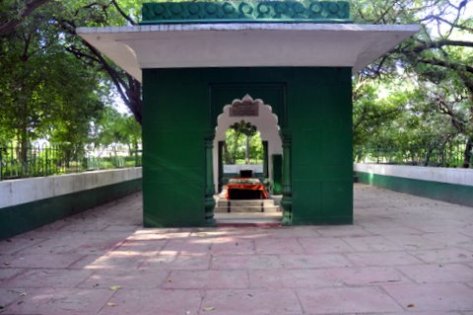
As part of the Festival of Spiritual Music being organised in February 2010, we are trying to rekindle interest in Mirza Abdul Qadir “Bedil’ one of the most significant poet of Persian from India. In fact Khusrau, Bedil and Ghalib are rated very highly in persian speaking countries. Khusrau and Ghalib need no introduction but Bedil has almost totally been forgotten in the Land of His Birth. Mirza Bedil is buried roughly opposite the dargah of Matka Peer, that all of you must be familiar with because of Bundoo biryaani wala.
We have got one of the finest qawwals of Delhi, Chand Nizami, and his group to specially prepare a few ghazals of Mirza Bedil and they will be presented in a qawwali mehfil at the shrine of Mirza Bedil on Feb 25,at 6.30 pm. Continue reading Bagh-e-Bedil
Miss Rajdhani Contest
Of SubTerrains and Seismology: Notes on the Contemporaneous in India
Guest post by MOHD. SABIH AHMED
Of SubTerrains and Seismology: Notes on the Contemporaneous in India [1]
If the starting point of an enquiry is to investigate into the larger ambit of cultural production in which a notional unity of ‘contemporary art’ is one formation, the study of alternative systems/networks/formations would not suffice merely as mapping them as ‘alternative art’ in the same field. Instead, the demand would be to trace the contexts that give rise to a necessity for peculiar and disparate kinds of alternatives, and how certain cases instigate the field, maybe even risk rearranging the very conceptual and pragmatic constituents of that field.
This paper is a series of ponderings, questions, and a hesitant proposition regarding the above-mentioned, as much as it is an exposition on the state of affairs of that notional unity that is ‘Contemporary Art in India’. Continue reading Of SubTerrains and Seismology: Notes on the Contemporaneous in India
Inaugurated: The Malabar Moral Police!
The dastardly attack on the eminent writer Paul Zachariah by the DYFI in the CPM fortress of Payyanur in north Kerala on 10 January has been roundly condemned across the political spectrum in Kerala. Zacharia was heckled and abused at a literary seminar organized by a publisher for criticizing the moral policing practiced by the official left in Kerala. He condemned the recent DYFI-PDP joint ‘moral action’ against the Congress leader Rajmohan Unnithan and a Sewa Dal leader which, according to the the DYFI leadership, were ‘provocative’. Zacharia was accosted by a gang of men when he was about to leave Payyanur and openly threatened. He was told that such talk was not permitted in the left bastion of Payyanur; when the threat did not produce the desired reaction, they resorted to physical intimidation, and relented only after the intervention of the organizers who are CPM sympathizers, and other writers present there. The day after, prominent leaders in the CPM, including the Chief Minister and the Minister for Education, condemned the action. Continue reading Inaugurated: The Malabar Moral Police!
Savarna Terror Erupts in Kerala
(with inputs from Mythri Prasad Aleyamma)
I admit, this title sounds sensationalist. But one can hardly avoid resorting to it when confronted with utterly stupefying news of attacks on dalit colonies almost next door to Kerala’s capital city and nerve centre of Malayalee politics, and that too, by a minor anti-political force that has a legacy of anti-South Indian hatred — the Siva Sena. And of course when one is confronted with the hard, stony silence of almost all sections of the media about this. The mystery of the murder of an elderly, innocent morning-walker in Varkala, a town close to Thiruvananthapuram (of which I wrote in an earlier post) still remains a mystery; the police story is so full of holes that it looks like a sieve. But the Guardians of our Free Press are still lapping police versions and not conducting independent investigation. Activists who have dared to do so have been heckled and hounded, even senior and respected human rights activists like B.R.P.Bhaskar, by the Siva Sena, and their protests have been ignored. Meanwhile violence continues to be unleashed against the supporters of the group that has been accused of murder, the Dalit Human Rights Movement (DHRM).
Who’s at ‘Jihad’? : ‘Love Jihad’ and the Judge in Kerala
It looked as if the controversy over ‘Love Jihad’ ( ‘jihad defined as ‘war by other means’) had blown over with state authorities in Kerala and Karnatake denying that such a threat ever existed.The Central Government informed the Kerala High Court early this month that there was no such thing and that the term ‘love jihad’ was being used by the media.However, today, the Kerala High Court openly voiced its scepticism of police reports, claiming that the reports were inconsistent and citing various technical flaws.The Court claims that it is abiding by the secular spirit of the Indian Constitution: it agrees that the freedoms to choose one’s faith and one’s partner in marriage are fundamental rights. However, it feels that the present instances of marriage and conversions that have been brought to its attention are not the exercise of freedom by individuals — specifically, by young women, though the Court does not say it that way. It is difficult to imagine a more anti-Muslim and anti-woman position; and it is a serious matter that the muddle-headed reasoning of the judge has been uncritically circulated in the dominant media.
Continue reading Who’s at ‘Jihad’? : ‘Love Jihad’ and the Judge in Kerala
Minarett-Verbot
This is a guest post by Naeem, an artist friend. The post is a cull from a conversation regarding the recent ban in Switzerland imposed on building minarets.

In a vote that displayed a widespread anxiety about Islam and undermined the country’s reputation for religious tolerance, the Swiss on Sunday overwhelmingly imposed a national ban on the construction of minarets, the prayer towers of mosques, in a referendum drawn up by the far right and opposed by the government. The referendum passed with 57.5 percent of the vote and in 22 of Switzerland’s 26 cantons.
Notes on Comfort: Akhil Katyal
This is a Guest Post by AKHIL KATYAL
To make our point let us begin with a story of a salon. It might have all the necessary noise of being new and first-of-its-kind but finally it is quite an unremarkable story. Of ‘NYC’ in Hauz Khas market in Delhi. It sells itself as India’s first LGBT salon. Its owner S. Mehta recently filled up all possible online LGBT forums with its ads, mass mailed on to Delhi list serves and dropped tiny text-ads into unwitting facebook groups, robustly selling it as the latest asset of Delhi’s LGBT community. I am not quite interested in how an otherwise 7 month old – some say not-doing-too-great – business venture is viably repackaged as a LGBT paradise in the wake of the Delhi high court judgment. After all, post the repeal of Sec. 377 in July we are only to expect more of this happening around us, more spectacles of the pink rupee. Nor am I presently interested in how a reigning sense of an LGBT community is proffered by such spectacular announcements of things shared – be it historic events or commercial joints, shared among few or many – but instead, I am interested in the all too common rhetoric that this salon uses in its publicity. A rhetoric that is becoming so widespread as to become almost commonsensical and this is the rhetoric of comfort.
Continue reading Notes on Comfort: Akhil Katyal
Debating “Political Islam”
A number of activists from the South Asia Solidarity Initiative (SASI) in New York have initiated a reading group on South Asia. The notes below are the second in a series of commentaries following reading discussions that some members of the reading group are posting on Kafila. This is an attempt to broaden the discussions and in the process make it a productive dialogue to understand developments in the region and deepen our solidarity.
Debating “Political Islam”
– Svati Shah, Biju Mathew, Sumitra Rajkumar, Prachi Patankar and Ahilan Kadirgamar
The recent debate between Samir Amin and Tariq Amin-Khan on a left perspective on “political Islam” in the context of imperialism, published in Monthly Review (December 2007 and March 2009), provides an opportunity to reflect on a number of issues that have vexed the anti-war movement and the left with respect to the on-going wars in Iraq and Afghanistan. The most vexing of these issues has been the question of whom the left should target as its allies in those countries, and what position the left should take toward so-called “political Islam,” represented by Islamist groups calling for an end to foreign occupation. The definition of “political Islam” is presented below in relation to each critique. Both Amin and Amin-Khan are in agreement that both “political Islam” and imperialism have to be challenged simultaneously. There are no strategic questions here, in terms of joining one to fight the other. The defeat or withdrawal of both is desirable in the interests of a people-centred politics. In imperialism’s projection of capitalism and reactionary Islam’s comfort with capitalism (that class and gender do not trouble it) they are objective allies even if on the ground their adherents are military enemies. This initial agreement then delves into a number of nuanced questions that must be considered in order to foster the return to a people centred politics in both of these countries, and the regions as a whole.
एक पुराने कॉमरेड की अंतिम यात्रा: सांत्वना निगम
The following story/reminiscence is a guest post by SANTWANA NIGAM
नोट: फ़ायरफ़ॉक्स या ऑपेरा इस्तेमाल करने वाले पाठक कृपया पढ़ते वक़्त फ़ॉन्ट बढ़ाने के लिए ( Ctrl +) दबाएं।
संस्मरण
एक पुराने कॉमरेड की अंतिम यात्रा
“साला भैंचो गॉरबाचोव, कैपिटलिस्टों का एजेंट … सब तोड़-फोड़ कर चकनाचूर कर दिया। युगों की मेहनत के ऊपर खड़े महल को ताश के घर की तरह ढहा दिया। हरामी ने ग्लासनोस्त हूँ: चूतिया कहीं का” संझले भैया चोट खाए सांप की तरह फुंफकार रहे थे। हालाँकि मेरा मन भी उदासी की गहरी परतों के नीचे दब चुका था, फिर भी मैंने जैसे उन्हें दिलासा देने के लिए कहा “भैया याद है? स्टडी सर्कल में जब हम तुमसे प्रश्न पूछते थे तुम अकसर कहते थे – ‘इतिहास अपने रास्ते पर चलता है लेकिन बेतरतीबी से नहीं – कार्यकारण से जुड़ी होती है सारी घटनाए। सड़ी गली समाज व्यवस्था से ही उपजती है क्रांति वग़ैरह-वग़ैरह।’ शायद उस समाज में भी सड़न आ गई थी, नहीं तो भुरभुराकर ढह कैसे गया?” “अरे रखो तुम्हारी अधकचरी थ्योरीज़, ख़ाक समझती हो, ख़ाक़ जानती हो।” भैया चिड़चिड़ा कर बोले। “मुझे तो लगता है साम्यवाद फिर से वापस आएगा, शायद किसी और शक़्ल में” मैंने कमज़ोर-सी आवाज़ में कहा। “खाक़ आएगा।” यह कैपिटलिस्ट सिस्टम, यह कंज़्यूमरिज़्म का दानव सब कुछ निगल जाएगा। संझले भैया दहाड़े। हरियाणा के एक छोटे-से क़स्बे के मकान के आँगन में यह वार्तालाप चल रहा था। मैं अपने “पुराने कॉमरेड” भाई से मिलने गई थी। महीने में एक बार जाती थी – पिछले तीस सालों से ।
Continue reading एक पुराने कॉमरेड की अंतिम यात्रा: सांत्वना निगम
A Face Towel in Allahabad, 1984
(Published with the title, The Actor’s Studio, in Outlook, Volume XLIX, No. 41, October 19, 2009.)
The late prime minister V.P. Singh’s memoir Manzilon se Zyaada Safar has an interesting episode pertaining to Amitabh Bachchan’s political baptism in Allahabad in 1984. The episode is not so much an event as it is an image. An image, which by its very opacity, by its presentation of a mask where we would normally expect to meet a face, continues to exercise a certain strange power. V.P. Singh, who was at that time the president of the UP state Congress party, recalls seeing Bachchan (whom he did not know of, he says, as he did not watch films) for the first time with his face “…covered in a towel”. Ever since I have read this, I can no longer see Amitabh Bachchan, not even retrospectively, without his face-towel on.
Rajiv Gandhi and his close advisors had decided that fielding Bachchan in the Lok Sabha elections for the Allahabad seat was a winning proposition. Bachchan was a friend, an Allahabad lad who had a cathartic place on the national stage and a decisive influence on the hairstyles and angst of millions. Continue reading A Face Towel in Allahabad, 1984
 KAFILA - COLLECTIVE EXPLORATIONS SINCE 2006